This post contains affiliate links. This means I may earn a small commission if you purchase through my links at no extra cost to you.
Most farm animal crafts for kids start the same way a printable pulled from a drawer, a quick explanation, glue sticks passed around the table. A cow, a sheep, a pig. The goal feels simple: finish the activity, move on to the next part of the day.
But if you’ve ever watched a child pause halfway through a craft staring at their paper, hesitating over a color, asking “Is this right?” you know there’s more happening than cutting and pasting.
Farm animal crafts often become one of the first places children test confidence. They’re deciding whether their cow has to look like the picture. They’re learning whether their ideas are welcome, or whether there’s a “correct” way to create. And sometimes, without meaning to, adults turn what could be a moment of creativity into a quiet performance aiming for neatness, sameness, or a finished product that looks display worthy.
This post isn’t about perfect farm animals or step‑by‑step tutorials.
It’s about what children are really practicing when they sit down to make something familiar with their hands. It’s about how simple farm animal crafts can help kids build confidence, trust their choices, and feel proud of their ideas even when the sheep is purple or the cow has five legs.
Because the real value of these crafts isn’t what ends up on the fridge.
It’s what children carry with them long after the paper dries.
Why Farm Animal Crafts Work So Well for Young Children
There’s something quietly comforting about farm animals for young kids. A cow, a sheep, a chicken they’re familiar without being flashy, recognizable without being overwhelming.
Even children who feel unsure in new activities tend to relax when the subject feels safe and known. That sense of familiarity is what makes farm animal crafts such a powerful starting point.
Unlike characters or themed crafts that come with expectations (“it has to look like this”), farm animals invite interpretation. A cow can be purple. A sheep can have one eye bigger than the other.
A pig doesn’t need to be perfect to be understood. Kids already know what these animals are, which frees them to focus on how they want to create them.
Farm themes also naturally lend themselves to storytelling. As children glue, color, or assemble, they narrate without realizing it “This cow is sleepy,” “My chicken lives next to the barn,” “This sheep is the baby.” That quiet narration supports early language development and helps children connect ideas, emotions, and imagination to what their hands are doing.
Emotionally, farm animal crafts feel grounding. They don’t overstimulate the way highly detailed or trend driven projects can. The shapes are simple.
The colors are flexible. The pace is slower. For many children especially those who get overwhelmed easily this kind of craft creates a sense of calm rather than pressure.
At their best, farm animal crafts aren’t about producing something impressive. They offer a steady, reassuring framework where kids can explore choice, confidence, and creativity without feeling rushed or judged.
And that’s exactly where real learning begins.
What Kids Are Really Practicing During Farm Animal Crafts
At first glance, it can look like a simple activity: glue, paper, maybe a sheep with cotton balls or a cow with spots. But while our eyes go to the finished animal, something much quieter and more important is happening while kids work.
Farm animal crafts gently invite children to make decisions often for the first time without a “right” answer. What color should the pig be? Where should the eyes go?
Do the spots feel better big or small today? These small choices help children practice trusting themselves, even when they’re unsure.
There’s also fine motor development happening, but without the pressure that can come with worksheets or skill drills.
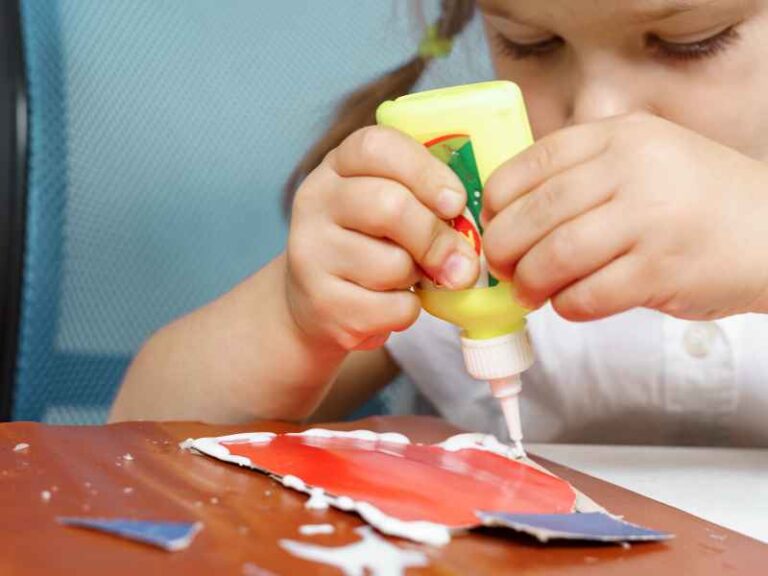
Tearing paper, squeezing glue, placing small pieces all of it builds coordination in a way that feels playful rather than evaluative.
Children can take their time, pause, adjust, and try again without feeling rushed to keep up.
Farm crafts also help kids learn how to follow steps while staying flexible. They practice listening, watching, and sequencing but because the subject is forgiving, they can adapt those steps to fit their own ideas.
A cow doesn’t stop being a cow if the legs are crooked or the face looks surprised. That freedom matters.
Most importantly, these crafts give children space to express personality through tiny details. A shy child might work slowly and carefully. A bold child might pile on materials or invent a backstory mid‑glue.
When we let the process unfold without correction, kids learn that their way of creating is valid and that’s a lesson far bigger than any finished craft.
The Perfectionism Problem (And Why Farm Crafts Help)
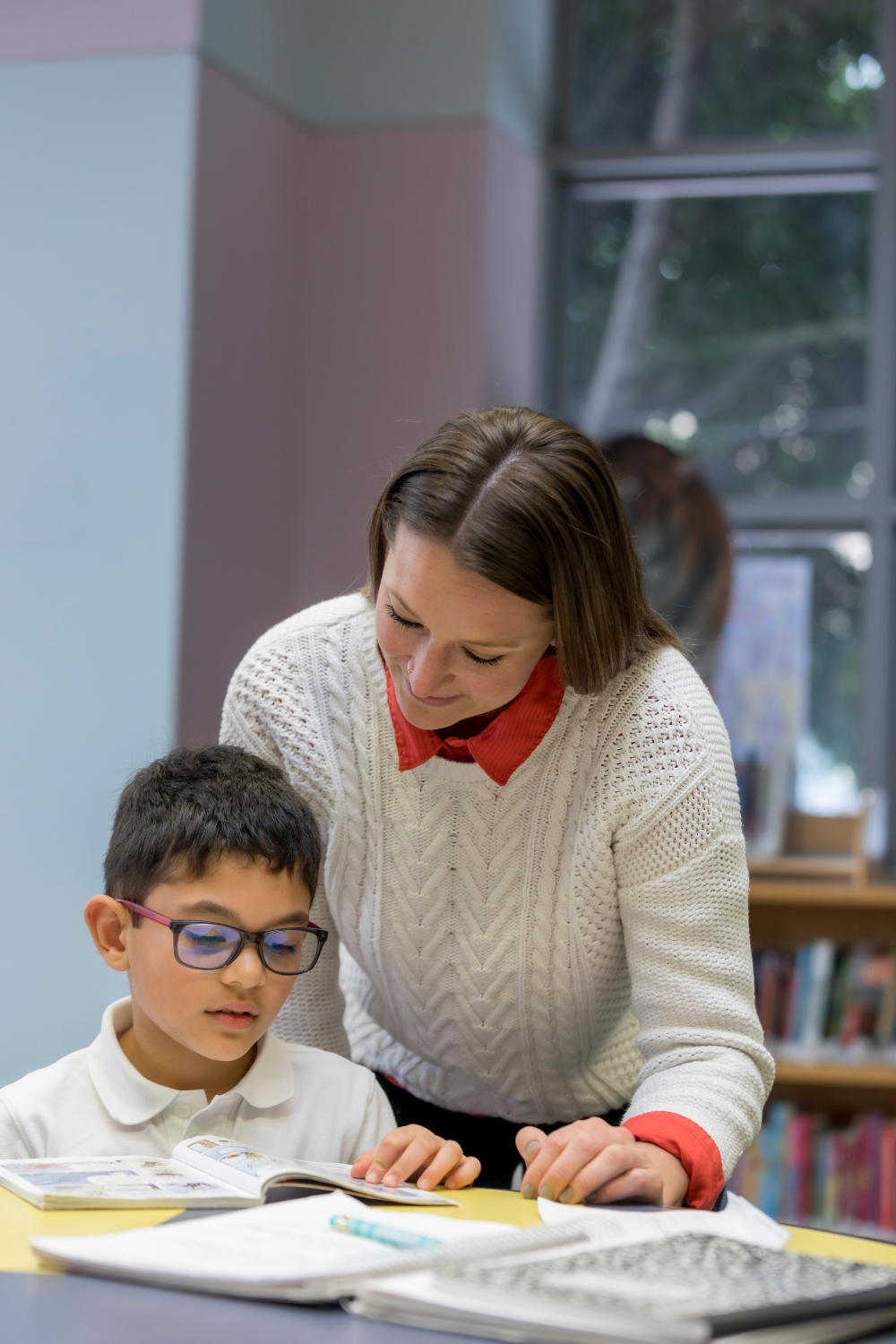
Many of us don’t realize how easily perfectionism sneaks into kids’ crafts often through good intentions. We show an example. We fix a piece that’s crooked.
We say, “Try to make it look like this.” And slowly, the activity shifts from exploration to performance.
When children feel there’s a correct outcome, creativity tightens. They begin to copy instead of imagine. They ask for approval before placing a piece.
They hesitate, erase, restart not because they don’t know what to do, but because they’re afraid of doing it wrong.
Farm animal crafts for kids quietly push back against that pressure. Simple shapes, familiar animals, and forgiving materials remove the fear of mistakes.
A sheep can have three eyes and still make sense. A horse can be purple and still feel right to the child who made it. There’s no single “perfect” version to compare against.
Because farm animals are already familiar and emotionally safe, kids feel more willing to experiment. Mistakes don’t feel like failures they feel like discoveries. A torn ear becomes a floppy ear. Extra glue turns into mud. What could have been “wrong” becomes part of the story.
When we allow that freedom, we teach children something powerful: creativity doesn’t require correctness. It requires curiosity.
And in a world that will eventually ask them to perform, evaluate, and compare, these small moments of low‑pressure creation help protect their confidence long before they realize they need it.
Farm Animal Crafts That Encourage Confidence (Not Just Copying)
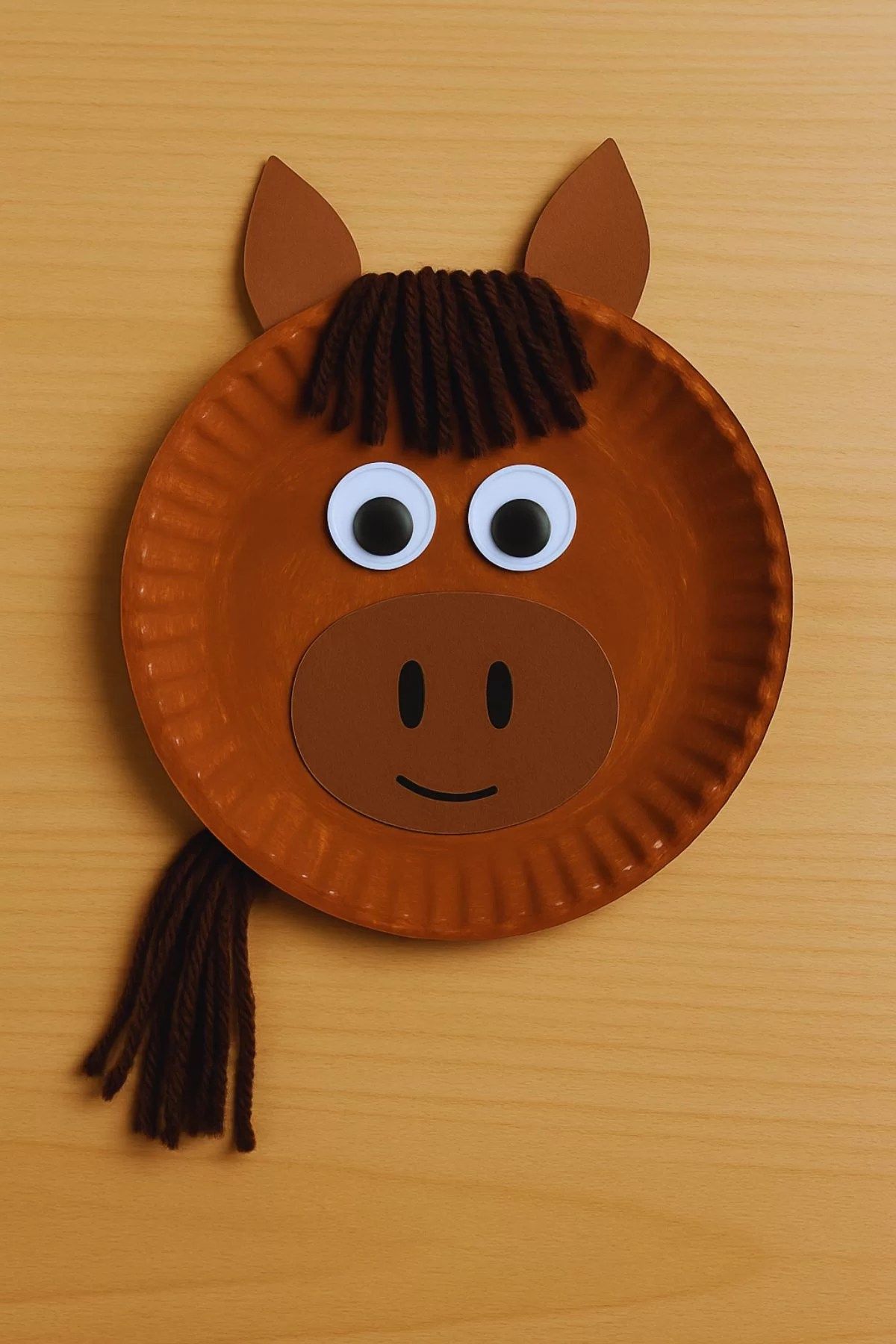
Photo credit: @Pawesomeverse
Not all farm animal crafts for kids invite the same kind of growth. Some quietly ask children to follow along, copy an example, and finish as quickly as possible. Others leave space and it’s in that space where confidence begins to form. These are the kinds of crafts that don’t rush children toward a “right” result, but instead let them discover what feels right to them.
Crafts With Open Ended Details
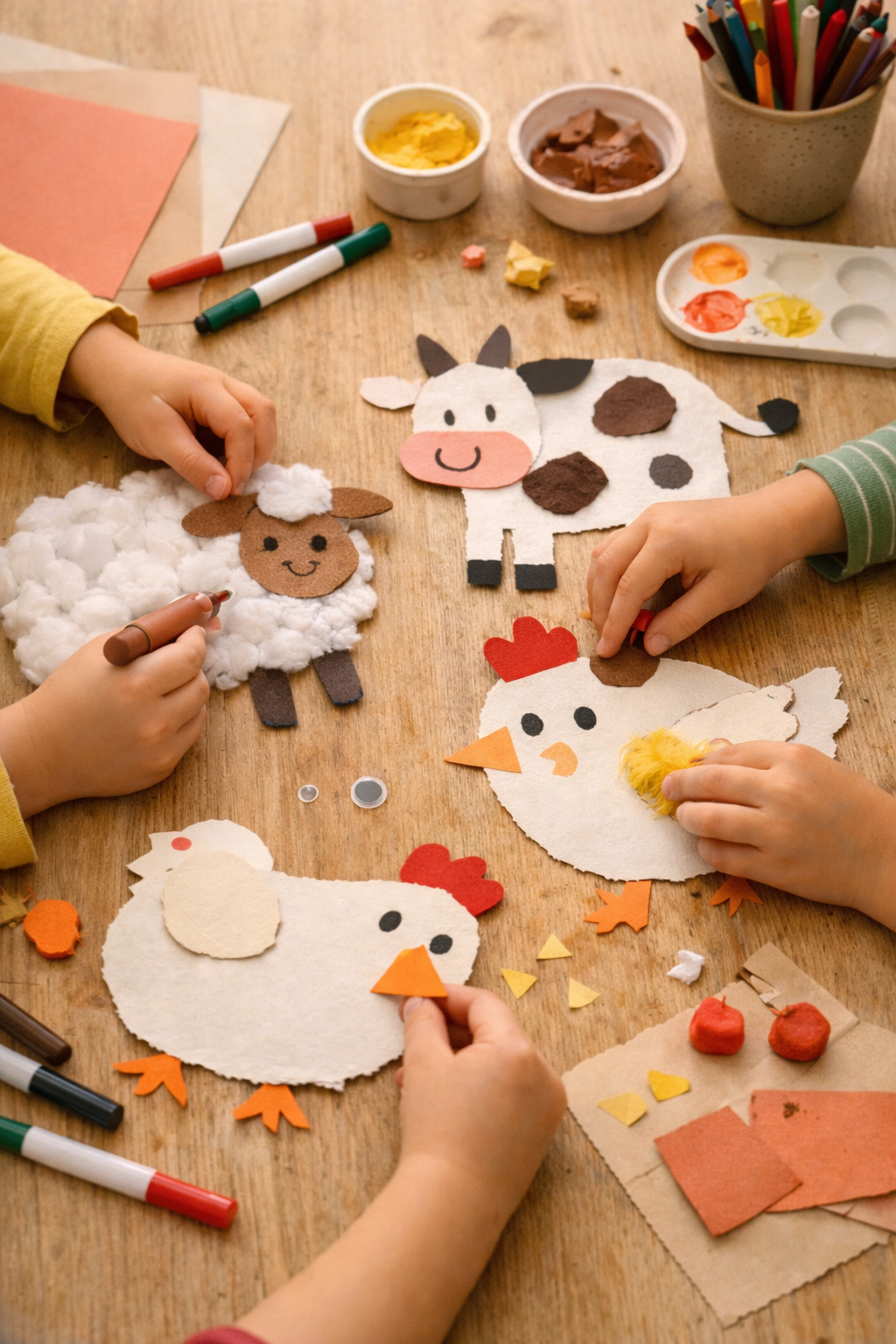
Think of farm animal crafts where not every feature is already decided. A sheep without fixed spots. A cow without a picture to match. A chicken without instructions for how big the beak should be.
When children are free to decide where details go or whether they belong at all something important happens. They stop looking around for approval and start looking inward. They make choices based on instinct, curiosity, or mood.
There’s no right placement, only their placement. And each small decision reinforces a quiet message: your ideas are worth trusting. Over time, this builds confidence far beyond the craft table.
Simple Animal Shapes With Room for Imagination
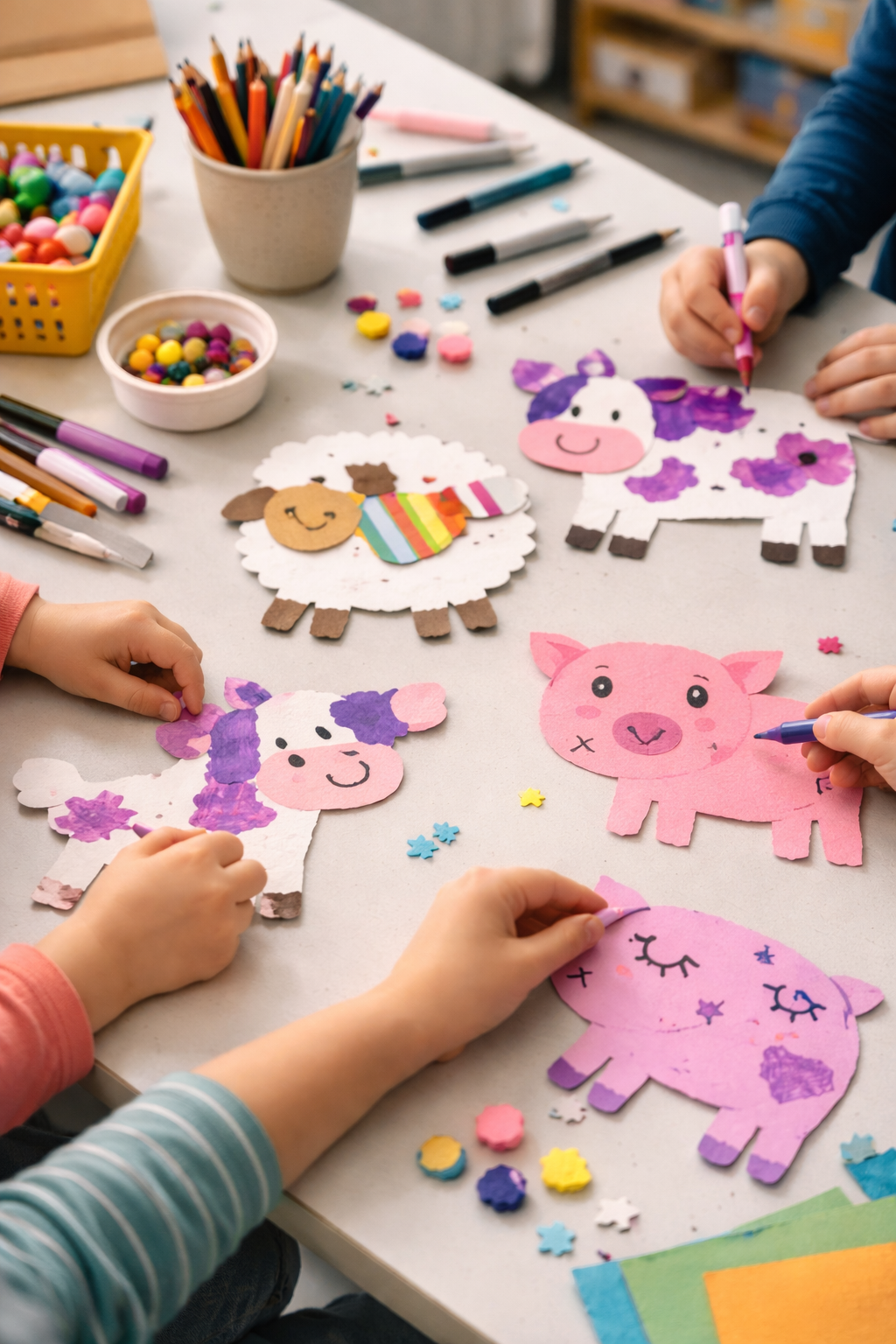
Simple shapes are often underestimated, but they’re powerful. A basic pig outline or a rounded barn animal cutout doesn’t overwhelm children with instructions or expectations. Instead, it invites interpretation.
One child adds eyelashes. Another adds stripes that don’t exist in real life. Someone else turns a cow purple because that’s the color they like today.
These choices aren’t distractions from learning they are the learning. When a child realizes there’s no single way their animal “should” look, they feel ownership over what they create. That ownership is the foundation of creative confidence.
Texture Based Farm Crafts
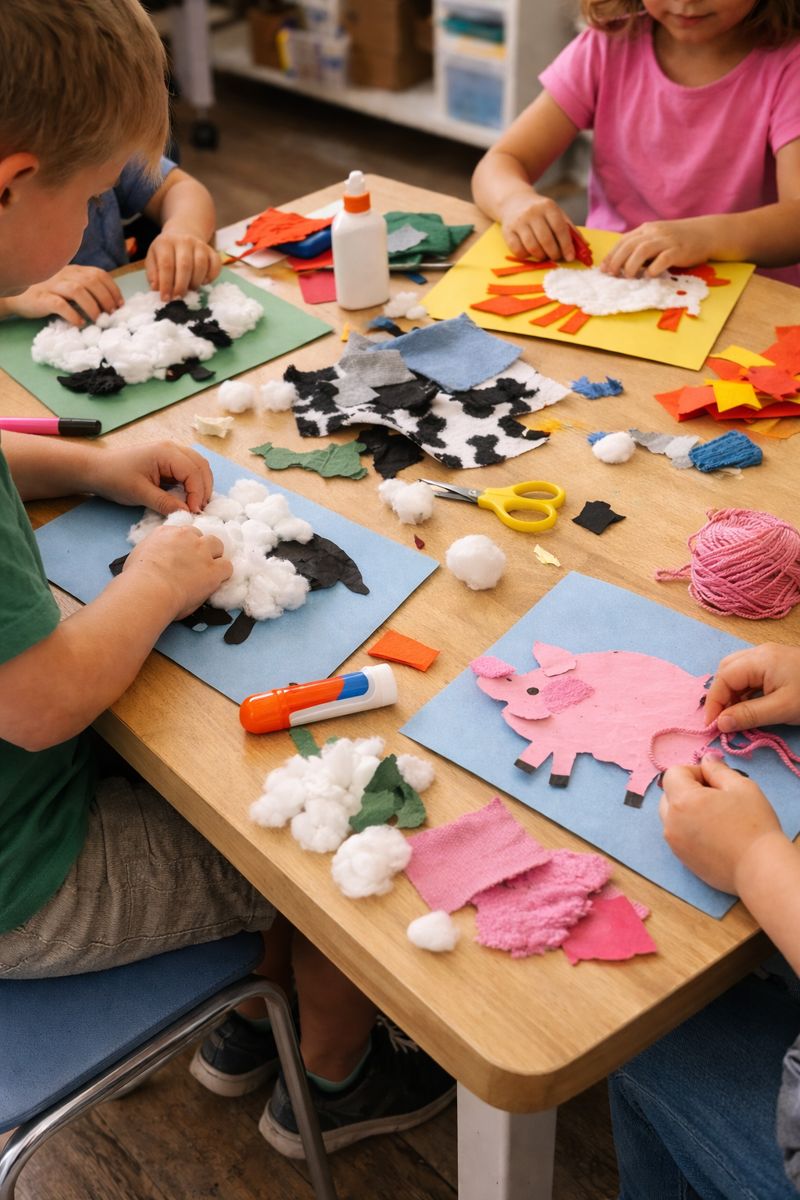
Farm animals naturally lend themselves to texture cotton balls for wool, yarn for tails, fabric scraps for patches, paper strips for feathers. Texture-based crafts shift the focus away from precision and toward experience.
When children choose how something feels, not just how it looks, they engage more deeply. Tearing, pressing, fluffing, layering these actions slow the process and invite exploration.
This is especially helpful for children who feel unsure about drawing or fine details. Texture gives them another way to participate fully, without fear of “messing up.” Confidence grows when children realize there’s more than one way to create something beautiful.
Story Driven Animal Crafts
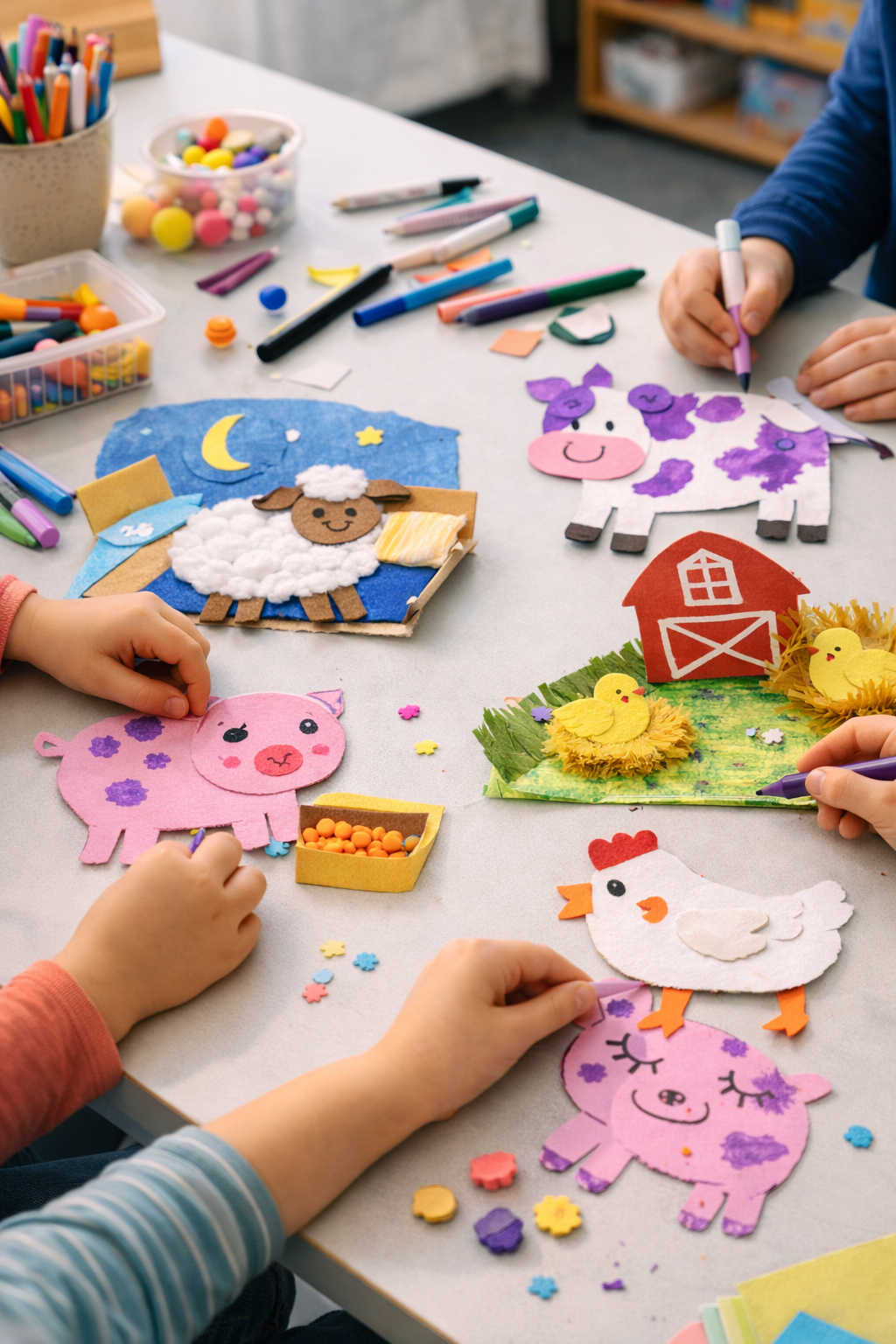
When a farm animal craft is paired with a simple question, the entire experience changes.
Where does this animal sleep?
What does it like to eat?
Who is its friend on the farm?
Suddenly, the craft isn’t just an object it’s a character. Children begin explaining their choices, adding personality, and telling stories. The focus shifts from neatness to meaning.
Talking about their animal builds confidence in a different way. Children learn that their ideas matter, that their voice is interesting, and that creativity isn’t about looking right it’s about expressing something real.
These kinds of farm animal crafts for kids don’t rush children toward a finished result. They invite them to linger, decide, explore, and explain. There’s no comparison, no example to match just space to grow. And in that space, confidence builds quietly, one gentle choice at a time.

Appreciate this post. Will try it out.