This post contains affiliate links. This means I may earn a small commission if you purchase through my links at no extra cost to you.
Halloween spirit week ideas for assisted living solve a problem nobody talks about enough: the week before Halloween in most facilities is flat.
Halloween day itself gets planned beautifully. But Monday through Thursday? Same activities, same routine, residents waiting for something to arrive.
Spirit week fixes that. One themed day per day, building excitement until Friday feels like a real event not just another activity on the calendar.
Facilities that have tried it report residents talking about the themed days for weeks afterward. Not because the costumes were elaborate, but because something different happened every day and everyone was part of it.
These Halloween spirit week ideas for assisted living are organized as a complete five-day plan you can implement with minimal budget and no complicated logistics.
Whether you’re an activity director building the full program or a family member who wants to participate, every day here is gentle, accessible, and designed for every ability level.
For the full October celebration these themed days fit inside, these Halloween party ideas for assisted living residents cover the complete party program that makes Friday the perfect finale.
What Is Halloween Spirit Week in Assisted Living?
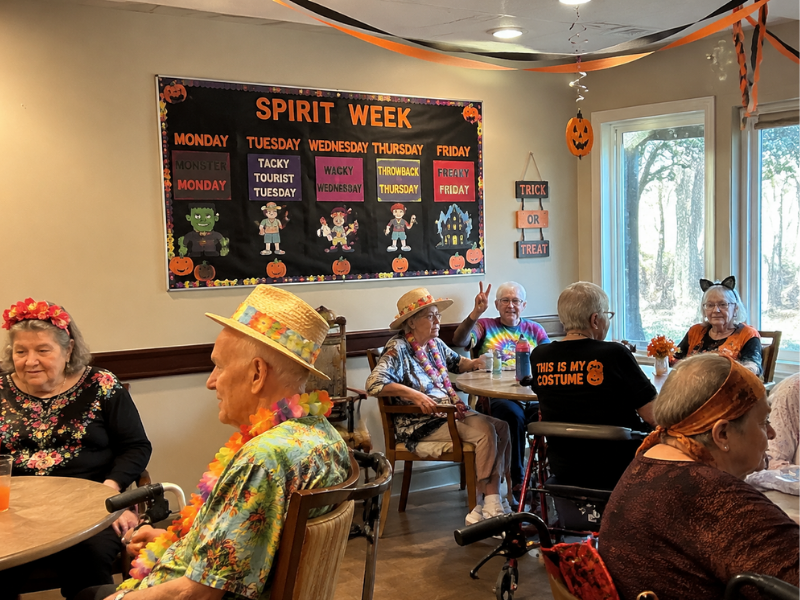
Spirit week is borrowed from schools, where each day of homecoming week has a different dress-up theme that builds toward a big event on Friday.
The concept translates to assisted living with surprising power and with very little modification.
The same anticipation that makes kids excited about Crazy Hat Day works just as well for a 78-year-old who’s been wearing the same cardigan for three Tuesdays in a row.
Why Anticipation Is the Real Gift
When residents know tomorrow has a theme when there’s a schedule on the bulletin board showing what each day holds the week takes on forward momentum that ordinary activity programming rarely creates.
Something to look forward to every single morning is one of the most powerful wellbeing tools available in a care setting.
According to the National Institute on Aging, social engagement and structured routine are two of the strongest positive interventions for elderly wellbeing spirit week delivers both at once.
And it does it without requiring a massive budget or elaborate planning.
Staff Participation Is Non-Negotiable
This is the ingredient most facilities miss. Spirit week only works when staff dress alongside residents.
When caregivers, nurses, and administrators join in, themed days feel like a shared celebration rather than an activity being done to residents by staff.
The sillier the staff gets, the more residents feel safe being playful too.
Even residents who can’t dress up can participate on every single day.
A colored accessory, a themed ribbon, a prop to hold, or simply being present in a festive space participation is a spectrum, not a binary. Good spirit week planning honors that from the start.
The 5-Day Halloween Spirit Week Plan
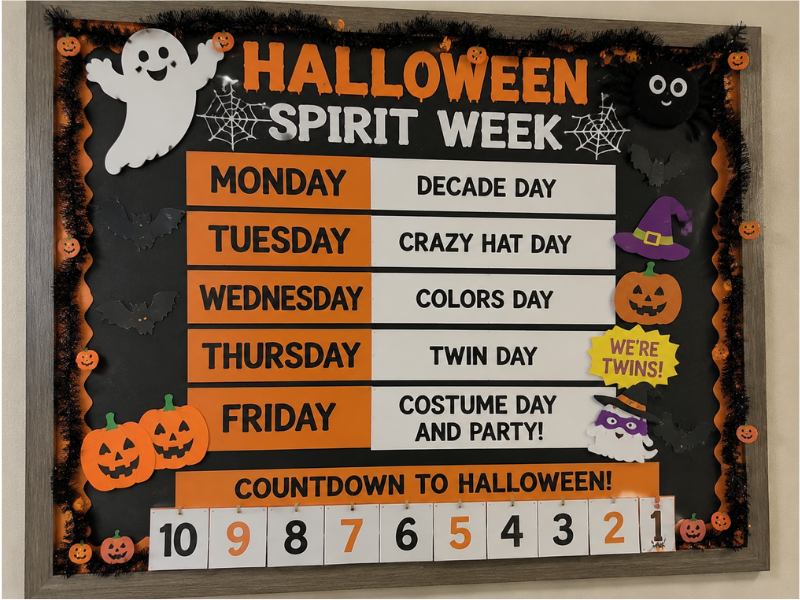
Day 1 — Monday: Favorite Decade Day
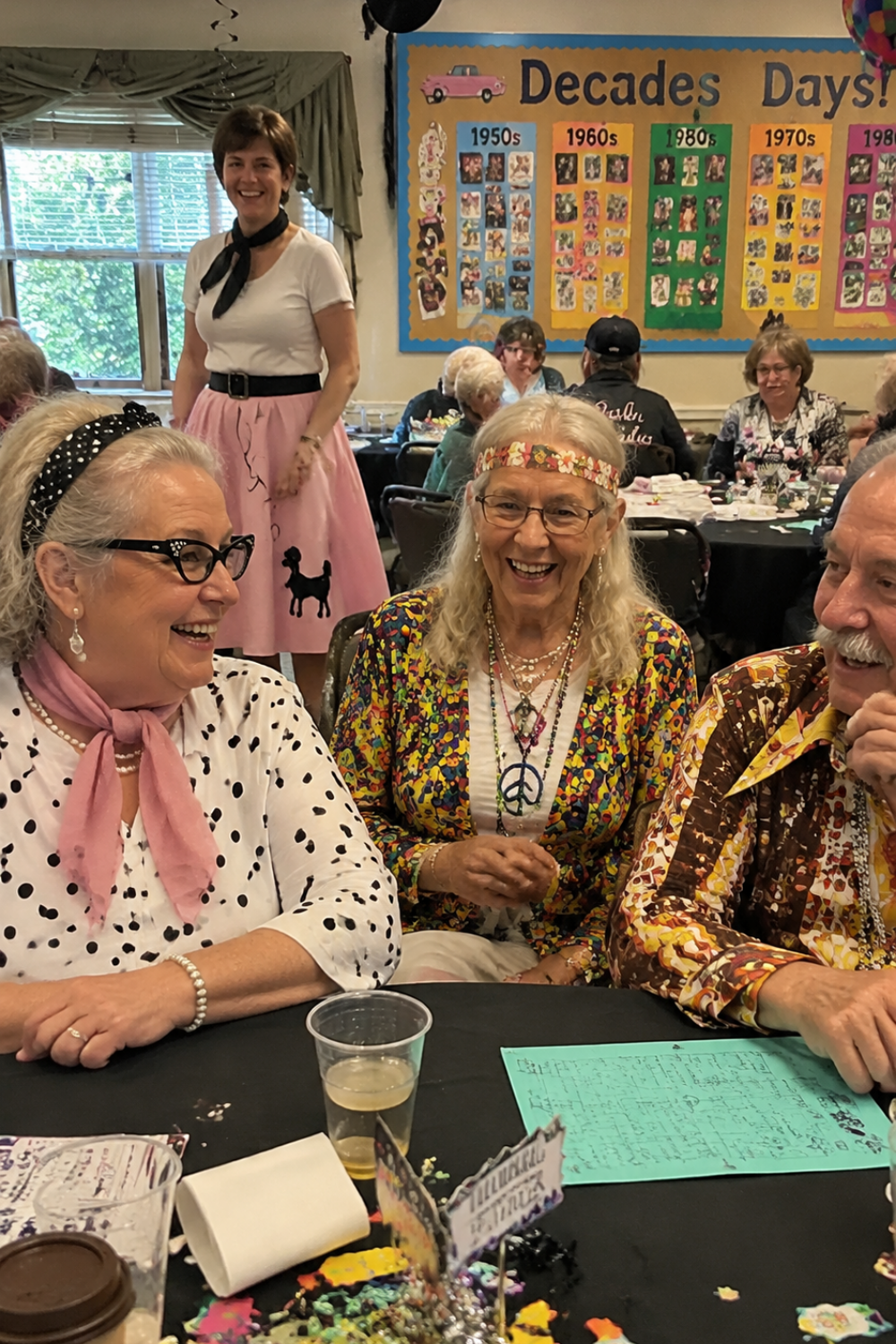
Favorite Decade Day is the strongest opener in the spirit week lineup because nostalgia is the most reliable engagement tool available for older adults.
Ask a 75-year-old what decade they’d go back to and they have an immediate, specific, personal answer with memories, music, fashion, and stories attached.
How to Run It
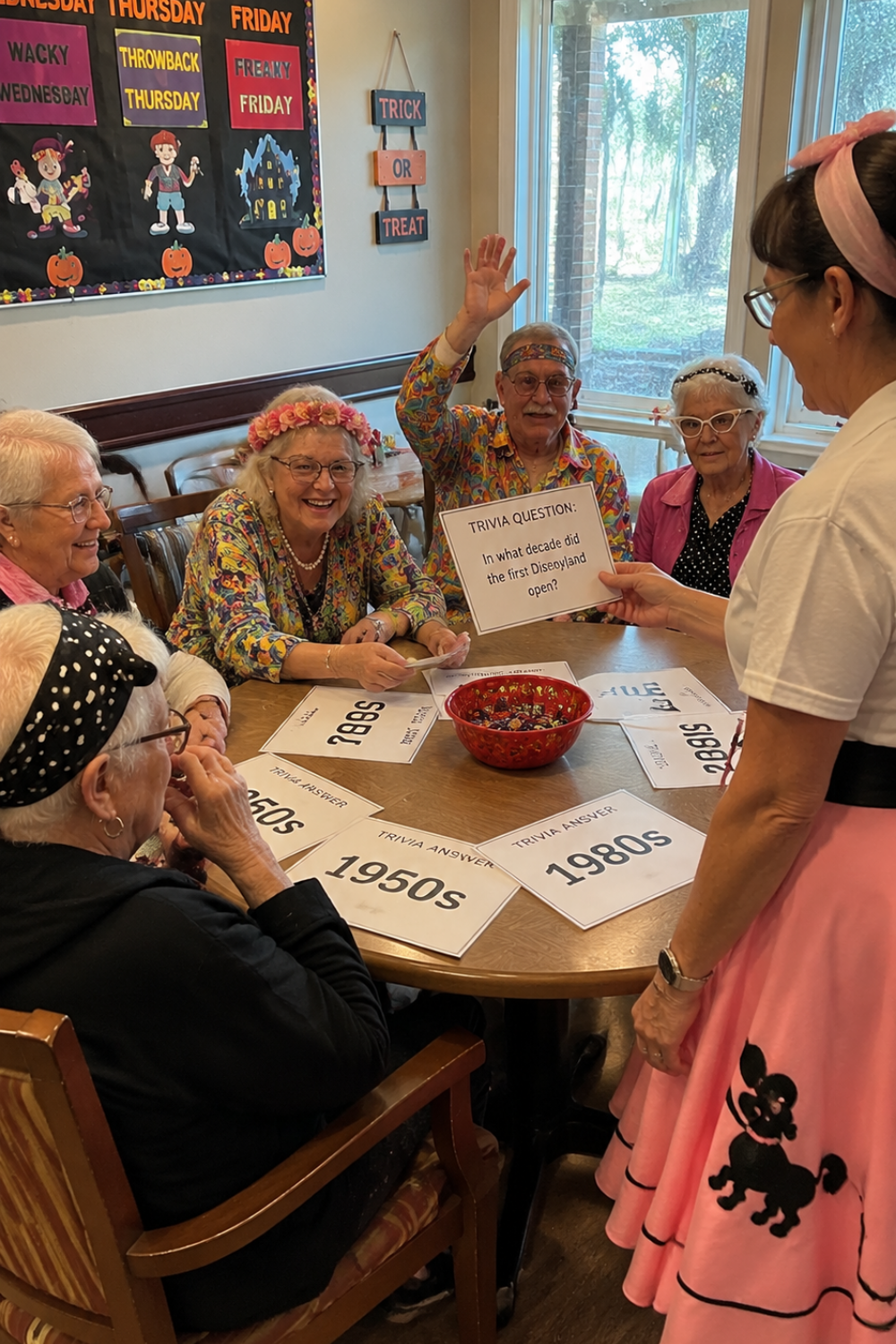
Residents dress in or simply reference their favorite decade. The 1940s, 50s, 60s, and 70s are the natural options for most current assisted living populations. A full outfit is wonderful but completely optional.
One accessory is enough to count as full participation and everyone should know that from the announcement.
During the morning activity session, play music from the chosen decades and run a trivia round built around that era. “Name a popular TV show from the 1950s.”
“What fashion trend defined the 1960s?” Residents are the experts here this is their cultural knowledge, not general trivia they have to retrieve under pressure. That shift matters.
Encourage residents to share personal decade memories alongside the trivia. “What were you wearing in 1962?” “Where were you when this song was popular?
“ For more game ideas that pair beautifully with this day, these Halloween party games for senior citizens have 40 fully developed ideas organized by format and ability level.
Why Monday Works for This Theme
Starting with Decade Day sets a high emotional tone immediately. Residents who participate on Monday are more likely to show up every other day because the first day creates a positive association with the week.
It also gives anyone who missed it a reason to ask: “What happened yesterday? What’s today?”
Day 2 — Tuesday: Crazy Hat Day
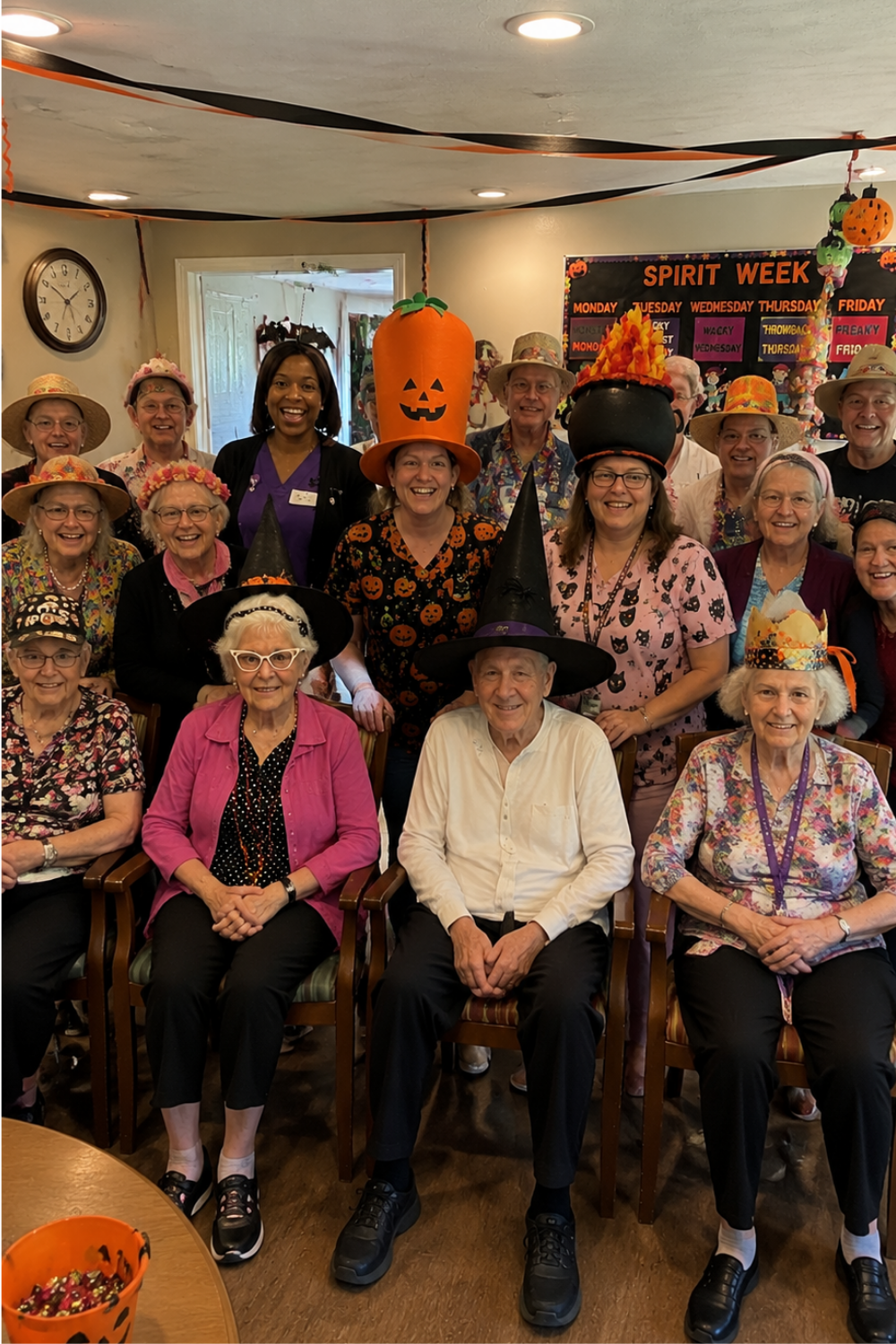
Crazy Hat Day is the highest-participation day in the entire spirit week lineup because the barrier to entry is essentially zero.
Hats require no mobility, fit over any clothing, and work at every ability level. Every resident who can wear any kind of hat can fully participate and that universality is why it works so well in a mixed-ability setting.
What Counts as a Crazy Hat
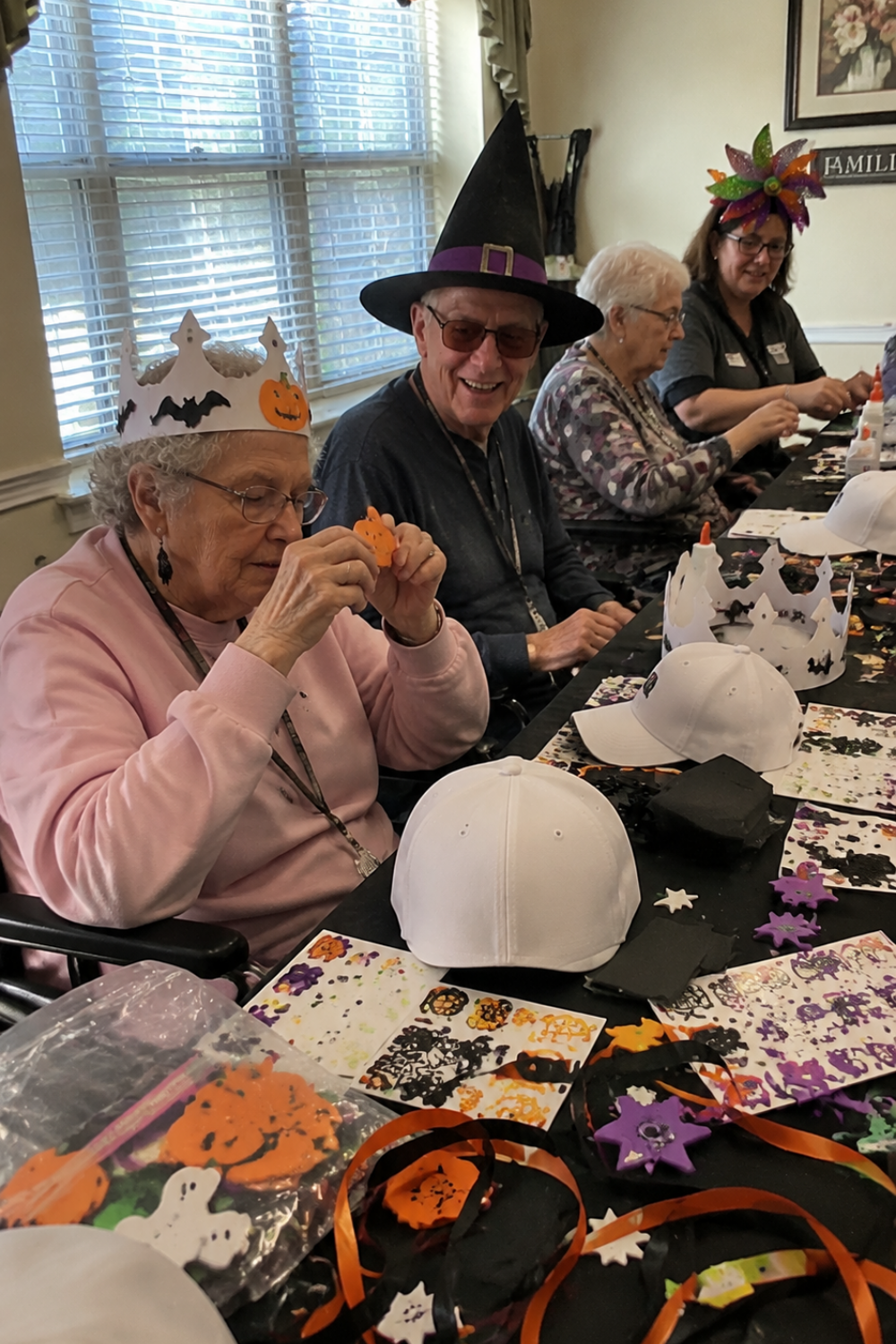
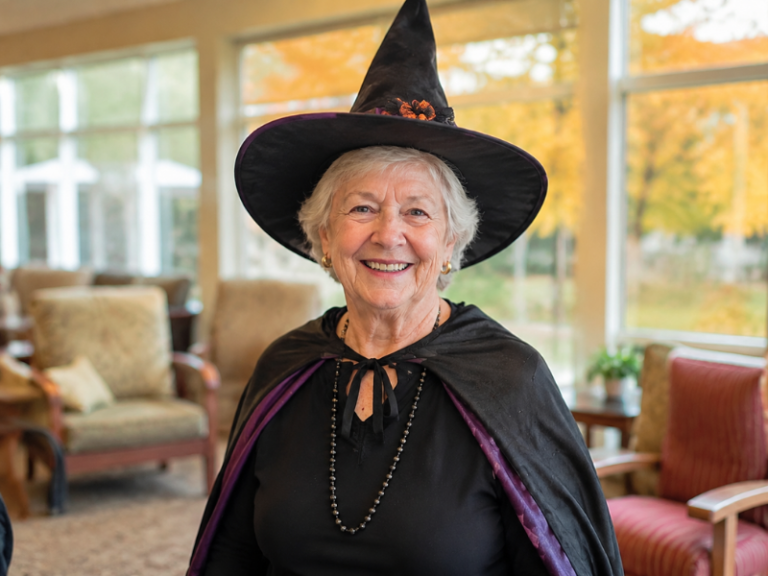
The range is beautifully wide. Consider: a baseball cap covered in Halloween stickers. Or a witch hat from the dollar section.
Another option is a paper crown made in the morning activity. Even a silk flower arrangement balanced on a beanie counts. The definition of “crazy” is entirely subjective, and that subjectivity is the game.
Morning Activity: Hat Decorating Station
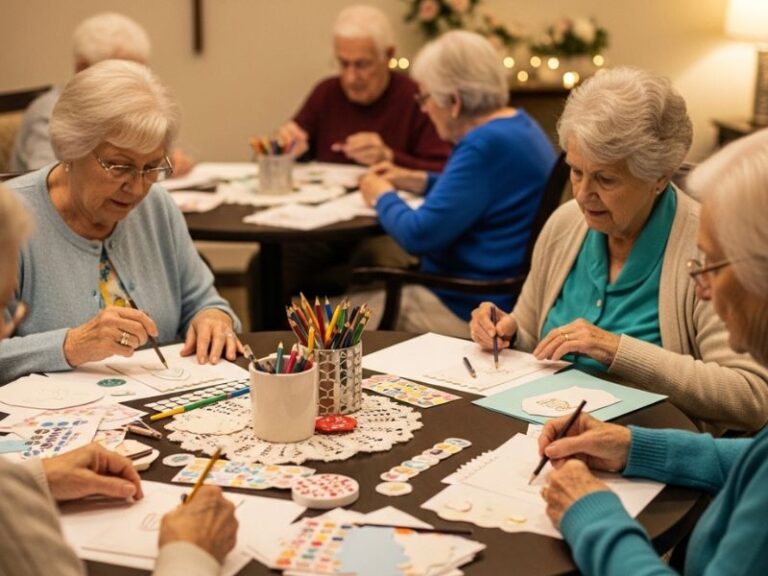
Set up a hat decorating station between breakfast and the morning activity session. Plain baseball caps or paper crowns, Halloween stickers, ribbon, foam pumpkin cutouts, googly eyes, and glue.
Residents who don’t already have a crazy hat can make one during the session which means Tuesday’s activity and costume are solved in one move.
This approach also works for residents with dementia who may not understand the concept of “themed day” but will happily decorate a hat when materials are in front of them.
For craft ideas that complement this, these Halloween crafts for dementia patients show how to adapt seasonal sessions for this group specifically.
The Staff Rule for Crazy Hat Day
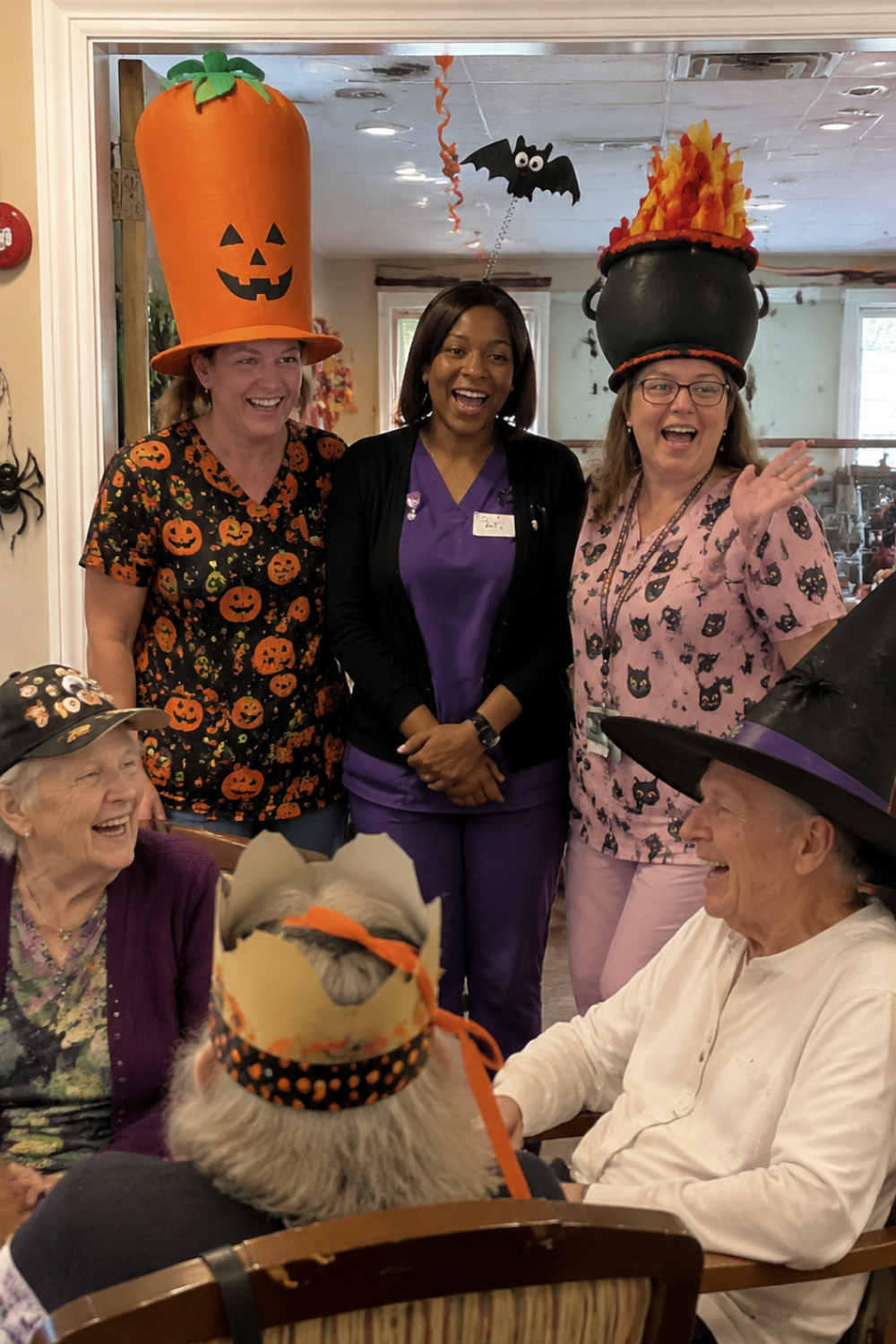
Staff should arrive in the most ridiculous hat they can find. The activity director in a two-foot foam pumpkin hat. A nurse with a plastic bat on a headband.
The administrator in a hat with spinning pinwheels. When staff are willing to be silly, residents feel freed to be playful too. Dignity works both ways.
Day 3 — Wednesday: Halloween Colors Day
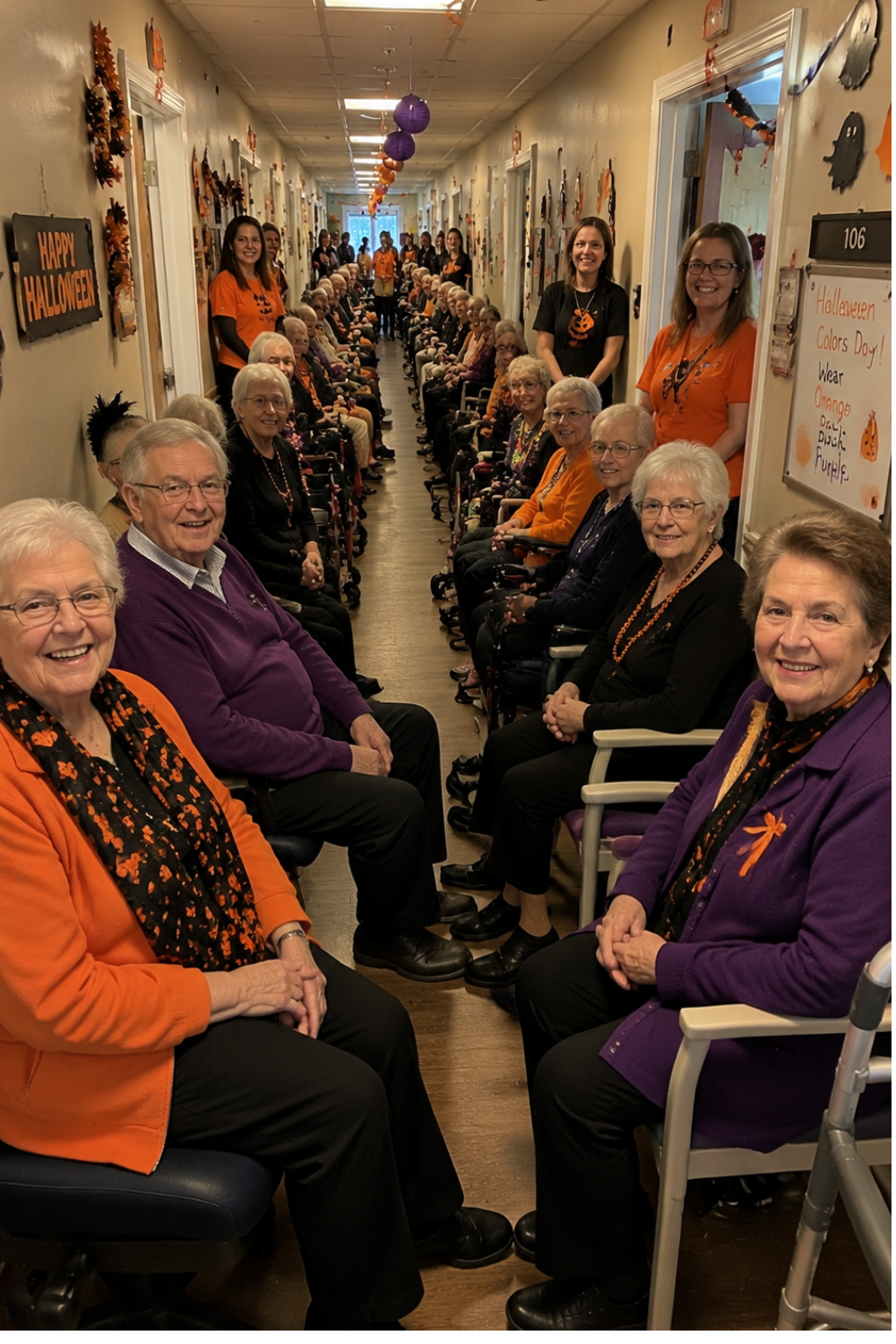
Wednesday’s theme is deliberately the most inclusive day of the week. Everyone wears orange, black, purple, or any combination and that’s it.
Because the participation options are so broad, every single resident can join fully regardless of mobility, cognitive level, or physical ability.
No One Gets Left Out
Consider what’s possible. Someone in a hospital gown can wear an orange ribbon in their hair. A resident who never changes out of regular clothes can hold an orange balloon.
Someone in bed can have a black and orange scarf draped across their blanket. The day is designed so there is literally no resident who cannot participate.
This day also photographs best as a group a hallway or common room filled with people in orange, black, and purple creates a striking visual that families love seeing and sharing. Make sure someone is taking photos throughout the day.
Activity and Prizes
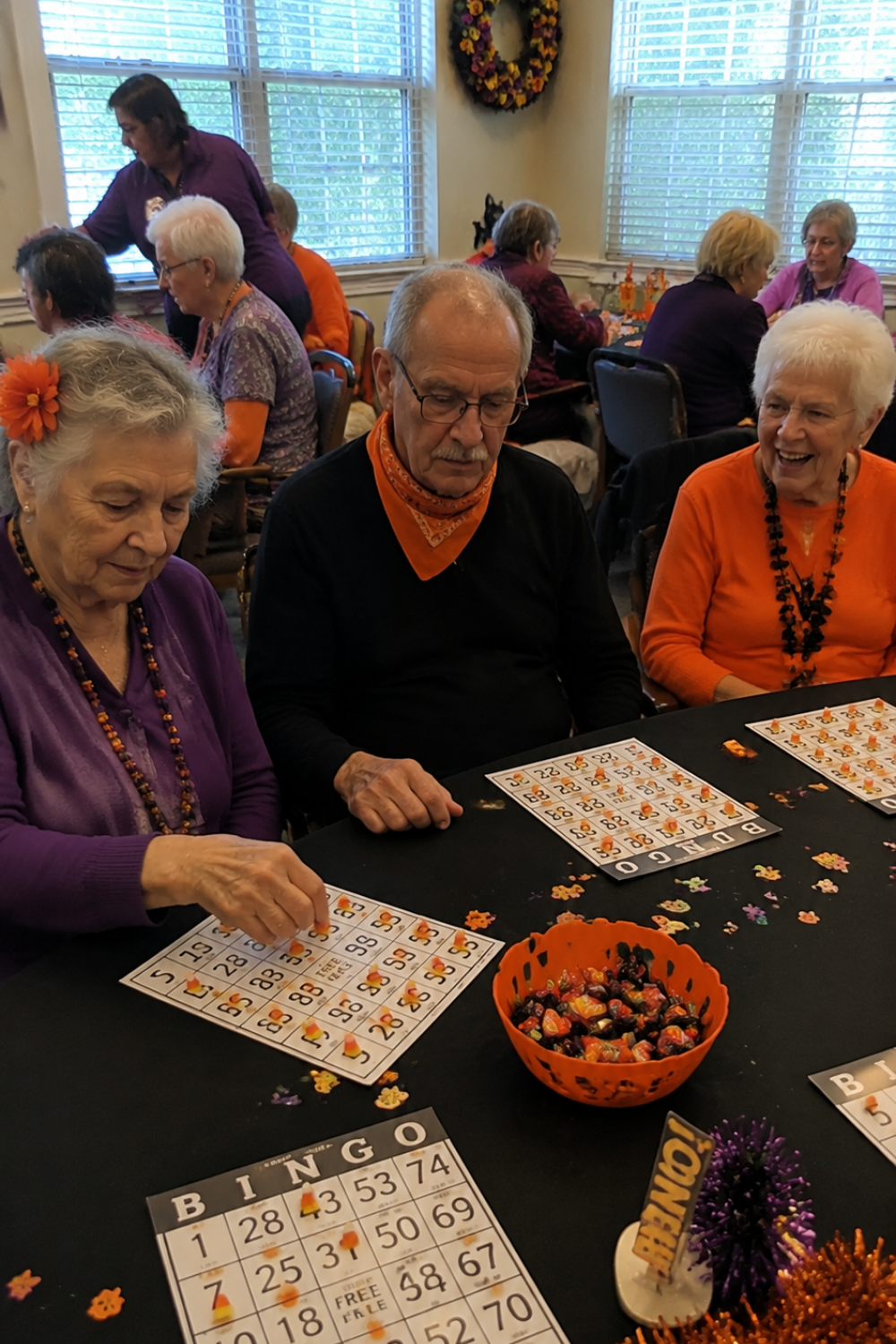
Wednesday’s activity should be double mid-week energy needs more fuel. Run Halloween bingo in the morning, then pivot to a seasonal craft like pumpkin painting in the afternoon.
These Halloween party games for senior citizens have a full bingo setup guide. Small prizes for most festive outfit keep the competitive energy going a Halloween goodie bag, autumn-print socks, a small candle.
Have a box of orange and black accessories available for residents who didn’t bring their own: bandanas, scarves, hair clips, ribbons. Budget $15–$20. No resident should feel left out because they forgot or couldn’t prepare.
Day 4 — Thursday: Twin Day
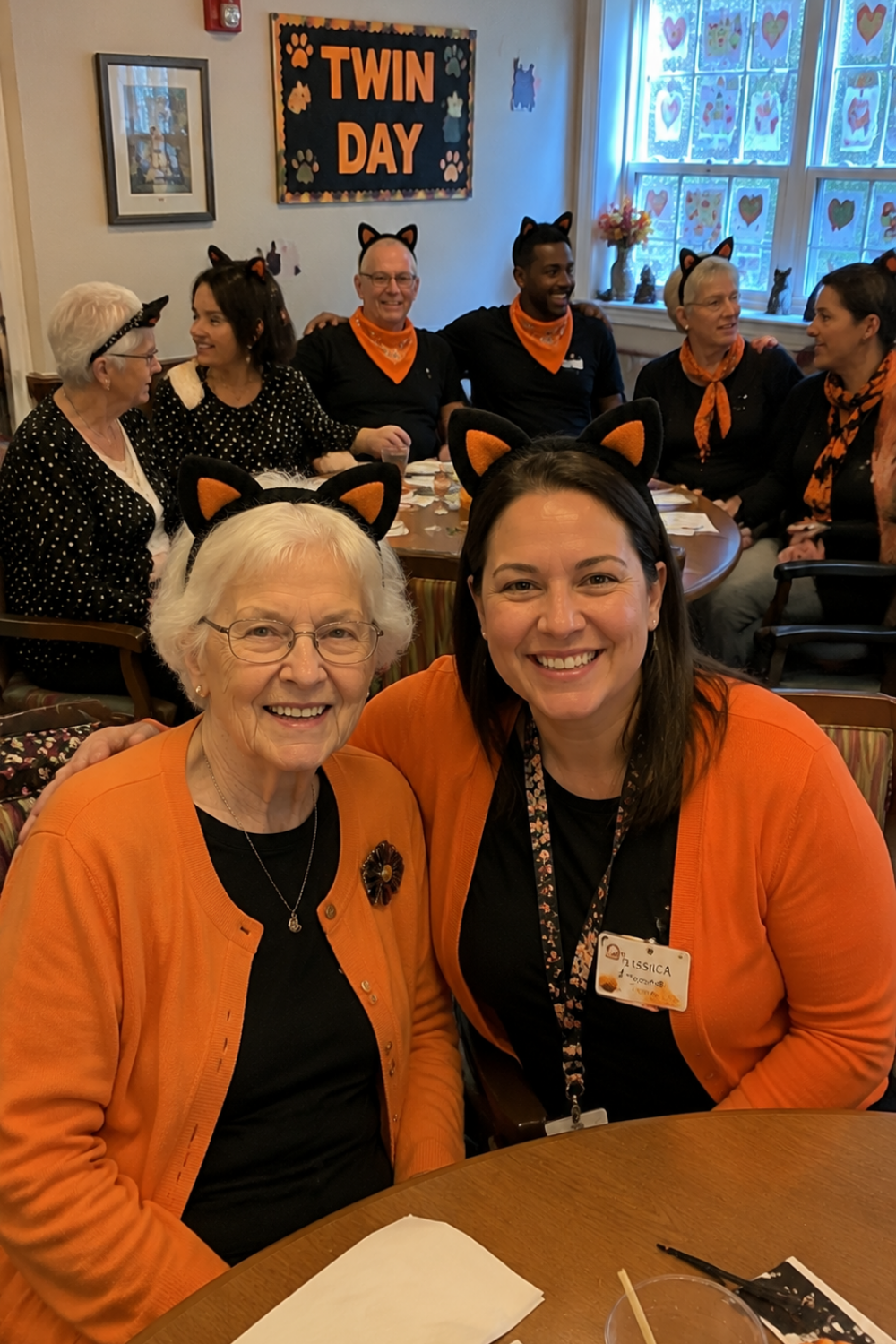
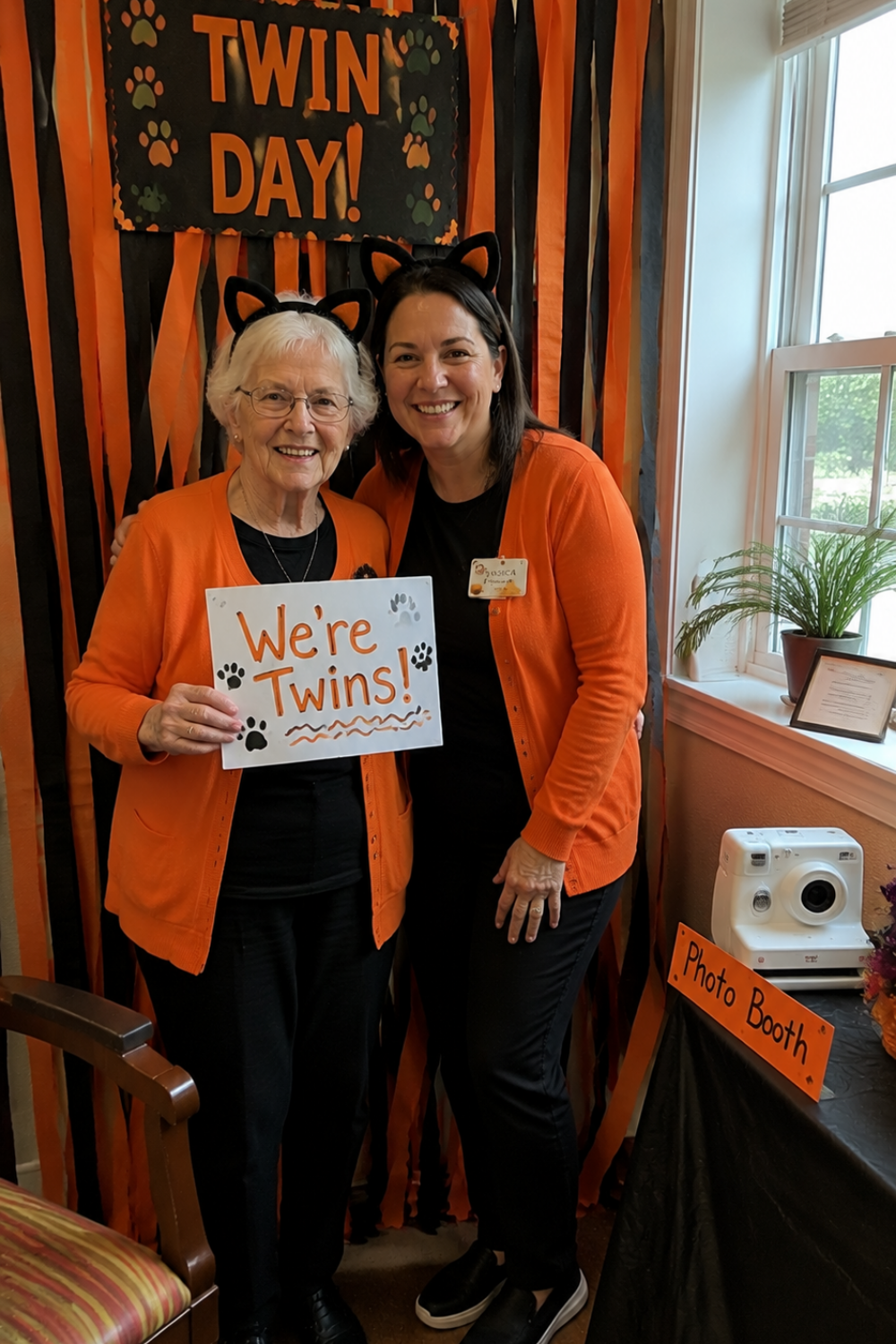
Twin Day is the most socially and emotionally powerful day in the spirit week. The concept is simple: pair up and dress alike.
But what it produces is remarkable residents who might not otherwise interact become partners.
A resident paired with a staff member they see daily suddenly has a shared identity and a real conversation topic.
Why Pairing Works
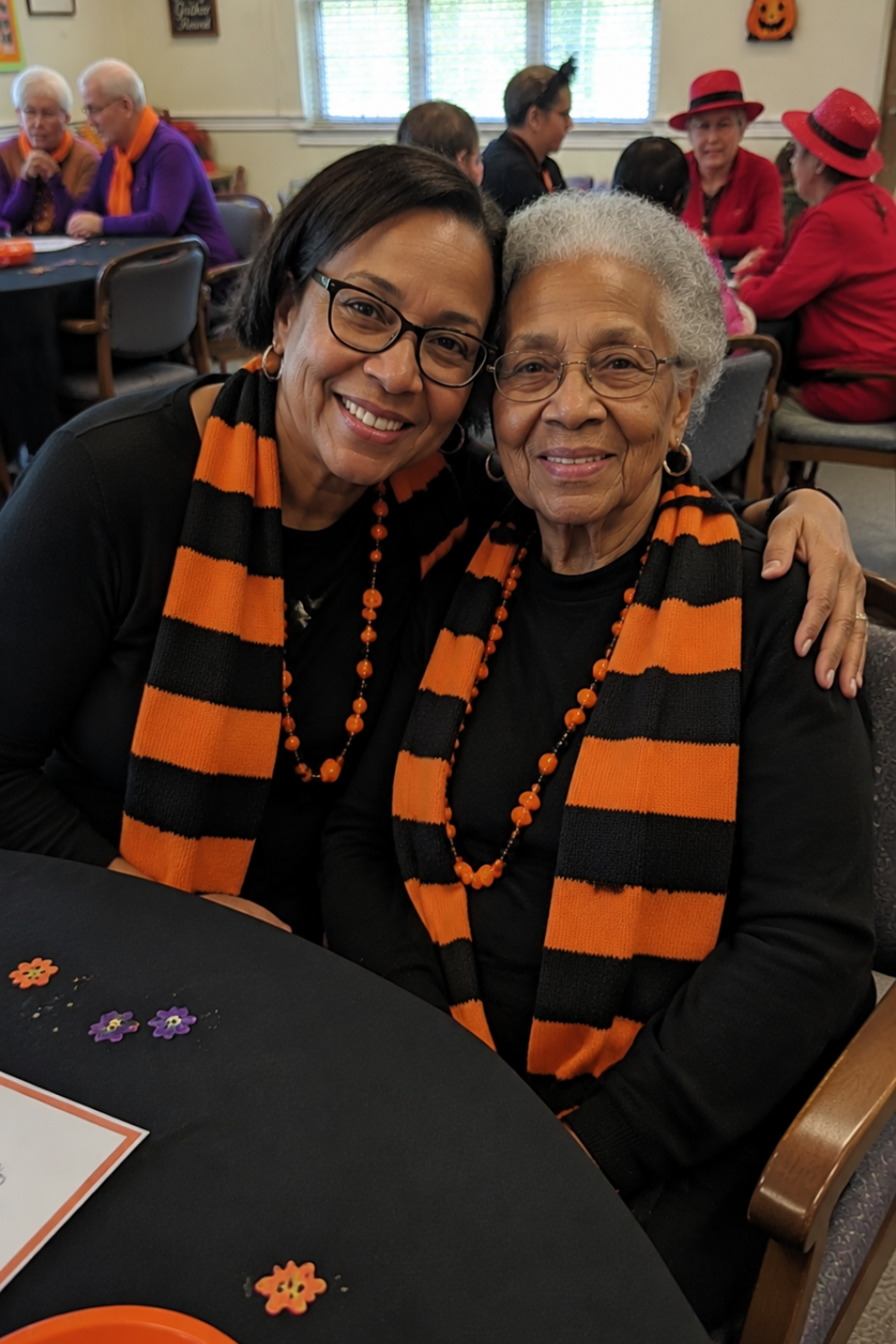
Research on social engagement in assisted living consistently shows that structured social pairing produces more meaningful connection than open social time.
Twin Day creates the structure. The matching outfits create the conversation opener. The rest happens naturally.
According to the Alzheimer’s Association, structured social activities reduce isolation and improve mood for elderly adults in care settings.
Twin Day delivers this almost incidentally the social benefit is a side effect of the fun.
Pairing Suggestions That Work
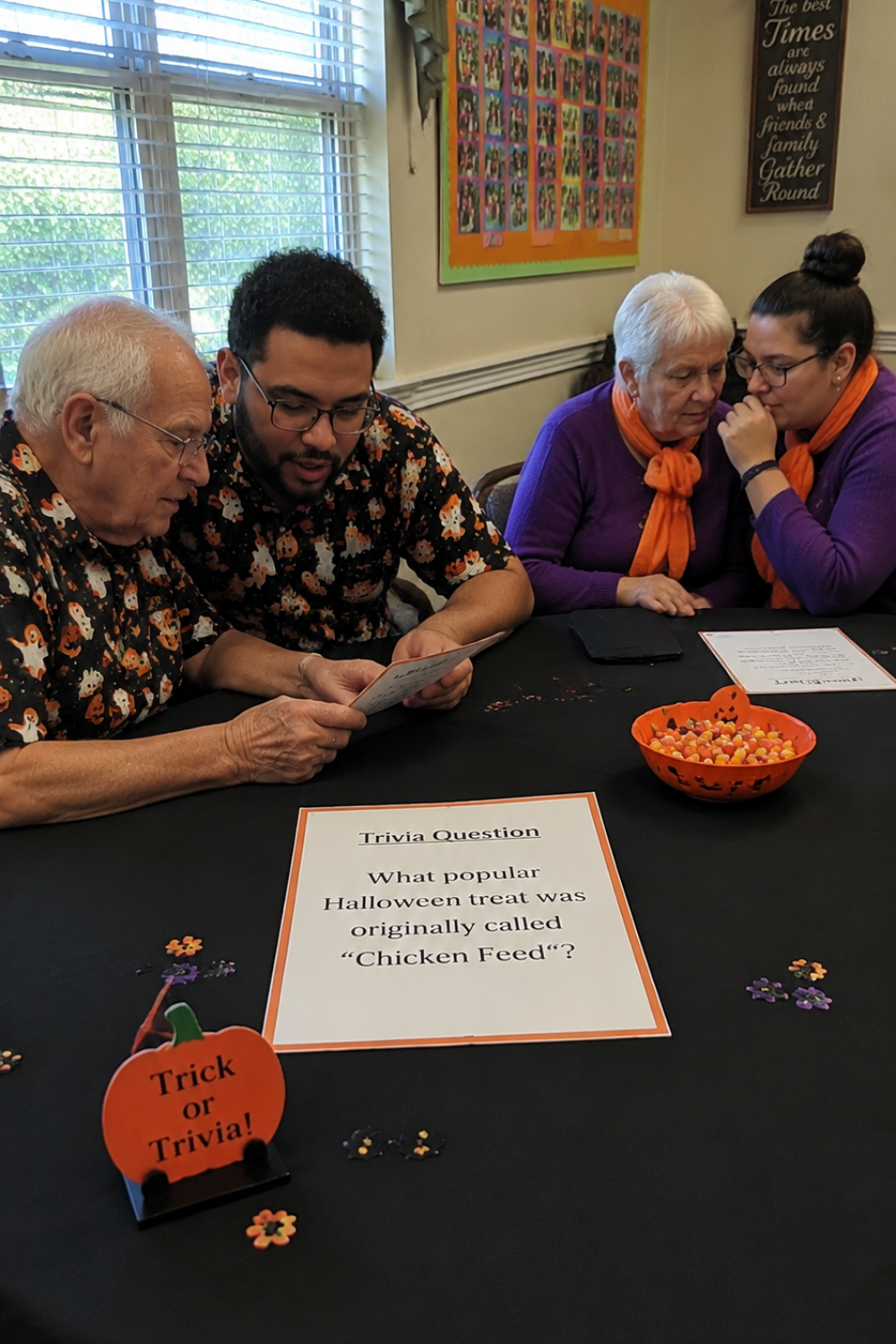
Not every resident will find their own twin organically. Have suggested pairings ready before the day begins posted on the bulletin board Monday or Tuesday so people have time to coordinate.
Consider pairing residents who live near each other, pairing quieter residents with outgoing staff members, or pairing family members who will be visiting Thursday with their loved one.
For residents who don’t want to twin with anyone, a “solo twin” works: dress as half of a famous duo and announce that your other half is running late.
It’s funny, inclusive, and gets a laugh without anyone feeling pressured.
For more activity ideas that build this same connection dynamic, these grandma and grandkids craft night ideas show how structured pairing with younger family members produces the same beautiful result.
Thursday Activity
Run trivia as twin pairs each pair answers together, which naturally creates conversation between the two people and removes the anxiety of answering alone.
Then set up a quick photo booth moment so every twin set has a photo to keep. A photo of a resident and their caregiver in matching accessories is the kind of thing families frame.
Day 5 — Friday: Full Halloween Costume Day and Party
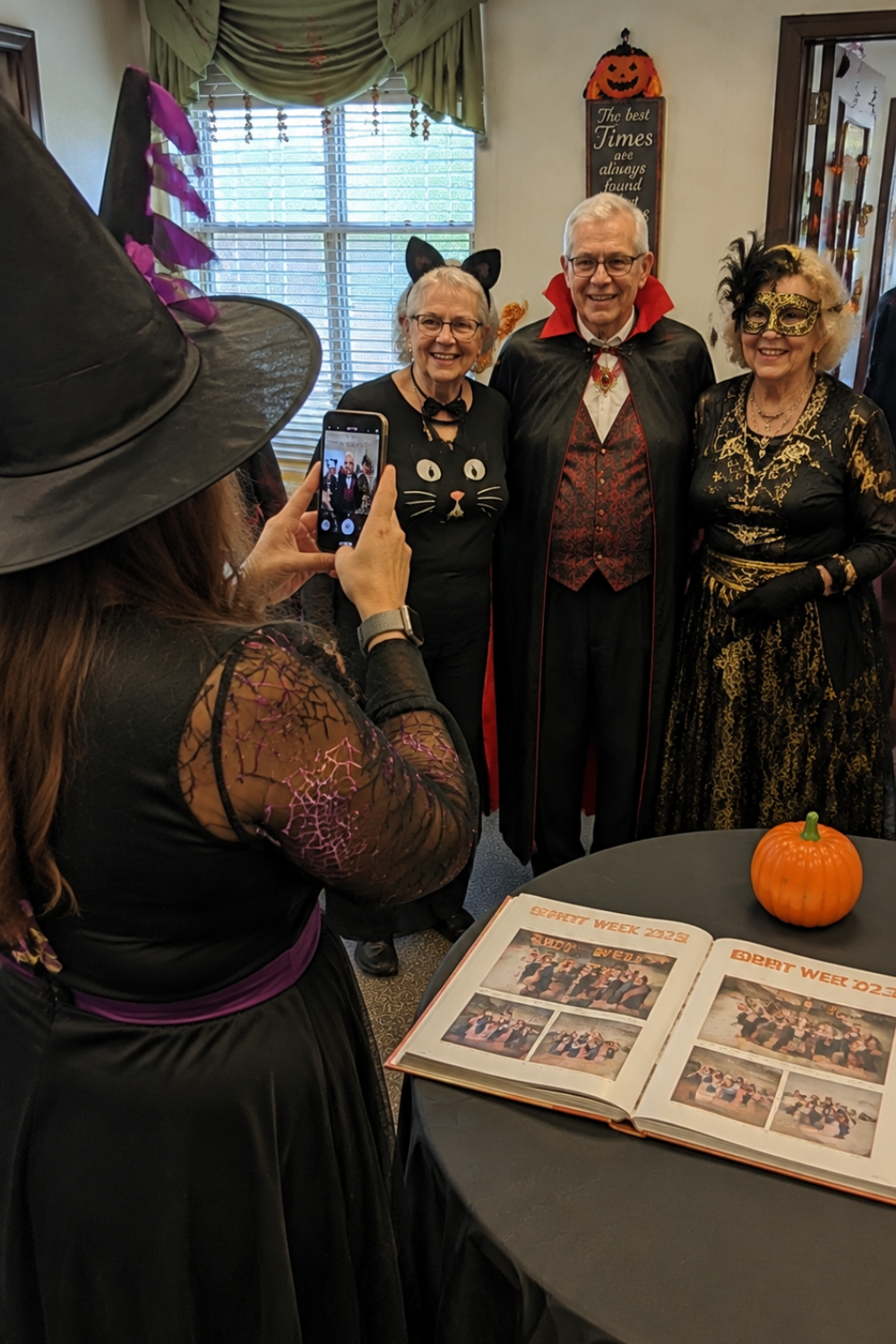
By Friday, the whole facility has a different energy. Four days of themed participation means Friday feels earned and that quality is what makes the costume day and party land harder than they would if you’d simply thrown a Halloween party on a random Friday without the build-up.
The Costume Setup
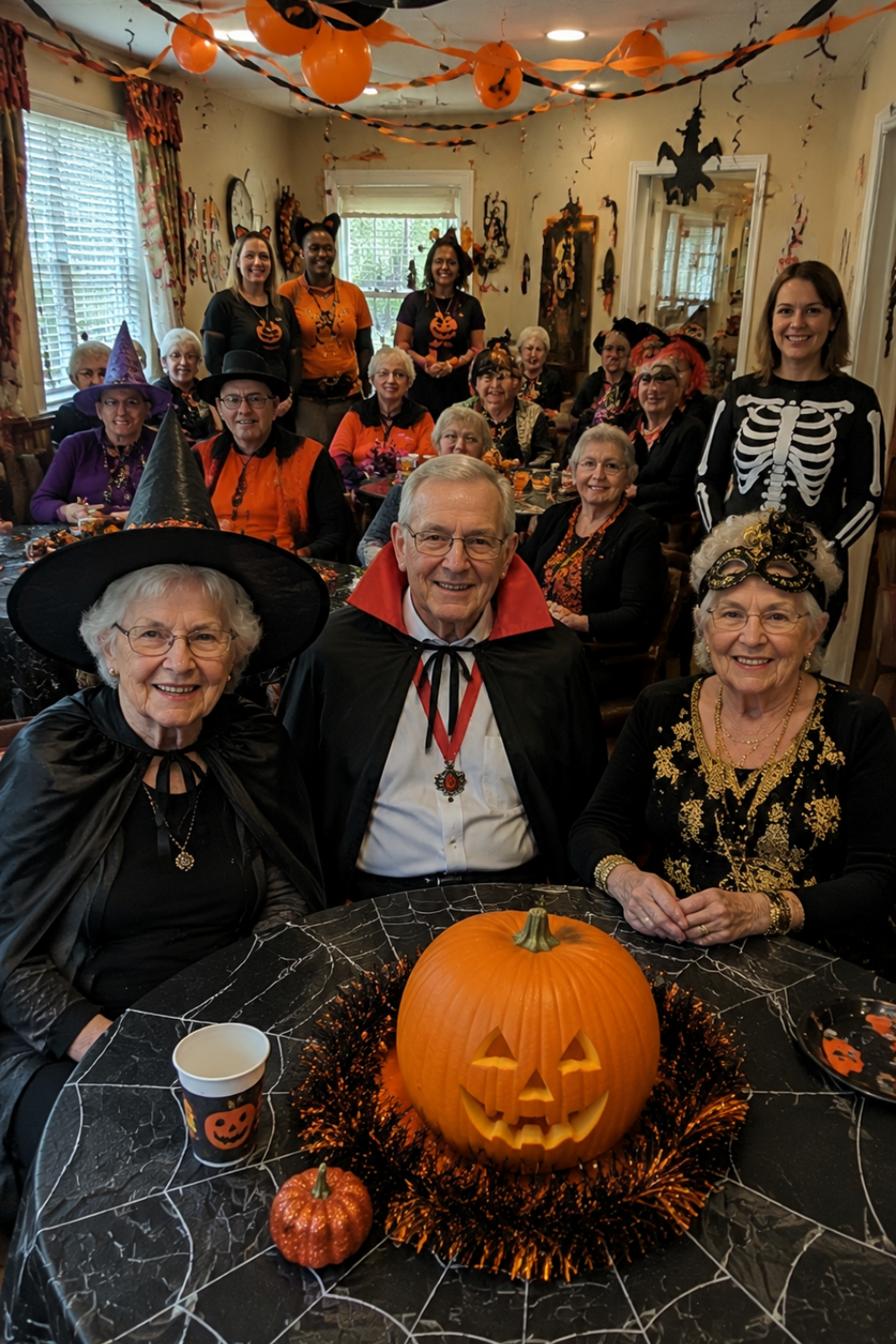
Residents wear their Halloween costume or any Halloween-themed accessory. Make clear from the announcement that an accessory fully counts.
A witch hat, cat ears, a cape, a Halloween-print scarf all count as full participation. Nobody should feel the bar requires a full costume, because for many residents it genuinely doesn’t.
Have a costume station open after breakfast with props available for anyone who didn’t bring their own: witch hats, feather boas, capes, silly glasses, Halloween bandanas.
The prop basket is the great equalizer anyone who wants to participate can grab something in thirty seconds.
For the decor environment that makes Friday feel festive, these Halloween decor ideas for assisted living cover every space from room doors to the activity room.
The Hallway Parade
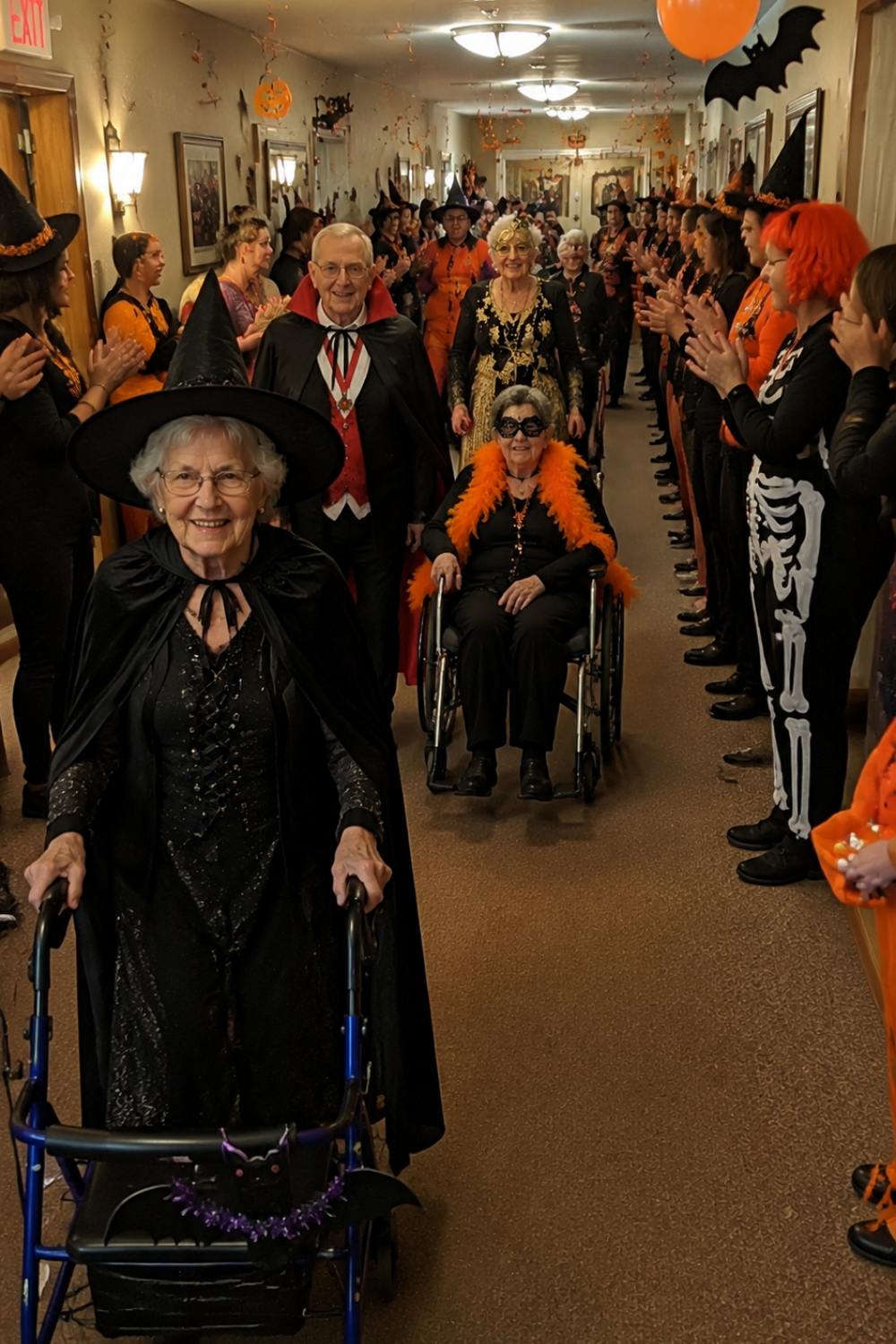
The costume parade is a loop through the main corridors — residents, staff, and visiting family walking or rolling together. Keep it short one full loop is enough. Staff line the route and cheer.
Family members walk alongside their loved ones. The activity director calls out each person as they come through.
The parade is the most photographed, most talked-about moment of the entire spirit week. Capture it well. These photos go into newsletters, onto the facility’s social pages, home with families.
A well-photographed parade becomes the best marketing the facility does all year without anyone intending it to be.
The Costume Contest
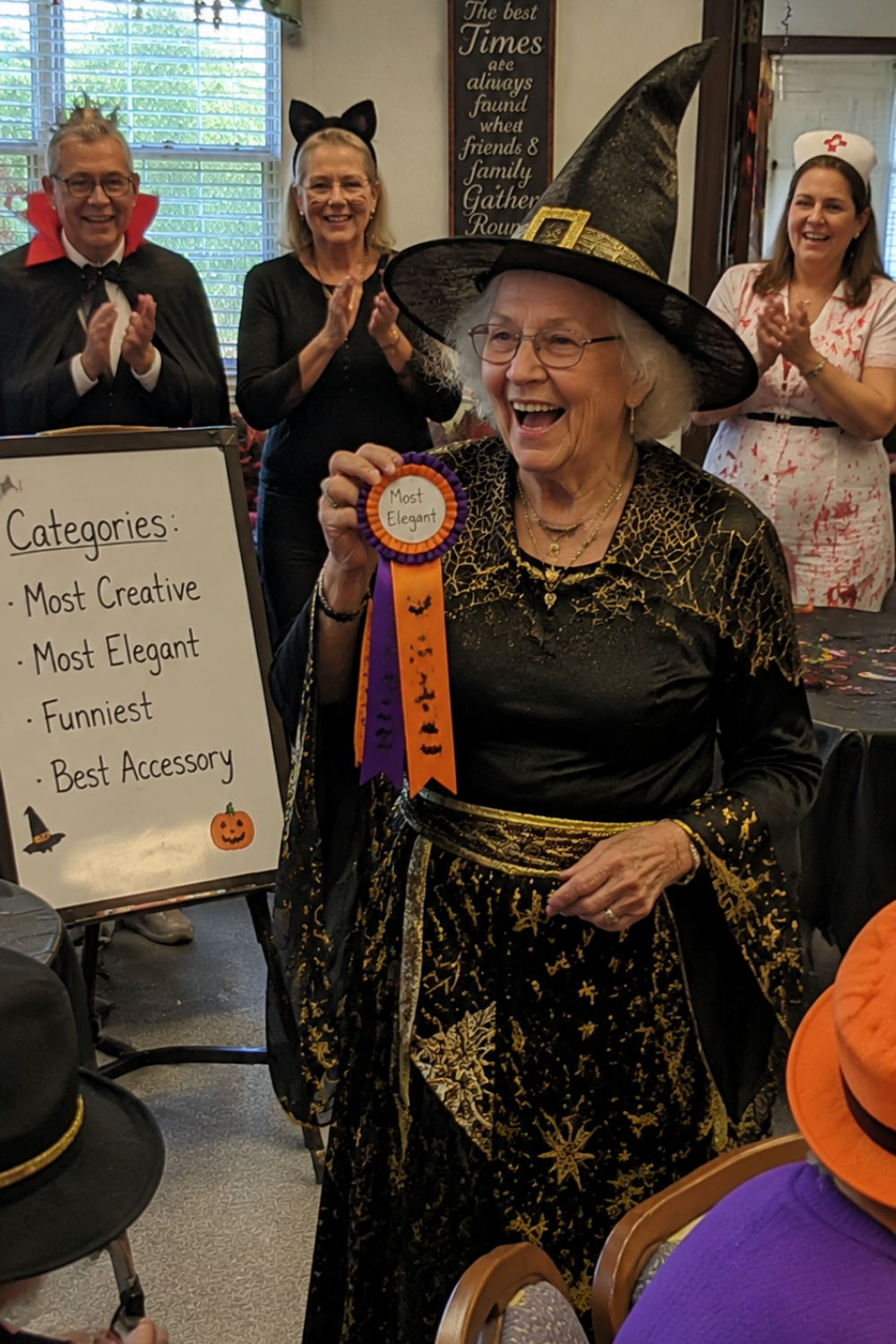
Use multiple categories so there are multiple winners: most creative, most elegant, funniest, best accessory, best staff costume, best twin pair from Thursday.
Multiple categories mean multiple moments of public acknowledgment which is the entire emotional value of a contest in a care setting. Nobody needs to lose at Halloween.
The party follows immediately after the contest results while energy is at its peak.
For a complete party program that flows naturally from the spirit week finale, these Halloween party ideas for assisted living residents have 33 ideas covering crafts, food, games, entertainment, and family activities.
How to Get Residents Involved in Planning Halloween Spirit Week
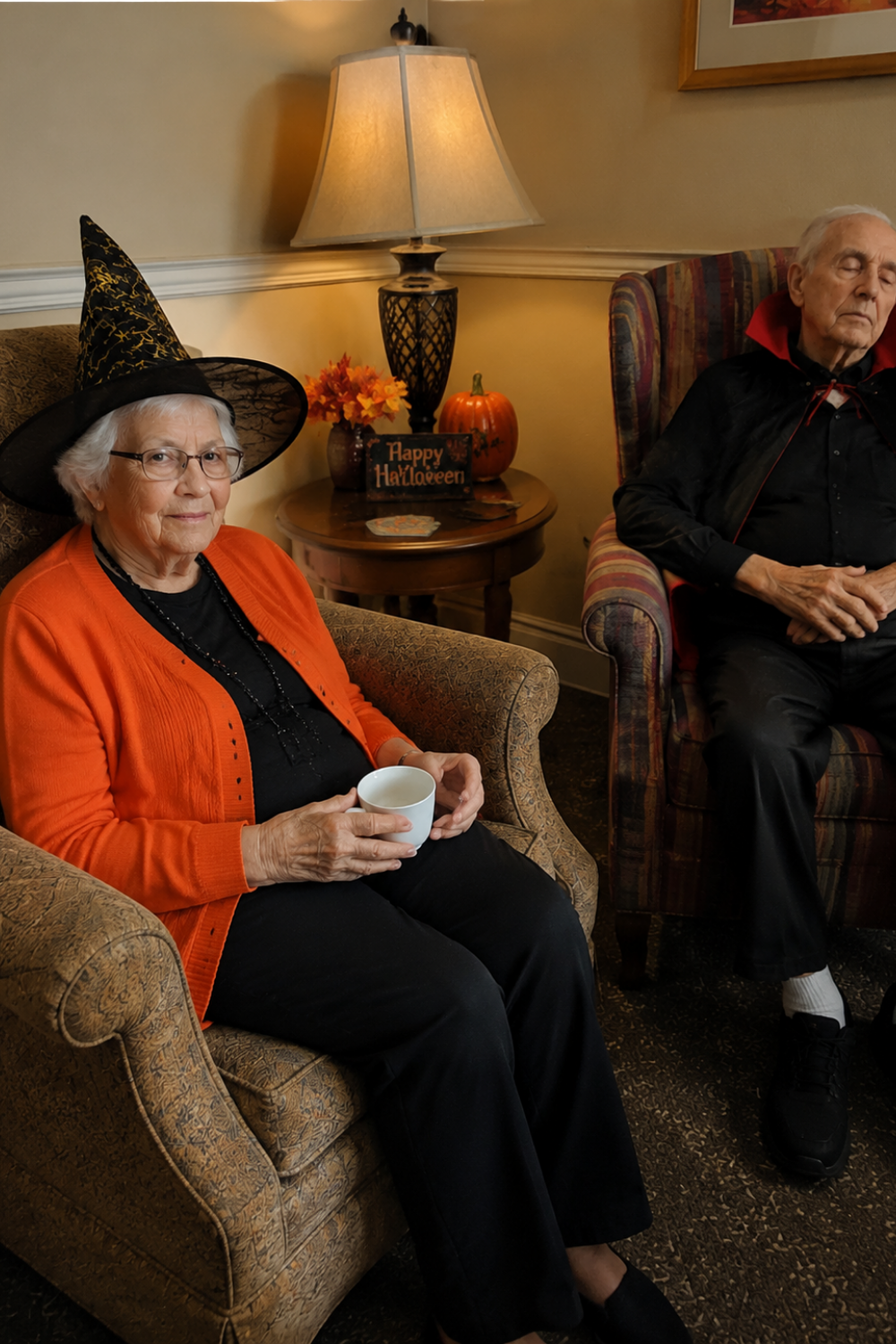
The single best thing you can do to maximize participation in Halloween spirit week for assisted living is to announce it at least two weeks before it begins.
Residents who know it’s coming have time to think about what they’ll wear, mention it to family, and look forward to each themed day.
The Bulletin Board Is Your Most Powerful Tool
Post the full five-day schedule on the main bulletin board as soon as you announce the week. Visual schedules reduce anxiety and increase participation.
Update the board each morning with a countdown: “Today is Crazy Hat Day 3 days until Costume Day!” The board builds anticipation every time anyone walks past it.
Give Residents a Vote
Put two or three theme options to a vote at the previous resident council meeting.
A single vote gives the whole week a democratic quality that increases buy-in from everyone even residents who didn’t get their preferred option. Ownership drives participation more reliably than enthusiasm alone.
Loop in Family Members Early
Send a spirit week note home with families at least ten days before. Tell them which day their loved one might most enjoy their company and what accessories or costume pieces would be welcome gifts to bring.
A family member who shows up Thursday in matching accessories with their parent is one of the most meaningful moments the facility will create all year.
For gift ideas that double as spirit week accessories, these Halloween gift ideas for elderly parents include several perfect options.
Tips for Making Halloween Spirit Week Work for Every Ability Level
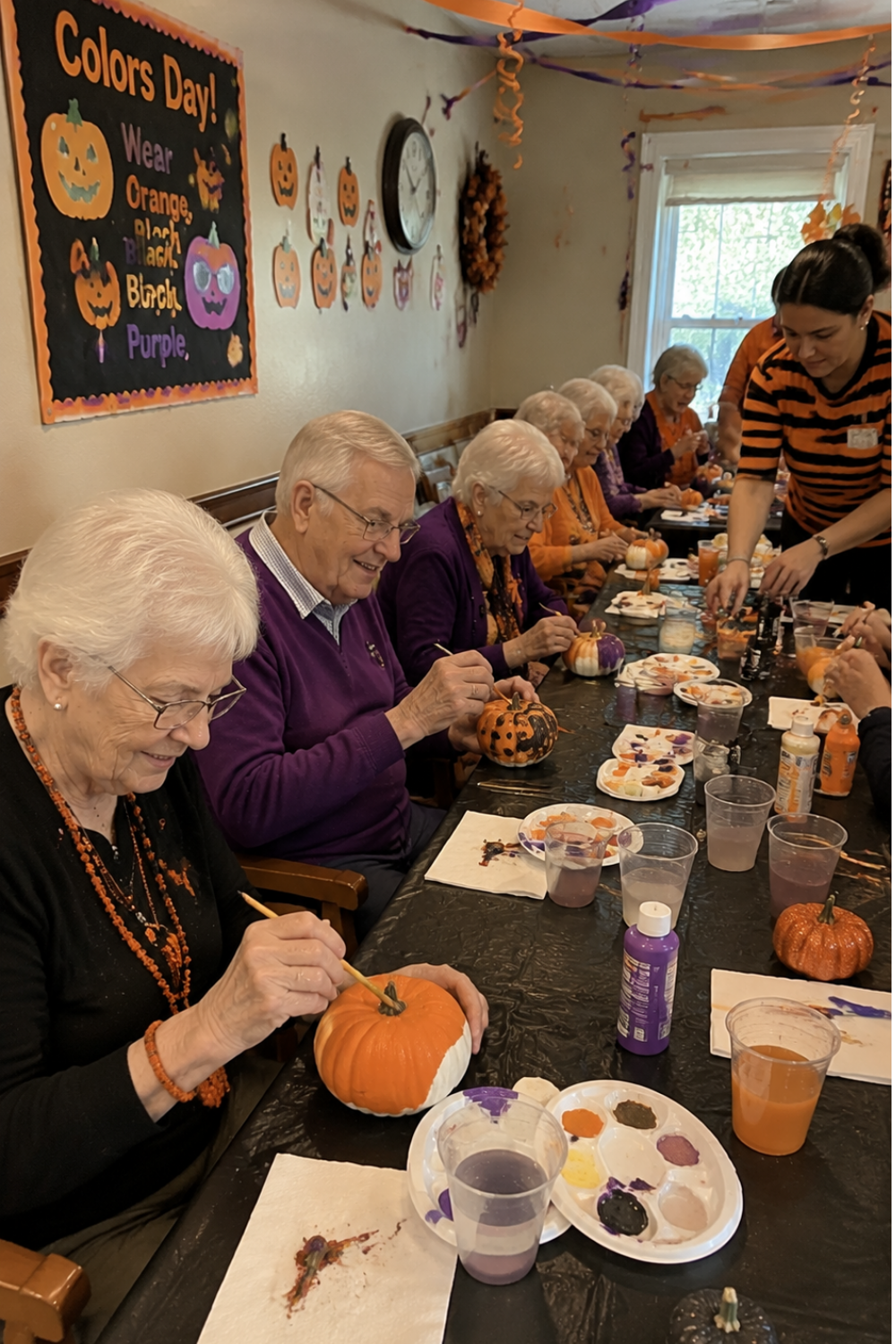
The inclusivity of Halloween spirit week in assisted living is what separates it from school spirit week.
Every design decision has to honor the reality that residents are at very different ability levels and that both the resident with limited mobility and the resident who walks to breakfast independently deserve to feel equally included.
Always Have an Alternative Participation Option
For every themed day, prepare a simple alternative that requires nothing more than accepting a small item: a themed ribbon, a sticker on their shirt, a prop to hold for a photo.
Present it with the same enthusiasm as the full costume it’s not the “easy option,” it’s just a different way to join.
Prepare Staff With Enough Lead Time
Announcing spirit week to staff three days before is too late for most people to organize a costume. Announce at a staff meeting two weeks out.
Send a reminder one week out. Post the daily themes in the staff room.
According to the Activity Director Network, building staff participation incentives a staff costume contest, photos for the facility newsletter drives engagement significantly.
Keep Activities Short and Pressure-Free
Each themed activity should run twenty to thirty minutes maximum. End while energy is still good. A short, high-energy session is better than a long one that loses people halfway through.
“Same time tomorrow for Twin Day!” lands better when today ended on a high note.
Have a Quiet Room Available Throughout
Spirit week creates more stimulation than a regular week more noise, more visitors, more social interaction.
A quiet designated room available throughout each themed day allows residents who feel overstimulated to step away without feeling like they’ve left the celebration.
Offering it without pressure is the right approach. For a calm wind-down activity, these gratitude journal craft night ideas for seniors work beautifully in that quieter space.
Document Everything
Take photos every single day. A spirit week photo album is one of the most valuable outcomes of the week beyond the fun itself.
It gives residents something to look back at, families a window into the week, and next year’s planning a visual recruitment tool.
For year-round seasonal activity inspiration, these October crafts for seniors in nursing homes show how to build a complete October calendar around events like this.
Spirit Week Is the Gift of Something to Look Forward To
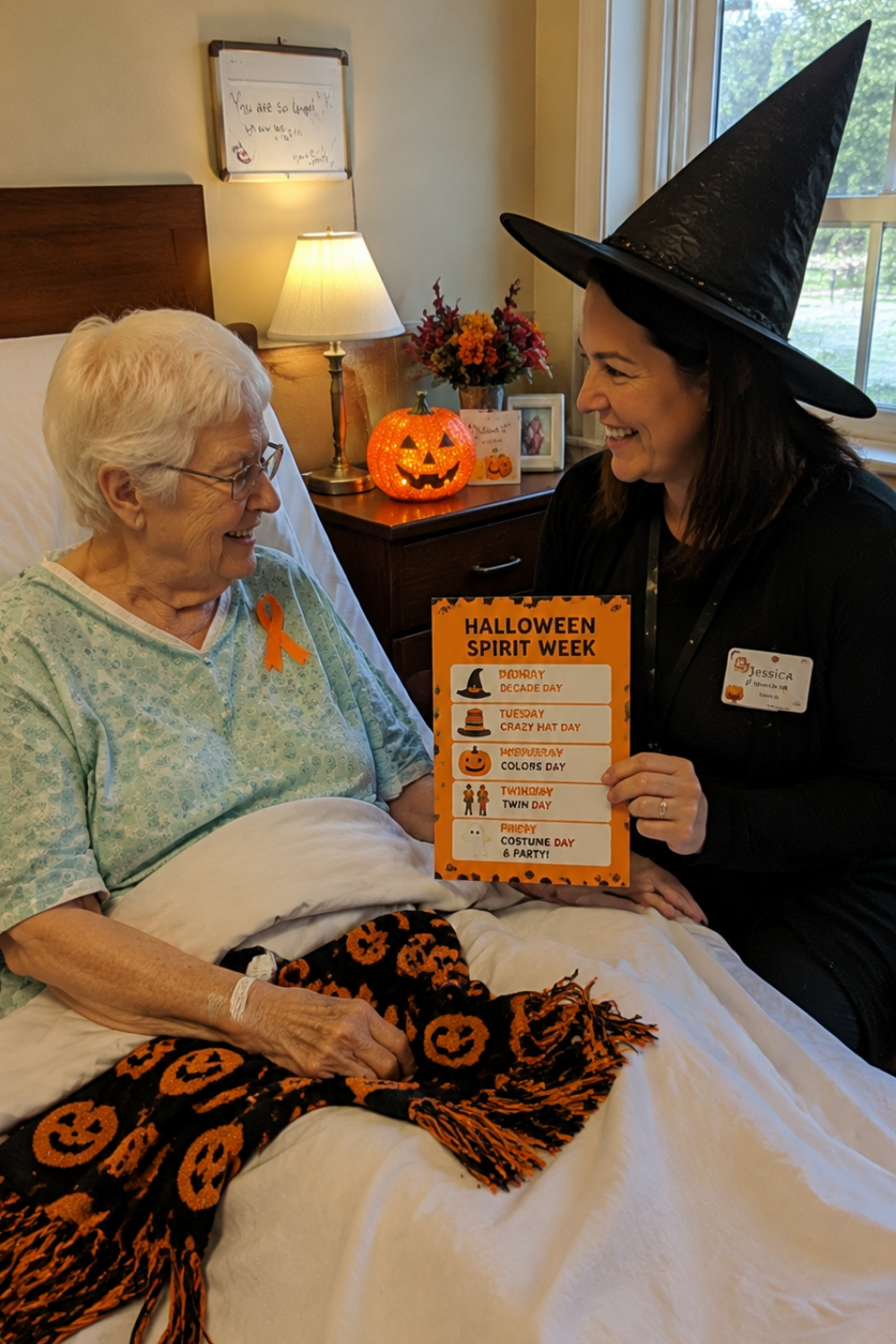
That’s really what Halloween spirit week in assisted living comes down to. Not elaborate costumes or flawless execution.
Something to look forward to, every single morning, for an entire week. In a setting where days can feel similar and the calendar can feel thin, that gift is genuinely significant.
Start small if five days feels like too much. Three themed days — Monday, Wednesday, Friday is still a spirit week.
A partial spirit week that actually happens beats a perfect plan that gets abandoned halfway through. Scale it to what your facility can do and build from there.
For everything surrounding these Halloween spirit week ideas for assisted living the crafts, the games, the decor that makes the whole facility feel festive these posts cover every piece:
Halloween party ideas for assisted living residents — the full Friday party program that closes spirit week.
Halloween decor ideas for assisted living — the safe, resident-approved decor that makes the facility feel like spirit week is actually happening.
Easy senior summer crafts use these year-round to keep the same seasonal activity momentum going.
For faith-based programming, these Bible verse craft night ideas for seniors blend the same gentle seasonal spirit with meaningful faith content.
Frequently Asked Questions
What is spirit week in assisted living?
Spirit week is a themed week where each day has a different dress-up or participation theme that builds excitement across the whole week.
Halloween spirit week ideas for assisted living typically run Monday through Friday, culminating in a costume day and party on Friday.
The concept is borrowed from school homecoming tradition and adapts powerfully to senior care settings.
How do you plan a Halloween spirit week for seniors?
Start with a two-week lead time minimum announce early enough that residents can prepare and staff can organize.
Choose five themes with clear, low-barrier participation options and post the daily schedule visibly. Staff participation is the most critical planning step without it, spirit week rarely lands.
What themed days work best for assisted living residents?
Based on what facilities report, the five highest-participation days are: Favorite Decade Day, Crazy Hat Day, Halloween Colors Day, Twin Day, and Full Costume Day.
Decade Day and Crazy Hat Day consistently produce the most enthusiasm because they tap directly into personal history and physical accessibility respectively.
How do you get residents with limited mobility to participate in spirit week?
Design participation options that require nothing more than accepting a small item a colored ribbon, a sticker, a prop to hold for a photo.
The spirit week bulletin board, shared music, and festive atmosphere are themselves forms of participation for residents whose physical engagement is limited.
What should staff wear during Halloween spirit week in assisted living?
Staff should match the day’s theme as closely as possible and err toward more rather than less.
When staff are visibly enthusiastic and willing to be playful, residents feel safe being playful too.
That emotional permission is worth more than any single activity you plan.