Flower crafts for kids often start with the best intentions.
You set everything up paper, glue, maybe a sample flower you found online. You imagine something sweet and simple.
But a few minutes in, the petals are uneven, glue is everywhere, and your child looks up and asks, “Is this right?”
That moment is familiar to so many parents and teachers.
There’s a quiet pressure that shows up during crafts. We want it to look nice. Sometimes we hope kids will follow the example.
Before long, worries creep in about the mess, the time, and whether the result will feel “worth it.”
Without meaning to, we start guiding a little too much fixing, adjusting, showing them how it should look.
Table of Contents
- 1 What Adults Often Worry About With Crafts (And Why It’s Normal)
- 1.1 Why These Worries Are Completely Normal
- 1.2 What Kids Are Really Practicing During Flower Crafts
- 1.3 The 6 Simple Flower Crafts For Kids
- 1.4 1. Sensory Flower Collage
- 1.5 2. Loose Part Flower Creations
- 1.6 3. Story‑Based Flower Characters
- 1.7 4. Quiet Flower Painting (Slow, No‑Rush Art)
- 1.8 5. Nature Inspired Flower Building
- 1.9 6. One Color Flower Challenge
- 1.10 A Gentle Reminder for Adults
- 1.11 How to Talk to Kids About Their Flower Crafts
- 1.12 What to Do With Flower Crafts After They’re Done
- 1.13 When Flower Crafts Are Especially Helpful
- 1.14 Letting Creativity Bloom Naturally
- 1.15 Related
Why Flower Crafts Don’t Need to Be Perfect
But here’s the gentle truth: flower crafts for kids were never meant to be perfect.
They’re not about making something pretty enough to keep forever. They’re about small hands exploring materials. About choosing where a petal goes. About feeling proud of an idea even if it looks nothing like the example.
When we let go of perfection, flower crafts become something deeper. They become a space where kids practice confidence, creativity, and trust in their own choices, all through play.
In this post, you’ll find simple flower crafts that focus on the process, not the result. Each one is designed to ease adult worries while giving children room to explore, imagine, and create without pressure.
No perfect petals required.
What Adults Often Worry About With Crafts (And Why It’s Normal)
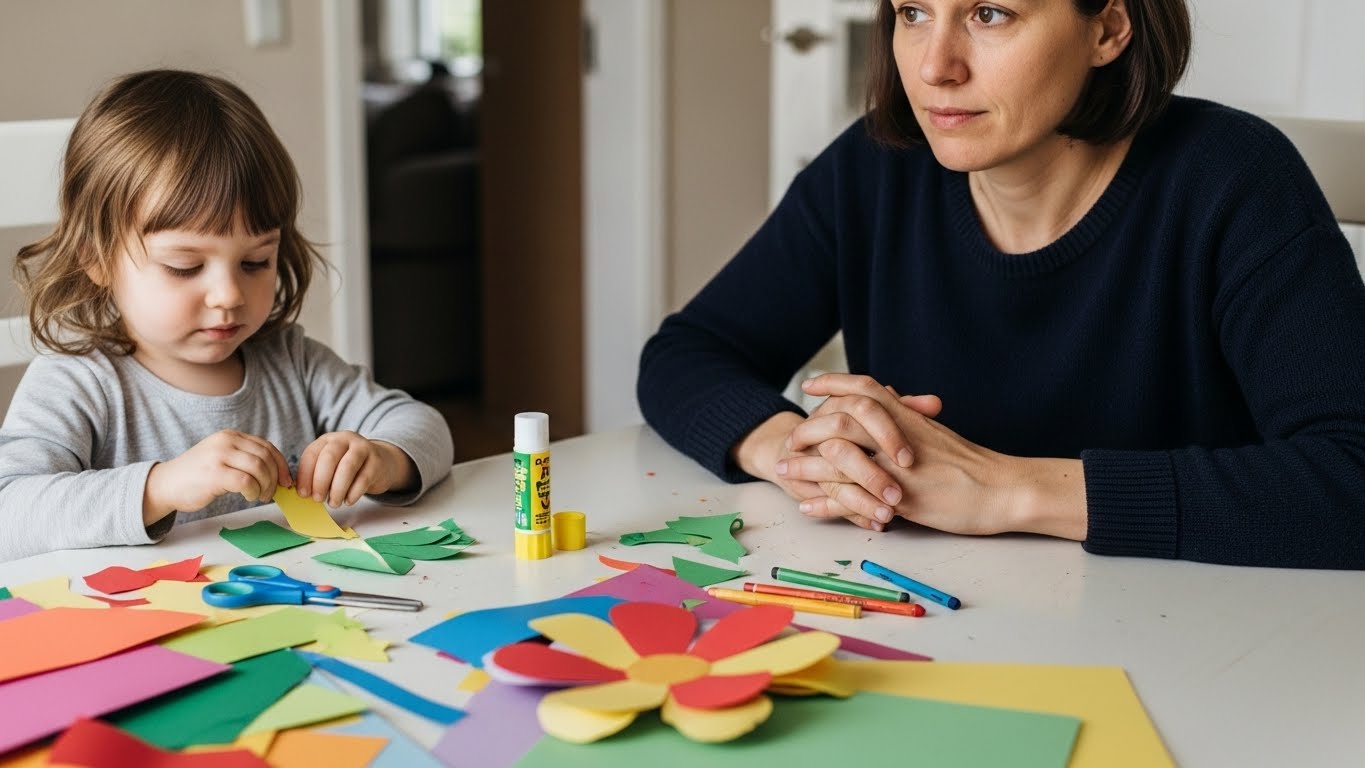
If we’re honest, a lot of craft stress doesn’t come from kids it comes from us.
You lay out the supplies with good intentions. Maybe you even picture how the finished flower might look. And then, almost right away, the worries start creeping in.
It looks messy. Glue is everywhere. Petals are uneven. The table needs a wipe again.
They’re not following the instructions. You showed them how to make the flower, but now it has six stems, no center, and colors that don’t “match.”
They lost interest already. They worked for five minutes, then wandered off. You’re left holding a half-finished flower and wondering if the activity failed.
And then there’s the quiet question that sits underneath it all: How much help should I give?
Should you step in? Fix it? Encourage them to keep going? Or let it be?
Why These Worries Are Completely Normal
Here’s the quiet truth most parents and teachers don’t hear enough: all of this is normal. More than that it’s healthy.
Mess often means engagement. When children feel free to explore, they use more materials, make bigger movements, and take more risks. A tidy craft usually means an adult did most of the work.
Not following instructions doesn’t mean they aren’t listening. It means they’re thinking. They’re testing ideas, making choices, and learning that they’re allowed to decide how something turns out.
Short attention spans don’t cancel out the value of the activity. Even a few focused minutes can build confidence, fine motor skills, and curiosity. Creativity doesn’t always show up as long concentration sometimes it shows up as a quick spark.
And not knowing how much help to give? That’s a sign you care. The balance is hard. But most of the time, less fixing and more observing gives children the message they need most: I trust you.
What Kids Are Really Practicing During Flower Crafts
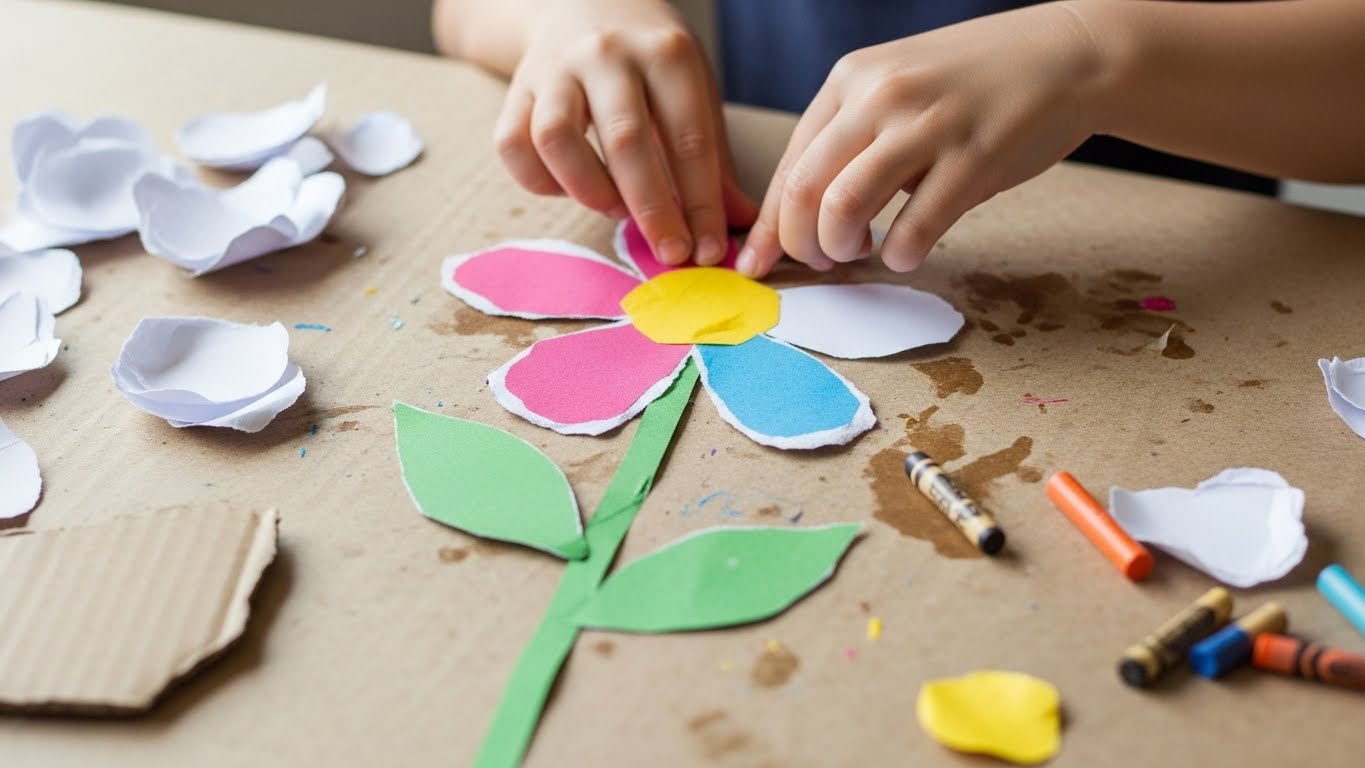
When kids sit down to make flower crafts, it can look very simple on the surface. Paper, glue, maybe some scraps. To adults, it might feel like “just an activity.” But underneath that quiet moment, a lot is happening.
Every small choice matters. When a child picks a color for their flower, decides how big the petals should be, or chooses where to place the stem, they are practicing decision making.
There’s no worksheet telling them the right answer. They are learning to listen to themselves and trust what feels right.
Their hands are working too, but without pressure. Cutting, tearing, layering, squeezing glue, pressing pieces down all of this builds fine motor control in a gentle way.
There’s no rush to stay inside lines or make it look a certain way. That freedom helps skills grow without stress.
Flower crafts also support emotional regulation. Repeating simple actions, feeling different textures, and arranging pieces can be calming.
For some kids, it’s how they slow down after a busy day. For others, it’s how they release energy in a safe, focused way. The craft becomes a quiet space to settle.
Most importantly, kids are practicing confidence through ownership. When the flower is theirs not a copy of an example they feel proud. Even if it looks uneven or unfinished, it belongs to them.
That sense of “I made this” is powerful, especially for children who are unsure or easily frustrated. These same confidence‑building ideas also show up in our farm animal crafts for kids that focus on creativity beyond the tutorial, where children explore at their own pace without pressure to copy an example
When adults respect the process instead of rushing the result, confidence grows naturally. Not because we tell kids they did it “right,” but because they learn they are capable of creating something all on their own.
The 6 Simple Flower Crafts For Kids
These flower crafts for kids are simple on purpose. They aren’t about producing something frame worthy.
They’re about giving children space to explore, decide, and create without pressure while also easing the quiet worries adults often carry.
Before you begin, it can be helpful to gather a few essential tools we cover many must‑have supplies and how they support creative making in our 10 must‑have crafts tools for DIY guide.
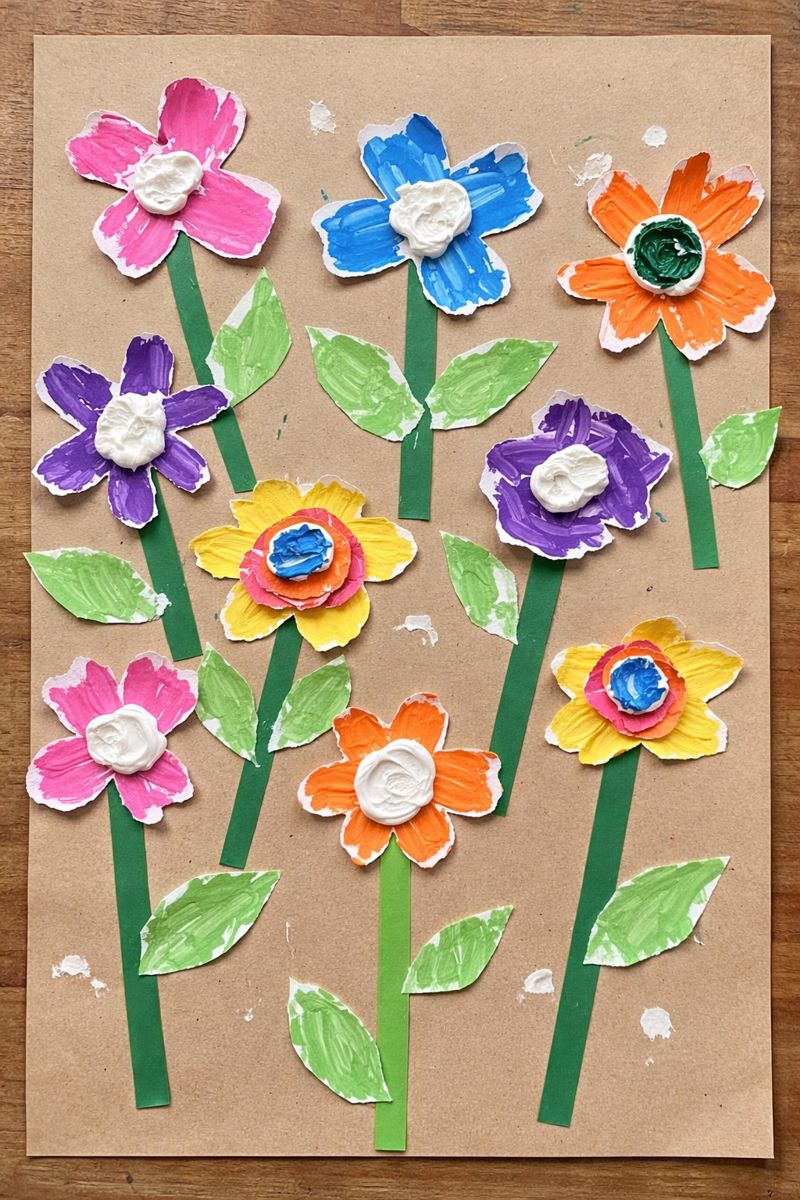
1. Sensory Flower Collage
What it is
This flower craft is built around how things feel, not how they look. Children create flowers using soft, rough, fluffy, or smooth materials instead of trying to draw perfect petals. The base can be simple cardboard or paper, and everything else is open for exploration.
This kind of craft works beautifully across ages because the entry point is so low. There’s no “right way” to begin just hands and materials.
Materials
Tissue paper, fabric scraps, cotton balls, felt, paper towels, cardboard, glue
Why it encourages creativity
Instead of asking, “Does this look right?” children are asking, “What feels good here?” That small shift matters.
When kids choose textures, they’re making real decisions without the pressure of drawing skills or fine detail. A flower might end up thick, bumpy, layered, or uneven and that’s exactly the point.
This is especially powerful for hesitant kids who freeze when they’re asked to draw or copy an example. Texture gives them a way in. They can tear, press, stack, and explore without worrying about lines or proportions.
Gentle age notes
-
Toddlers often focus on touching, squeezing, and sticking. The “flower” may not look like one at all and that’s developmentally perfect.
-
Preschoolers start making intentional choices, like grouping similar textures or placing pieces with purpose.
-
Early elementary kids may layer thoughtfully or explain why certain textures belong together, blending sensory play with storytelling.
How it eases adult worries
Many adults worry when a craft doesn’t look like much halfway through. Sensory collages remind us that the value isn’t visual it’s experiential.
There is no “wrong” flower here. No backwards petal. No messy mistake. Just hands moving, choices being made, and confidence quietly building.
Why parents and teachers love it
You don’t need to correct anything. If glue spreads or pieces overlap, that’s part of the process. The child is engaged, focused, and successful even if the result looks nothing like a traditional flower.
2. Loose Part Flower Creations
What it is
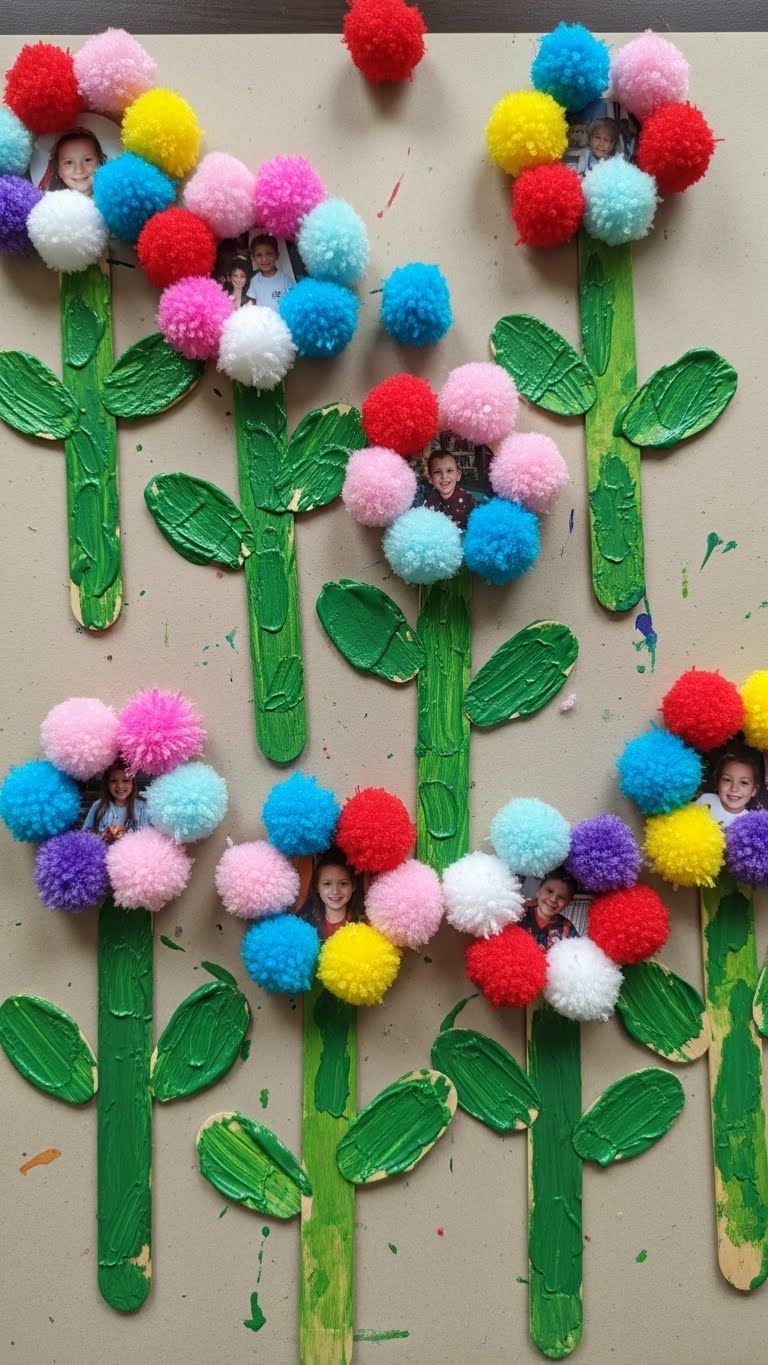
Loose‑part flower crafts for kids use small, movable items that children can arrange and rearrange freely. Nothing is glued down at first. The flower is allowed to change and so is the child’s thinking.
This craft is especially helpful for kids who don’t like committing too quickly or who get frustrated when something feels “stuck.”
Materials
Buttons, yarn pieces, paper bits, beads, bottle caps, cardboard bases (optional)
Why it encourages creativity
This craft gives children permission to change their minds. A button center might become a petal. Yarn might move from stem to sun.
Kids try ideas, undo them, and try again which is real creative thinking, not indecision. They’re learning that creativity isn’t about getting it right the first time. It’s about exploring possibilities.
There’s no finish line here. Some children will work quietly for a long time, adjusting tiny details. Others will create quickly, knock it apart, and start over. Both are learning flexibility, problem‑solving, and trust in their own ideas.
Gentle age notes
-
Toddlers often enjoy filling and emptying spaces, moving pieces without forming a clear design this builds early spatial awareness.
-
Preschoolers begin to intentionally place parts and name what they’re making, even if it changes every few minutes.
-
Early elementary kids may plan layouts, test balance, or explain why they changed something, showing growing reasoning skills.
How it eases adult worries
Loose‑part crafts often look messy especially to adults. Pieces spread out. Designs don’t stay still. But mess, in this case, is a sign of thinking.
If a child keeps changing their flower, they’re not unfocused. They’re experimenting.
Adult reassurance
You don’t need to rush them to glue things down or “finish.” The value is in the arranging, not the keeping. When a child feels free to explore without permanence, creativity grows without fear.
3. Story‑Based Flower Characters
What it is
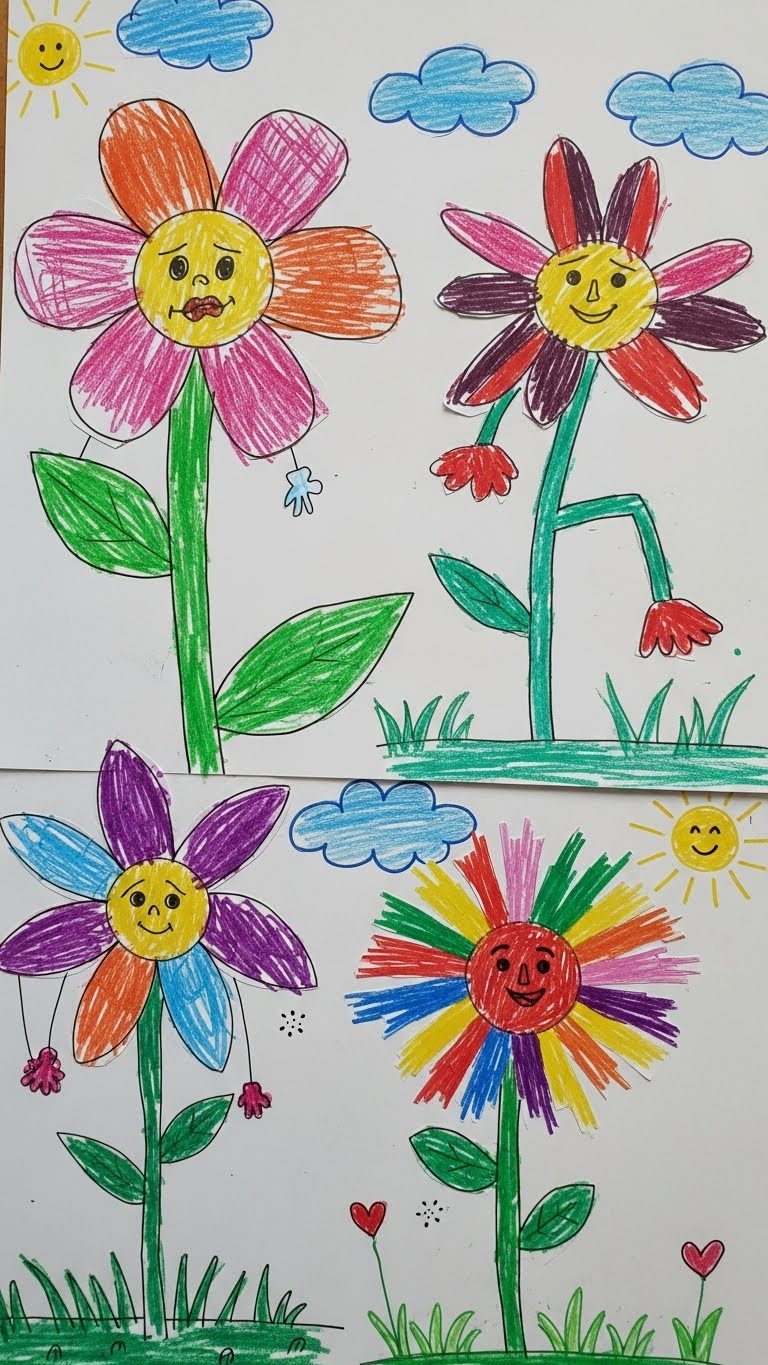
Children create a flower and then give it a story. It might have a name, a favorite place to grow, or a reason it looks the way it does.
Materials
Paper, crayons or markers, collage materials (optional)
Why it encourages creativity
When a flower becomes a character, the pressure to look realistic disappears.
A flower with uneven petals might be “shy.” A tall, wobbly stem might mean it’s still growing. Kids begin explaining their choices and explanation builds confidence.
How it eases adult worries
Instead of asking, “What is it?” adults can ask, “Tell me about your flower.”
This shifts attention away from neatness and toward meaning. Children feel seen for their ideas, not judged on appearance.
Age‑based reassurance
Some children will tell long stories. Others will offer one sentence and move on. Both are valid forms of expression.
4. Quiet Flower Painting (Slow, No‑Rush Art)
What it is
This is a calm, low‑energy flower craft meant for slow moments. Painting is gentle, with no time pressure and no expectation to finish.
Materials
Watercolors or diluted paint, thick paper, paintbrushes, water
Why it encourages creativity
Slow painting helps children listen to themselves. They notice color mixing, brush movement, and space.
This is especially helpful for kids who feel overwhelmed by fast crafts or busy instructions.
How it eases adult worries
There’s no “keep up” expectation. No step to rush through. If a child paints one petal and stops, the activity has still done its job.
Age‑based reassurance
Some kids paint quietly for long stretches. Others take a few minutes and move on. Attention span does not equal effort.
5. Nature Inspired Flower Building
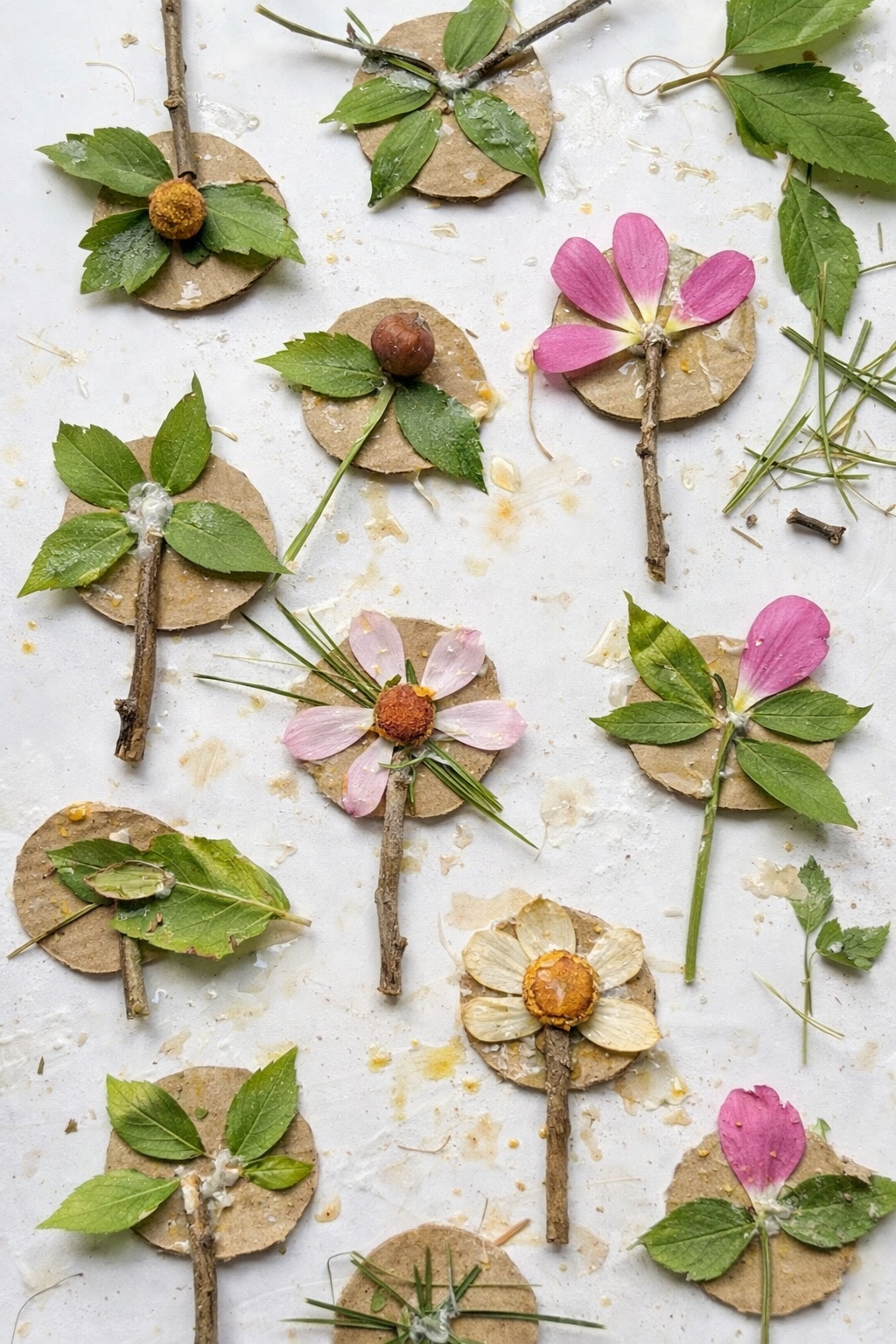
What it is
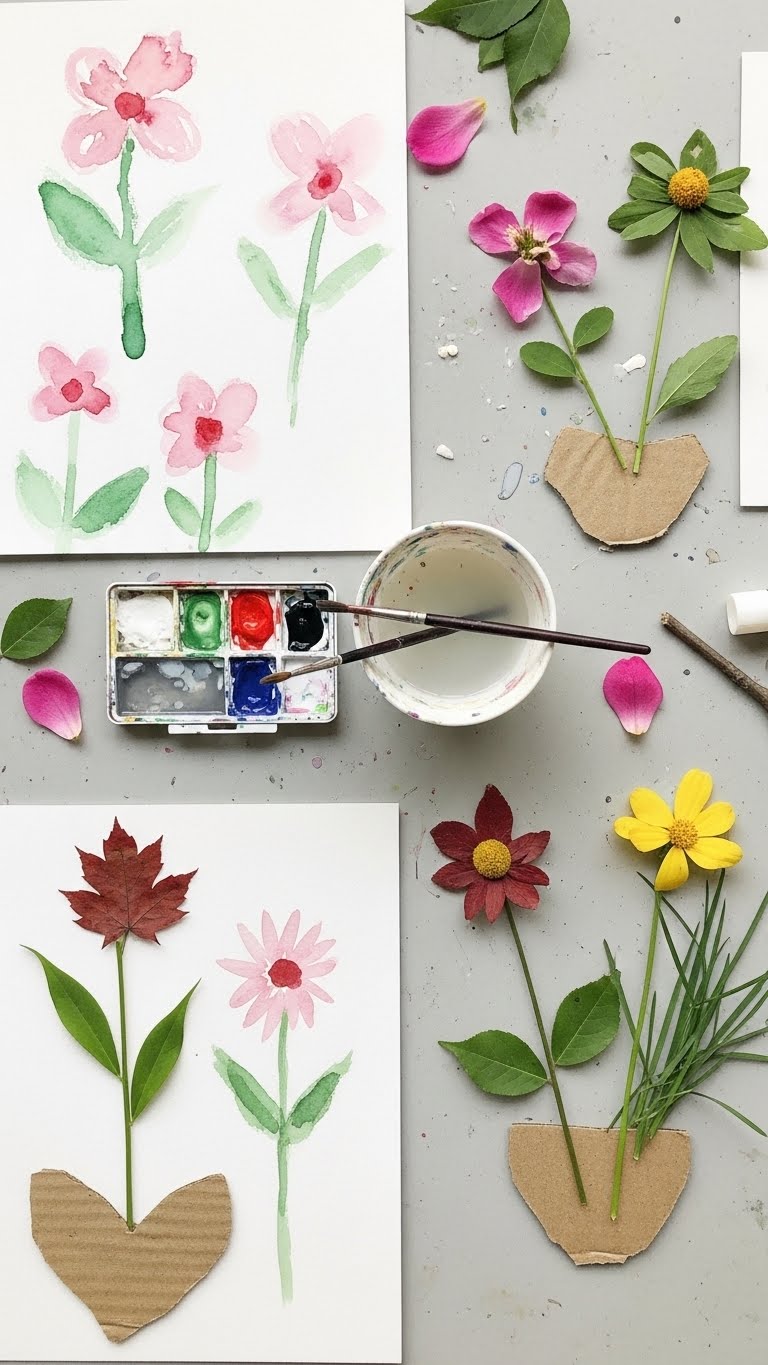
This flower craft uses found or natural materials leaves, twigs, petals, grass combined with paper or cardboard bases. Flowers don’t need to look realistic. They just need to feel connected to the materials chosen.
Materials
Leaves, small sticks, grass, petals, cardboard, glue (optional)
Why it encourages creativity
Nature doesn’t come with instructions, and neither does this craft. Children decide what becomes a petal, what becomes a stem, and what doesn’t belong at all.
This builds creative confidence because the child is working with materials, not against them. A leaf might be upside down. A stick might feel too long. Those choices matter and kids learn to trust their judgment.
How it eases adult worries
Adults sometimes worry when crafts feel “unfinished” or fragile. Nature‑based flowers remind us that temporary creations still have meaning.
If pieces fall off or designs change, that’s not failure that’s part of the experience.
Gentle age note
-
Toddlers: Focus on touching and placing materials without glue.
-
Preschoolers: Begin combining pieces intentionally.
-
Early elementary: Enjoy designing specific flower “types” or scenes.
6. One Color Flower Challenge
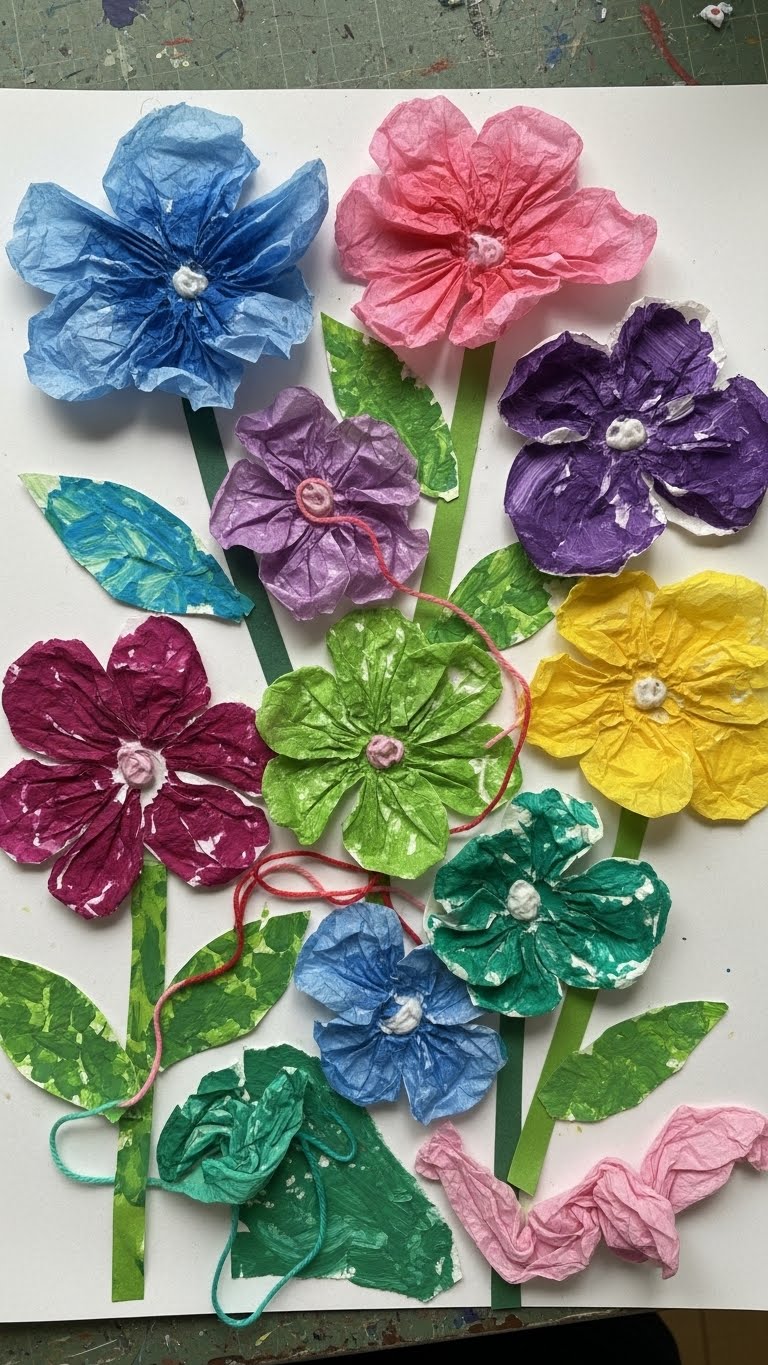
What it is
Children create flowers using only one color but many shades, textures, and materials within that color. The limitation is intentional and gentle, not restrictive.
Materials
Paper scraps, fabric, paint, yarn, tissue paper all in one color family
Why it encourages creativity
Limiting color actually frees the imagination. Kids stop worrying about which color to pick and start noticing differences in texture, shade, and shape.
This builds deeper creative thinking. Children learn that creativity isn’t about more it’s about noticing what’s already there.
How it eases adult worries
Adults often worry when kids choose “too many” colors or clash visually. This challenge removes that tension without controlling the child’s process.
The result may still look abstract or uneven but it will feel intentional.
Gentle age note
-
Preschoolers: Focus on simple grouping and layering.
-
Early elementary: Enjoy exploring shade differences and detail.
A Gentle Reminder for Adults
These flower crafts aren’t meant to impress, last forever, or look the same. They’re meant to give children space to try, pause, change their minds, and feel capable without correction.
When adults step back just a little, kids step forward on their own.
How to Talk to Kids About Their Flower Crafts
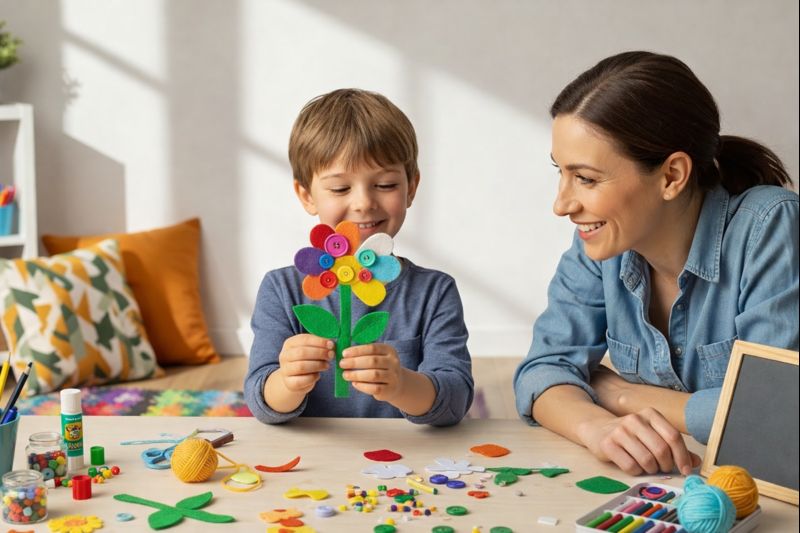
The words adults use during crafts matter more than we realize. A few small phrases can either build confidence or quietly shut it down.
When a child shows you their flower, they’re not really asking if it’s “right.” They’re asking if they are safe to create.
What helps to say:
-
“Tell me about this part.”
-
“How did you choose these colors?”
-
“What’s your flower called?”
These questions show curiosity, not judgment. They invite children to explain their thinking, which builds pride and confidence.
What to gently avoid:
-
“Flowers don’t look like that.”
-
“Let me fix it.”
-
“Here, do it like this.”
Even said kindly, these phrases can make kids doubt themselves. They learn that their ideas need approval or correction.
Why this matters:
Language shapes confidence. When adults stay curious instead of corrective, kids learn that their ideas are worth sharing. The goal isn’t to teach art it’s to help children trust their own choices.
What to Do With Flower Crafts After They’re Done
One of the biggest pressures adults feel is, “What am I supposed to do with all this?”
The answer is simpler than we think.
Not every craft needs to be kept forever to be meaningful.
Gentle options:
-
Display the flower for a short time, then let it go
-
Use it in pretend play (a flower shop, a garden, a gift)
-
Turn it into a storytelling prompt: “Who grew this flower?”
-
Let the child decide what happens next
When kids choose what happens to their work, they learn that meaning doesn’t depend on permanence. The value was in the making not the storing.
And for any kids’ creations you do want to keep longer, check out our best sealant for crafts tips to help them last and stay vibrant.
When Flower Crafts Are Especially Helpful
Flower crafts aren’t just “something to do.” They can be quiet emotional tools when used at the right moments.
They work especially well during:
-
Transition times (after school, before dinner, between activities)
-
Quiet mornings or slow afternoons
-
Confidence‑building moments for hesitant or perfection‑prone kids
-
Classroom settings that need calming, low‑pressure activities
Because flower crafts are gentle and open‑ended, they meet children where they are without demanding energy, speed, or perfection.
Letting Creativity Bloom Naturally
Flower crafts for kids may look simple, but they hold quiet power. In these small moments, children practice choice, confidence, and self‑trust.
When we stop rushing the result, creativity has room to grow. When kids feel safe and unjudged, they take risks. They explore. They bloom in their own way.
Sometimes the most meaningful growth happens in glue‑sticky hands and uneven petals not polished final products.