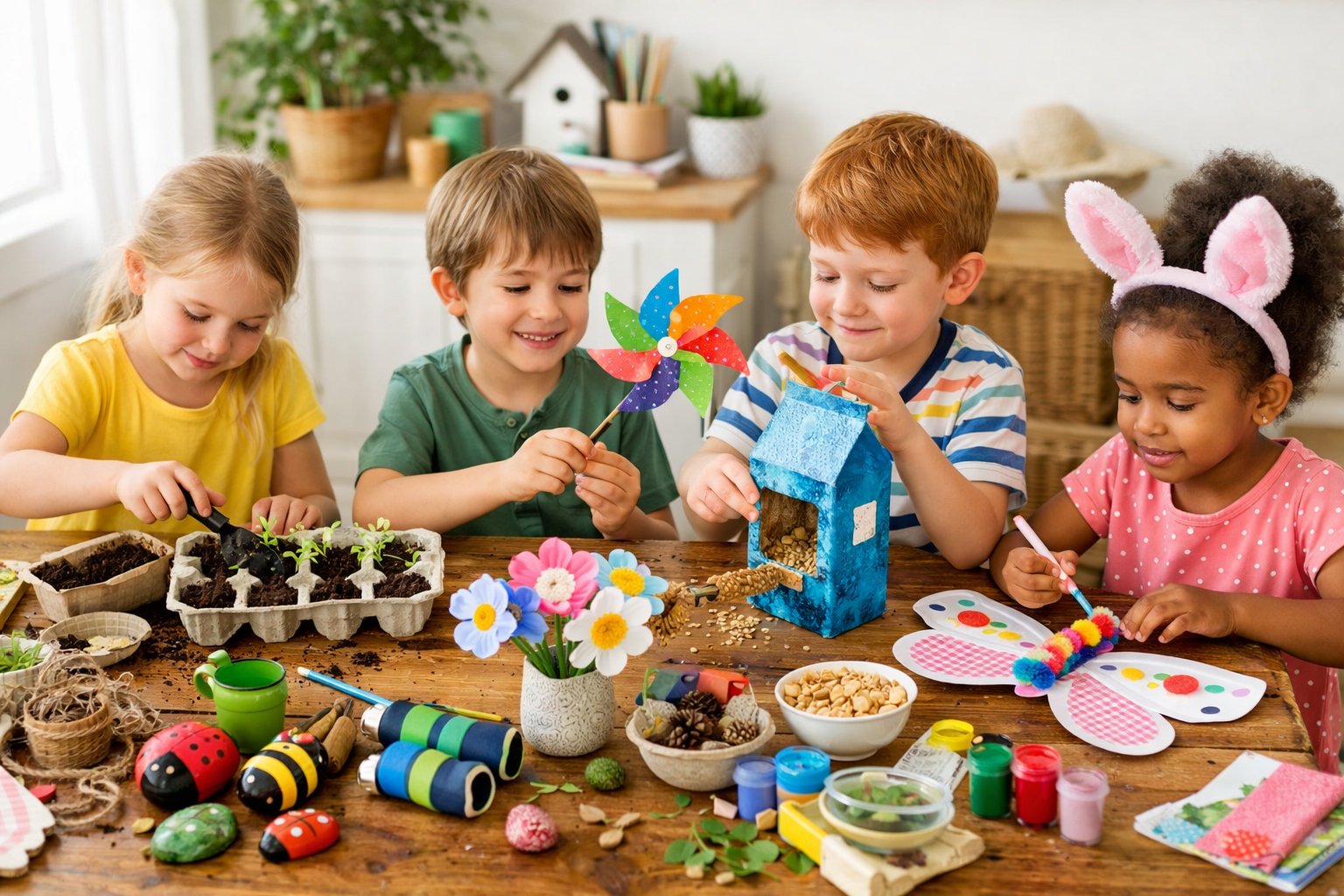
Looking for simple activities that teach while entertaining? Try these 10 easy spring crafts for kids (fun and educational) for hands-on fun.
Spring seems to me like the season when kids’ energy seems unstoppable, yunno sunlight streaming in, flowers blooming, and curiosity at an all-time high. Finding activities that are both fun and educational can feel like a challenge, especially for parents and caregivers juggling busy schedules.
That’s where easy spring crafts for kids come in: hands-on projects that are not only entertaining but also packed with opportunities for learning.
These educational spring activities go beyond keeping little hands busy, they introduce kids to basic science concepts, early math skills, fine motor development, and even emotional regulation. Each craft encourages creativity while helping children explore the world around them in meaningful ways.
In this guide, you’ll discover 10 simple yet impactful spring crafts for kids. Every project is easy to set up, budget-friendly, and designed to maximize learning through play.
To add more spring-inspired ideas, check out 6 Simple Flower Crafts for Kids That Encourage Creativity Over Perfection, perfect for hands-on learning with flowers and colors.
Table of Contents
- 1 Why Spring Crafts Are Perfect for Kids
- 2 Easy Spring Crafts for Kids
- 2.1 Seedling Starters in Egg Cartons
- 2.2 2. Rainbow Nature Collages
- 2.3 3. DIY Weather Station
- 2.4 4. Symmetry Butterflies
- 2.5 5. Pollinator Garden Craft
- 2.6 6. Counting Flower Petals
- 2.7 7. Sun Catchers with Leaves & Flowers
- 2.8 8. Animal Footprint Painting
- 2.9 9. Wind Spinners
- 2.10 10. Recycled Bird Feeders
- 3 How to Make Craft Time More Educational
- 4 Safety and Preparation Tips
- 5 Conclusion:
Why Spring Crafts Are Perfect for Kids
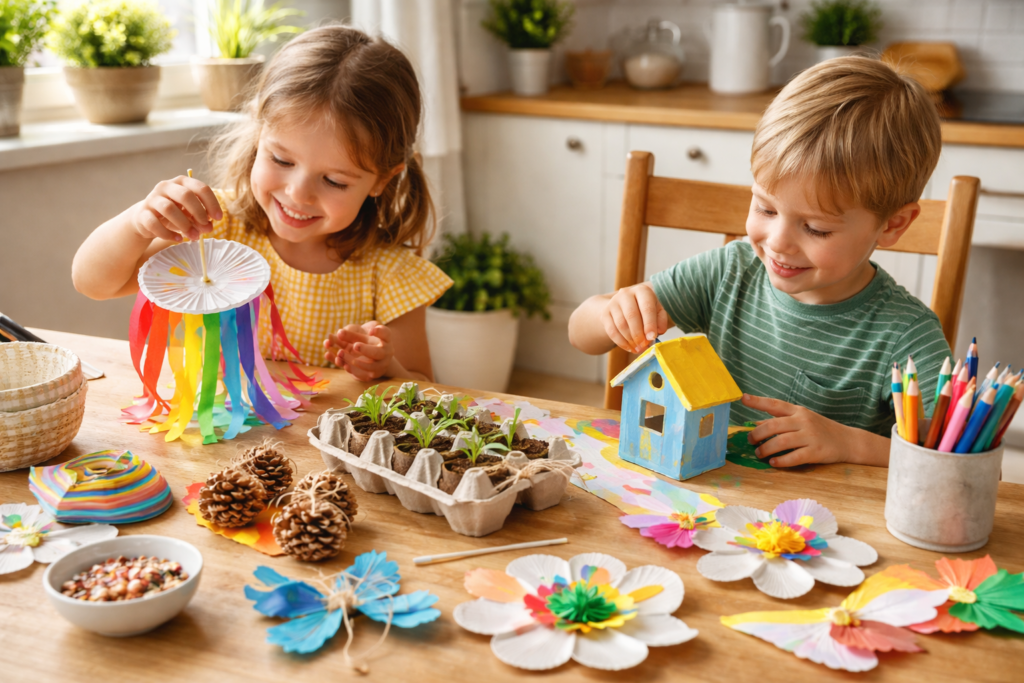
Spring is the ideal season for hands-on learning and educational spring activities. The natural world comes alive, offering a built-in classroom where children can explore plants, animals, weather patterns, and the cycles of nature.
By adding easy spring crafts for kids, parents and educators can turn these seasonal lessons into fun, interactive projects that spark curiosity and encourage exploration.
-
Seasonal Learning Opportunities
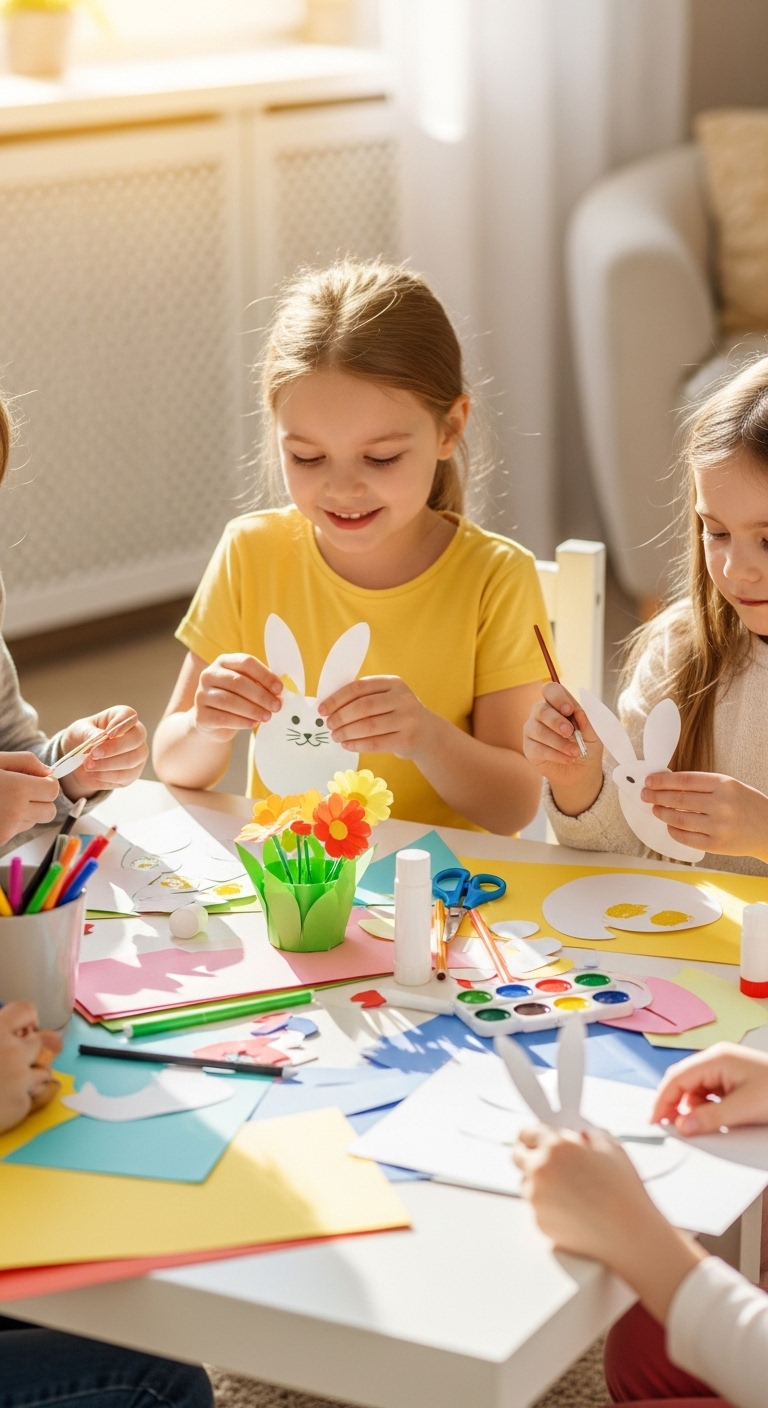
Spring provides countless opportunities to teach kids about the environment. Crafts like planting seeds in egg cartons, creating leaf collages, or making paper butterflies introduce children to biology, ecology, and the rhythm of the seasons.
These projects transform abstract concepts, like growth cycles or pollination, into tangible, hands-on learning experiences, helping kids understand the natural world while keeping them actively engaged.
-
Cognitive Development
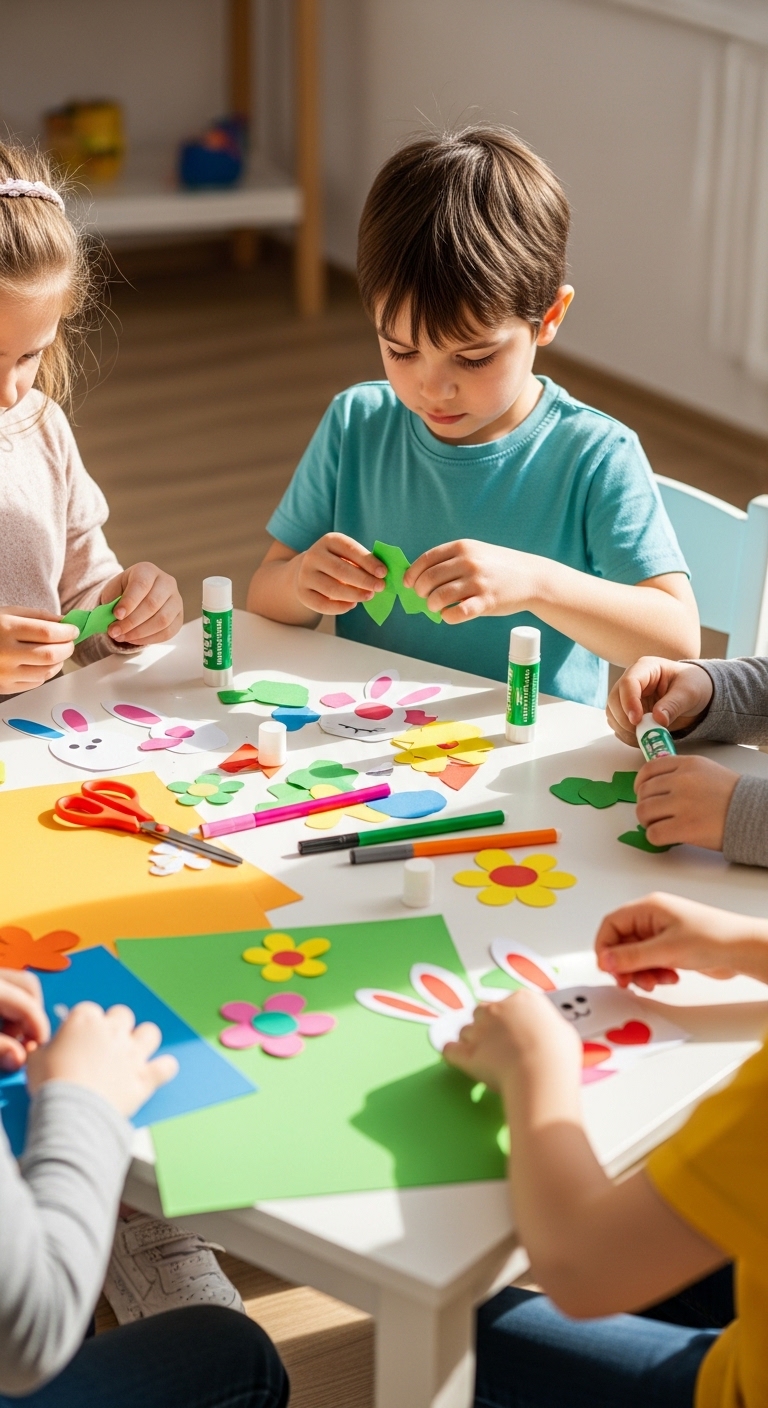
Crafting isn’t just about coloring or cutting shapes, it’s a powerful way to nurture problem-solving, planning, sequencing, and concentration.
Even simple spring STEM crafts for children, such as building a miniature weather station or counting flower petals, help develop early math and logic skills.
When kids follow step-by-step instructions or figure out how to assemble materials, they are strengthening critical thinking and executive function in a playful, stress-free way.
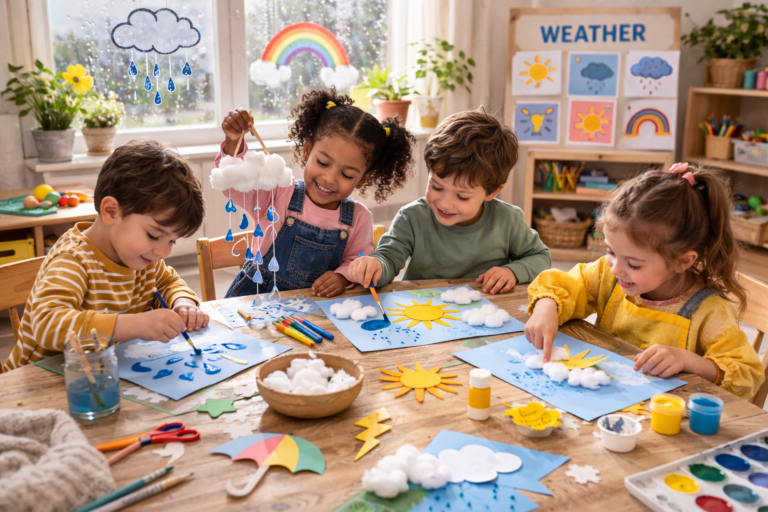
Spring is also the perfect time to explore seasons, and Weather Crafts for Kids That Turn Curiosity Into Gentle Creativity adds an educational twist to your craft time
-
Emotional & Social Skills
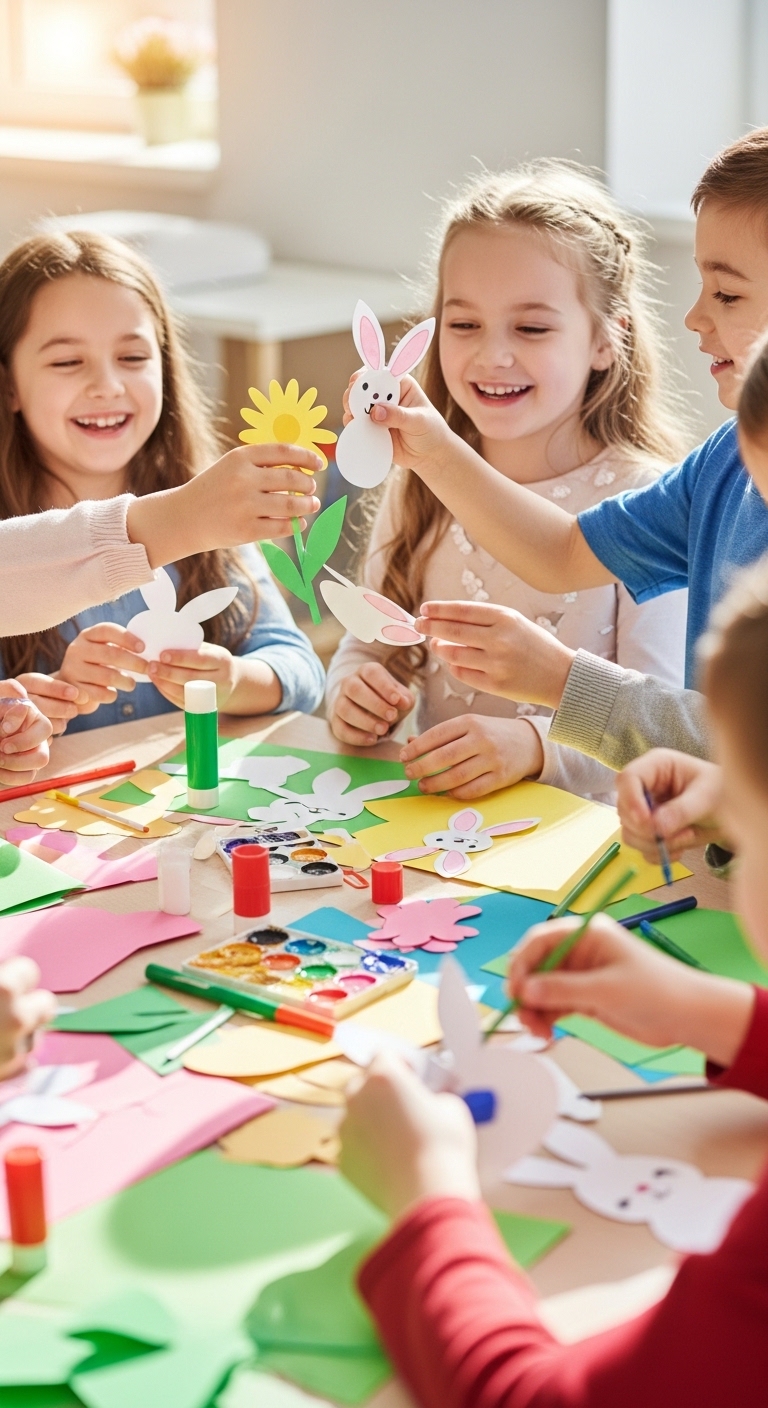
Spring crafts also provide valuable lessons in teamwork, patience, and pride in accomplishment. Whether children are working side by side on a group collage, waiting for paint to dry, or proudly showing off their completed butterfly, they are learning emotional regulation and social cooperation.
These experiences build confidence and resilience, helping children see mistakes as part of the learning process and teaching them the joy of shared creativity.
By choosing easy spring crafts for kids that combine learning with play, parents and teachers can create meaningful, memorable experiences that nurture both the mind and the heart.
“For more ideas that help kids practice friendship and cooperation while crafting, see our post on Friendship-Themed Spring Preschool Crafts For Kids
Easy Spring Crafts for Kids
-
Seedling Starters in Egg Cartons
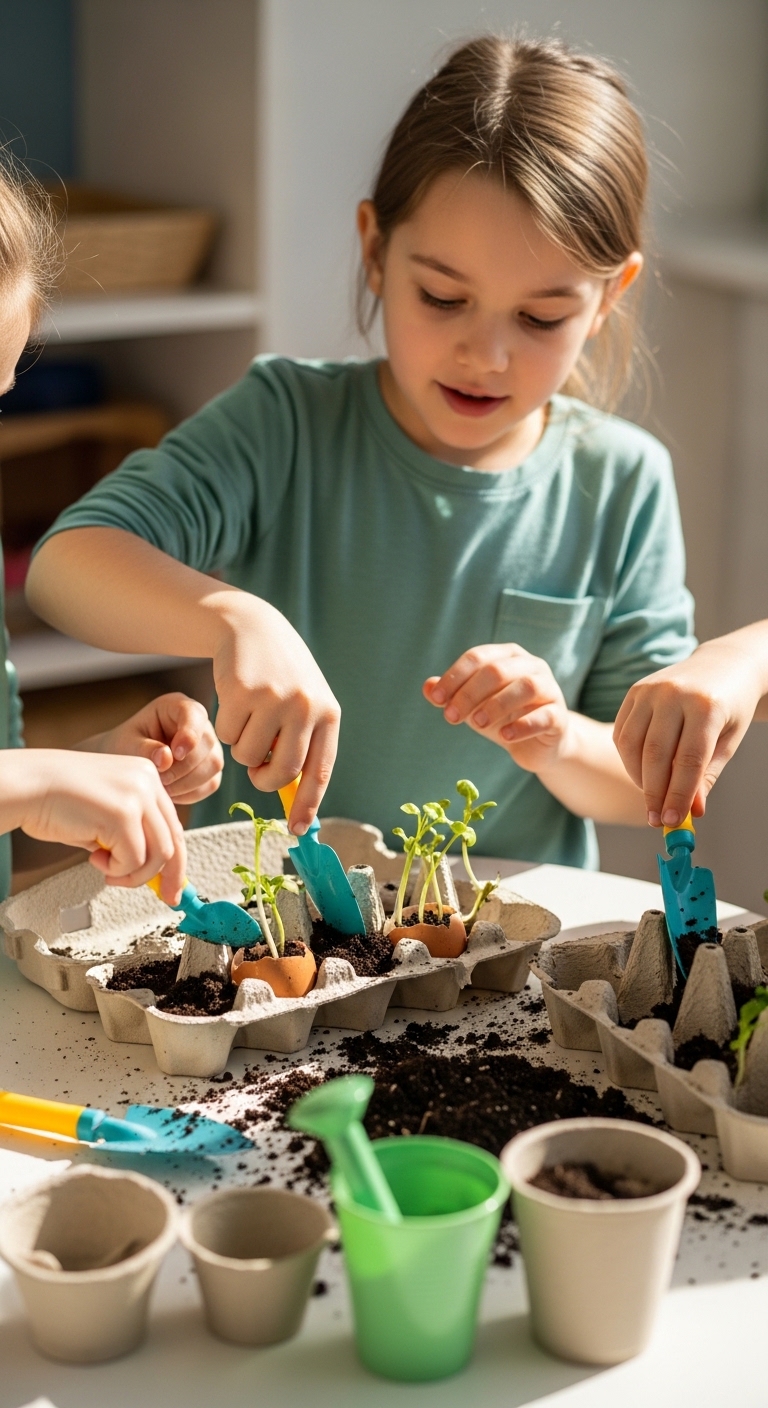
Spring is the perfect time to introduce children to the wonders of plant growth and responsibility, and making seedling starters in egg cartons is an easy spring craft for kids that combines creativity with hands-on science learning.
Kids get to observe seeds sprout, care for their plants, and connect with nature in a meaningful way.
You can also explore Farm Animal Crafts for Kids to blend creativity with early learning about animals and nature.”
Materials Needed
- Empty egg cartons (cardboard works best)
- Potting soil or compost
- Small seeds (sunflowers, beans, or herbs work well)
- Water spray bottle or small cup
- Optional: markers or paints to decorate the egg carton
Step-by-Step Instructions
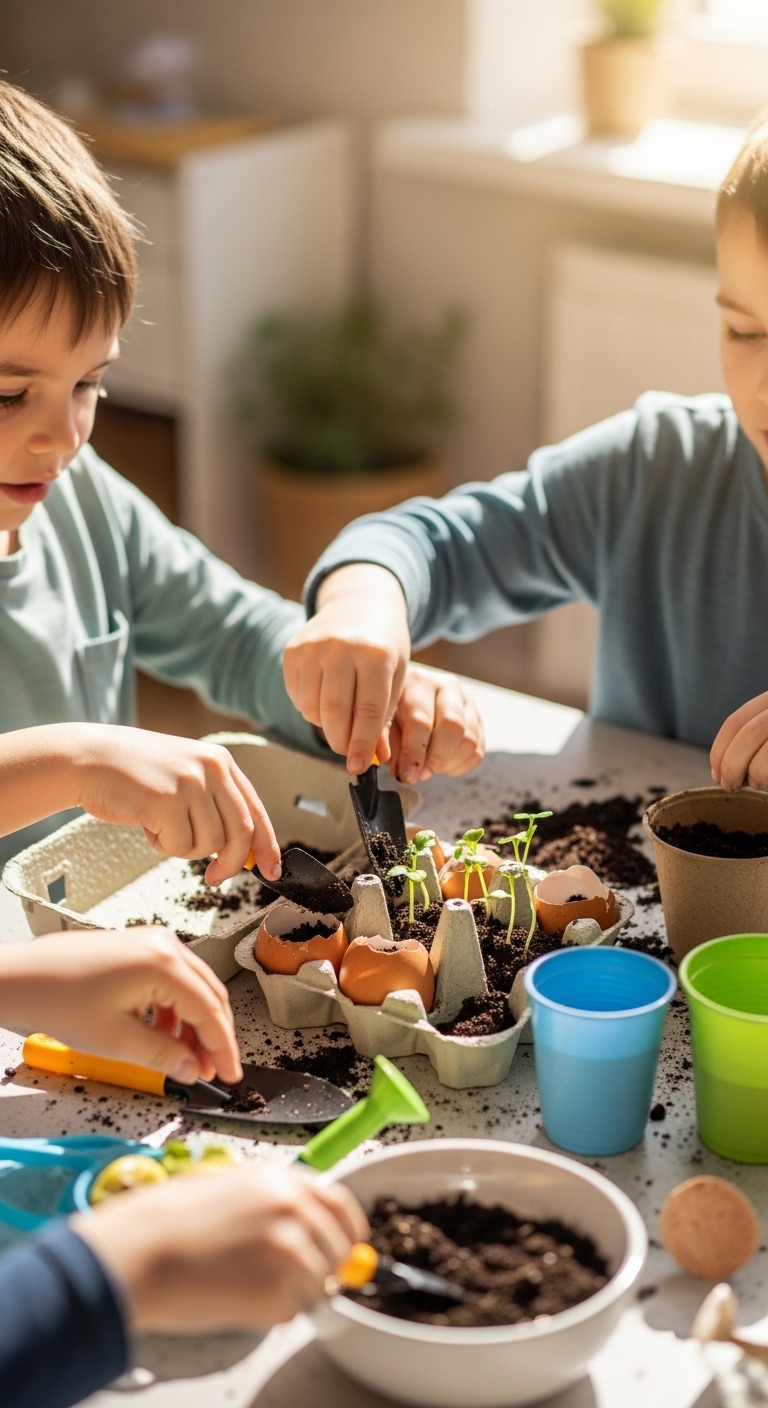
- Prepare the Egg Cartons: Cut the top lid off the carton if desired, leaving the individual cups as mini seed pots.
- Add Soil: Fill each compartment about 2/3 full with potting soil.
- Plant the Seeds: Place 1–2 seeds in each compartment, lightly covering them with soil.
- Water Gently: Use a spray bottle or small cup to moisten the soil without flooding it.
- Label and Decorate: Let kids decorate the outside of the carton and write the seed type on each cup.
- Place in Sunlight: Put the egg carton on a sunny windowsill or under grow lights.
- Care for the Seedlings: Encourage children to water daily and watch for sprouts in a few days to a week.
- Optional Transplant: Once seedlings are strong enough, plant them in the garden or larger pots.
Educational Benefits
- Science Skills: Children learn about plant life cycles, germination, and photosynthesis in a visual, hands-on way.
- Responsibility: Caring for seedlings teaches routine, patience, and empathy.
- Sensory Development: Handling soil, seeds, and water engages tactile senses, improving fine motor skills.
- Early Math & Observation: Counting seeds, measuring soil, and tracking growth encourages numeracy, measurement, and scientific recording.
Friendly Advice/ Variations
- Age Adaptation: Toddlers can focus on filling cups with soil and watering; older kids can record growth in a plant journal.
- Creative Twist: Let children paint and decorate their egg cartons with spring-themed designs, combining art with science.
- Environmental Lesson: Use this activity to discuss recycling and upcycling, emphasizing that egg cartons are reused instead of discarded.
- Sensory Play: Add texture by sprinkling sand or small pebbles over soil, kids love exploring different textures.
This craft is more than just a fun spring activity, it’s a complete learning experience that turns a simple egg carton into a miniature classroom for plant science, responsibility, and creativity.
Teachers and homeschool parents will also love Easy Spring Crafts for the Classroom That Feel Fun Without Feeling Overstimulating for group-friendly creative ideas.
2. Rainbow Nature Collages
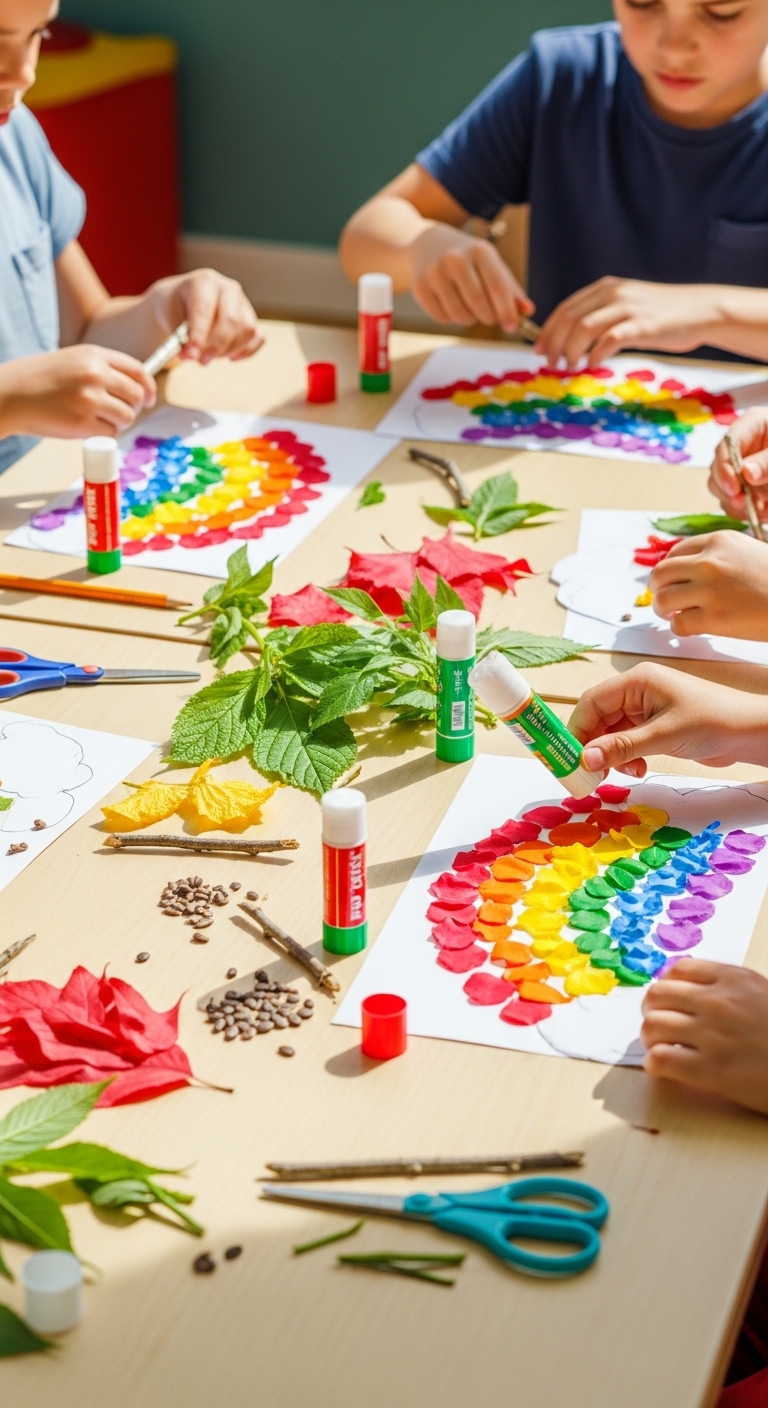
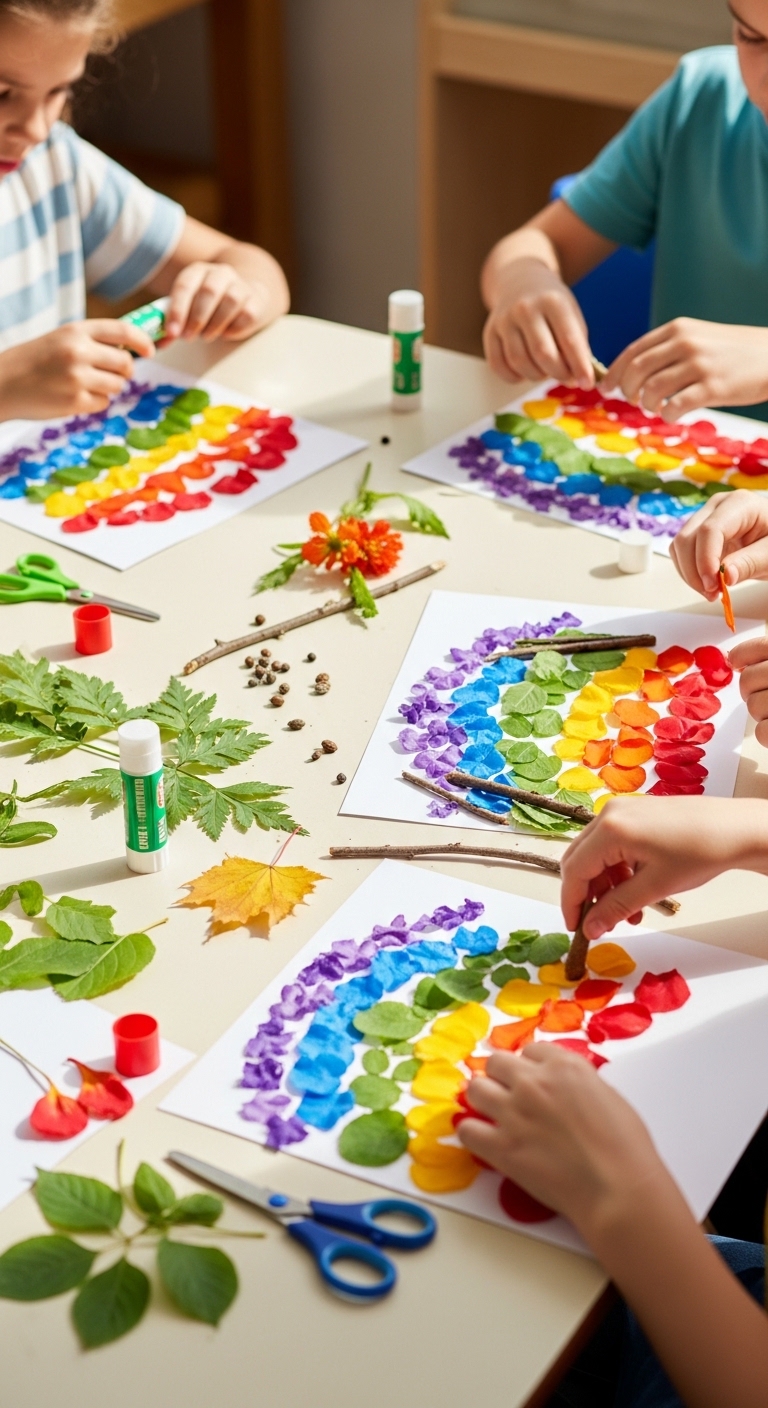
Creating rainbow nature collages is one of the most visually engaging easy spring crafts for kids, and it’s a fantastic way to combine art, sensory exploration, and early science learning.
Children can collect natural items from the backyard or a park, arranging them by color to form a rainbow, while learning about patterns, textures, and the diversity of nature.
Materials Needed
- Cardstock or thick paper as a base
- Leaves, flower petals, grass, small twigs, or other natural finds
- Glue or glue sticks
- Optional: markers or crayons to outline the rainbow shape
Step-by-Step Instructions
- Prepare the Base: Draw a light rainbow outline on the cardstock, or let children create freeform arcs.
- Collect Nature Items: Go on a short nature walk to gather leaves, petals, and other colorful objects.
- Sort by Color: Encourage kids to group materials into rainbow colors: red, orange, yellow, green, blue, and purple.
- Arrange and Glue: Place the items within the arcs of the rainbow and glue them down.
- Add Final Touches: Kids can use markers to outline the rainbow or add extra details like clouds or suns.
- Display Proudly: Hang the collage in a window to let sunlight highlight the textures and colors.
Educational Benefits
- Color Recognition & Sorting: Teaches early math and cognitive skills as children sort items by hue.
- Environmental Awareness: Encourages exploration of local plants and flowers, sparking curiosity about ecosystems.
- Sensory Development: Handling leaves, petals, and twigs develops fine motor skills and tactile awareness.
- Creativity & Spatial Reasoning: Designing a rainbow layout fosters pattern recognition and visual organization skills.
Friendly Advice / Variations
- Age Adaptation: Younger kids can focus on gluing pre-sorted items, while older kids can research plant types or create more intricate color gradients.
- Eco-Friendly Twist: Discuss the importance of gentle foraging, only take fallen leaves or petals to respect nature.
- Indoor Version: Use colored paper or recycled magazine scraps for a mess-free indoor alternative.
- Math Extension: Count the number of items in each color section to subtly introduce basic addition and comparison.
This craft is not just a fun spring activity, it’s a multi-sensory, educational experience that combines creativity, nature exploration, and early STEM concepts. Kids finish with a bright, proud project and a deeper connection to the world around them.
3. DIY Weather Station
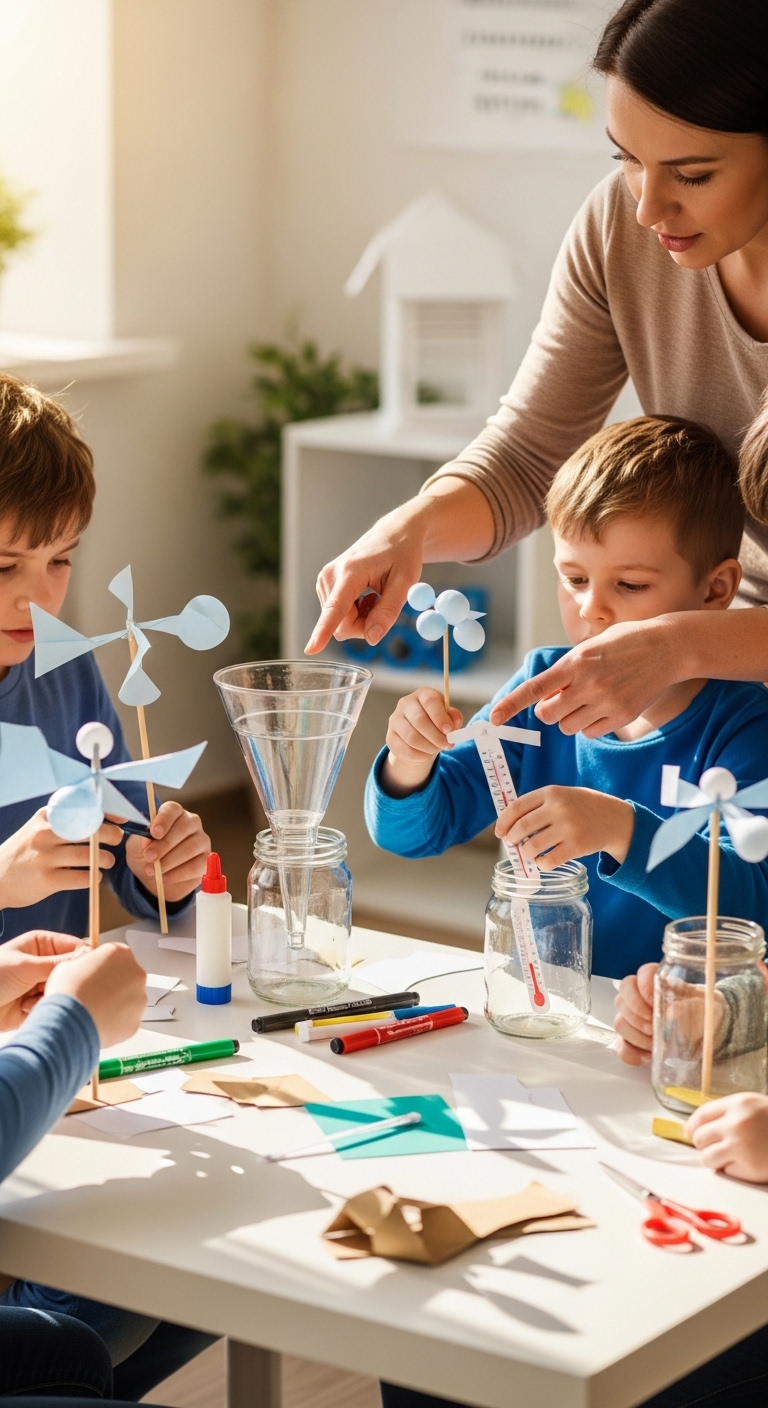
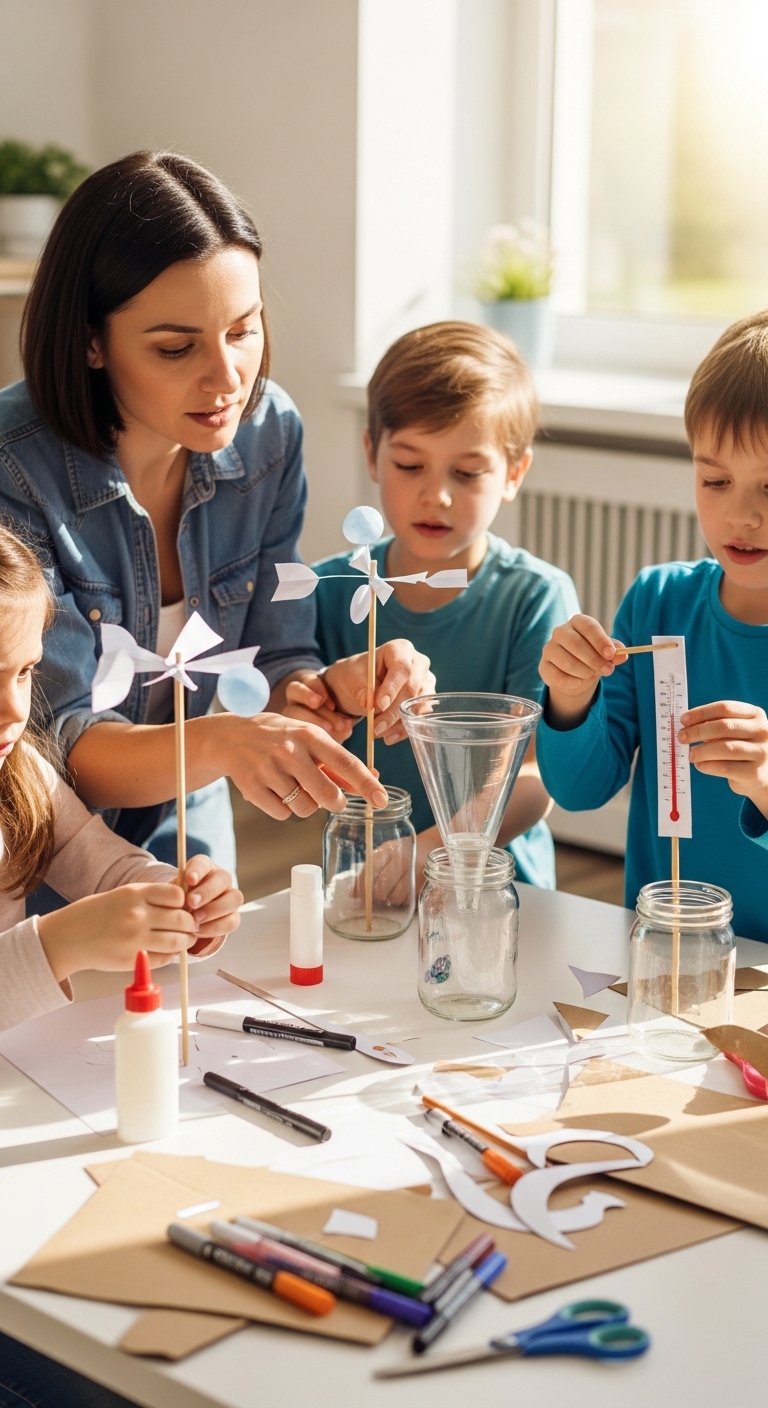
Building a DIY weather station is an easy spring craft for kids that blends creativity with hands-on science learning. This project teaches children to observe, measure, and record weather patterns, helping them understand how temperature, wind, and rainfall affect the world around them.
Plus, it encourages curiosity, problem-solving, and consistent observation, skills often overlooked in simple craft activities.
Materials Needed
- Small containers or jars for rain collection
- A ruler or measuring tape
- Paper cups or cardboard for wind vanes
- Straws, paper, tape, and scissors
- Marker or notebook for recording observations
- Optional: thermometer or anemometer (if available)
Step-by-Step Instructions
- Rain Gauge: Use a jar or container and mark measurement lines with a permanent marker or tape to track rainfall.
- Wind Vane: Attach a paper arrow to a straw and balance it on a pencil or stick to track wind direction.
- Temperature Tracking: Place a thermometer outdoors in a safe spot to monitor daily temperature changes.
- Observation Notebook: Encourage children to record weather data daily, including rain amount, wind direction, and temperature.
- Decorate the Station: Let kids add stickers, drawings, or color-coded labels to make the station their own.
- Daily Check-Ins: Make it a routine to check the weather, discuss changes, and make predictions.
Bunny-themed projects are always a hit in spring, and Easter Bunny Crafts For Kids That Take Less Than 30 Minutes makes seasonal crafting quick and stress-free.
Educational Benefits
- Scientific Observation Skills: Children learn data collection, measurement, and analysis, introducing early scientific methods.
- Math & Recording: Measuring rainfall and tracking temperature involves numeracy and comparison skills.
- Critical Thinking: Kids make predictions (“Will it rain tomorrow?”) and compare them with actual results.
- Environmental Awareness: Teaches kids about weather patterns, seasons, and the impact of climate, connecting crafting with real-world science.
Friendly Advice / Variations
- Age Adaptation: Younger kids can focus on observing and coloring results; older kids can calculate averages or create charts.
- STEM Extension: Introduce concepts like evaporation, condensation, and wind speed for older children.
- Indoor Version: Create a mock weather station with drawings, a homemade thermometer, or paper cloud charts.
- Interactive Learning: Challenge kids to predict weather for the week and discuss why predictions were right or wrong.
This craft turns spring afternoons into interactive science lessons while remaining fun and hands-on. Children not only create a unique project but also develop practical skills in observation, analysis, and critical thinking, making it one of the most educational spring activities you can do at home.
You can also pair crafting with fun spring baking activities for kids, check out 7 Spring Baking Ideas for Kids That Feel Playful, Calm, and Mess-Friendly for inspiration.
4. Symmetry Butterflies
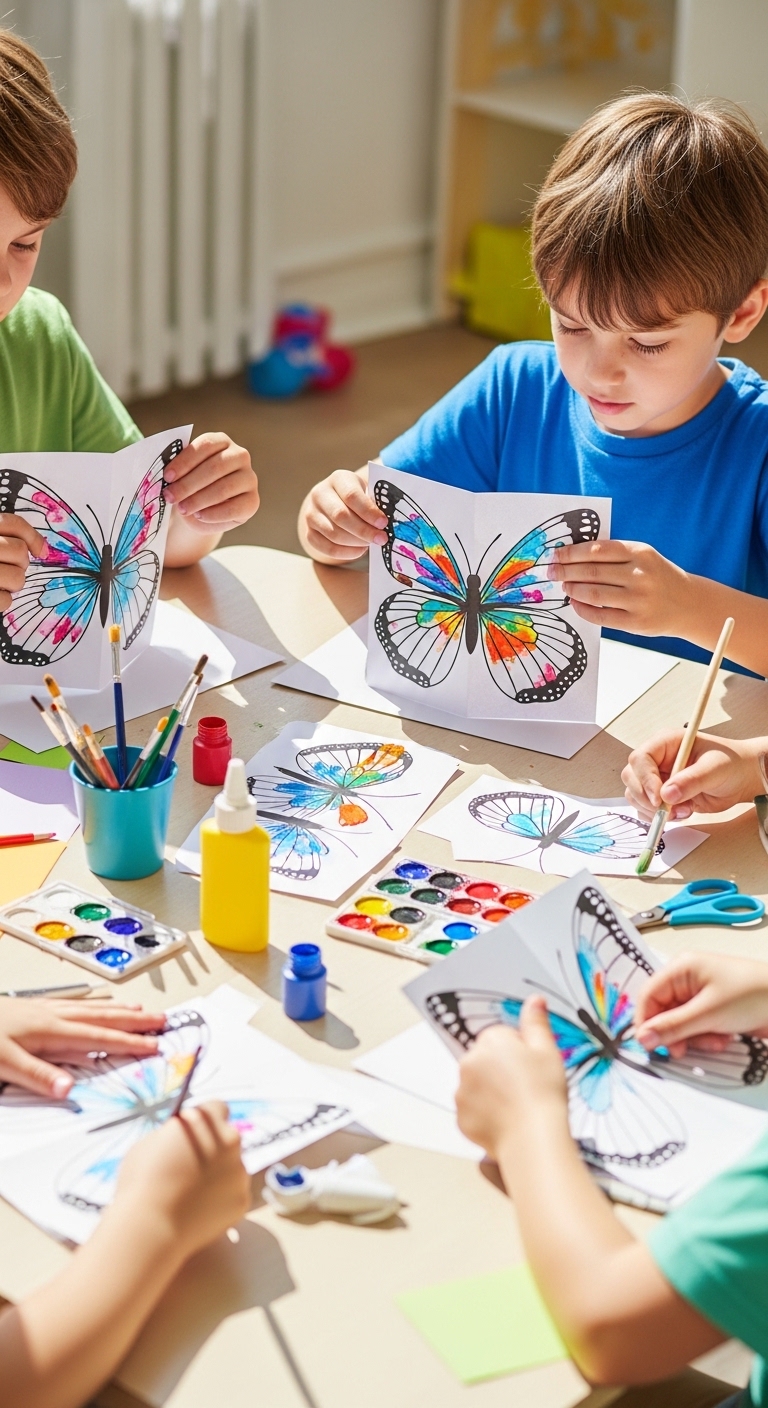
Creating symmetry butterflies is one of the most engaging and educational spring activities for children.
This easy spring craft for kids combines art with early math concepts, allowing children to explore symmetry, patterns, and fine motor skills while making colorful, unique butterfly designs. Beyond the creative fun, kids also practice planning, sequencing, and observation, all crucial cognitive skills.
Materials Needed
- White or colored paper
- Washable paints (various colors)
- Paintbrushes or droppers
- Scissors
- Optional: markers or glitter for decorating
Step-by-Step Instructions
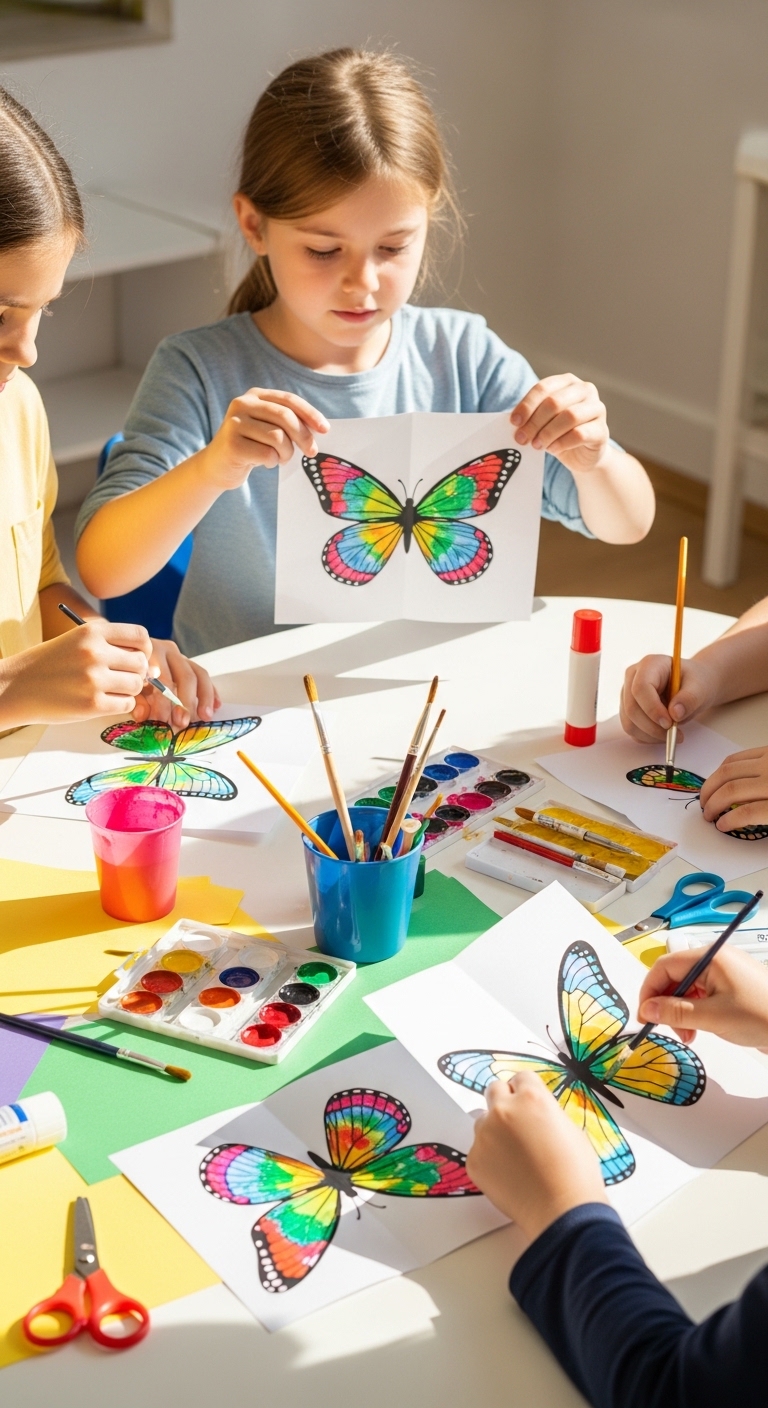
- Fold the Paper: Fold a sheet of paper in half to create a center line, this will act as the axis of symmetry.
- Apply Paint: On one half of the folded paper, let kids add paint drops or patterns using brushes or droppers.
- Fold to Create Symmetry: Close the paper and gently press to transfer the paint onto the other side.
- Open and Reveal: Unfold the paper to reveal a perfectly symmetrical butterfly design.
- Cut and Decorate: Cut out the butterfly shape along the edges, and add extra details with markers, stickers, or glitter if desired.
- Display Proudly: Hang the butterflies in windows, walls, or classroom displays to celebrate the children’s work.
Educational Benefits
- Math and Geometry: Teaches symmetry, reflection, and pattern recognition, giving kids an early foundation in geometry.
- Fine Motor Skills: Cutting, painting, and decorating improve hand-eye coordination and dexterity.
- Cognitive Development: Planning and predicting how paint will transfer builds critical thinking and problem-solving skills.
- Creativity and Self-Expression: Kids experiment with colors and shapes, fostering originality and artistic confidence.
Friendly Advice / Variations
- Age Adaptation: Younger kids can focus on folding and painting; older kids can create complex patterns or even incorporate math by counting shapes or color repetitions.
- Outdoor Learning: Let children collect small leaves or flower petals to press into their butterfly design for added nature-inspired textures.
- Sensory Extension: Use textured paints or sponges for a multi-sensory experience, combining tactile learning with visual art.
- Classroom or Group Version: Children can work together to create a giant butterfly mural, encouraging teamwork and collaborative creativity.
This easy spring craft for kids transforms a simple sheet of paper into a hands-on learning project that merges art, science, and math.
Kids leave with beautiful butterflies and a deeper understanding of symmetry, patterns, and creativity, making it a standout activity for both home and classroom spring projects.
Seasonal decorating feels even more special when kids help create projects from Simple DIY Paper Spring Garlands That Adds Soft Seasonal Charm.
5. Pollinator Garden Craft
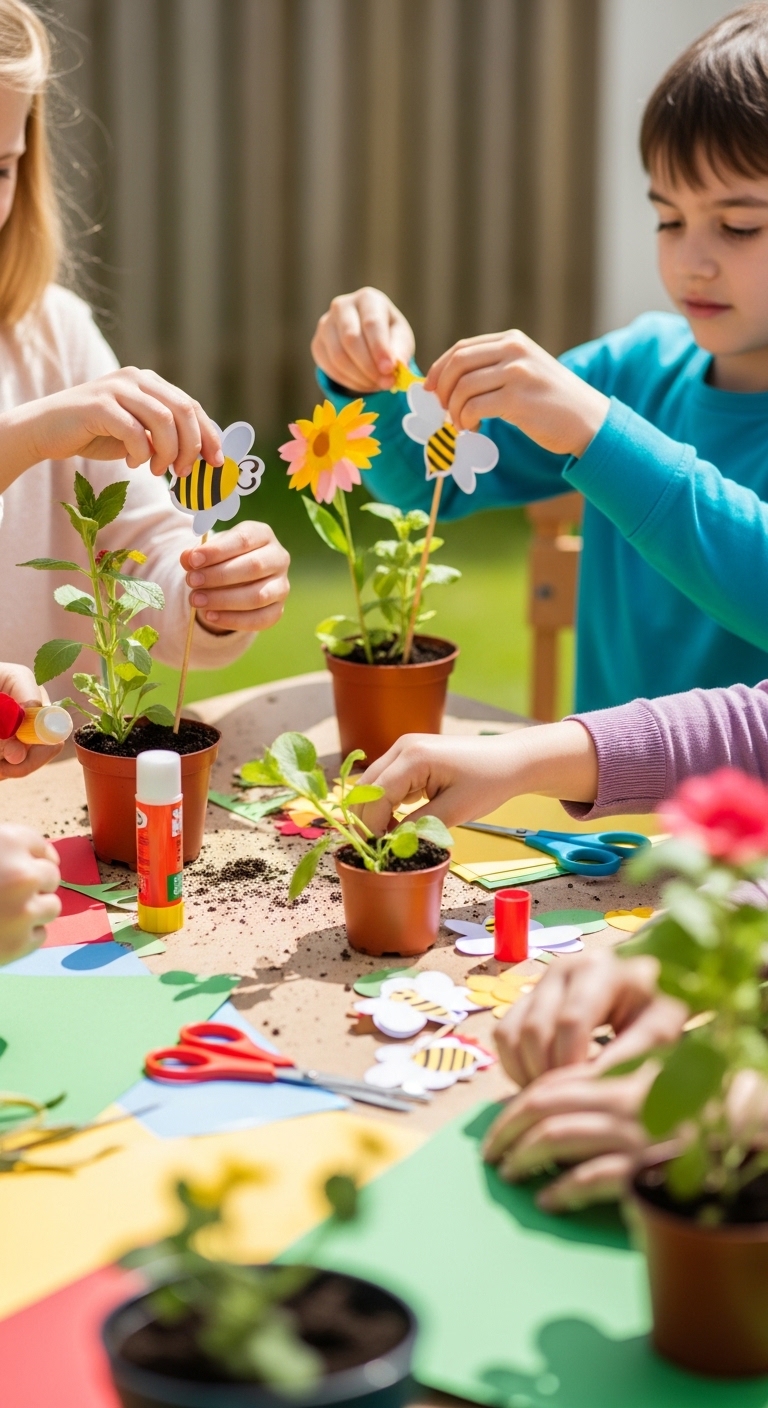
Introducing children to the world of pollinators is both fun and educational. The pollinator garden craft is an easy spring craft for kids that teaches ecology, biology, and the importance of bees, butterflies, and other pollinators.
By creating a small craft garden, children gain hands-on experience with nature while learning how these tiny creatures support our environment.
Materials Needed
- Cardboard, paper, or small planting trays
- Artificial flowers, paper flowers, or real small blooms
- Pipe cleaners or sticks to make bees, butterflies, or other pollinators
- Glue or tape
- Markers or crayons for decoration
- Optional: small rocks or pebbles for garden borders
Step-by-Step Instructions
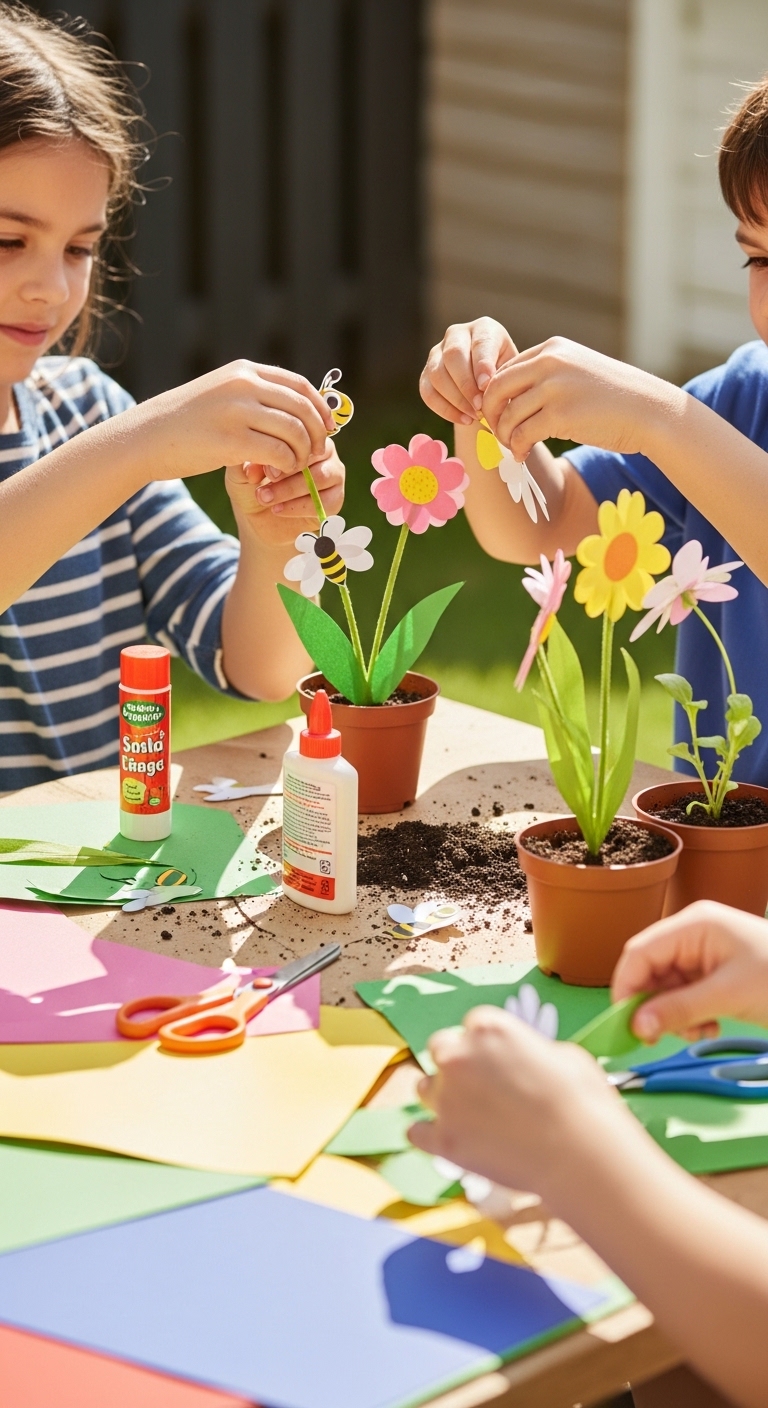
- Prepare the Base: Use cardboard or a small tray as the foundation for your mini pollinator garden.
- Create Flowers: Either fold and color paper flowers, use small artificial blooms, or carefully place real flowers.
- Make Pollinators: Shape bees, butterflies, or ladybugs from pipe cleaners, paper, or other craft materials.
- Assemble the Garden: Attach flowers to the base and position the pollinators around the garden.
- Decorate: Add rocks, colored paper, or drawings to represent soil, sunlight, and greenery.
- Observe & Discuss: Talk to children about which pollinators visit which flowers and why they’re important to nature.
Educational Benefits
- Environmental Awareness: Introduces kids to pollination, ecosystems, and biodiversity, helping them appreciate the role of insects in nature.
- Hands-On Science Learning: Children see how flowers attract pollinators, creating a mini interactive ecosystem.
- Creativity and Fine Motor Skills: Crafting pollinators and arranging a garden develops dexterity and artistic expression.
- STEM Connections: Measuring flower placement, counting pollinators, and discussing growth cycles integrates early math and observation skills.
Friendly Advice / Variations
- Age Adaptation: Younger children can focus on assembling flowers, while older kids can create detailed pollinator models or track how real pollinators interact with plants outdoors.
- Sensory Learning: Add textured materials like felt for flower petals or cotton for clouds to engage tactile senses.
- Outdoor Version: Take the craft outside, children can plant real flowers and place handcrafted pollinators nearby, connecting crafts with real-life biology.
- Cross-Curricular Extension: Discuss poetry, storytelling, or fun facts about bees and butterflies while creating the garden.
This easy spring craft for kids turns simple materials into a miniature, educational ecosystem, combining art, science, and environmental learning.
Children not only have fun building their garden but also gain a deeper understanding of nature, pollination, and the vital role of insects in our world.
Spring crafting becomes even more purposeful with ideas from Meaningful Christian Easter Crafts to Create at Home with Kids, especially for families who love combining creativity with faith.
6. Counting Flower Petals
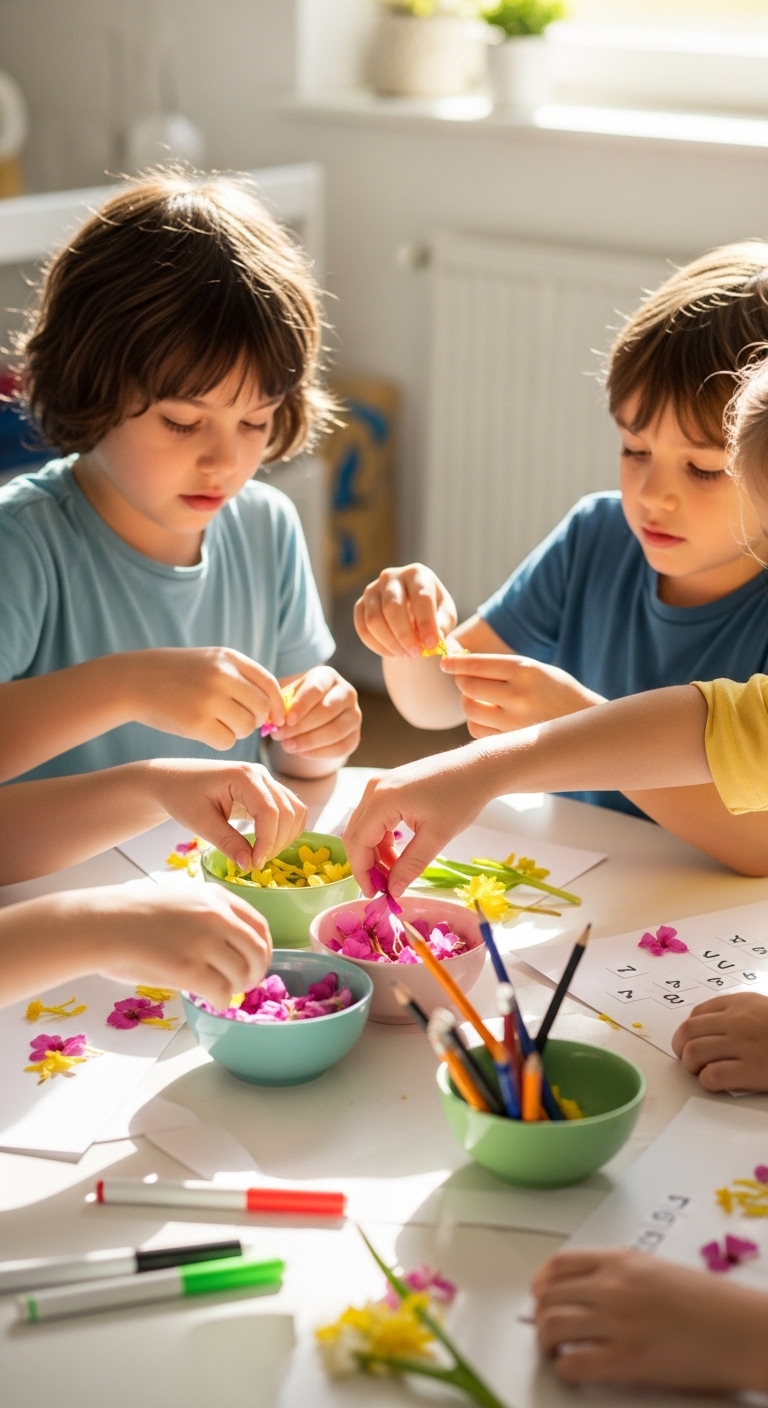
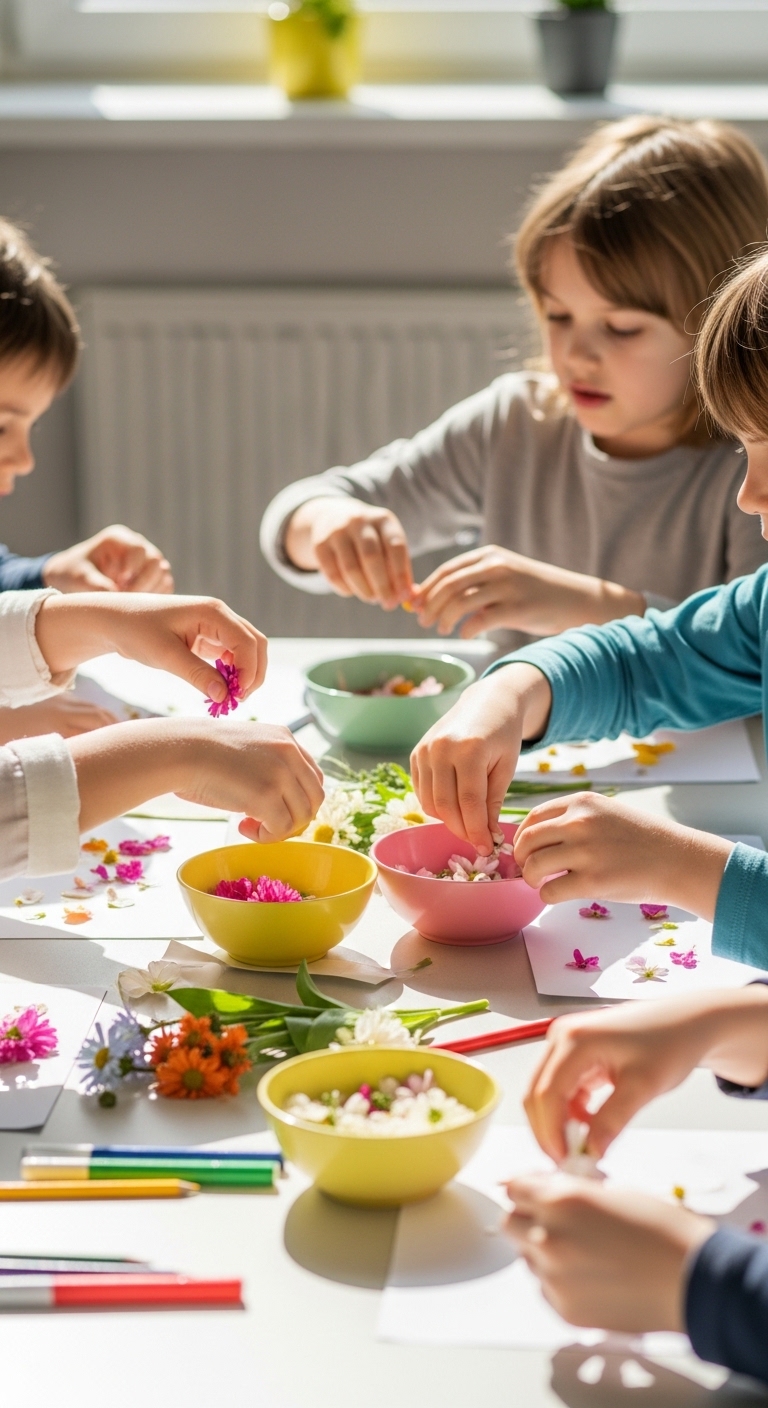
Counting flower petals is an easy spring craft for kids that subtly introduces early math concepts while connecting children to nature.
This simple activity combines hands-on learning, sensory exploration, and playful numeracy, making it both fun and educational. Kids learn to count, compare, and categorize while engaging with the natural world, an approach most blogs rarely discuss in depth.
Materials Needed
- Real flowers with multiple petals (daisies, sunflowers, or marigolds work well)
- Paper and markers for recording
- Small containers or trays to separate petals
- Optional: magnifying glass for observing details
How Its Done
- Select Flowers: Take children on a short nature walk or use flowers from home.
- Observe Petals: Examine the flowers carefully, counting the petals together.
- Disassemble the Flower: Gently remove the petals and place them in a tray or container.
- Record Counts: Use paper to write down the number of petals per flower.
- Compare & Sort: Encourage children to compare counts, “Which flower has the most petals?” or “Do any have the same number?”
- Optional Extension: Use colored markers to color-code petals by size, shape, or shade.
Educational Benefits
- Early Math Skills: Introduces counting, comparison, and basic addition, laying the groundwork for numeracy.
- Observation & Pattern Recognition: Children notice differences in size, shape, and symmetry, developing critical thinking.
- Sensory Development: Touching and handling petals engages tactile senses, improving fine motor coordination.
- Environmental Awareness: Teaches children about flower anatomy and plant diversity, fostering curiosity about nature.
Friendly Advice / Variations
- Age Adaptation: Younger kids can focus on counting petals, while older children can create petal charts or graphs to practice early data skills.
- STEM Integration: Discuss why flowers have different numbers of petals and how it affects pollination, connecting biology with math.
- Creative Twist: After counting, children can press petals to create colorful collages for an added art element.
- Indoor Version: Use artificial flowers or paper cutouts if outdoor flowers aren’t available.
This easy spring craft for kids transforms a simple flower into a hands-on learning tool, combining math, science, and sensory exploration.
Kids leave the activity not only with a sense of accomplishment but also with a stronger connection to nature and early STEM skills, making it one of the most educational and engaging spring projects.
7. Sun Catchers with Leaves & Flowers
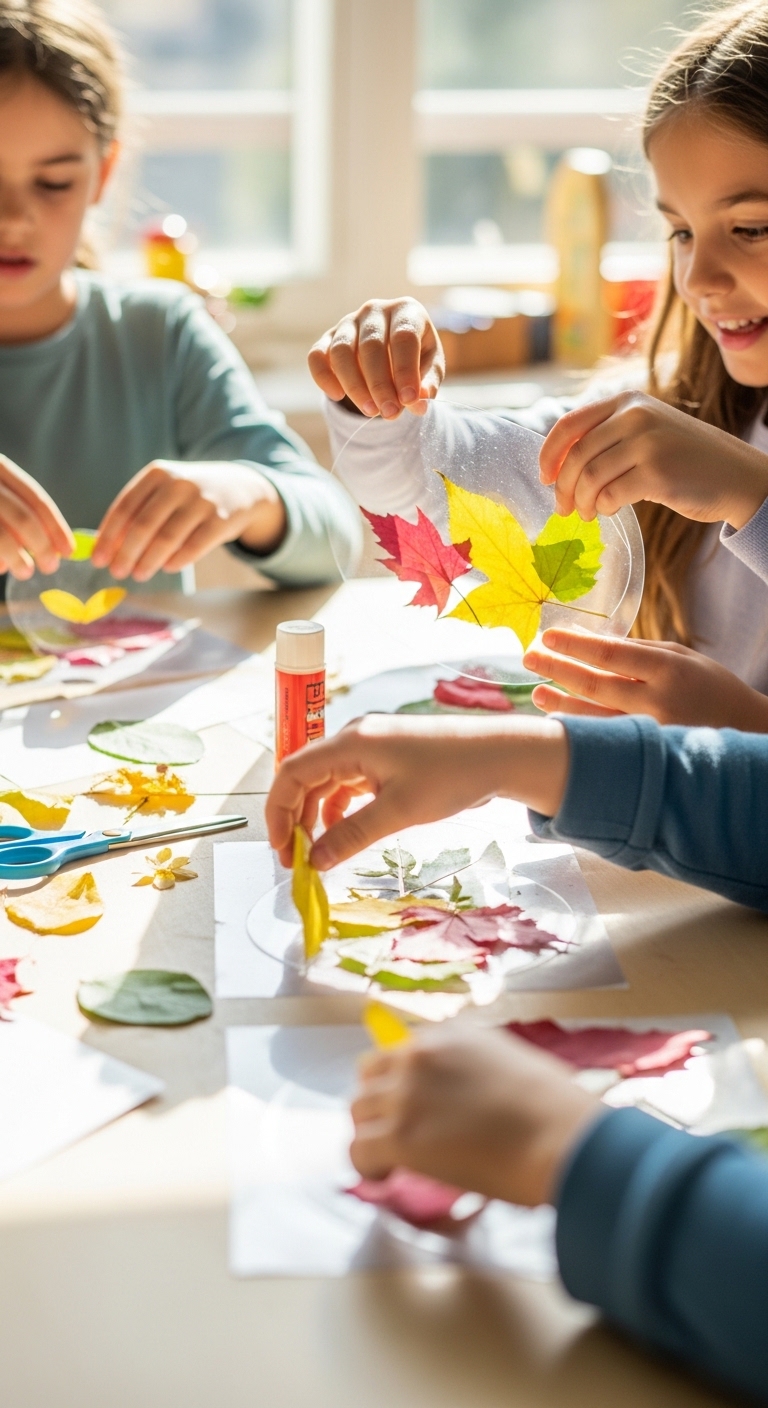
Creating sun catchers with leaves and flowers is a fun and educational spring activity that lets children explore nature, light, and color in a hands-on way.
This project combines art with science, encouraging kids to observe how sunlight interacts with materials while fostering creativity, fine motor skills, and environmental awareness.
Materials Needed
- Clear contact paper or laminating sheets
- Leaves, flower petals, or other small natural items
- Scissors
- Ribbon or string for hanging
- Optional: markers or paint for additional decoration
Step-by-Step Instructions
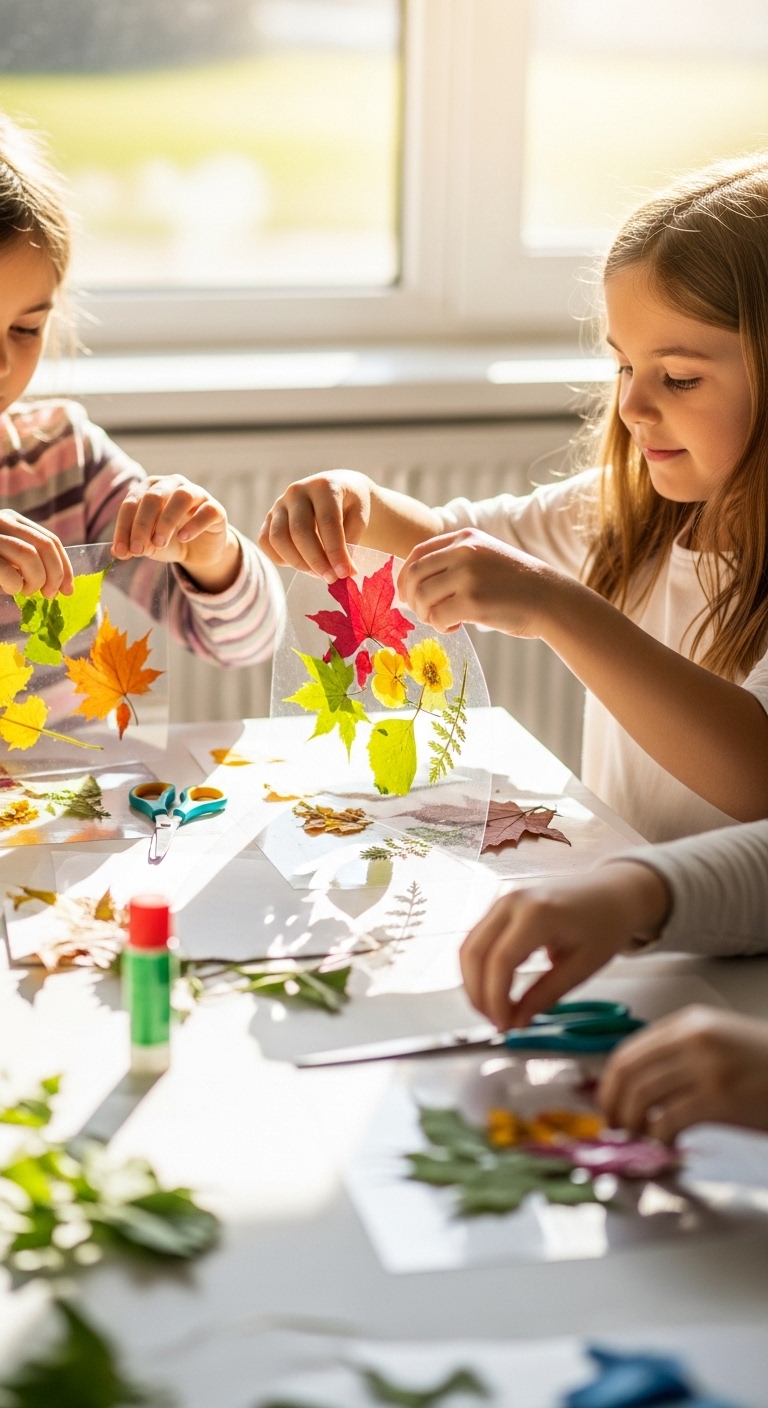
- Prepare the Base: Cut a piece of contact paper slightly larger than your intended sun catcher.
- Arrange Natural Items: Let children place leaves and flower petals onto the sticky side of the contact paper, creating a colorful pattern or random design.
- Seal the Sun Catcher: Cover the arrangement with another layer of contact paper, pressing gently to seal everything inside.
- Trim the Edges: Cut around the design, leaving a small border to keep it sealed.
- Add a Hanger: Punch a hole at the top and thread a ribbon or string for hanging.
- Display in Sunlight: Hang the sun catcher in a sunny window and watch how the light illuminates the natural materials.
Educational Benefits
- Science of Light: Children observe how sunlight passes through different textures and colors, introducing basic concepts of light, transparency, and reflection.
- Fine Motor Skills: Arranging small leaves and petals develops hand-eye coordination and dexterity.
- Creativity and Artistic Expression: Kids experiment with color combinations, shapes, and layouts, fostering imagination.
- Environmental Awareness: Using natural materials encourages observation of plants, seasonal changes, and respect for nature.
Friendly Advice / Variations
- Age Adaptation: Younger children can focus on placing larger leaves and petals, while older kids can create intricate patterns or even layer items for a 3D effect.
- Seasonal Twist: Encourage children to collect materials from different seasons to compare textures and colors.
- Classroom or Group Version: Create multiple sun catchers to form a window collage, teaching collaboration and shared creativity.
- Sensory Extension: Include leaves with different textures or scented petals for a multi-sensory learning experience.
This easy spring craft for kids turns simple leaves and flowers into a hands-on science and art project, combining learning, creativity, and sensory exploration.
Children gain practical understanding of light and nature while producing a beautiful, displayable creation that brightens any space.
8. Animal Footprint Painting
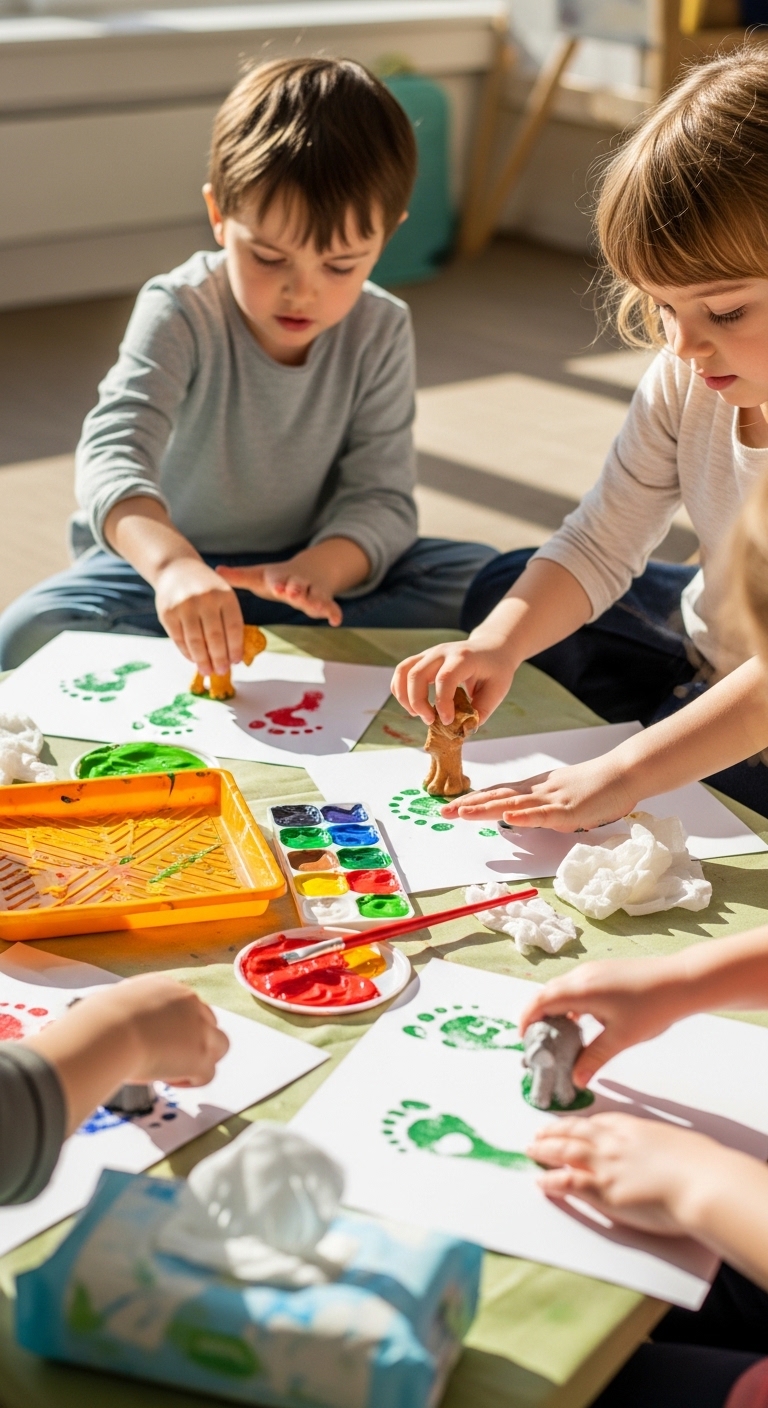
Animal footprint painting turns a simple art session into a hands-on lesson about wildlife and nature, making it one of the most engaging and educational spring activities for children.
This craft lets kids explore animal shapes, textures, and habitats while improving fine motor skills, observation, and creativity.
Materials Needed
- Washable paint in various colors
- Paper or cardstock
- Toy animal figures or DIY stamps
- Paintbrushes or sponges
- Paper towels or wipes for cleanup
- Optional: markers to draw details or habitat backgrounds
How Its Done
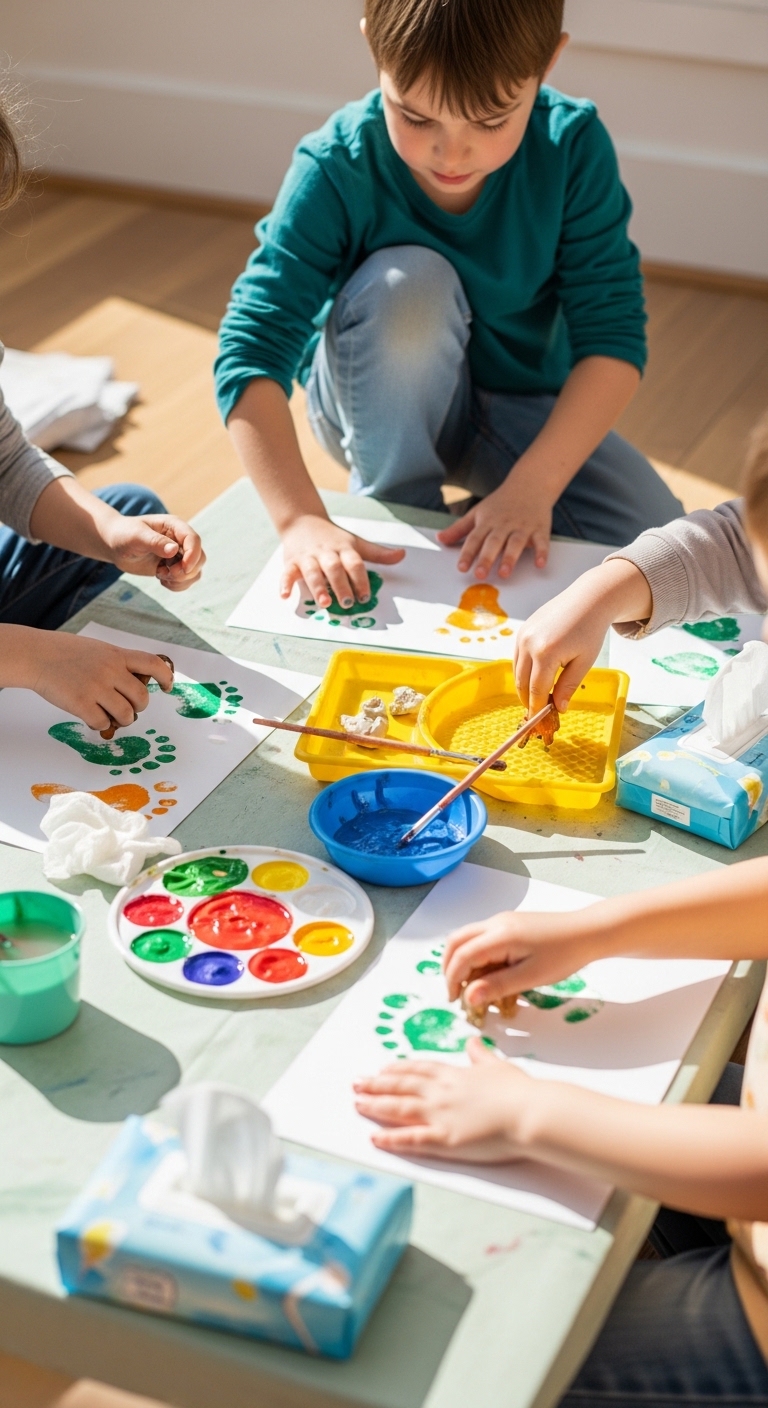
- Prepare Your Workspace: Lay down newspaper or a plastic mat for easy cleanup.
- Paint the Toy Animals: Apply a thin layer of paint to the feet of small toy animals or stamps.
- Stamp Footprints: Press the toy onto paper to leave footprints.
- Explore Patterns: Encourage children to experiment with tracks, spacing, and direction.
- Add Habitat Details: Draw grass, water, or rocks around the footprints to simulate the animal’s environment.
- Discuss Animals: Talk about the animal that left the print, its habitat, and unique traits.
Educational Benefits
- Environmental Awareness: Teaches children about different animals, their tracks, and habitats.
- Sensory & Fine Motor Skills: Handling paint, figures, and paper engages tactile senses and coordination.
- Early Observation & Math Skills: Counting footprints, comparing sizes, and creating patterns introduces numeracy and spatial reasoning.
- Creativity & Storytelling: Kids can invent stories about the animals, building language and imagination.
Friendly Advice/ Variations
- Age Adaptation: Younger kids can focus on stamping and coloring; older kids can research the animal footprints and replicate them accurately.
- Multi-Sensory Extension: Sprinkle sand or dirt over wet paint to create realistic textures.
- Outdoor Version: Use mud or safe washable paint to make footprints on sidewalks or garden paths for a real-world sensory experience.
- Cross-Curricular Learning: Incorporate science and literacy by reading animal books or discussing tracks in the wild.
This easy spring craft for kids transforms simple toys and paint into a fun wildlife exploration, combining art, science, and critical thinking.
Children gain hands-on learning about animals, patterns, and habitats while producing a creative and educational piece of art.
9. Wind Spinners
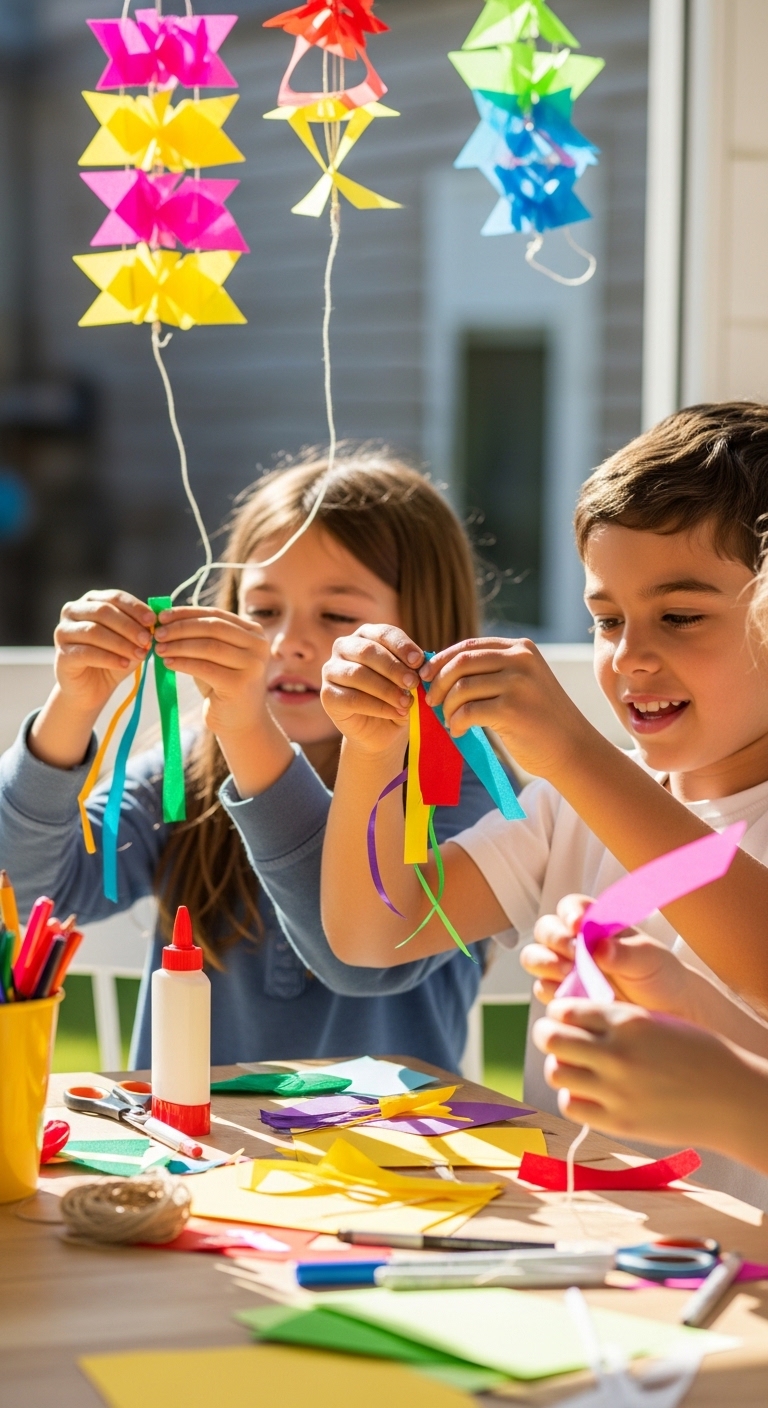
Wind spinners turn simple materials into a vibrant exploration of motion and air, making them one of the most fun and educational spring activities for children.
This project allows kids to experiment with cause and effect, rotational motion, and wind patterns, all while expressing their creativity through color and design.
Materials Needed
- Colored paper, cardstock, or recycled magazines
- Scissors
- String or yarn
- Straws, pencils, or sticks (for the base)
- Tape or glue
- Optional: beads for added movement and decoration
Step-by-Step Instructions
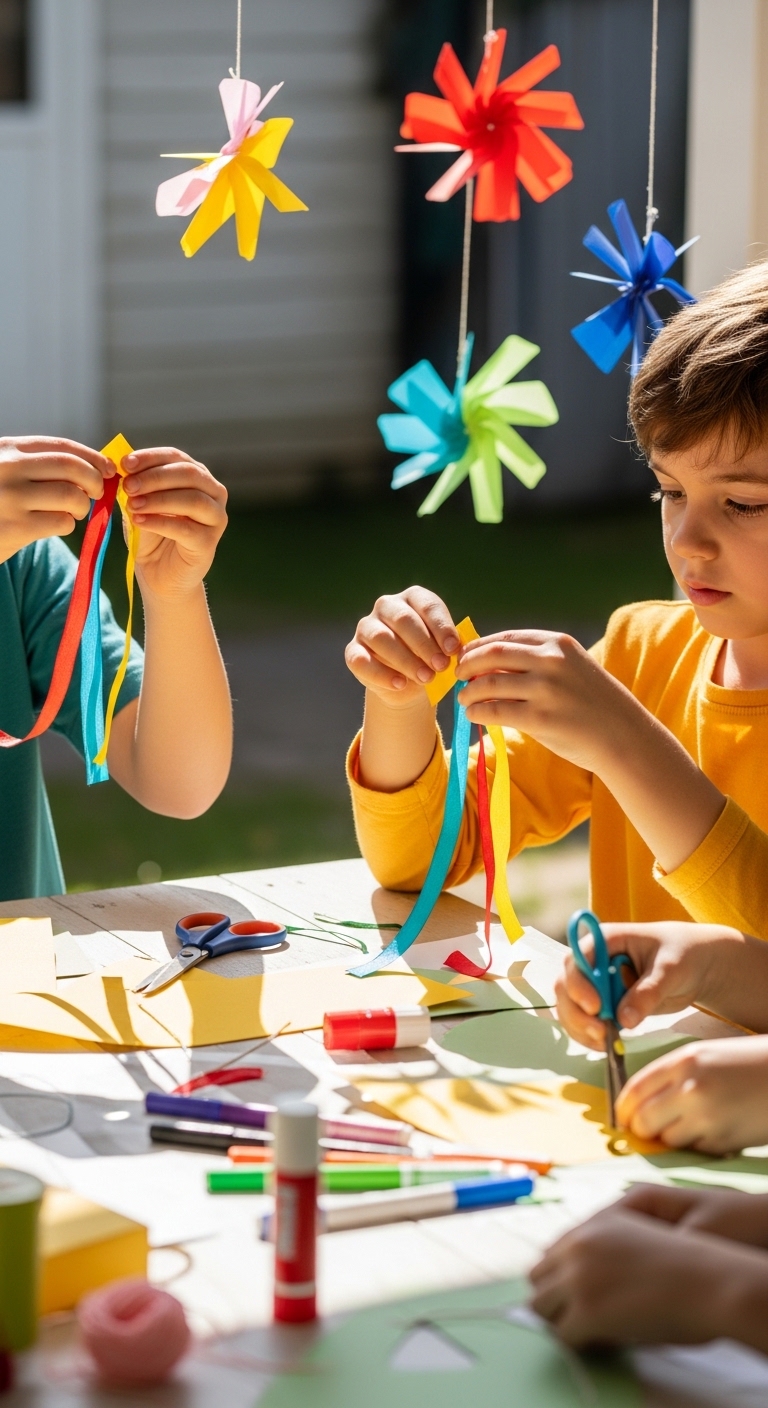
- Prepare the Paper: Cut paper into strips, spirals, or pinwheel shapes according to the desired spinner design.
- Attach to the Base: Secure one end of each strip to a straw, pencil, or stick using tape or glue.
- Add a Hanger: Tie a string or yarn to the top of the base for hanging.
- Decorate: Use markers, stickers, or beads to enhance the design and influence how it spins.
- Test and Observe: Hang the spinner outdoors in a breezy spot. Watch how different shapes, lengths, or weights affect rotation.
- Experiment: Encourage kids to change the configuration and predict how these adjustments will affect motion.
Educational Benefits
- STEM Learning: Introduces wind energy, rotational motion, and cause-and-effect relationships in a hands-on way.
- Problem-Solving Skills: Kids experiment with shapes and weights, learning how adjustments influence movement.
- Fine Motor Development: Cutting, folding, and assembling strips strengthens hand-eye coordination and dexterity.
- Creativity and Design: Children choose colors, patterns, and decorations, combining art with science.
Friendly Advice / Variations
- Age Adaptation: Younger children can focus on assembling pre-cut strips, while older kids can create more intricate spirals or pinwheels for faster rotation.
- Outdoor Learning: Use this project to observe how weather changes, wind strength, and direction affect motion.
- Recycling Twist: Use old magazines, scrap paper, or cardboard for an eco-friendly approach.
- Collaborative Version: Make a spinner garden by displaying multiple children’s spinners together to compare motion and design.
This easy spring craft for kids transforms simple paper and sticks into a hands-on STEM activity, combining creativity, observation, and problem-solving.
Kids gain a practical understanding of motion and wind while enjoying a colorful, interactive project perfect for spring.
Some of these crafts can even be transformed into thoughtful little gifts, see When a Small Birthday Basket Is the Perfect Gift Choice for inspiration on presenting homemade creations.
10. Recycled Bird Feeders
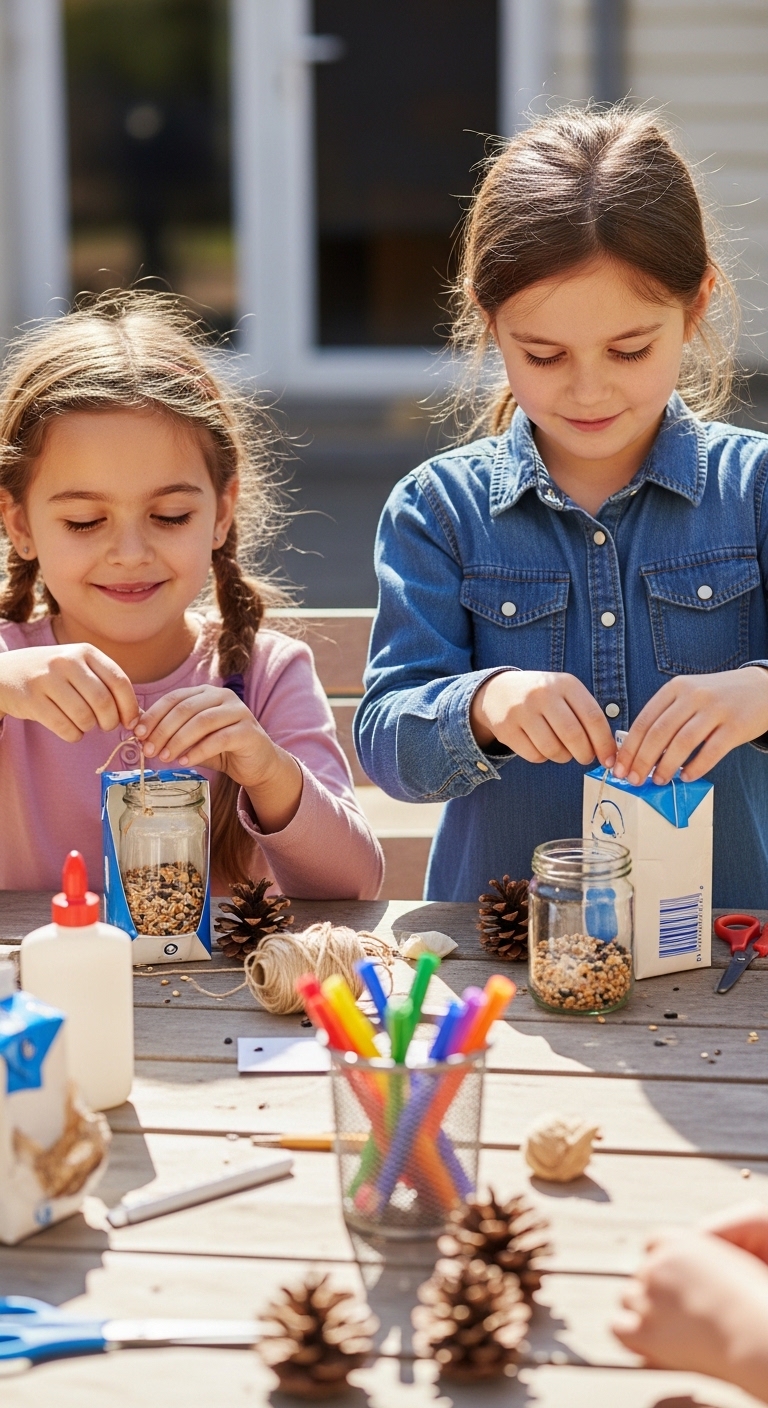
Recycled bird feeders are an easy spring craft for kids that combine creativity with environmental learning, animal behavior observation, and empathy. This activity not only turns everyday household items into something useful but also encourages children to connect with nature and understand the needs of wildlife.
Materials Needed
- Empty milk cartons, plastic bottles, or toilet paper rolls
- String or twine for hanging
- Birdseed
- Scissors
- Tape or glue
- Optional: markers, paints, or stickers for decoration
How Its Done
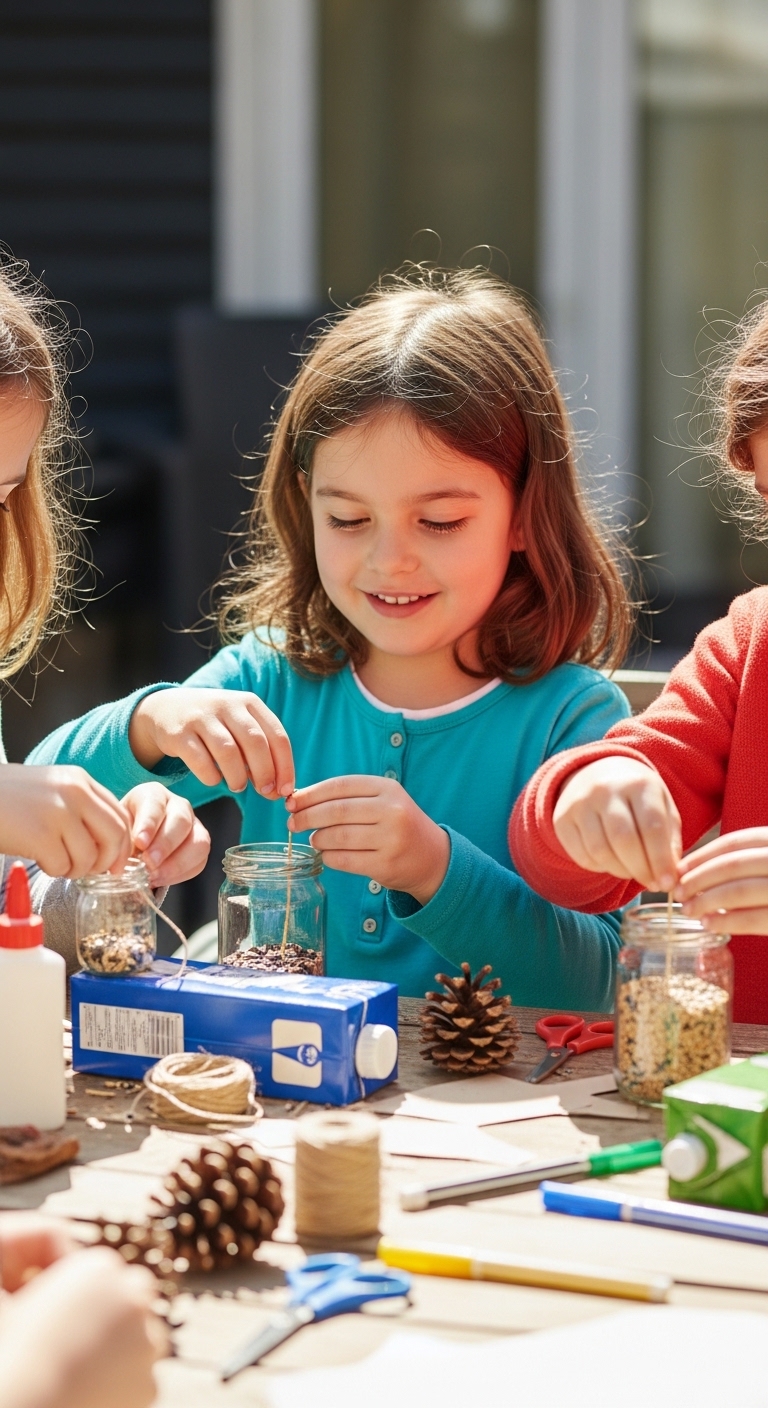
- Prepare the Container: Clean and dry a milk carton, bottle, or toilet paper roll. Cut openings large enough for birds to access the seed but safe enough to prevent them from getting stuck.
- Add a Hanger: Attach string or twine to the top of the feeder for hanging.
- Decorate: Let kids decorate the feeder with paints, markers, or stickers. Encourage bright colors to attract birds.
- Add Birdseed: Fill the feeder with birdseed.
- Hang Outdoors: Place the feeder in a safe, visible spot like a tree branch or balcony.
- Observe & Record: Watch for visiting birds and encourage children to note the types of birds, feeding behaviors, or favorite seeds.
Educational Benefits
- Environmental Awareness: Teaches children the value of recycling and reusing materials.
- Animal Behavior & Ecology: Observing which birds visit helps kids learn about different species, diets, and behaviors.
- Empathy & Responsibility: Caring for the feeder fosters compassion, patience, and routine care.
- Sensory & Fine Motor Skills: Cutting, decorating, and filling the feeder engages hands-on coordination and tactile exploration.
Friendly Advice / Variations
- Age Adaptation: Younger children can decorate and fill feeders, while older kids can create complex designs or track bird visits in a journal.
- Nature Connection: Incorporate a short nature walk to identify local birds before setting up the feeder.
- Seasonal Twist: Adjust the seeds or feeder design for different seasons to observe changing bird populations.
- STEM Extension: Discuss how bird beaks are adapted to different seeds, combining biology with hands-on learning.
This easy spring craft for kids turns simple household items into a mini wildlife project, blending art, science, and empathy.
Children gain not only a sense of accomplishment but also a deeper understanding of nature, conservation, and responsibility, making it one of the most meaningful crafts to include in any spring activity list.
How to Make Craft Time More Educational
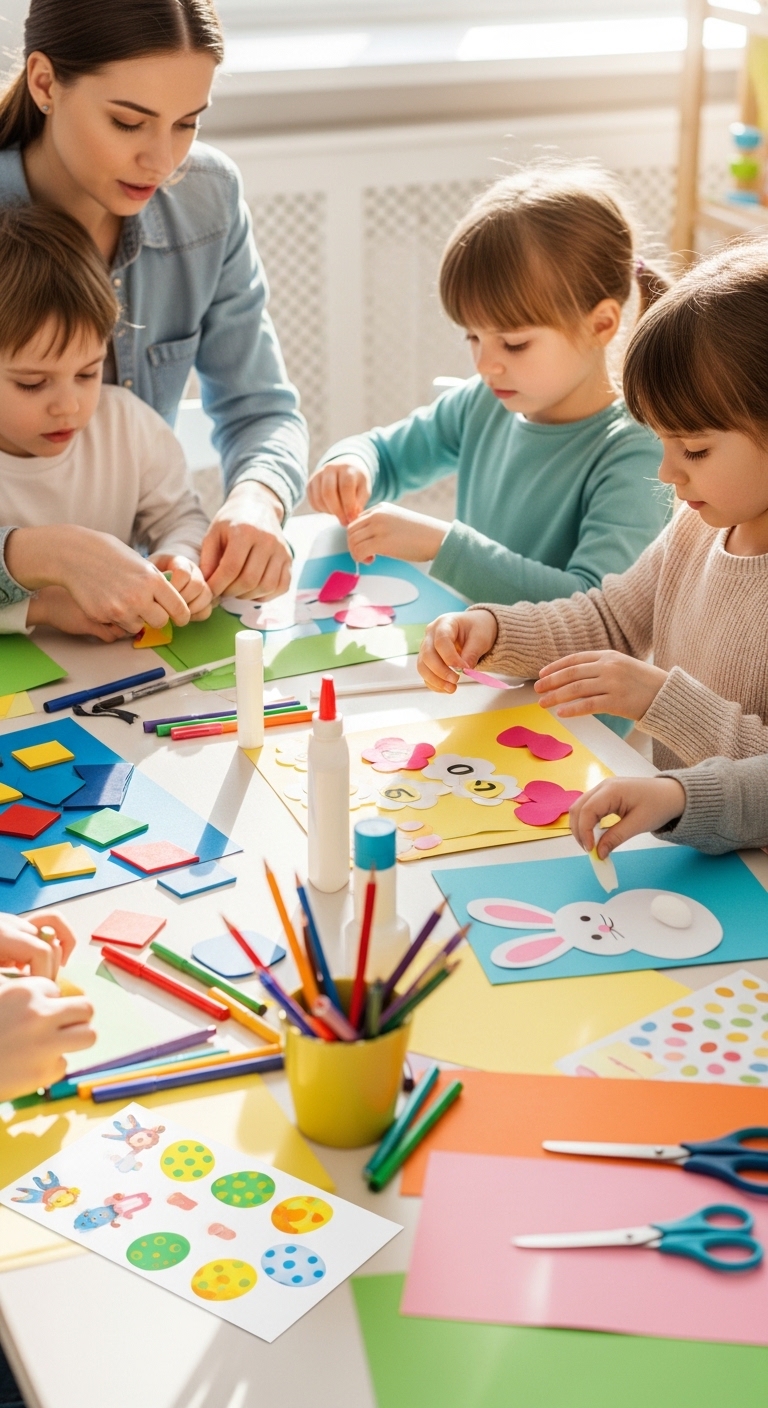
Craft time can be more than just fun, it can become a powerful learning experience when approached thoughtfully.
These strategies help transform easy spring crafts for kids into activities that develop curiosity, critical thinking, and hands-on STEM skills.
-
Ask Questions While Crafting
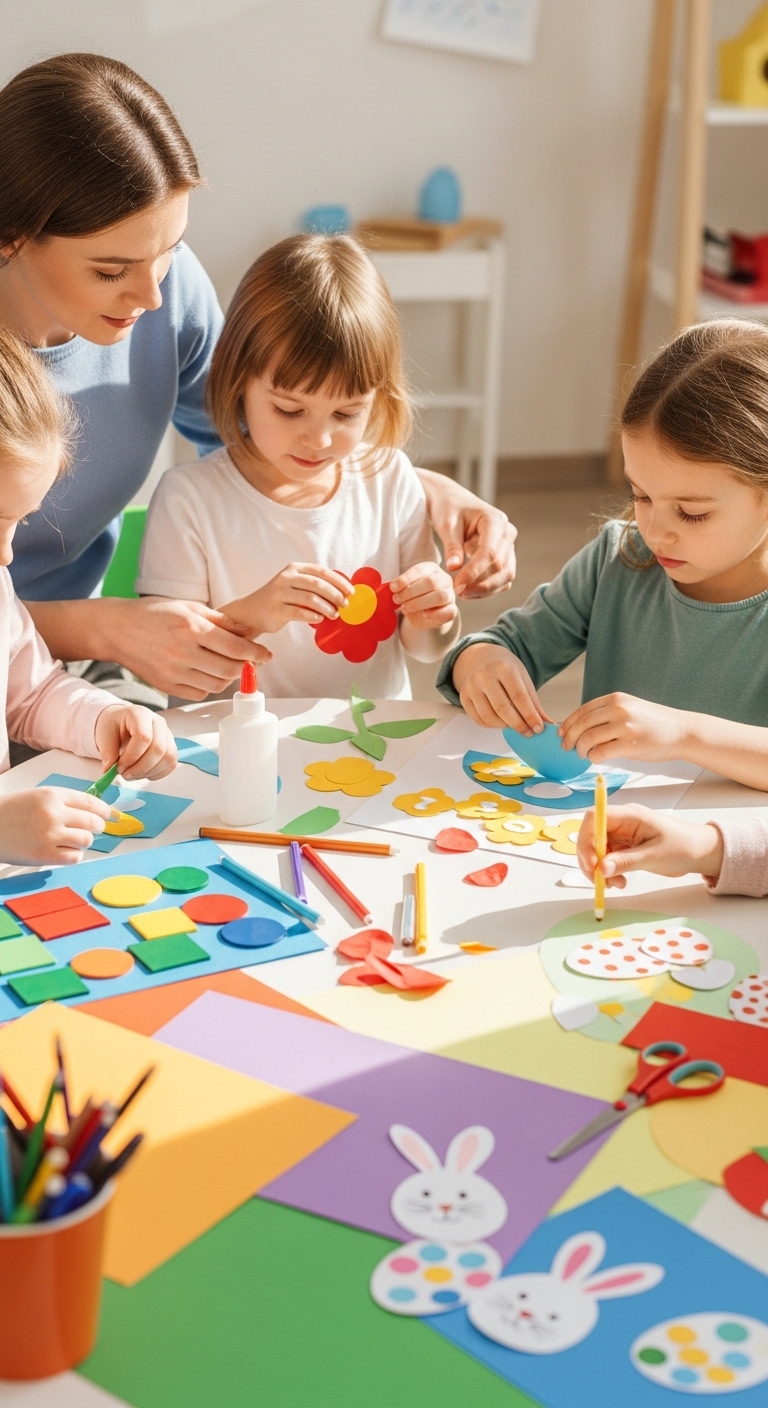
Encourage children to think critically by asking open-ended questions during the activity. For example:
- “Why do you think seeds need sunlight to grow?”
- “What do you notice about the colors on your butterfly?”
- “How does the wind make your spinner move?”
These conversations promote scientific thinking, observation skills, and problem-solving, turning every craft into an interactive learning opportunity.
-
Add Mini Science Experiments
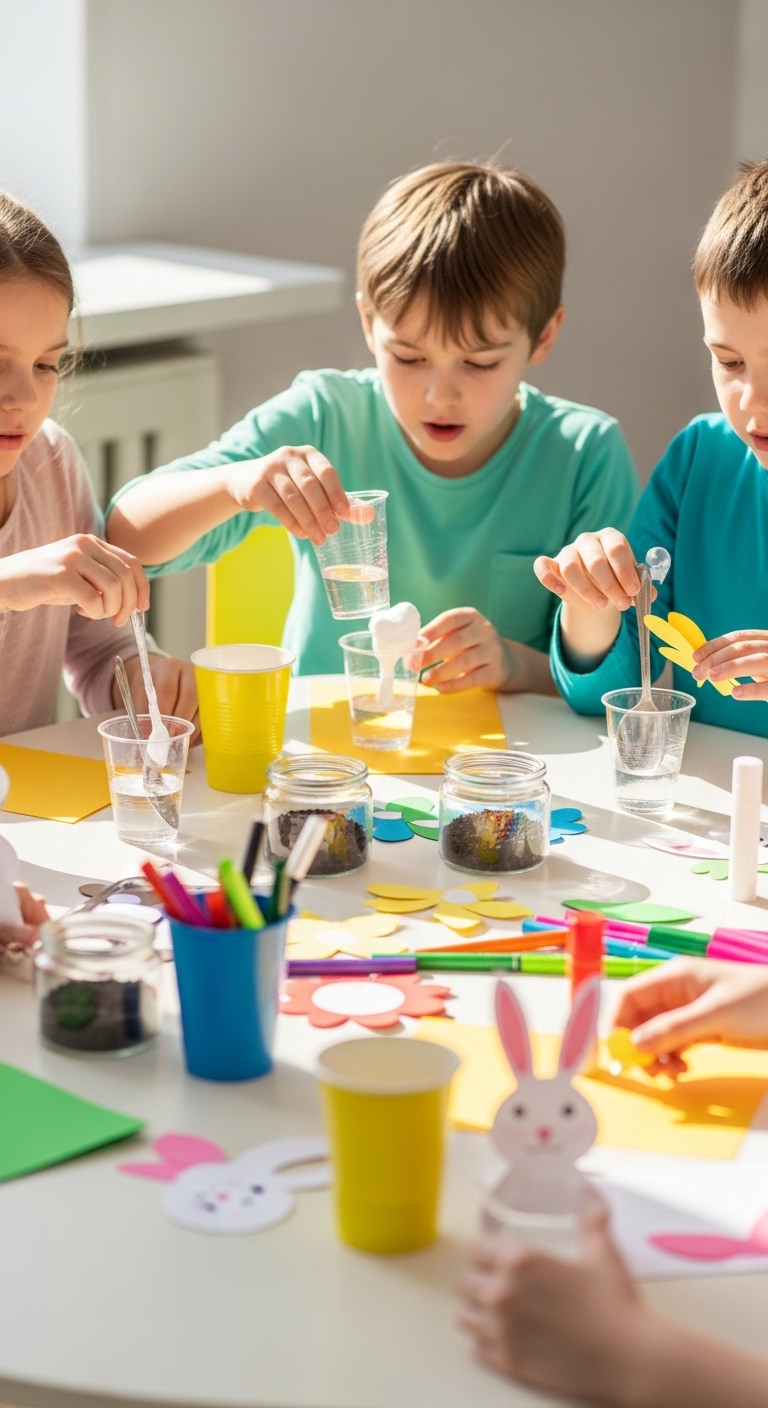
Many easy spring crafts for kids can double as simple experiments:
- Seedling Starters: Track growth by measuring sprout height or comparing sunlight exposure.
- Weather Station or Wind Spinners: Record rainfall, wind speed, or direction and discuss patterns.
- Pollinator Garden or Animal Tracks: Observe insects or track birds visiting the craft garden.
Adding a measurement or observation element teaches children the scientific method, data collection, and analysis while keeping crafting fun and engaging.
-
Use Craft Journals
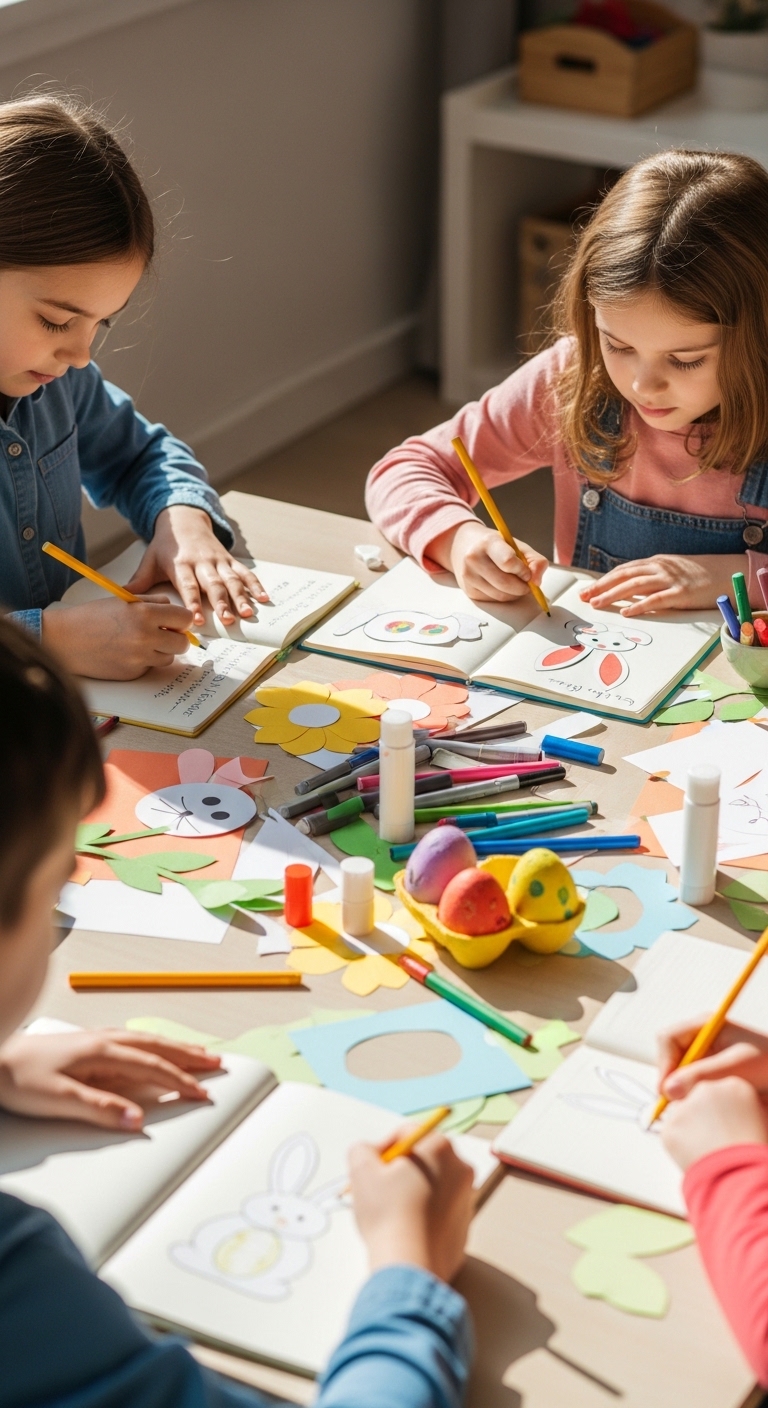
Encourage children to keep a craft journal:
- Draw what they see, sketch predictions, or record results.
- Write short notes or observations about plants, animals, or weather.
- Reflect on what worked, what changed, or what they want to try next.
Journaling enhances literacy, memory retention, and self-expression, while also helping children track progress over time. Even young kids benefit from simple drawings and labeled observations.
By integrating these strategies, easy spring crafts for kids become multi-dimensional learning experiences, combining creativity, science, literacy, and critical thinking.
Craft time evolves from a simple pastime into an educational adventure that supports both mind and imagination.
Safety and Preparation Tips
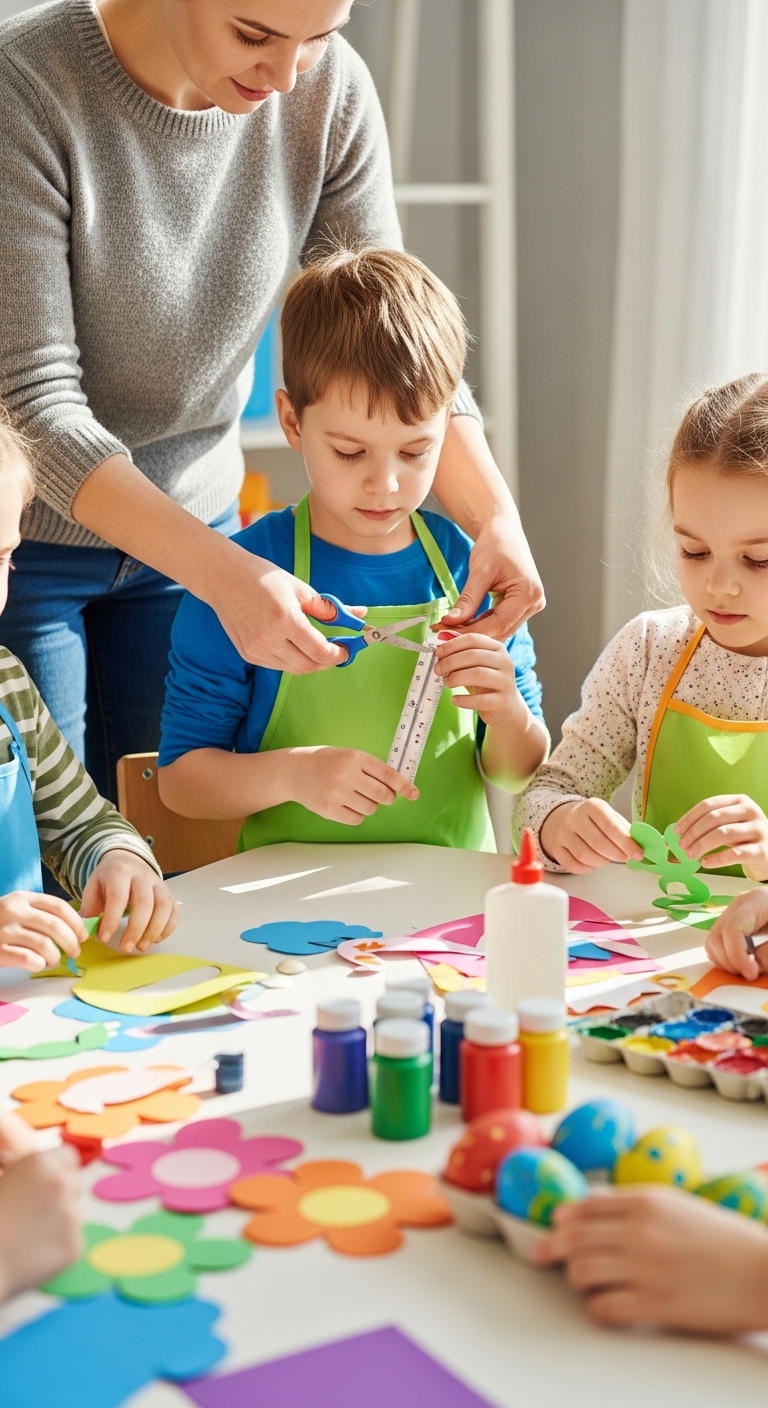
Ensuring a safe and smooth crafting experience is just as important as the fun and educational aspects. With a few simple strategies, you can make easy spring crafts for kids both enjoyable and safe for all ages.
1. Use Kid-Safe and Non-Toxic Materials
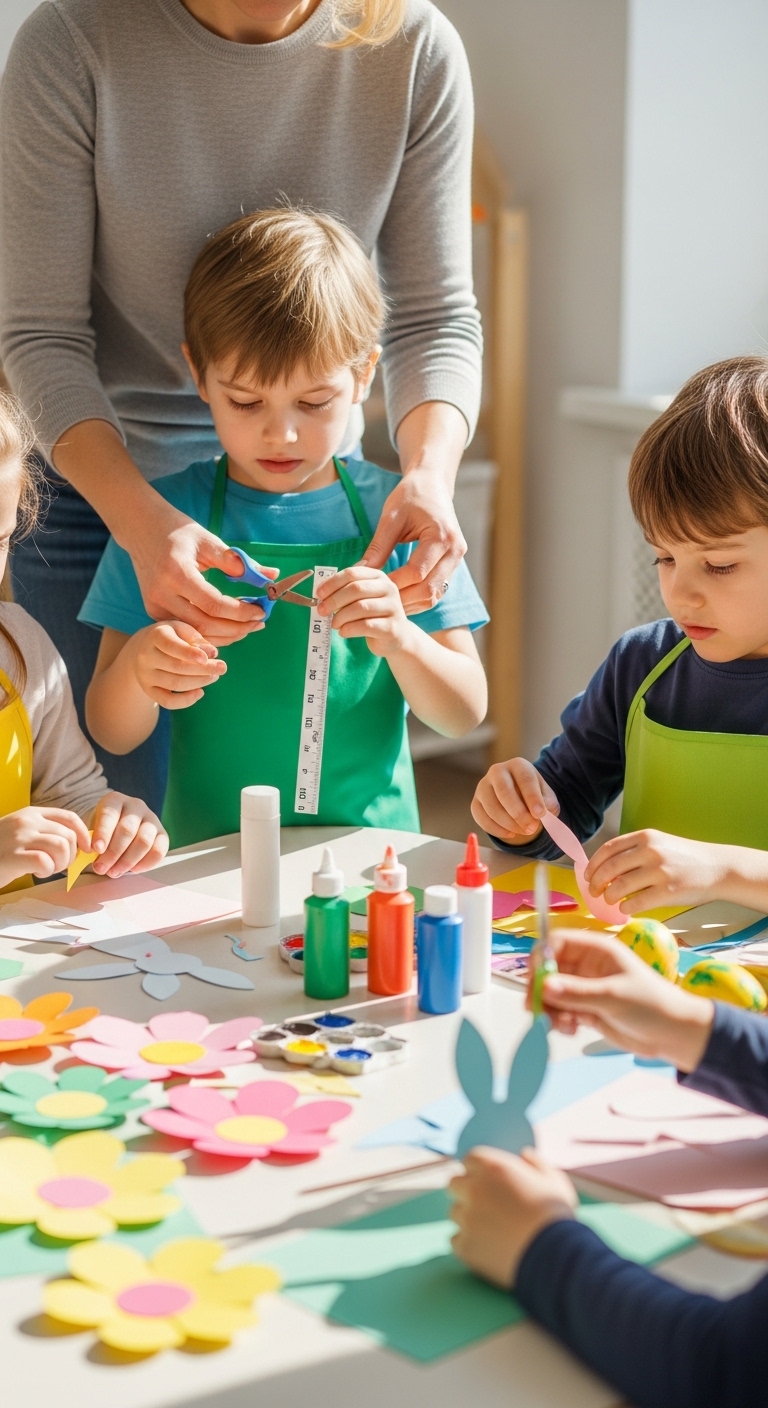
- Choose child-safe scissors with rounded tips to prevent accidents.
- Opt for non-toxic glue, paints, and markers to protect little hands and mouths.
- Avoid small items that could be choking hazards for younger children.
By using age-appropriate, safe materials, children can explore freely without unnecessary risks, giving parents peace of mind.
2. Prep Materials Ahead of Time
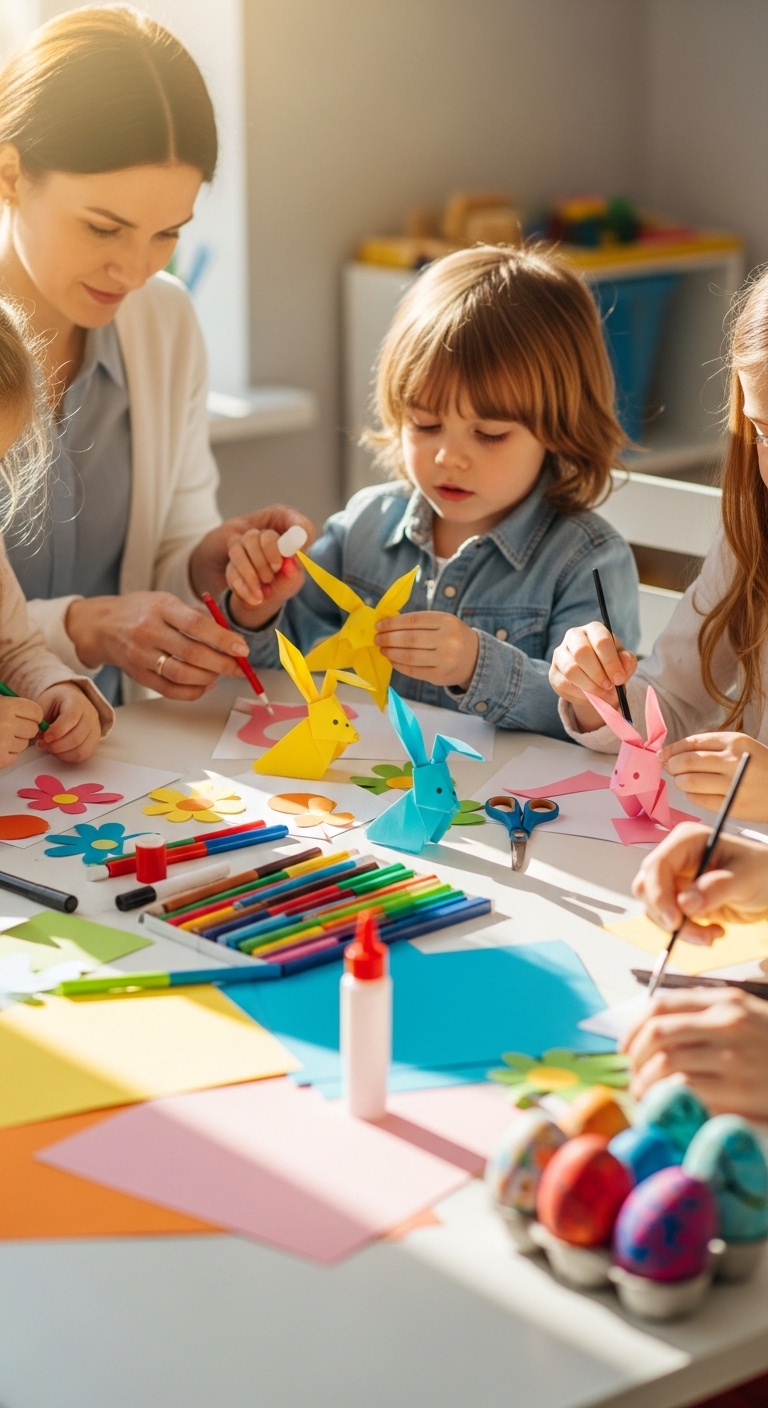
- Gather all materials and tools before starting the craft to avoid interruptions or frustration.
- Pre-cut or organize supplies in small containers to make them accessible for little hands.
- Set up a clean, well-lit workspace with newspaper or mats to reduce mess.
Preparation keeps the session organized and stress-free, allowing children to focus on learning, creativity, and exploration.
3. Adjust Complexity for Age Groups
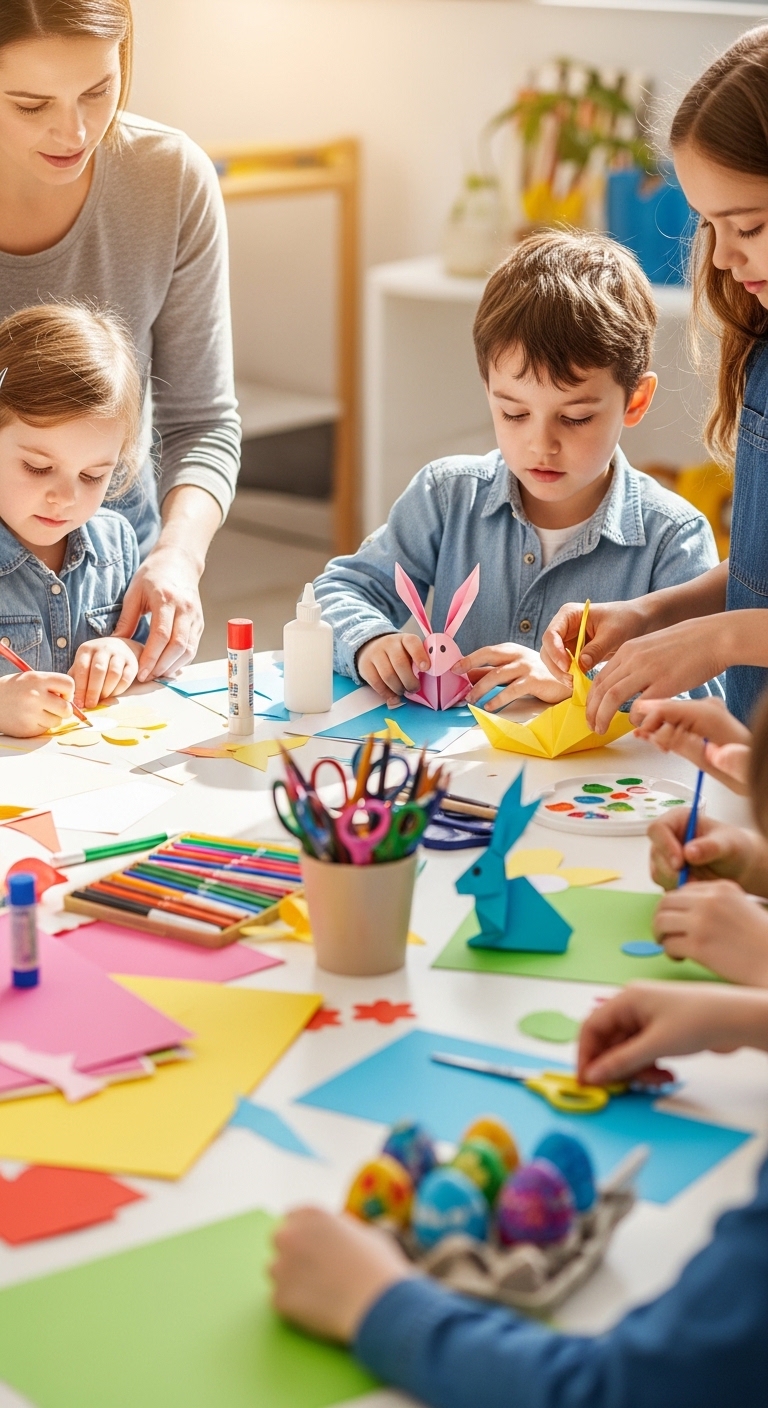
- Toddlers: Stick to simple crafts with large pieces, easy handling, and minimal steps.
- Preschoolers: Introduce slightly more challenging tasks like cutting, measuring, or assembling multiple components.
- Older Kids: Encourage experiments, detailed observation, or integrating mini-science projects with their crafts.
Tailoring activities to each child’s skill level ensures the craft is fun, achievable, and educational without causing frustration.
By prioritizing safety, preparation, and age-appropriate design, parents and educators can turn any craft session into a seamless, engaging, and learning-rich experience. These small steps help make easy spring crafts for kids not just fun, but also safe, organized, and highly educational.
Conclusion:
Spring is the perfect time to combine creativity, hands-on learning, and outdoor exploration through easy spring crafts for kids. From seedling starters that teach responsibility and plant life cycles, to wind spinners and sun catchers that introduce physics and light, each craft is an opportunity for children to develop STEM skills, fine motor abilities, and environmental awareness while having fun.
Remember, the key to a successful craft session is preparation, age-appropriate complexity, and safety. When children feel safe, supported, and free to explore, they gain confidence, critical thinking skills, and a lifelong love of learning.
These easy spring crafts for kids are more than just activities, they’re mini adventures in discovery, creativity, and growth.