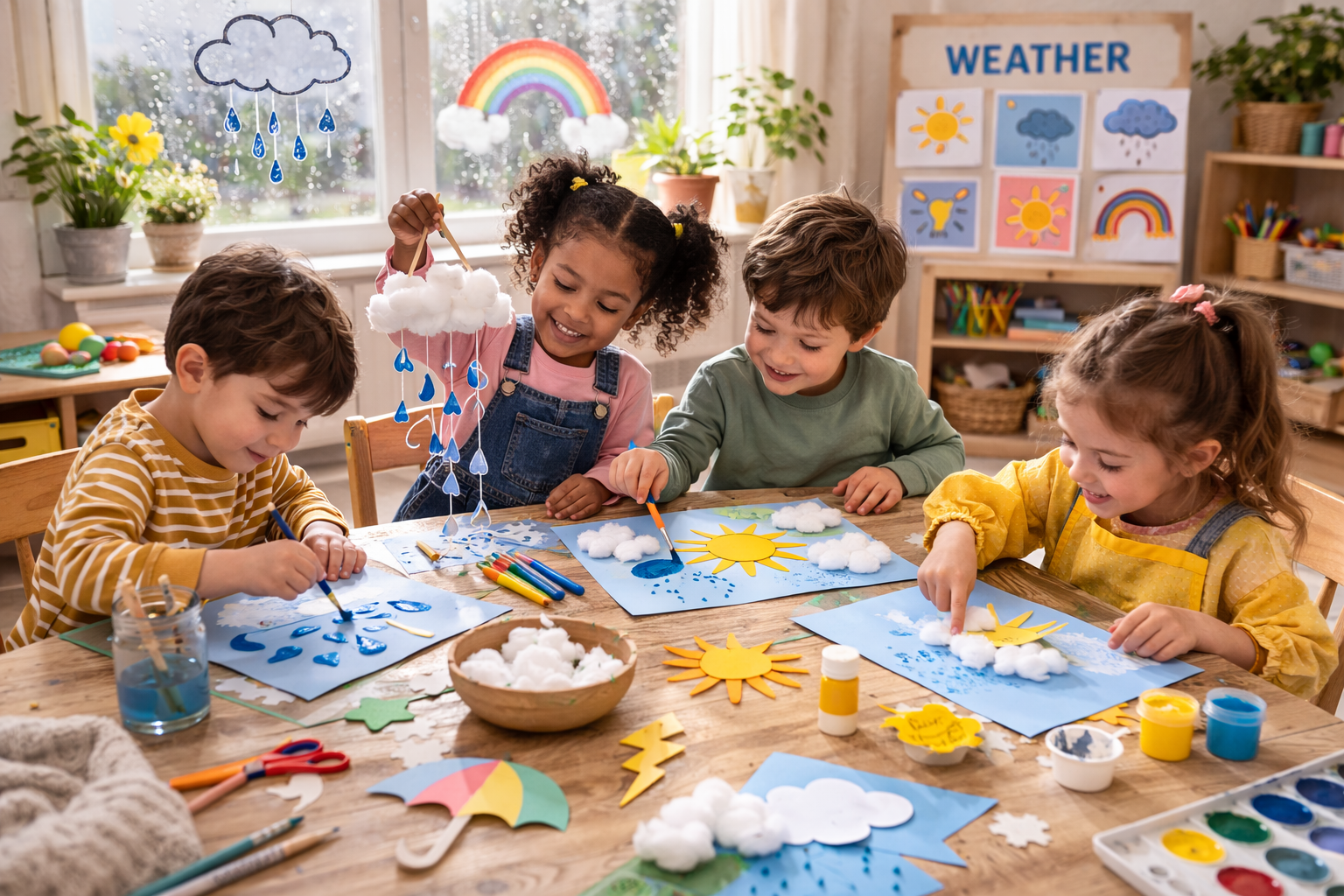
These weather crafts for kids that turn curiosity into gentle creativity are simple activities that teach about the weather and let kids be creative.
Some days a child asks about the weather ten times before lunch.
Not because they love clouds, but because the sky keeps changing without warning.
Rain cancels playtime. A dark afternoon feels like bedtime came early.
Most weather activities teach facts: names of clouds, seasons, temperature.
But many kids aren’t looking for information yet. They’re trying to make sense of something unpredictable.
That’s where weather crafts help.
Slow, hands-on projects give children a way to recreate what they see, which quietly turns confusion into understanding. Instead of memorizing weather, they begin to feel its patterns.
This post shares weather crafts for kids that channel curiosity into calm creativity, simple activities that help children process change, not just decorate paper.
If you want more simple activities after this, you can also explore these fun and educational Easy Spring Crafts for Kids (Fun and Educational).
Table of Contents
- 1 Why Kids Are So Drawn to Weather
- 2 The Real Problem: Most Weather Crafts Overstimulate
- 3 How to Design Gentle Weather Crafts
- 4 THE WEATHER CRAFTS FOR KIDS
- 5 1. Cloud Thinking Crafts: Helping Kids Understand Change and Mood
- 6 3. Rain and Storm Thinking Crafts: Helping Kids Understand Change and Prediction
- 7 4. Sun and Temperature Thinking Crafts: Helping Kids Notice Patterns
- 8 What Kids Actually Learn From Weather Crafts
- 9 Tips for Running These Crafts Without Chaos
- 10 Conclusion
Why Kids Are So Drawn to Weather
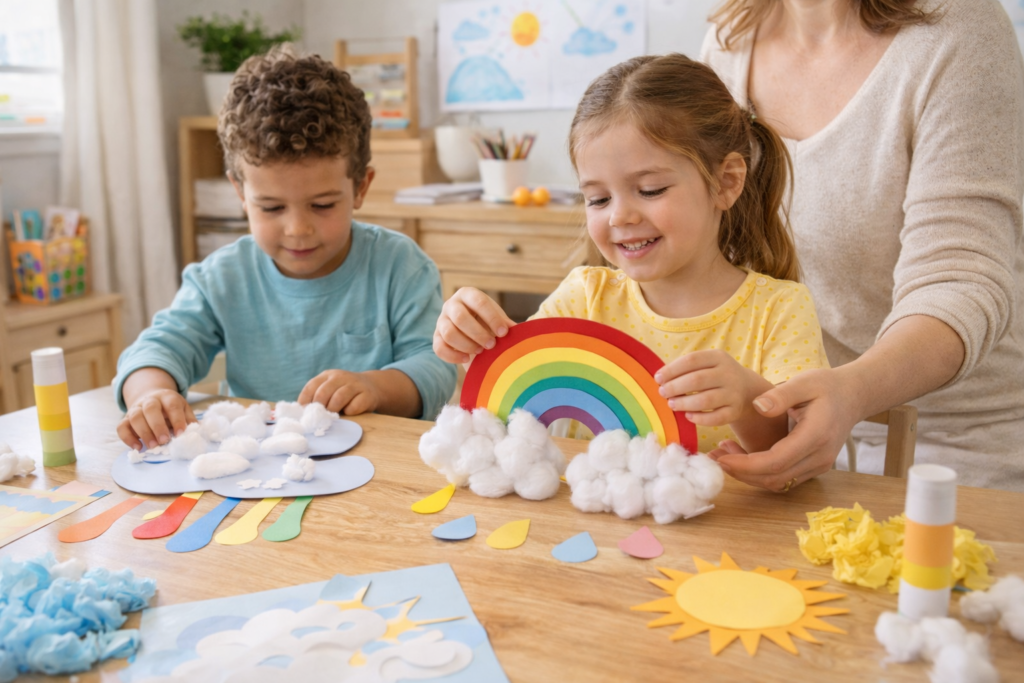
Before we rush into making clouds and suns, it helps to understand what children are actually doing when they talk about the weather all day.
Kids aren’t fascinated by weather because it’s cute. They’re trying to understand control.
Weather is usually the first big system they notice that affects their life but doesn’t listen to them. The playground suddenly closes because of rain.
The room gets dark at noon during a storm. The wind becomes loud at night and they can’t sleep. To a child, that feels huge, something powerful just changed their world without warning.
That’s why the questions repeat:
“Why is the sky dark?”
“Who made the rain start?”
“Will the wind come inside?”
They’re not really asking for a science lecture.
They’re asking for reassurance and predictability.
This is where weather crafts matter more than worksheets.
When a child recreates rain, wind, or clouds with their hands, they are processing the unknown. They move from things just happen to things follow patterns.
A calm weather craft quietly teaches:
- storms begin and end
- clouds change gradually
- wind has direction
- dark skies don’t last forever
These activities also help emotional regulation.
Children who model storms, heat, or night wind through art often handle real weather changes better because their brain has already rehearsed it in a safe way.
So the goal isn’t to decorate seasons.
It’s to give children a gentle way to understand a world that suddenly changes around them.
The Real Problem: Most Weather Crafts Overstimulate
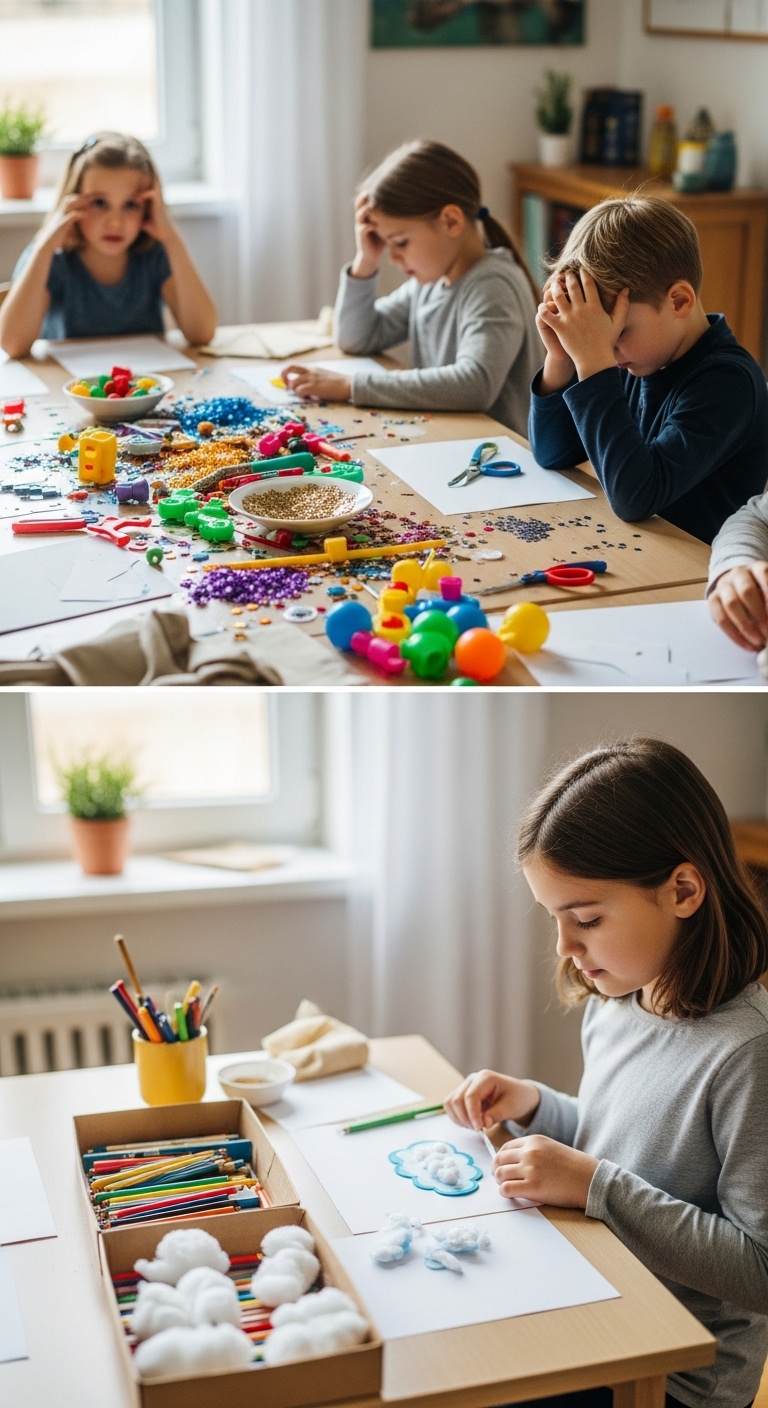
A lot of weather crafts for kids look fun but don’t actually help kids understand weather.
When the page is full of bright colors, glitter, foam, and stickers, children focus on decorating. They stop paying attention to what the weather is doing. The cloud shape doesn’t matter anymore. The direction of the rain doesn’t matter either.
The activity becomes “finish the art” instead of “notice the change.”
Loud, messy crafts also make kids rush. They want to use every material before someone else does, so observation disappears. And weather is something you only understand by slowing down and looking carefully.
A simpler approach works better:
Observe → Make → Understand
Let the child first notice one thing (dark sky, moving clouds, longer shadows).
Then recreate just that one idea with a simple craft.
After that, the explanation actually makes sense to them.
That’s when weather crafts for kids stop being decoration and start becoming learning.
Calm learning doesn’t only happen with paper crafts, even kitchen activities can work when they are structured and predictable, like these Spring Baking Ideas for Kids That Feel Playful, Calm, and Mess-Friendly.
How to Design Gentle Weather Crafts
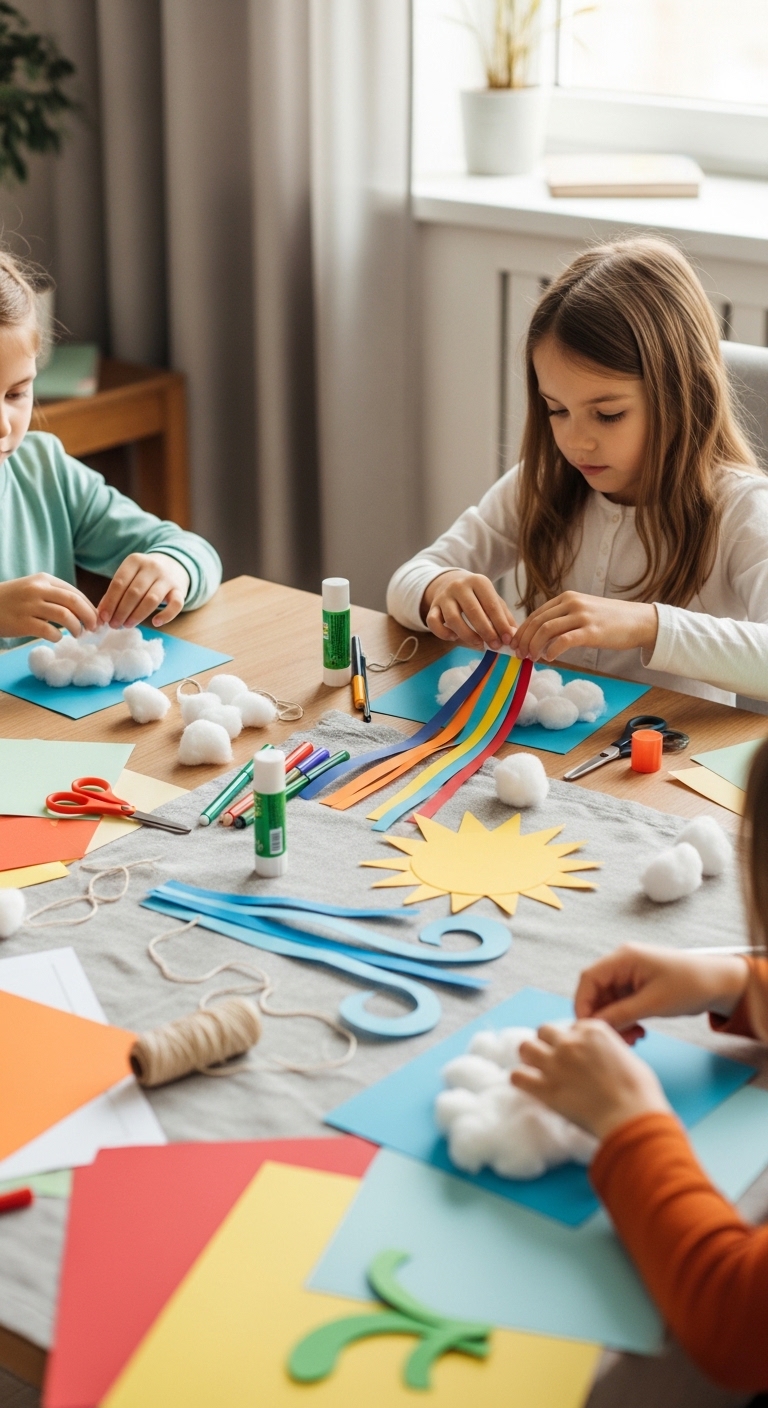
Before choosing activities, it helps to know what makes a weather craft actually work for children.
You don’t need more supplies, you need clearer focus.
Here’s a simple framework you can reuse when planning weather crafts for kids.
The 4 Rules of Calm Learning Crafts
- One concept per craft
Don’t mix sun, clouds, rain, wind, and rainbow in one project.
Children learn faster when the activity answers one question only, How does wind move? or What happens before rain? - Movement matters more than decoration
Weather is motion. Clouds drift, shadows shift, rain falls.
If the craft moves (spins, slides, swings, changes), kids understand it better than if they just color it. - Keep the background quiet
Plain paper or soft colors help attention stay on the weather idea. Busy backgrounds make children decorate instead of observe. - Ask for a prediction first
Before making the craft, ask:
“What do you think will happen?”
Children remember the lesson longer when they test their own guess.
These small choices turn simple activities into meaningful weather crafts for kids, without adding complexity.
THE WEATHER CRAFTS FOR KIDS
1. Cloud Thinking Crafts: Helping Kids Understand Change and Mood
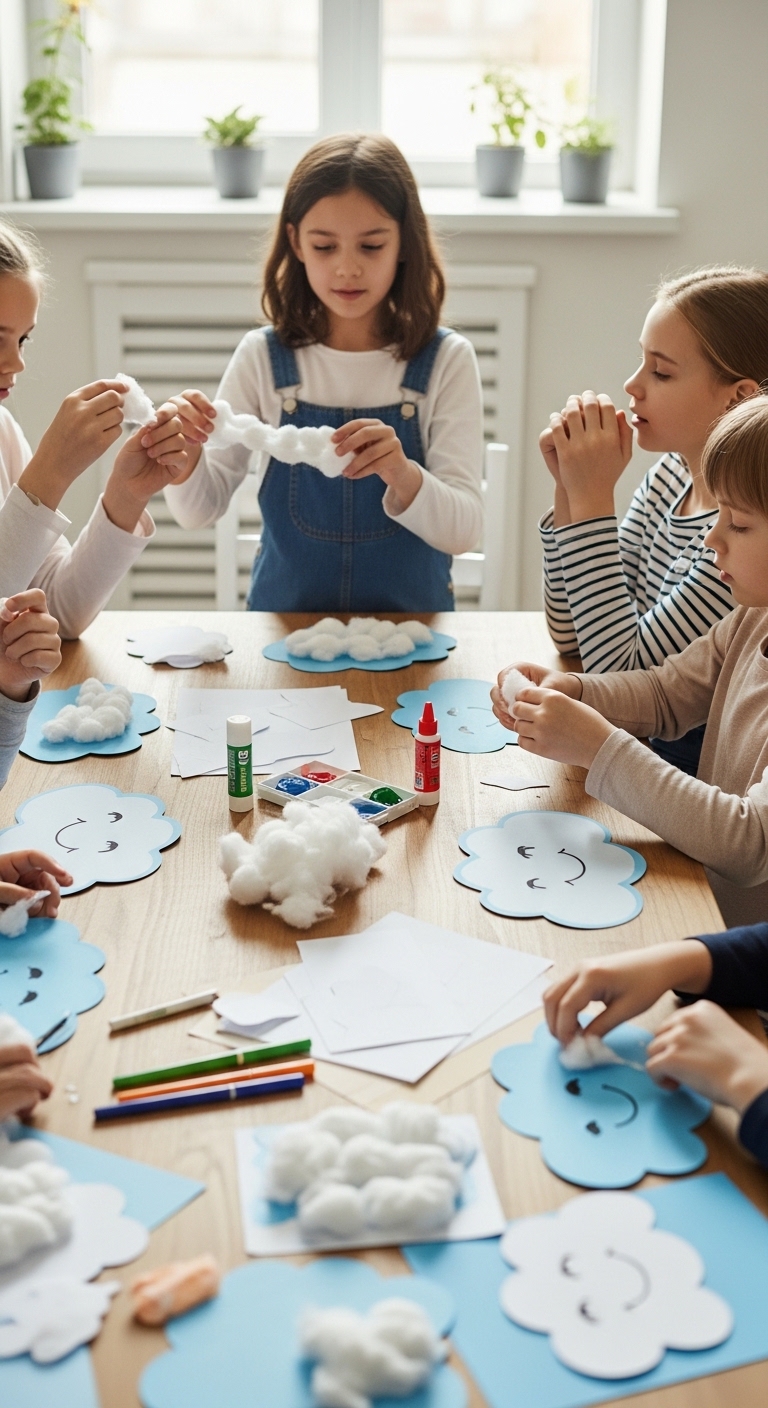
Clouds are one of the first natural patterns children notice, and one of the hardest to understand. They’re not just “pretty shapes in the sky.” Kids see clouds move, change color, and appear suddenly, and that can feel unpredictable or even unsettling.
When we guide children through cloud-focused crafts, we’re not making pretty jars or wheels, but helping them notice patterns, understand timing, and connect observation. That’s real learning.
Children learn best when activities connect to real feelings, which is why social-emotional crafts like these Friendship-Themed Spring Preschool Crafts For Kids also work beautifully alongside weather observations.
Watching Clouds Jar
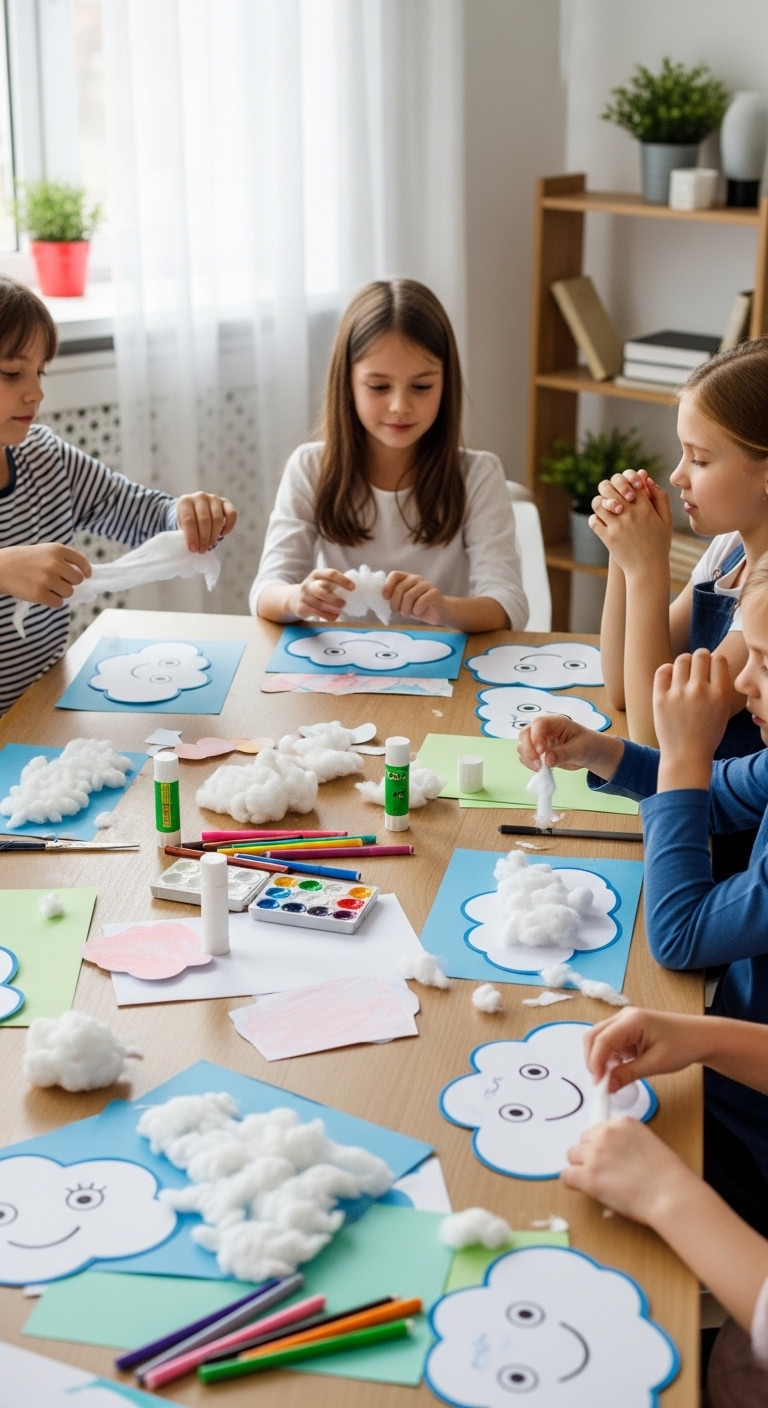
Instead of giving a child a jar to decorate in one sitting, we use it as a tool for observation and reflection.
- How it works: Children start with a clear jar and a small amount of blue water. Cotton pieces represent clouds. Each time they look outside, they adjust the jar to match what they see: thin layers for light clouds, thicker for heavier clouds, darker water if the sky deepens.
- What they learn: Clouds build gradually. The sky has layers and depth. Weather isn’t random — it changes over time.
- Why it matters: Many children feel frustrated or anxious about sudden changes in the environment. By modeling clouds slowly in a jar, they practice noticing, predicting, and connecting what they see outside to what they create inside. That builds patience and understanding, a foundation for scientific thinking.
Sky Mood Wheel
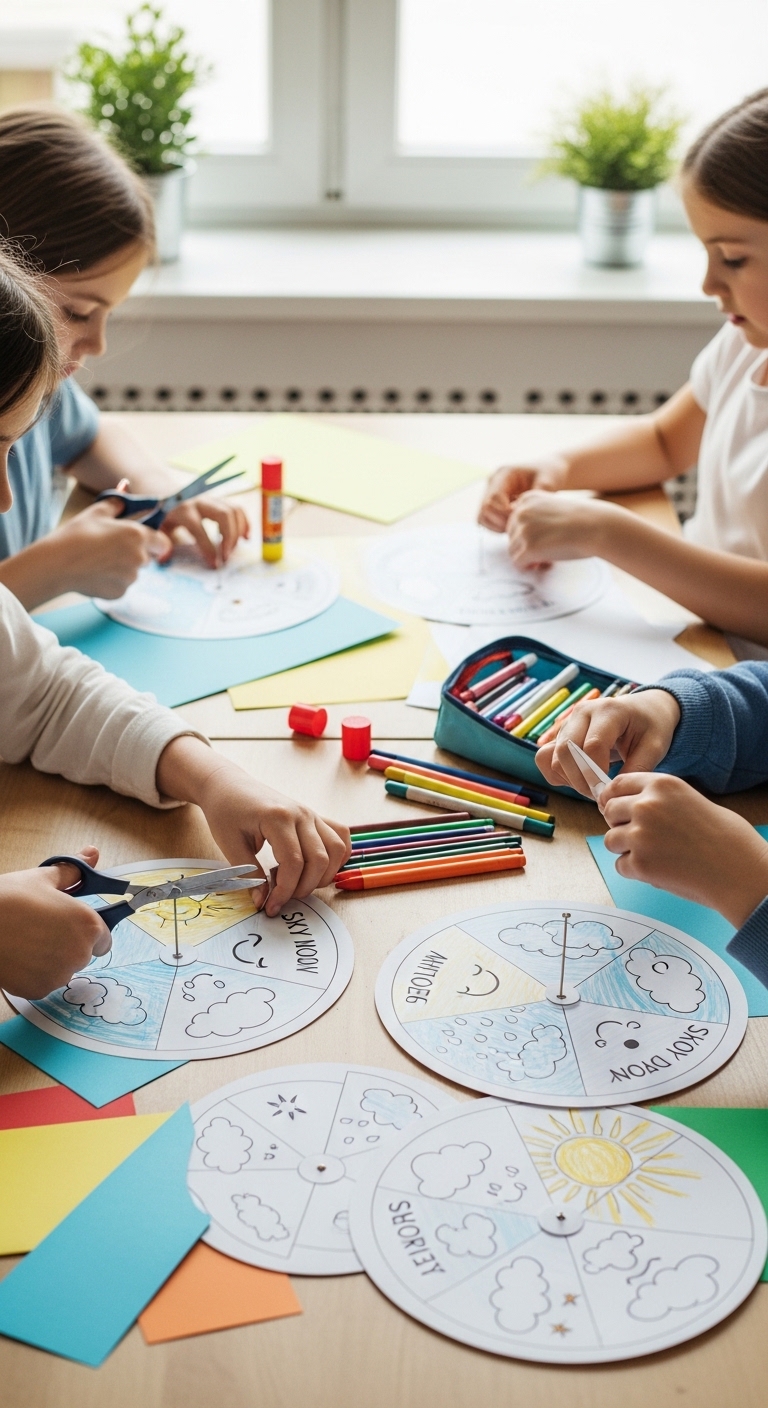
Children react emotionally to the sky, a dark afternoon can feel like danger, a bright day like safety. Crafts that label and track sky changes help them link feelings to real-world patterns.
- How it works: Create a simple rotating wheel with sections for different sky states: clear, cloudy, stormy, evening. Children rotate the wheel to match what they see outside throughout the day.
- What they learn: Patterns repeat. A gray sky doesn’t always mean rain. The child learns to predict and categorize, and notice connections between sky and weather events.
- Why it matters: Children often respond emotionally before they understand. This activity lets them practice observation, prediction, and emotional awareness in a calm, safe way.
Rain Arrival Window Hanger
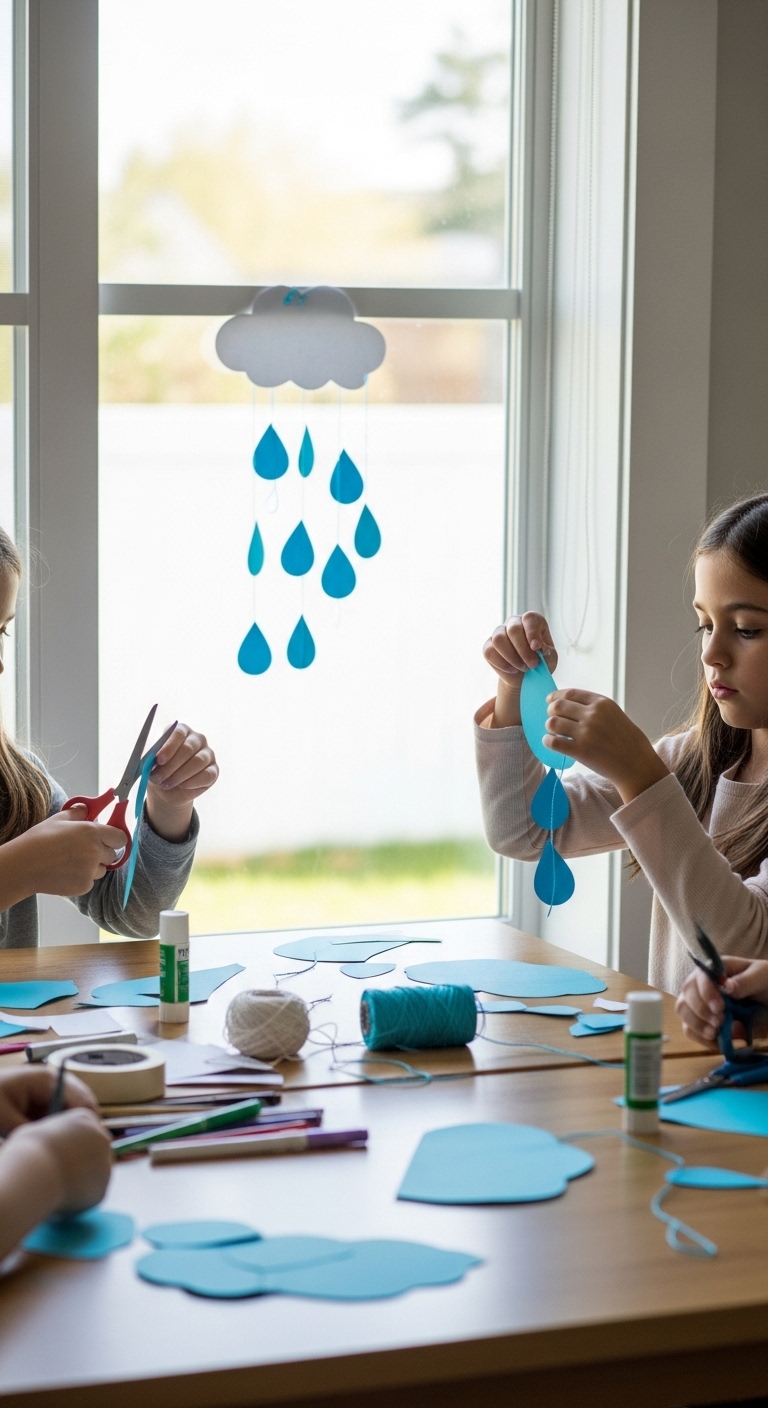
Rain can feel sudden to children. They often miss the early signs and experience it as a surprise. Crafts that represent rain arriving gradually help them notice precursors and sequence events.
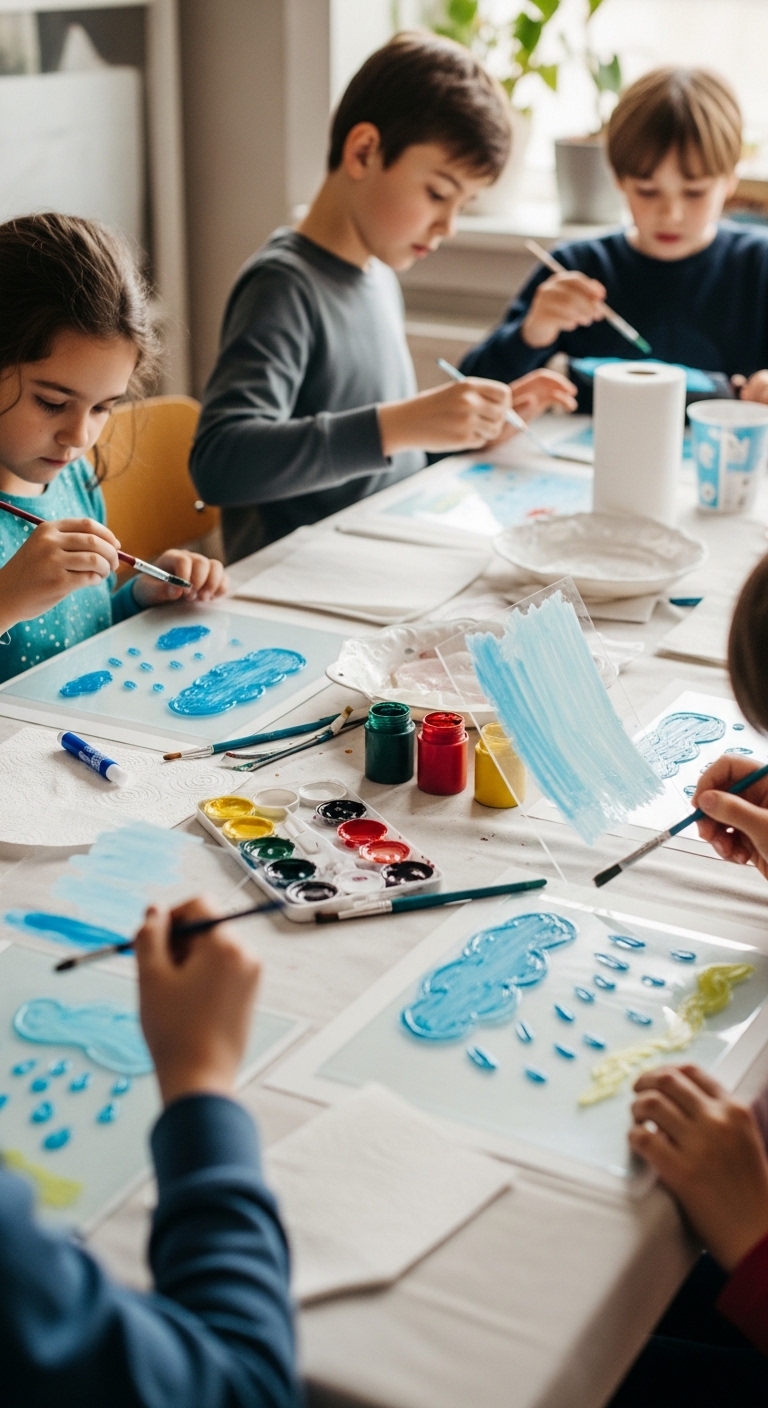
- How it works: A clear sheet is taped to a window. When clouds gather, children add a few paper raindrops at the top. As the sky darkens, they add more, gradually filling the sheet until it “matches” the real rain outside.
- What they learn: Prediction, sequencing, and connecting cause and effect. They see that rain builds slowly and can anticipate changes.
- Why it matters: This simple craft turns waiting for rain into active observation. Children learn that nature follows patterns and they can notice them, an essential skill for problem solving and critical thinking.
2. Wind Thinking Crafts: Helping Kids Understand Invisible Forces
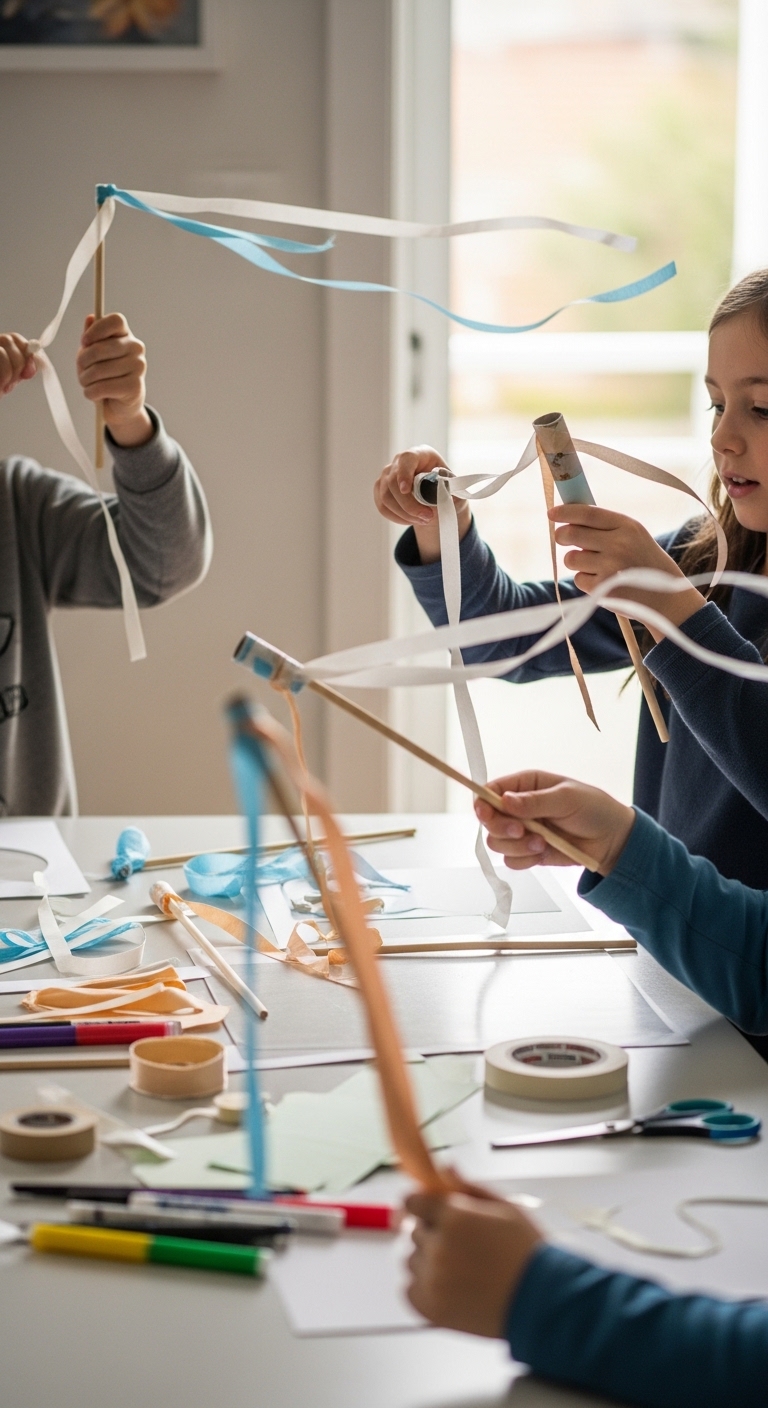
Wind is invisible, but children notice its effects everywhere, leaves sway, flags flap, hair blows. That sudden movement can feel unpredictable. Kids often think it happens randomly because they can’t see the air itself.
Guiding children through wind-focused crafts helps them see movement, experiment with cause-and-effect, and connect observation to understanding. These activities are about noticing patterns, not just making something spin.
Ribbon Weather Stick
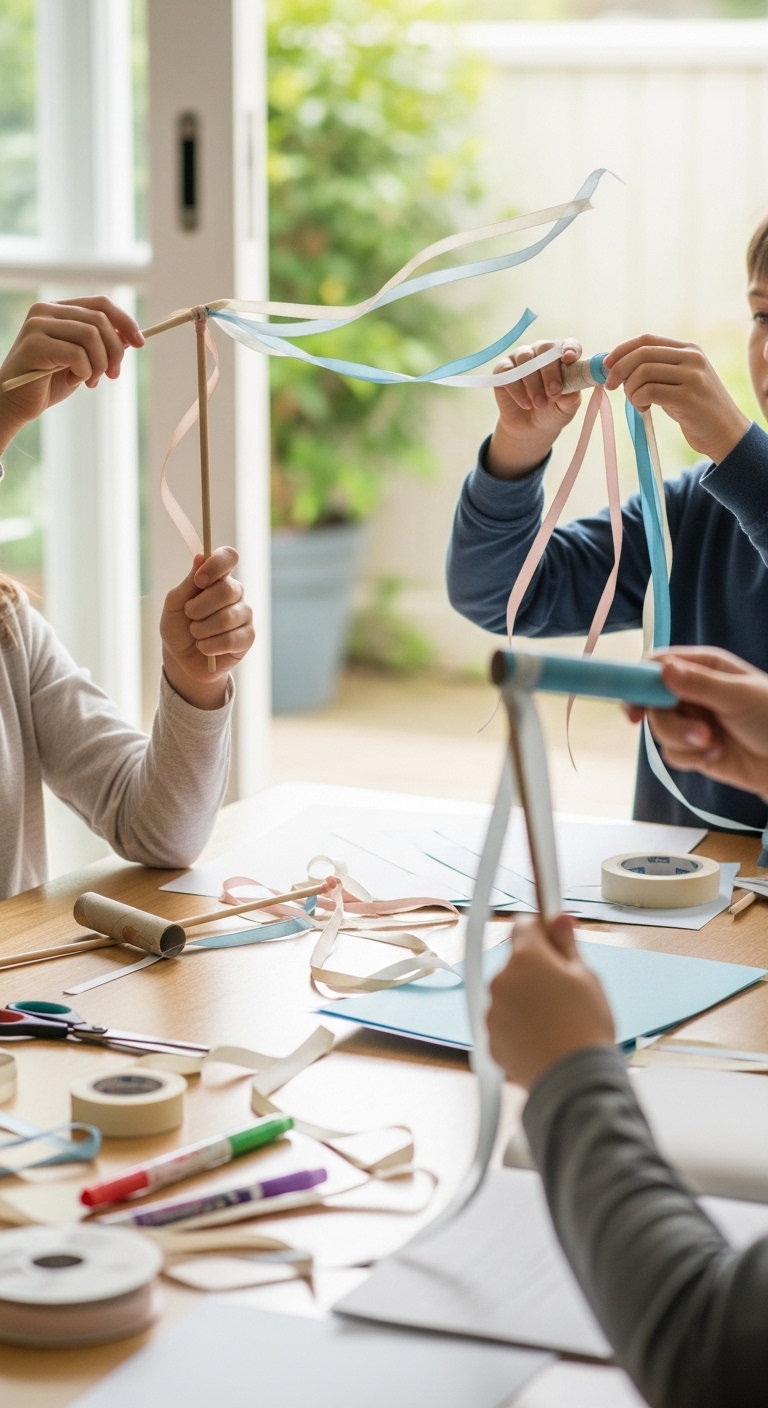
A ribbon stick lets children observe wind in a visible, controlled way.
How it works: Children tie ribbons to a stick and hold it outside. They watch how the ribbons move in a gentle breeze versus a stronger gust, noticing patterns of speed and direction. Over time, they may try adjusting how they hold it or where they stand to see different effects.
What they learn: Wind has direction and strength. Movement follows patterns. They practice observation, comparison, and noticing subtle differences.
Why it matters: Wind can feel random to children. Watching and testing it through a craft teaches them to predict, connect cause and effect, and understand something invisible. This builds curiosity and critical thinking while keeping the activity calm.
Pinwheel Experiment
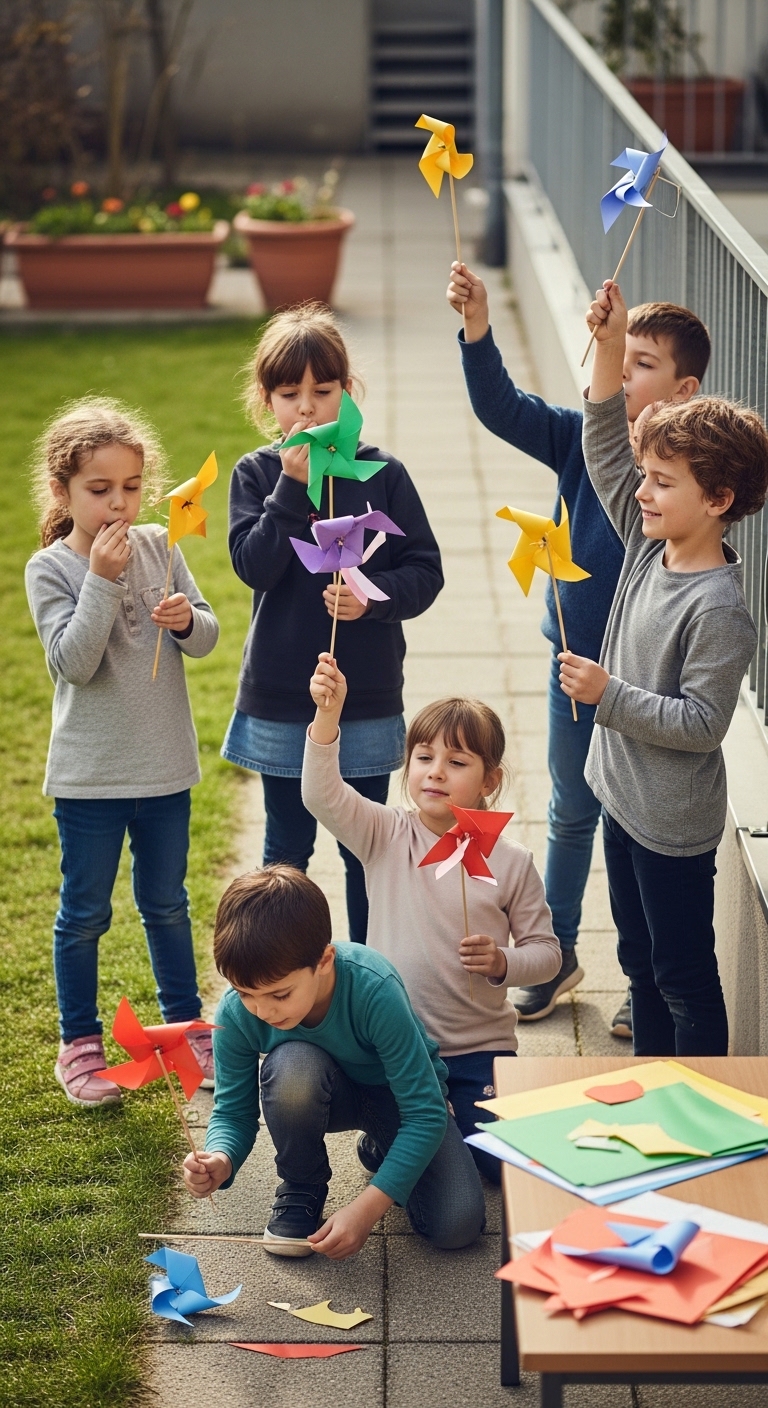
A pinwheel turns playful movement into real observation.
How it works: Children blow on a pinwheel to see how it spins, then place it outside and watch how natural wind affects it. They can compare speeds, notice changes, and make simple predictions about how the wind will move it next.
What they learn: Forces can be strong or weak, and movement depends on direction and speed. They practice cause-and-effect thinking and start noticing environmental patterns.
Why it matters: Children learn that the world has predictable forces. Observing wind in a hands-on way builds patience, attention, and reasoning, all critical skills for understanding nature.
3. Rain and Storm Thinking Crafts: Helping Kids Understand Change and Prediction
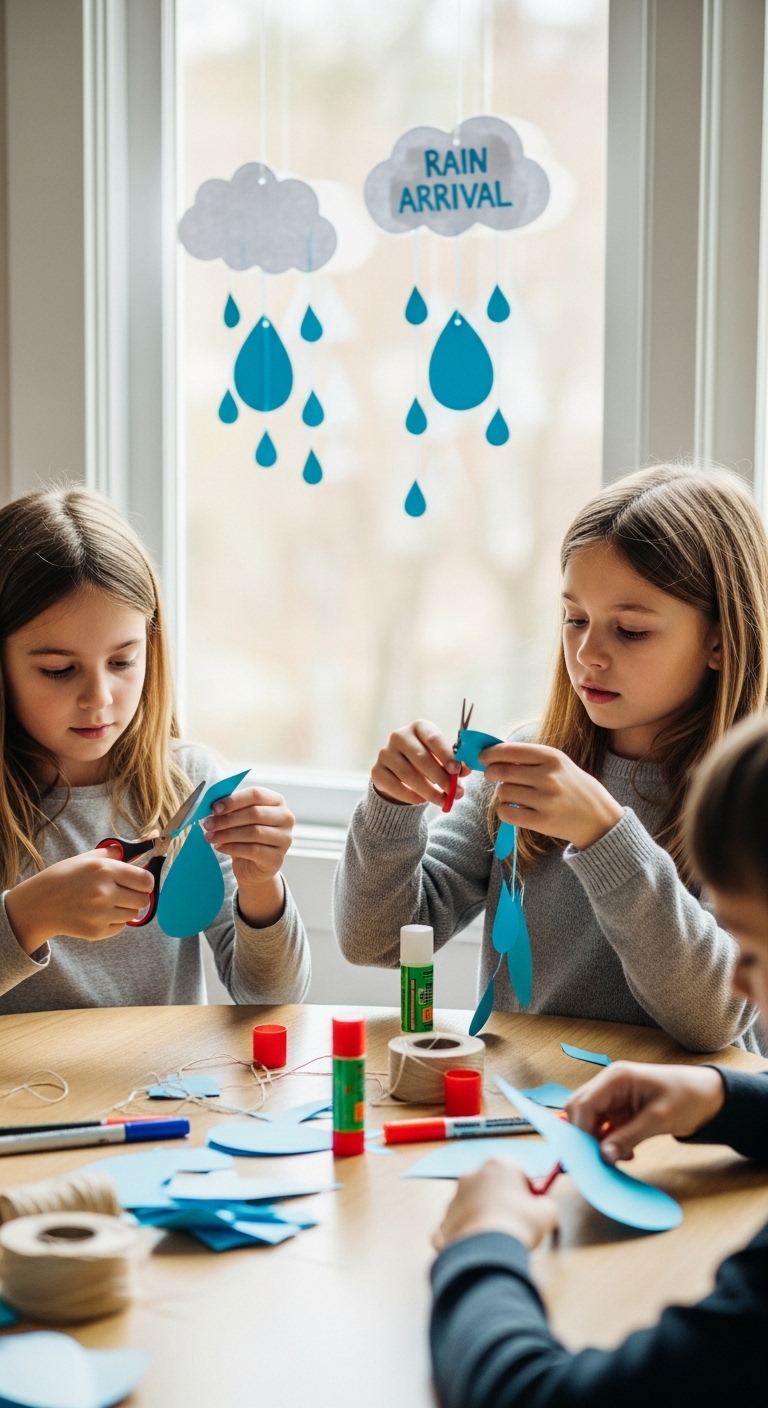
Rain and storms can feel sudden and unpredictable to children. They notice thunder, see clouds darken, or feel raindrops, but they often don’t connect these events to the gradual changes leading up to them.
Using Weather Crafts for Kids focused on rain and storms helps children observe patterns, predict outcomes, and understand cause-and-effect, turning curiosity into calm learning rather than surprise or anxiety.
Rain Arrival Window Hanger
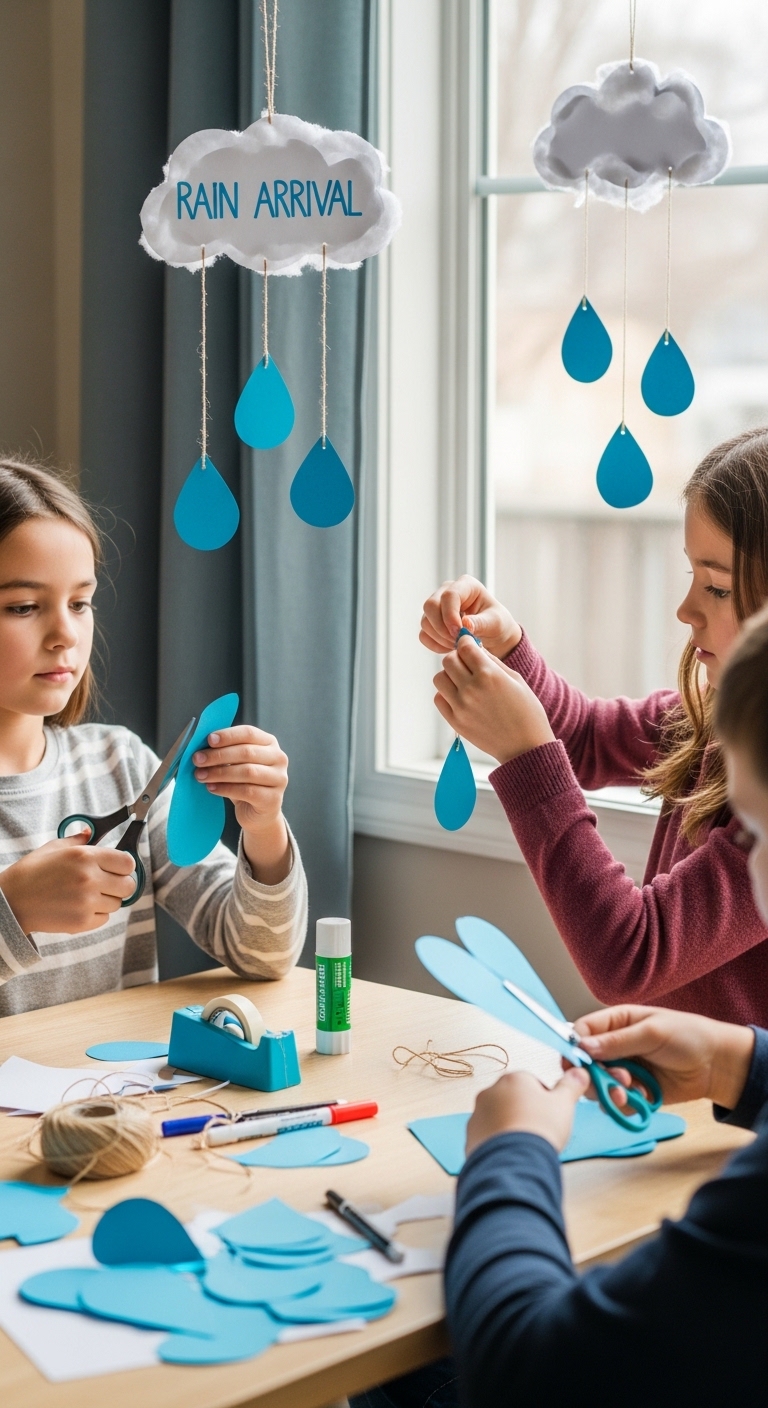
A clear window sheet shows how rain develops over time.
How it works: Children place a clear sheet on a window and add paper raindrops at the top as clouds gather. Throughout the day, they gradually add more drops to match the sky outside. When rain begins, the window already reflects what they’ve been observing.
What they learn: Rain doesn’t appear suddenly. Children practice prediction, sequencing, and linking visual cues to real events. They begin noticing subtle signs, like darkening clouds or increasing wind, that signal rain is coming.
Why it matters: Many kids find sudden storms frightening. By tracking rain in a craft, they learn patience, observation, and cause-and-effect, and see that the weather follows patterns they can understand.
Storm Sound Box
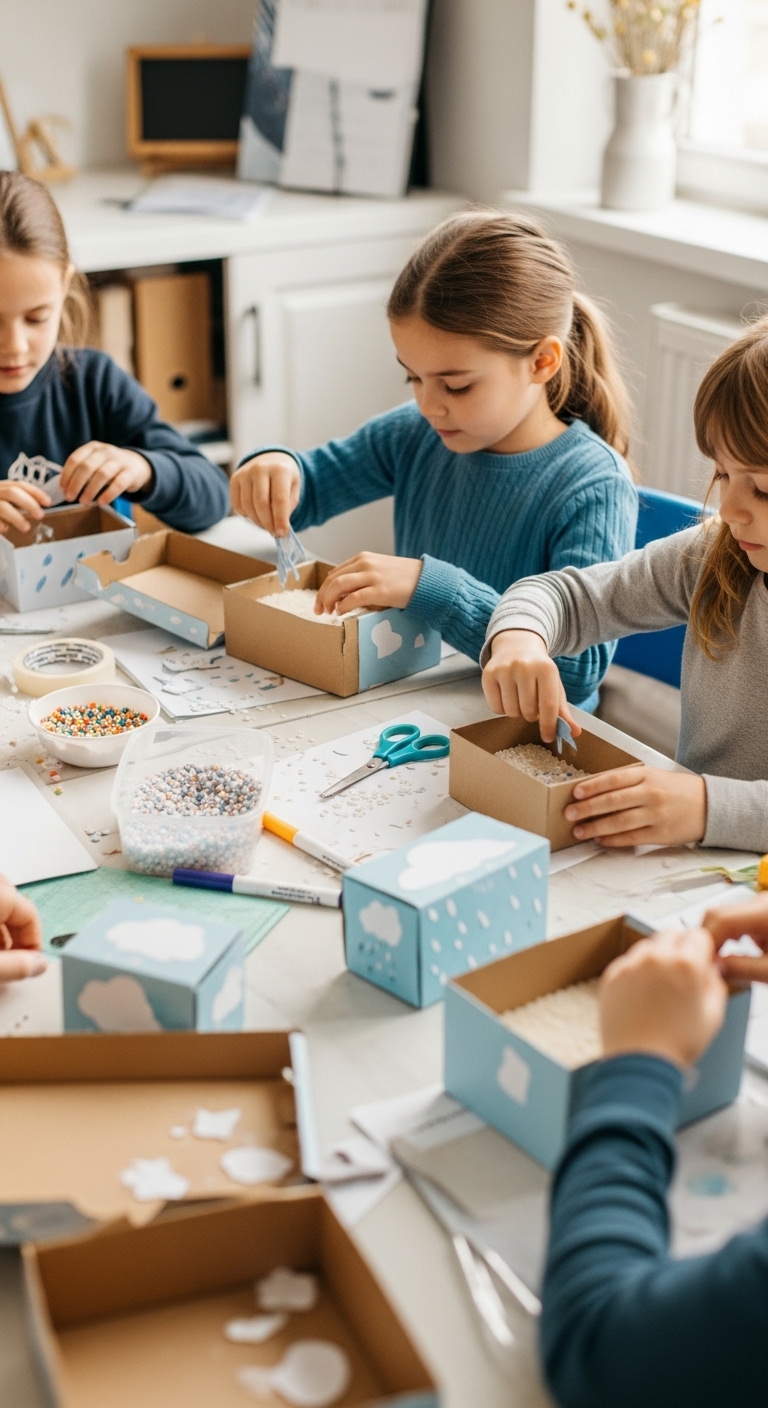
Children often feel overwhelmed by thunder or wind noise. Crafts that represent storms give them a calm, hands-on way to explore sound and movement.
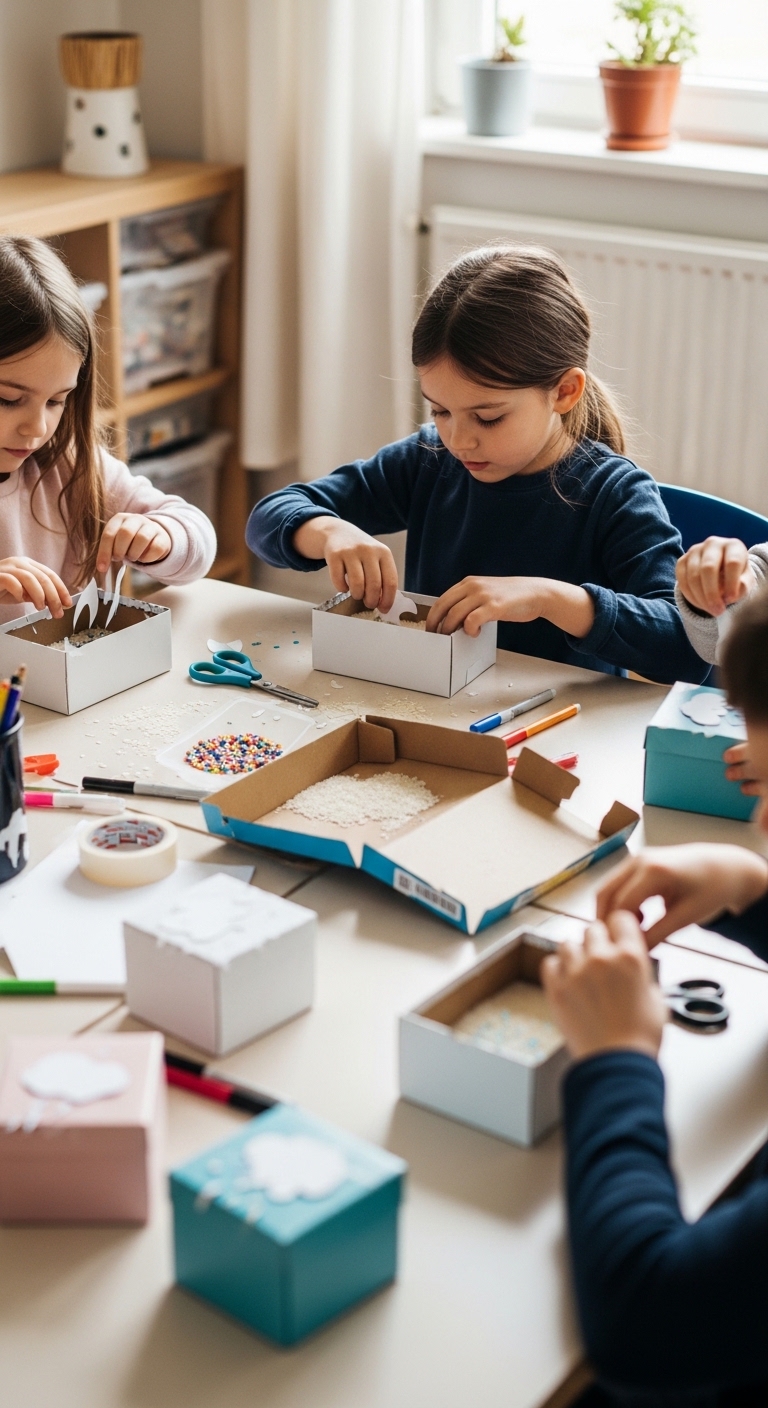
How it works: Fill a small box with rice or beads to represent rain. Children shake it slowly for drizzle, faster for heavy rain, and gently tap the box to simulate thunder rumbling. They can match the sounds to real weather events outside.
What they learn: Storms have intensity levels and patterns. They understand progression — from light rain to heavy storm, and start connecting sensory experience to observable events.
Why it matters: Storms can trigger fear or overstimulation. By turning sound into a hands-on craft, children gain control over the experience, learn emotional regulation, and connect observation with understanding.
Shadow Storm Scene
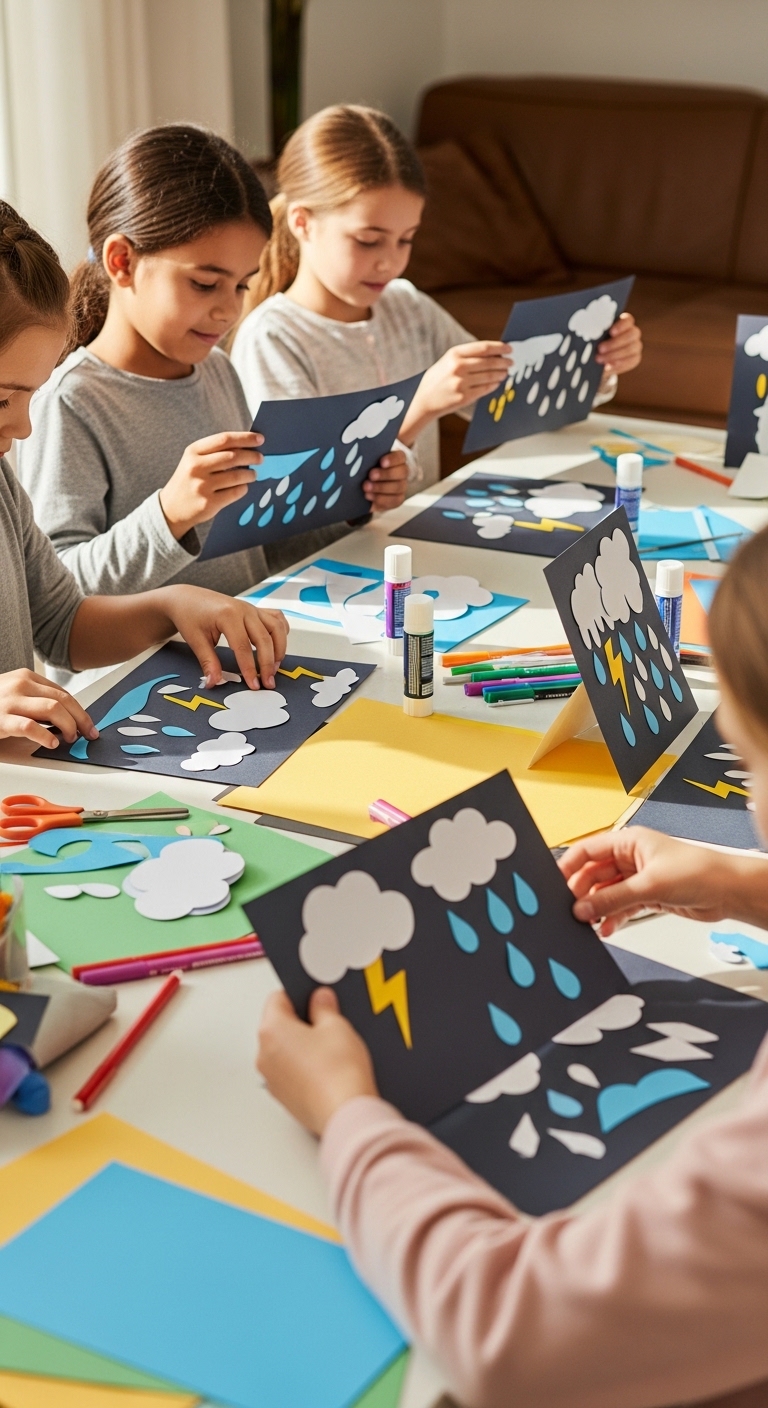
Storms often change light levels quickly, which can be confusing for children. A simple craft can make these changes visible.
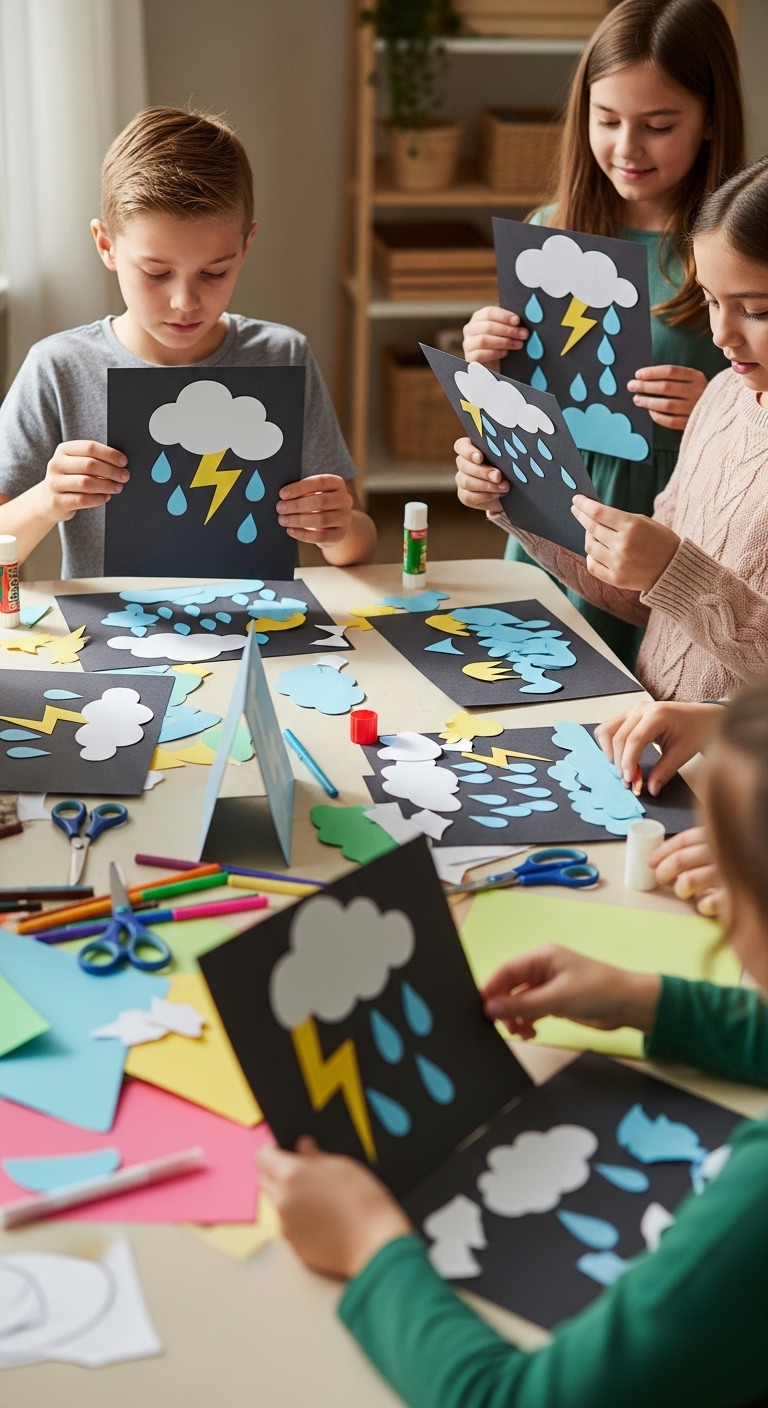
How it works: Children cut storm cloud shapes and attach them to a background. They can slide darker clouds over a lighter sky to match real conditions. Optional: move a sun or moon cutout to see light change during storms.
What they learn: Clouds gather gradually. Light changes over time. Storms have sequences. Children see that weather events are predictable rather than random.
Why it matters: Children develop visual observation skills, sequencing ability, and calm reasoning. They learn to notice changes, anticipate outcomes, and feel more confident about unpredictable events.
4. Sun and Temperature Thinking Crafts: Helping Kids Notice Patterns
The sun affects everything, light, warmth, and how shadows change, but children don’t automatically connect what they feel with what they see.
They may notice warmth on their skin or bright light, but often miss patterns like how shadows lengthen or how heat changes during the day.
Weather Crafts for Kids that focus on the sun and temperature help children observe, compare, and understand gradual changes, turning curiosity into meaningful learning.
Seasonal decorations can also become learning tools when kept simple, soft visual crafts like these Simple DIY Paper Spring Garlands train attention without overwhelming children.
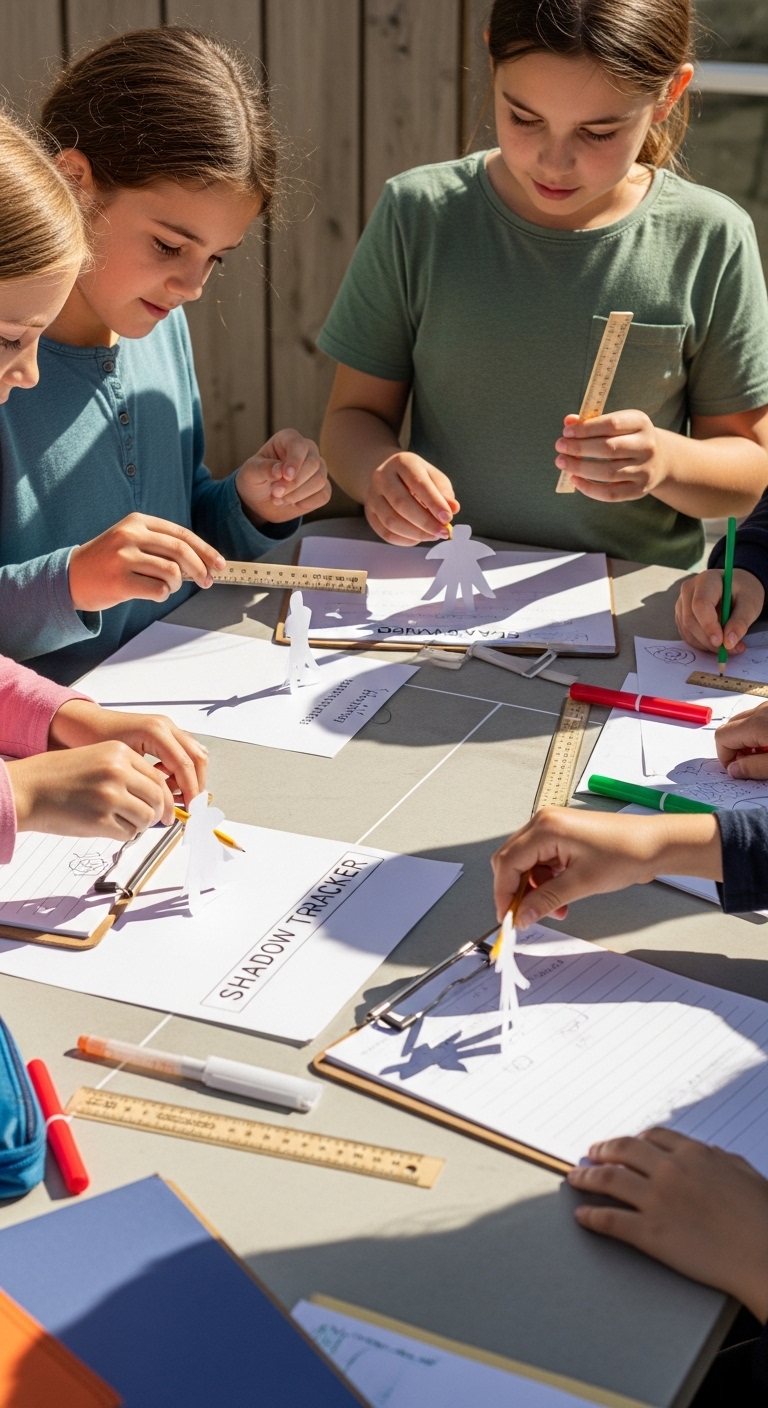
Shadow Tracker
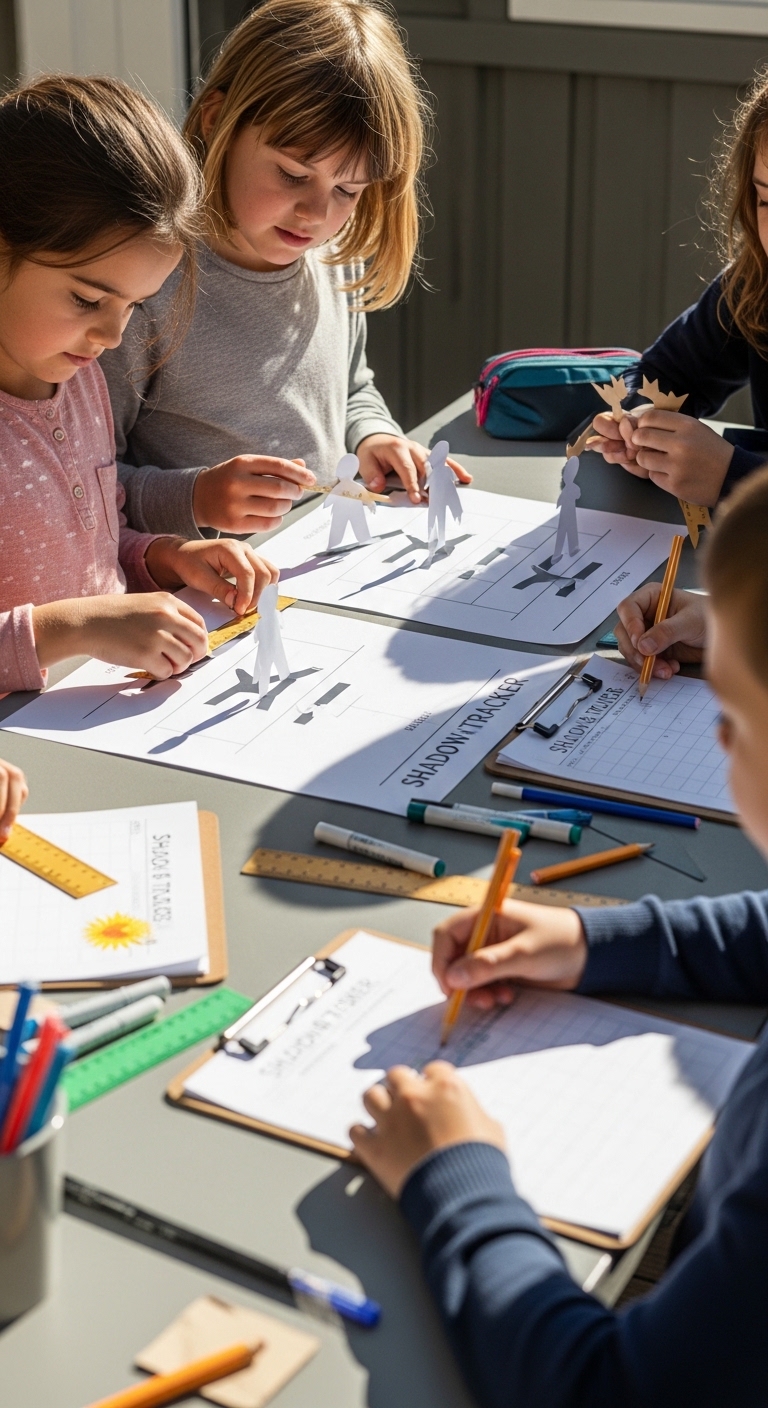
Shadows move throughout the day, and tracking them helps children see time and sun patterns.
How it works: Place paper on the ground and have children trace shadows of a stick or object at different times of day. They can mark morning, noon, and afternoon positions and notice how length and direction change.
What they learn: The sun moves across the sky. Shadows shift predictably. Children begin connecting the position of the sun to light, warmth, and time.
Why it matters: Children often feel sunlight as immediate but unpredictable. By watching shadows change slowly, they learn to observe, measure, and reason about natural patterns, building early scientific thinking.
Temperature Observation Jar
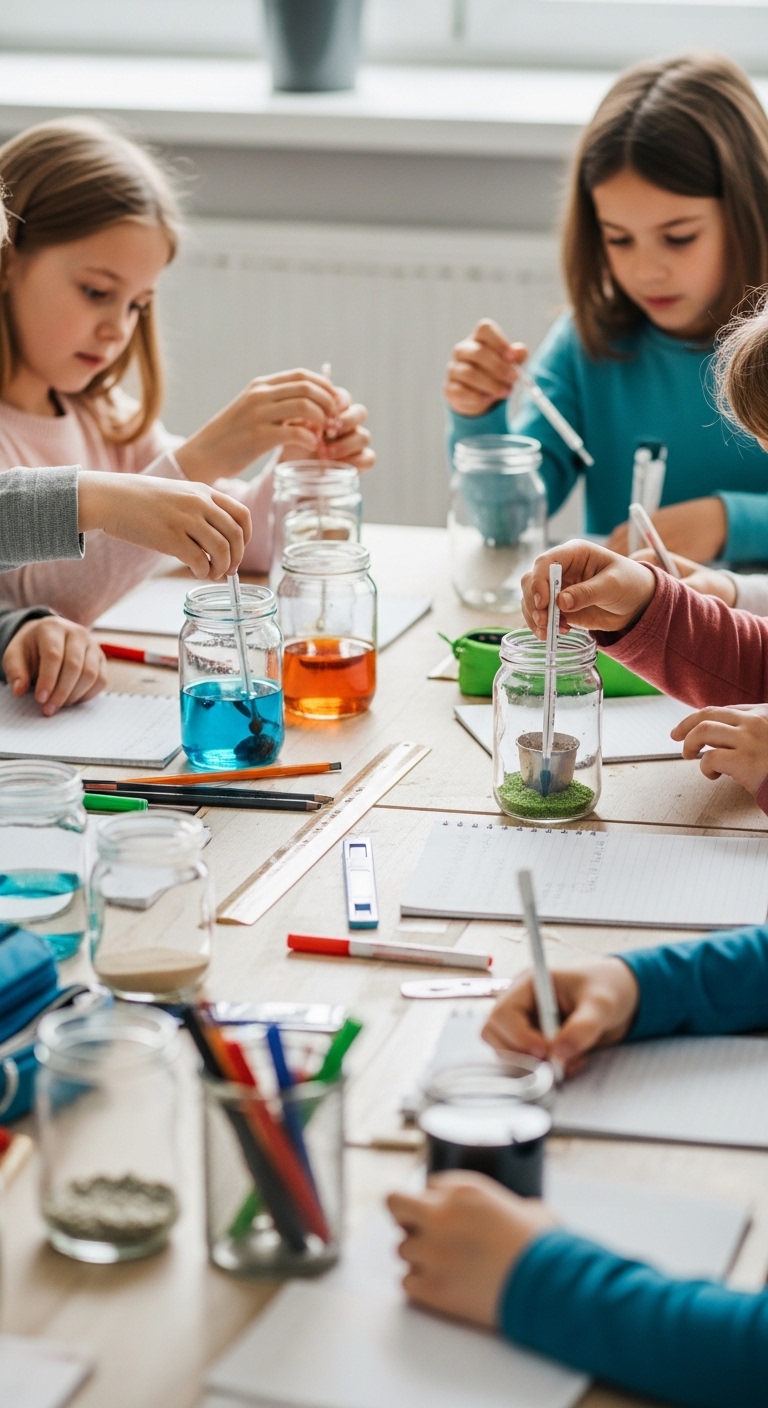
Temperature is invisible, but we can represent it visually.
How it works: Children place a thermometer or colored water beads outside or in different sunlight conditions. They record which areas feel warmer or cooler and make simple drawings or color changes to represent temperature.
What they learn: The sun affects heat. Some areas warm faster than others. Observation connects what they feel with measurable outcomes.
Why it matters: Kids often perceive weather only through sensation. A craft that shows heat differences teaches cause-and-effect, attention to detail, and predictive thinking, while keeping the activity calm and focused.
Sun Catcher Observation
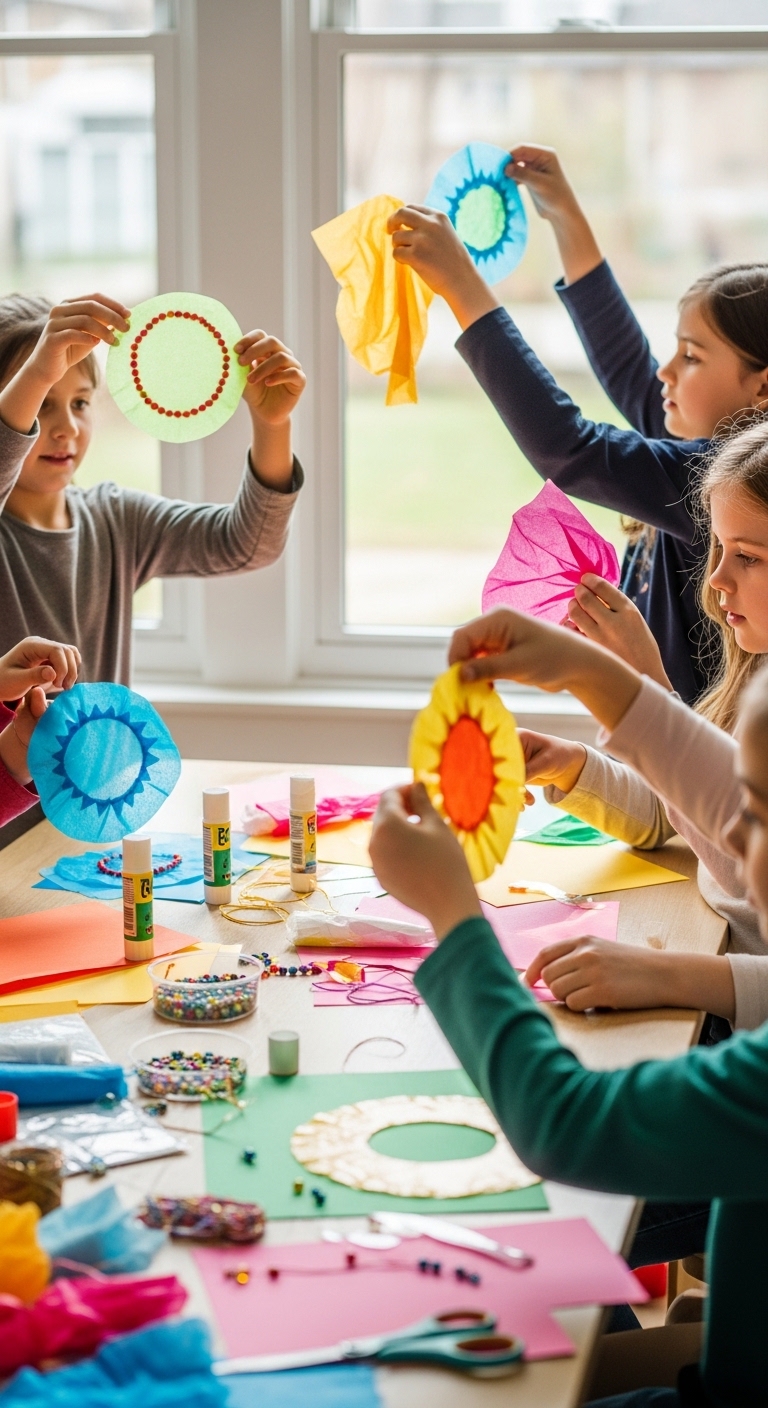
Sunlight can be bright and dynamic. Sun catchers help children notice light quality without being overwhelmed.
How it works: Children use transparent paper, colored cellophane, or tape strips to catch sunlight through windows. They can observe how the colors shift as the sun moves during the day.
What they learn: Light direction changes. Color intensity varies. Children connect observation with time, sun position, and patterns.
Why it matters: This craft encourages careful watching, sensory awareness, and pattern recognition, helping children understand natural rhythms without overstimulation.
5. Snow and Fog Thinking Crafts: Helping Kids Notice Subtle Weather
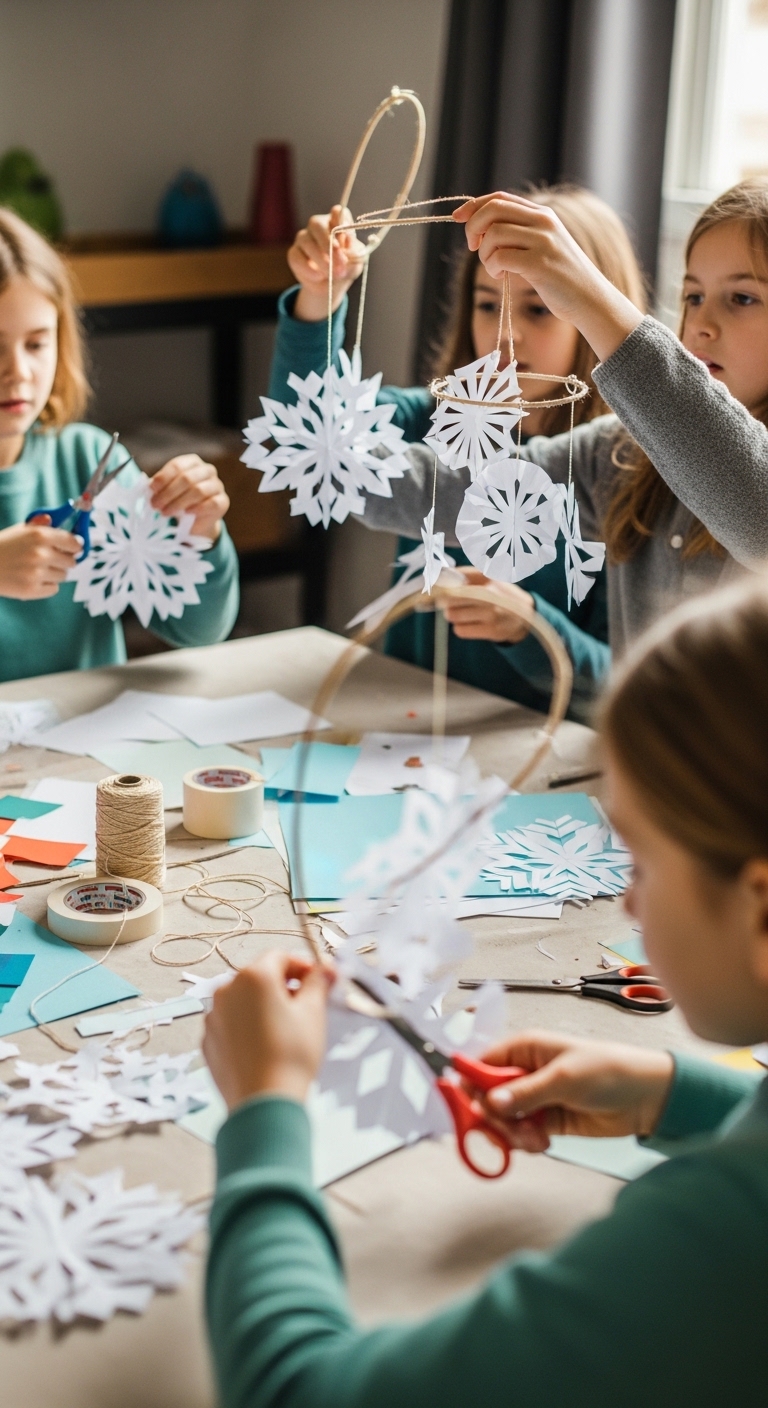
This craft are fascinating because they transform the world visually and quietly, but children often miss the patterns behind them. Snow melts, fog drifts, and both affect temperature, light, and visibility.
Crafts focused on these phenomena help children observe, experiment, and understand gradual changes, turning curiosity into meaningful learning.
Snowflake Observation Mobile
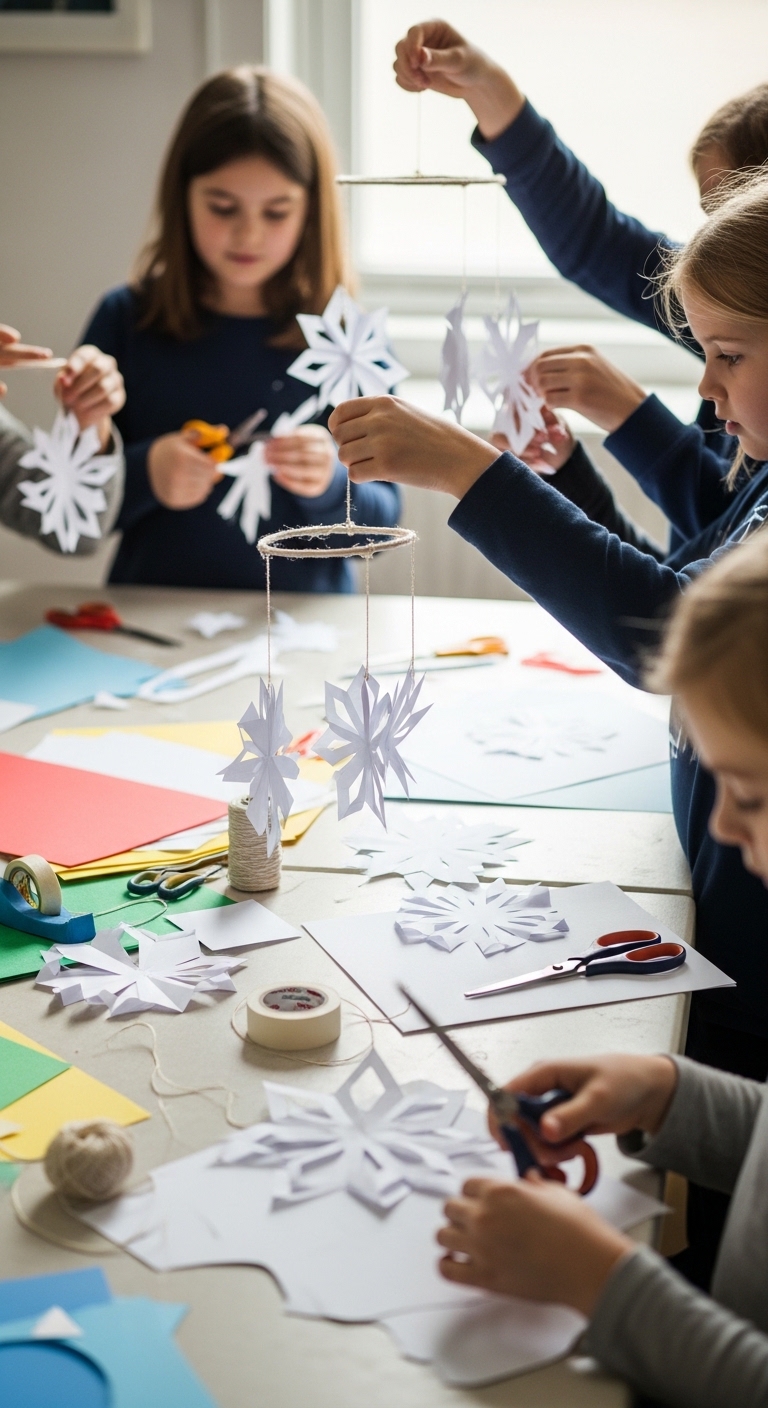
Snowflakes are intricate, but children don’t need to know the science to notice patterns.
How it works: Children cut paper snowflakes or use simple templates. They hang them on strings at different heights to create a mobile. Over time, they can compare the shapes and patterns, noticing how each snowflake is unique.
What they learn: Patterns repeat in subtle ways. No two snowflakes are identical. Children practice observation, comparison, and attention to detail.
Why it matters: Watching and creating snowflake patterns teaches children mindful observation and curiosity, helping them notice small details in the environment instead of being overwhelmed by the idea of “snow as one big thing.”
Foggy Window Painting
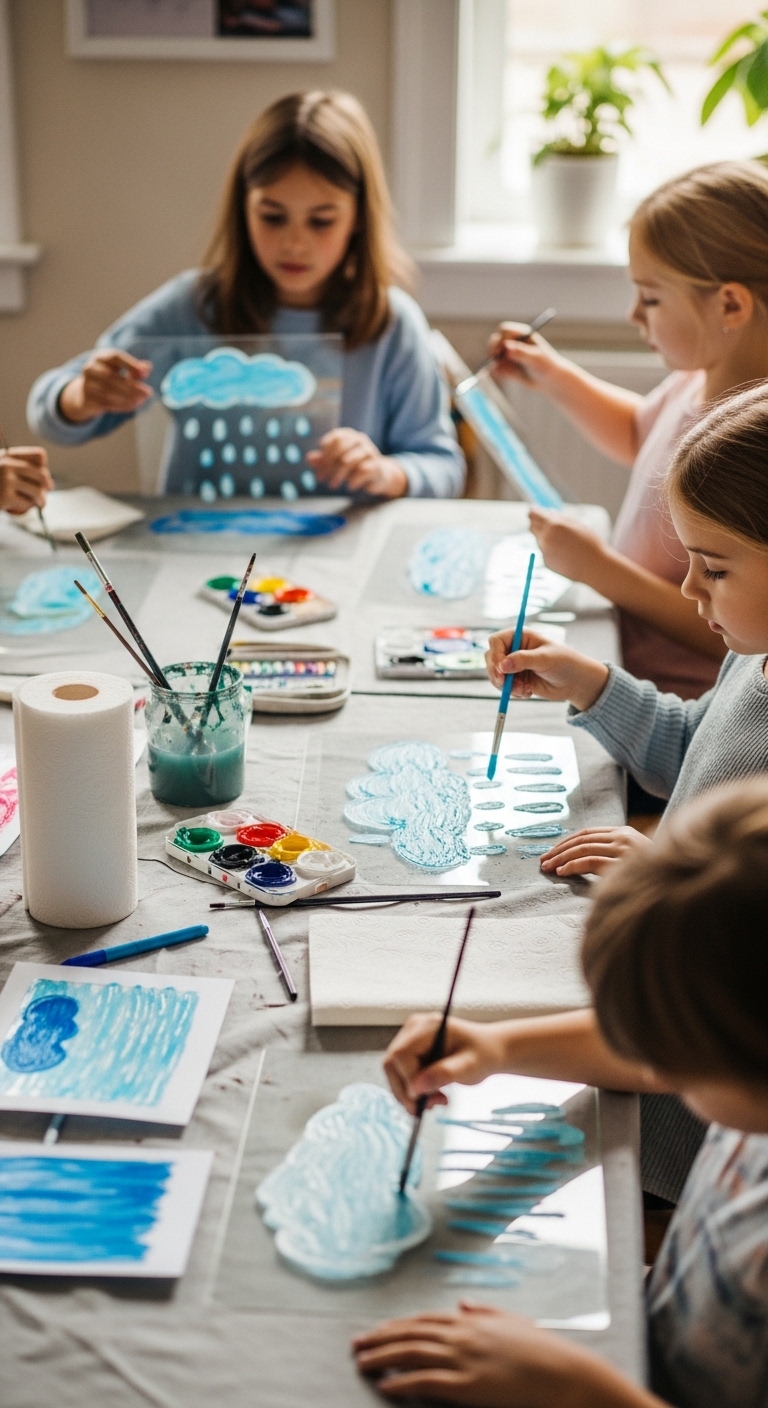
Fog and mist can feel mysterious, but representing them in crafts helps children explore their changing shapes and textures.
How it works: Using water vapor, condensation on a window, or translucent paint, children create foggy scenes. They can add simple trees, hills, or houses and watch how the “fog” spreads or fades over time.
What they learn: Fog moves and changes gradually. Children practice tracking change and noticing subtle movement.
Why it matters: Fog can feel unpredictable. By observing and representing it, children learn patience, careful watching, and understanding gradual processes, while keeping the activity calm and controlled.
Melting Snow Experiment Jar
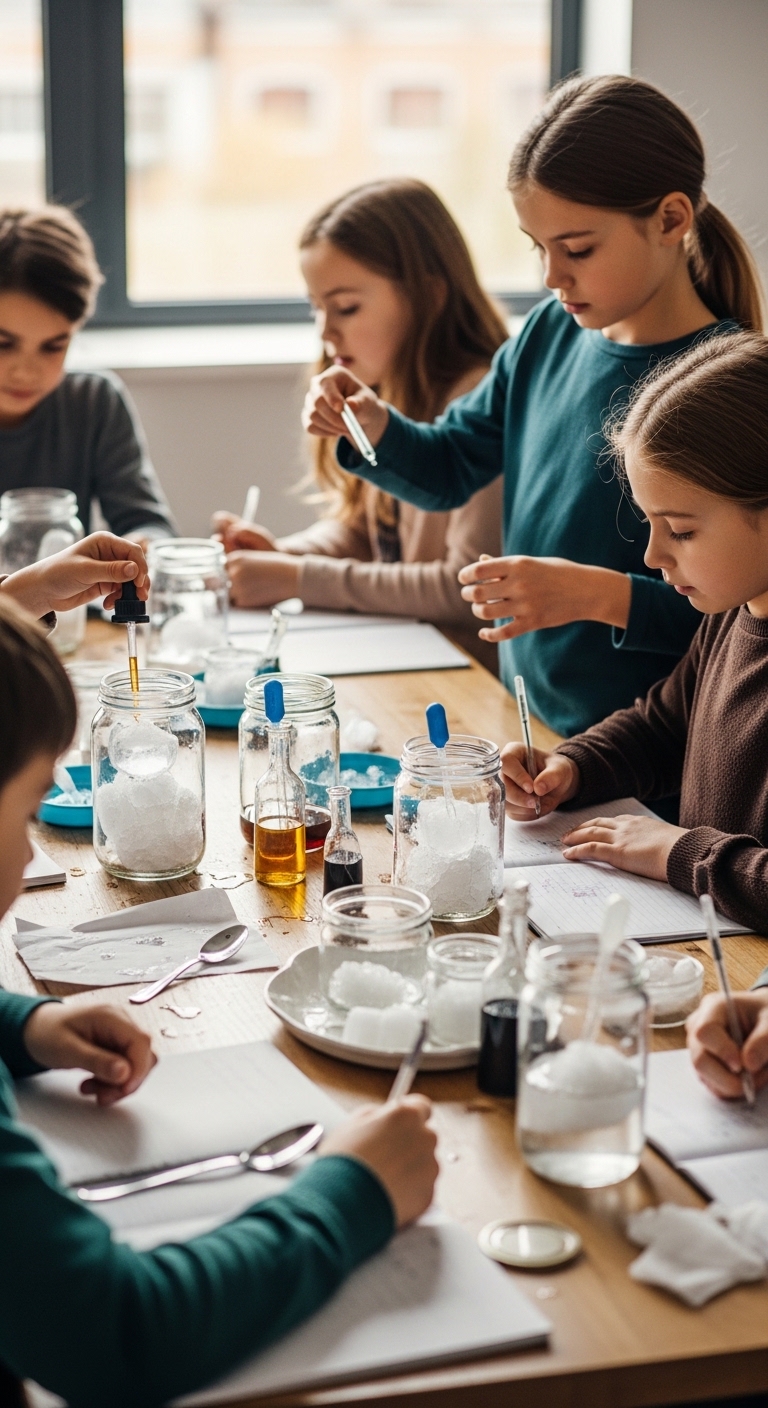
Snow changes into water, a simple way to explore cause-and-effect.
How it works: Children place small amounts of snow (or ice) in clear jars. They watch it melt under different conditions: sunlight, shade, or indoor temperature. They can record how long it takes and notice differences in melting speed.
What they learn: Temperature affects state change. Snow doesn’t disappear randomly, it melts predictably depending on warmth. Children learn observation, recording, and basic experimentation.
Why it matters: Kids often experience snow as magical or confusing. Representing it slowly through a jar teaches cause-and-effect, prediction, and observation, turning wonder into understanding without overstimulation.
What Kids Actually Learn From Weather Crafts
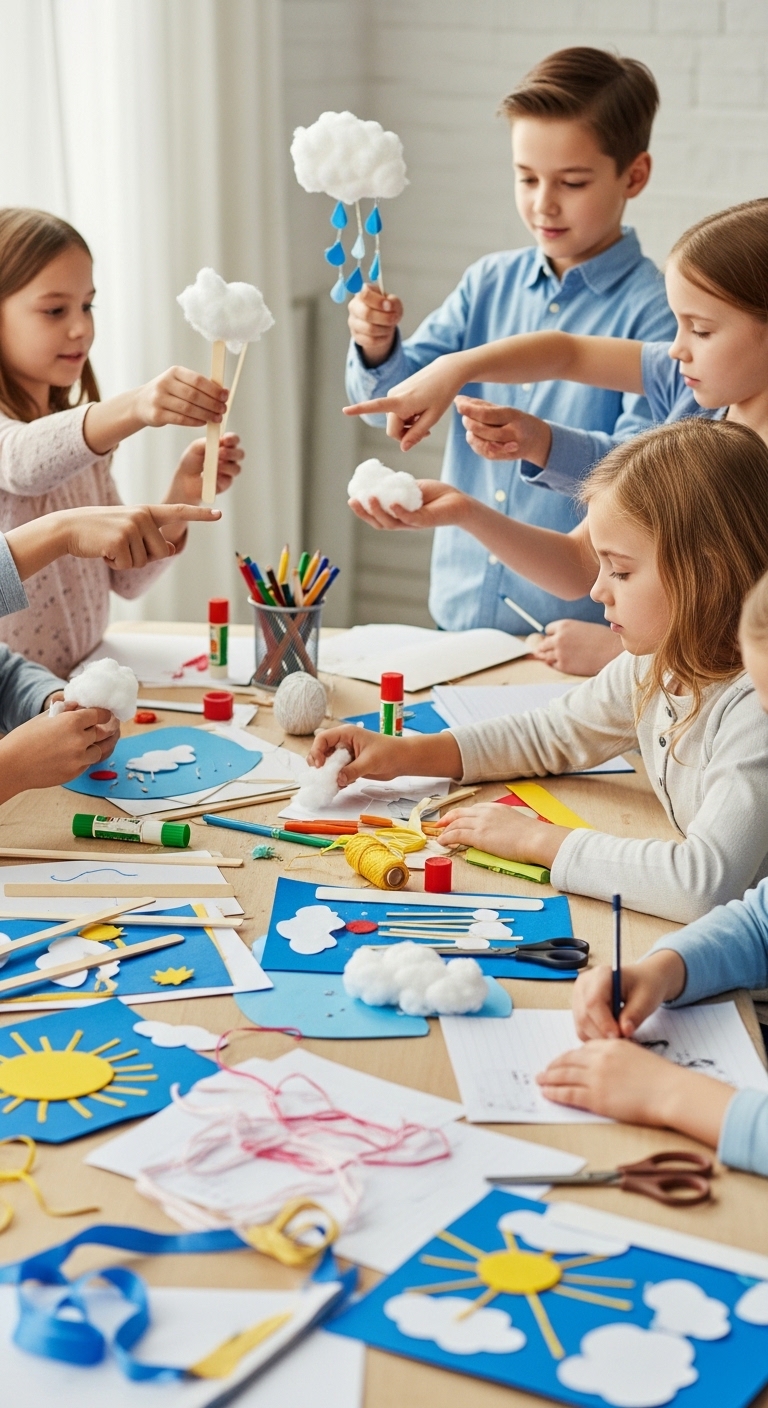
Worksheets can teach facts, but they rarely teach children how to notice, predict, and understand the world around them. Weather crafts do something different, they turn observation into hands-on learning that feels meaningful and calm.
When kids understand patterns, they start creating with intention, the same thinking behind Crafts to Make for Friends: Meaningful DIY Gift Ideas rather than rushed crafting.
Prediction Skills
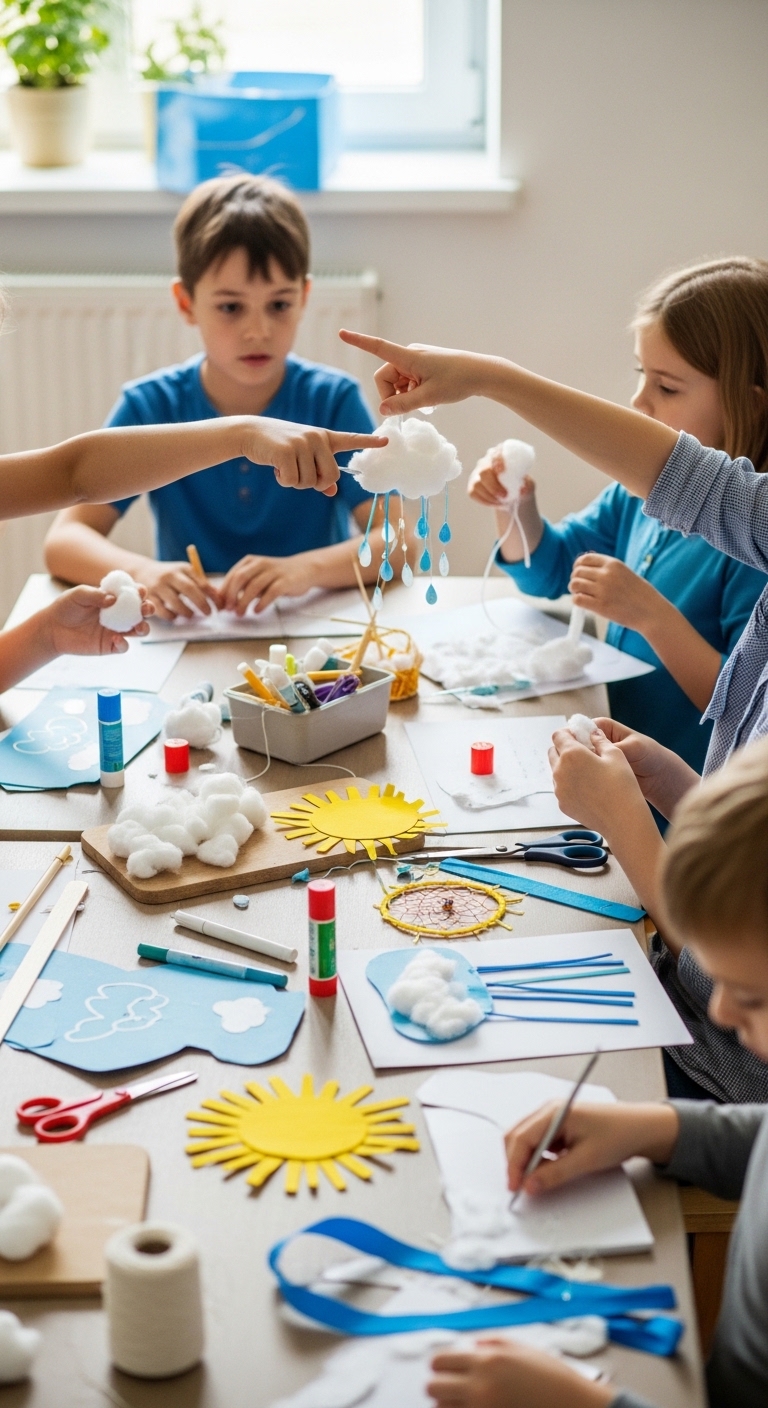
Children watch patterns develop, clouds thickening, wind moving leaves, or snow melting. These crafts give them a chance to guess what will happen next and then test it. They start to understand that weather events follow sequences, which builds predictive thinking in a natural, engaging way.
Patience

Weather changes slowly, and crafts reflect that. Tracking clouds in a jar, observing shadows, or waiting for ice to melt teaches children to slow down and notice gradual processes. This helps them practice delayed gratification and focused attention, skills that worksheets rarely require.
Pattern Detection
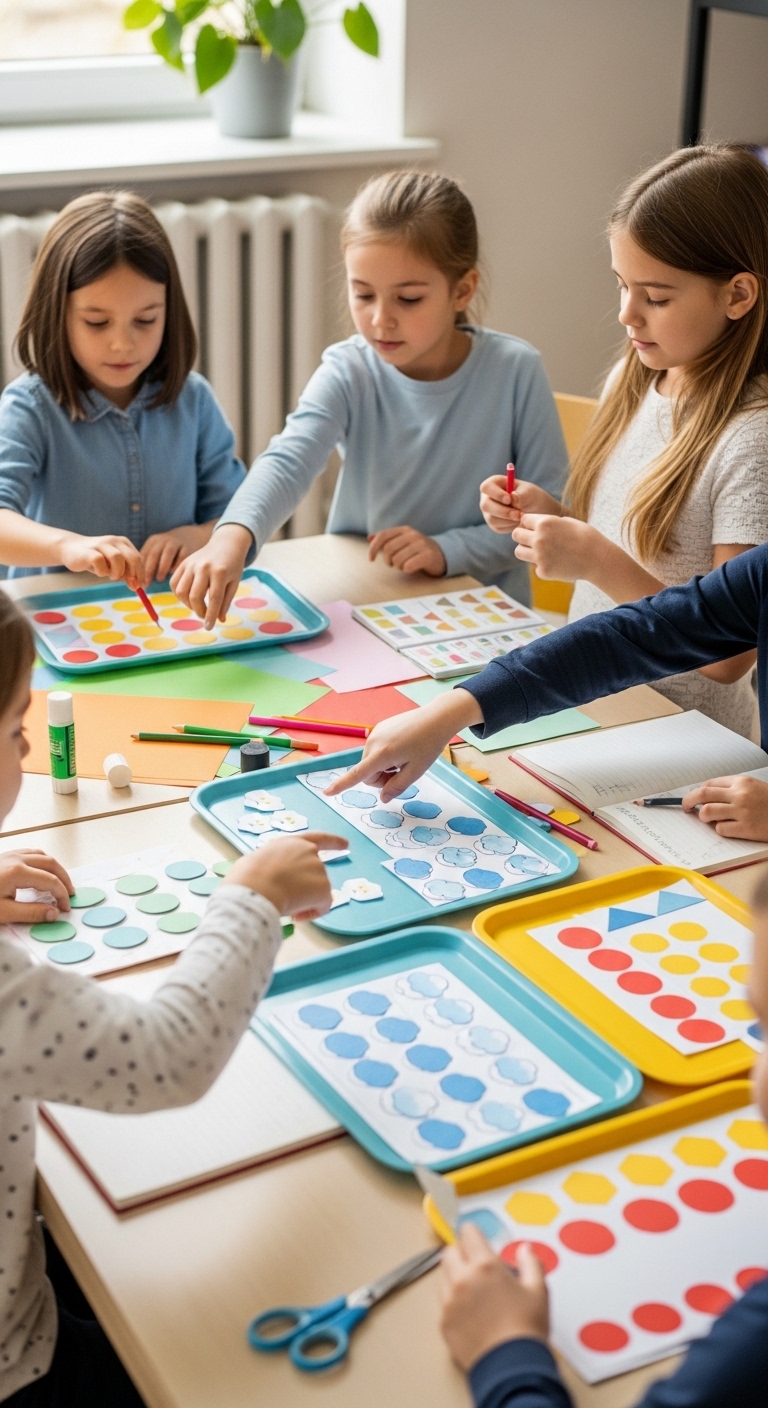
By observing repeated behaviors, how wind moves ribbons, how sun shifts shadows, or how fog spreads, children develop pattern recognition. They learn to notice subtle differences and similarities, a foundational skill in science and everyday problem-solving.
Emotional Coping With Uncertainty
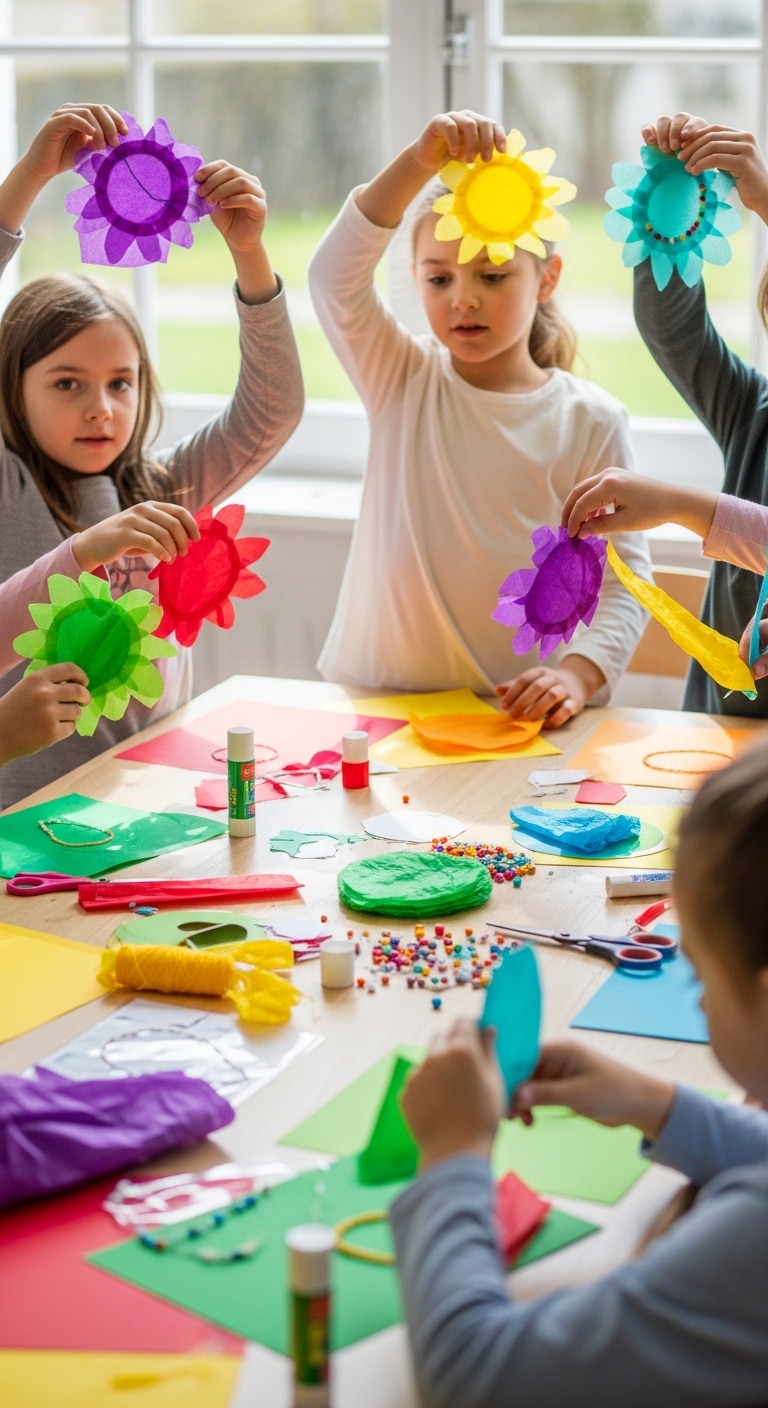
Sudden weather changes can feel overwhelming. Crafting calm representations of rain, storms, or wind gives children a safe space to process unpredictability. They learn that change is normal and manageable, which helps build emotional regulation alongside scientific curiosity.
Scientific Thinking Without Pressure
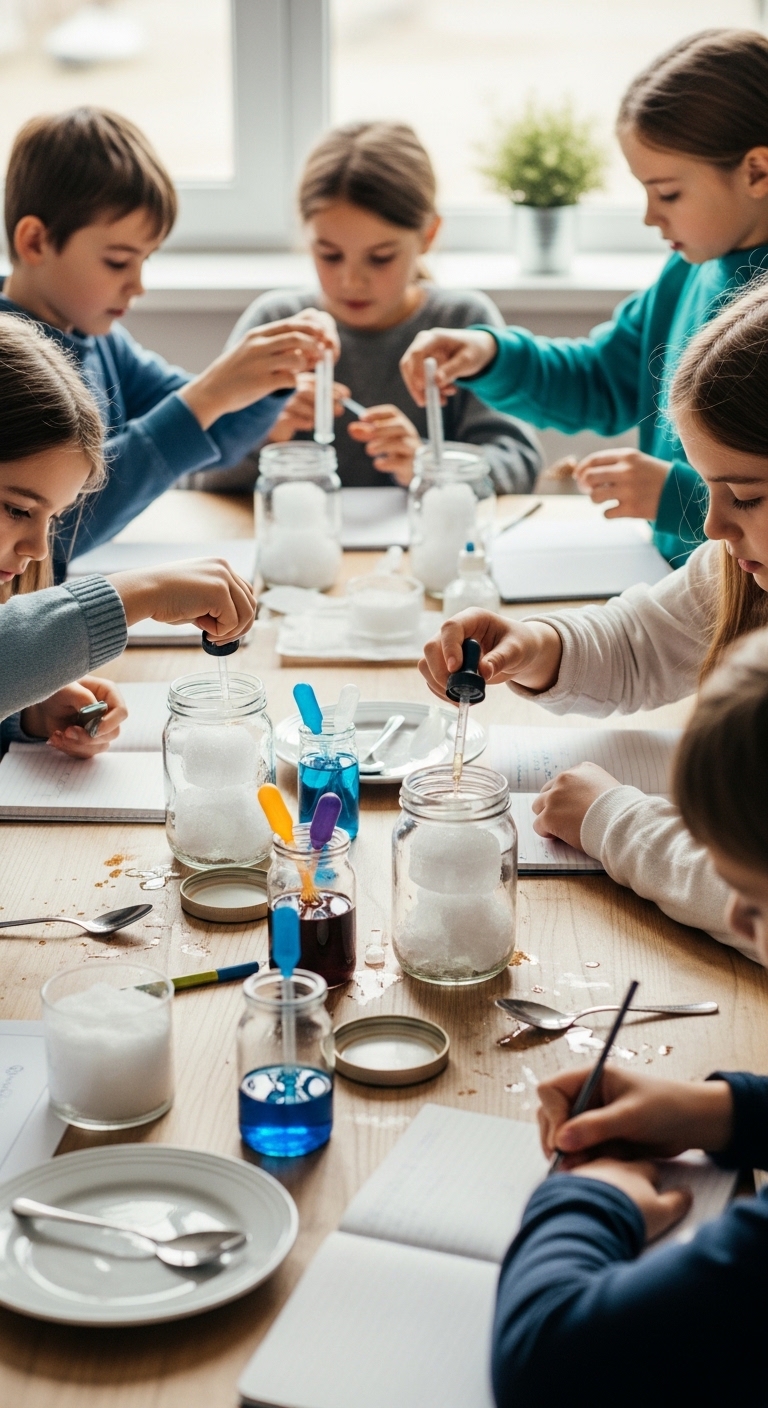
Weather crafts turn everyday curiosity into experimentation and reasoning. Children observe, hypothesize, test, and reflect, all without being graded or rushed. This nurtures a love of learning and confidence in exploring the natural world, which worksheets rarely achieve.
Tips for Running These Crafts Without Chaos
Even calm Weather Crafts for Kids can overwhelm if done all at once. These tips keep learning safe and meaningful:
Spread Crafts Across the Day
Do different activities at different times. For example, clouds in the morning, shadows at midday, rain in the afternoon.
The learning behind it: Spacing crafts allows children to observe, reflect, and reset, reducing sensory overload.
Combine With Outdoor Observation
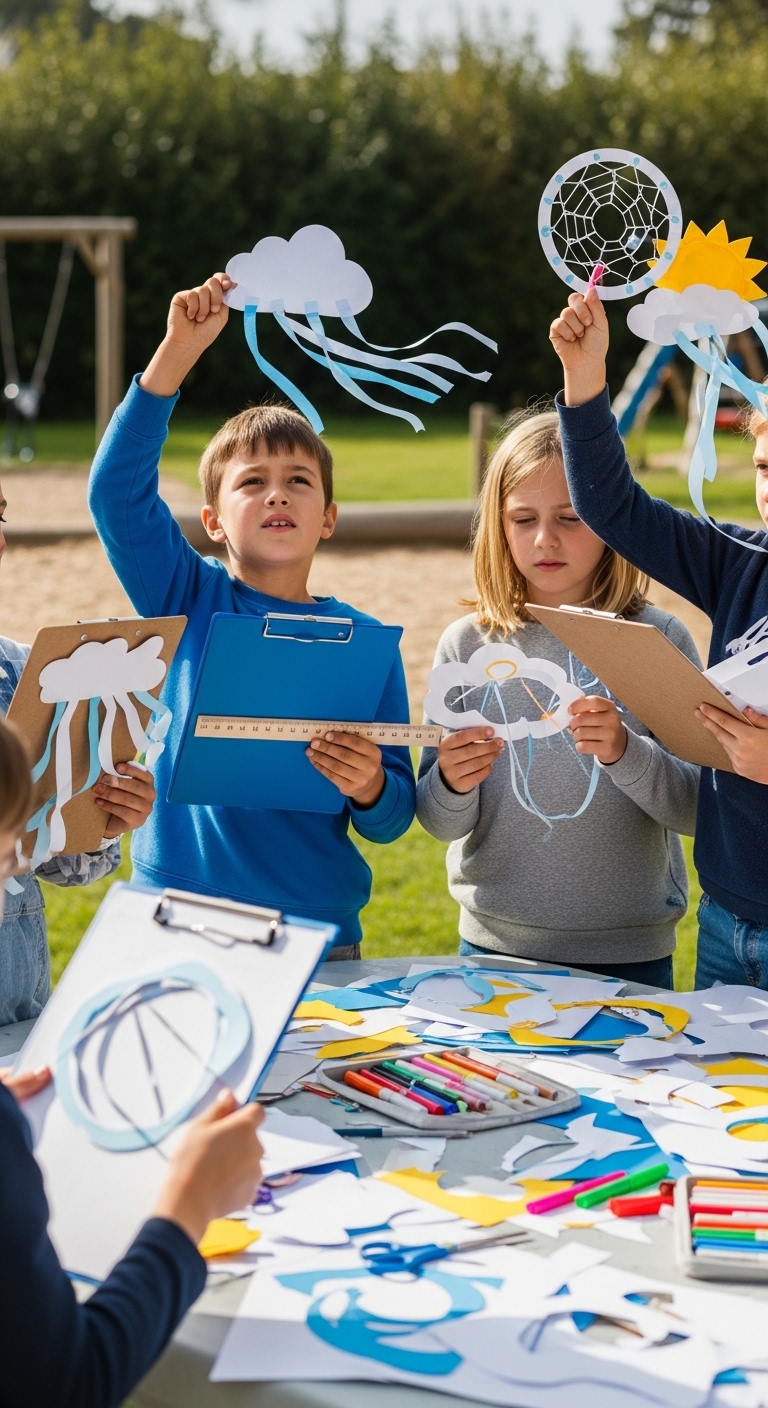
Observe real weather before or after the craft. Bring outside observations into the activity.
The learning behind it: Children connect abstract craft ideas with real-world patterns, reinforcing prediction and cause-effect skills.
Let Kids Explain Before Guiding
Ask children to describe what they observed and why before correcting or guiding them.
The learning behind it: Children practice verbalizing reasoning, ownership of learning, and confidence while staying calm.
Conclusion
Weather crafts aren’t just fun projects, they are tools for real learning. By guiding children to notice patterns, predict changes, and connect observations to outcomes.
When crafts are calm, focused, and sensory-friendly, children can explore curiosity without overwhelm, making connections between what they see outside and what they create inside.
Observing clouds, shadows, wind, rain, or snow teaches them to think like little scientists, noticing small changes and understanding natural patterns.
Try one of these Weather Crafts for Kids in a calm, structured way. Watch how children engage, explain what they observe, and slowly connect cause, effect, and prediction. You’ll notice curiosity turning into understanding, and learning becoming a joyful, meaningful experience.