This post contains affiliate links. This means I may earn a small commission if you purchase through my links at no extra cost to you.
Red and green aren’t your only options. Try these Christmas tree ideas that aren’t red and green for a tree that feels fresh without looking random.
Every Christmas tree doesn’t have to end up covered in red baubles, green ribbon and the same gold accents you’ve used for years.
Maybe you want something softer this year. Your home may already lean neutral, or perhaps you prefer deeper colours, natural textures, metallics or a more modern look.
That’s where the right Christmas tree ideas that aren’t red and green can make a difference.
Choosing a different colour is only one part of the process.
The colour of the tree itself, the room around it, the finishes you’re mixing, the size of your ornaments and even the way your lights affect those colours can all change the finished look.
So rather than giving you 25 versions of the same decorated tree, we’re looking at different ways to approach yours, from unusual colour combinations and natural materials to oversized ornaments, meaningful keepsakes and decorations you may already have at home.
Keep little hands busy before the decorating begins with 15 Christmas Tree Crafts for Toddlers Can Finish Before the Real Tree Goes Up.
How to Choose the Right Christmas Tree Palette for Your Room
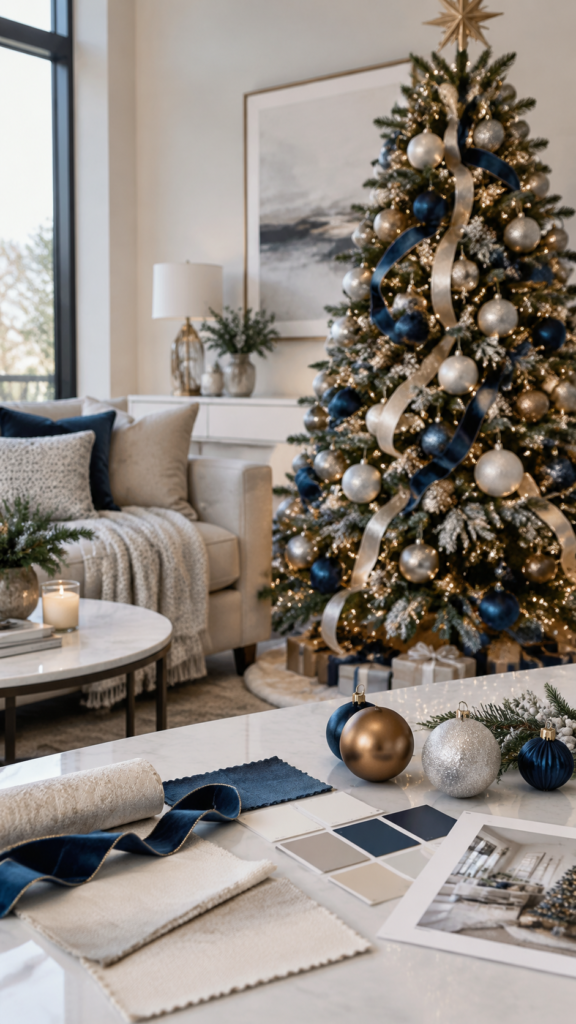
Before choosing ornaments, look at the room where the tree will sit.
You don’t need to match everything exactly, but the existing colours and finishes can help you choose a palette that feels connected to the space.
- Wall colour: Light walls give you more freedom with deeper or brighter ornaments, while darker walls can benefit from lighter or reflective decorations.
- Sofa and upholstery: Pull a colour from the sofa, curtains or cushions, or choose a related shade rather than copying it exactly.
- Wood tones: Warm wood pairs naturally with bronze, copper, cream and brown. Paler or cooler wood can work well with silver, white and soft blue.
- Flooring: A very dark floor can make a dark tree feel heavy, while lighter flooring gives you more room to use deeper colours.
- Existing metals: Brass, chrome, black metal or bronze already used around the room can guide your choice of tree accents.
- Natural light: Check the room during the day. Colours can look much stronger or softer depending on how much daylight reaches the tree.
- Artificial lighting: Warm white lights bring out warm colours such as cream, bronze and copper, while cooler light can make silver, blue and white look crisper.
The tree doesn’t have to match the room. It simply needs to relate to it through colour, tone, texture or finish.
That gives you room to try something different without making the tree look disconnected from everything around it.
Christmas Tree Ideas That Aren’t Red and Green
1. The Icy Blue and Pearl Tree
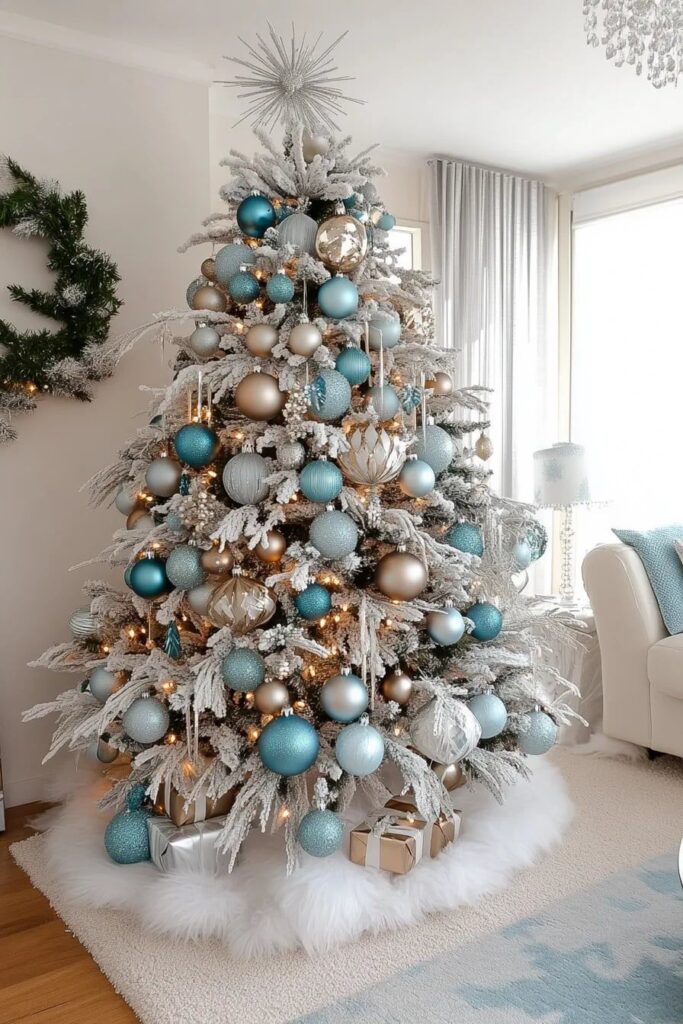
Photo credit: @ Lovely Harbor
Icy blue and pearl white give you a softer Christmas tree without making it look washed out.
Add translucent ornaments alongside solid pearl baubles so the lights can show through some pieces while others give the tree more visual weight.
Place the icy blue ornaments deeper into the branches and bring the pearl and translucent pieces toward the outer tips.
The deeper blue gives the tree dimension, while the lighter ornaments catch the light where they are easiest to see.
Mix opaque, translucent and reflective finishes rather than covering everything in glitter. A few clear icicle ornaments or faceted pieces can catch the lights without turning the whole tree sparkly.
A small amount of silver can work here too, but let the icy blue and pearl remain the main colours.
2. The Mocha and Antique Gold Tree
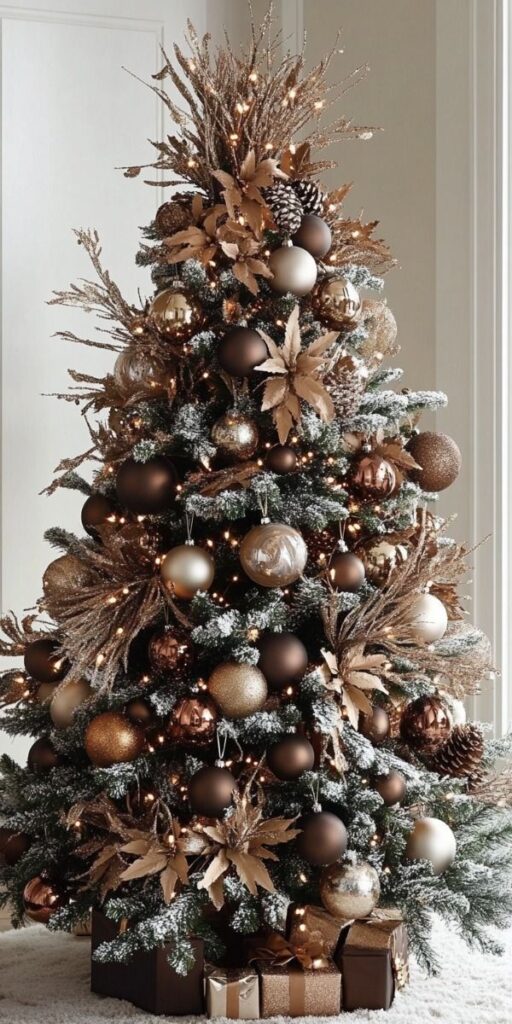
Photo credit: @ Family Moments Together
Brown can make an unusual Christmas palette feel warm rather than overly bright.
Pair chocolate, mocha, bronze, antique gold and warm cream instead of trying to make every ornament the same shade.
The important part is texture. Brown can look flat when everything has the same matte finish, so mix velvet ribbon, wooden ornaments, glass baubles and matte pieces.
Let the antique gold appear in smaller details such as ornament accents, ribbon edging or a few statement baubles.
Keep the cream pieces lighter and closer to the outer branches so they break up the deeper browns. The result feels layered without needing a large number of colours.
3. The Plum and Champagne Tree
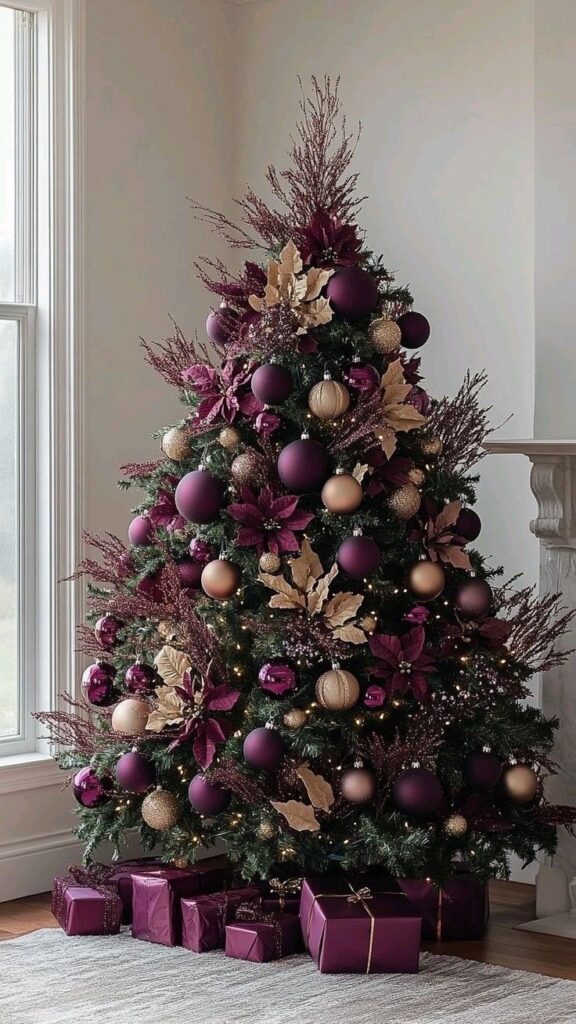
Photo credit: @ Ellis
Plum gives you a deeper Christmas colour without relying on bright red.
Combine deep plum, champagne, soft ivory and muted mauve, keeping plum as the strongest colour and using the lighter shades to prevent the tree from becoming too dark.
Rather than spreading every colour evenly across the branches, use plum in larger ornaments and ribbon, then repeat champagne and ivory in smaller pieces around them.
A few mauve ornaments can soften the transition between the two.
This palette works especially well when you want colour but don’t want the tree to dominate the whole room.
The key is to let one deep shade lead while the lighter colours provide breathing room.
4. Black, Cream and Brass Tree
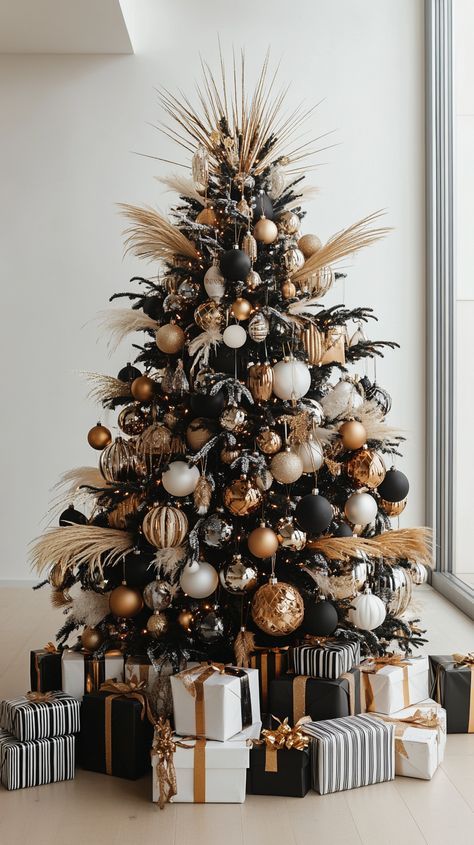
Photo credit: @ jane Smith
Black can look striking on a Christmas tree, but using too much of it can make the tree feel heavy, especially in a room that already has dark furniture or limited natural light.
For Christmas tree ideas that aren’t red and green, this palette gives you a more modern direction without relying on lots of colour. Use black in controlled amounts, then let cream and brass break it up.
Simple bauble shapes work better here than a collection of highly detailed ornaments competing for attention.
Think black velvet ribbon, cream ornaments and a handful of brass pieces rather than covering the entire tree in black.
The brass adds warmth, while the cream gives your eye somewhere lighter to land.
5. Blush, Copper and Cream Tree
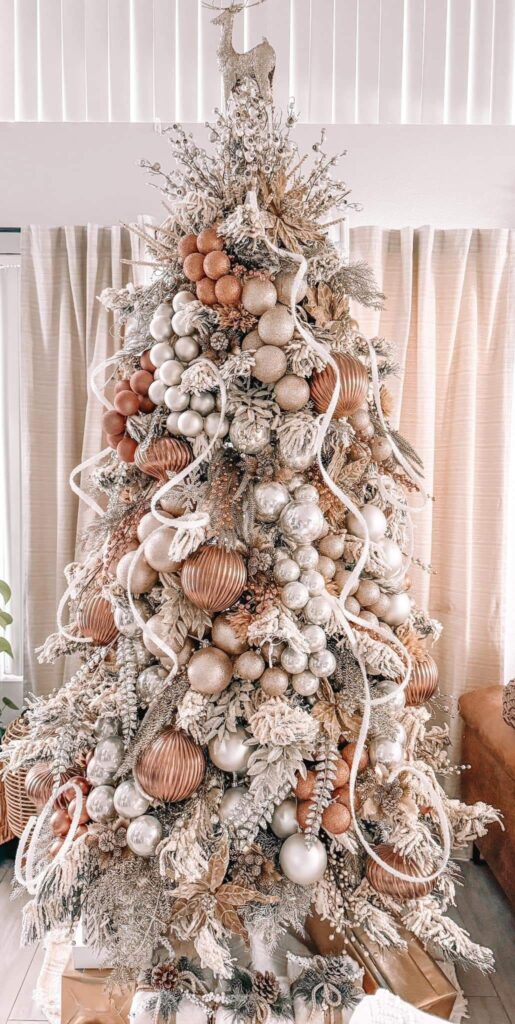
Photo credit: @ Judi Astalos-Keller
Blush can easily turn into a very glittery, overly pink Christmas tree. The difference here is in keeping the colour muted and giving it warmer partners.
Use dusty blush, copper and cream, with cream doing most of the visual balancing.
Copper can appear in baubles, ribbon details or a few reflective ornaments, while blush works better when you repeat it in different finishes rather than using one shade everywhere.
This gives you a softer tree without making it look like a children’s decoration.
It also works well when the room already has beige, cream, tan or warm wood because the palette has enough warmth to sit naturally alongside those finishes.
6. Deep Teal and Bronze Tree
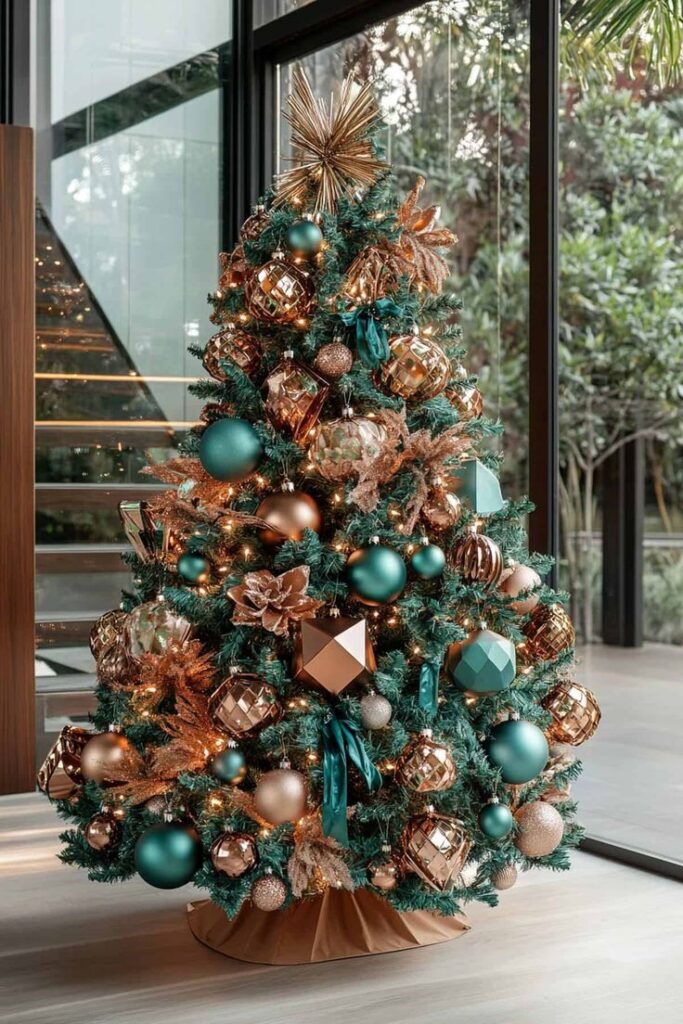
Photo credit: @ O p e n >_< S e a
Deep teal gives you a strong colour without falling back on the familiar red-and-green combination.
Pair it with bronze, warm white, dark wood and a few smoked or amber glass ornaments to keep the palette rich without making it too dark.
One problem with deep colours is that they can lose their detail once evening lighting takes over.
Warm white lights help bring out the green and blue undertones in teal, while bronze and amber finishes pick up the light instead of disappearing into the branches.
Use the teal for your larger ornaments, then place the warm white and metallic pieces around them to break up the darker areas.
That way, the tree still looks deep and dramatic without becoming one solid block of dark colour.
7. Lavender and Silver Tree
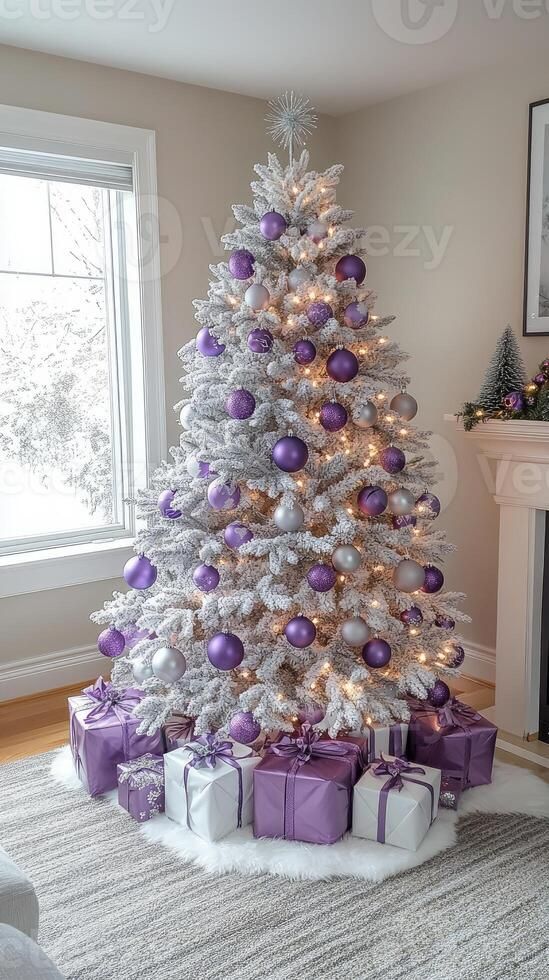
Photo credit: @ Kathleen Clarke
Lavender and dusty violet can give you a cooler, softer Christmas tree, especially when you pair them with silver and white.
But using several unrelated purple shades can quickly make the tree look busy.
Keep the palette to lavender, dusty violet, silver and white.
Use lavender as the main colour, then bring in deeper violet through a smaller number of ornaments or ribbon. Silver and white can fill the spaces between them and catch the light.
For Christmas tree ideas that aren’t red and green, this is a good option when you want colour without making the tree feel loud.
Mix matte lavender baubles with frosted white, clear or silver pieces so the tree has texture as well as colour.
8. Jewel-Tone Tree Without Red
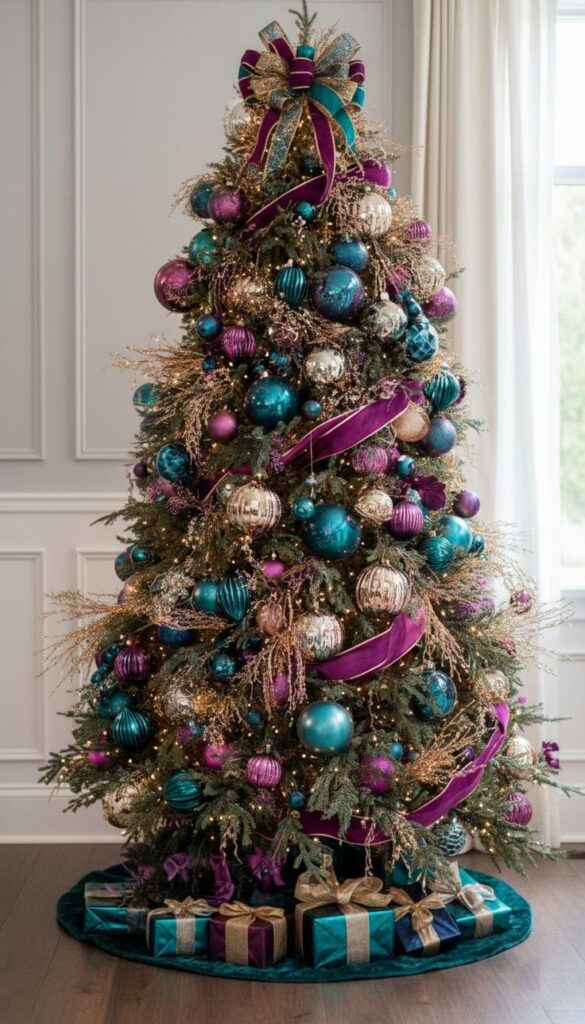
Photo credit: @ InteriorDesignInfo.com
You can get the richness of jewel tones without automatically reaching for red.
Try emerald, sapphire, amethyst, deep teal and antique gold, but don’t treat all five colours as equal.
Choose one jewel tone to lead. For example, emerald can make up most of the larger ornaments, while sapphire and amethyst appear in smaller pieces.
Use antique gold sparingly to connect the colours and catch the light.
This matters because too many strong colours at the same visual weight can make the tree look scattered. One dominant colour gives the eye somewhere to settle; the others add variation.
Current holiday decorating trends have also been pointing toward richer jewel tones and bolder ornament choices, so this approach gives you a way to use that direction without simply piling every saturated colour onto one tree.
9. Warm Neutral Tree
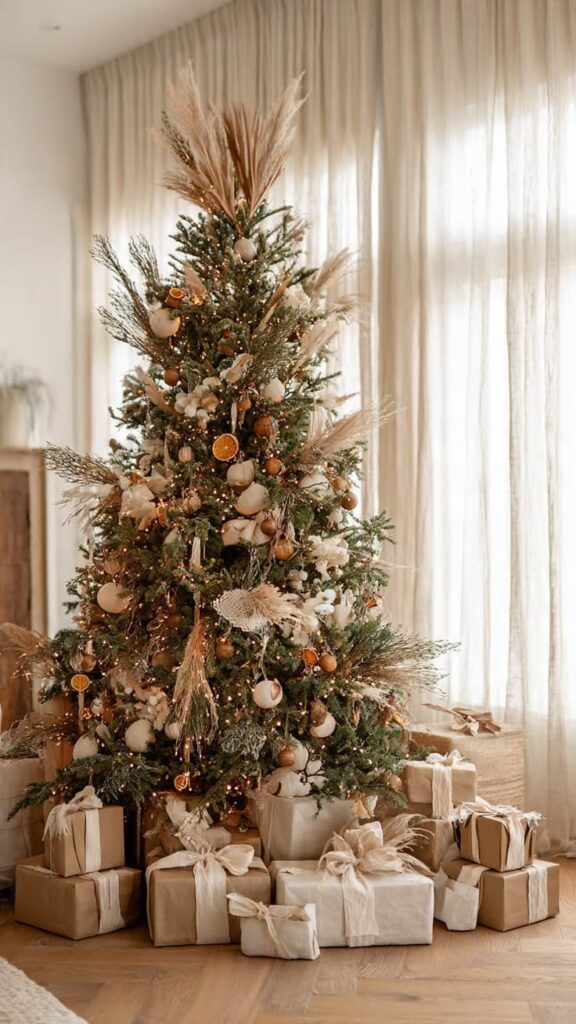
Photo credit: @ nimra097
A neutral Christmas tree does not have to mean a tree covered entirely in beige ornaments. The interest comes from combining oatmeal, cream, taupe, caramel and soft brown with different materials.
Start with cream and oatmeal ornaments, then add a smaller number of caramel and brown pieces for depth.
Bring in wooden ornaments, woven decorations or natural-fibre ribbon to keep the tree from looking like a collection of plain plastic baubles.
Warm white lights work particularly well with this palette because they reinforce the warmer tones.
This is also a practical choice when your room already has beige upholstery, wood furniture or other warm neutral finishes.
Need a gift that people actually want to take home? Try these Office Christmas Party White Elephant Gift Ideas That Actually Get Picked Every Single Time.
10. All-Metal Tree
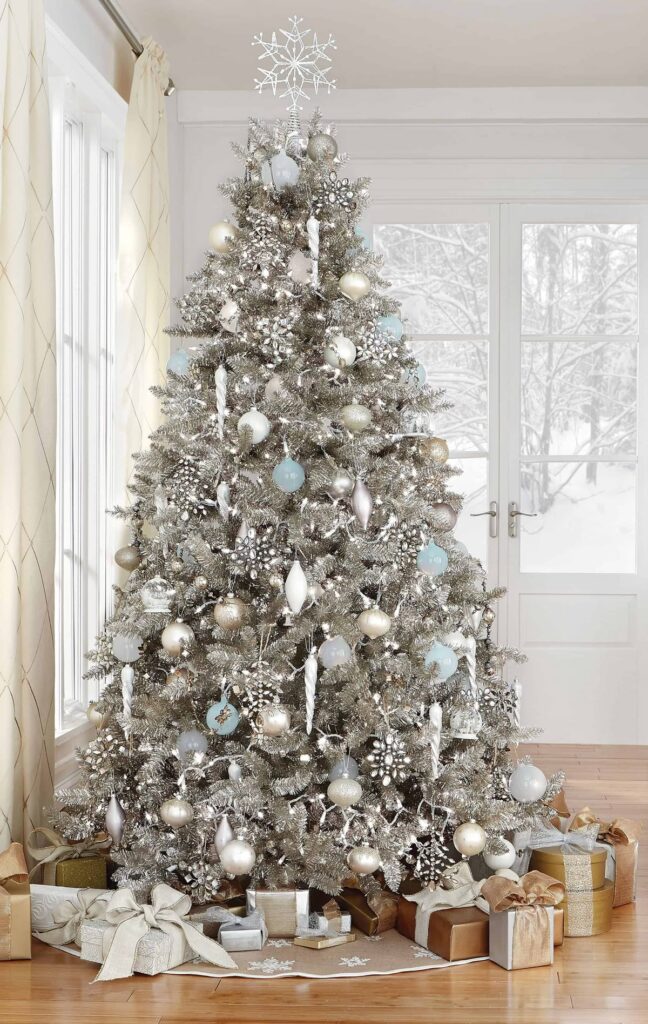
Photo credit: @ Deb Mallery
An all-metal tree can look polished, but using every metallic finish at the same level can make the lights bounce off the tree without giving it much visual depth.
Instead, choose one main metallic family, such as champagne, brass, bronze, silver or copper, and build around it.
You can still introduce a second metallic in small amounts, but let one finish do most of the work.
Then mix the surfaces. Pair shiny baubles with matte ornaments, brushed finishes, velvet ribbon or textured pieces.
A matte bronze ornament, for example, gives the eye a break from highly reflective gold or copper.
That balance is what makes an all-metal tree feel layered rather than like every decoration was chosen simply because it shines.
11. Copper and Burnt Orange Tree
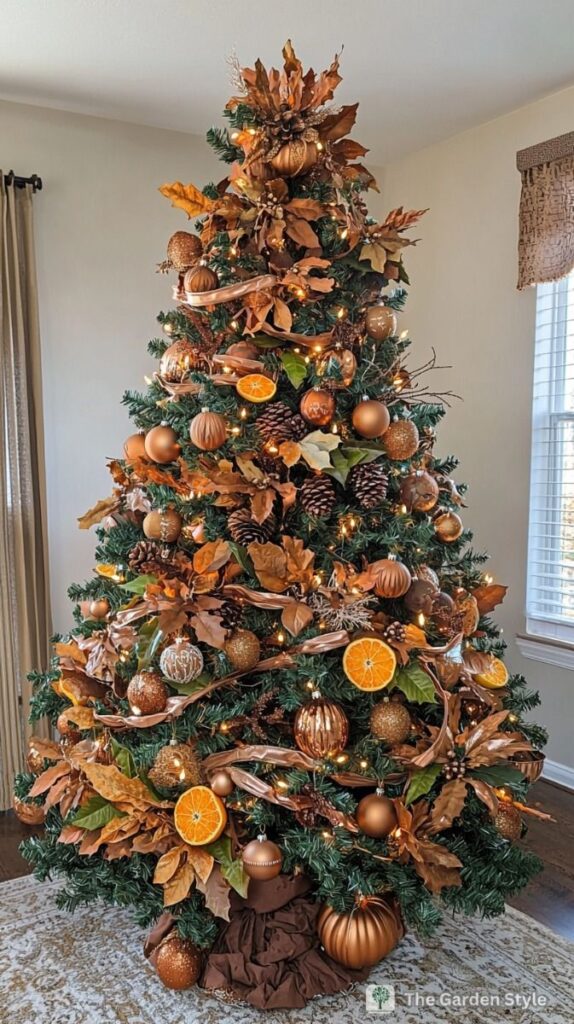
Photo credit: @ The Garden Style
Copper and burnt orange create a warm Christmas palette without relying on red.
Build the tree around copper, burnt orange, cinnamon, cream and natural wood, then let the materials add some of the variation.
Use larger burnt-orange or copper ornaments as the main visual anchors, then fill the spaces with smaller cream and wood pieces.
A cinnamon-coloured velvet ribbon can soften the harder metallic surfaces.
The important part is controlling the warmth.
Too much copper, orange and brown together can make the tree look heavy, so cream ornaments and lighter wood help break up the deeper tones.
12. Coastal Christmas Tree
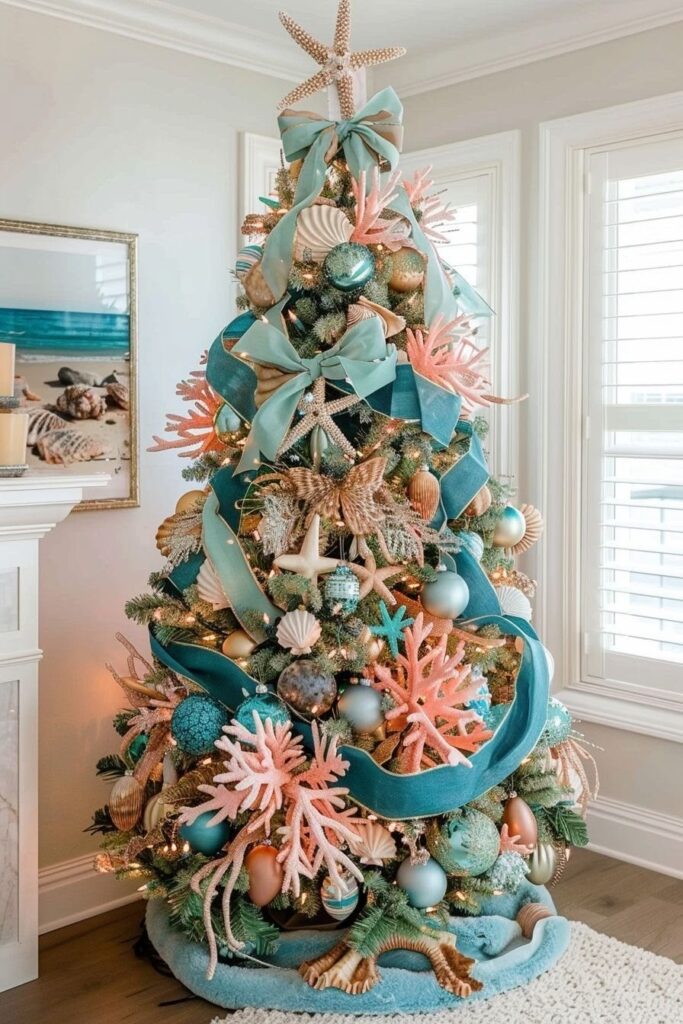
Photo credit: @ Sandy LaBrie
A coastal Christmas tree doesn’t need seashells, starfish and beach-themed ornaments covering every branch.
A better approach is to borrow the colour and materials already found in a coastal interior.
Use washed blue, sand, ivory, pale driftwood and a little frosted glass. Keep the shapes simple, then use texture to make the palette interesting.
For example, combine smooth glass ornaments with unfinished wood and woven ribbon.
The tree should still look like part of the home at Christmas, rather than a beach display with a few holiday decorations added to it.
That is why keeping the palette restrained matters more here than adding lots of coastal symbols.
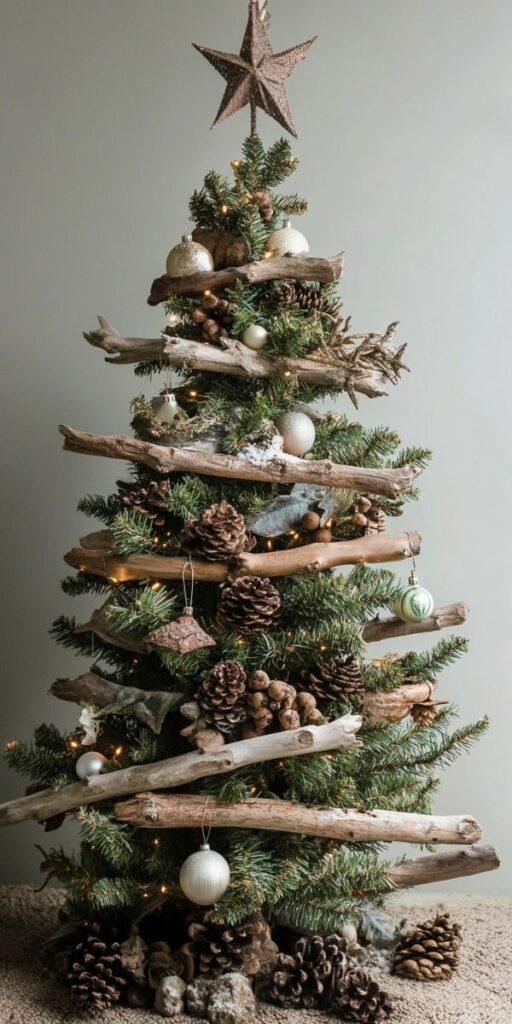
Photo credit: @ Moms Journey Together
A natural tree can still have plenty of visual interest without relying on bright ornaments.
Use unfinished wood, paper ornaments, linen, straw, neutral ribbon and warm lights, keeping the shapes simple and the materials visible.
Instead of adding more colours when the tree feels plain, add another texture.
A folded paper ornament, woven decoration and smooth wooden piece can all sit within the same neutral palette while giving the eye something different to look at.
That is the useful lesson with this style: natural doesn’t mean empty. Texture can do the work that colour usually does.
14. Dried-Orange and Natural Fibre Tree
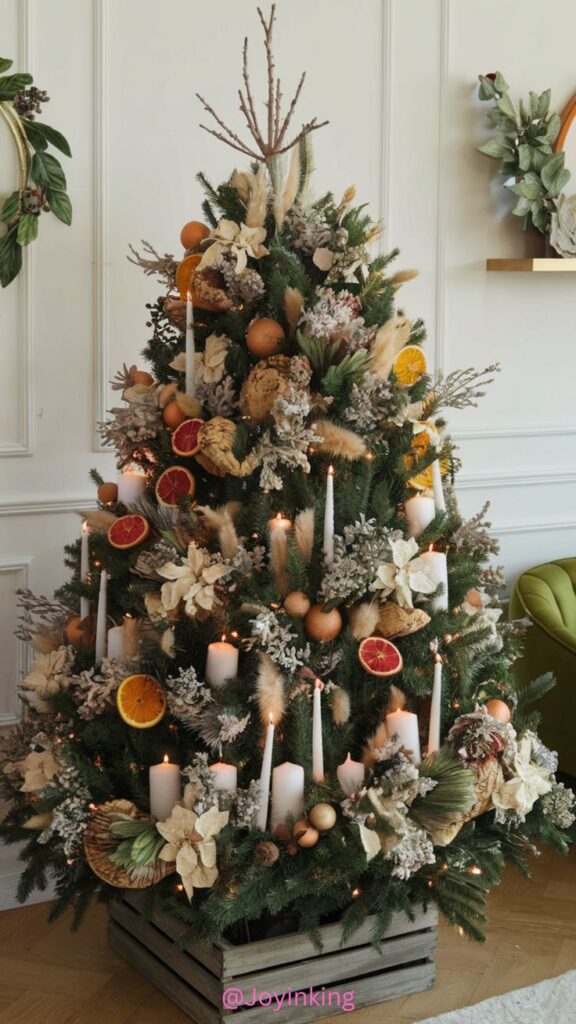
Photo credit: @ Joyinking
Dried orange slices, wood, raffia, paper and natural ribbon can give a Christmas tree its colour without depending on brightly dyed ornaments.
The oranges bring warm amber tones, while the wood and fibres keep the rest of the palette grounded.
For a more balanced arrangement, use the dried orange slices as repeating accents rather than covering the entire tree with them.
Combine them with lighter paper ornaments and a few wooden pieces so the natural materials don’t all blend into one brown mass.
There is also a safety issue worth considering with this style. Dried plant materials are combustible, so keep them away from heat sources and damaged or overheating light cords.
Don’t place candles on or near the tree, and switch the tree lights off when leaving the room or going to bed.
Looking for gentle activities to fill quiet December days? 30 Cozy December Crafts for Seniors in Assisted Living to Fill the Whole Month offers plenty of options.
15. Paper Ornament Tree
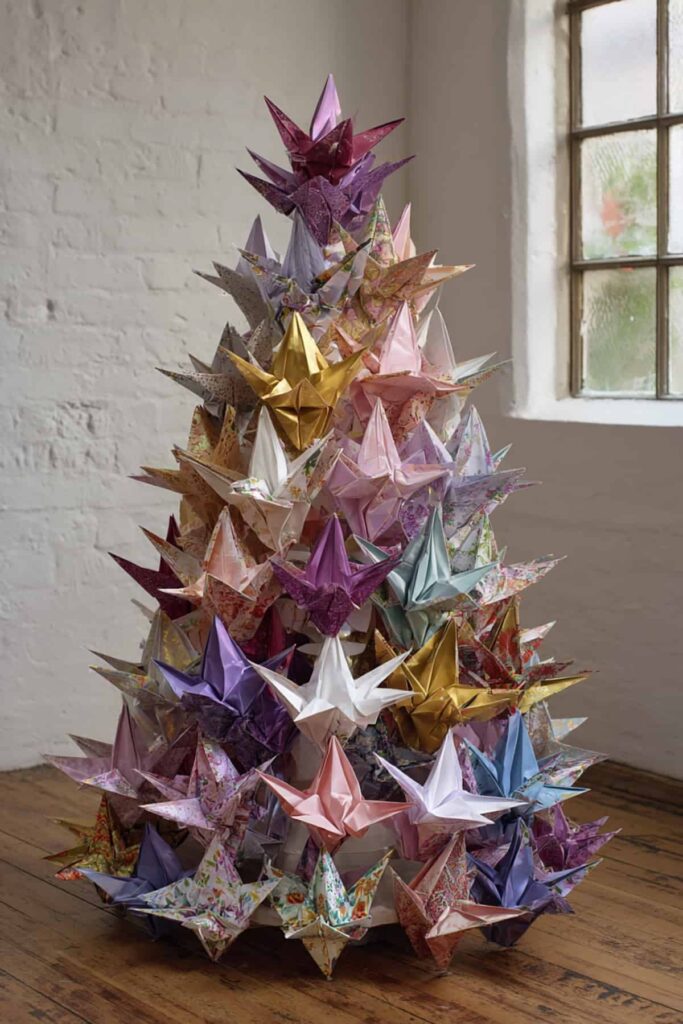
Photo credit: @ Homenish
Paper ornaments can give you a different look without requiring a large collection of baubles.
Folded, pleated or cut-paper decorations work especially well when you keep the palette restrained, such as cream and white, kraft and ivory, or one colour with a neutral.
They are also useful when budget or branch weight is a concern.
Paper is much lighter than glass or many large plastic ornaments, so you can use more pieces without putting as much weight on individual branches.
For Christmas tree ideas that aren’t red and green, try combining different paper shapes rather than making every ornament identical.
A few larger folded stars can anchor the tree, while smaller paper ornaments fill the spaces around them.
16. Oversized Ornament Tree
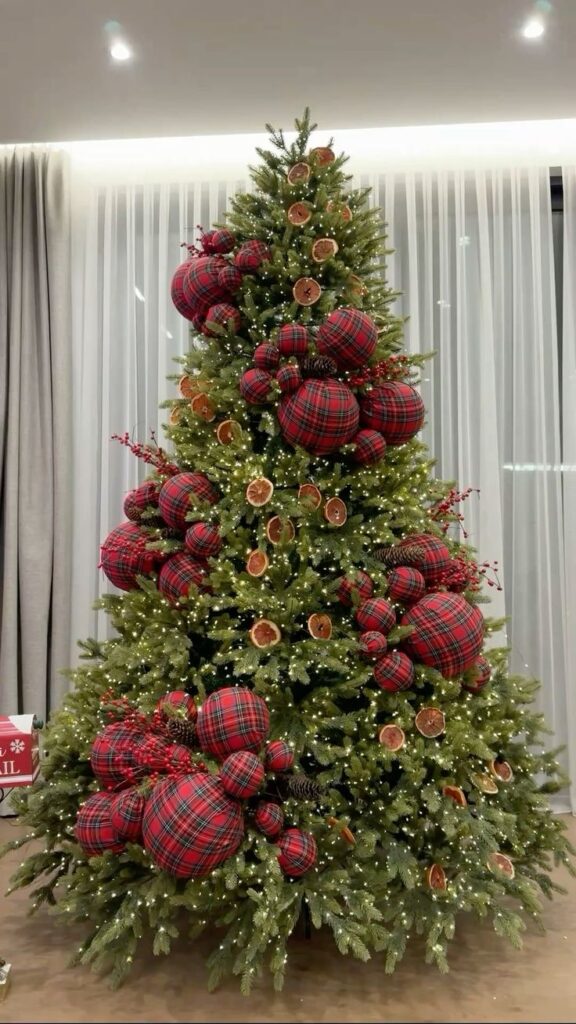
Photo credit: @ happy market
Large baubles and oversized bows can give a tree a stronger visual presence, but they create a common decorating problem: the tree can become overcrowded very quickly.
Start with fewer large ornaments than you think you need. Place them across the tree first, leaving enough space between them for the branches to remain visible.
Then add a smaller number of medium and small pieces to fill obvious gaps.
There is no need to decorate every branch when the ornaments themselves make a statement. In fact, adding too many pieces can hide the scale that made the oversized decorations interesting in the first place.
17. Ribbon-First Tree
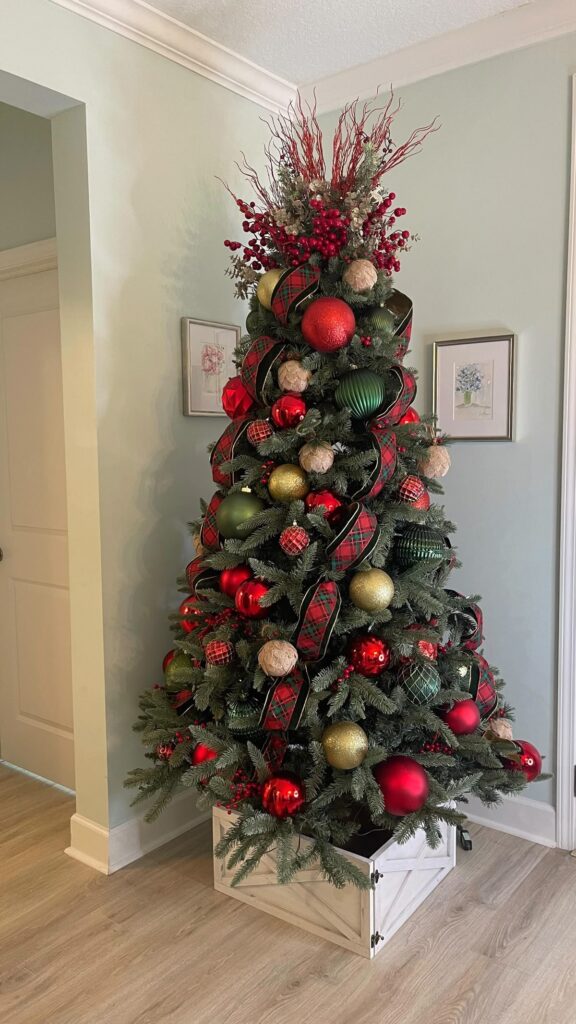
Ribbon can determine the shape and movement of a tree before you add a single ornament.
Instead of wrapping several unrelated ribbons around the branches, choose one substantial ribbon treatment and repeat it throughout the tree.
Long vertical drops can draw the eye upward and emphasise a tall, narrow tree.
Wider movements across the branches can create more visual width, which can help a slim tree appear fuller.
Secure the ribbon at several points rather than relying on one continuous wrap. This gives you more control over the shape and makes it easier to work around ornaments, branches and lights.
18. Monochromatic Blue Tree
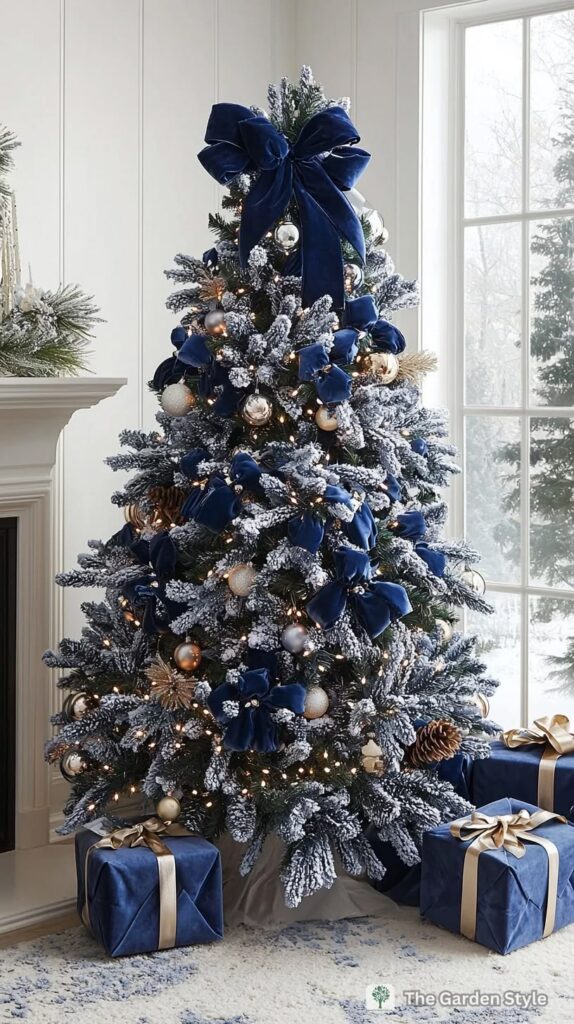
Photo credit: @ The Garden Style
Using one colour doesn’t mean every ornament has to look identical.
A blue tree can have much more depth when you work with pale blue, medium blue and navy, then introduce one neutral such as white or cream to separate the shades.
Use the palest blue closer to the lights and outer branch tips, while deeper navy pieces can sit further into the tree.
Mix matte, glossy, frosted and translucent finishes so the different blues remain visible instead of blending together.
This is a useful approach when you want Christmas tree ideas that aren’t red and green but don’t want a complicated colour scheme.
The variation comes from lightness, texture and finish rather than adding more colours.
19. Metallic + Natural Materials Tree
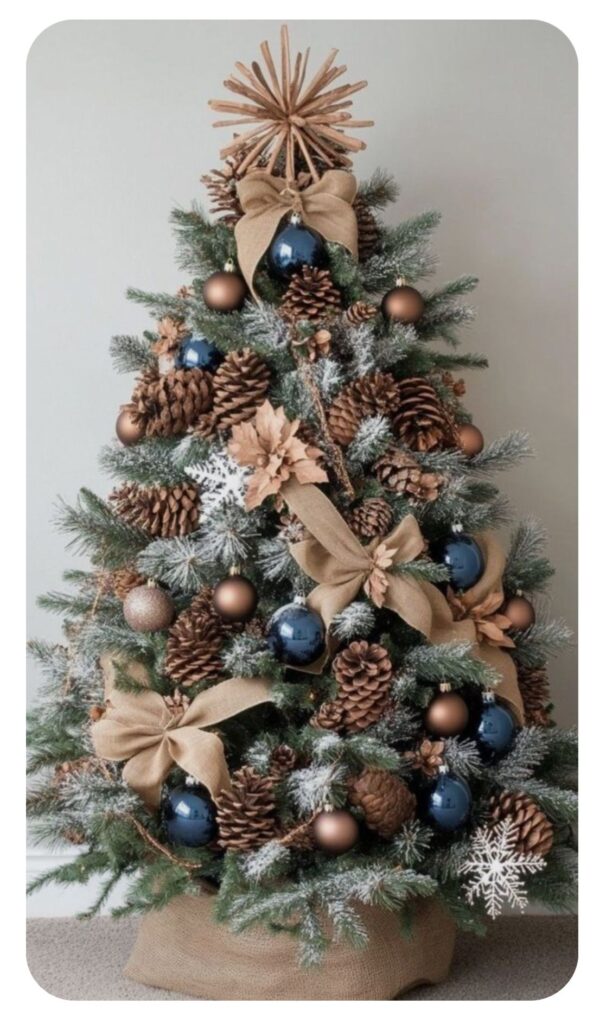
Photo credit: @ Ginny Cahill
The easiest way to make metallic decorations feel less cold is to put them next to something with a visibly different texture.
Instead of adding several shiny colours, pair brass with wood, bronze with jute, copper with dried botanicals, or silver with paper.
Start with the metallic pieces as your reflective accents, then use the natural material to break up the shine.
For example, brass baubles can sit alongside unfinished wooden stars, while bronze ornaments can be balanced with simple jute bows.
The materials don’t have to match perfectly.
What matters is the contrast between smooth and rough, shiny and matte, hard and soft. That gives the tree depth without needing a complicated colour scheme.
Running behind on your holiday projects? Last Minute Christmas Craft In 30 Minutes gives you a quick project to finish without the usual rush.
20. Vintage-Inspired Tree Without Red and Green
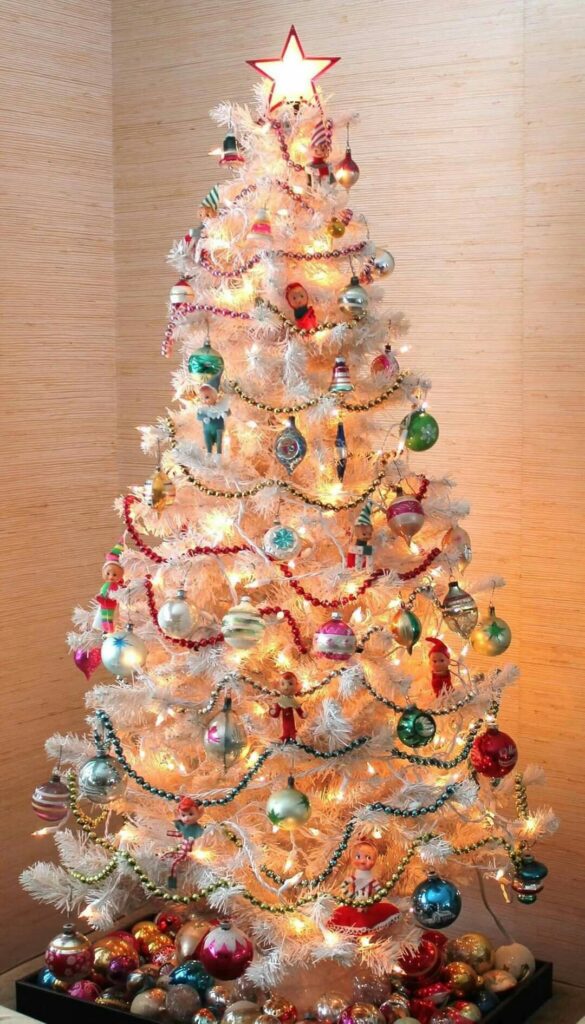
Photo credit: @ Dee Riley
You don’t need traditional red and green to make a tree feel nostalgic. Instead, borrow the shapes, finishes and materials associated with older Christmas decorations.
Look for glass ornaments, tinsel, mercury-glass-style finishes, old-fashioned ornament shapes, muted pastels and cream.
A few pieces with a slightly aged or imperfect appearance can do more for the look than filling the tree with modern decorations designed to look vintage.
For Christmas tree ideas that aren’t red and green, the lighting and ribbon can help establish the mood just as much as the ornaments.
Warm white lights suit the softer glass and cream tones, while a narrow velvet or satin ribbon in dusty rose, champagne or faded blue can add an old-fashioned touch without introducing another loud colour.
Keep the newer pieces simple so they don’t compete with the vintage-style ones.
For example, combine delicate glass ornaments with plain cream baubles and restrained tinsel rather than adding a different novelty ornament for every branch.
Place the more distinctive glass or vintage-style pieces where they can be seen easily, then use the simpler ornaments to fill the deeper areas of the tree.
This gives the tree depth without making every branch compete for attention.
The result feels nostalgic because of the materials, shapes, lighting and restrained colour palette, not because every decoration has to look old.
That also makes it easier to mix inherited ornaments with newer pieces without making the tree feel like two different collections.
21. Kids’ Artwork Tree That Still Looks Put Together
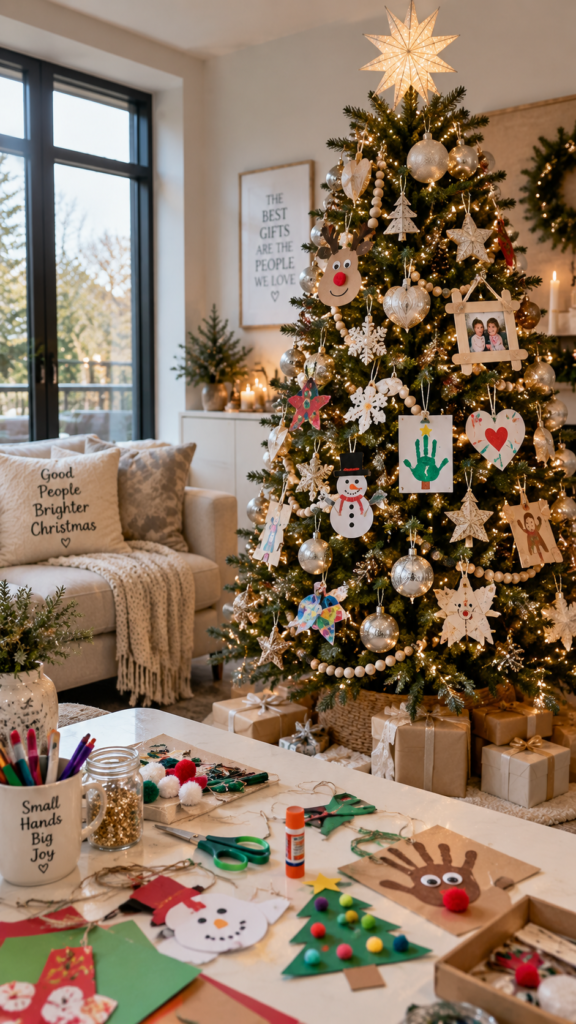
Children’s handmade ornaments can make a tree much more personal, but putting every craft on the branches at once can quickly create a jumble of colours, shapes and sizes.
Start with a simple base palette for the tree, cream, white, natural wood or one colour that appears often in the children’s artwork. Then let the handmade pieces provide the variation.
The ribbon and lights can do a lot of the organising here. Warm white lights keep colourful artwork easy to see, while one repeated ribbon gives the different pieces a visual connection.
You can also keep the ornaments within a similar size range so one large paper craft doesn’t overwhelm everything around it.
Spread the children’s pieces throughout the tree rather than putting them all at eye level.
Leave some simpler areas between the handmade ornaments so each piece has room to be noticed.
The aim isn’t to make the crafts look coordinated. The surrounding decorations create the structure; the children’s work supplies the personality.
22. Travel-Memory Tree
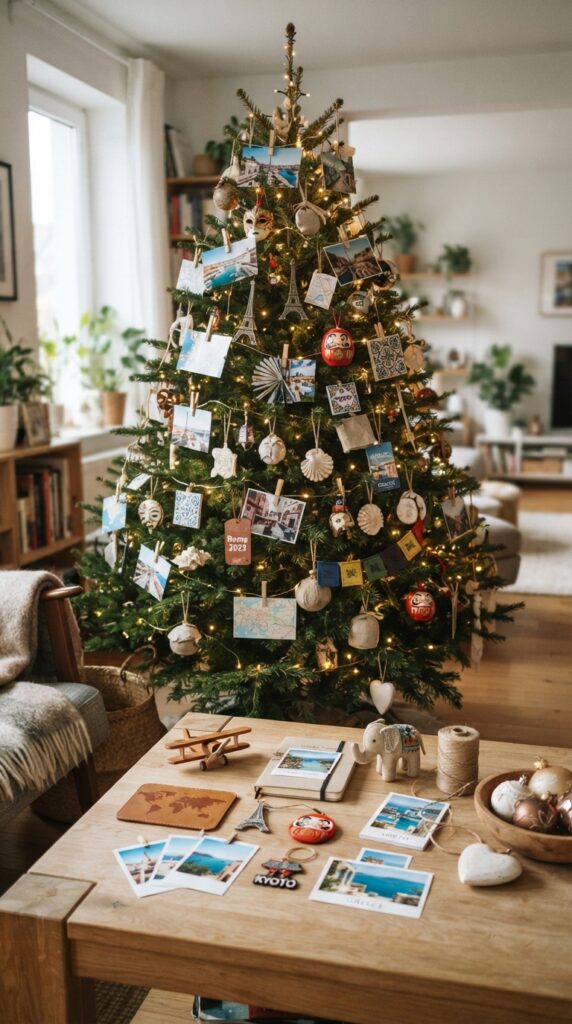
A travel-memory tree gives you a reason to use the ornaments and small keepsakes you’ve collected over the years instead of buying another matching decoration set.
The challenge is that souvenirs rarely share the same colours, shapes or materials.
Lay everything out first and choose the pieces that have something in common, perhaps similar colours, natural materials, small proportions or a particular finish.
Keep the rest of the tree quiet. Warm white lights, a simple cream or natural ribbon and understated filler ornaments give the travel pieces enough space to stand out without competing with each other.
Place heavier souvenirs securely on stronger inner branches, while smaller and lighter pieces can sit closer to the tips.
Spread different destinations around the tree rather than arranging each location in one section.
The result should feel collected rather than cluttered. You’re editing your memories into a tree, not displaying every souvenir you own.
23. Book-Lover’s Tree
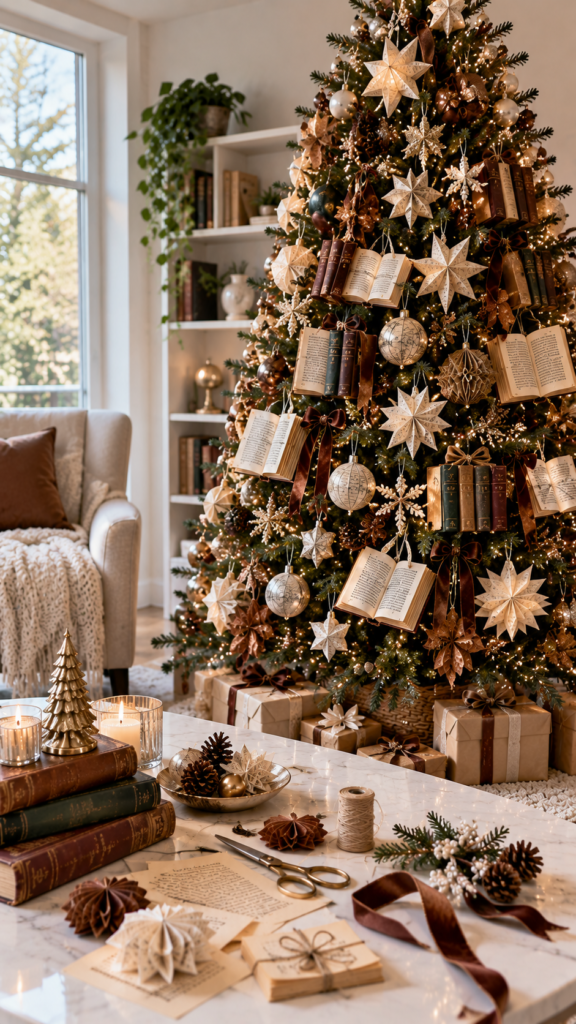
A book-themed tree can quickly become a novelty display when every branch contains miniature books, literary quotes and reading-related characters.
A more considered approach is to use books as the inspiration while letting the colour and materials hold everything together.
Paper stars, miniature books, old-book-style paper ornaments, simple reading motifs and handmade page decorations can all work.
Cream, brown, muted green, navy or burgundy can give the tree a quieter library-inspired palette.
Use warm white lights to bring out the cream and brown tones, then add paper or linen ribbon rather than a highly reflective metallic one.
A few wooden ornaments can also connect the paper pieces to the rest of the tree.
Keep the most recognisable book-related pieces toward the outer branches where they can be seen, and use plain paper stars, cream baubles or wooden shapes deeper inside to fill the gaps.
That way, the tree communicates a love of books without looking like a shop display of literary merchandise.
24. Single-Material Tree
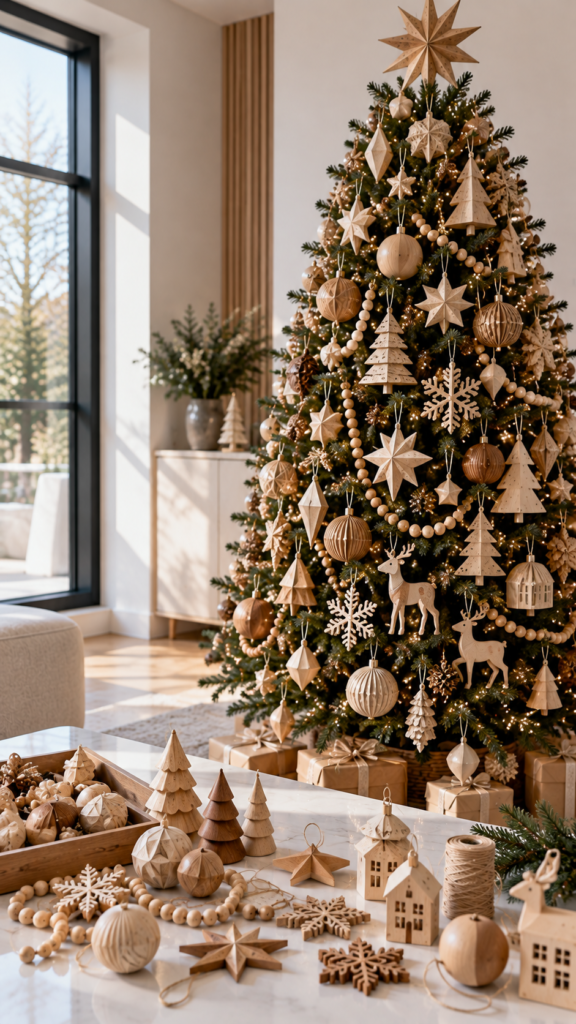
Using one material throughout the tree is a simple way to create a distinctive look without having to coordinate several colours.
Choose wood, paper, felt, glass or fabric, then let the shapes and sizes provide the variation.
For Christmas tree ideas that aren’t red and green, this approach is useful when you want the tree to feel cohesive but don’t enjoy matching lots of colours.
A wood-only tree, for example, can include stars, beads, snowflakes and geometric shapes while still looking like one collection.
Start with your largest pieces, then add smaller versions of the same material around them.
Vary the texture where possible, a smooth wooden ornament can sit beside a carved or unfinished one, while folded and flat paper pieces can give a paper tree more dimension.
The important principle is repetition.
Ornaments don’t need to match in shape or size when they share the same material language. That repeated element gives the eye something familiar to follow around the tree.
25. Use What You Already Own Tree
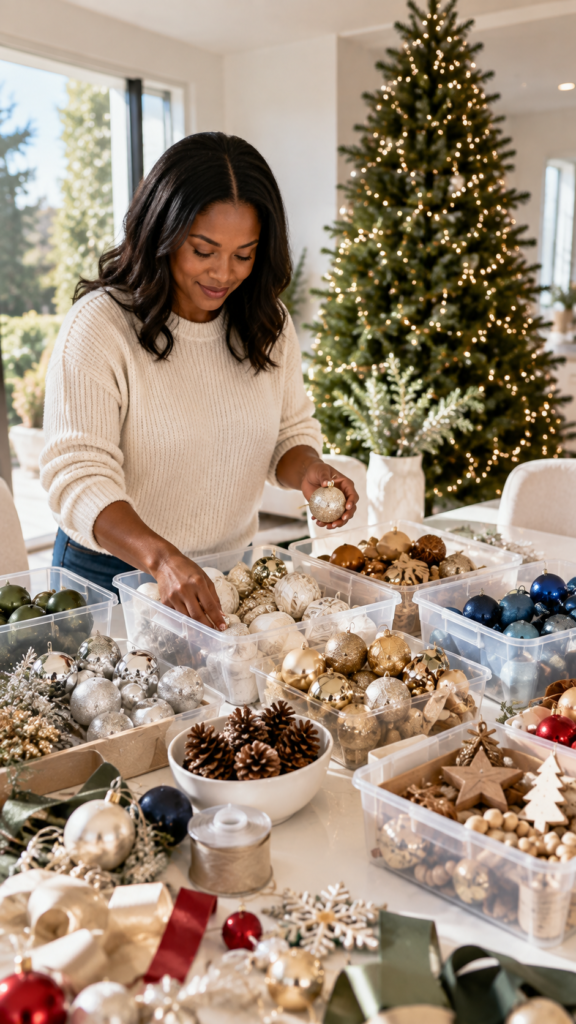
A new Christmas look doesn’t necessarily require a new collection of decorations.
Before buying anything, take out the ornaments you’ve accumulated over the years and sort them by colour, material, size and finish.
You may find enough silver pieces for a simple metallic tree, several blue ornaments that have been scattered among older decorations, wooden pieces that suit a neutral room, or sentimental ornaments that could become the main feature.
Once you’ve sorted everything, choose one group to build around and put the pieces that don’t fit aside.
Then identify the actual gaps. You may only need one length of ribbon, new ornament hooks, a few larger pieces or a different tree topper to pull the look together.
Use your largest decorations first, spread the main colour or material evenly around the tree, then fill obvious gaps with the smaller pieces you already own.
Keep sentimental ornaments where they can be seen rather than burying them among filler decorations.
This approach solves a problem that often gets overlooked: buying more decorations can make a tree harder to coordinate, not easier.
Sometimes the better Christmas tree is already sitting in your storage boxes, you just need to sort it differently.
Before tossing those empty boxes and containers, see what you can make with DIY Christmas Crafts From Recycled Materials.
What Actually Makes a Non-Traditional Tree Look Intentional?
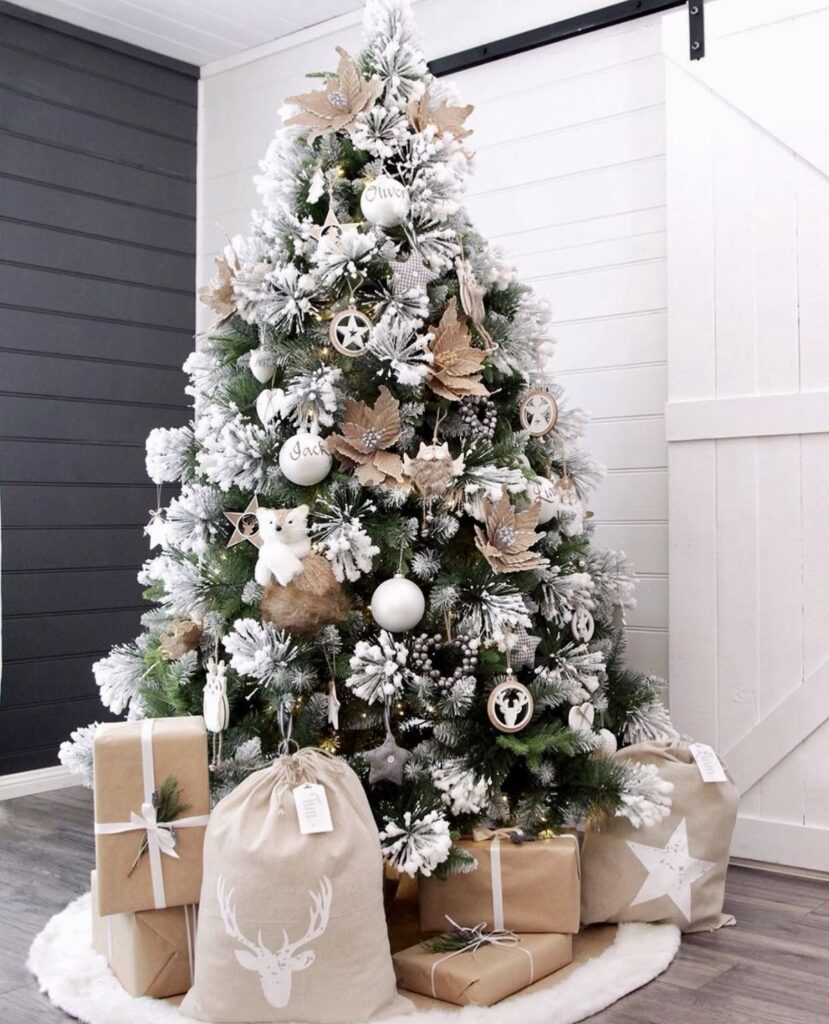
A traditional Christmas tree usually follows a familiar formula: red and green ornaments, gold accents, warm white lights, ribbon or garland, and a mix of baubles, bows and familiar holiday shapes.
The colours and decorations may vary, but the overall look is easy to recognise.
A non-traditional tree changes one or more of those familiar elements. That could mean using unusual colours, natural materials, one dominant finish or a collection of personal ornaments. But different doesn’t automatically mean well designed.
The best Christmas tree ideas that aren’t red and green still have some visual order behind them. Here are four things to pay attention to:
Give One Element the Lead
Think of your palette in three levels: a dominant colour or material,a supporting one, and a smaller accent.
The proportions don’t have to follow an exact 60–30–10 rule. The point is simply to avoid giving every colour equal importance.
Repeat Something Around the Tree
Repeat a colour, shape, material or texture in several places. Three or more appearances are usually enough to make separate decorations feel connected rather than randomly placed.
Mix Finishes, Not Just Colours
A restrained palette can still look rich when you combine matte, glossy, frosted, glass, velvet, wood or woven textures. This gives the eye something to notice without adding five more colours.
Let Some Decorations Stay Quiet
One or two statement elements can carry much of the visual interest. The smaller ornaments should help fill gaps and support the main pieces rather than competing with them.
The goal isn’t to make your tree unusual for the sake of being unusual. It is to make your choices look connected.
Need more holiday projects to make at home? DIY Christmas Crafts to Make This Holiday Bright has plenty to keep the crafting going.
Conclusion
A different Christmas tree doesn’t have to look strange or unfamiliar. The best Christmas tree ideas that aren’t red and green simply use a colour, material, memory or decorating style that makes sense in your home.
You also don’t have to start from scratch. Changing the ribbon, switching the lights, or choosing one new dominant colour can change the whole tree while letting you keep decorations you already own.
So choose the part you want to change first, then build the rest of the tree around it.
Which direction are you leaning this Christmas, colour, natural materials, metallics, or something built around your own memories? Pick one and start there.