
This post contains affiliate links. This means I may earn a small commission if you purchase through my links at no extra cost to you.
Watching a parent get older changes the way you see their home. The same hallway they have walked through for years suddenly feels different.
The stairs you never noticed become something you think about. The bathroom you never worried about becomes the room you quietly check every time you visit.
And that is usually how the worry starts.
Maybe it was a small stumble. Maybe they mentioned feeling less steady. Maybe nothing has happened yet, but something in your gut says it is time to pay attention.
Learning how to make a home safe for aging in place is not about turning your parent’s house into a hospital or taking away the independence they have worked hard to keep.
It is about making small, thoughtful changes that help them stay comfortable, confident, and in control of their own space.
The hardest part is knowing where to begin.
Most adult children are not contractors. They are not home safety experts. They are simply trying to help someone they love without making their parent feel like they are losing their freedom.
That is why this room-by-room approach matters.
You do not need to change everything overnight. You need to know what matters most, what can wait, and which changes will make the biggest difference.
Small changes, done in the right order, can make a home feel safer, easier, and more comfortable.
This room-by-room guide will walk you through the places that matter most, what to fix first, and the changes that can help your parent continue living at home with confidence.
Why This Matters More Than Most People Realize
Ninety percent of adults over 65 want to stay in their own homes as they age. That’s according to the National Institute on Aging. Not a nursing home. Not a spare bedroom in your house. Their own.
But wanting to stay isn’t the same as being safe to stay.
The Centers for Disease Control and Prevention reports that one in four adults over 65 falls each year. Falls are the leading cause of injury death in older adults.
Only about 1 in 10 American homes are “aging ready” meaning they have a first-floor bedroom and bathroom, a step-free entry, and at least one bathroom accessibility feature. That’s a 2020 U.S. Census Bureau finding.
That’s the gap. And that’s why learning how to make a home safe for aging in place matters so much right now.
Before You Buy Anything, Do This First
Here’s the step nearly every family skips.
Before you spend a dollar on grab bars, before you rearrange a single piece of furniture, book a home safety assessment with an occupational therapist.
An OT is a licensed healthcare professional trained to evaluate how someone actually functions in their environment.
They’ll walk through your parent’s home room by room. They’ll watch how your parent moves. They’ll catch what you’ll miss.
You’ll see the loose rug. You won’t see that your mom’s grip strength has weakened to the point where she can’t safely carry a full pot from the stove to the sink. That’s the difference an OT makes.
How to Find an Occupational Therapist
Three routes worth knowing:
- Ask your parent’s primary care doctor for a referral. Medicare Part B may cover the assessment with a doctor’s order.
- Search the American Occupational Therapy Association directory directly.
- Call your local Area Agency on Aging through the Eldercare Locator.
One OT visit will save you thousands on things you didn’t need. And it’ll catch the risks you would have missed until they became a hospital stay.
If you do nothing else this week, book that call.
The Room-by-Room Guide to Making a Home Safe for Aging in Place
Once the assessment is done, the rest becomes manageable. You don’t fix an entire home in a weekend. You fix one room at a time, prioritized by fall risk.
Here’s exactly how to make a home safe for aging in place, room by room, in the order that actually matters.
This is the working framework the part every family wishes someone had handed them earlier when they first started asking how to make a home safe for aging in place.
1. The Entryway (Where Falls Often Start)
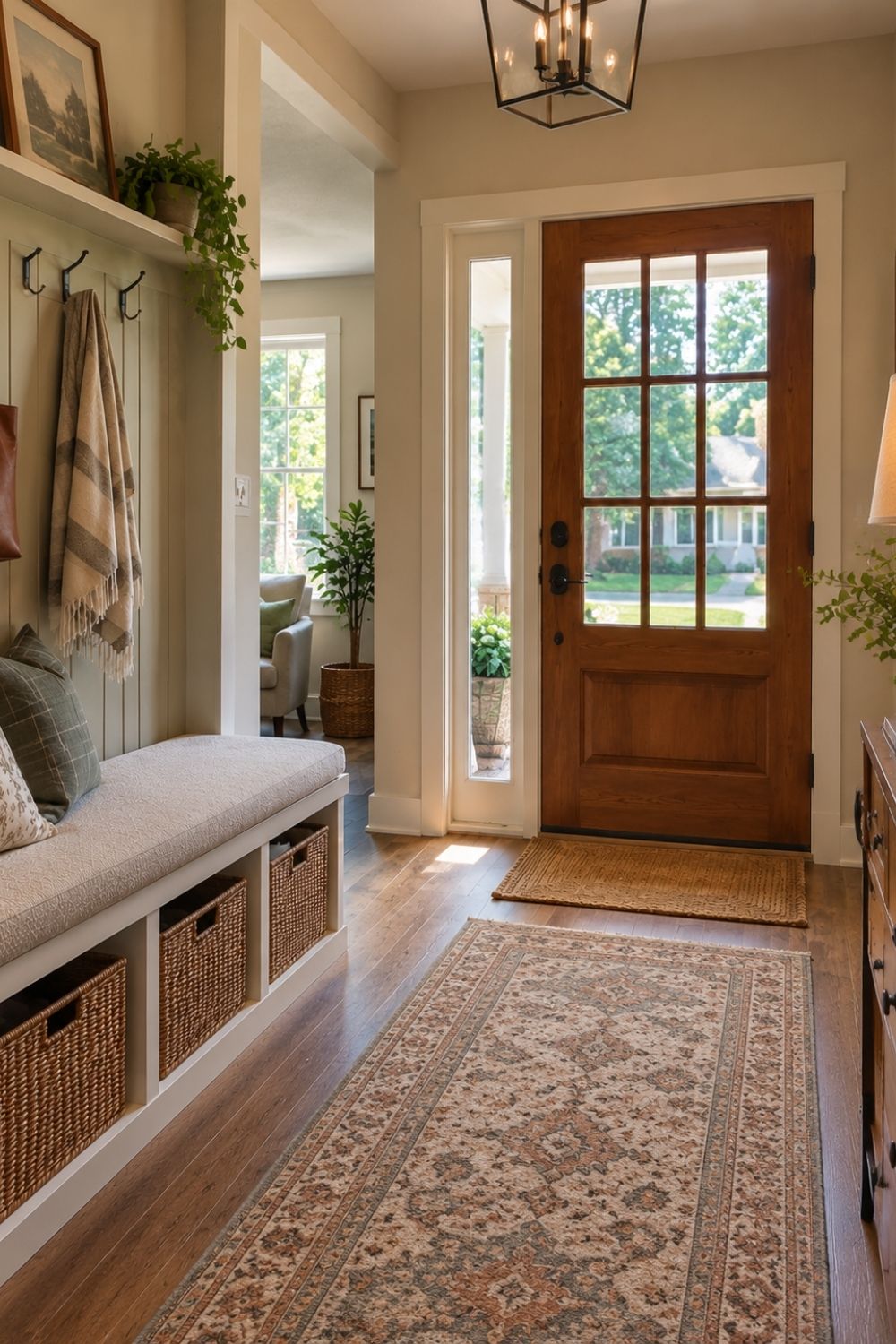
The entryway is the transition point between the outside world and the safe indoors. That transition is where a tired parent is most vulnerable. Groceries in hand. Outdoor shoes on. Change in surface underfoot. All at once.
What to add:
- A step-free entry, or a ramp with sturdy handrails on both sides
- Motion-sensor lighting outside the door and just inside
- A bench for sitting down to remove shoes safely
- A wide doorway — 36 inches minimum for wheelchair and walker access
- A lever door handle in place of any round knob
- A doorbell camera or peephole viewer at accessible height
- Secured or removed doormats — loose entry mats are one of the most common trip hazards in older adults’ homes
Fix the entryway first when starting the conversation. The changes are visible, low-cost, and rarely met with resistance. Your parent sees progress. You buy trust for the harder conversations coming later.
2. The Living Room (Where They Spend the Most Time)
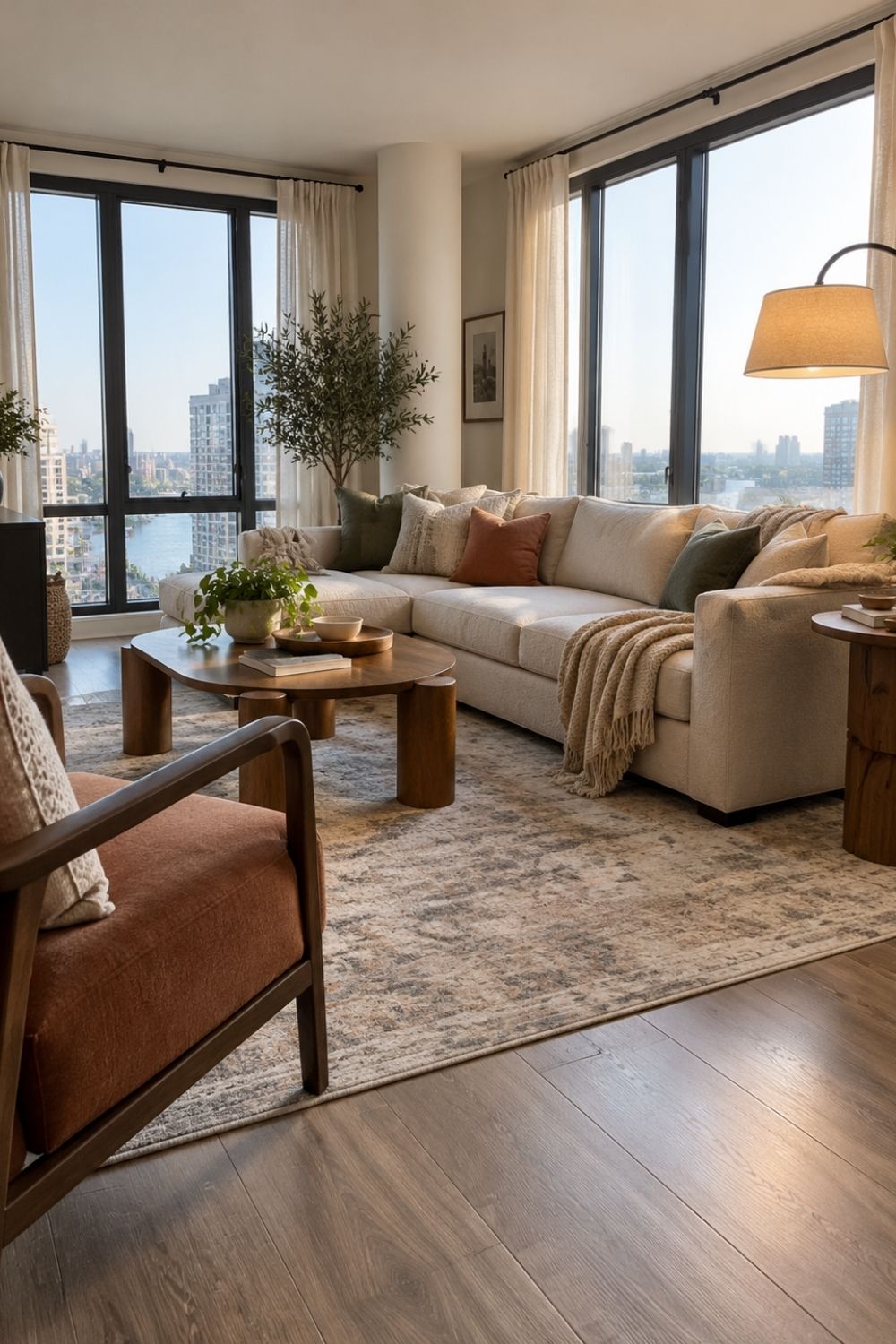
Your parent probably spends more waking hours in the living room than anywhere else. Small hazards add up here.
What to add or change:
- Chairs with sturdy armrests and a seat height of at least 18 inches
- A lift chair if getting up is genuinely hard — worth every penny
- Textured upholstery instead of slick leather, because grip matters when core strength weakens
- Clear pathways at least 36 inches wide, no ottomans or small tables in the middle
- Remove throw rugs entirely, or secure with heavy-duty non-slip underlay
- A flush hearth if there’s a fireplace — raised hearths are a major trip hazard
- Table lamps and reading lights positioned near favorite seating
- An emergency phone or medical alert device within arm’s reach of the primary seat
Here’s the detail nobody mentions. Watch how your parent gets up from their favorite chair. If they’re rocking forward multiple times to build momentum, that chair is too low or too soft. That’s a bigger safety issue than any rug in the room.
3. The Kitchen (Where Independence Lives)
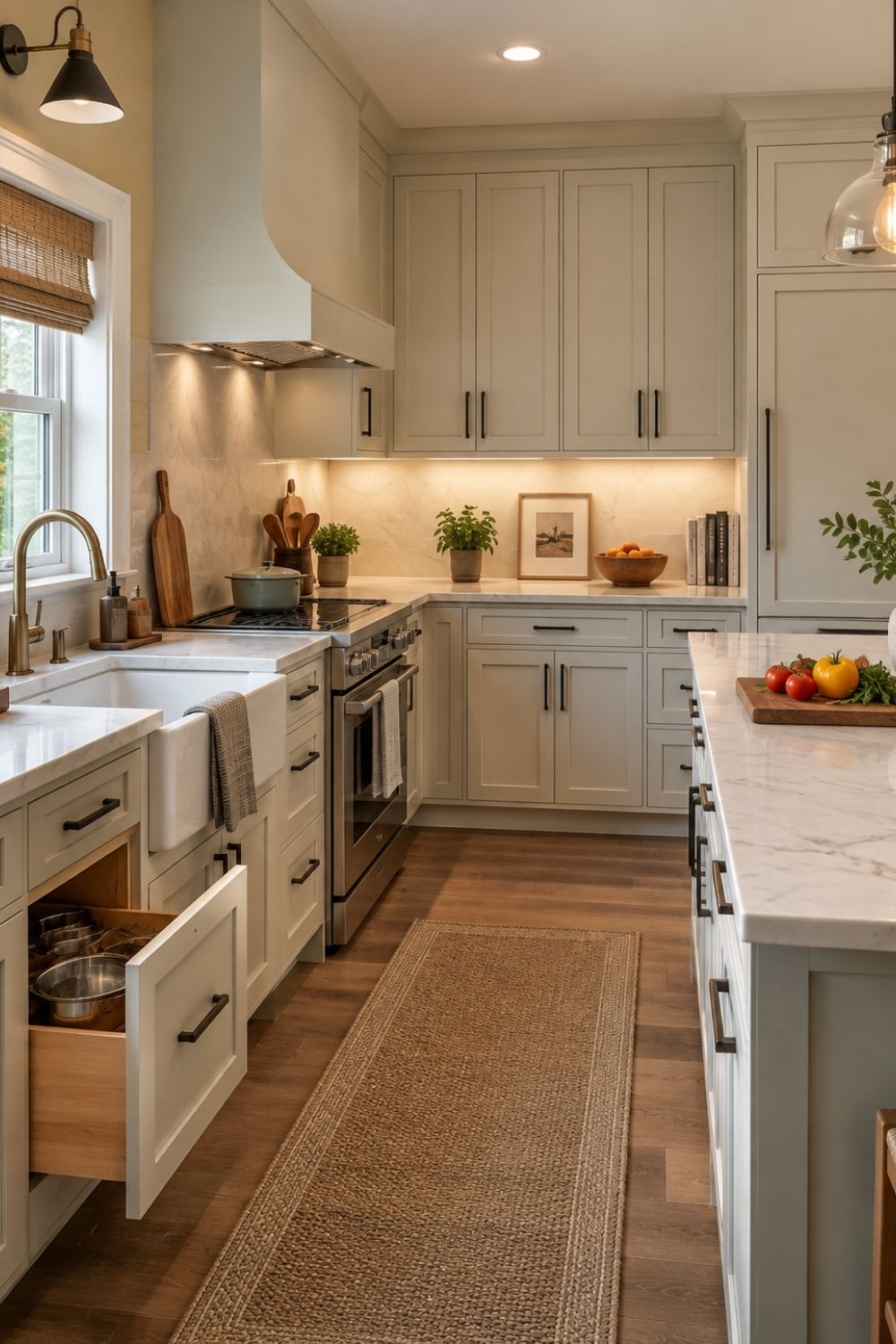
For most aging parents, the kitchen is where independence is felt most strongly. Losing it is felt just as sharply. Making this room safer is as much about preserving dignity as it is about preventing accidents.
What to add or change:
- A lever faucet with a single handle — much easier on arthritic hands
- Pullout drawers in the lower cabinets instead of fixed shelves
- Frequently used items moved to waist height, not overhead or floor level
- Non-slip mats at the sink and in front of the stove
- A front-control range or induction cooktop, which prevents reaching over hot burners
- An automatic stove shut-off device — one of the highest-value upgrades in the entire home
- Under-cabinet LED lighting plus brighter overhead bulbs
- Corner guards on sharp countertop edges
- An emergency contact list posted visibly on the fridge
The Kitchen Detail Most Families Miss
Kitchen fires from unattended cooking are one of the most common household emergencies in older adults’ homes.
An automatic stove shut-off device one of those add-ons that mounts to the existing stove and turns it off if left unattended costs less than most people expect and prevents one of the biggest catastrophic risks. Put it near the top of your list.
4. The Bathroom (The Single Highest-Risk Room)
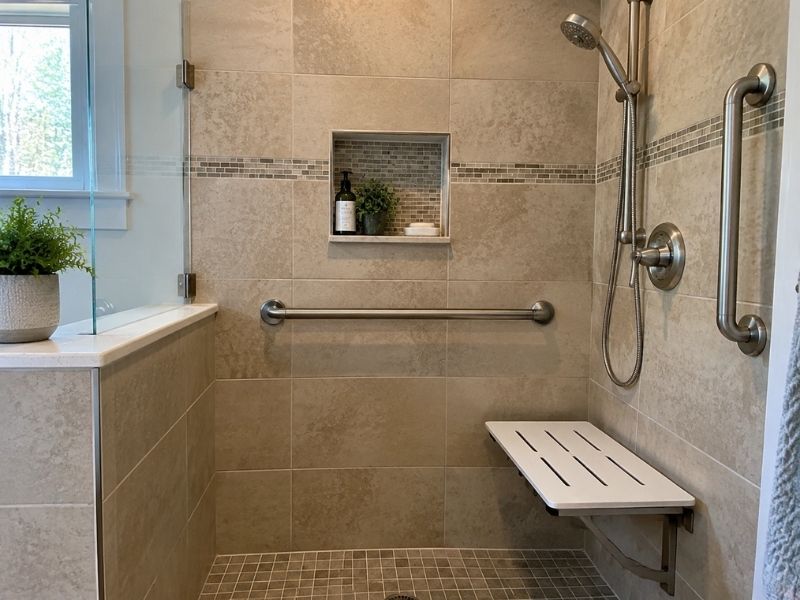
If you only have the energy to modify one room this month, make it this one.
Most home falls in older adults happen in the bathroom. Wet surfaces. Low toilets. High tub walls. Transitions between all of them. Add in low nighttime lighting and a tired parent, and you have the perfect storm.
What to add or change:
- Grab bars near the toilet, in the shower, and beside the tub
- All grab bars must be professionally installed into wall studs — never drywall anchors alone
- A non-slip bath mat both inside and outside the shower or tub
- A curbless walk-in shower if renovating, or a transfer bench for existing tubs
- A handheld showerhead mounted on a sliding bar that doubles as a grip support
- A raised toilet seat, or a comfort-height toilet if replacing
- A motion-sensor night light — nighttime bathroom trips are a top cause of falls
- An anti-scald device on the faucets to prevent sudden hot water burns
- A shower chair or built-in bench for seated bathing
If your parent has already fallen once, the bathroom is where it likely happened. Fix this room first. That’s not a suggestion. That’s the order the CDC data recommends. If you only remember one thing about how to make a home safe for aging in place — remember that it starts here.
5. The Bedroom (Where Mornings Start Safely)
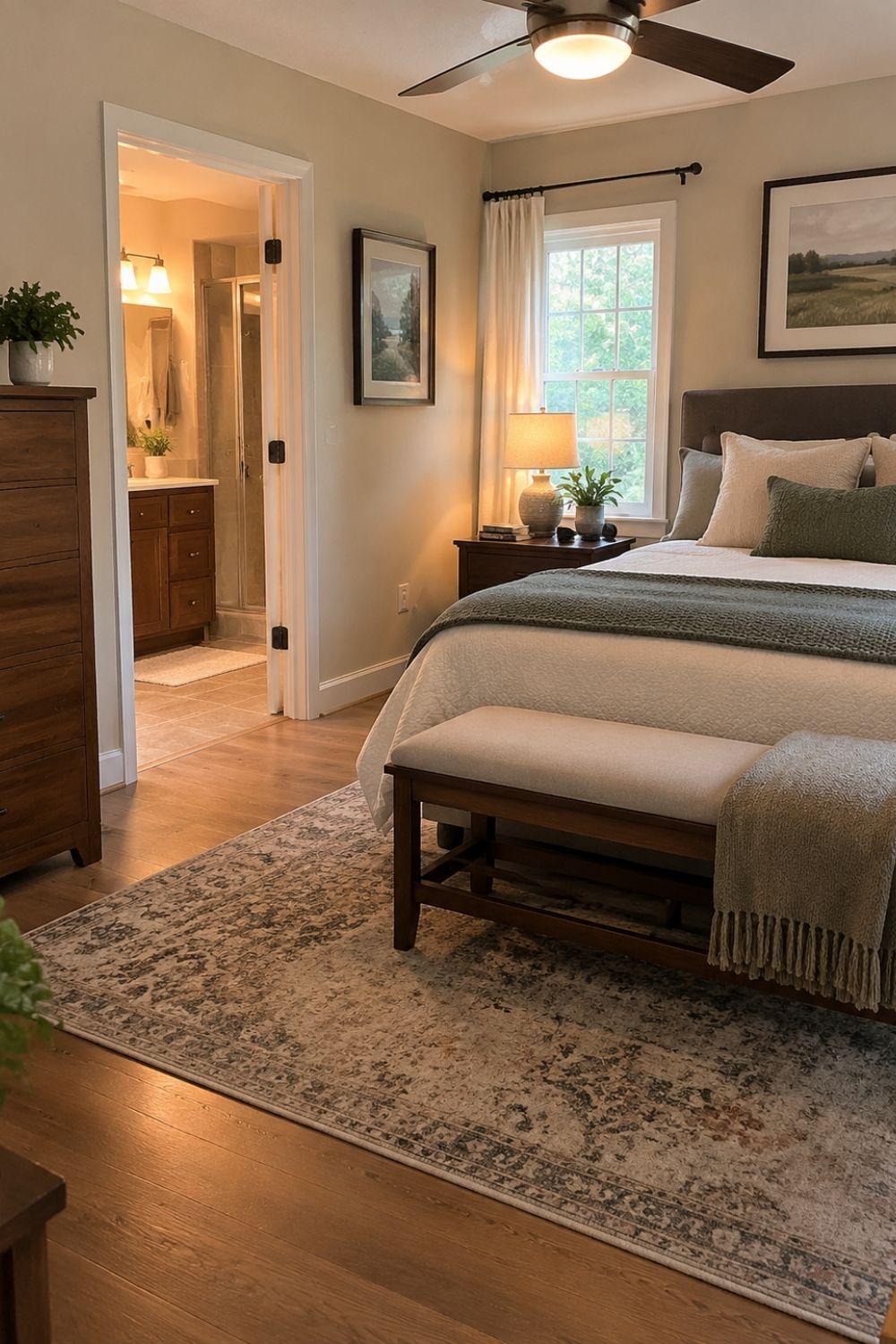
Morning is when many falls happen. Your parent has been horizontal all night. Blood pressure drops when they stand. Balance is off. They’re heading to the bathroom before their body is fully awake.
The bedroom setup matters more than most families realize.
What to add or change:
- A bed at the right height — parent should be able to sit on the edge with feet flat on the floor
- Bed risers if too low, or an adjustable bed frame if getting in and out is difficult
- A nightstand within arm’s reach: lamp, phone, glasses, water
- Motion-sensor floor lighting for nighttime bathroom trips
- A clear, unobstructed path from bed to bathroom
- A non-slip bedside rug, or no rug at all
- An emergency call button or phone within reach of the bed
- Daily-use clothes hung between waist and shoulder height in the closet
The path from bed to bathroom is the single most-traveled route in the house. It’s also often the darkest. Light it.
6. Stairs and Hallways (Where Falls Become Injuries)
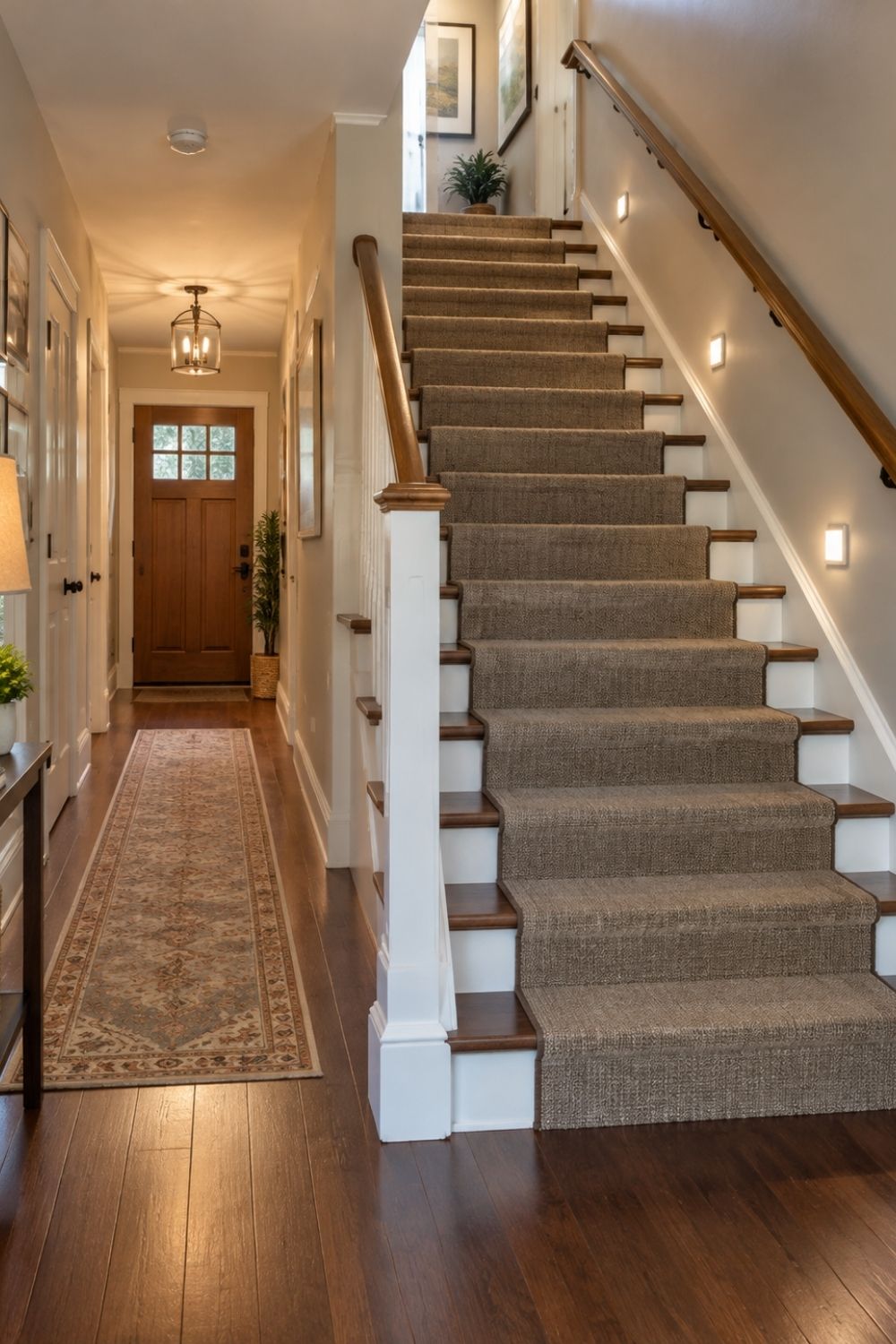
A stumble on flat ground is embarrassing. A stumble on a staircase is a hospital stay.
What to add or change:
- Handrails on both sides of every staircase, not just one
- Non-slip treads on every stair
- Contrasting color on stair edges — helps aging eyes see where one step ends
- Motion-sensor lighting at top and bottom of every staircase
- A stairlift for multi-story homes where climbing has become dangerous
- Stairlift installation is professional-only — never DIY
- Wider hallways where possible, or furniture removed to prevent narrowing
- Nightlights in every hallway, especially between the bedroom and bathroom
If your parent has started avoiding the upstairs, that’s not a preference. That’s a warning. Address the stairs before they stop using half their house.
The Small Changes That Make the Biggest Difference
Not every modification needs a contractor. Some of the highest-impact changes for how to make a home safe for aging in place cost almost nothing and take an afternoon.
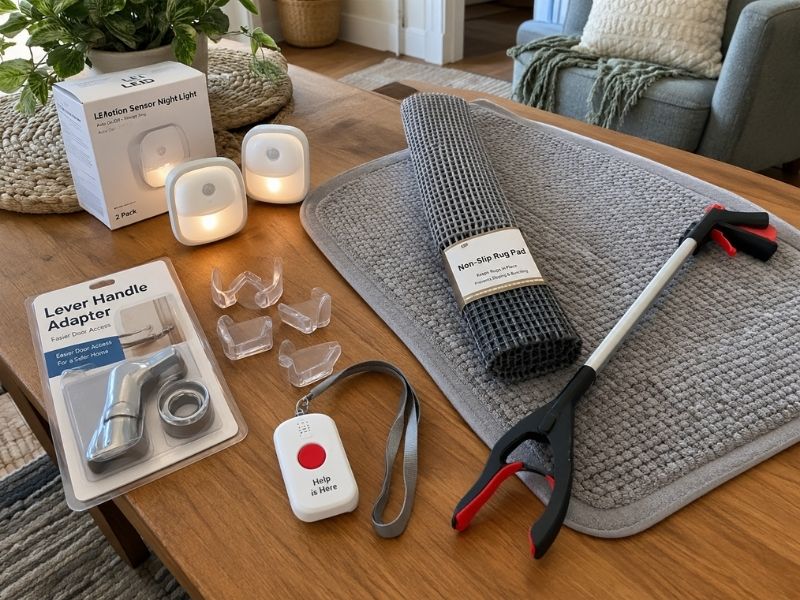
These are the ones you can knock out on a Saturday visit no permits, no waiting on a contractor, no big spend. Just small, steady wins that meaningfully reduce fall risk.
Worth adding this Saturday:
- Lever door handle adapters that slip over existing round knobs
- Corner guards for sharp countertop and furniture edges
- Non-slip pads under every area rug
- Motion-sensor plug-in nightlights for hallways and bathrooms
- Reachers or grabbers for high or low items
- Non-slip bath mats for inside and outside the tub
- Emergency call pendants your parent can wear at all times
- Rocker light switches to replace old toggle switches — huge difference for arthritic hands
- Bed rail attachments that clip onto existing bed frames
None of these will feel like enough on their own. Together, they meaningfully reduce fall risk before you tackle the bigger modifications.
Smart Home Devices That Help Aging Parents Stay Independent
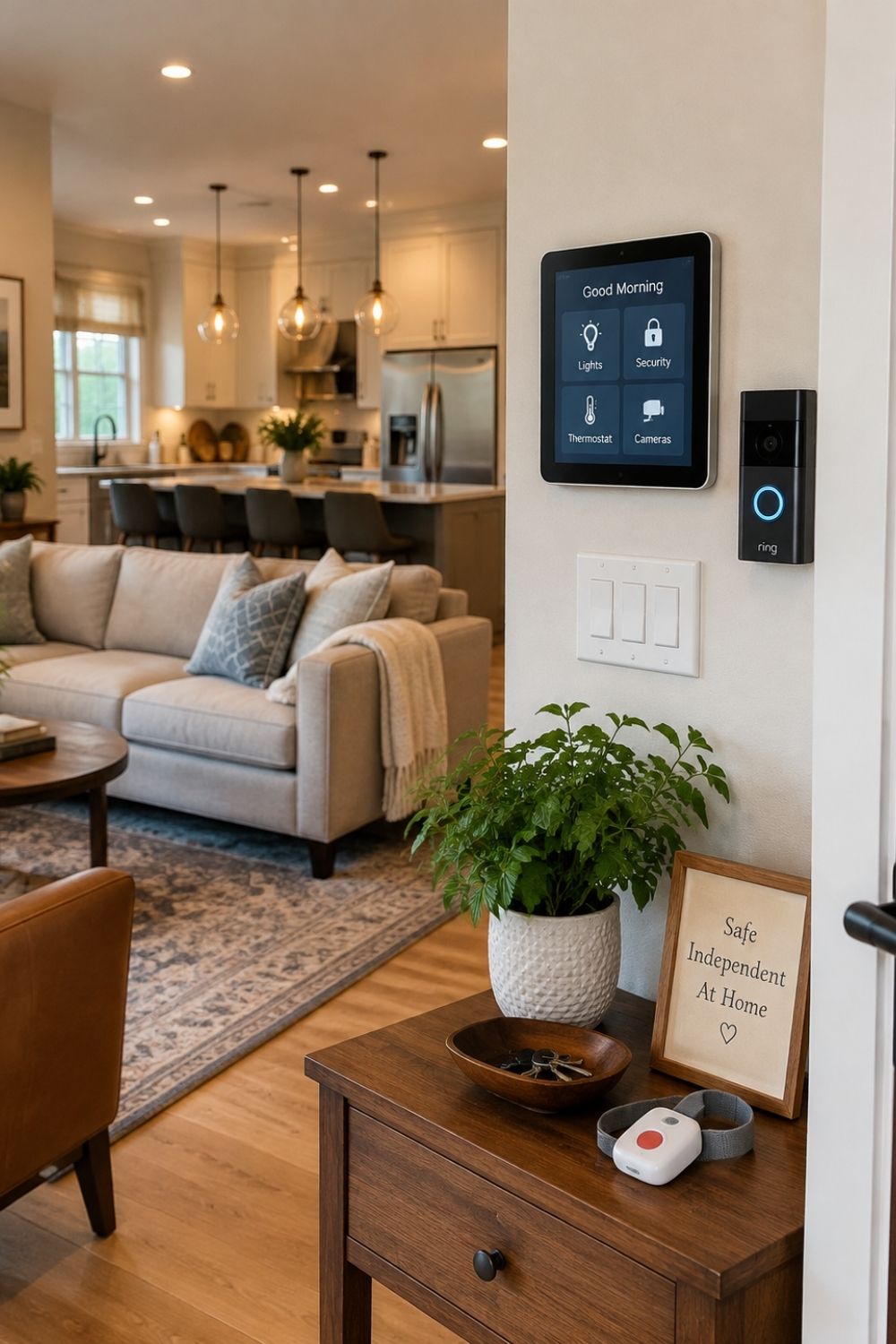
Technology has made aging in place safer than ever. But only if your parent will actually use the devices you buy.
Worth considering:
- Voice-activated lights through Amazon Echo or Google Nest — no fumbling for switches
- Video doorbells so your parent can see who’s at the door without walking to it
- Medical alert systems with fall detection
- Smart smoke and carbon monoxide detectors that notify family members
- Automatic pill dispensers that dose medication on schedule
- Motion sensor systems that alert adult children if there’s been no movement for unusual periods
- Video calling devices designed for seniors, like GrandPad
One rule matters more than the rest. Don’t buy the most impressive tech. Buy the tech your parent will actually use. A basic medical alert pendant they wear every day is worth more than a complicated smart home system they resent.
Common Aging-in-Place Mistakes to Avoid
Some of the most expensive lessons come from well-meaning adult children who didn’t know these traps existed.
The Grab Bar Mistake That Sends People to the ER
Installing grab bars into drywall anchors instead of wall studs is the single most common cause of grab bar failure.
When it fails, your parent falls harder than they would have without it because they were leaning their full weight on it. Grab bars must be professionally installed into structural framing. Always.
The Walk-In Tub Trap
Walk-in bathtubs sound like a great idea until you own one. They’re expensive. They’re hard to clean. They take fifteen minutes to fill and drain.
And residents often stop using them within a year. A walk-in shower conversion is almost always the better choice.
The Rest of the Traps to Avoid
- Buying grab bars from home décor sites — many aren’t weight-rated for actual support
- Skipping the OT assessment and guessing at what’s needed
- Choosing style over safety on flooring — polished hardwood and glossy tile look beautiful and cause falls
- Buying tech-heavy smart devices for parents who don’t already use smartphones
- Waiting until AFTER a fall to make modifications
- Trying to do everything at once instead of prioritizing by fall risk
- Not having a conversation with your parent before making changes
The last one is the hardest. It’s also the most important. Modifications feel like a loss of independence when they’re imposed. They feel like empowerment when they’re chosen together.
Who to Hire (And Who to Skip)
The right professional makes the difference between a modification that works for a decade and one that fails when your parent needs it most.
When it comes to how to make a home safe for aging in place, the hiring choices matter as much as the modifications themselves.
Book these people:
- Occupational therapist (OT) — the home safety assessment specialist. Find one at AOTA.
- CAPS-certified contractor — a Certified Aging-in-Place Specialist trained by the National Association of Home Builders in senior modifications.
- Aging Life Care Manager — coordinates modifications, medical care, and family logistics. Especially valuable when siblings are helping remotely.
- Area Agency on Aging — free local resource for referrals, funding programs, and services.
- Handyman — fine for small non-load-bearing changes like motion lights, lever knob adapters, rocker switches
- General contractor — for anything structural like widening doorways, walk-in showers, stairlifts
Skip anyone who cold-calls or door-knocks offering “senior discounts” on home modifications. Scams targeting aging homeowners are aggressive and common.
Never sign anything with a contractor your parent didn’t seek out first.
What Insurance Actually Covers (And What It Doesn’t)
This is the section every family wishes they’d read earlier.
Most people assume Medicare covers home modifications. It usually doesn’t. Here’s the real breakdown.
What Medicare and Medicaid Cover
Original Medicare (Parts A and B) covers durable medical equipment like walkers, wheelchairs, and hospital beds with a doctor’s prescription. It generally does not cover home modifications like grab bars, ramps, or bathroom remodels.
Medicare Advantage plans are different. Some now include limited home modification benefits. Check your parent’s specific plan.
Medicaid HCBS Waivers may cover home modifications in some states through Home and Community-Based Services waivers. Coverage varies significantly by state.
Other Programs Worth Knowing
- VA benefits — the HISA (Home Improvements and Structural Alterations) grant provides funding for eligible veterans
- Long-term care insurance — some policies cover modifications, check the policy language
- State tax deductions for medical home modifications
- USDA Section 504 loan program for rural low-income seniors 62 and older
- Habitat for Humanity — offers an Aging in Place program in some regions
Your parent’s Area Agency on Aging is the single best local source to identify funding your family may qualify for. Call them before assuming you’re paying out of pocket for everything.
Where to Start When You Can Only Do One Thing
If this list feels overwhelming, here’s how to prioritize.
- If your parent has never had a fall: start with the bathroom
- If your parent has already fallen: book an OT assessment immediately, before any other changes
- If your parent lives alone: medical alert system plus bathroom modifications are non-negotiable
- If your parent has vision issues: lighting upgrades throughout the entire home. This is especially true for parents with low vision — some of Zinnie’s crafts for seniors with low vision also touch on why visual contrast matters for daily safety
- If your parent has arthritis: lever handles, pullout drawers, and rocker light switches
- If you’re just starting the conversation: do the entryway first — visible, low resistance, easy win
The one universal rule: make one change at a time and let your parent see it working before adding the next.
When Home Modifications Aren’t Enough
Here’s something most aging-in-place guides won’t tell you.
Sometimes the modifications work. Sometimes they don’t. Sometimes your parent’s needs move past what any home renovation can safely provide and that’s not a failure on your part.
That’s the nature of aging. Learning how to make a home safe for aging in place also means knowing when home is no longer the safest place.
If your parent has already moved into assisted living or a nursing home, that doesn’t mean this post is irrelevant.
Family visits still matter. Engagement still matters. Bringing something meaningful into their new space is part of what keeps them connected to who they are.
Zinnie’s October crafts for seniors in nursing homes and Halloween party ideas for assisted living residents exist for exactly this reason. Home safety is one chapter of the story. Meaningful engagement, wherever your parent is, is another. Both matter.
One Thing to Remember Before You Read Another Article
Reading this list can feel overwhelming. You’re not being asked to fix everything this weekend. You’re being asked to start.
Every small change reduces fall risk. Every conversation with your parent about safety is a conversation that keeps them in their home longer.
Every professional you loop in — the OT, the CAPS contractor, the aging life care manager — is a person carrying part of the weight with you.
Your parent may resist. That’s not because they don’t love you. It’s because they’re grieving the version of themselves that didn’t need any of this. Go slow. Go with love. Start with what’s most dangerous.
And if you’re feeling the weight of watching a parent age — you’re not alone. That grief is real. It doesn’t mean you’re doing this wrong. It means you love them.
The best gift you can give your aging parent isn’t a perfect home. It’s your presence while you help them adapt to living in the one they already have.
That’s what it really means to know how to make a home safe for aging in place. Not perfect modifications. Not a Pinterest-worthy remodel. Just steady, thoughtful, room-by-room love.
FAQ: Real Questions About How to Make a Home Safe for Aging in Place
What does “aging in place” mean?
Aging in place means continuing to live in your own home as you get older, rather than moving to assisted living or a nursing home. The CDC defines it as the ability to live safely, independently, and comfortably in your own home regardless of age or ability level.
What room is most important to modify for aging in place?
The bathroom. Most home falls in older adults happen there — a mix of wet floors, low toilets, and the challenge of getting in and out of the tub. Prioritize grab bars, non-slip mats, a raised toilet seat, and a motion-sensor night light.
Does Medicare pay for home modifications for seniors?
Generally, no. Original Medicare doesn’t cover grab bars, ramps, or bathroom remodels, though it does cover durable medical equipment like walkers with a doctor’s prescription. Some Medicare Advantage plans, Medicaid waivers, and VA benefits may help — check with your parent’s plan.
Who should I hire to help me make my home safe for aging parents?
Start with an occupational therapist for a home safety assessment. For major modifications, hire a Certified Aging-in-Place Specialist (CAPS) contractor. For coordinated care, an Aging Life Care Manager can help.
How do I know if my parent needs home modifications yet?
Watch for the quiet signs before a fall happens: grabbing walls or furniture for balance, avoiding the stairs, taking longer to get up from chairs, or a recent near-miss they didn’t mention. Any of these signs means it’s time to book a home safety assessment. Don’t wait for a fall to force the issue.
How much do aging-in-place modifications cost?
Costs vary widely depending on the scope of work, your location, and whether modifications are DIY-friendly add-ons or structural renovations. The best approach is to get quotes from a CAPS-certified contractor after your OT assessment, so you’re only paying for what your parent actually needs.
What’s the first change I should make to my parent’s home?
If your parent has never fallen, start with the bathroom — it’s the highest-risk room. If your parent has already fallen, book the OT assessment first before any modifications. And if you’re just opening the conversation, start with the entryway. It’s the easiest win.
Save This Guide for Later
If this post helped you, save it.
Pin it to your caregiving board so you can find it when you need it. Print the room-by-room walkthrough and take it with you the next time you visit your parent.
Share it with your siblings this shouldn’t be one person’s job. The next time someone asks you how to make a home safe for aging in place, you’ll have somewhere to send them.
You’re doing something hard. And you’re doing it because you love them.
That’s already the most important part.