This post contains affiliate links. This means I may earn a small commission if you purchase through my links at no extra cost to you.
Tired of crafts that feel too simple for what you actually want to make? These bead crafts for seniors are sorted by what your hands need today.
Arthritis doesn’t take away the desire to make something beautiful. It changes what the hands can manage, smaller pinches get harder, holding a needle steady for long stretches gets harder, but the desire to create doesn’t go anywhere.
Beading is one of the few crafts built around a motion arthritic and aging hands can actually sustain: a repeated open-and-close threading action, done at your own pace, with no fine pinching required if the beads and stringing material are chosen right.
That’s different from crochet or hand-sewing, where losing your place mid-row or gripping a small hook for long stretches is often what ends the session early. With beading, you can set it down after five beads or fifty and pick back up without losing anything.
What actually determines whether a project feels good to make isn’t skill level, it’s whether the bead size, hole size, and stringing material match what your hands, eyes, or grip can do that day. A senior with a hand tremor and a senior with low vision need different adjustments, even though both are labeled “beginner.”
This list sorts 25 bead crafts for seniors by what’s actually limiting the crafting, grip strength, vision, tremor, or working one-handed, so the project fits the person, not the other way around.
Creating without discomfort is possible with Easy Summer Crafts for Seniors with Arthritis: Gentle on the Hands, Good for the Soul, featuring relaxing projects designed to be enjoyable while putting less strain on stiff or aching hands.
The Set-Up That Makes Beading Painless
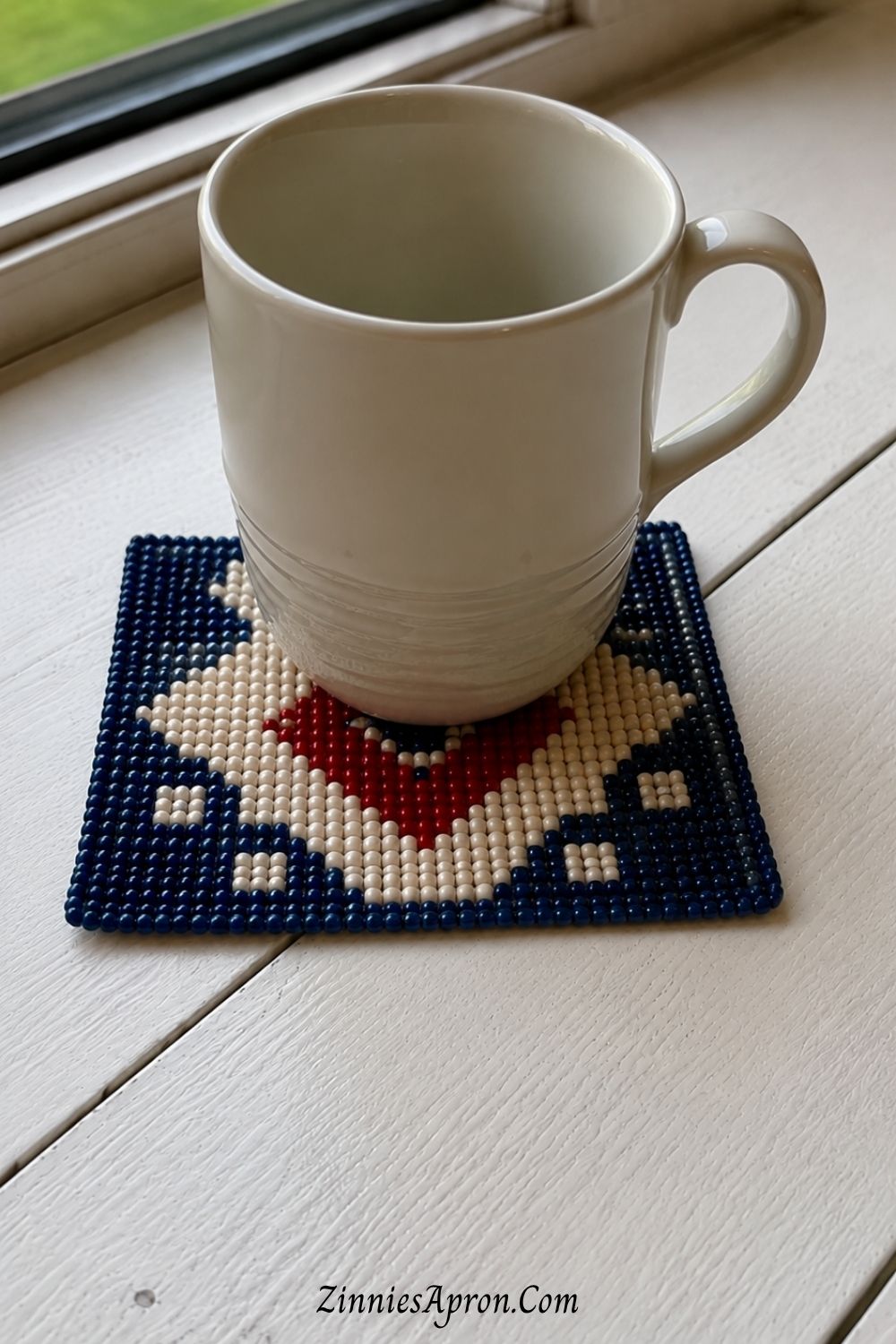
The beads themselves aren’t usually what ends a session early, it’s the workspace around them. A few adjustments made before you sit down solve most of what turns beading into a strain instead of a pleasure.
✅ Task lighting and magnification
Overhead lighting leaves the exact spot your hands are working in shadow. Move a clamp lamp so it shines directly down on the work surface, and that shadow disappears, along with a good part of the eye strain that makes small beads blur together after a few minutes.
If seed beads or fine wire are involved, add a magnifying clip or a monocular. Let the magnification do the close-up work so the eyes don’t have to strain for it.
✅ A non-slip mat or tray
Beads roll the moment they touch a bare table, and reaching to catch one that’s rolling away puts real strain on a stiff joint.
A textured bead mat, or a shallow tray with a raised edge, keeps everything sitting still and within easy reach. Hands can stay in one relaxed position instead of stretching and grabbing.
✅ Foam-grip tools
If pliers or a crimping tool are part of the project, check the handles. Thin metal handles concentrate pressure into a small strip of the palm, and that adds up fast over a longer project.
Foam tubing slipped over the handles, or pliers built with ergonomic grips from the start, spreads that pressure across the whole hand instead. It’s often the difference between finishing a clasp comfortably and needing to stop halfway through.
✅ A bead spinner
Picking up one bead at a time, over and over, is where most of the hand strain in beading actually comes from. A bead spinner does that part for you, a bowl of beads, a gentle spin, and the beads load themselves onto the needle.
This one tool makes the biggest difference for anyone with stiff or shaky hands, and it’s especially good for working one-handed, since the spinner does the picking-up and the other hand only has to guide the needle through.
Set these four things up once, and most of what follows in this list stops being about ability , and becomes simply a matter of what looks most beautiful to make.
Everyone deserves to enjoy crafting, and 21 Crafts for Seniors With Low Vision That Are Tactile, Beautiful and Completely Accessible offers projects that focus on texture, larger materials, and easy-to-follow techniques
Bead Crafts for Seniors
Gentle-Grip Bead Crafts (Start Here If Hands Tire Fast)
1. Stretch-Cord Bracelet
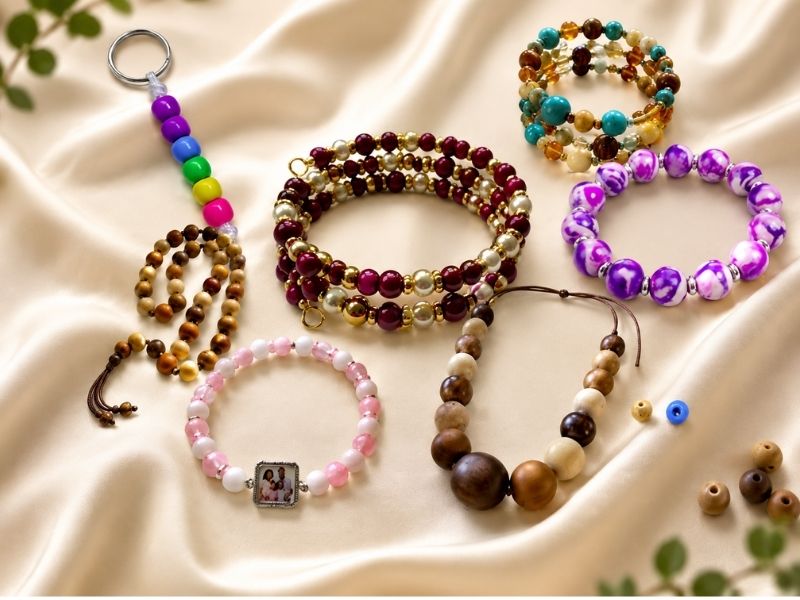
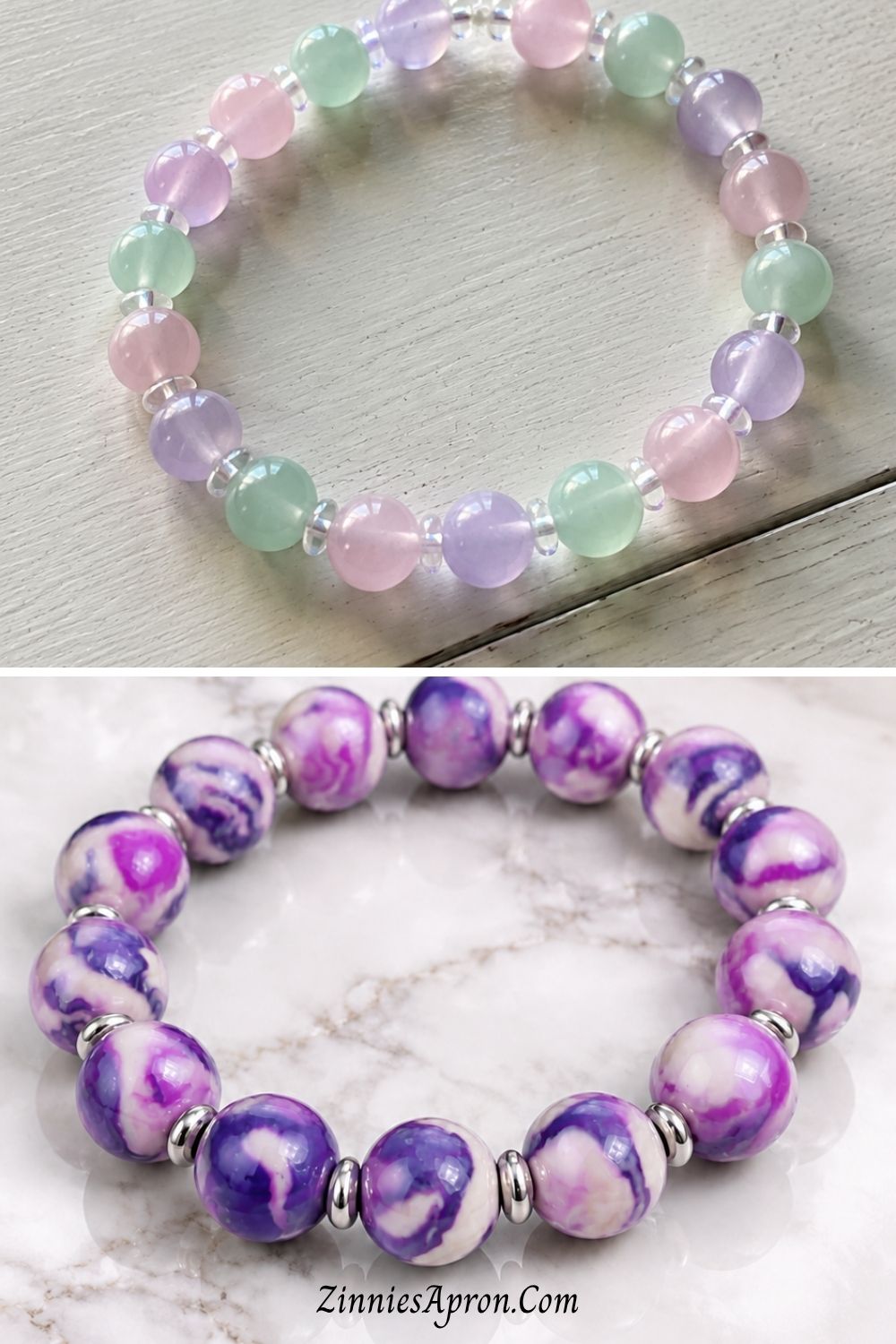 This is elastic cord, the same stretchy material used in a lot of children’s jewelry, threaded with beads and finished with a simple knot.
You pick beads with a hole wide enough for the cord to pass through easily, string them on in whatever pattern you like, tie a double knot, and trim the ends.
There’s no clasp to fasten and no tool involved beyond scissors. Because the cord stretches, the bracelet just slides over the hand, so you’re not lining up a clasp with shaky fingers at the end of the project, often the most frustrating part of jewelry-making for anyone with joint pain.
2. Memory-Wire Wrap Bracelet
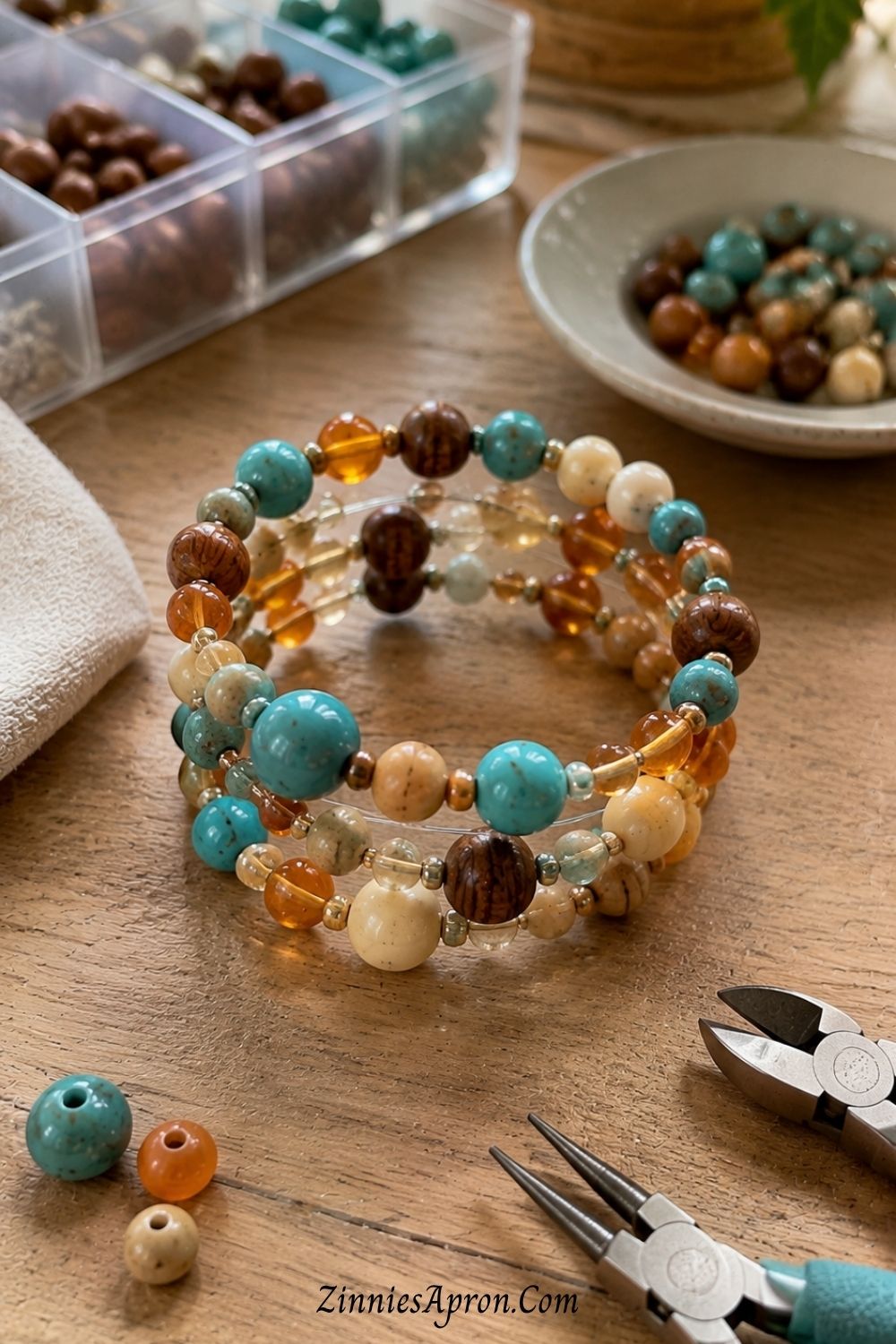
Memory wire is a specialty wire that comes pre-coiled into the shape of a bracelet and holds that shape permanently, you can’t bend it flat even if you tried.
You thread beads directly onto the coil, and once it’s full, you form a small loop at each end with pliers so the beads can’t slide off. Because the wire itself already holds the bracelet shape, you’re never fastening anything, you just slip it onto the wrist and the coil wraps around on its own.
3. Oversized Wooden Bead Necklace
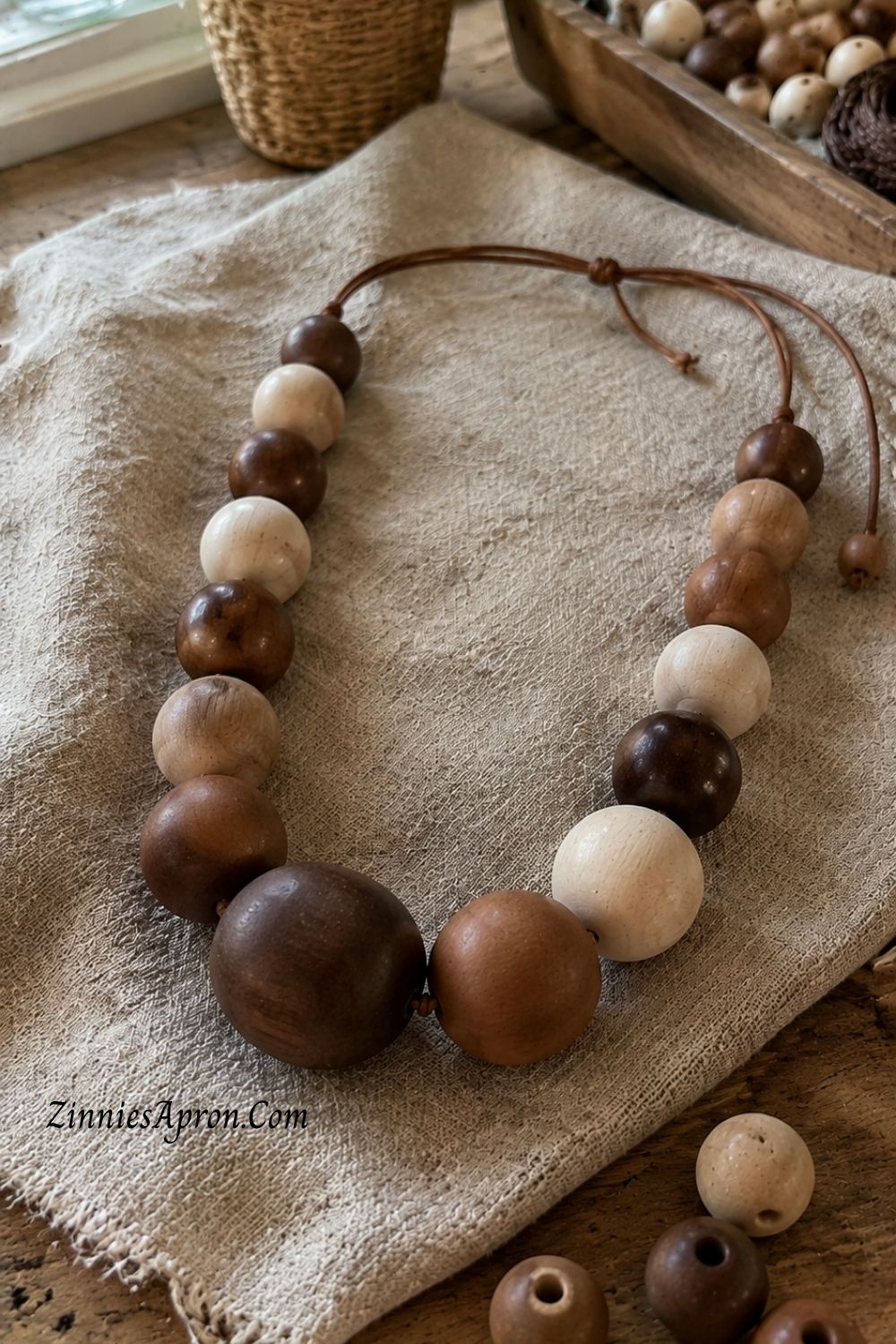
This is a single strand of large wooden beads, usually 16 to 20mm, noticeably bigger than typical jewelry beads, strung on stretch cord or a soft leather cord.
Wooden beads are hollow enough to be light on the neck even in a long necklace, and their size means you might only need 20 to 30 beads to finish a full strand, compared to over a hundred for smaller glass beads. Finish it with a slide knot instead of a clasp: two loose overhand knots that slide against each other to adjust the length, so there’s nothing to clip shut.
4. Memory-Wire Suncatcher
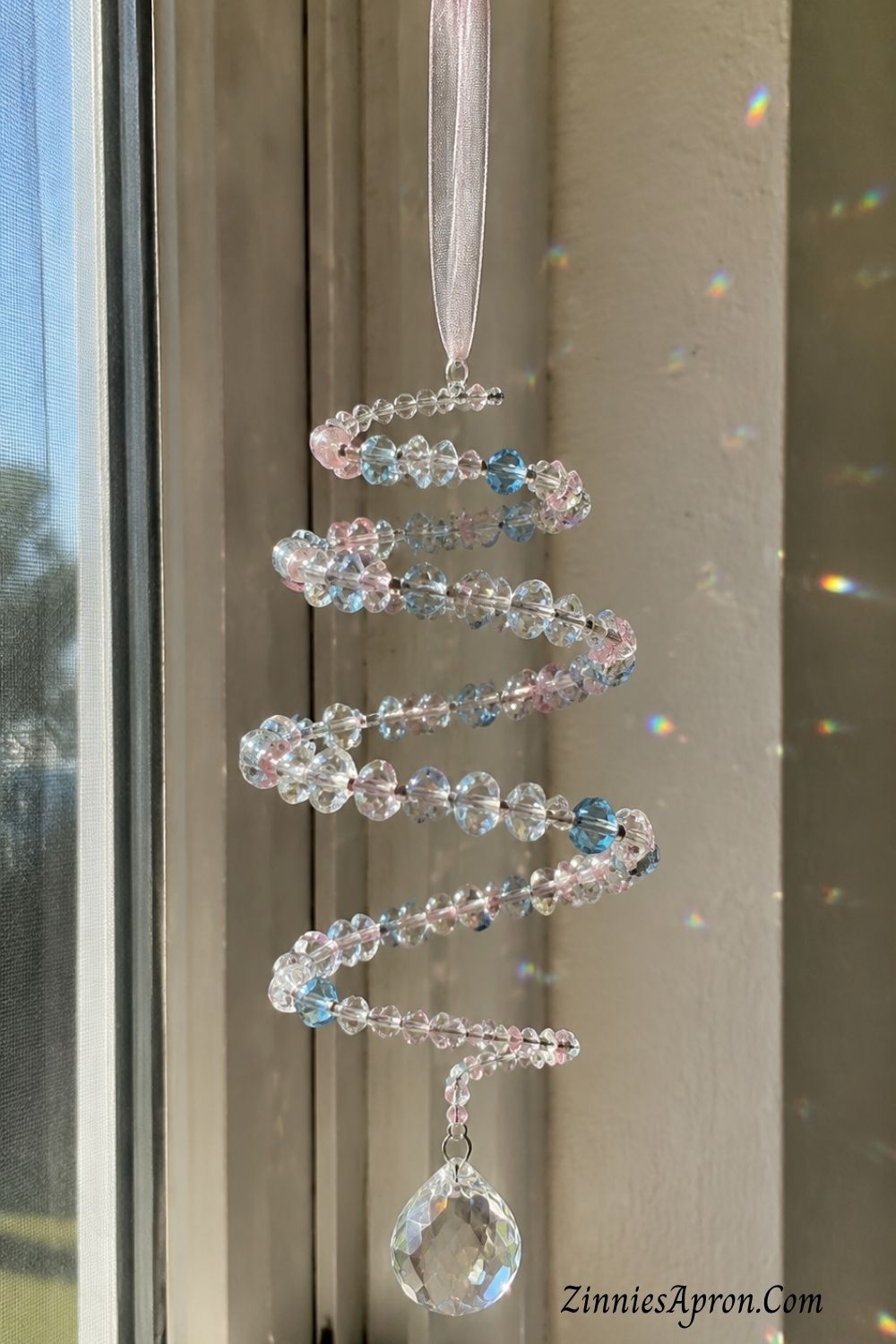
Take that same memory wire, but instead of a bracelet-sized coil, use the wider spiral loops meant for necklaces or wall pieces. Thread on glass or crystal beads along the spiral, and finish with a loop of thread or ribbon at the top for hanging in a window.
Light catches differently on each bead as the spiral turns slightly, which is what makes this one look far more impressive than the effort it actually takes. Craft stores sell kits with the memory wire pre-cut and a starter loop already attached, which removes the wire-cutting step entirely if that’s a concern.
Keep the summer spirit alive with 20 July Crafts for Seniors in Assisted Living That Are Simple, Festive and Full of Summer Joy, packed with cheerful ideas that brighten activity days and encourage social connection.
5. Single-Strand Pony Bead Keychain
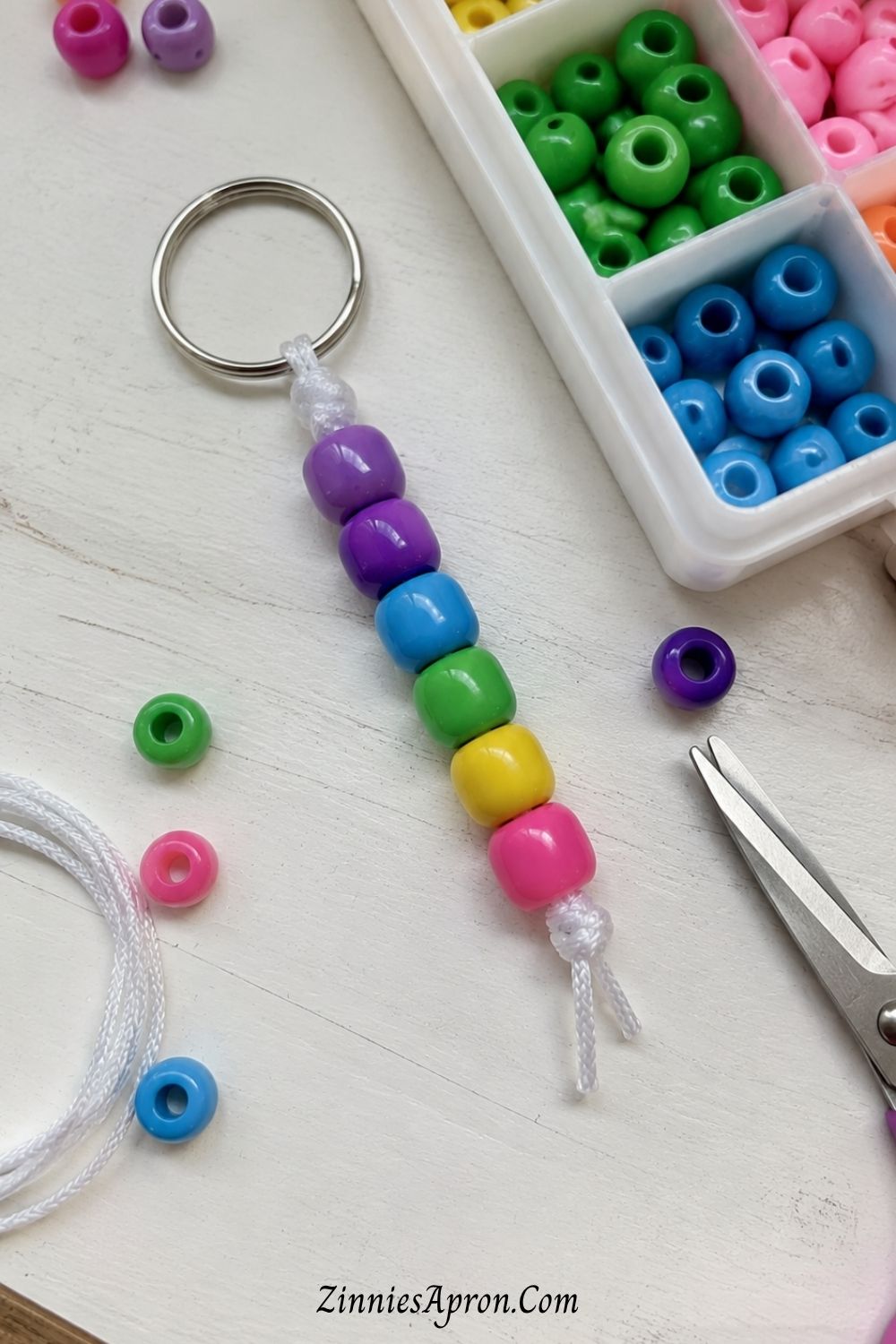
Pony beads are the plastic beads most people remember from childhood crafts, and they earn a spot here because their holes are genuinely the largest and most forgiving of any bead sold in craft stores.
String a short row onto a leather cord or a length of waxed thread, knot it directly onto a keyring, and you’re done in under fifteen minutes.
It’s a good one to keep on hand for a day when your hands are having a harder time, short enough to finish in one sitting, but still a real, giftable piece when it’s done.
Low-Vision Friendly Bead Crafts (High Contrast, Big Tactile Beads)
6. Chunky Glass Bead Suncatcher
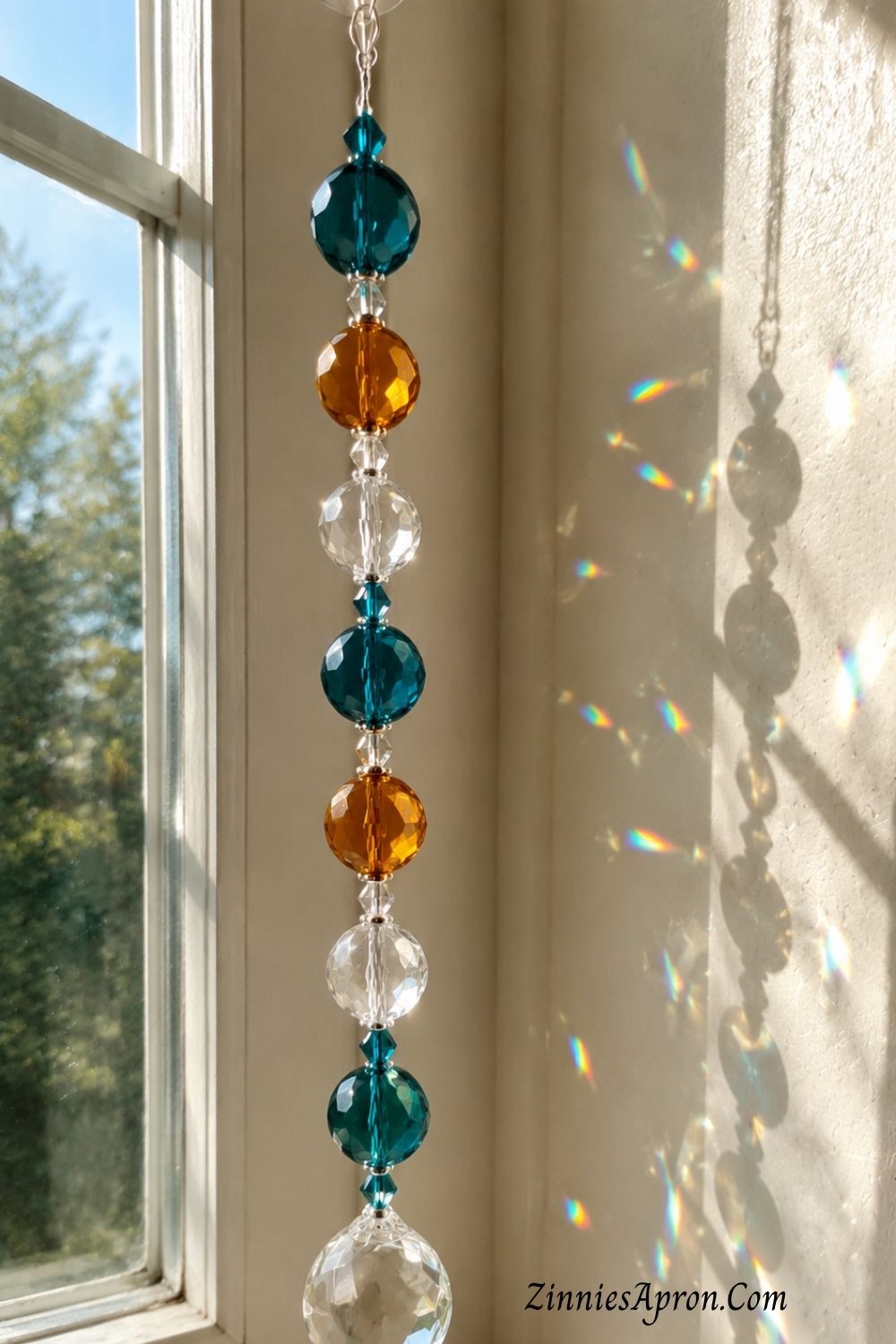
Where the memory-wire suncatcher above relies on spiral shape for its effect, this one relies on color and light instead, large faceted glass beads, usually 12mm or bigger, strung on sturdy wire or fishing line in a simple vertical or fan pattern.
The size makes each bead easy to distinguish by touch alone, and faceted glass throws more scattered light than smooth beads, so the finished piece reads clearly even to eyes that struggle with fine detail.
This is one of the more forgiving bead crafts for seniors with reduced vision, since there’s no small pattern to follow, just stringing large, distinct pieces in whatever order feels good.
7. Tactile Worry Beads or Prayer Beads
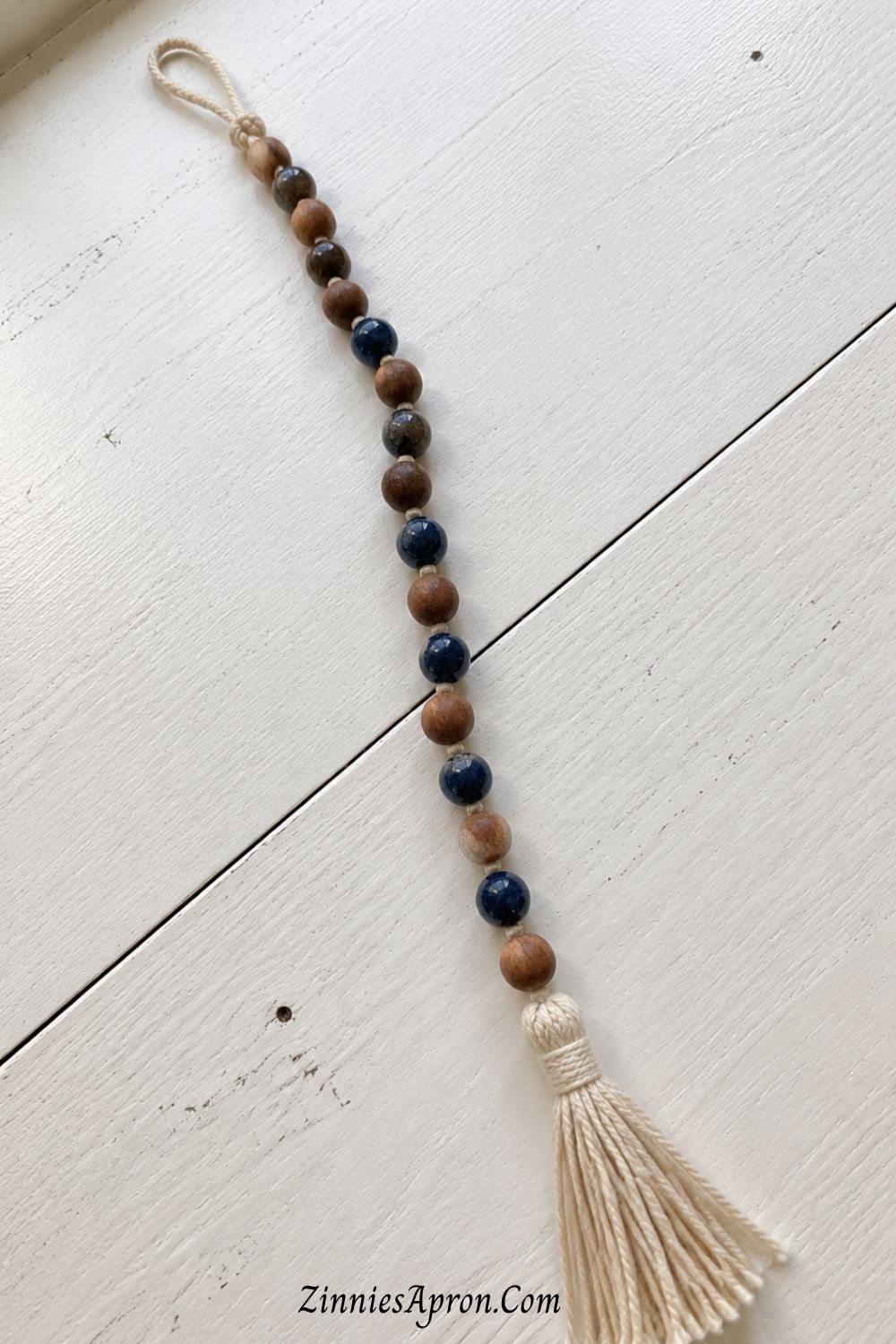
Worry beads (also called komboloi) are a small, handheld strand, usually 16 to 20 beads, meant to be moved through the fingers rather than worn.
Because they’re built for touch rather than sight, this project works well when vision is the main obstacle: choose beads with distinct textures (smooth glass next to rough wood, for example) so each one is identifiable by feel, string them on a cord, and knot off with a tassel.
The finished piece doubles as a genuinely calming object to hold, not just something to display.
8. Contrast-Color Bookmark Tassel
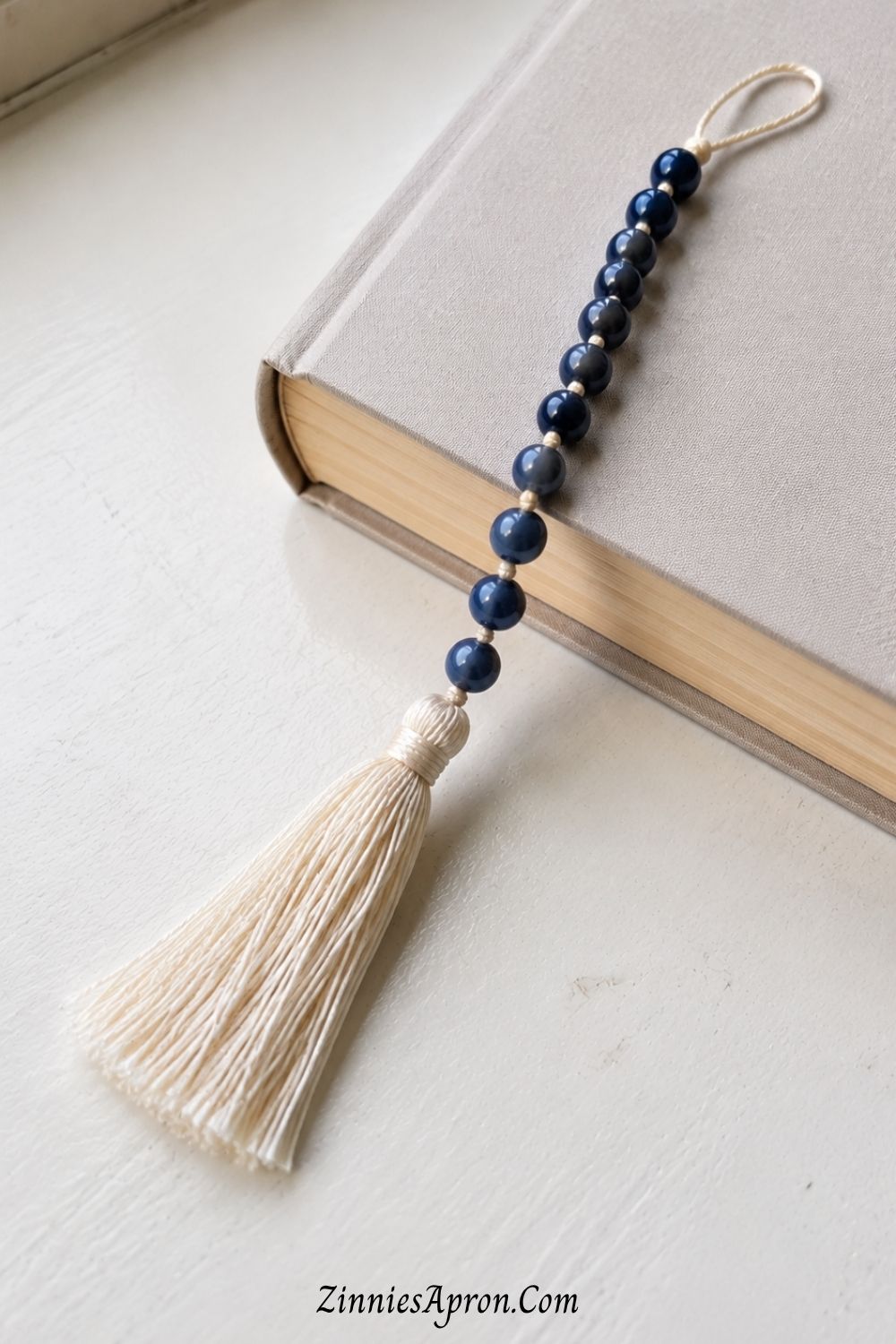
A short beaded strand attached to a tassel or ribbon, clipped or tied to the top of a book. The trick that makes this one low-vision friendly is deliberate color contrast, dark beads against a light cord, or the reverse, so the strand stays visible against most page colors instead of blending in.
It’s a small project, usually 8 to 10 beads, which makes it a good one to practice color contrast on before trying it on a larger piece.
Late summer is the perfect time to stay creative, and 20 August Crafts for Seniors in Assisted Living features simple seasonal projects that are enjoyable for both individuals and group activities.
9. Large Wooden Bead Rosary or Meditation Strand
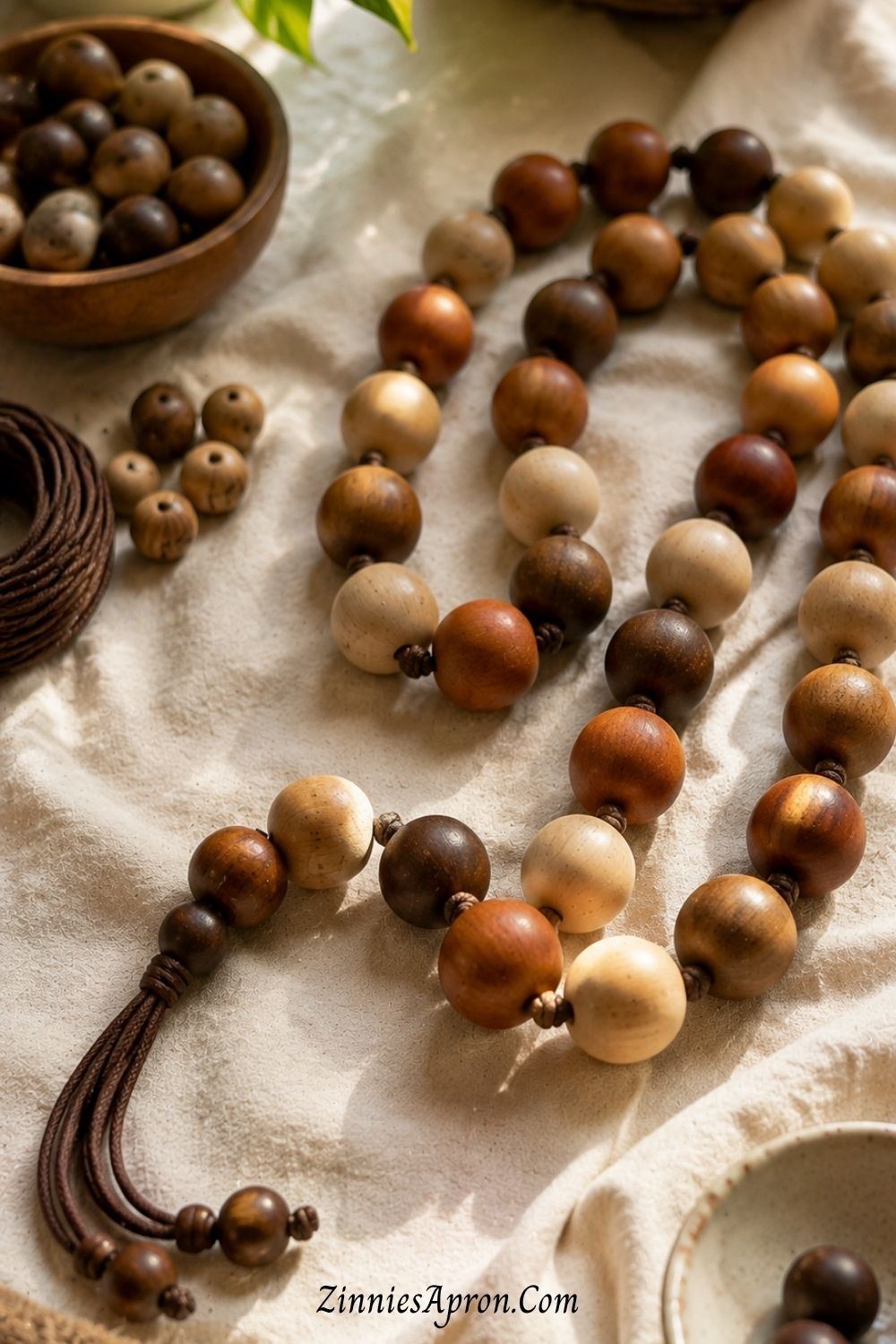
Similar in spirit to the worry beads, but strung as a continuous loop rather than a single strand, following a traditional count (a five-decade rosary uses 59 beads, for instance).
Wooden beads in the 10 to 14mm range keep the strand light enough to hold for extended periods, and their matte surface is easier on the eyes than reflective glass or crystal under bright light.
This is a project with a real, structured pattern to follow, which makes it a good next step once the simpler strands above feel comfortable.
10. Textured Bead Art Panel
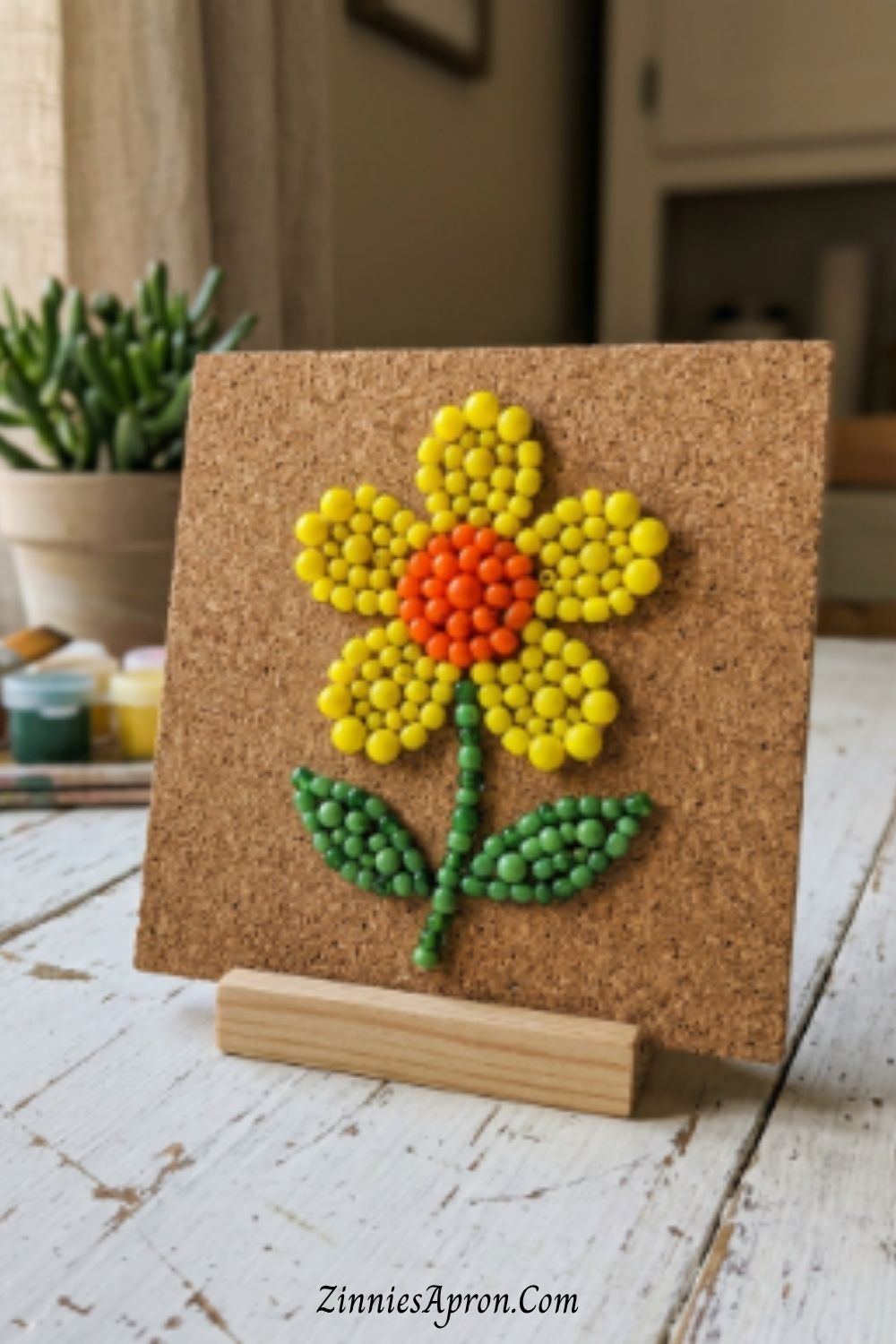
A small wooden or cork board with beads glued on in a raised design, a flower, a cross, initials, whatever the pattern calls for.
Because the beads sit on a fixed surface rather than moving on a string, there’s no threading involved at all; it’s closer to painting than stringing, and each bead can be felt and placed one at a time without the piece shifting.
Mixing bead sizes and textures across the design gives it a tactile quality that’s actually meant to be touched, not just looked at, which makes it a genuinely different kind of piece from anything strung on cord.
As cooler weather arrives, Cozy September Crafts for Seniors That Bring Calm and Creativity to Fall Days offers comforting projects inspired by the colors and beauty of the changing season.
Tremor-Friendly Bead Crafts (Minimal Precision Required)
11. Bead-Spinner Strung Bracelet
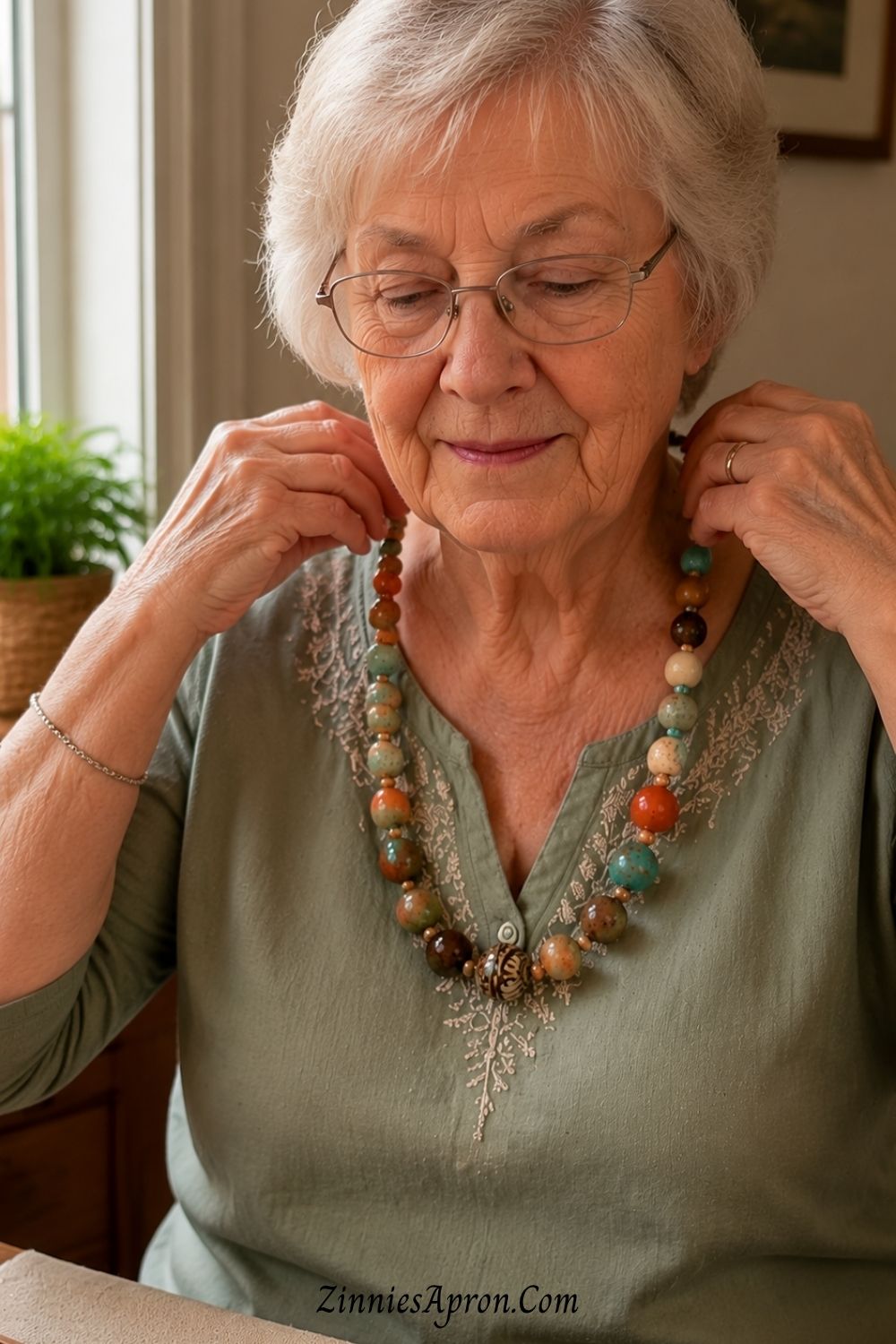
This one leans entirely on the tool covered in the set-up section, a bead spinner loads beads onto the needle for you, so the only motion left is guiding the needle through and sliding beads down the thread.
Because there’s no pinching or aiming at a single bead, a shaking hand doesn’t throw off the process the way it would with tweezers or fine-point pliers.
Finish with a stretch cord and a knot, same as the very first bracelet on this list, so there’s still no clasp to fight with at the end.
12. Pre-Drilled Bead Ornament Kit
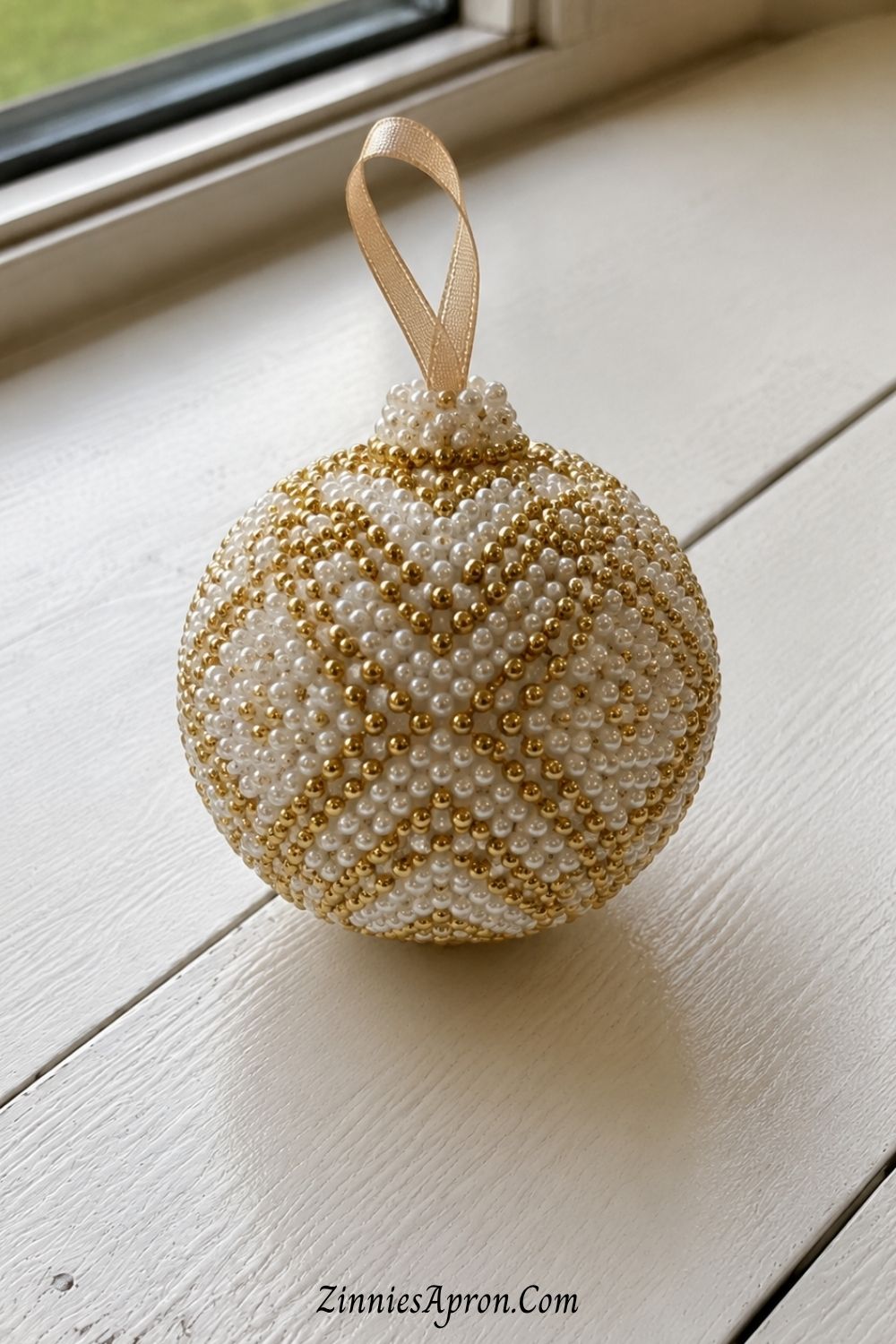
These kits come with the beads already strung on a wire frame or a simple loop, and the “craft” part is arranging, adding a few extra beads, and closing the loop shut, most of the fiddly setup is done before it reaches your hands.
It’s a good option on a day when tremor is more pronounced than usual, since the bulk of the fine work has already been handled by the kit, and what’s left is mostly decision-making rather than precision motion.
13. Melted Pony-Bead Suncatcher
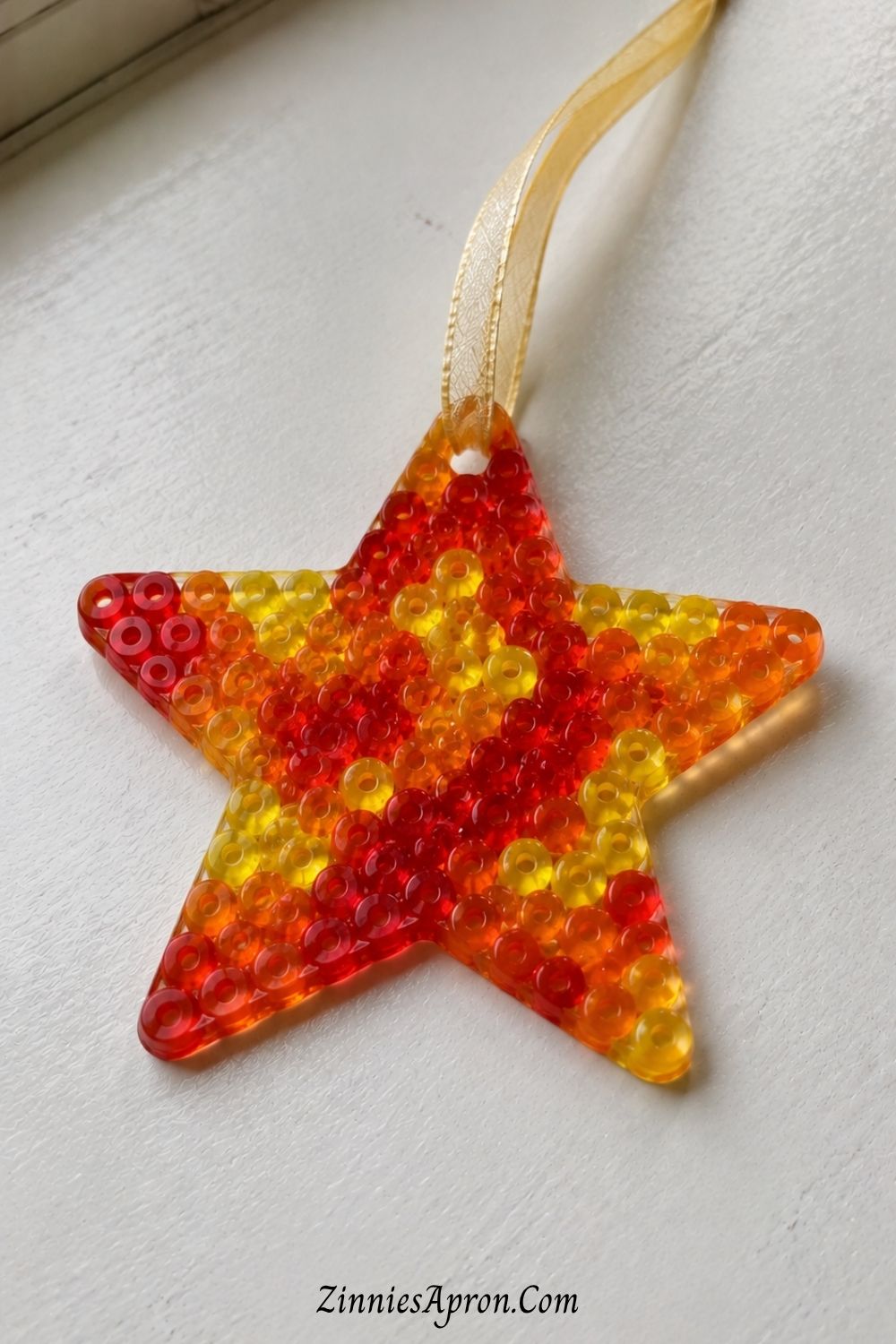
A cookie cutter or muffin tin gets filled with a single layer of pony beads, which then melts into one solid, fused shape in the oven, no threading involved at all.
The part that needs steady hands (placing the tin in a hot oven) is easy to hand off to someone else, while arranging the beads by color inside the mold beforehand is entirely low-pressure: knocking a bead loose or placing it slightly off just changes the pattern, it doesn’t ruin the piece.
Celebrate the season with October Crafts for Seniors in Nursing Homes That Create Memories, Not Just Decorations, where meaningful projects encourage creativity, conversation, and shared experiences.
14. Chunky Bead Phone or Bag Charm
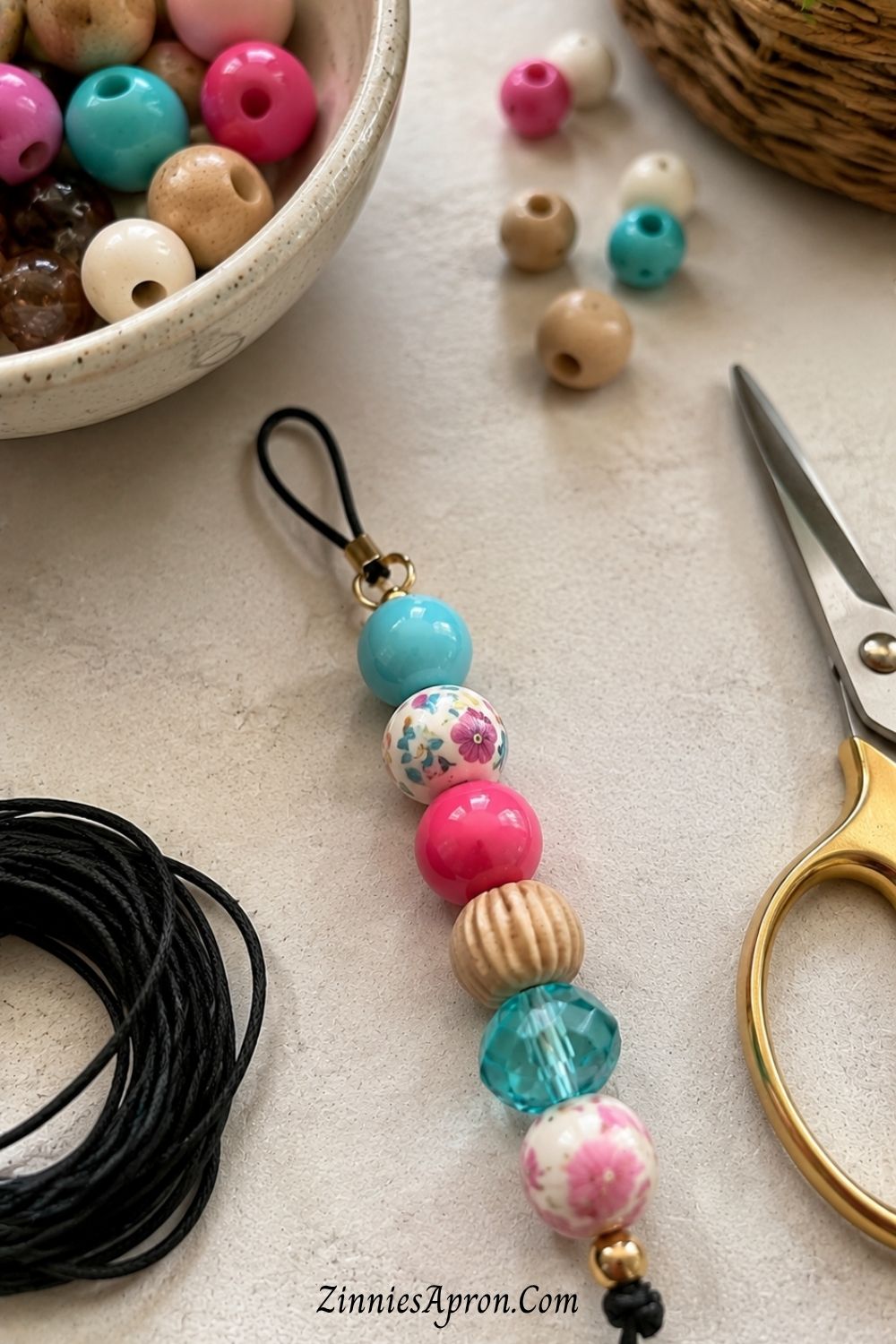
A short strand of large beads attached to a lobster clasp or a keyring loop, small enough to finish in one sitting, forgiving enough that a slightly uneven strand still looks intentional rather than like a mistake.
Because the whole piece is only 4 to 6 beads long, there’s very little room for a tremor to derail the project before it’s done.
15. Wooden Bead Garland
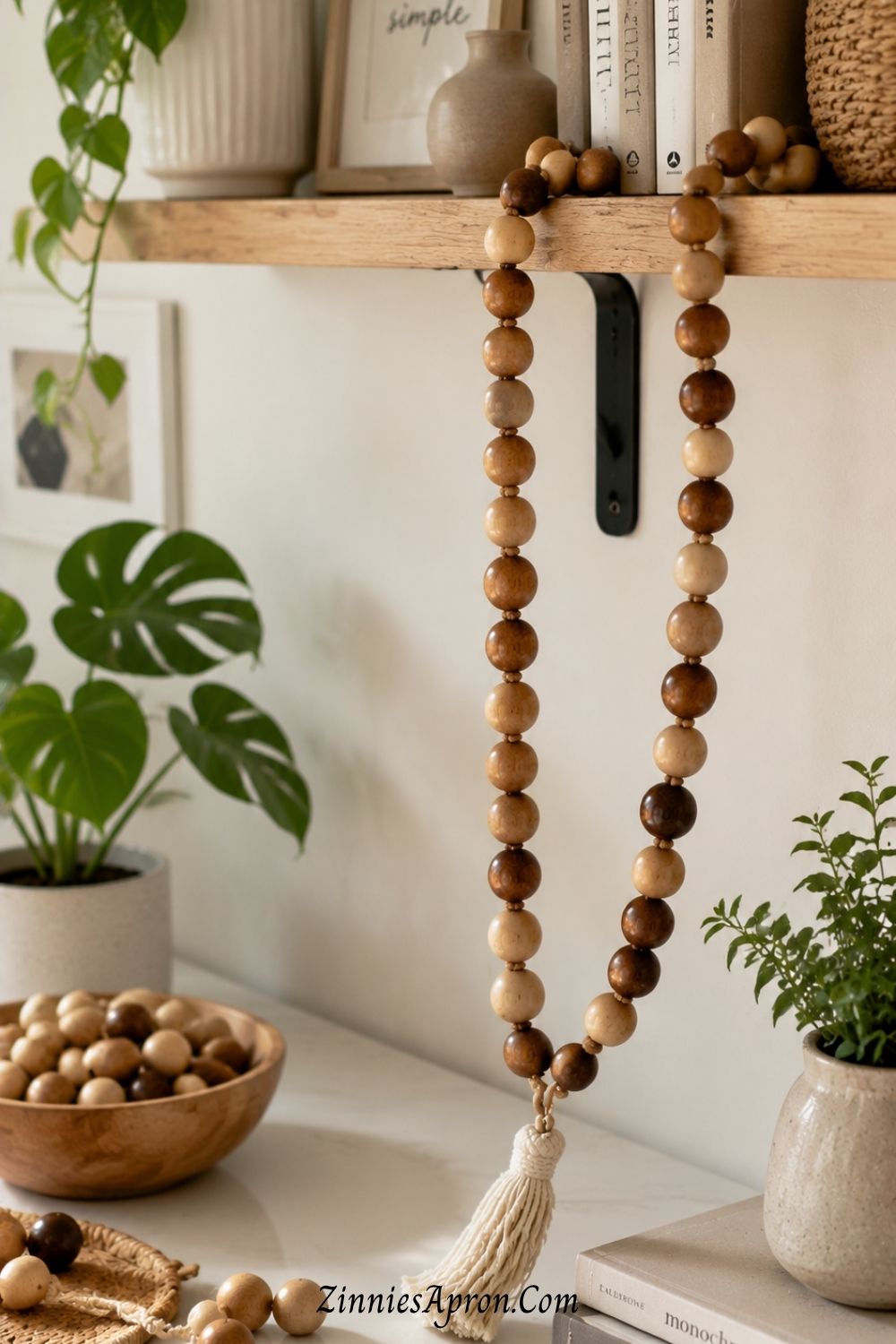
A long strand of wooden beads knotted at intervals along a length of twine, meant for draping over a mantel, mirror, or shelf rather than worn.
The knots between beads are spaced loosely and don’t need to be tight or uniform, so there’s no fine motor precision required, just a repeated, forgiving motion of thread-bead-knot down the full length of the twine.
Looking for even more warm-weather inspiration? 21 Easy Senior Summer Crafts That Are Relaxing, Creative and Seasonal is filled with enjoyable activities that encourage creativity without feeling overwhelming.
One-Handed and Seated-Friendly Bead Crafts
16. Bead-Spinner Assisted Necklace
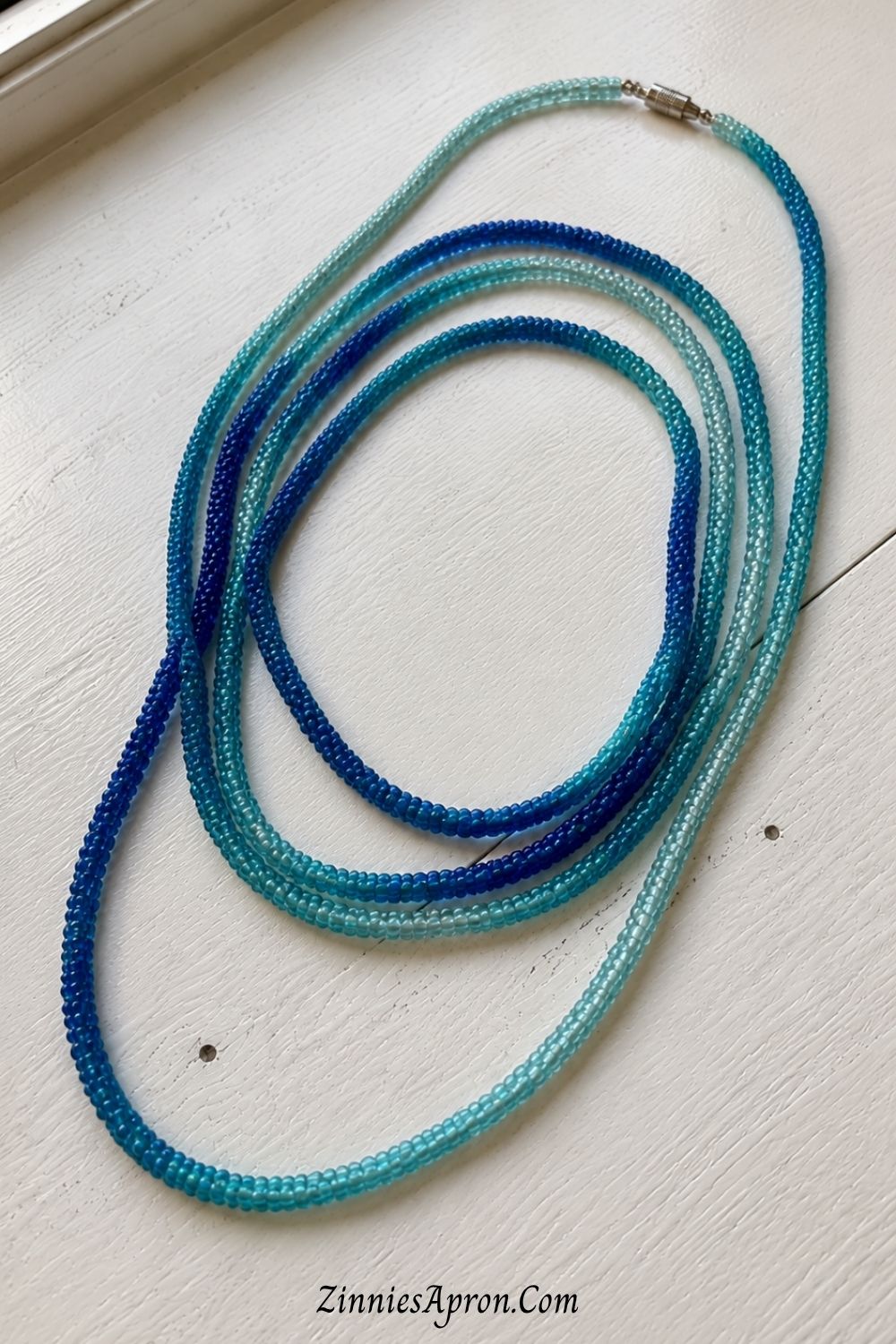
The same principle as the bracelet in the tremor-friendly group, scaled up to a full necklace length.
The bead spinner sits still on the table and loads beads onto the needle with one hand steadying the bowl, while the other hand simply threads, no second hand is ever needed to pick up or hold an individual bead.
It’s one of the more practical bead crafts for seniors working with only one functional hand, since the tool itself replaces the hand that would normally be doing the picking-up.
17. Adhesive Bead Mosaic Coaster
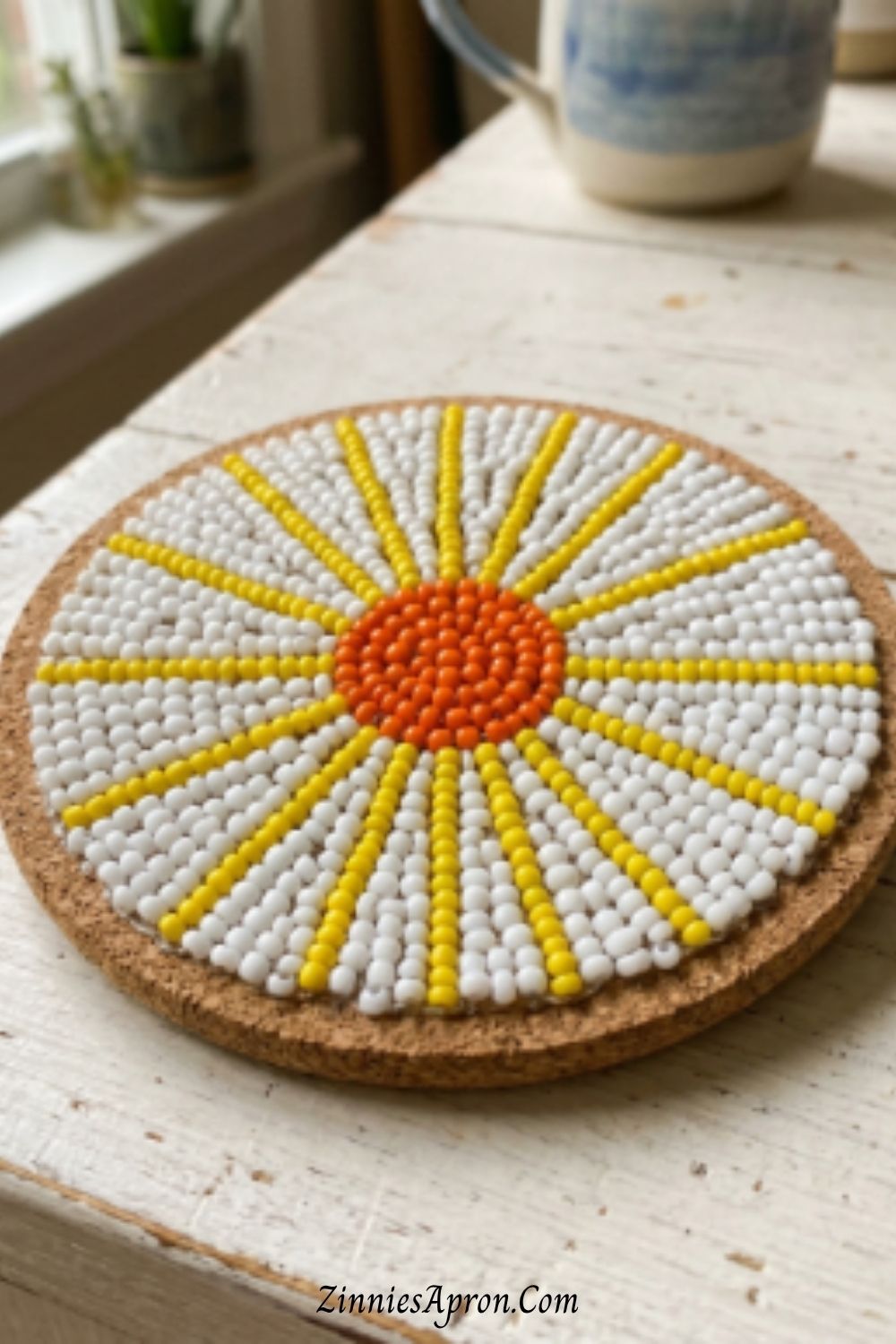
A cork or wood coaster with a sticky adhesive surface, onto which beads are pressed one at a time to build a mosaic pattern.
There’s no threading, no needle, and no second hand required to hold a strand steady, each bead is placed and pressed down independently, so the whole project can be built one-handed, at any pace, without losing progress if you need to stop mid-pattern.
18. Pre-Cut Elastic Bracelet Kit
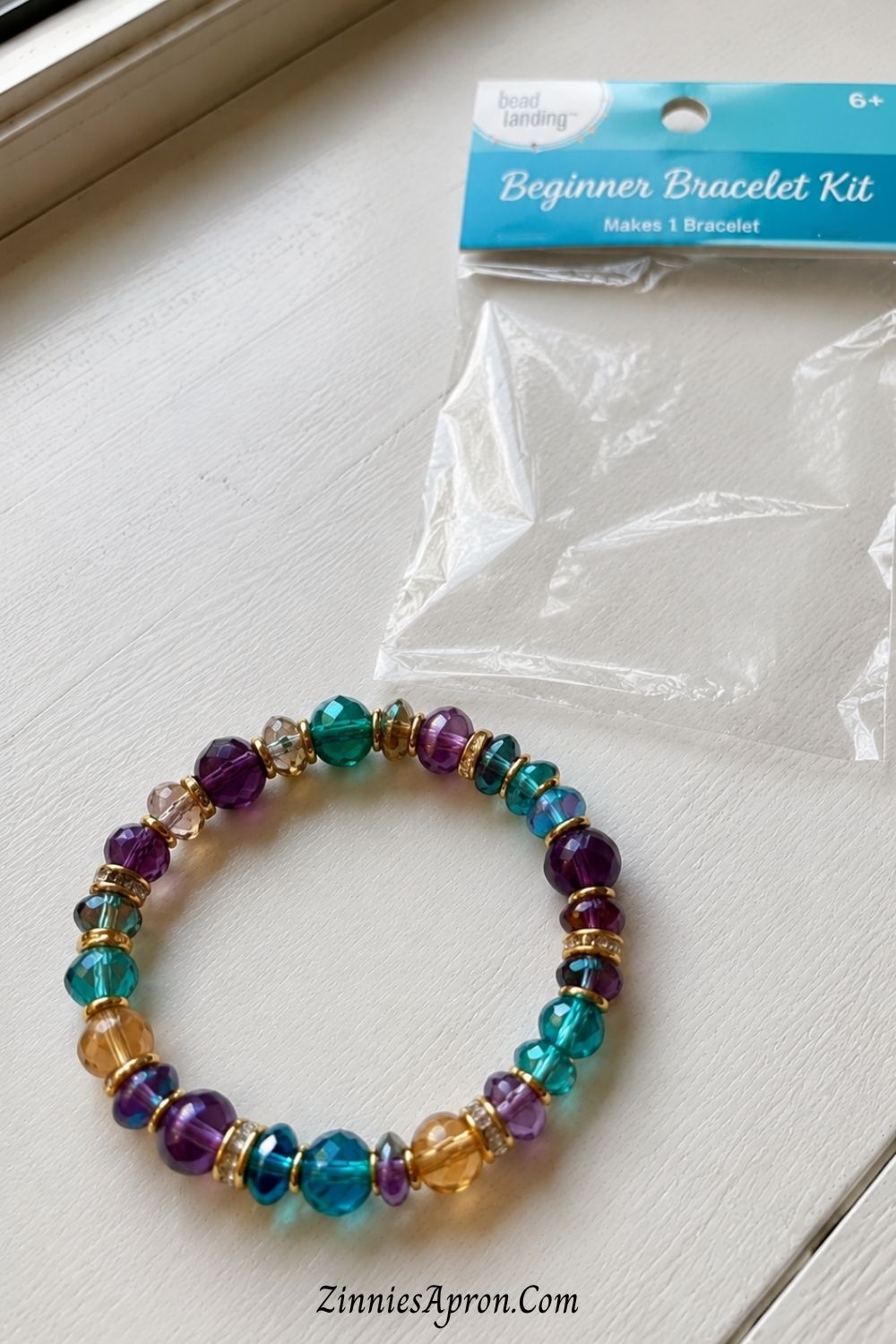
These kits come with the elastic cord already cut to bracelet length and often with a needle pre-threaded, so the only remaining task is adding beads and tying one knot at the end.
Because there’s no measuring, cutting, or threading a needle involved, it’s a genuinely accessible starting point for seated crafting or working from a wheelchair, where reaching for and managing multiple tools can be its own obstacle.
19. Single-Hand Loom Bead Bookmark
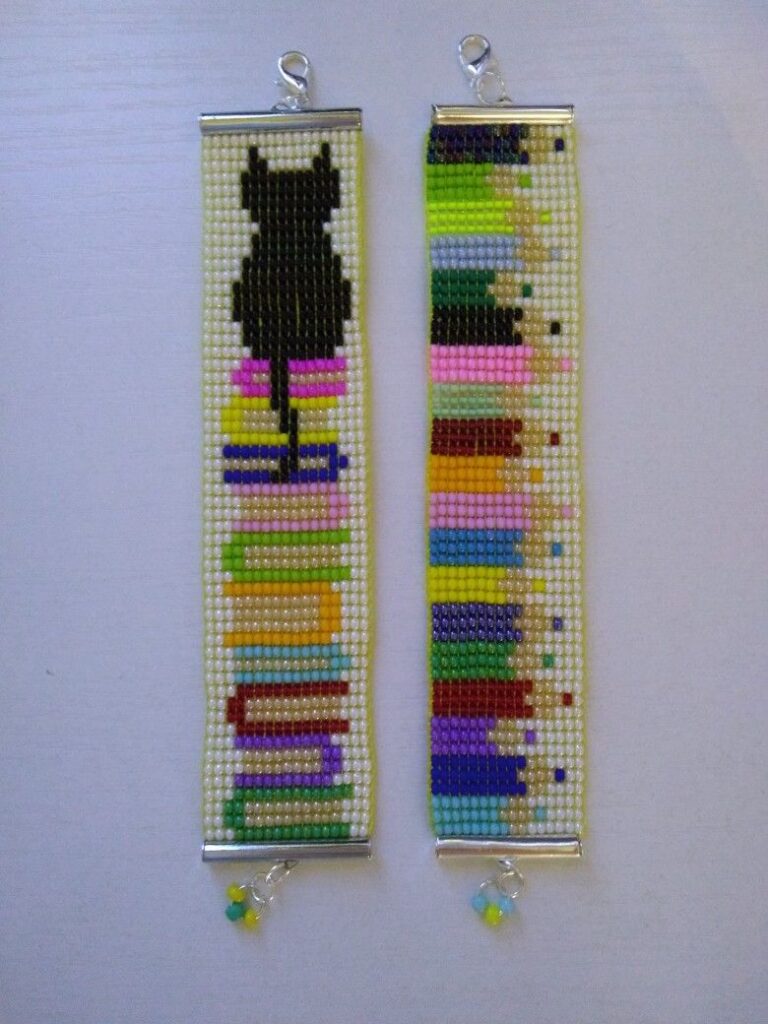
A small hand-held loom holds the warp threads taut on its own, which means the loom, not a second hand, does the job of keeping the threads in place while you weave beads across them one row at a time.
It’s a slower project than the others in this group, but the loom’s frame does enough of the steadying work that weaving becomes possible with just one working hand.
20. Beaded Wine Charm Set
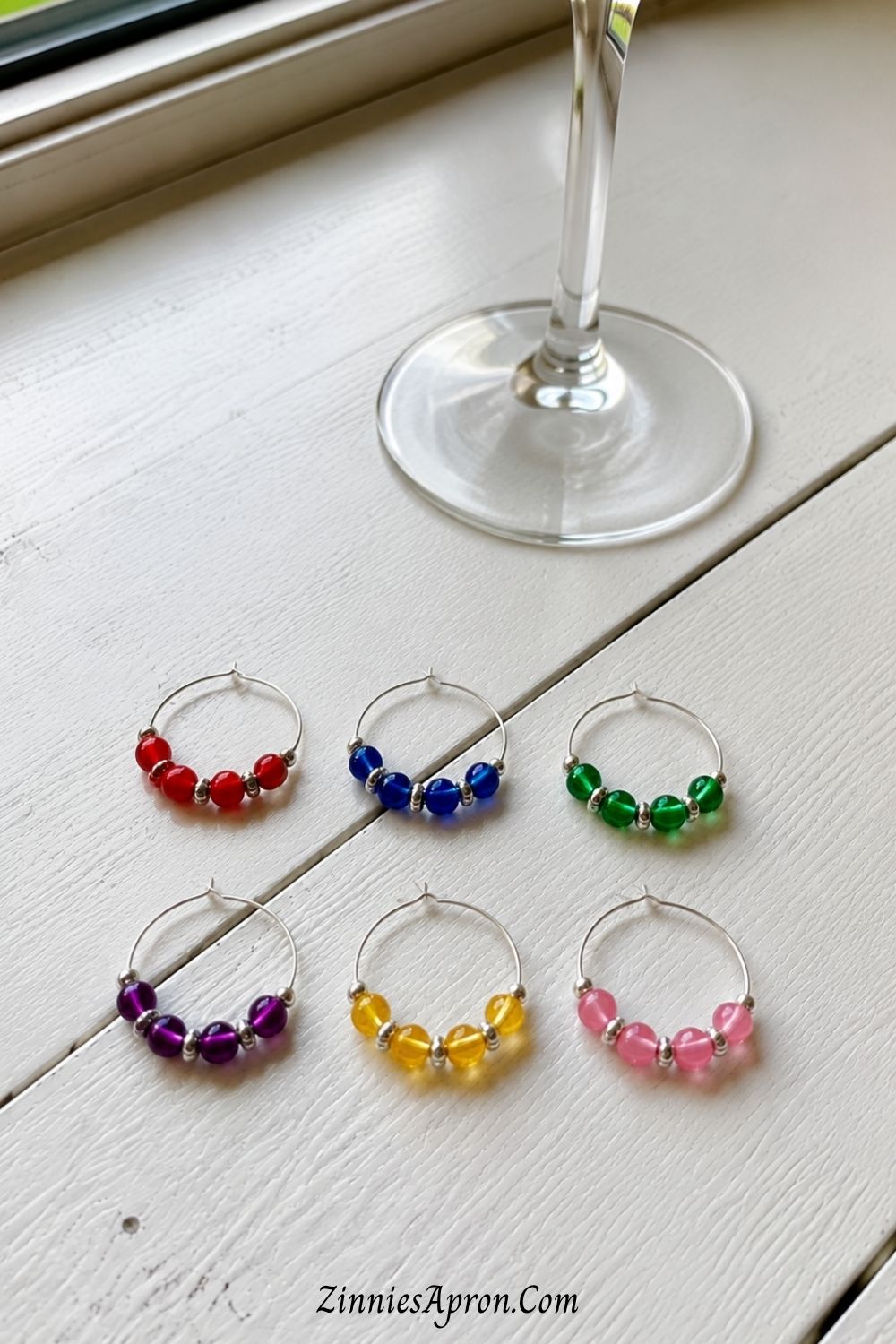
A short loop of wire, four or five beads, and a simple twist to close it into a ring shape, small enough that an entire set of six can be made in one seated session without needing to change position or reach for new tools between pieces.
Each charm is its own self-contained task, so there’s a natural stopping point built into the project every few minutes.
Simple everyday materials become beautiful handmade projects in 15 Simple Clothespin Crafts for Seniors That Keep Hands Busy and Minds Sharp, offering creative activities that support fine motor skills and cognitive engagement.
For Steadier Hands Wanting a Bit More Challenge
21. Kumihimo Bead Bracelet on a Stand
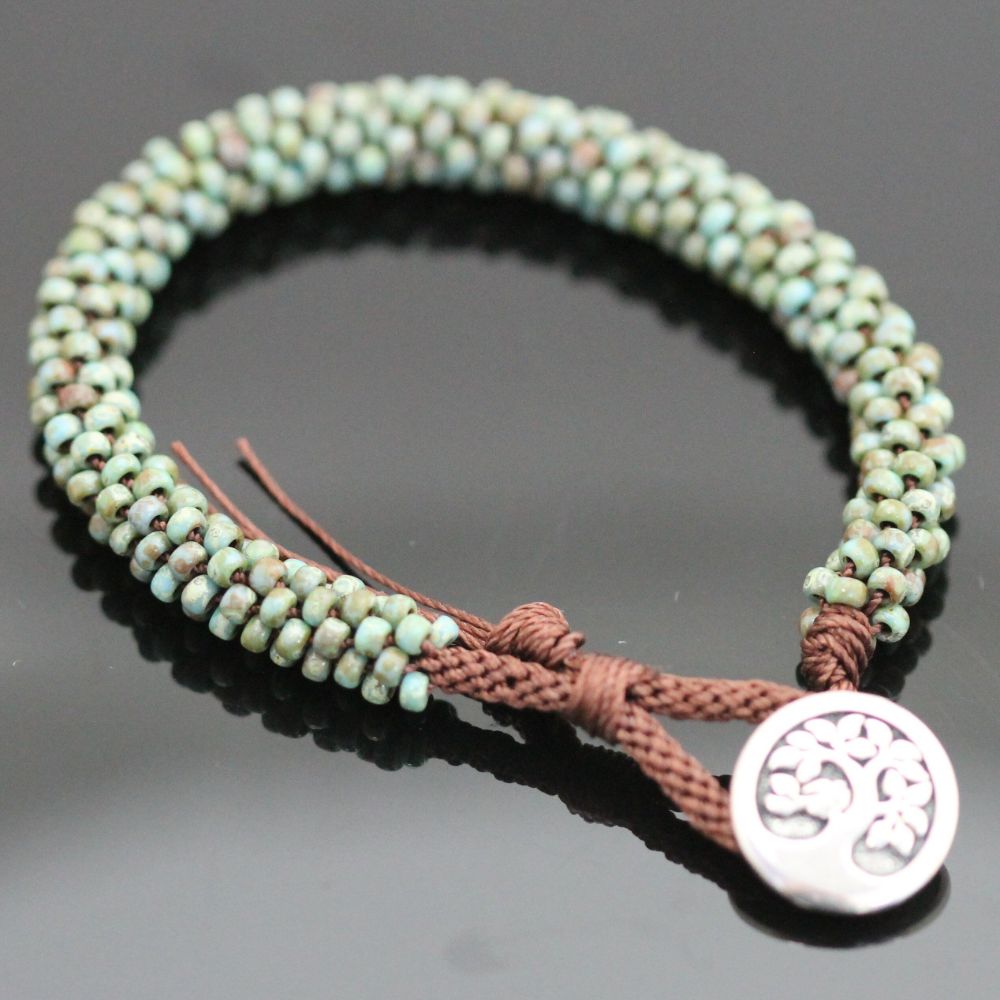
Kumihimo is a Japanese braiding technique traditionally done by hand, but a foam or plastic kumihimo disk changes that, the disk holds all the threads in slotted grooves, so you’re only ever moving one thread at a time into its next slot rather than managing several strands at once.
Beads get strung onto the threads before braiding begins, so they weave themselves into the pattern as you go.
It’s a genuine step up in complexity from anything earlier on this list, which makes it a good one to save for a day when hands feel steady and unhurried.
22. Seed-Bead Loom Coaster
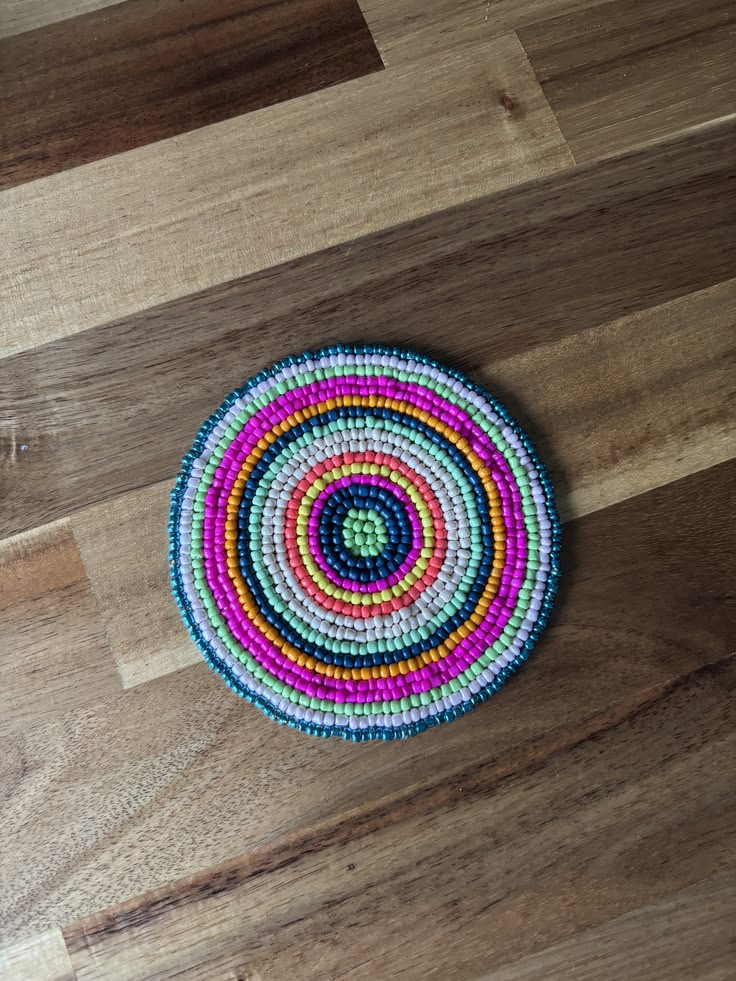
A small tabletop loom, similar in principle to the single-hand version covered earlier but built for finer seed beads instead of large ones.
The tighter weave and smaller bead size mean more rows to complete a full coaster, but the loom still does the work of holding tension, so what’s left is a steady, repetitive weaving motion rather than anything requiring fine pinching.
23. Wire-Wrapped Pendant With One Focal Bead
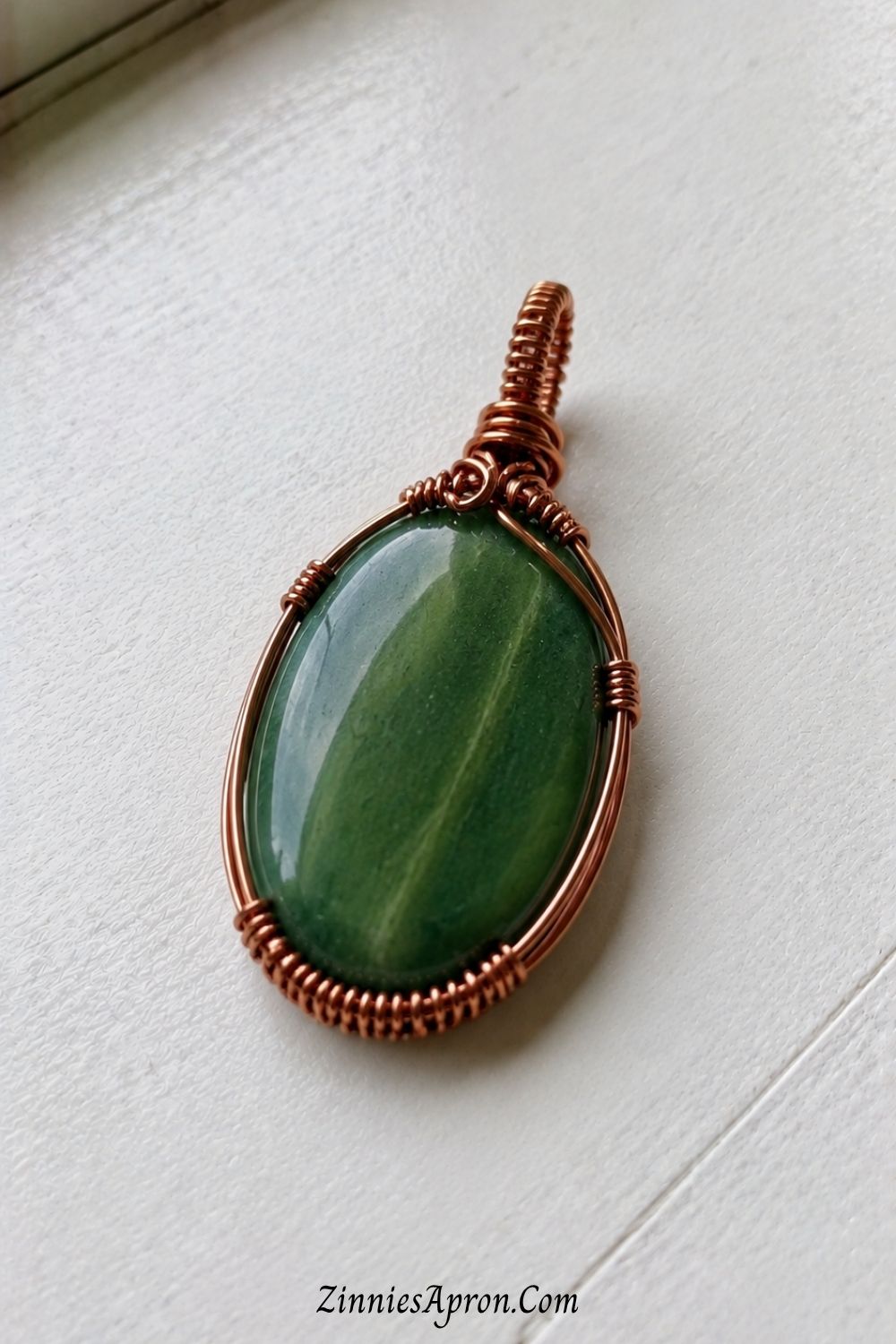 A single striking bead, a polished stone, a large glass focal, or a carved wooden piece, wrapped in wire to create a hanging loop and a decorative frame around it.
This one rewards patience over speed: wrapping wire neatly around a bead takes a few tries to get comfortable with, but the payoff is a pendant that looks like it came from a jewelry counter rather than a craft table.
24. Beaded Keepsake Photo Charm
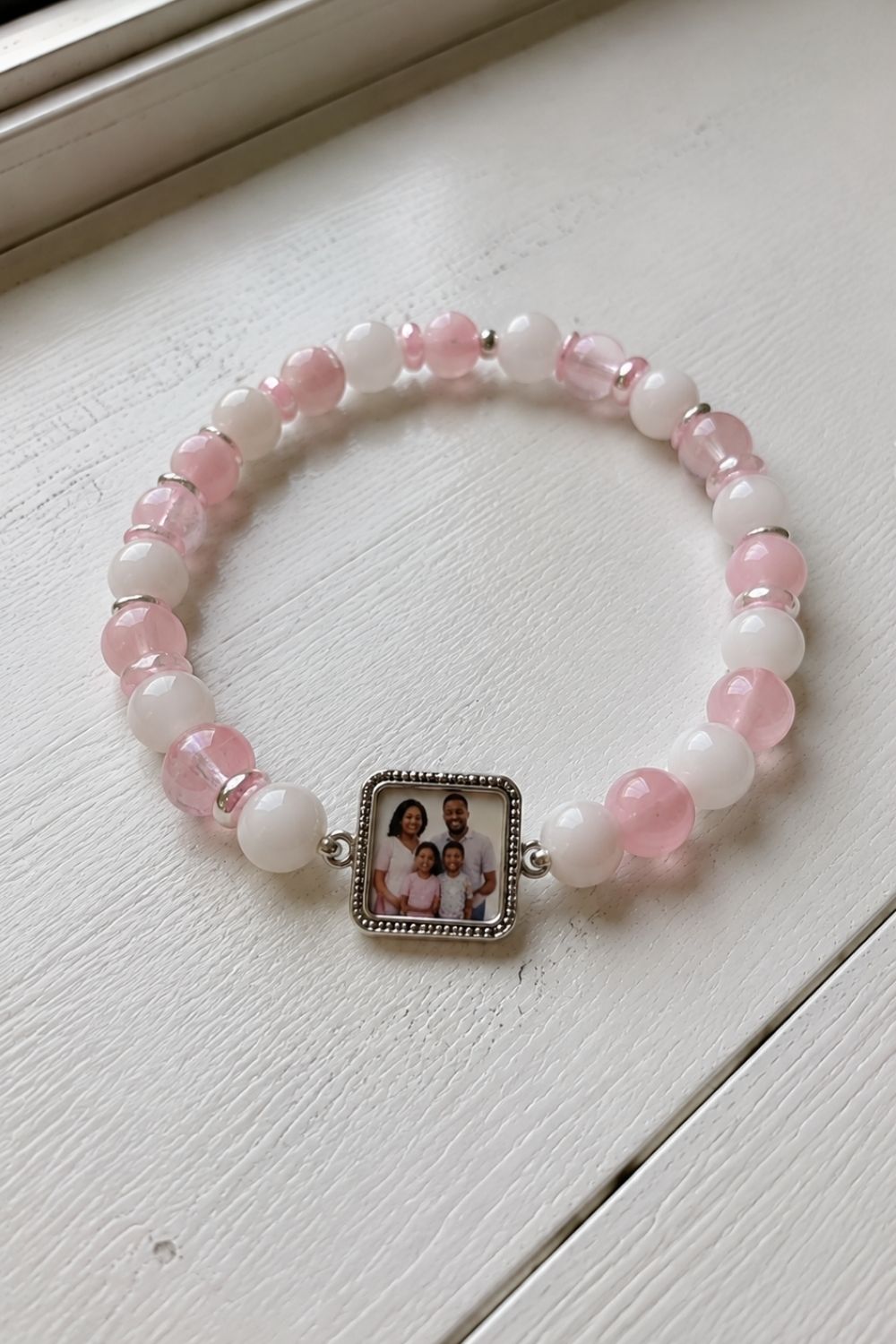
A small charm frame, sized to hold a tiny printed photo, strung onto a beaded bracelet or necklace alongside coordinating beads.
This is where the keepsake angle comes in directly, the photo charm turns the whole piece from decoration into something with a story attached, which is often the difference between a project someone finishes and one they keep coming back to.
25. Memory-Bead Birthstone Bracelet for a Grandchild
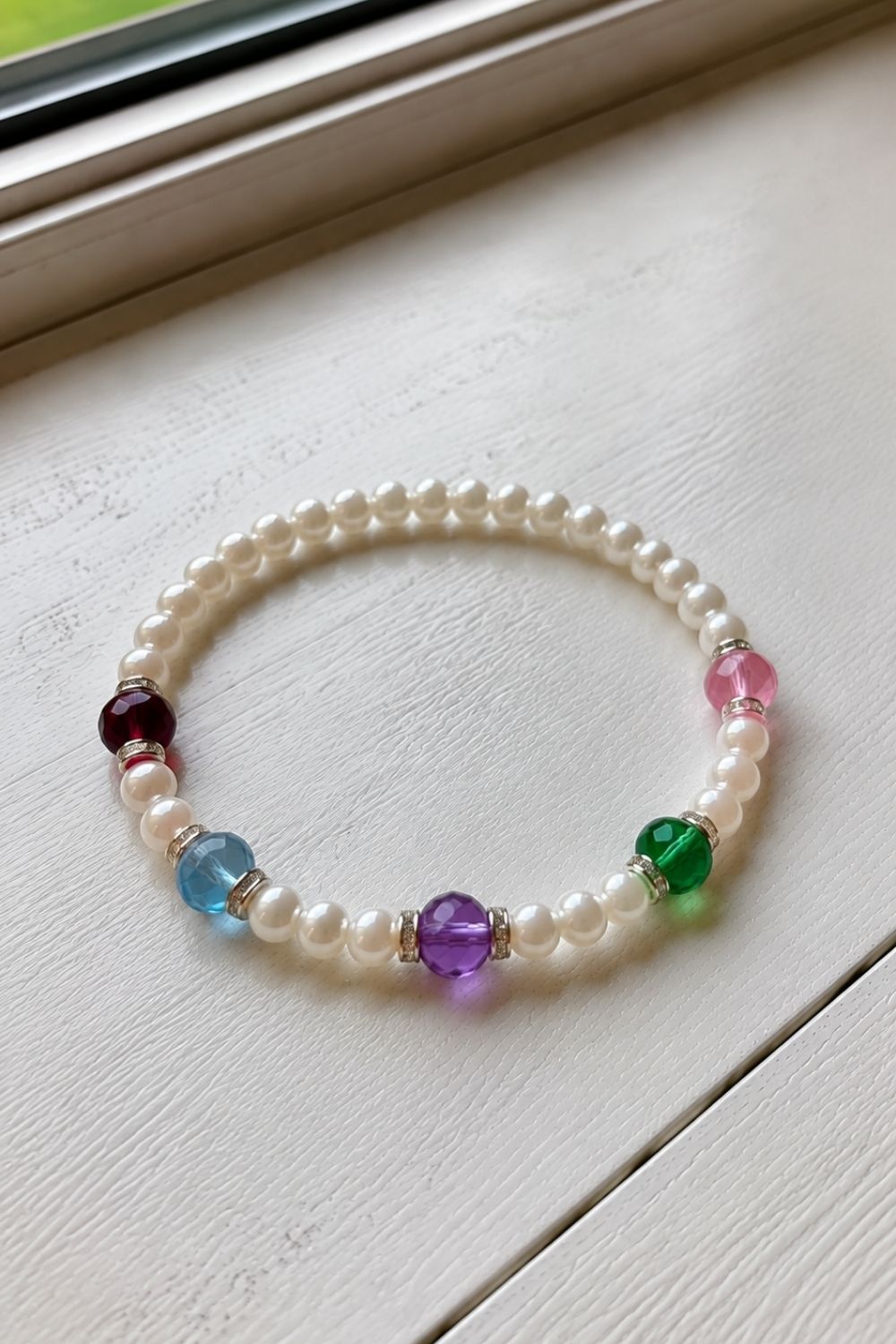
A bracelet built entirely around meaning: one birthstone-colored bead for each grandchild, spaced along a strand of complementary beads, sometimes with a small charm added for a name or initial.
Of all 25 bead crafts for seniors on this list, this is the one most likely to be worn every day rather than set on a shelf, it’s not just beautiful, it’s personal, and that combination is what makes it worth the extra bit of planning to get the colors and order right.
Celebrating the season can be both joyful and calming with 20 Simple Halloween Crafts for Dementia Patients That Feel Festive Not Frightening, featuring easy, familiar projects designed to encourage participation without becoming overwhelming.
Get Your Free 44-Page Memory Book for Seniors
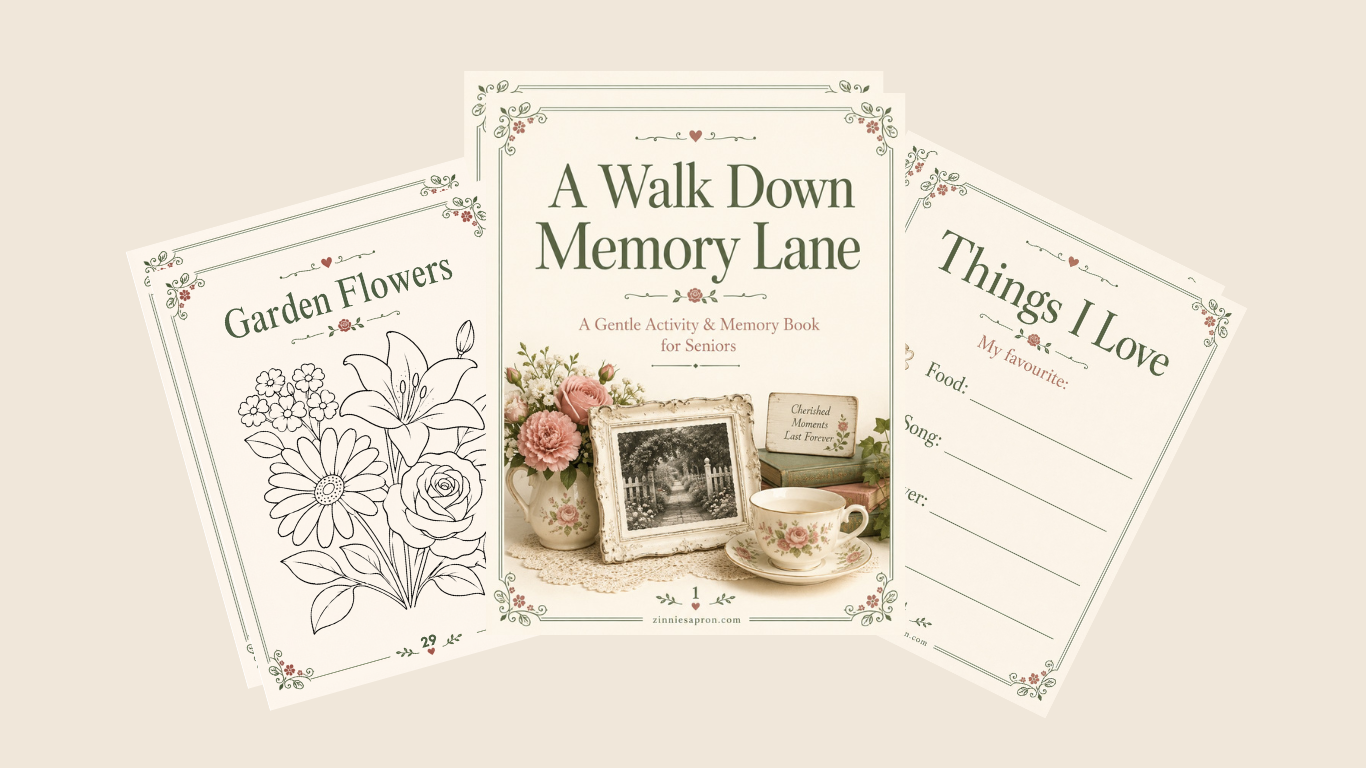
A gentle activity and memory book designed specifically for seniors. Print it today and use it in your next session.
Know This
These 25 bead crafts for seniors aren’t sorted from easy to hard. They’re sorted by what’s actually making crafting difficult on a given day, a stiff grip, poor eyesight, a shaking hand, or only having one hand free to work with.
Someone with arthritis and someone with low vision need different things from a project, even if both would be called beginner.
If today’s a stiff-hands day, start with the memory-wire bracelet as it needs no clasp, crimping, and no more than one bead at a time. And If today’s a steadier one, the wire-wrapped pendant is worth the extra patience it takes.