This post contains affiliate links. This means I may earn a small commission if you purchase through my links at no extra cost to you.
Halloween crafts for dementia patients start with a truth that most craft lists don’t say out loud: the holiday itself can be genuinely frightening for someone living with dementia.
Not in the fun, theatrical way Halloween is supposed to be frightening. In the real way the confused way.
According to the Alzheimer’s Foundation of America, scary sights, unfamiliar sounds, and costumed strangers can cause anxiety, agitation, and real distress in people with cognitive decline.
Halloween doesn’t have to look like that for your loved one.
It can look like a quiet morning with a small pumpkin to paint, like stringing paper leaves together while familiar music plays in the background.
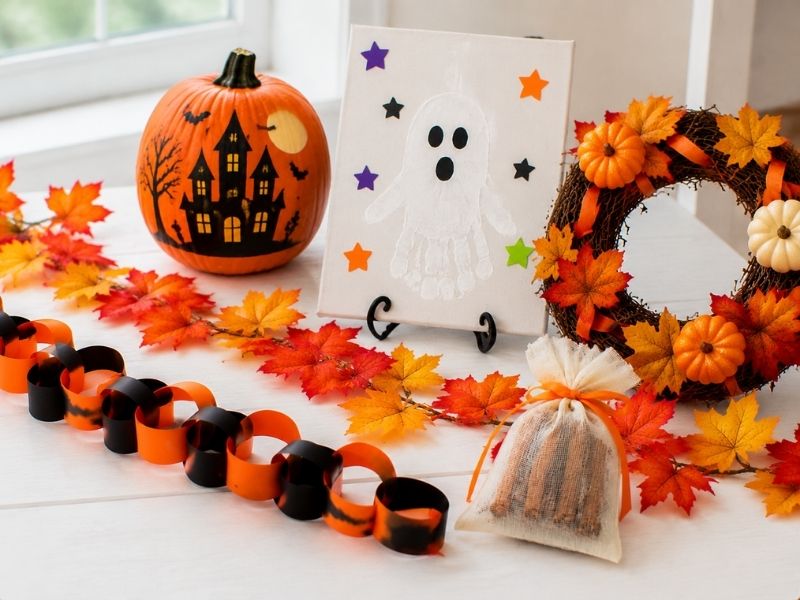
It can look like pressing a handprint onto black paper and watching a ghost appear.
These Halloween crafts for dementia patients aren’t a lesser version of the holiday.
They’re the version that actually works warm, sensory, familiar, and achievable for someone at any stage of cognitive decline.
I’ve organized these 20 ideas by category so you can find the right fit quickly whether you’re a caregiver at home trying to make the afternoon meaningful, or an activity director in a memory care unit building an October program.
Every craft here is autumn-first rather than spooky-first, which is the framing that works best for this group.
For the full picture of Halloween in a care setting, these Halloween party ideas for assisted living residents cover the complete event alongside these crafts.
Before You Start — What Makes a Craft Dementia-Friendly
Before getting into the specific Halloween crafts for dementia patients, it’s worth spending a moment on the why behind the how.
These aren’t just tips they’re the difference between a craft session that creates connection and one that ends in frustration for everyone.
Choose Materials That Are Easy to Grip and Pre-Cut

Fine motor skills decline as dementia progresses.
Pre-cut shapes, foam materials, thick brushes, and chunky crayons are not a compromise they’re the right tool for the job.
Anything requiring significant dexterity or sustained grip will derail the activity before it begins.
Have everything prepared before your loved one sits down.
The craft begins the moment they touch something not after a setup period that loses their attention.
Pre-open paint containers, pre-cut all shapes, pre-thread any needles.
Keep Instructions to One Step at a Time

Multi-step instructions are confusing for people with dementia even when the steps themselves are simple.
“Watch me do this — now you try” is the most effective format.
Visual demonstration bypasses the cognitive processing that verbal instructions require, tapping directly into procedural memory, which is often better preserved than other types.
Research on therapeutic activities for dementia shows that activities matching the person’s current ability level reduce frustration and agitation.
If they struggle with step one, simplify further rather than helping too much.
Their hand doing the action is the goal — not a perfect result.
Morning Is the Best Time — Between Breakfast and Lunch
This is the most practically important point in this entire post.
Sundowning the worsening of dementia symptoms in the late afternoon and evening is real and well-documented.
According to the Alzheimer’s Association, agitation, confusion, and restlessness reliably increase as the day progresses.
The same craft that goes beautifully at 10am can fail completely at 4pm.
Schedule all sessions in the mid-morning window between breakfast and lunch.
That window is genuinely different from any other part of the day.
Protecting it for meaningful activities is one of the most loving things a caregiver can do.
Start the Activity Yourself and Invite Them to Join
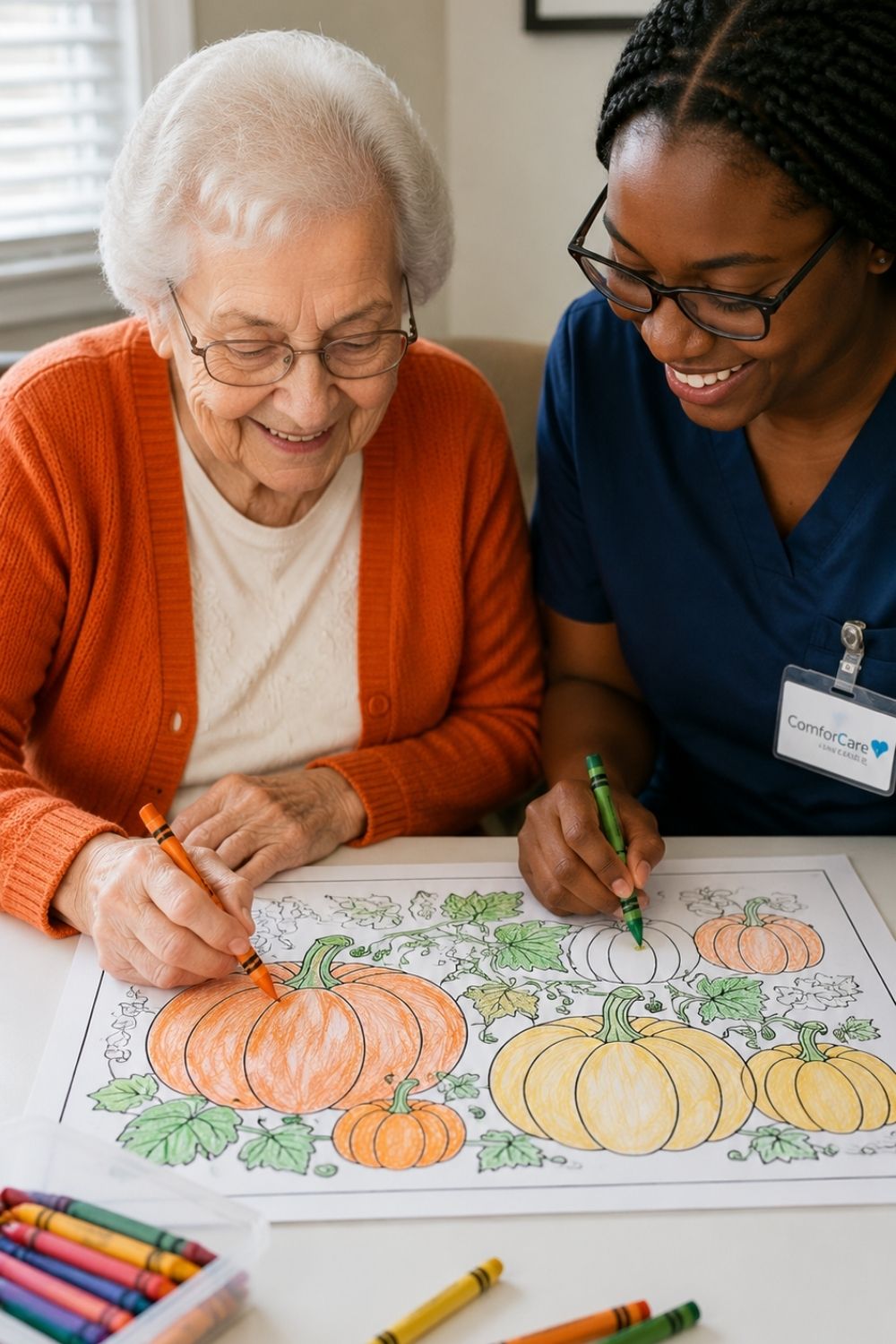
Never place materials in front of your loved one and wait.
Begin the activity yourself while they watch. Pick up the brush. Paint the first stroke. Place the first leaf on the paper.
Then invite them to join “Would you like to try?” and let them say no without pressure.
Watching you do something familiar is itself a meaningful activity for someone with dementia.
Sitting beside you for twenty minutes and pointing at colors counts as a successful session.
Presence and connection are the goal. The finished object is just evidence that time was well spent.
Play Familiar Music Softly in the Background
Music is one of the most powerful therapeutic tools available for dementia care.
Playing music from their young adult years activates parts of the brain that remain accessible even in advanced dementia.
It reduces agitation, improves mood, and creates an environment that makes craft sessions feel safe rather than clinical.
Keep the volume soft. Background music, not foreground music present without competing for attention.
A Bluetooth speaker set to low on the far side of the room is perfect.
Think of it as setting a mood, not running a concert.
The Goal Is Connection — Not a Perfect Finished Product
Write this on a sticky note where you’ll see it during the session: the finished product doesn’t matter.
The time spent side by side, the sensory experience of materials in their hands, the small moments of recognition and satisfaction these are what matter.
A pumpkin with three lopsided stickers and a smile on your loved one’s face is a perfect craft result.
Section 1: No-Carve Pumpkin Crafts
Pumpkin crafts are the most searched Halloween crafts for dementia patients for good reason.
Pumpkins are universally recognized, seasonally familiar, and emotionally safe.
Every person who grew up in the mid-twentieth century has a pumpkin memory and that familiar connection is exactly what you want to activate.
1. Painting a Small Pumpkin With Non-Toxic Washable Paint

A small pumpkin on a tray with a thick brush and two or three colors of washable paint is one of the most accessible crafts available for someone with dementia.
The rounded surface is easy to hold. Color appears with every stroke, making the result immediately rewarding.
Stick to two or three colors to avoid decision paralysis. Orange, yellow, and white is a warm, familiar fall palette.
Red and black can startle some patients. Let them choose which color to start with and follow their lead.
2. Decorating a Foam Pumpkin With Stickers

For someone with advanced cognitive decline or hand tremors, foam pumpkins and large sticker sheets are the gentlest option.
Foam is lighter than a real pumpkin, won’t roll away, and accepts stickers without requiring precise placement.
Peeling and pressing is a repetitive, calming sensory action.
Look for large Halloween sticker sheets with simple, bold designs.
Avoid tiny stickers they’re hard to peel and hard to see.
Big foam star stickers in orange and gold work just as well as Halloween-specific designs and are far easier to use.
3. Wrapping a Pumpkin With Fabric, Lace, or Ribbon

Wrapping and tying are deeply familiar motor actions for most elderly adults practiced for decades in domestic life and often retained even as other fine motor skills decline.
A small pumpkin and strips of orange or gold fabric engages those remembered movements in a seasonal context.
This craft has essentially zero failure mode. Any wrapping looks intentional.
Secure the end with a rubber band hidden under a ribbon and the result is a beautifully wrapped pumpkin they made themselves.
For more craft ideas using preserved motor memories, these clothespin crafts for seniors use the same principle.
4. Drawing a Face on a Pumpkin With Markers
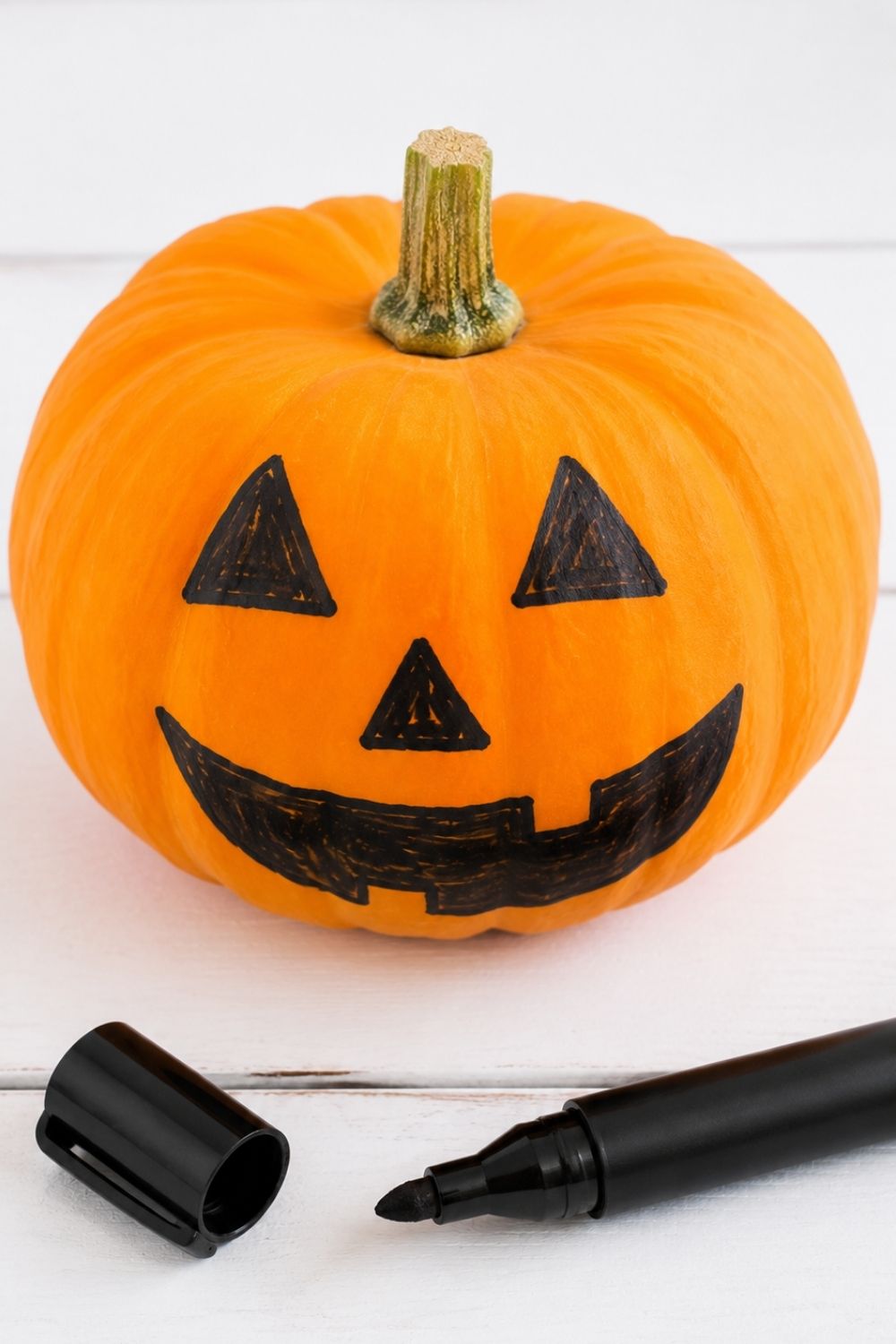
A pumpkin and a thick black marker is the entire supply list.
Drawing a jack-o-lantern face bypasses overthinking because it’s been seen and done so many times over a lifetime that it comes naturally.
Two triangles for eyes, a triangle nose, a smile. Done.
If they draw something that doesn’t look like a face, that’s a perfect pumpkin.
Never correct or suggest additions. Display it with genuine pride.
5. Button Pumpkin Craft

Press colorful buttons large, easy to grip into a foam pumpkin to create a pattern or texture.
The tactile sensation of pressing a button into soft foam is immediately satisfying and the repetitive action is calming in the way all repetitive sensory activities tend to be calming for dementia patients.
Use large buttons only —nothing smaller than a quarter to eliminate choking risk.
Contrasting colors against the orange foam create a beautiful visual result with very little effort.
This one produces a display-worthy finished object that can sit on a windowsill for the whole month.
Section 2: Autumn Leaf Crafts
Autumn-first framing works better than Halloween-first for Halloween crafts for dementia patients and leaf crafts are the clearest example of why.
Leaves are universally beautiful, emotionally neutral, and sensory-rich.
They connect to a lifetime of autumn memories without any of the potentially frightening associations of traditional Halloween imagery.
6. Leaf Rubbing With Crayons and Real or Silk Leaves

Place a real or silk leaf under a piece of paper and rub a crayon across the surface to reveal the leaf’s shape and veining.
For someone with dementia, it may feel like magic every time.
The image emerging under the crayon stroke is a genuine moment of delight that requires no cognitive processing to appreciate.
Use thick crayons and bold autumn colors orange, red, yellow, brown.
Press firmly and rub in one direction. A piece of foam under the paper helps the impression come through more clearly.
This is one of the most sensory-rich of all the leaf crafts.
7. Painting Leaves in Fall Colors

Lay real or silk leaves flat on a tray and let your loved one brush paint across them in fall colors.
The irregular edges and natural texture make every painted result look beautiful there’s genuinely no way to do this wrong.
When dry, the painted leaves can be arranged in a glass bowl, glued to card stock, or simply displayed as they are.
This is also an excellent two-session activity paint the leaves in the morning, then arrange them into a display the following day.
Two connected activities create a sense of ongoing project, which benefits patients who thrive on purposeful repeated engagement.
8. Paper Leaf Garland

Pre-cut a large batch of leaf shapes from orange, red, and yellow card stock before the session.
Then give your loved one the shapes and a length of twine. Show them how to attach each leaf by gluing, by a simple fold-and-hook, or by threading a pre-threaded needle.
The repetitive action of attaching leaf after leaf is wonderfully calming.
The finished garland becomes a real decoration something made by their hands that goes up on the wall and stays there for the whole of October.
Visible evidence of their contribution is meaningful for dementia patients in a way that’s easy to underestimate.
For more seasonal craft ideas that produce lasting displays, these October crafts for seniors in nursing homes are a natural companion.
9. Leaf Collage on Card Stock
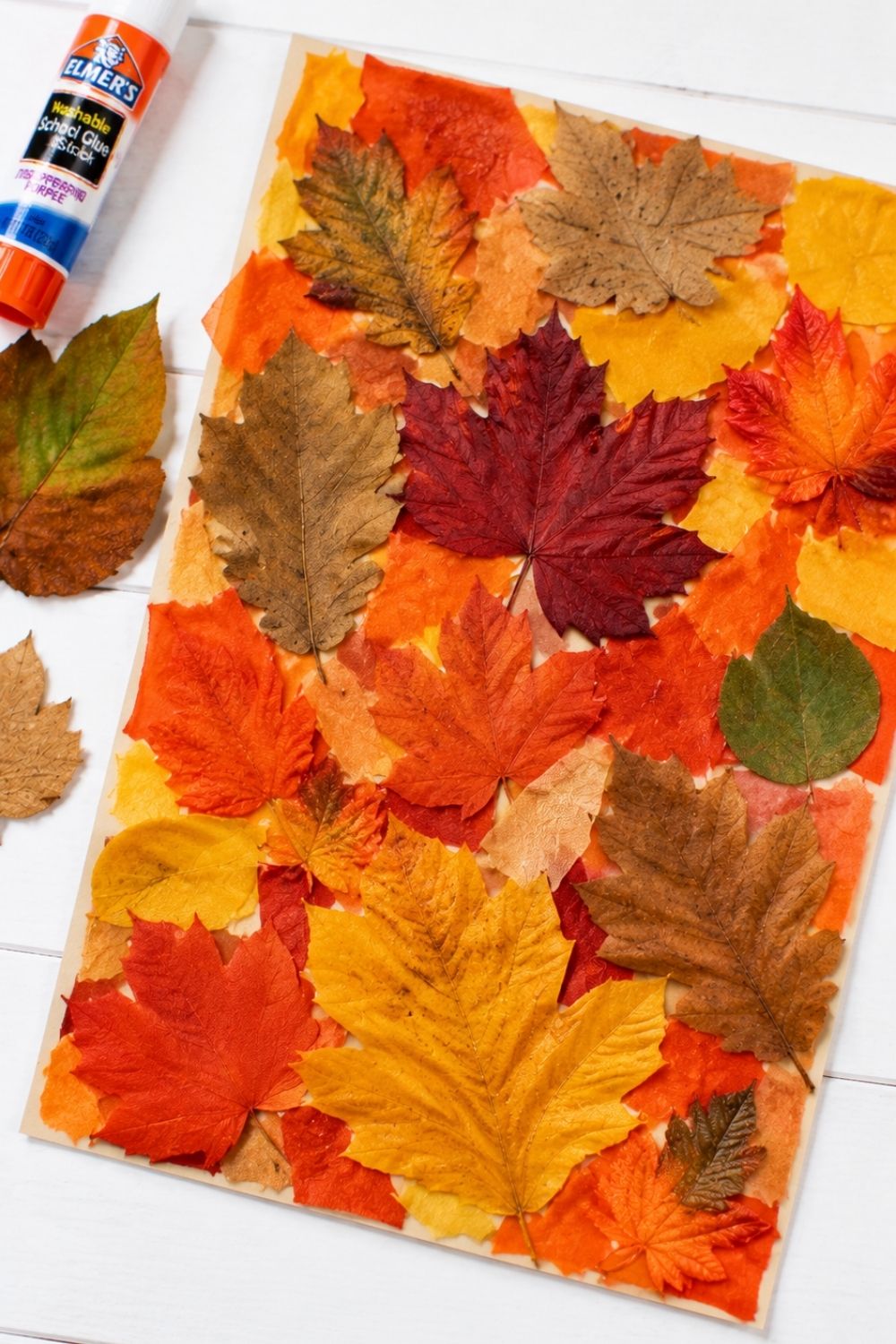
Arrange real fallen leaves, silk leaves, and torn tissue paper in fall colors on card stock, then glue them down together.
If your loved one can go outside, gathering real leaves is itself part of the activity the smell, the feel, and the colors provide sensory input that no craft supply can replicate.
If outdoor gathering isn’t possible, present a small basket of pre-gathered leaves and let them choose which ones to use.
The choosing is meaningful. Laying them on the paper, moving them around, deciding the arrangement all of this is the craft, not just the gluing.
10. Pressed Leaf Bookmarks

Press a leaf between wax paper with a warm iron you do this part to seal it flat and preserve the color.
Trim to bookmark size and add a ribbon at the top.
The result is a beautiful, professional-looking bookmark your loved one can give to a family member or keep for themselves.
Their role is choosing the leaf and choosing the ribbon color.
Purposeful involvement in a process is still a meaningful craft experience, especially for those in later stages.
The bookmark becomes a gift and giving something made with love is deeply satisfying at any cognitive level.
Section 3: Halloween Decorations They Can Make and Display
The best Halloween crafts for dementia patients aren’t just activities.
They produce something with a visible purpose.
When the finished craft goes up on the wall or hangs from a doorway, the maker has contributed to the environment they live in.
That sense of purpose matters profoundly for cognitive and emotional wellbeing.
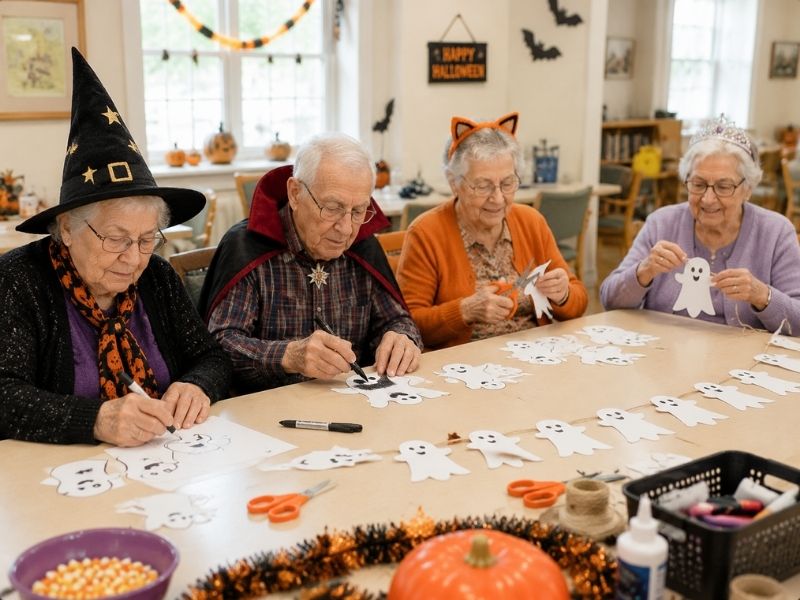
11. Paper Ghost Garland

Pre-cut ghost shapes from white card stock simple teardrop shapes with a flat bottom.
Give your loved one the ghosts, black markers, and a length of string. They draw faces. You attach them to the string as they finish each one.
The result goes straight from the craft table to the hallway a visible contribution that lasts the whole month.
Keep the ghost shapes large at least the size of a hand. Large ghosts with simple dot eyes and a curved mouth are satisfying to make and look genuinely charming strung together. The simpler, the better.
12. Bat and Pumpkin Bunting
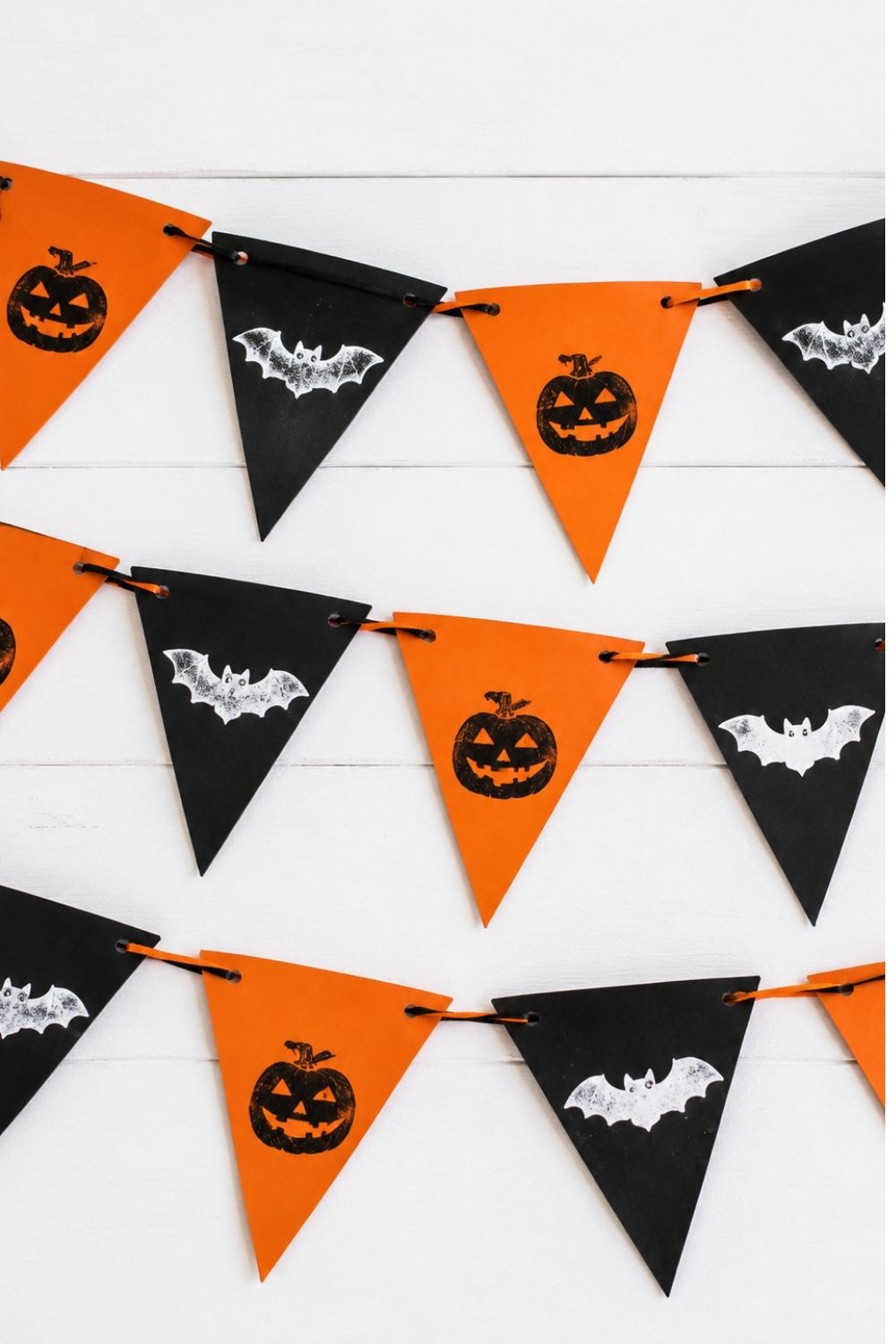
Pre-cut triangular pennant flags from orange and black card stock.
Have your loved one decorate each flag a stamp, a sticker, a simple drawing and attach them to a ribbon as they finish each one.
The bunting goes up immediately after the session so they can see their work displayed while it’s still fresh.
This scales beautifully for group settings. One person decorates flags, another strings them, another holds the ribbon.
Everyone contributes at their own level to a shared finished object that belongs to everyone. No one is excluded.
13. Halloween Greeting Cards Using Tissue Paper and Paint

Fold card stock in half. Have your loved one press torn pieces of orange, yellow, and black tissue paper onto the front using diluted PVA glue.
The tissue paper technique is forgiving overlapping and irregular placement looks intentional and beautiful.
When dry, add a simple marker detail and the card is finished.
Address the card to a grandchild or family member and actually send it.
A card that goes in the mail connects the maker to their relationship network in a tangible way.
For more on meaningful handmade gifts in this context, these Thanksgiving gifts for seniors in nursing homes show how handmade items from elderly adults land with families.
14. Paper Chain in Orange and Black
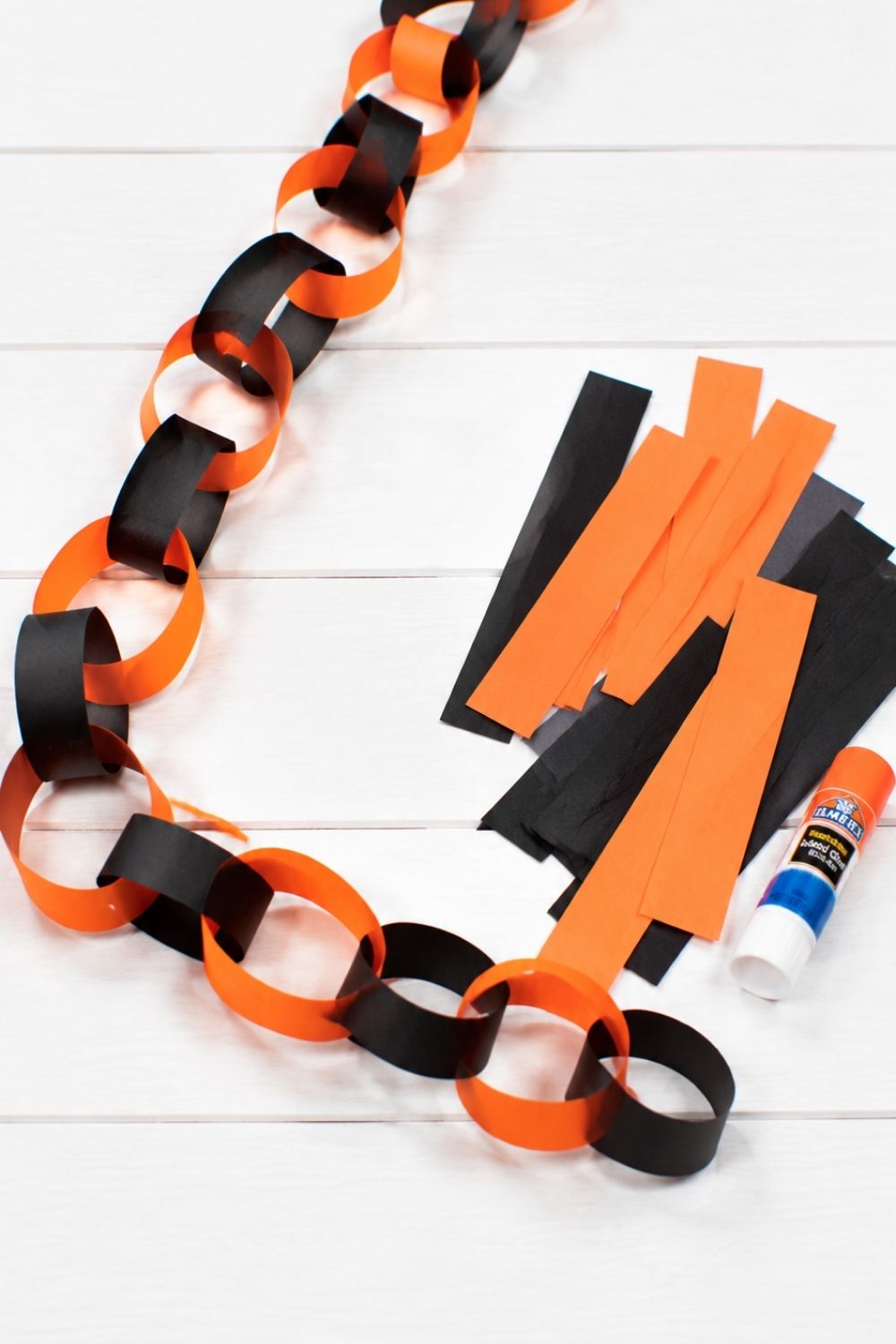
Pre-cut strips of orange and black card stock.
Show your loved one how to loop and connect the action is simple, the pattern is satisfying, and the chain grows visibly with every link.
For many dementia patients, repetitive rhythmic actions are specifically calming, not boring.
The paper chain can grow across multiple sessions, adding links each day throughout October.
A craft that continues across days creates a sense of ongoing project and gives the person something to return to with ease.
15. Handprint Ghost Art on Black Paper

Pour white paint into a shallow tray.
Gently press your loved one’s hand into the paint, then onto black construction paper.
The white handprint becomes a ghost add two small black dot eyes when dry and it’s complete.
This craft takes about three minutes and produces something genuinely beautiful.
Black paper with white paint is one of the highest contrast combinations available, making this particularly accessible for dementia patients with visual perceptual difficulties a common and often overlooked symptom.
The ghost emerges clearly and unmistakably.
Section 4: Sensory and Reminiscing Crafts
Sensory and reminiscing activities are some of the most therapeutically valuable Halloween crafts for dementia patients available.
Sensory engagement bypasses the cognitive processing that dementia disrupts and connects directly to emotional memory the kind that remains accessible long after other memories are gone.
16. Scent Sensory Craft — Fill Sachets With Autumn Spices

Lay out small muslin sachets alongside bowls of cinnamon sticks, whole cloves, dried orange peel, and star anise.
Have your loved one select spices, spoon them in, and tie the sachet closed with a ribbon.
The scent experience is immediate, powerful, and emotionally resonant — cinnamon and orange are among the most universally positive scent memories for people who grew up in the mid-twentieth century.
According to the Alzheimer’s Foundation of America, familiar scents can trigger positive emotional responses and reduce agitation even in advanced stages where verbal communication is limited.
A scent that connects to a memory is a gift in the deepest sense of that word.
Print large, non-scary autumn scenes pumpkin patches, harvest fields, woodland animals in fall leaves rather than traditional Halloween imagery.
Sit side by side and color together. The shared activity removes performance pressure and turns coloring from a task into a conversation.
Comments about colors, memories of autumn, and observations about the image emerge naturally.
Use thick crayons or chunky colored pencils rather than markers.
Large images with simple lines are better than detailed designs.
Often, the conversation that happens during coloring is more valuable than the finished page.
For more gentle shared activity ideas, these September crafts for seniors show the same warm, seasonal approach across multiple formats.
18. Treat Bag Assembly for Visiting Grandkids

This craft works on a level that most don’t: it gives the person with dementia a role of provider and giver rather than recipient.
Set up a simple assembly line small Halloween bags, candy, stickers for sealing, labels to place.
Have your loved one fill the bags and prepare them for grandchildren who are coming to visit.
The purposeful, productive nature of this activity is deeply meaningful.
It connects them to their grandparent identity their history of providing for the people they love.
Tell them exactly who the bags are for while they work. That specificity matters.
19. Memory Collage — Autumn and Halloween Images With Conversation

Cut autumn and Halloween images from magazines and lay them on the table.
Have your loved one choose which ones to include in a collage while you talk about what each image brings up.
“What did Halloween look like when you were young?” “Did you use to make pumpkin pie?”
The images are conversation prompts as much as craft materials.
Reminiscence therapy has documented benefits for mood and cognitive engagement in dementia patients.
The collage is evidence of the conversation. The conversation is the therapy.
For more on how memory and making intertwine in senior craft programming, these memory jar craft night ideas for seniors show this same principle across different craft formats.
20. Simple Grapevine Wreath Decorating

Buy a pre-made small grapevine wreath. Lay out pre-cut ribbon lengths in fall colors, silk leaves, and a few small foam pumpkins.
Have your loved one thread ribbon through the wreath, tuck leaves into the vines, and press foam pumpkins into gaps.
The three-dimensional, tactile nature of this craft is extraordinarily satisfying grapevine texture, ribbon movement, a result that looks genuinely beautiful.
This is one of the most visually rewarding of all Halloween crafts for dementia patients because the finished wreath goes directly onto a door or wall and stays there for the whole month.
Every time they pass it, there’s a moment of recognition: I made that.
For more wreath and garland craft ideas, these Halloween crafts for seniors in assisted living have 25 fully developed ideas with complete supply lists.
The Assembly Line Model for Group Settings
If you’re running Halloween crafts for dementia patients in a group setting, the assembly line model changes everything.
Instead of everyone completing the same craft from start to finish, divide it into individual steps and assign one step per person.
How It Works
Someone draws the shapes. Another person colors them.
A staff member cuts. Someone else assembles.
Another adds the final detail. Everyone participates at their own ability level. No one feels behind. No one feels left out.
The finished product belongs to everyone.
This model is especially valuable because it eliminates comparison anxiety when people at different dementia stages work together.
The person drawing detailed ghost faces and the person pressing stickers onto card stock are contributing equally to the same shared project.
The social experience of working alongside others is itself therapeutic even without much conversation.
For more on inclusive group programming, these gratitude journal craft night ideas for seniors show how group-based reflective activities work in the same setting.
For faith-based facilities, these Bible verse craft night ideas for seniors blend the same inclusive group format with meaningful faith content.
What to Avoid When Planning Halloween Crafts for Dementia Patients

Knowing what not to do is just as important as knowing what to do.
These avoidances aren’t overly cautious they’re based on what genuinely triggers distress in people with cognitive decline.
No Sharp Scissors or Carving Tools
This applies even in early-stage dementia. The caregiver does all cutting before the session begins.
Safety scissors can be offered for tearing if fine motor engagement is the goal.
Pumpkin carving is completely off the table foam pumpkins and paint produce equally display-worthy results.
Nothing With Small Pieces That Could Be Swallowed
Small beads, tiny buttons, loose glitter, and small googly eyes all present choking risks for dementia patients who may put things in their mouths a behavior that becomes more common in later stages.
Large format everything: large buttons, chunky beads, bold stickers, no loose glitter.
Avoid Anything With Strong Chemical Smells
Chemical odors from certain glues, spray paints, permanent markers, and solvents can be overwhelming and disorienting for someone with heightened sensory sensitivity.
Use water-based non-toxic paints, PVA glue, washable markers, and natural materials throughout.
Skip Motion-Activated and Noisy Halloween Decorations Nearby
Remove or turn off any motion-activated decorations before a craft session.
A skeleton that cackles when someone walks past can interrupt a calm session catastrophically a startle response in someone with dementia can take thirty minutes to resolve.
For the full safety framework for decorating around dementia patients, Halloween decor ideas for assisted living cover every space from individual rooms to hallways.
Never Schedule Crafts in the Late Afternoon or Evening
Sundowning is real. Agitation, confusion, and restlessness increase reliably from mid-afternoon onward for many people with cognitive decline.
Protect the morning window for meaningful activities.
Use the afternoon for quieter engagement music, gentle walking, familiar television.
Never Criticize the Finished Result
Any comment implying the result isn’t right can trigger shame, withdrawal, and resistance to future craft sessions.
The result is always right. The result is always good. Your genuine enthusiasm for whatever they made is both true and necessary.
The Best Halloween Craft Is the One They Actually Enjoy
The best Halloween craft for a dementia patient isn’t on this list.
It’s the one your loved one reaches for, the one that produces a moment of focus, the one they smile at when it’s done.
Maybe it’s painting one leaf, pressing one sticker onto one pumpkin or sitting beside you for twenty minutes while you paint just occasionally pointing at a color they want you to use next.
Let go of the outcome. Follow their lead. The connection you create in that morning session however it looks is the whole point.
A holiday celebrated at 10% of its traditional scale, with someone you love, in a way that makes them feel safe and happy, is a better Halloween than any perfectly executed party.
For the full seasonal programming picture around these crafts, these Halloween party ideas for assisted living residents cover games, food, decorations, and family activities.
For the safe, resident-friendly decor environment, these Halloween decor ideas for assisted living cover every space.
And for the summer equivalent of this approach, these July crafts for seniors in assisted living are worth bookmarking for your full seasonal calendar.
Save this to your Halloween Pinterest board and share it with a caregiver, activity director, or family member trying to make October meaningful for someone they love.
These Halloween crafts for dementia patients are worth passing on.
Frequently Asked Questions
What Halloween crafts are safe for dementia patients?
The safest Halloween crafts for dementia patients use large, non-toxic, non-breakable materials with no sharp edges and no small parts.
Foam pumpkin painting, large-sticker decorating, leaf rubbings, paper chains, and handprint ghost art are all excellent choices.
For the full safety framework across craft types, these crafts for seniors with low vision show how accessibility-first thinking applies across multiple formats.
How do you celebrate Halloween with someone who has dementia?
Keep it calm, brief, familiar, and morning-based. Choose autumn-first framing —pumpkins, leaves, harvest colors, familiar scents and avoid anything that disrupts the usual routine.
A warm morning with a small craft, familiar music, and good company is a better Halloween than any elaborate party.
What crafts can someone with Alzheimer’s do at Halloween?
Match the craft to the stage.
Early stage: most crafts on this list work with minimal modification.
Middle stage: sensory crafts leaf rubbings, scent sachets, pumpkin painting with thick brushes.
Late stage: handprint ghost, fabric-wrapped pumpkin, or assembly line participation with one simple action per session.
How do you make Halloween less frightening for dementia patients?
Replace scary imagery with harvest imagery.
Replace evening events with morning activities.
Static, soft-lit decorations only motion-activated anything has no place in a memory care setting.
The holiday doesn’t need to be eliminated it needs to be reframed around what’s comforting rather than what’s startling.
What time of day is best for crafts with dementia patients?
The mid-morning window between 9am and 11:30am is consistently the best time.
That’s when most patients are well-rested, recently fed, and at their clearest.
Sundowning makes afternoon and evening sessions significantly harder for most patients and riskier for some.