This post contains affiliate links. This means I may earn a small commission if you purchase through my links at no extra cost to you.
Maximize hidden bedroom space with simple, budget-friendly DIY under bed storage ideas that help reduce clutter and improve organization fast.
Look under most beds and you won’t find space, you’ll find decisions that were never fully made. A bag you didn’t unpack. Clothes you stopped wearing but couldn’t throw away yet. Boxes you said you’d sort later.
That space doesn’t become clutter overnight. It builds slowly, every time something is put there just to get it out of sight.
And the problem is, under-bed space is one of the biggest storage areas in a bedroom — yet it’s almost never designed to carry what ends up there.
So it becomes this in-between zone: not storage, not rubbish, just paused life.
That’s why fixing it changes everything.
What most people don’t realize is that once this space is handled properly, the bedroom doesn’t just look cleaner, it starts to feel easier to live in, without anything else changing.
So in this guide, you’ll see simple DIY under-bed storage ideas that help you turn that forgotten space into a working system that actually reduces clutter instead of hiding it.
Small, practical systems like this follow the same creative thinking seen in 10 Back to School Gift Basket Ideas for Kids Starting Kindergarten That Build the Excitement, where simple materials are turned into something useful and exciting.
BEFORE YOU DIY — UNDERSTANDING SMART UNDER-BED STORAGE RULES
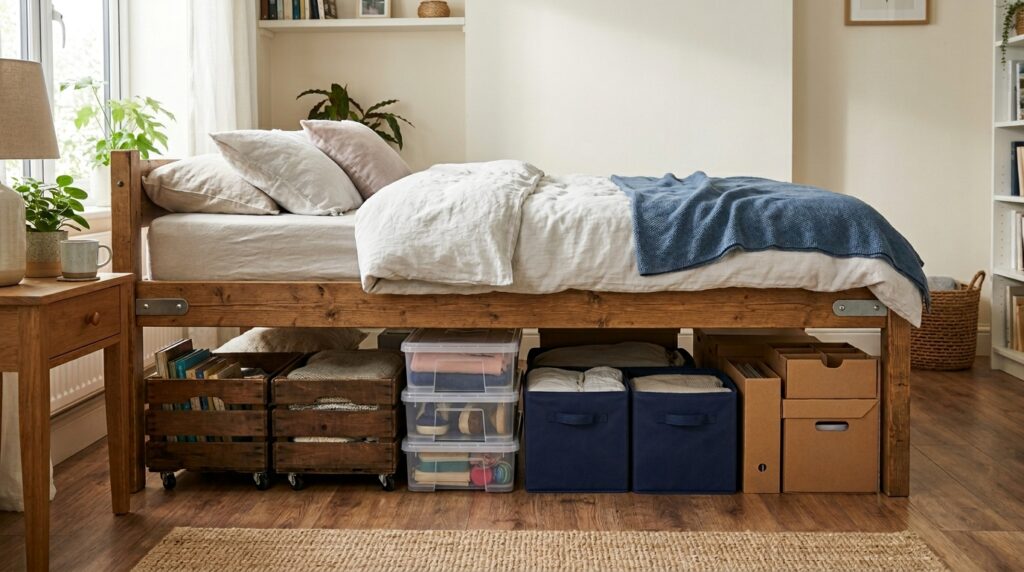
Before you start building or buying anything, it helps to understand one simple truth: under-bed storage only works when it follows how you actually live, not how it looks in photos.
Most storage problems happen when the system is built for aesthetics instead of function.
The 3 Rules That Make Under-Bed Storage Actually Work
Rule 1: If you can’t reach it easily, you won’t maintain it
Under-bed storage should not turn into a “drag everything out and regret it later” situation. If access is annoying, the system fails over time.
Rule 2: What you use less often should go lower and farther back
The less frequently you need something, the more sense it makes for it to live under the bed. Daily items will always end up causing frustration here.
Rule 3: Anything stored here must be protected from time
Dust, humidity, and neglect build up quietly in this space. If an item can’t handle being sealed, covered, or contained, it doesn’t belong here.
What Actually Works Well Under the Bed
✔ Things that rotate with seasons (winter clothes, heavy fabrics, summer wear)
✔ Bedding that takes up too much closet space (duvets, spare sheets, blankets)
✔ Shoes you don’t wear every day but still keep
✔ Travel items you only need occasionally (luggage, travel kits, bags)
✔ Sentimental or archive storage (keepsakes, documents, memory boxes)
Things That Always Become a Problem Here
- Items you need weekly or daily (they’ll get annoying fast)
- Food or anything that attracts pests or spoilage
- Electronics that aren’t properly sealed or protected
MEASURING & PLANNING YOUR UNDER-BED SPACE (DO THIS BEFORE YOU BUY ANYTHING)
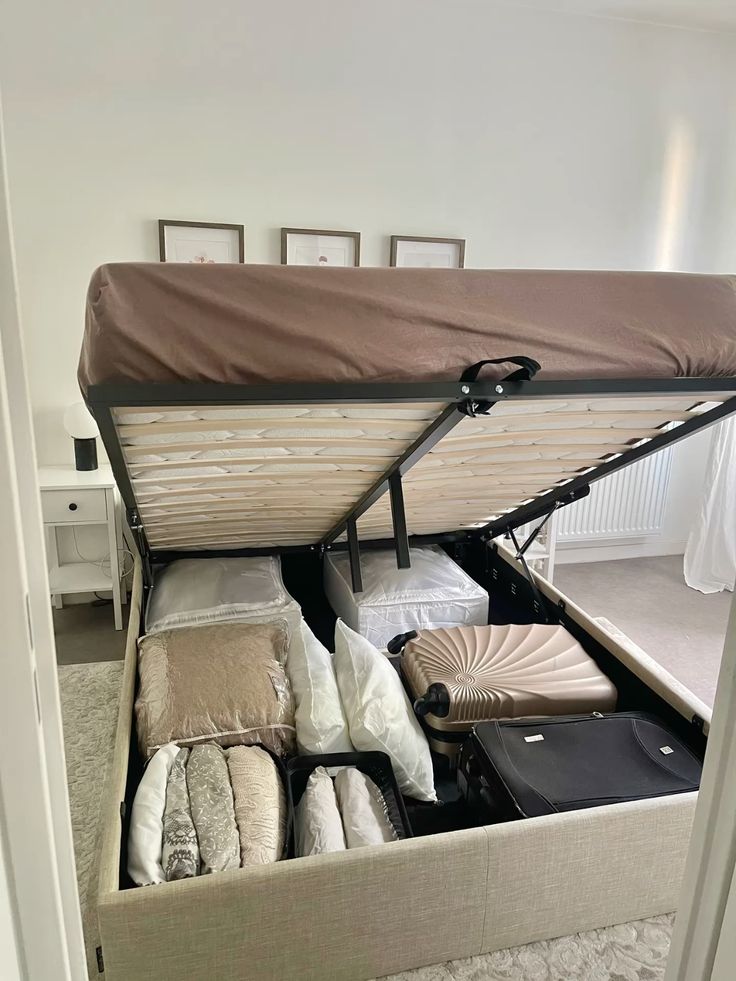
Most under-bed storage problems don’t come from bad ideas, they come from skipping this step.
People buy containers first, then discover they don’t fit, don’t slide, or don’t open properly. At that point, the system already fails.
Good under-bed storage is not about what you store. It starts with how much physical space you actually have to work with.
1. Measure the REAL Clearance Height (not assumptions)
Don’t guess. Don’t eyeball it.
Measure the exact distance from the floor to the lowest point of your bed frame.
This number decides everything:
- whether a storage box will fit at all
- whether wheels or drawers are possible
- whether you can stack or must stay flat
Even a small difference in height can determine if your system works smoothly or becomes frustrating to use.
2. Identify your bed type (this changes your entire approach)
Not all beds are built for the same kind of storage. You need to know what you’re working with:
- Platform bed: usually low clearance, limited space, needs slim containers
- Frame bed with legs: most flexible option, allows boxes, drawers, or rolling storage
- Storage bed: already has built-in drawers or lift mechanisms, so DIY may focus more on organization inside
If you skip this, you end up forcing the wrong storage system into the wrong structure.
3. Decide how you will actually access the storage
This is the part most people ignore, but it determines whether your system stays useful or becomes abandoned.
- Slide-out access: best for boxes, bins, and rolling containers
- Lift-up access: works for larger storage but requires effort and space around the bed
- Side pull access: ideal for narrow rooms where front access isn’t possible
Think about your daily movement. If accessing storage feels like a task, you won’t maintain it.
Why this step matters more than the DIY itself
Under-bed storage only works when it fits your room, your bed, and your habits, not just mere ideas. Once these three decisions are correct, every DIY idea after this becomes easier, cleaner, and actually usable long-term.
DIY UNDER-BED STORAGE IDEAS
A: SIMPLE LOW-BUDGET DIY STORAGE
1. Reinforced Cardboard Sliding Boxes
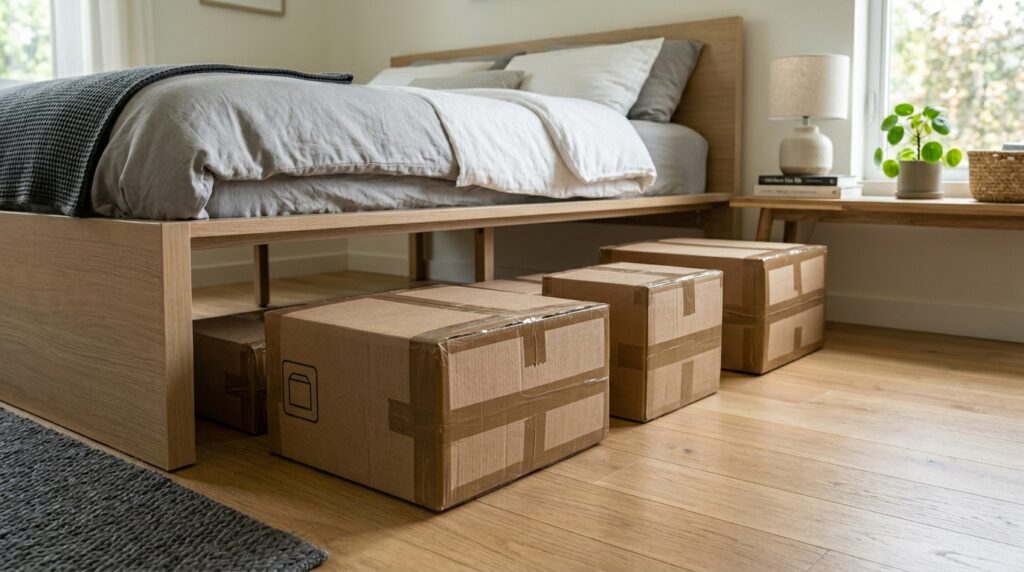
Cardboard boxes become surprisingly effective under-bed storage when reinforced properly. The key is not the box itself, but how stable you make it.
Line the base with extra cardboard layers and tape all weak edges so it doesn’t collapse under weight. Once strengthened, it works well for light items like clothing, linens, or seasonal fabrics.
Best use: temporary or lightweight storage that needs easy sliding access.
2. Shoe Boxes Converted Into Labeled Storage Compartments
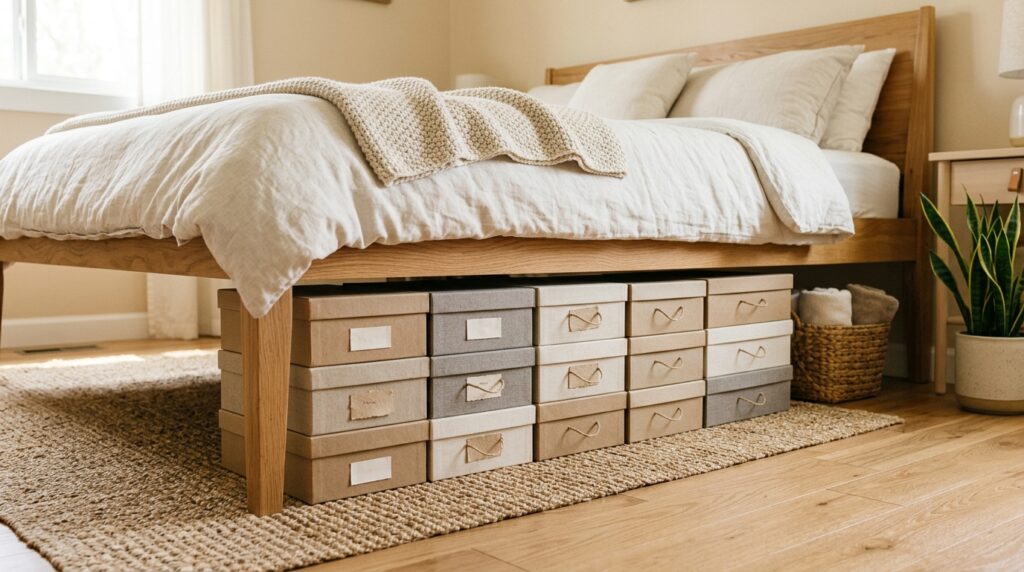
Shoe boxes are already sized for stacking, which makes them ideal for compartment-style storage under the bed.
Instead of leaving them loose, group similar items together (socks, accessories, small clothing items) and label each box clearly so you’re not constantly opening everything to find one thing.
Best use: small-item organization and category-based storage.
3. Repurposed Plastic Containers With Lids
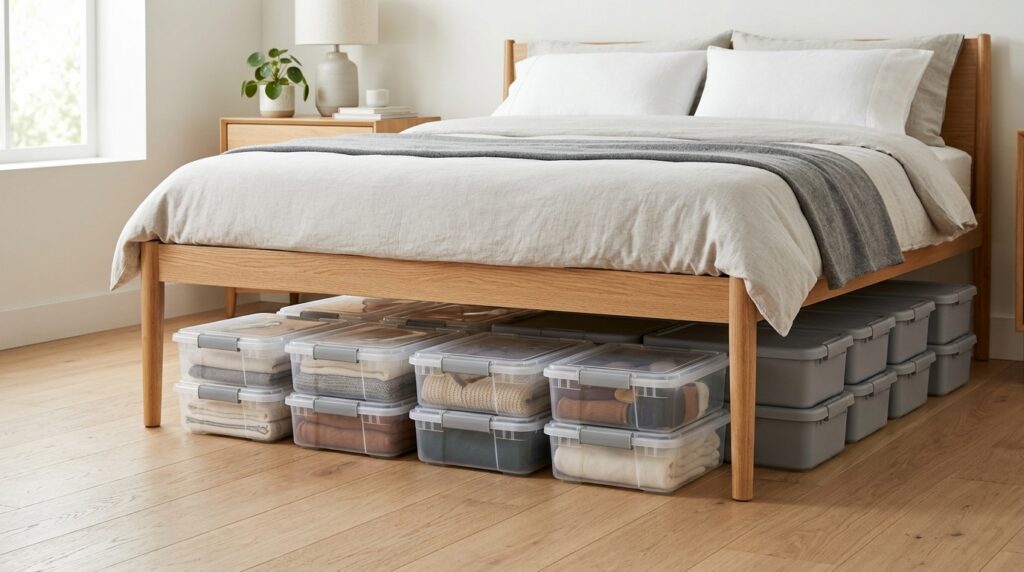
Old plastic containers are one of the most reliable low-budget storage options because they already offer structure and protection.
Use containers with tight lids to protect items from dust and moisture. They’re especially useful in humid environments where fabric storage may absorb moisture over time.
Best use: long-term storage for clothes, shoes, or household items.
4. Old Fabric Bins Stiffened With Cardboard Inserts
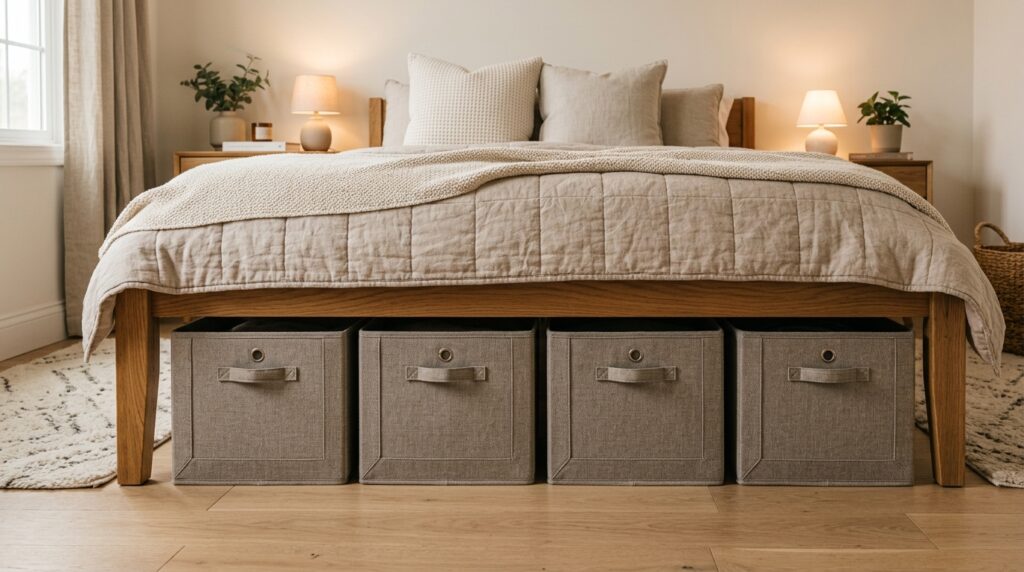
Soft fabric bins usually collapse under beds, which makes stacking and sliding difficult. Adding cardboard inserts along the sides and base gives them structure and helps them hold shape.
This small modification turns a flexible bin into a proper storage container without buying anything new.
Best use: lightweight clothing, bedding, or mixed storage.
5. Reused Delivery Cartons With Waterproof Lining
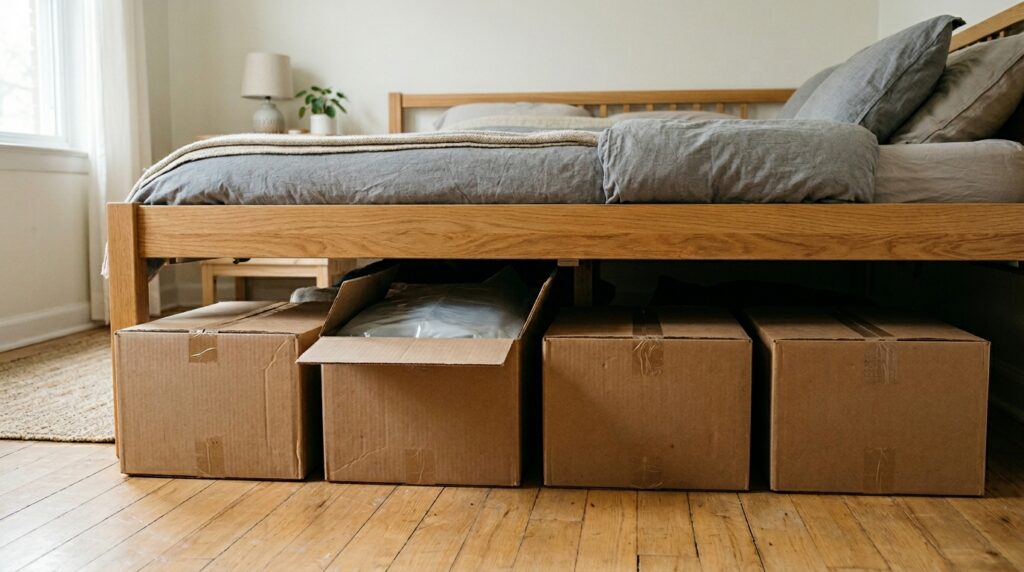
Delivery boxes can be upgraded into functional storage by lining them with plastic sheets, contact paper, or even reused packaging material that protects against dust and moisture.
Once sealed and reinforced, they become a free storage solution for items you don’t access often.
Best use: budget-friendly seasonal storage or overflow items.
B: ROLLING & SLIDE-OUT SYSTEMS
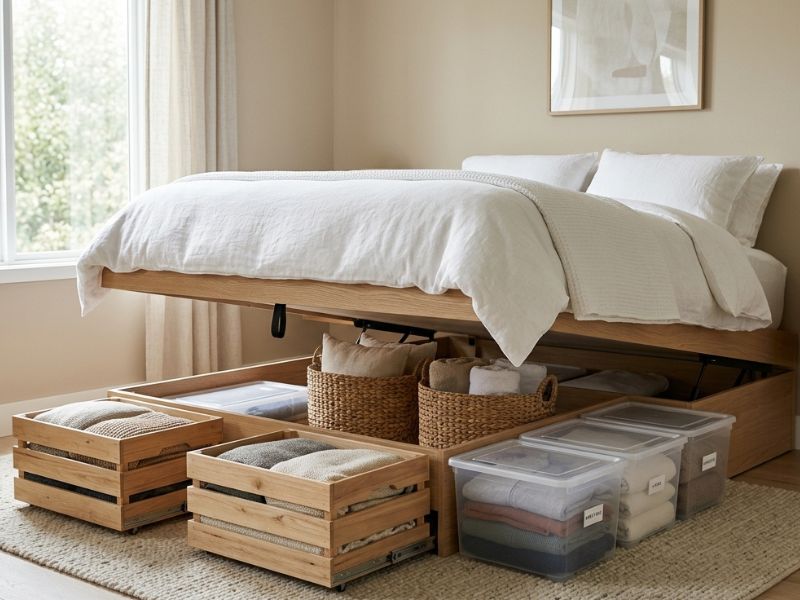
6. DIY Wooden Crate With Caster Wheels
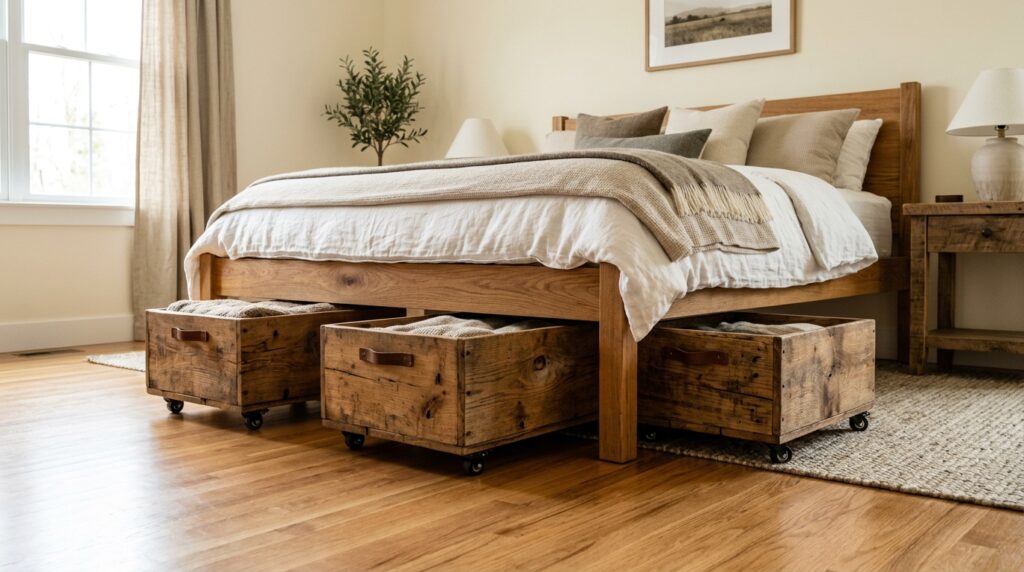
This is one of the most practical ways to turn simple materials into functional storage.
A basic wooden crate becomes a mobile unit once caster wheels are attached underneath, allowing it to slide in and out smoothly without lifting.
It works especially well for heavier items that still need easy access, like shoes, folded clothes, or extra bedding. A quick sanding and corner reinforcement also prevents wear over time.
Best use: sturdy, high-capacity rolling storage for frequently rotated items.
7. Rolling Fabric Storage Bin Frame
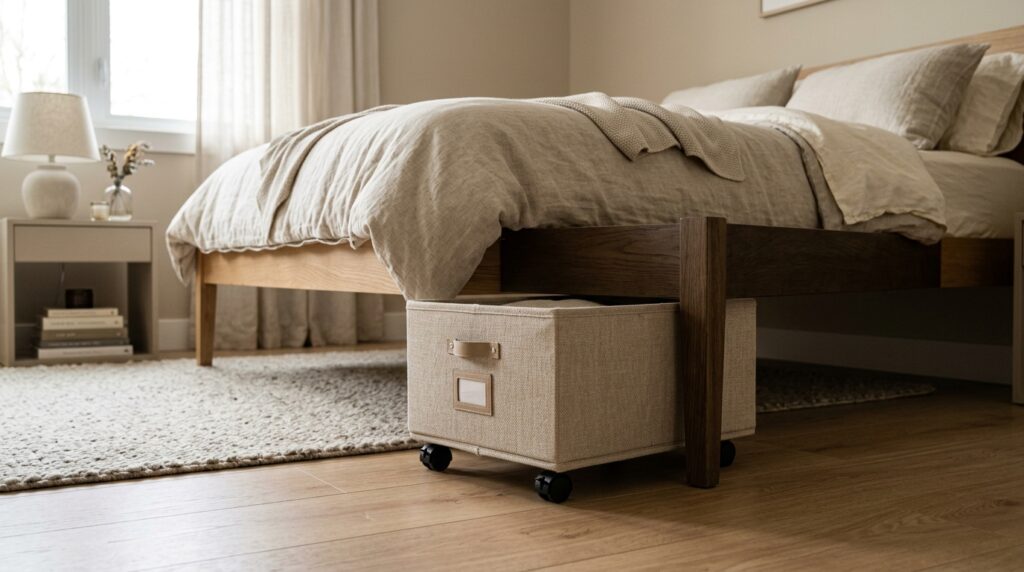
A softer approach to under-bed organization involves building a lightweight frame inside a fabric bin and attaching small wheels underneath. This keeps the bin flexible but structured enough to move easily.
It’s ideal for renters or anyone working with low-clearance beds where rigid containers might not fit. The fabric also helps reduce noise and friction when sliding.
Best use: soft items like clothing, linens, or lightweight household storage.
8. Under-Bed Sliding Tray Made From Plywood
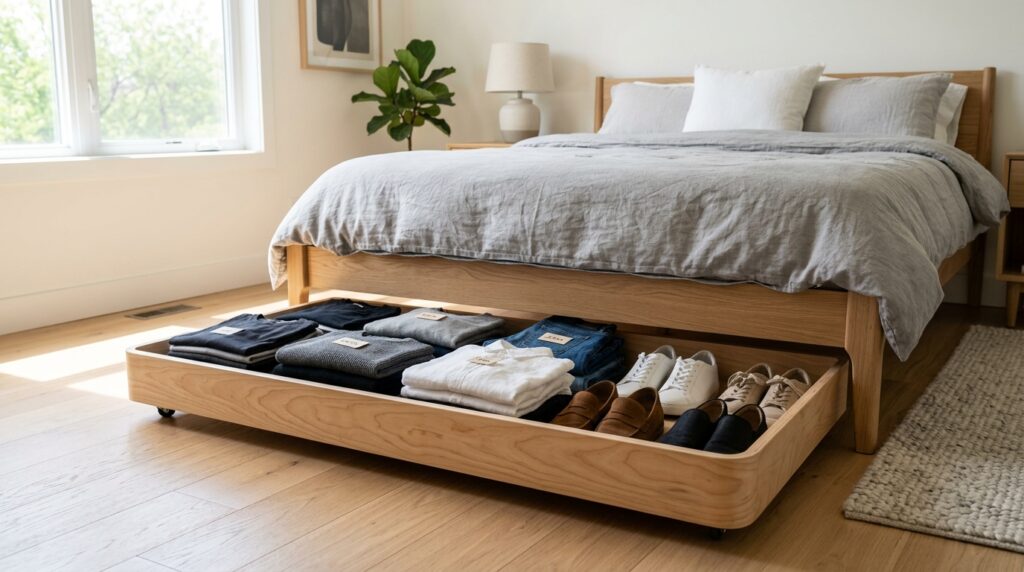
This method uses a flat plywood base cut to size and fitted with low-friction sliders or rails. Instead of rolling, the entire tray glides in and out in a controlled motion.
Because it sits close to the floor, it works well in tight spaces where wheels would be impractical. The flat surface also helps keep items stable and neatly arranged.
Best use: shoes, folded clothes, or neatly stacked storage boxes.
9. Repurposed Drawer Unit With Wheels
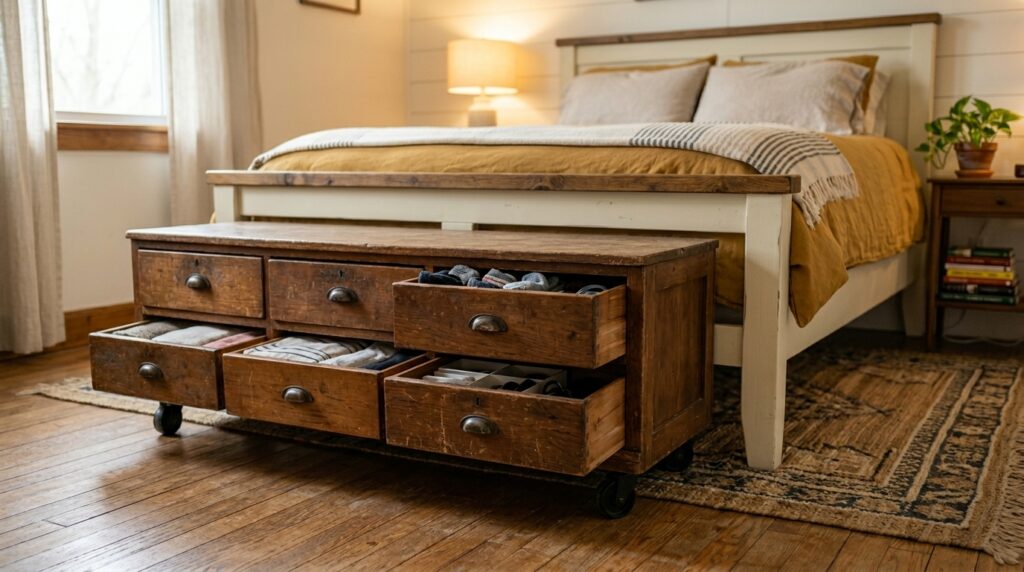
An old drawer unit can be transformed into a hidden storage system by adding wheels to the base. Instead of discarding furniture, you repurpose it into a structured under-bed organizer.
Each drawer can hold a different category, making it easier to maintain order without mixing items. This approach is especially useful for long-term storage needs.
Best use: multi-category storage with built-in organization.
10. Pull-Out Storage Box With Rope Handles
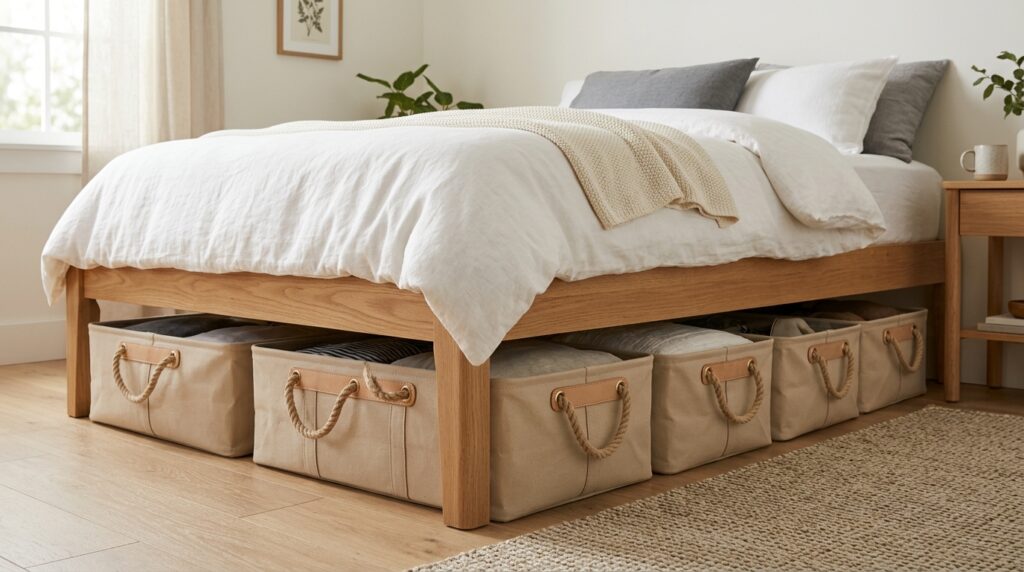
A simple but effective option is a reinforced storage box fitted with durable rope handles on both sides. This allows you to pull it out quickly without needing wheels or complex modifications.
It’s one of those low-effort setups that still improves daily organization, especially for items you access occasionally but want to keep neatly contained.
Best use: lightweight storage for quick-access essentials.
This kind of smart repurposing is similar to the design creativity in 13 DIY Reclaimed Wood Wall Art Ideas That Transform Any Blank Wall Instantly, where everyday materials are transformed into functional design.
C: VACUUM & COMPRESSION STORAGE
11. Vacuum-Sealed Seasonal Clothing Bags
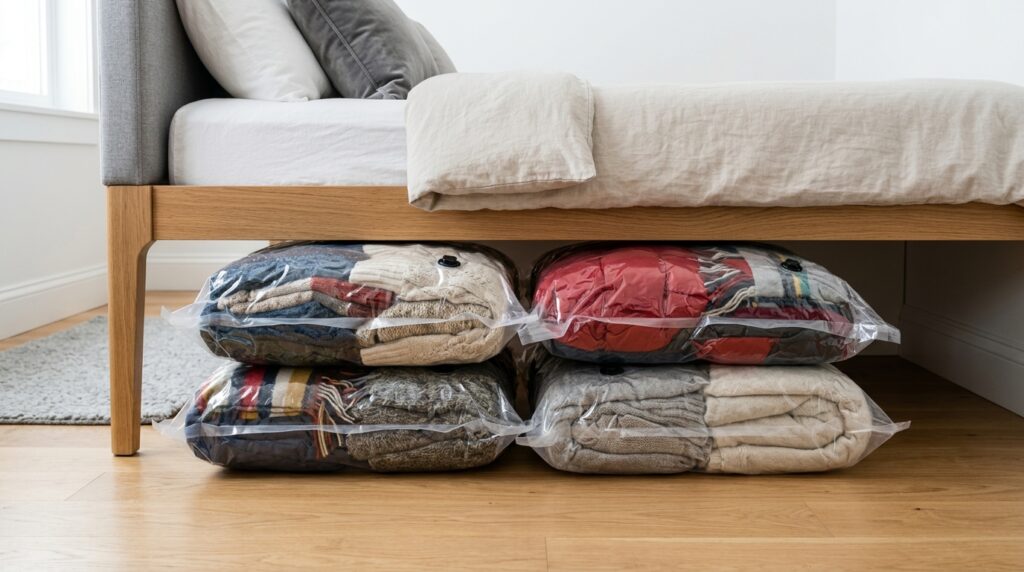
Vacuum sealing is one of the most effective ways to reduce bulk in clothing storage.
By removing excess air, bulky seasonal items like winter wear or heavy fabrics take up far less space under the bed.
It also helps protect clothing from dust, moisture, and long-term storage odor, especially in climates where humidity is a concern. The key is to ensure items are completely dry before sealing to avoid trapped moisture.
Best use: seasonal wardrobes, winter clothing, and bulky fabric items.
12. Compression Storage Cubes for Bedding
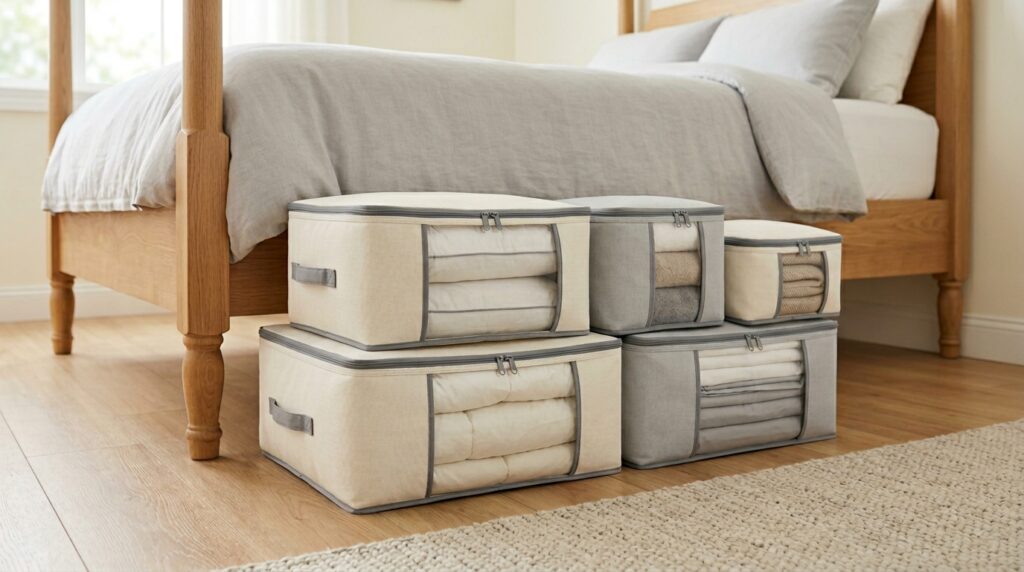
Bedding tends to take up more space than most people expect, which is why compression cubes are useful. These allow duvets, blankets, and sheets to be neatly packed into compact, structured forms.
Unlike loose bags, cubes help maintain shape, making it easier to stack and slide them under the bed without collapsing or shifting.
Best use: bedding sets, duvets, and soft household textiles.
13. Hybrid Hard Box + Vacuum Bag System
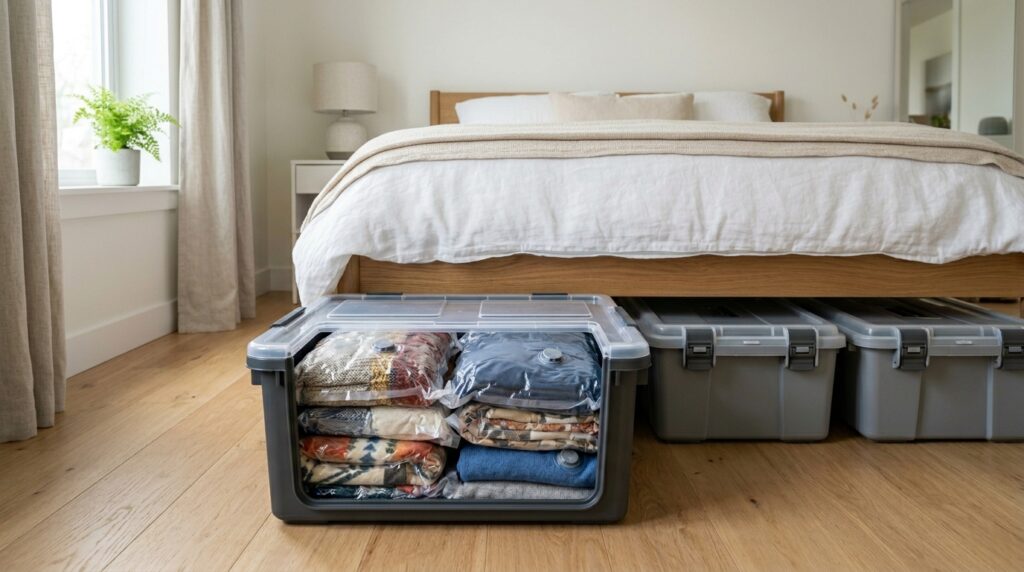
This method combines structure with compression. Items are first vacuum-sealed, then placed inside a hard storage box for added protection and stacking stability.
It’s especially useful when you want long-term storage that won’t deform or get crushed under the bed. The hard exterior also makes sliding in and out smoother.
Best use: long-term seasonal storage and fragile soft goods that need extra protection.
14. Multi-Layer Stackable Compression Organizers
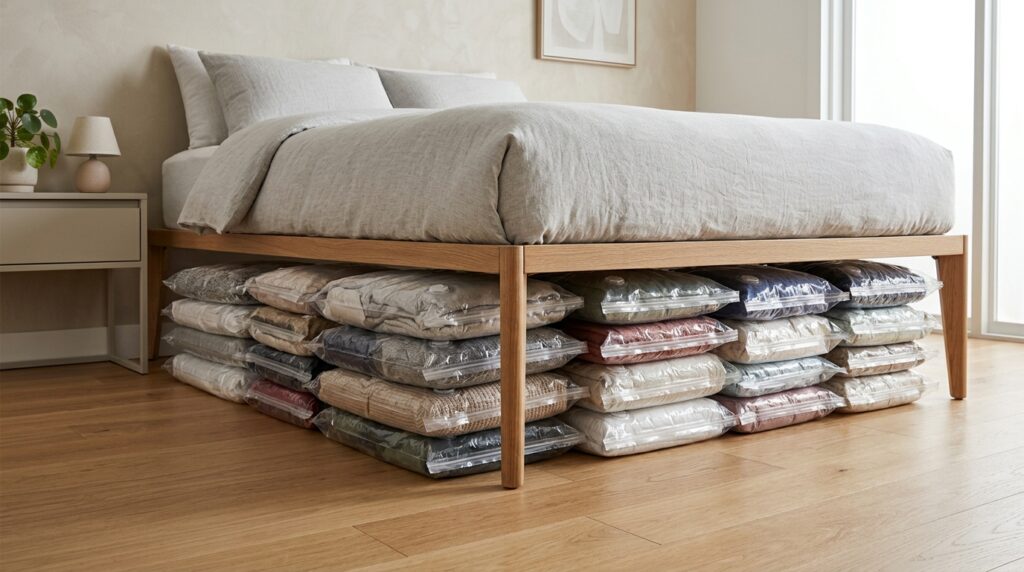
These are designed for users who want to maximize vertical under-bed space without creating mess. Each layer holds compressed items, allowing multiple categories to be stored in one compact stack.
The structure helps prevent shifting, which is common with soft storage bags, and makes it easier to pull out sections without unpacking everything.
Best use: organized bulk storage for clothes, linens, or mixed seasonal items.
D: BED FRAME MODIFICATIONS
15. DIY Raised Platform Bed With Open Storage Slots
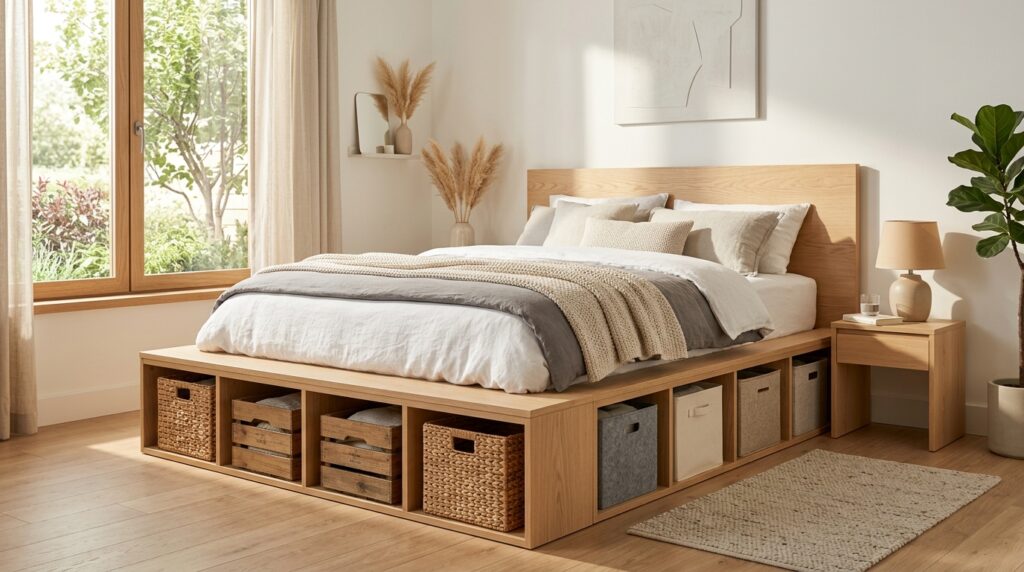
This is one of the more structural DIY under bed storage ideas, where the bed itself is elevated and redesigned to include open storage slots underneath.
Instead of treating the space as an afterthought, it becomes part of the furniture design. Open compartments make it easy to slide in baskets, boxes, or folded items without complicated mechanisms.
Best use: long-term storage for frequently rotated household items in a stable, built-in format.
16. Pallet Bed Base With Storage Compartments
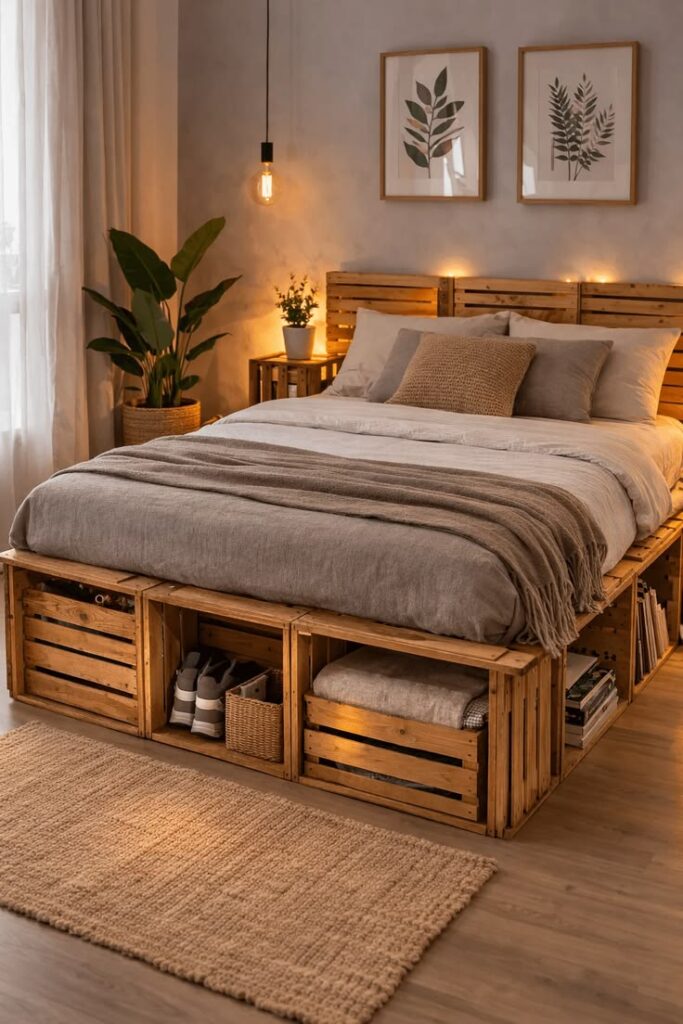
Wooden pallets can be repurposed into a functional bed base that naturally creates storage gaps underneath. When arranged properly, they form divided sections that can hold containers or loose storage bins.
This approach works well for budget-friendly setups and gives structure without needing full furniture construction.
Best use: affordable storage for shoes, bins, or seasonal household items.
17. Bed Risers Creating Hidden Storage Zones
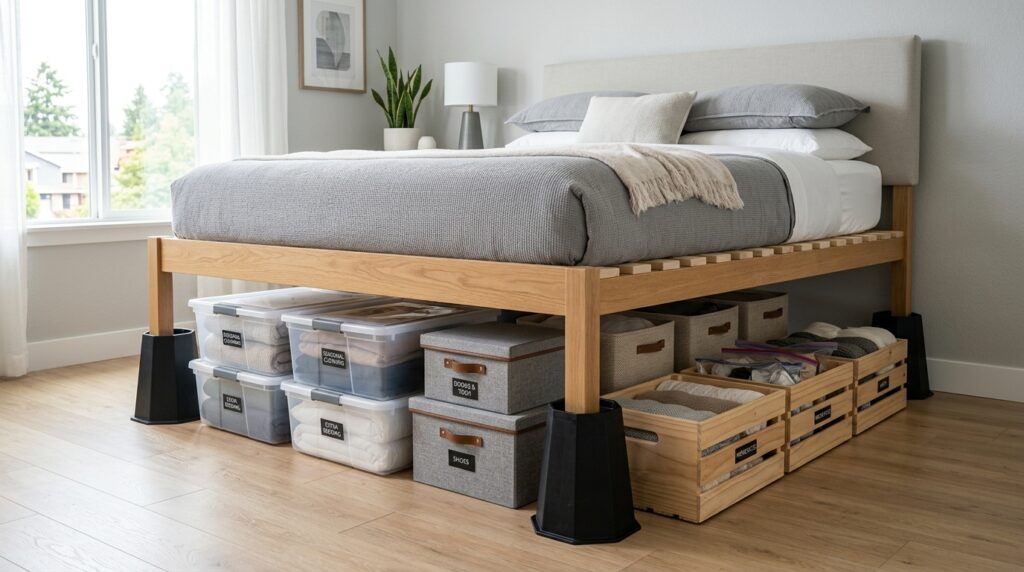
Bed risers are a simple but highly effective way to increase vertical clearance and unlock additional storage capacity underneath the bed.
Once the height is raised, the space can accommodate larger containers that previously wouldn’t fit. It’s a small change that significantly expands storage potential without replacing furniture.
Best use: creating extra clearance for boxes, luggage, and bulk storage containers.
18. Modular Drawer System Built Into Bed Frame
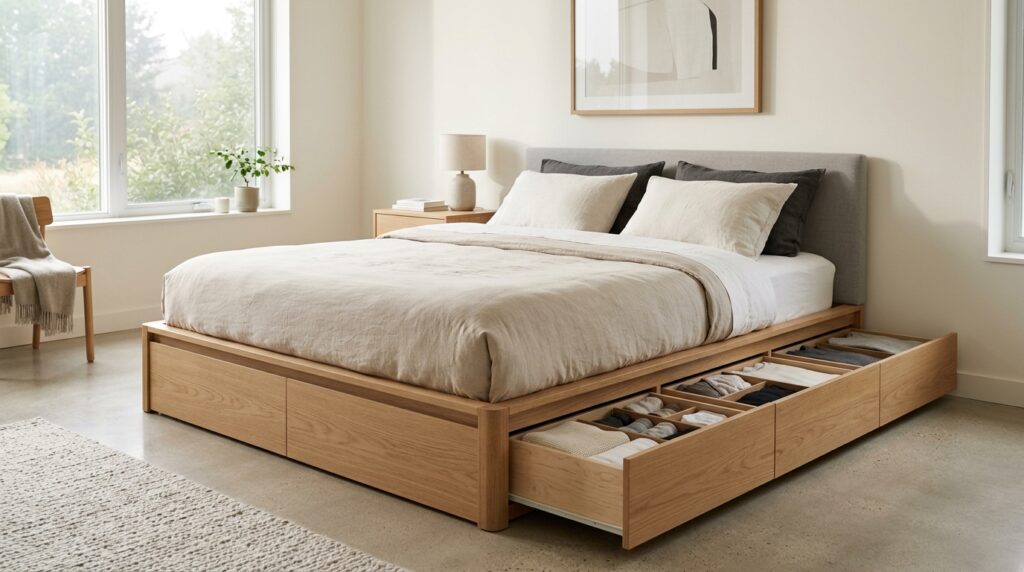
A more advanced approach involves integrating drawers directly into the bed frame structure. Instead of separate storage units, the bed itself functions as a built-in organization system.
Each drawer can be assigned a category, making it easier to maintain order while keeping everything hidden and accessible.
Best use: structured long-term storage with a clean, built-in finish.
E: ORGANIZATION & DIVIDER SYSTEMS
19. Cardboard Divider Grids Inside Storage Boxes
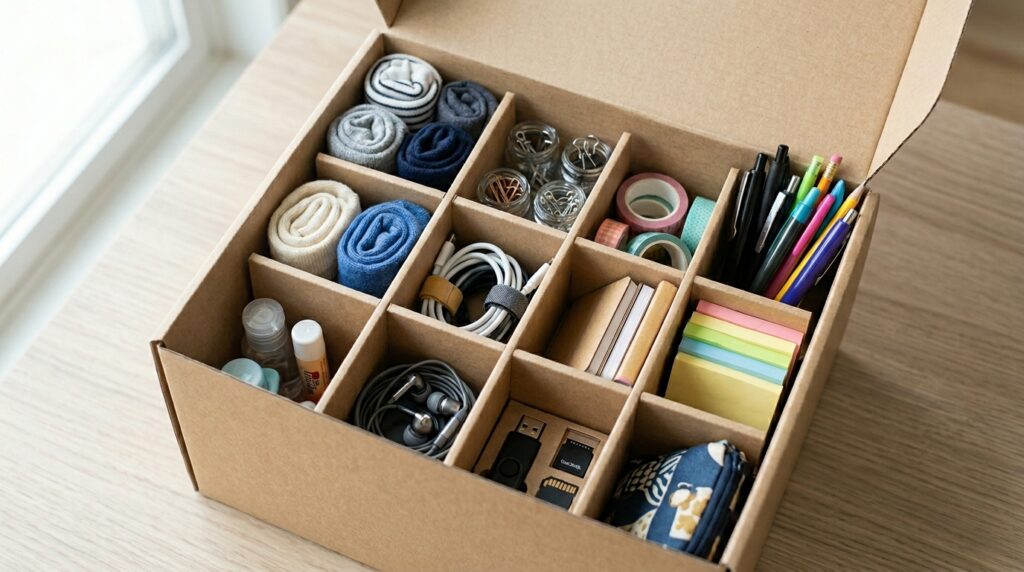
A simple but highly effective DIY under bed storage ideas approach is adding cardboard divider grids inside boxes to stop items from mixing together.
Instead of one messy pile, each section has a purpose, making it easier to keep categories separated.
This works especially well for small items that tend to shift around, like accessories, socks, or lightweight clothing. It also reduces the need to unpack everything just to find one thing.
Best use: structured small-item organization inside larger storage boxes.
20. Fabric Compartment Organizers For Clothes Separation
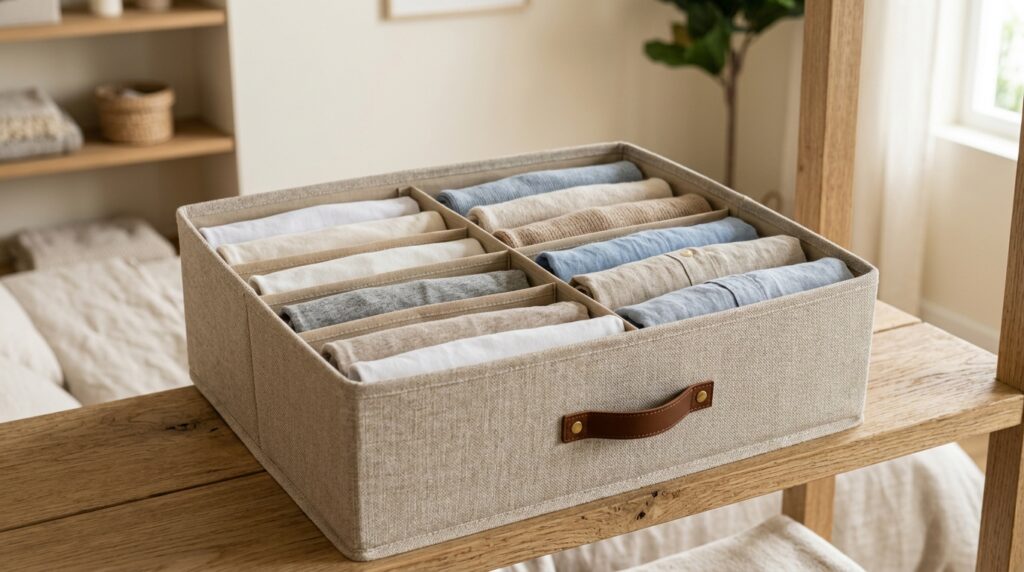
Fabric dividers are useful when you want flexibility without hard structures. They create soft compartments inside storage bins, helping clothes stay separated instead of collapsing into one mixed space.
This is one of those DIY under bed storage ideas that works well for renters or lightweight setups where rigid materials aren’t ideal.
Best use: clothing categories like tops, loungewear, or seasonal outfits.
21. Clear Labeling System For Seasonal Rotation
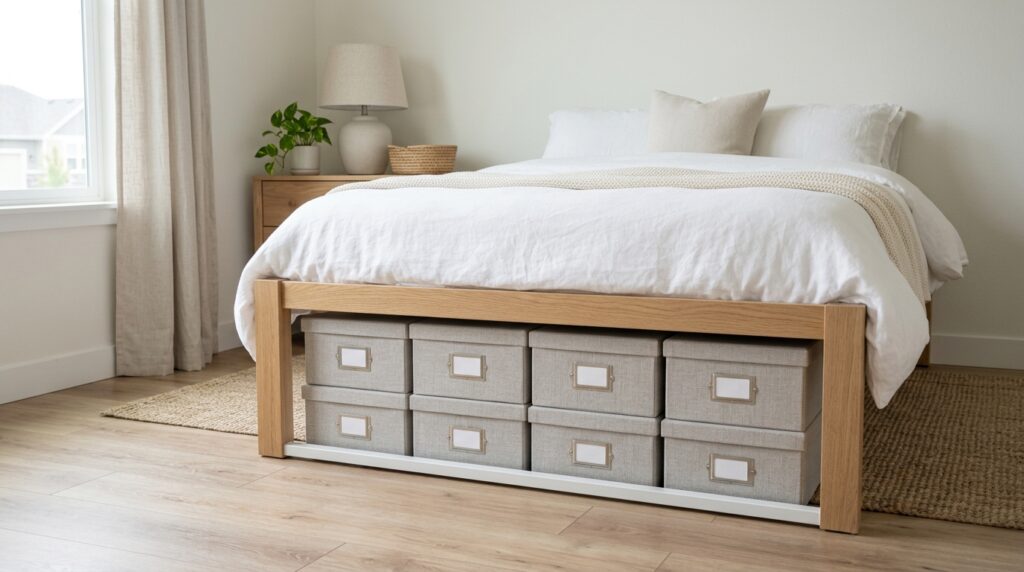
One of the most overlooked parts of storage is labeling. A clear system for marking boxes by season or category prevents repeated searching and reduces clutter over time.
Instead of opening multiple containers, you immediately know what belongs where, which makes seasonal rotation faster and more consistent.
Best use: long-term organization of rotating clothing and household items.
22. Vertical Folding Organizers For Clothing Stacks
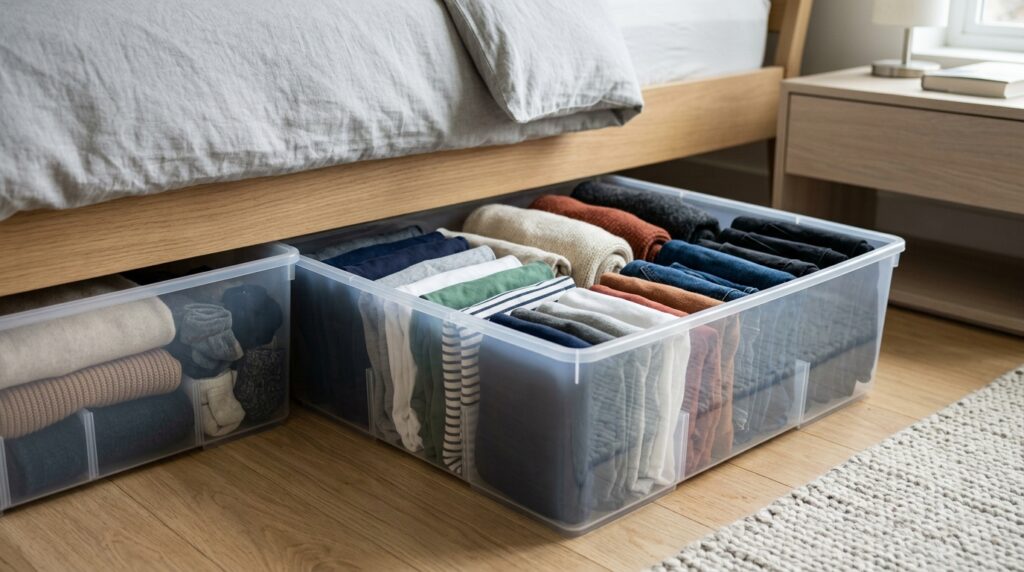
Vertical folding transforms how space is used inside containers by allowing clothes to be stacked upright instead of piled.
This keeps items visible and reduces disruption when removing one piece.
As part of practical DIY under bed storage ideas, this method helps maintain order inside deep boxes where items would otherwise get buried.
Best use: neatly folded clothes that need visibility and easy access.
F: MULTIPURPOSE & LIFESTYLE STORAGE
23. Under-Bed Travel Kit Storage (Bags, Essentials, Passports)
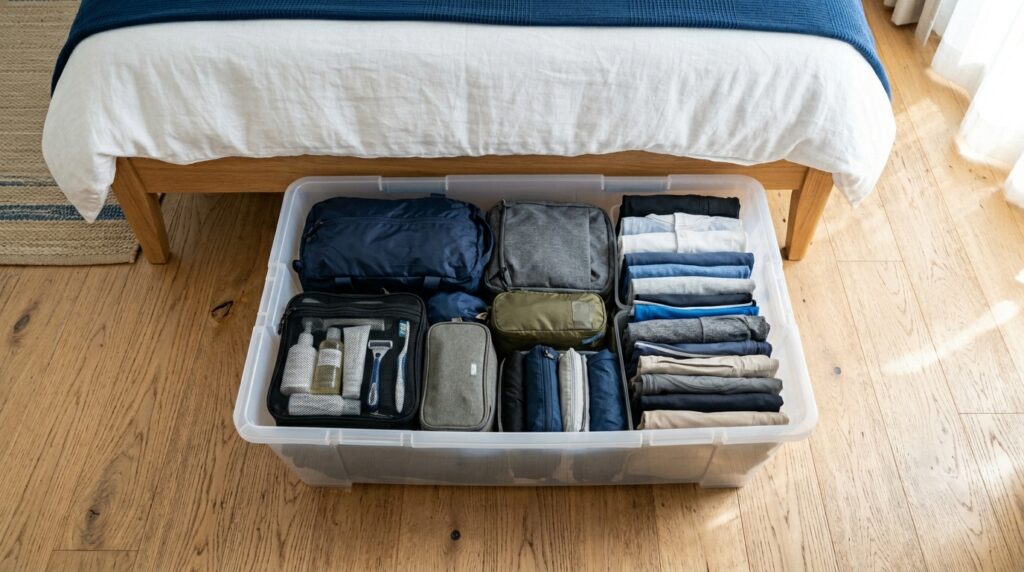
This is one of those DIY under bed storage ideas that solves a very specific real-life problem: travel items that always seem to get scattered right before a trip.
Instead of storing bags, documents, chargers, and travel essentials in different places, they are grouped into a single ready-to-go system under the bed. This reduces last-minute stress and prevents forgetting important items like passports or adapters.
Best use: travel-ready storage kits for frequent or occasional trips
24. Memory Box Storage For Keepsakes And Documents
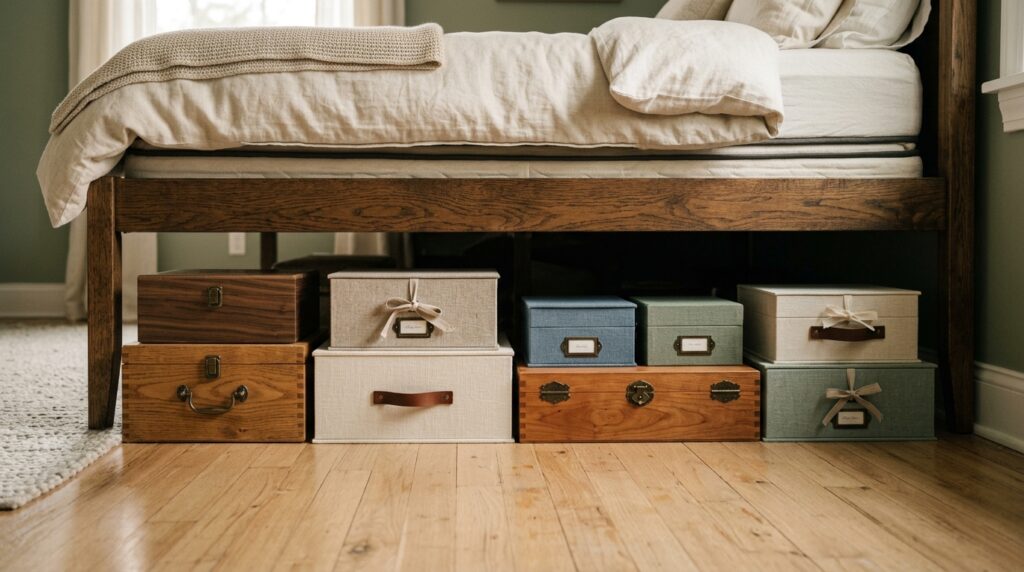
Not everything under the bed is about utility, some of it is about preservation. A structured memory box system keeps sentimental items, important documents, and personal keepsakes safely stored but still accessible.
Unlike random storage, this approach gives emotional items a defined place, preventing them from being mixed with everyday clutter or misplaced over time.
Best use: keepsakes, certificates, letters, and personal archives
25. Capsule Wardrobe Rotation System Under The Bed
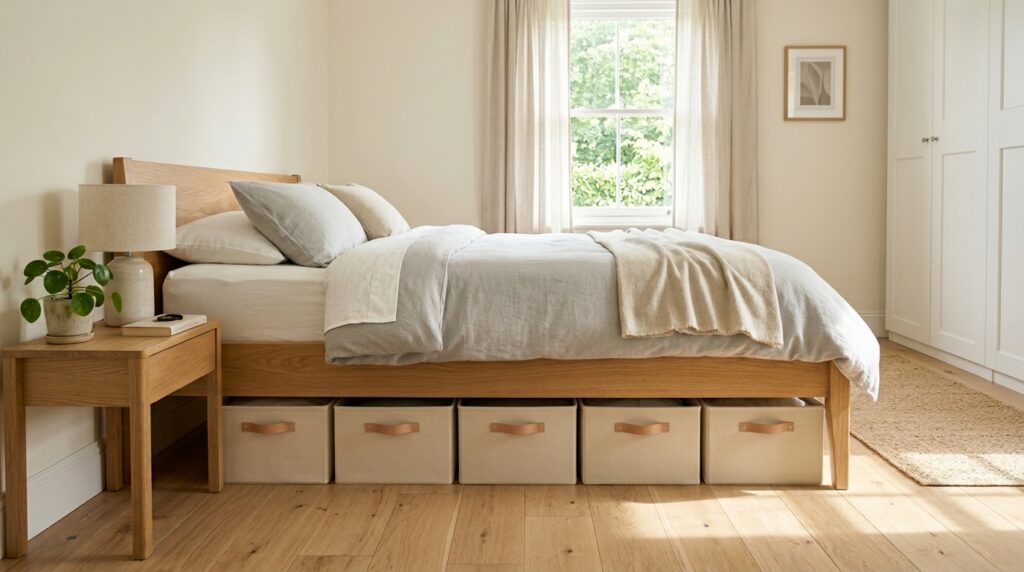
This is one of the more lifestyle-focused DIY under bed storage ideas, where clothing is rotated seasonally instead of overcrowding a wardrobe year-round.
Items are grouped by season or usage cycle and stored neatly under the bed, making it easier to switch wardrobes without chaos. It also helps reduce decision fatigue by keeping only current-season clothing in active use.
Best use: seasonal wardrobe rotation and simplifying daily outfit choices.
That same transformation mindset appears in 15 Thrift Store Furniture Makeovers That Look Like They Cost a Fortune, where simple items are upgraded into something far more practical and valuable.
HOW TO KEEP UNDER-BED STORAGE CLEAN & FUNCTIONAL
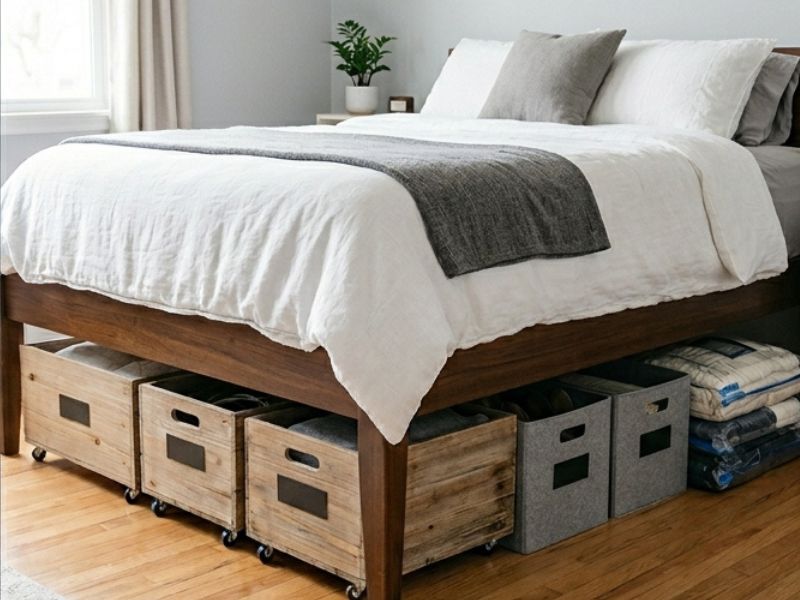
Under-bed storage only worksfor a long while when it is treated like a system, not a dumping zone. Even well-built setups lose efficiency if they are not maintained over time.
Key Maintenance Rules
- Rotate stored items every 3–6 months so the space doesn’t become forgotten storage
- Avoid overpacking containers, as this makes access difficult and leads to damage over time
- Use dust-proof covers or sealed boxes to protect items from buildup and moisture
- Label everything clearly so you can identify contents without opening multiple boxes
- In humid climates, allow airflow where possible or use moisture-absorbing packs to prevent dampness
CONCLUSION
Under-bed storage isn’t really about decluttering, it’s about stopping your bedroom from quietly collecting the things you keep postponing.
When that space is finally organized with intentional DIY under bed storage ideas, the room starts to feel lighter, calmer, and easier to actually live in.
If you’re ready to fix that hidden mess zone, start with one simple idea and build from there.