
This post contains affiliate links. This means I may earn a small commission if you purchase through my links at no extra cost to you.
You know that cupboard where you keep old jeans, pretty calendar pages and fabric scraps because they feel too useful to throw away? This is their moment.
These recycled crafts for seniors turn those forgotten materials into things someone would genuinely use or proudly display. An old necktie becomes an eyeglass case.
Wallpaper samples become a beautiful photo display. Even a lonely drawer knob gets a second life holding a favourite family picture.
And honestly? That is the best part. Nothing here has to look like it came from the recycling pile.
With coordinated colours, simple finishes and a little preparation from staff, residents can focus on the enjoyable parts choosing patterns, arranging pieces and deciding where the finished project will go. No complicated instructions. No pressure to make everything perfect.
Just twenty thoughtful ways to take something familiar and see what else it could become. Sometimes it only takes a little imagination to realize an old object is not finished yet.
If fabric is doing most of the work, this guide to no-sew fabric options for DIY projects will help you choose finishes that hold without turning every session into a sewing lesson.
What Makes a Recycled Craft Look Intentional?

The material is rarely the problem. The finish is.
Cardboard can look like leather. Old paper can look like handmade stationery. Discontinued upholstery samples already have the colour, weight and texture of expensive home décor.
The best recycled crafts for seniors hide the material’s first identity and give it a convincing second one.
Cover Every Clue
No barcodes, no nutrition labels. No bright juice-carton lettering peeking around the back.
If a box is becoming a bedside tray, cover every visible surface and edge. That one decision separates “I made this from rubbish” from “Where did you get that?”
Limit the Colour Palette
Choose two or three colours and stop. Navy, cream and tan. Burgundy, blush and gold. Rust, brown and oatmeal.
Random scraps tell twenty different stories at once. A controlled palette makes unrelated materials look as if they were always meant to meet.
Give the Finished Piece a Real Job
Useful crafts earn their place. An organizer holds glasses. A charging dock controls a loose cable. A photo display keeps familiar faces in view.
That practical quality is one reason easy senior summer crafts work so well. Residents do not just finish an activity. They leave with something worth keeping.
Prepare the Frustrating Parts
Activity directors can cut leather, smooth CD pieces, prepare wire and create structural supports before residents arrive. Removing a barrier is not taking over the craft.
The creative part still belongs to the resident: choosing the necktie, placing the photograph, arranging the jewellery or deciding which wallpaper looks right.
For more adaptations, these crafts for seniors with arthritis show how larger pieces and prepared materials can protect sore hands without making the finished project feel simplified.
Recycled Fabric and Clothing Crafts
1. Denim-Pocket Armchair Organizer

Old jeans are already halfway to becoming good storage. They are one of the most convincing materials for recycled crafts for seniors because denim somehow looks better after it has lived a little.
This recycled craft for seniors becomes a wide fabric panel that sits over an armchair and holds glasses, tissues, a television remote or a puzzle book.
Matching denim pockets placed in straight rows keep the design calm, while a neutral canvas or linen backing makes it look more like home décor than a school project.
It is especially useful for a resident who regularly misplaces small essentials. Add a large fabric initial if the organizer will be used in a shared room.
Make it look intentional: Use denim in one wash and keep the pocket spacing even.
Best suited for: Residents who enjoy practical crafts and making simple decorative choices.
2. Necktie Eyeglass Case
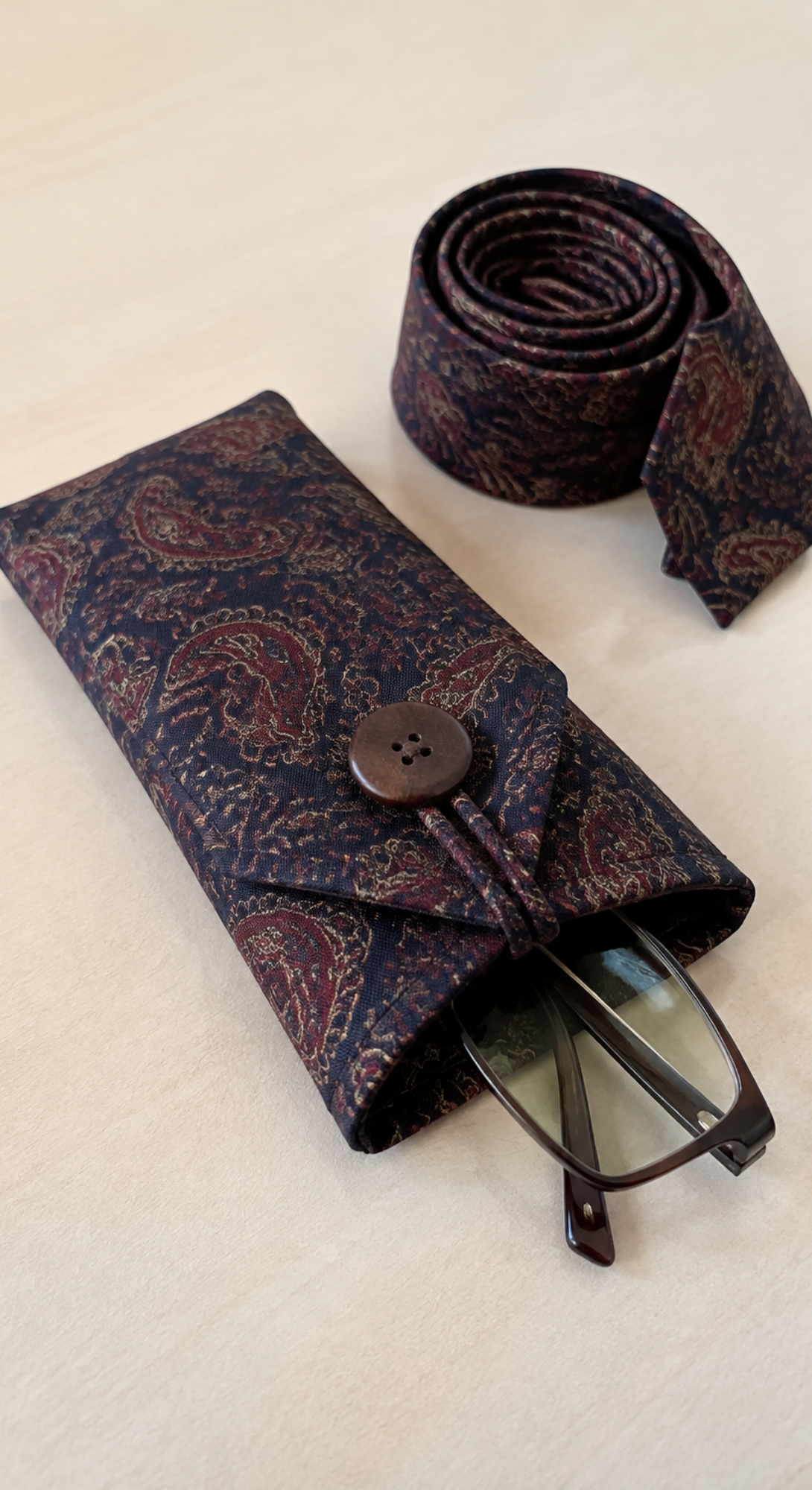
A necktie carries history before anyone touches it. Among recycled crafts for seniors, this one arrives with memories already stitched into it: workdays, Sunday mornings and weddings.
The wide end of an old tie becomes a soft case for reading glasses, with a large button adding a satisfying finish. Traditional stripes, paisley, deep burgundy and navy tend to look especially polished.
This is one of the lightest recycled crafts for seniors, and the large fabric section is easier to handle than tiny embellishments. It can also become a meaningful keepsake when the tie belonged to someone the resident loved.
Make it look intentional: Let the tie pattern do the decorating. It does not need five extra things glued to it.
Conversation spark: Who wore ties in your family, and where were they always rushing off to?
3. Vintage Jewellery Velvet Artwork

One lonely earring looks lost in a drawer. In the right recycled crafts for seniors, it can sit on velvet beside an old brooch and suddenly look curated.
Broken or unmatched jewellery can form a flower, heart, monogram or loose abstract design on a velvet-covered board. The dark background matters.
Black, burgundy, navy or forest green makes inexpensive stones catch the light and gives the piece the feeling of a vintage display case.
Residents can choose pieces based on colour, memory or simple attraction. That open-ended arrangement makes it adaptable for different abilities, much like the larger options in these bead crafts for seniors.
Make it look intentional: Select one shape and leave breathing room around it.
Safety note: Staff should remove sharp pins, broken clasps and exposed wire before the session.
4. Sweater-Sleeve Door Draft Stopper

A stretched sleeve may be finished as clothing, but it still has enough warmth left for one more job.
Filled and closed, a clean sweater sleeve becomes a soft draft stopper for the bottom of a door. Neutral cable knit, charcoal wool and muted stripes look particularly cosy, while two or three large fabric buttons can finish the ends without making it busy.
Soft textile activities are often more comfortable for residents who prefer tactile participation. The finished object is useful too, which changes the whole mood. It is not a decoration someone has to find room for. It solves a problem.
Make it look intentional: Choose a sweater with a clear knit texture and keep the embellishments oversized but minimal.
Best suited for: Tactile participation, low vision and residents who prefer functional projects.
5. Upholstery-Sample Table Runner

Furniture showrooms discontinue fabric collections all the time, and those sample books are full of small pieces that already look expensive.
That built-in quality makes them perfect for recycled crafts for seniors that need to feel grown-up.
Coordinating samples can become a long geometric table runner in rust, cream and brown or blue, grey and taupe. Because upholstery fabric has weight, the runner sits properly instead of curling at every corner.
This is one of those upcycled crafts for seniors that works beautifully as a group piece. One resident can choose the colour order, another can arrange the blocks and someone else can decide which pattern belongs in the centre.
Make it look intentional: Stay within one showroom collection or one colour family.
Best suited for: Collaborative sessions and residents who enjoy fabric, pattern and home décor.
6. Woven Lampshade-Frame Memory Display
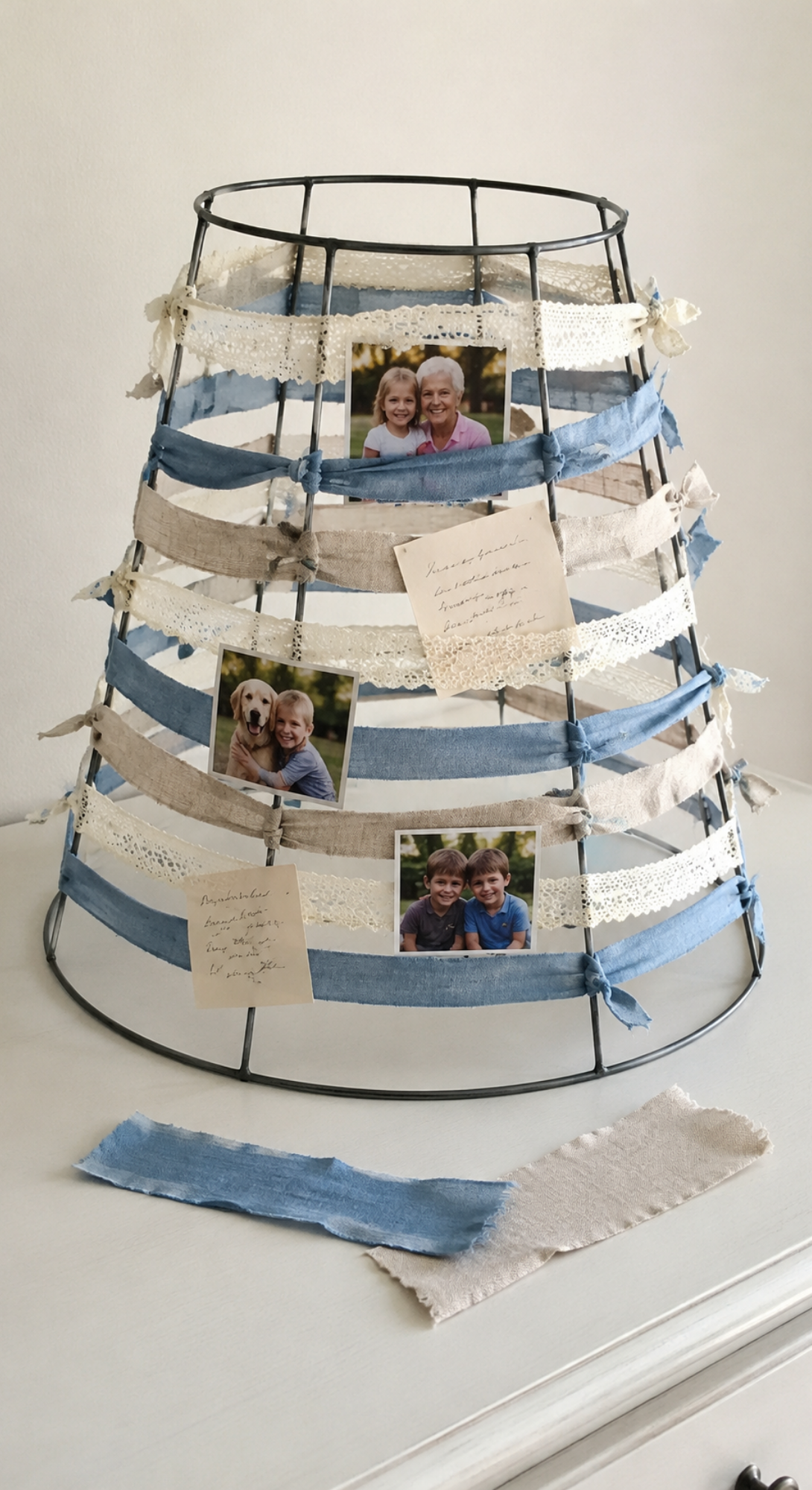
An old lampshade frame has a surprisingly beautiful shape once the torn covering comes off. Those bare lines give photographs and messages somewhere to live.
Wide ribbons, lace and fabric strips woven around the frame create a sculptural tabletop display. Small photographs or notes can sit between the bands, changing throughout the year as family members visit or new messages arrive.
The limited palette is what keeps it from looking chaotic. Cream lace, faded blue cotton and natural linen feel calm. Bright red ribbon, purple satin, green yarn and floral scraps all together do not.
The photograph element connects naturally with memory jar crafts for seniors, where the object matters because of the stories it holds.
Safety note: Use only a disconnected, bare frame. It must never be returned to a working lamp.
Recycled Paper and Cardboard Crafts
7. Faux-Leather Catchall Tray

This starts with cereal-box cardboard and ends looking like the small valet trays sold beside men’s wallets and watches.
Covered completely in faux leather, linen or textured wallpaper, the shallow tray can hold keys, hearing-aid cases, coins or bedside essentials.
The key word is completely. One exposed cereal-box edge will tell on the whole project.
The finished tray works well for men and women, especially when residents can choose between restrained finishes.
For more adult projects that avoid a childish look, crafts for men over 50 offers useful direction.
Make it look intentional: Add one neat trim line around the edge and leave the centre plain.
Best suited for: Residents who want something practical, compact and easy to personalize.
8. Wallpaper-Sample Accordion Photo Display

Wallpaper books are almost unfairly beautiful for something shops eventually discard. For polished recycled crafts for seniors, their coordinated patterns and heavy paper remove half the design work.
Joined as a folding tabletop screen, the samples become a display for family photographs. One panel might hold a wedding picture, another a childhood home and another the newest great-grandchild making a face at the camera.
This is one of the strongest recycled crafts for seniors because the decorative choices are large and meaningful. Nobody needs to create perfect artwork. The photographs already carry the emotion.
Make it look intentional: Choose wallpapers that belong to the same collection and print photographs in one consistent size.
Conversation spark: Which photograph deserves the centre panel?
9. Old-Calendar Envelope Set

Last year’s calendar may be useless for dates, but its artwork still has somewhere to go.
Botanical paintings, landscapes, birds and fine-art prints become decorative envelopes for letters, birthday cards, photographs or small keepsakes.
Grouping the finished envelopes by theme makes them feel like a stationery set rather than folded scraps.
Large calendar images provide immediate colour without asking residents to paint tiny details.
That makes this a good choice for mixed-ability groups and anyone who enjoys paper crafts but tires easily.
Make it look intentional: Choose images from one calendar and pair them with plain cream labels.
Best suited for: Limited dexterity, letter writers and residents making small gifts.
10. Fabric-Covered Remote-Control Caddy
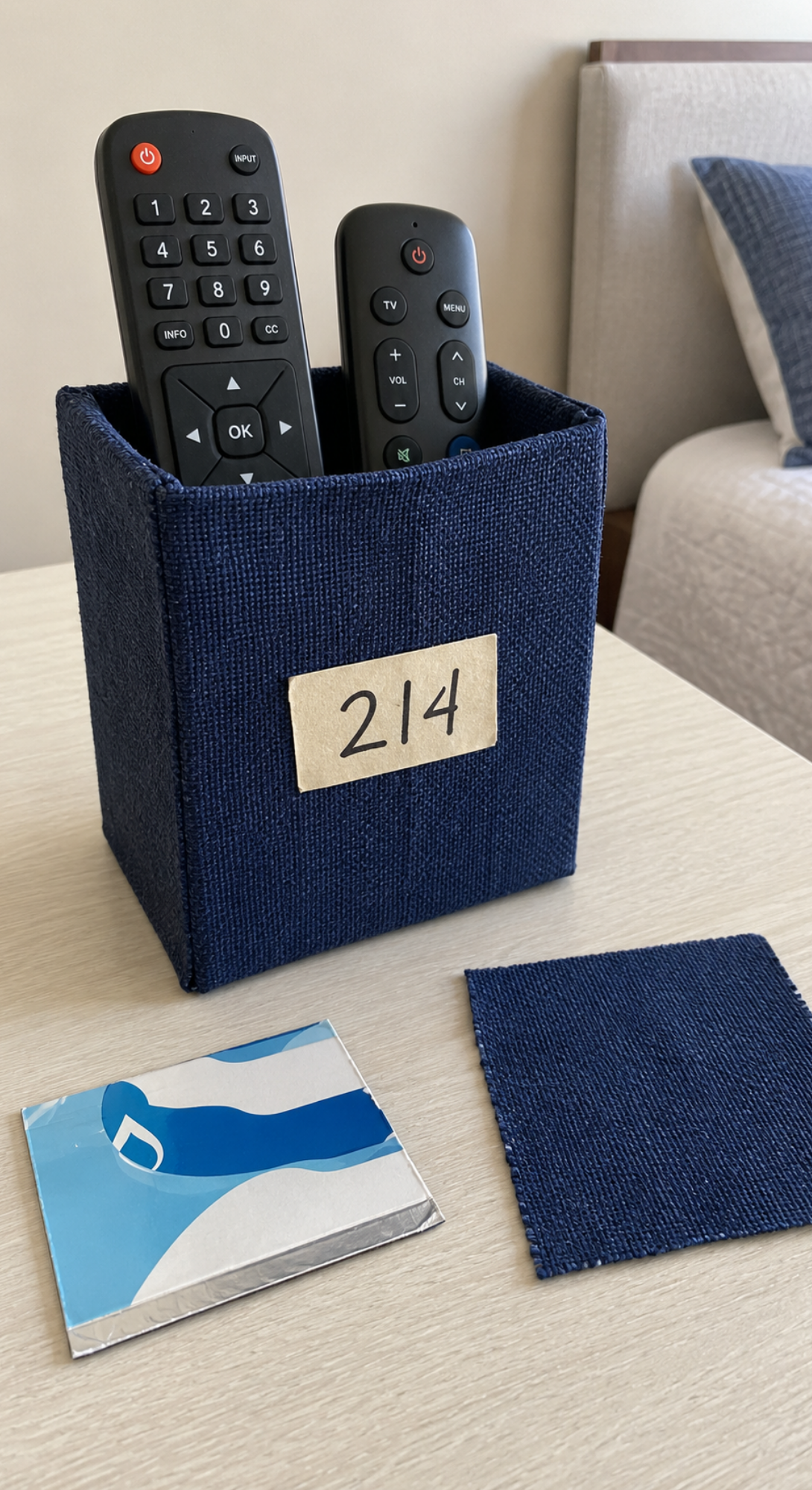
A clean milk or juice carton has exactly the right proportions for a remote-control caddy. Unfortunately, it also has fruit pictures, nutritional information and a very loud logo.
Once every printed surface disappears beneath linen, upholstery fabric or sophisticated wallpaper, the carton reads as a small storage box.
Add a discreet label for the resident’s name or room number, and it becomes even more useful in a shared space.
Good recycled crafts for seniors should solve small daily annoyances. The remote finally has a proper home, and nobody has to dig through the chair cushions during the best part of the programme.
Make it look intentional: Cover the inside rim as carefully as the outside.
Get Your Free 44-Page Memory Book for Seniors
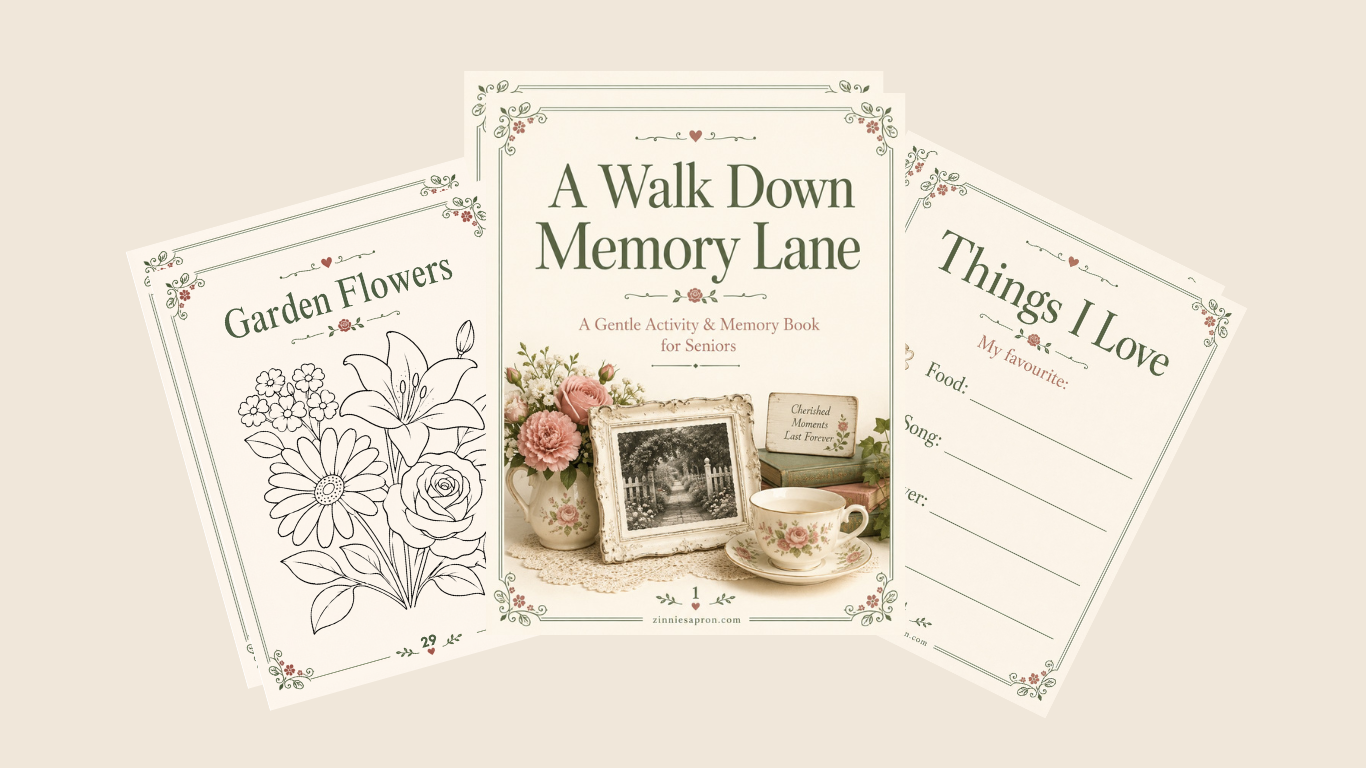
A gentle activity and memory book designed specifically for seniors. Print it today and use it in your next session.
11. Rolled-Magazine Table Basket

Magazine pages can become surprisingly sturdy when they are turned into prepared paper reeds. These recycled crafts for seniors have colour and movement without looking like a pile of advertisements.
The trick is sorting by colour first. Blues and greens create a cool woven effect. Cream, black and gold feel more formal. Random pages can work, but they produce a much busier result.
Staff can prepare the tight paper reeds before residents arrive, leaving the more satisfying arrangement and shaping choices for the session.
This follows the same principle used in clothespin crafts for seniors: remove the fiddly barrier and keep the part that feels good to complete.
Make it look intentional: Repeat colours in a deliberate sequence.
Finished use: Letters, yarn, puzzle books or lightweight craft supplies.
12. Book-Page Botanical Napkin Rings

Damaged book pages have a soft cream colour that new craft paper tries very hard to imitate.
Wrapped around wide cardboard rings and paired with botanical prints, natural twine or one wooden bead, they become quiet, vintage-style table accessories.
The restraint matters here. Bright paint and glitter would fight the material instead of helping it.
Use only books that are genuinely damaged, incomplete and unsuitable for reading or donation. A readable book has another future already. It does not need to become a napkin ring.
For the right adhesive on layered paper and cardboard, see what type of glue to use for paper crafts.
Make it look intentional: Keep the paper cream and the decoration natural.
13. Old-Book Bedside Charging Dock

Charging cables have a special talent for sliding behind furniture the moment someone needs them. A damaged hardcover book can give that cable a fixed, handsome place beside the bed.
The finished dock looks less like a gadget and more like a personalised bedside object, especially when the cover is dressed in linen or decorative paper. A simple name label can replace the original title.
This is one of the more structured recycled crafts for seniors, so staff must prepare the hidden cable route beforehand. Residents can take ownership of the cover, label and decorative direction without handling cutting tools.
Safety note: The charger and device must remain ventilated. Nothing should cover a phone or power block that becomes warm.
Make it look intentional: Use a plain spine and one personalised label.
14. Handmade Paper-Pulp Trinket Bowl

Waste paper and cardboard egg cartons can become a lightweight bowl with the imperfect surface of handmade pottery.
That texture is the whole point. Finished in matte terracotta, chalky cream, charcoal or stone grey, the bowl looks organic rather than recycled. A slightly irregular rim makes it more convincing, not less.
Staff can prepare the pulp before the activity, particularly for residents who would find wet paper processing tiring. The resident still chooses the form, colour and final personality of the piece.
Make it look intentional: Use one matte colour and skip the glossy rainbow decoration.
Finished use: Wrapped sweets, fabric sachets or lightweight keepsakes—not food, water or heavy objects.
15. Wallpaper-Lined Drawer Dividers

Delivery boxes are not glamorous. An organized drawer lined in a soft botanical wallpaper absolutely can be.
Covered cardboard compartments create proper places for socks, letters, personal-care items or craft supplies.
Using one wallpaper throughout gives the drawer a custom-fitted look, while two patterns from the same collection can add interest without visual noise.
This project is especially satisfying because the improvement is immediate. The drawer changes from a muddle into something calm and usable in one session.
Make it look intentional: Cover the top edges and inside walls so no delivery-box printing remains visible.
Best suited for: Independent residents, practical organizers and anyone settling into a new room.
Recycled Household Objects Turned Into Décor
16. Mosaic Tray Made From Old CDs
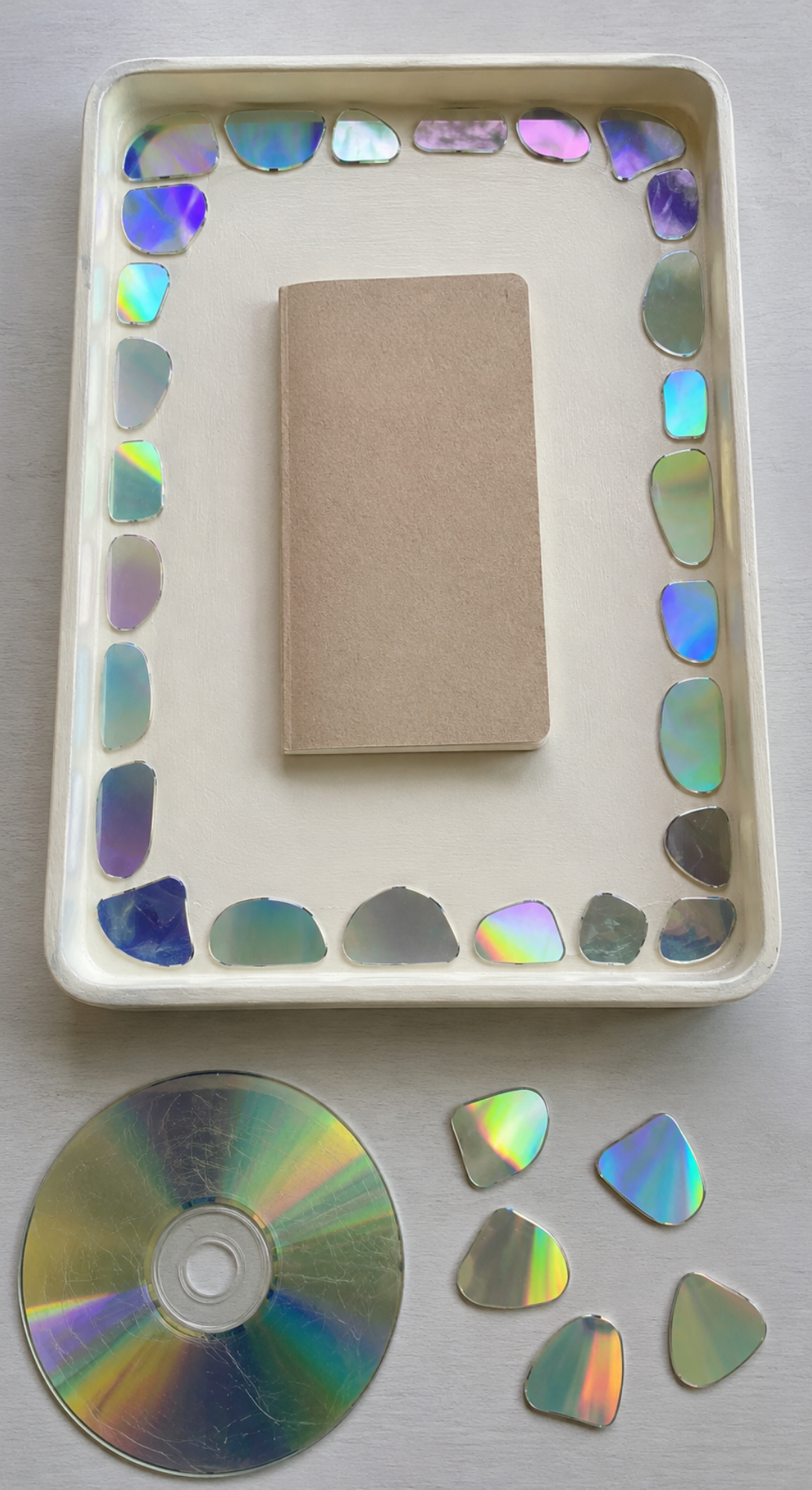
Scratched CDs may no longer play, but they can still catch light like mother-of-pearl.
Prepared pieces arranged around the border of a plain wooden tray create a reflective mosaic that changes colour as someone walks past it.
Keeping the centre clear gives the design somewhere to rest and leaves the tray usable for lightweight items.
This recycled craft for seniors has strong visual impact without requiring detailed painting. Residents can work with large, safely prepared pieces and choose the spacing or colour effect they prefer.
Make it look intentional: Keep the mosaic on the rim and use one neutral colour for the tray.
Safety note: Staff must cut, smooth and inspect every CD piece. Residents should never handle sharp fragments.
17. Leather-Belt Napkin Rings

Old leather rarely looks ruined. It looks worn in.
Short, prepared belt sections can become rustic napkin rings using existing holes, stitching, snaps or embossed details.
Rings made from similar shades of brown or black look like a coordinated tableware set, even when every piece came from a different belt.
Leather also offers a strong, familiar texture that may appeal to residents who do not enjoy delicate paper crafts. Add a small initial stamp or leave the surface alone. Both can work.
Make it look intentional: Match the leather tones and keep the original stitching visible.
Safety note: Staff should cut and prepare every section before the session.
18. Chipped-Teacup Pincushion

A mismatched teacup already has more personality than most new craft containers. Add a neat fabric cushion and suddenly it belongs on a sewing table in a cottage.
Floral china works best with plain velvet, linen or cotton. If the cup pattern is busy, the cushion should be quiet. Lace, ribbon or one decorative button around the rim is enough.
This project can bring out stories about wedding china, afternoon tea and the cupboard nobody was allowed to touch as a child.
Those conversations are part of what makes September crafts for seniors feel connected to real memory rather than a seasonal checklist.
Safety note: Use only professionally smoothed cosmetic chips. Cracked, sharp or unstable china belongs in the bin.
19. Drawer-Knob Photograph Holders
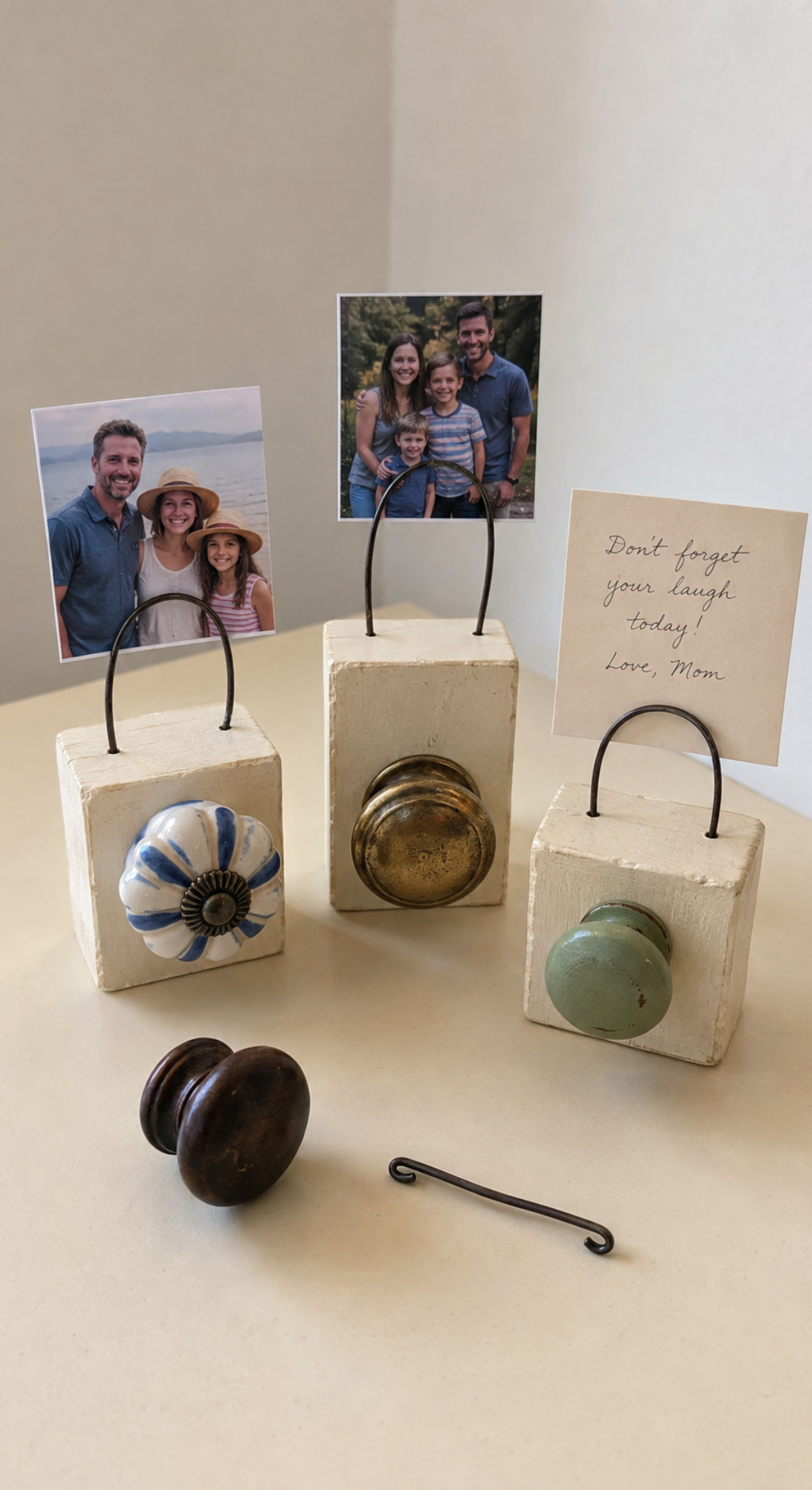
A drawer knob without a drawer looks like spare hardware. Mounted on a small block with a neat photograph loop, it becomes a tiny sculpture.
Glass, ceramic, painted wood and old brass knobs each bring a different mood. Residents can choose one that reminds them of a family dresser, kitchen cabinet or bedroom set they remember.
The finished holder is small enough for a bedside table and useful for a photograph, name card or short message.
It could also become part of a visiting-day activity alongside these Grandparents Day ideas for nursing homes.
Make it look intentional: Keep the wooden blocks and wire loops uniform, then let each knob be different.
20. Eggshell Mosaic Art Tile

Painted eggshell has the fractured surface of old ceramic when the colours are controlled.
Soft blue and white can resemble porcelain. Terracotta, cream and brown feel earthy. Black, white and gold create something much more modern.
The palette is what stops the finished tile from looking like breakfast leftovers.
Prepared shell pieces can be arranged on a sturdy tile or wooden plaque as a border, monogram or abstract design.
For residents with low vision, stronger contrast and larger fragments can make participation easier; these crafts for seniors with low vision offer more useful adaptations.
Residents who respond to familiar natural shapes may also enjoy the colour and recognition built into these bird crafts for seniors.
Safety note: Eggshells must be washed, sanitized and completely dried before the session.
Choosing the Right Recycled Craft for Each Resident
Not every good project is good for every person. Choose recycled crafts for seniors based on the hands, attention span and interests at the table—not the photograph on Pinterest.
| Resident’s needs or interests | Crafts to consider |
|---|---|
| Practical projects | Armchair organizer, catchall tray, remote caddy, drawer dividers |
| Family photographs | Wallpaper display, drawer-knob holders, memory display |
| Fabric and texture | Denim organizer, necktie case, table runner, draft stopper |
| Limited dexterity | Calendar envelopes, photo display, fabric-covered caddy |
| Low vision | Velvet jewellery art, upholstery runner, sweater draft stopper |
| Independent residents | Paper basket, charging dock, napkin rings |
| Group activity | Jewellery artwork, memory display, table runner |
| Giftable pieces | Eyeglass case, photo display, trinket bowl, photo holders |
The National Institute on Aging explains that meaningful activities and social engagement can support well-being as people age. That does not mean every craft needs to become a test of memory or hand strength.
Sometimes choosing between navy and burgundy is enough. Sometimes placing one photograph is the whole contribution. Participation still counts when the activity bends to fit the person.
The Arthritis Foundation recommends reducing joint strain and using tools that are easier to grip. Large materials, glue dots, prepared components and shorter sessions can help without changing the character of the finished piece.
For residents living with dementia, August crafts for seniors in assisted living includes more sensory-first ideas that can be adapted to different levels of participation.
How to Stop Recycled Crafts From Looking Cheap
The difference is rarely glitter. Usually, it is editing.
Hide Every Printed Surface
If packaging is providing the structure, it should not remain part of the design. Cover the inside rim, base and exposed edges.
Match the Finishes
Choose brass or silver, not both. Choose warm wood or pale wood, not every offcut available. Repeat the same ribbon, border or backing so the pieces feel connected.
Stop Decorating Earlier
One button can finish a project. Eleven unrelated buttons can bury it.
A polished recycled craft leaves some surfaces alone. The eye needs a quiet place to land.
Show the Object Doing Its Job
Put glasses inside the necktie case. Add a real photograph to the holder. Place the remote in the caddy.
The project looks finished when its purpose is obvious. That same principle appears throughout these July crafts for seniors in assisted living: useful objects feel more complete when residents can immediately see where they belong.
Protect the Right Surfaces
Paper bowls, jewellery artwork and decorative tiles may need an appropriate finish, but not every project needs a thick glossy coat.
This guide to the best sealant for crafts can help match the finish to paper, fabric, wood or textured materials.
Safety Matters More Than Saving the Material

Reusing something is never worth an injury.
Reject anything mouldy, strongly scented, greasy, structurally cracked or impossible to clean. Wash fabrics, wipe hardware and sanitize eggshells before they enter the activity room.
The Environmental Protection Agency encourages reuse, but the material still needs to be suitable for its new purpose.
Staff should handle:
- CD and leather cutting
- Sharp jewellery findings
- Wire preparation
- Cable channels
- Hard cardboard trimming
- Structural gluing
- Damaged china inspection
Charging docks must not trap heat. A bare lampshade frame must never return to a working lamp. Decorative cork, paper and cardboard should not be described as heat-safe unless every component has been rated for that use.
For residents with dementia, the Alzheimer’s Association recommends matching activities to the person’s abilities and interests. Keep the table calm, demonstrate choices clearly and do not correct harmless differences in the final result.
The purpose is not perfect output.
It is a safe hour in which someone still gets to choose, arrange, remember and make something worth keeping.
People Also Ask About Recycled Crafts for Seniors
What are some good crafts for seniors?
Useful, easy-to-handle projects are often the strongest choices, including fabric organizers, photo displays, greeting cards, trinket bowls and drawer dividers.
The best craft matches the senior’s interests and abilities instead of treating age as the only selection criterion.
What are examples of recycled crafts?
Examples include calendar envelopes, magazine baskets, denim organizers, wallpaper photo displays and decorative bowls made from waste paper. I
n each case, an unwanted material receives a new function instead of being used only as decoration.
What can I make out of recycled materials?
You can create storage trays, eyeglass cases, table runners, photo holders, charging docks, napkin rings and memory displays. Cardboard, old clothing, wallpaper samples, magazines and salvaged hardware are especially versatile.
How does crafting help the elderly?
Crafting can support social connection, creative choice, gentle hand movement and a sense of accomplishment. It works best when the activity is enjoyable and adaptable, not presented as an exercise residents must complete correctly.
What crafts are good for people with dementia?
Familiar, sensory projects with simple choices can work well, including fabric collage, photograph displays and large-piece arrangements. Avoid sharp materials, crowded tables and projects that depend on remembering a long sequence.
The Material Is Finished With Its First Job. That’s All.
An old necktie can still carry a memory. A drawer knob can still belong beside a family photograph. Wallpaper discontinued years ago can become the background for faces that matter now.
That is the good part of recycled crafts for seniors.
It is not about proving how little money was spent. It is about looking at an object everyone else dismissed and giving it a second life that feels useful, beautiful and completely intentional.
Save this post to your Recycled Crafts or Senior Activities Pinterest board. Then send it to the activity director with a cupboard full of wallpaper books, lonely buttons and fabric labelled “maybe someday.”
Someday has twenty good options now.