This post contains affiliate links. This means I may earn a small commission if you purchase through my links at no extra cost to you.
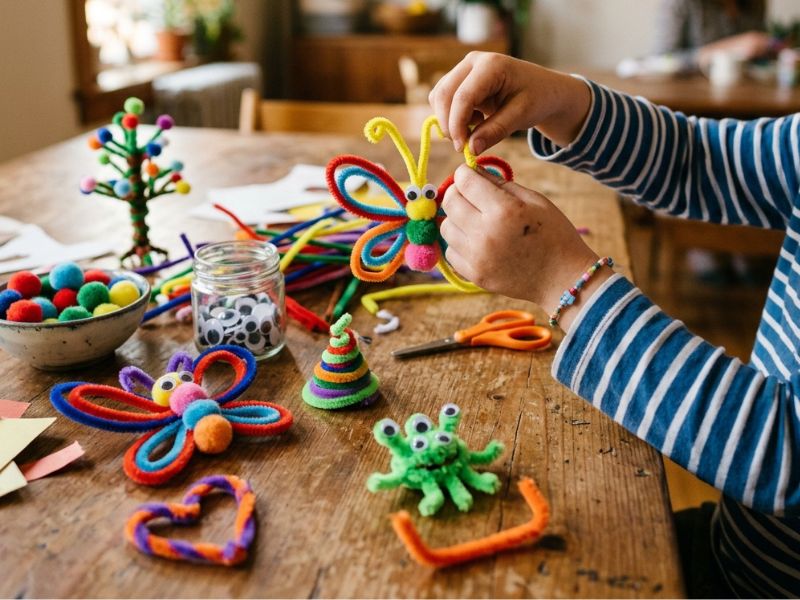
Need easy, mess-free activities that actually hold kids’ attention? Pipe cleaner crafts for kids inspire creativity, learning, and hands-on fun.
As a parent or carer, if you’ve ever found yourself searching for a simple activity that keeps a child engaged without requiring a long supply list or a complicated setup, pipe cleaners might be exactly what you need.
These colorful, fuzzy craft sticks have been a favorite in classrooms, homes, and art centers for decades, and for good reason. Also, they are inexpensive, easy to use, and surprisingly versatile.
What makes pipe cleaners stand out from many craft kits is the freedom they offer. Unlike kits that tell a child exactly what to make and how to make it, pipe cleaners encourage experimentation. A single stem can become a butterfly, a flower, a bracelet, a silly monster, or something entirely original.
There is no single right outcome, which gives children room to explore their own ideas and make creative decisions along the way.
The simple act of bending, twisting, looping, and shaping pipe cleaners does more than create cute crafts. These hands-on movements help strengthen fine motor skills while encouraging problem-solving and imaginative thinking.
When a creation doesn’t turn out as planned, a child naturally learns to adjust, redesign, and try again. Those small moments of experimentation are often where creativity grows the most.
In this guide, you’ll discover easy pipe cleaner crafts that are fun to make and genuinely beneficial for developing creative skills.
Whether you’re looking for a quick rainy-day activity, a classroom craft, or a screen-free project that sparks imagination, these ideas will give you plenty of inspiration while keeping the process enjoyable and stress-free.
Looking for a meaningful Sunday school activity that actually keeps kids engaged? Try 15 Noah’s Ark Crafts for Kids Your Sunday School Class Will Actually Be Excited to Make for hands-on Bible fun.
Before You Start: Simple Tips That Make Pipe Cleaner Crafts Easier for Kids
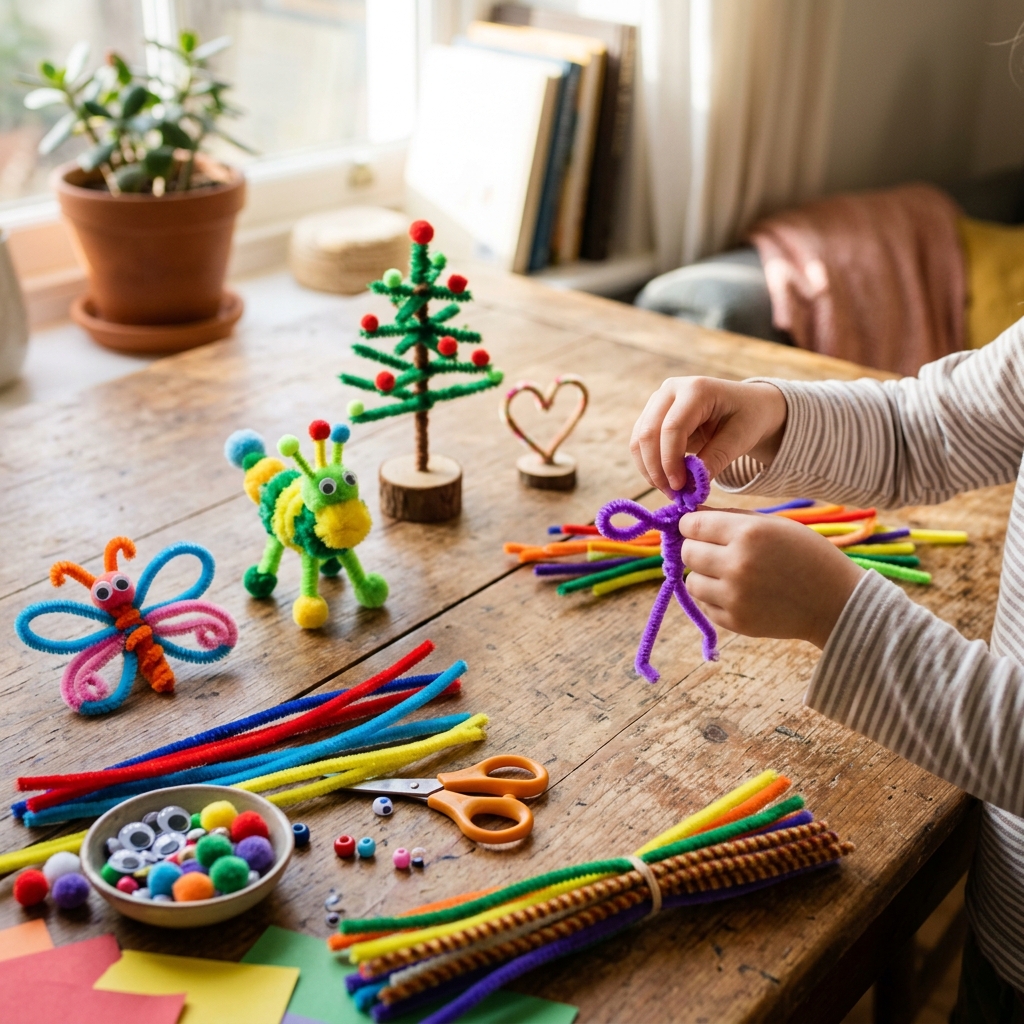
A few small adjustments before you begin can make pipe cleaner crafts much more enjoyable and less frustrating.
While pipe cleaners are one of the easiest craft materials to work with, choosing the right supplies and setting up the activity thoughtfully can help a child stay engaged, feel more confident, and enjoy the creative process from start to finish.
1. Choose the Right Thickness and Texture
Not all pipe cleaners are exactly the same. Standard chenille stems are the most common type and are widely used for craft projects. They are flexible enough to bend into shapes but sturdy enough to hold their form once twisted.
Jumbo pipe cleaners, on the other hand, are thicker and easier for small hands to grip. If you’re crafting with a younger child who is still developing fine motor skills, jumbo stems can make the experience much easier. The larger size requires less precision when bending and twisting, which can help reduce frustration.
Texture matters too. Some pipe cleaners have a fuller, fluffier coating, while others are more sparsely covered. Fuller chenille stems tend to be easier to hold and can make finished crafts look more colorful and appealing.
Before starting a project, take a quick look at the child’s age and skill level. A preschooler may find thick, soft pipe cleaners easier to manage, while an older child may enjoy working with standard stems for more detailed creations.
2. Create a “Build First, Decorate Later” Mindset
One common reason children become frustrated during crafts is that they focus on decorations before the basic structure is complete. They may add beads, googly eyes, stickers, or other embellishments too early, only to discover that the craft falls apart or needs adjustments later.
Encouraging a build first, decorate later approach can make the process much smoother. Start by creating the main shape or framework of the project. Once the structure is secure and the child is happy with how it looks, move on to decorative details.
Want a sweet seasonal project that feels fun and sensory-rich? Check out 19 Sweet Ice Cream Art Projects for Kids That Scream Summer Fun for colorful creative ideas.
3. Keep Extra Colors Within Reach
Color may seem like a small detail, but it plays a surprisingly important role in creative thinking. When children have access to a variety of colors, they naturally begin making choices, experimenting with combinations, and expressing their own ideas.
Instead of handing out only the colors needed for a specific craft, consider placing several extra colors nearby.
A child who starts making a green caterpillar might suddenly decide it should have rainbow stripes or bright purple antennae. Those creative decisions are part of what makes crafting valuable.
Having additional colors available also encourages problem-solving and flexibility. When a planned color isn’t available, children learn to adapt and find alternative solutions.
Planning a beach-inspired activity that feels calm and imaginative? Explore 19 Beautiful Seashell Crafts for Big Kids That Feel Beachy and Creative for ocean-themed inspiration.
Easy Pipe Cleaner Crafts for Kids
1. Bendable Emotion Puppets
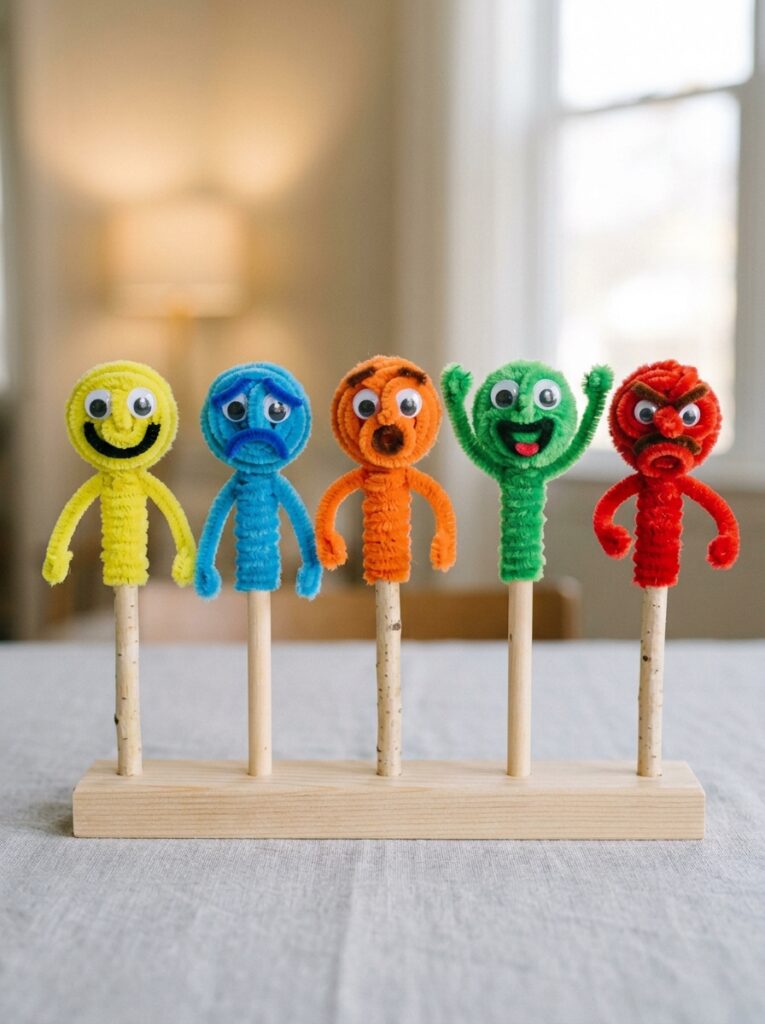
Most children’s crafts focus on creating something cute, but this activity goes a step further by encouraging emotional awareness and storytelling.
Instead of making a generic puppet, your child will create characters that show different emotions through facial expressions, body posture, and creative details.
This craft can open the door to conversations about feelings while giving children the freedom to invent personalities, stories, and imaginative scenarios. The possibilities are endless, making this one of the most creativity-focused pipe cleaner crafts for kids.
What You’ll Need
- Assorted colored pipe cleaners
- Googly eyes (optional)
- Small pom-poms
- Craft glue
- Markers
- Cardstock or construction paper
- Child-safe scissors
How to Make Bendable Emotion Puppets
- Choose a pipe cleaner color for the puppet’s body.
- Twist one pipe cleaner into a simple stick figure shape with arms, legs, and a head.
- Use additional pipe cleaners to create hair, hats, glasses, or other features.
- Add googly eyes or draw facial features on a small paper circle attached to the head.
- Decide which emotion the puppet will express.
- Adjust the mouth, eyebrows, and body posture to match that feeling.
- Create additional puppets showing different emotions and compare how they look.
Creativity Challenge
After making one emotion puppet, create three more characters showing completely different feelings. Can you make each puppet recognizable without telling anyone which emotion it represents?
What This Craft Teaches
This activity encourages children to think about how emotions are communicated through facial expressions and body language. They learn that creativity isn’t only about making something colorful, it’s also about communicating ideas and feelings.
Make It More Educational
Ask questions such as:
- How can you tell this puppet is excited?
- What changes would make it look worried instead?
- What kind of story would this character belong in?
- What might have happened just before this puppet felt this way?
These questions help develop observation skills, emotional vocabulary, and storytelling abilities while keeping the activity fun.
Why Kids Love It
Children naturally enjoy creating characters, and bendable pipe cleaner puppets can be posed in different ways long after the craft is finished. The puppet becomes both a craft project and a toy, extending playtime and encouraging imaginative thinking well beyond the crafting session.
Need festive crafts that build excitement for Independence Day? These 23 Easy 4th of July Flag Crafts for Kids to Make This Summer are perfect for patriotic creativity.
2. Build-Your-Own Fantasy Creature

Among the most imaginative pipe cleaner crafts for kids, this activity encourages inventiveness by challenging your child to create a creature that has never existed before.
Rather than copying an animal from a picture, your child becomes the designer, combining features from different animals to create something completely unique.
A fantasy creature might have butterfly wings, an elephant trunk, and a kangaroo tail, or perhaps rabbit ears, shark fins, and a turtle shell. There are no wrong answers, which makes this craft especially valuable for developing creative confidence.
What You’ll Need
- Assorted colored pipe cleaners
- Googly eyes
- Small pom-poms
- Craft glue
- Construction paper (optional)
- Markers
How to Make a Fantasy Creature
- Choose three animals to combine.
- Decide which features to borrow from each animal.
- Twist pipe cleaners together to form the creature’s body.
- Add legs, wings, tails, ears, horns, or fins.
- Attach eyes and decorative details.
- Give the creature a unique name.
Creativity Challenge
Create a creature that could survive in a place no animal currently lives, such as a candy forest, an underwater volcano, or a city in the clouds.
What This Craft Teaches
This activity develops imaginative thinking, invention, and creative problem-solving. Children learn how to combine familiar ideas to create something entirely new.
Make It More Educational
Ask your child:
- What does your creature eat?
- Where does it live?
- What special abilities does it have?
- How does it protect itself?
Why Kids Love It
Children enjoy the freedom to invent without rules. Every finished creature is completely different, making the craft feel personal and exciting.
3. Pipe Cleaner Marble Maze
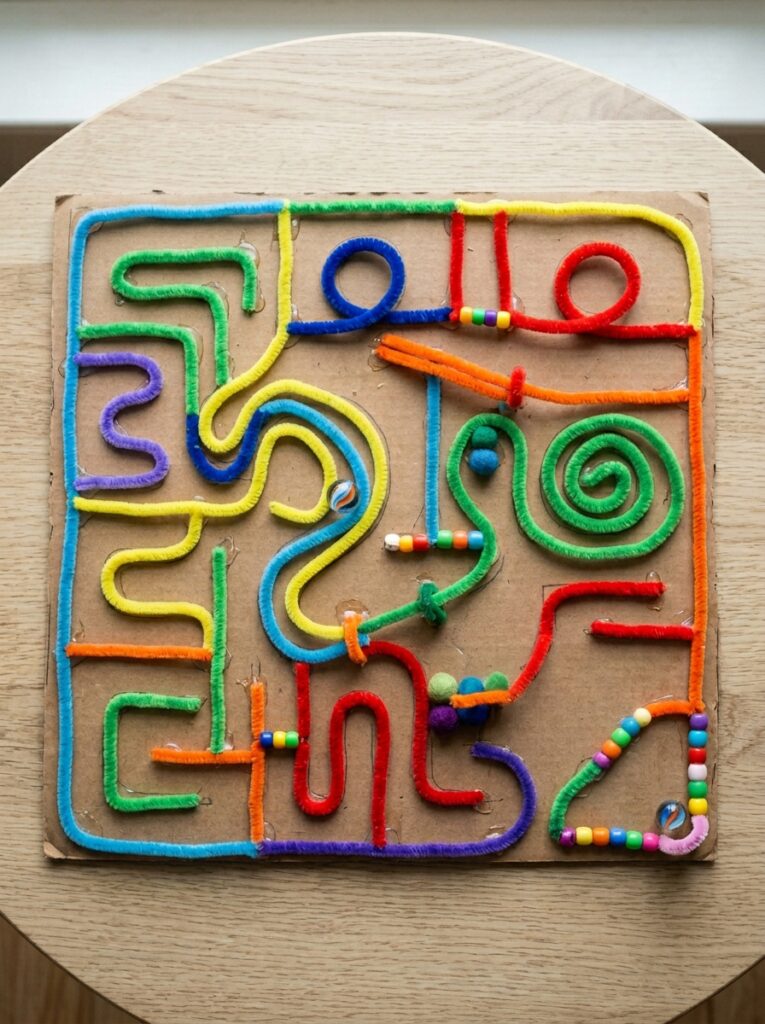
If you’re looking for pipe cleaner crafts for kids that combine creativity with hands-on problem-solving, a marble maze is an excellent choice.
Instead of simply making a decorative project, your child will design a working pathway and test whether a marble can successfully travel from start to finish.
This activity encourages experimentation because children often need to adjust and redesign sections of the maze as they discover what works and what doesn’t.
What You’ll Need
- Pipe cleaners
- Cardboard
- Tape or glue
- A marble or small ball
- Markers for decorating
How to Make a Pipe Cleaner Marble Maze
- Place a piece of cardboard on a flat surface.
- Plan a starting point and finishing point.
- Bend pipe cleaners into pathways and turns.
- Secure the pipe cleaners to the cardboard with glue or tape.
- Test the maze with a marble.
- Make adjustments where the marble gets stuck or moves too quickly.
- Decorate the board if desired.
Creativity Challenge
Add tunnels, obstacles, loops, or multiple routes that lead to different endings.
What This Craft Teaches
Children explore basic engineering concepts such as design, testing, problem-solving, and cause-and-effect relationships.
Make It More Educational
Ask questions such as:
- Which pathway is the fastest?
- Where does the marble slow down?
- How can you make the maze more challenging?
Why Kids Love It
Unlike many crafts that sit on a shelf afterward, this project becomes an interactive game that children can repeatedly improve and play with.
Want simple but fun holiday crafts using everyday materials? Try 25 Easy 4th of July Popsicle Stick Crafts for Kids That Are Fun and Festive for easy DIY ideas.
4. Storytelling Character Kit
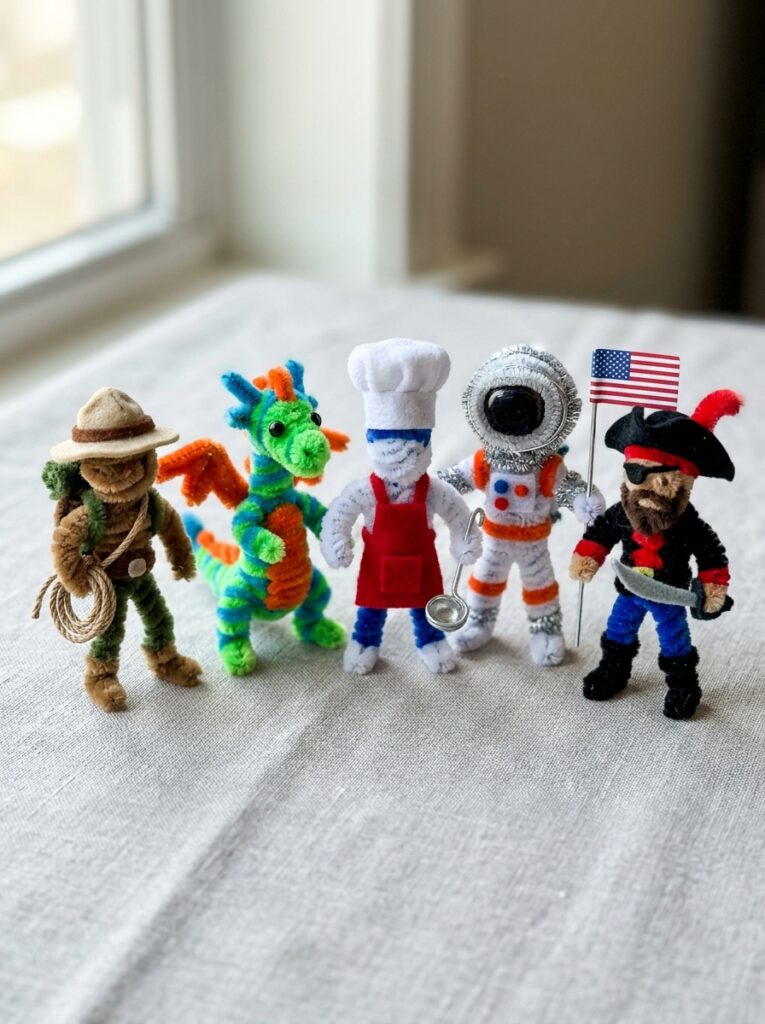
Many pipe cleaner crafts for kids focus on creating a single object, but this activity encourages children to build an entire cast of characters.
Once the characters are complete, they can be used to act out original stories, adventures, and imaginative scenes.
The characters can be anything your child dreams up, including an explorer, dragon, chef, astronaut, pirate, fairy, inventor, or superhero.
What You’ll Need
- Assorted pipe cleaners
- Googly eyes
- Pom-poms
- Craft glue
- Construction paper
- Markers
How to Make a Storytelling Character Kit
- Create several simple figures using pipe cleaners.
- Give each character unique features.
- Add accessories such as hats, wings, tools, or capes.
- Name each character.
- Arrange the characters together.
- Create a story that includes every character.
Creativity Challenge
Create a story where all the characters must work together to solve a problem.
What This Craft Teaches
This activity develops narrative thinking, sequencing skills, creativity, and imaginative play. Children learn how characters interact and how stories are built from beginning to end.
Make It More Educational
Encourage your child to answer:
- Who is the main character?
- What challenge do they face?
- How is the problem solved?
- What happens at the end of the story?
Why Kids Love It
The fun doesn’t stop when the crafting ends. The finished characters become toys that inspire new stories and adventures long after the project is complete.
5. Mini Playground Designer
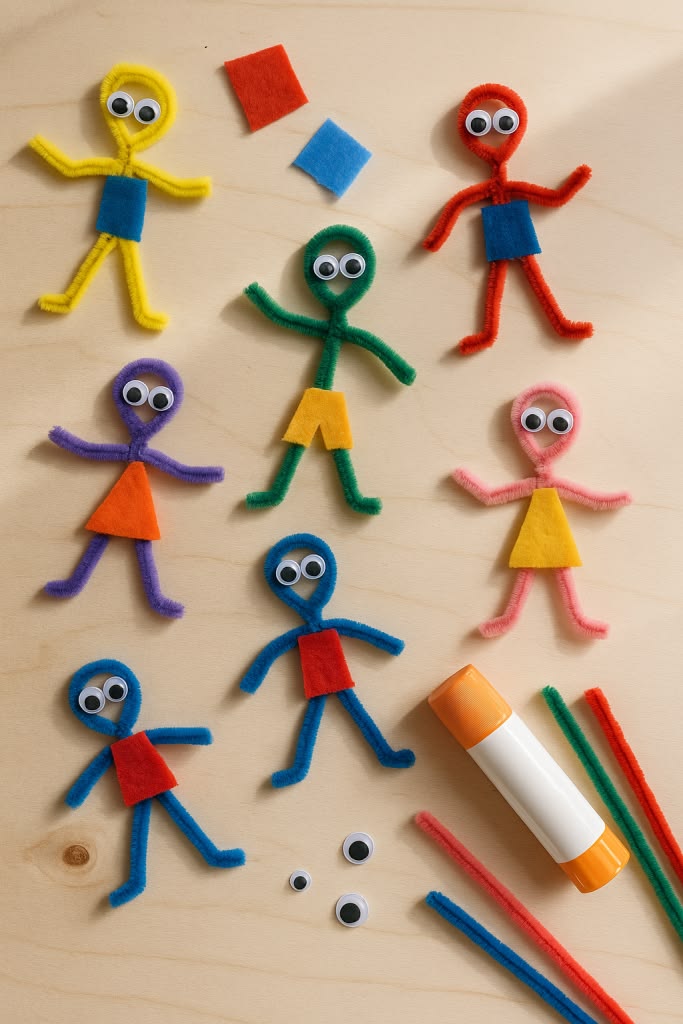
Designing a playground is a fun way to encourage creative thinking while introducing basic concepts of planning and construction.
Instead of simply making a single object, your child will create an entire play space complete with slides, swings, climbing walls, and monkey bars.
This activity encourages children to think about how different parts of a playground fit together and how people would move through the space. It also gives them the freedom to invent exciting features they wish existed in real playgrounds.
What You’ll Need
- Assorted pipe cleaners
- Cardboard base
- Craft glue or tape
- Small pom-poms (optional)
- Child-safe scissors
How to Make a Mini Playground
- Start with a sturdy piece of cardboard as the base.
- Bend pipe cleaners into simple playground structures.
- Create swings by forming small loops and attaching them to frames.
- Twist pipe cleaners into slides, ladders, and climbing structures.
- Arrange the pieces across the cardboard.
- Secure everything with glue or tape.
- Add extra details such as benches, trees, or pathways.
Creativity Challenge
Design a dream playground with one feature that has never been seen before.
What This Craft Teaches
Children practice spatial planning, design thinking, and creative problem-solving while learning how individual elements work together within a larger space.
Why Kids Love It
There is no single correct design, which means every playground becomes a unique creation filled with personal ideas and imaginative features.
Looking for school-friendly Father’s Day activities that are simple yet meaningful? These Easy Father’s Day Crafts for Kindergarten Kids to Make at School are perfect for little hands.
6. Underwater Coral Reef Sculpture
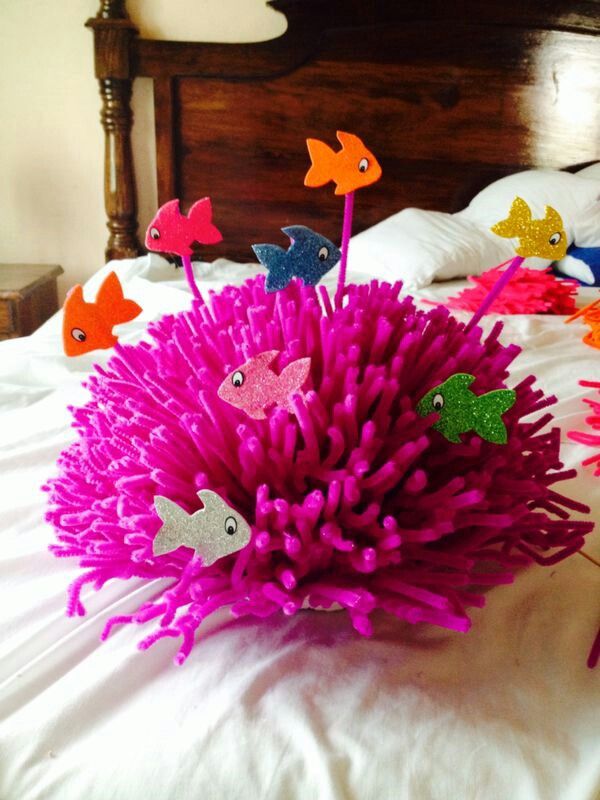
The ocean is filled with fascinating shapes, colors, and creatures, making it the perfect source of inspiration for a creative craft project.
In this activity, your child will build an underwater scene using colorful pipe cleaners to represent coral reefs, seaweed, fish, and other marine life.
The finished sculpture can be as realistic or imaginative as they like. Some children may choose familiar ocean animals, while others may invent mysterious creatures that live deep beneath the waves.
What You’ll Need
- Pipe cleaners in various colors
- Cardboard or foam base
- Glue
- Googly eyes (optional)
- Small pom-poms (optional)
How to Make an Underwater Coral Reef Sculpture
- Choose a base for the underwater scene.
- Twist pipe cleaners into coral-like shapes.
- Create seaweed by bending green stems into wavy forms.
- Add fish, jellyfish, starfish, or other sea creatures.
- Arrange all pieces on the base.
- Secure them with glue if needed.
- Add final decorative details.
Creativity Challenge
Invent a sea creature that no scientist has ever discovered and place it in your reef.
What This Craft Teaches
This activity encourages observation, nature-inspired design, and imaginative thinking while introducing children to ocean habitats.
Make It More Educational
Ask your child to explain how each creature survives in their underwater environment.
Why Kids Love It
Bright colors, unusual shapes, and endless possibilities make ocean-themed crafts especially engaging and exciting.
Need confidence-building craft ideas that go beyond copying steps? Check out Farm Animal Crafts for Kids: Building Confidence and Creativity Beyond the Tutorial for playful, skill-building inspiration.
7. Invent-A-Bug Challenge
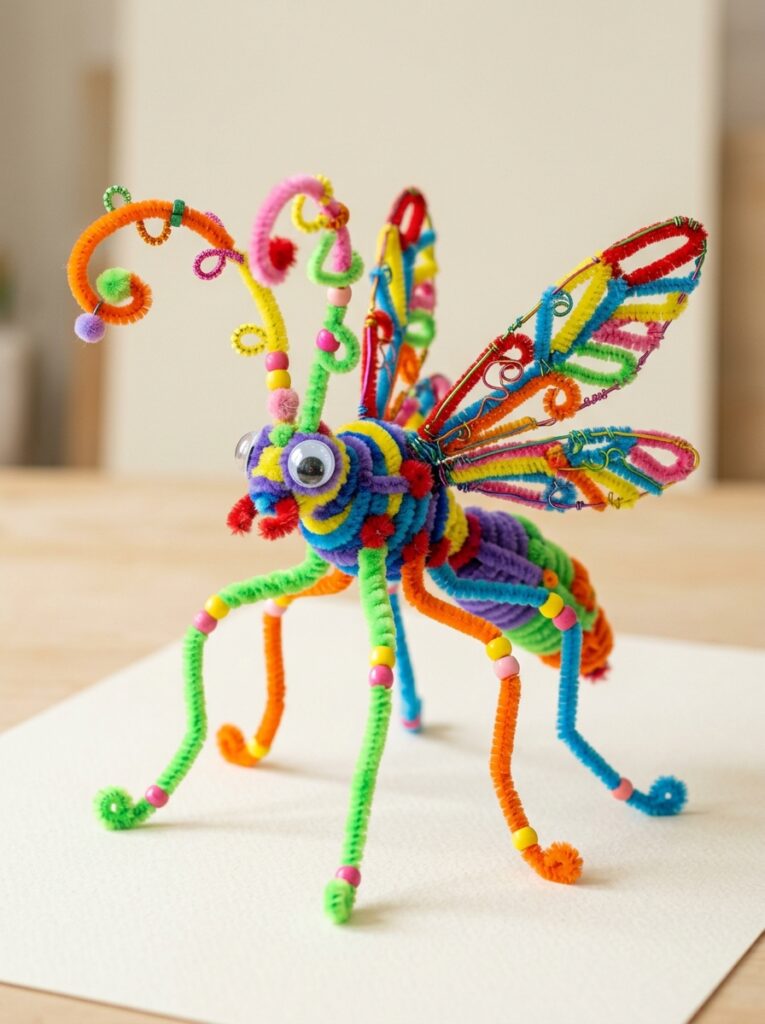
Many craft projects ask children to copy something they already know. This challenge does the opposite. Instead of recreating a real insect, your child becomes an inventor and designs a brand-new species from scratch.
The bug can have as many legs, wings, antennae, or unusual features as your child can imagine. By combining creativity with observation, this activity encourages children to think like both artists and scientists.
What You’ll Need
- Assorted pipe cleaners
- Googly eyes
- Pom-poms
- Craft glue
- Markers and paper
How to Make an Invented Bug
- Create the body using one or more pipe cleaners.
- Add legs, antennae, wings, or tails.
- Twist and bend stems into unusual shapes.
- Attach eyes and decorative features.
- Give the bug a unique name.
- Decide where it lives and what it eats.
Creativity Challenge
Create a bug that could survive in an environment where no real insect could live.
What This Craft Teaches
Children practice scientific imagination, creative design, and original thinking while learning that innovation often starts by combining familiar ideas in new ways.
Make It More Educational
Ask questions such as:
- How many legs does your bug have?
- What purpose do its wings serve?
- How does it stay safe from predators?
- What makes it different from real insects?
Why Kids Love It
There are no rules to follow, which gives children complete freedom to create something entirely their own.
Looking for Bible crafts that teach courage in a hands-on way? Try 15 David and Goliath Bible Crafts for Kids That Teach Courage and Faith for story-based learning.
8. Weather Maker Craft
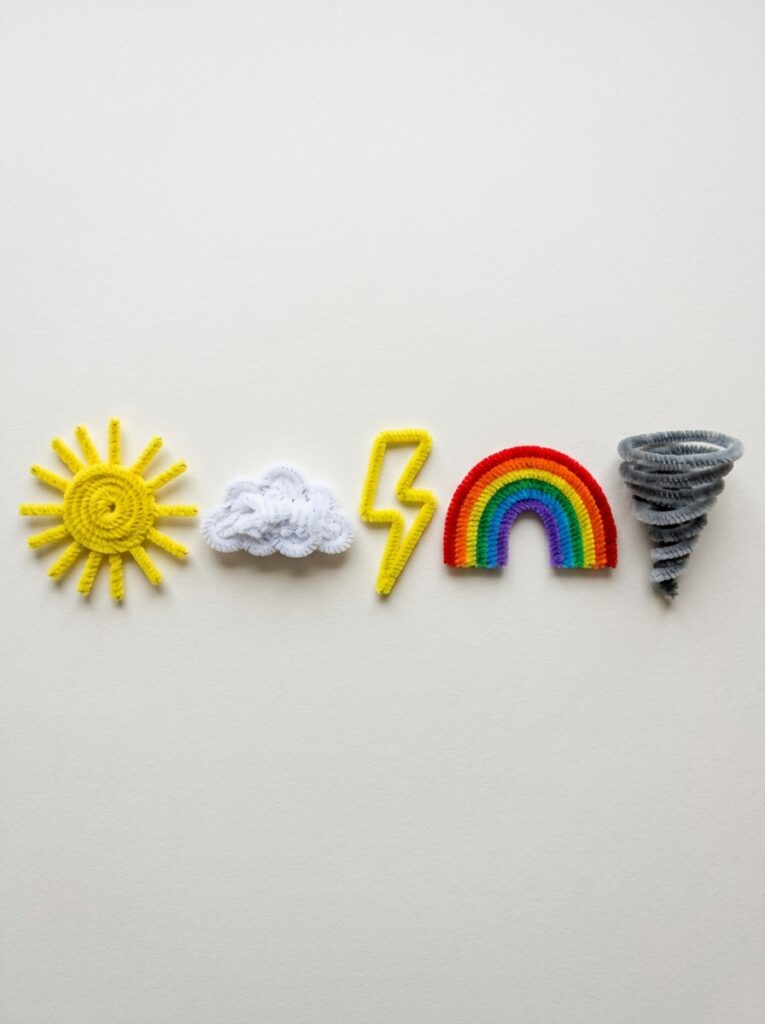
Weather shapes are surprisingly fun to build because they allow children to transform invisible natural forces into colorful, hands-on creations. From swirling tornadoes and bright rainbows to lightning bolts and fluffy clouds, each piece helps bring weather concepts to life.
This activity combines creativity with curiosity about the natural world.
What You’ll Need
- Pipe cleaners in multiple colors
- Cotton balls (optional)
- Glue
- Cardstock or cardboard
How to Make Weather Shapes
- Choose a weather type to create.
- Bend pipe cleaners into the appropriate shape.
- Twist multiple colors together for rainbows.
- Use spirals to create tornadoes.
- Form zigzag shapes for lightning.
- Add clouds, raindrops, or sunshine details.
- Display the finished weather collection.
Creativity Challenge
Create a completely imaginary type of weather and explain how it works.
What This Craft Teaches
Children learn to observe and visualize natural phenomena while expressing their understanding through art.
Why Kids Love It
The variety of shapes and colors keeps the activity interesting, and children enjoy creating weather events they see in everyday life.
9. Pipe Cleaner City Skyline
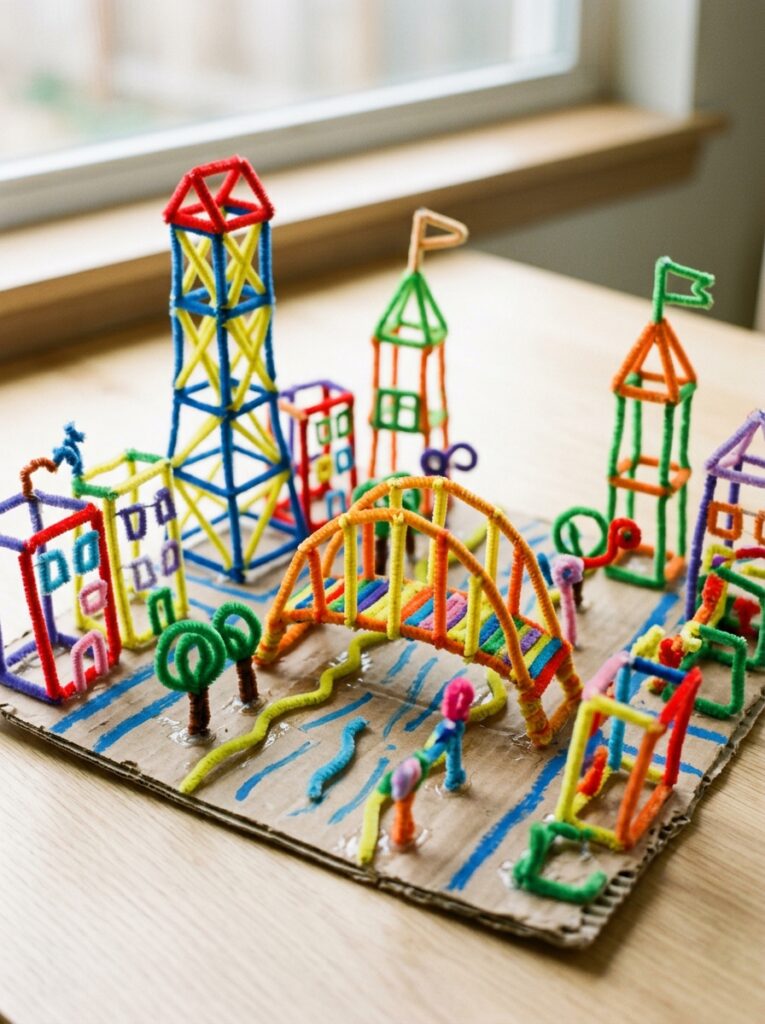
Building a miniature city encourages children to think like architects, planners, and designers. Instead of focusing on a single structure, they will create an entire skyline filled with buildings, bridges, towers, and landmarks.
Each city can reflect your child’s imagination, whether they envision a bustling modern metropolis, a futuristic city in the clouds, or a magical town filled with unusual buildings.
What You’ll Need
- Assorted pipe cleaners
- Cardboard base
- Glue or tape
- Markers
- Construction paper (optional)
How to Make a City Skyline
- Start with a flat cardboard base.
- Twist pipe cleaners into building shapes.
- Create towers of different heights.
- Add bridges connecting structures.
- Design parks, monuments, or landmarks.
- Arrange the city layout.
- Secure the pieces to the base.
Creativity Challenge
Design a city that solves a real-world problem, such as reducing traffic or protecting the environment.
What This Craft Teaches
This activity develops architectural thinking, planning skills, and an understanding of how different structures work together within a community.
Why Kids Love It
Children enjoy creating their own world and deciding exactly what belongs in it, making every skyline unique.
Want a keepsake craft that captures real emotion? Explore 19 Adorable Father’s Day Footprint Craft Ideas Kids Can Make for heartfelt, memory-making projects.
10. Wearable Superhero Symbol
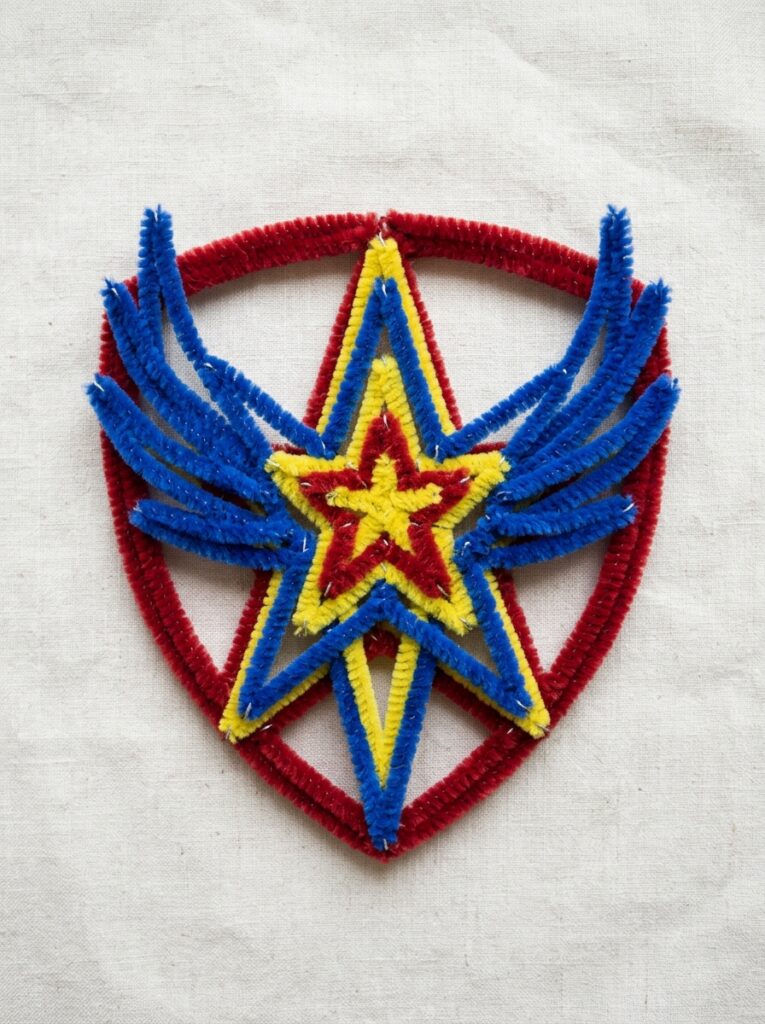
Among the most exciting pipe cleaner crafts for kids, this superhero-themed activity gives your child the chance to design a one-of-a-kind hero identity.
Instead of copying a famous character, they can create their own superhero logo, complete with unique colors, shapes, and powers.
The finished symbol can be attached to a bracelet, shirt, cape, or costume, turning a simple craft into an imaginative role-playing experience.
What You’ll Need
- Assorted pipe cleaners
- Craft glue
- Safety pin or elastic band
- Cardstock (optional)
- Child-safe scissors
How to Make a Wearable Superhero Symbol
- Choose a superhero name.
- Think about the hero’s special powers.
- Bend pipe cleaners into a unique symbol or emblem.
- Add extra details using different colors.
- Secure the design to a bracelet, shirt, or cape.
- Test your superhero look and make adjustments if needed.
Creativity Challenge
Design a superhero whose powers help solve everyday problems rather than fight villains.
What This Craft Teaches
Children explore self-expression, creative identity, and design thinking while developing confidence in their own ideas.
Why Kids Love It
Kids enjoy becoming the hero of their own story, especially when they get to invent everything from the name to the symbol themselves.
11. Build a Secret Garden
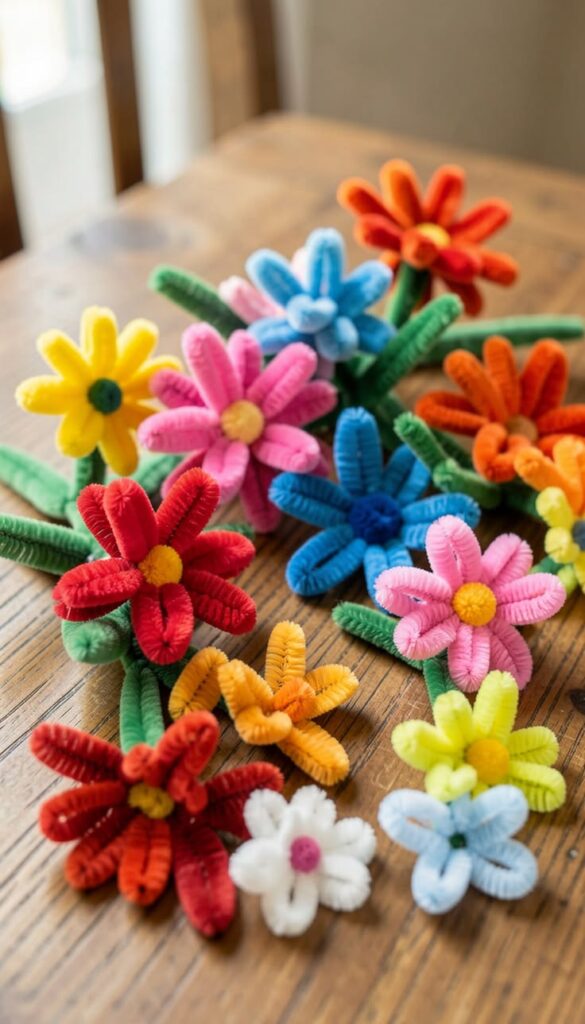
If you’re looking for pipe cleaner crafts for kids that encourage imagination and attention to detail, a secret garden is a wonderful choice.
This activity invites children to create a miniature world filled with flowers, winding pathways, colorful butterflies, tiny creatures, and hidden surprises.
There is no limit to what can be included. One garden might feature a fairy bridge, while another could have a butterfly sanctuary or a magical flower that only blooms at night.
What You’ll Need
- Green, brown, and colorful pipe cleaners
- Cardboard base
- Craft glue
- Pom-poms
- Small decorative craft supplies (optional)
How to Make a Secret Garden
- Use cardboard as the garden base.
- Twist pipe cleaners into flowers and plants.
- Create pathways using brown or tan stems.
- Add arches, fences, and garden features.
- Make butterflies, insects, or tiny creatures.
- Arrange everything into a miniature garden scene.
- Add final details and decorations.
Creativity Challenge
Hide three magical surprises inside your garden and create a story explaining their purpose.
What This Craft Teaches
Children practice environmental design, planning, and imaginative world-building while learning how different elements work together in a landscape.
Make It More Educational
Ask your child to explain which plants attract butterflies, where creatures might live, and how visitors would explore the garden.
Why Kids Love It
Every garden becomes a personal creation filled with tiny details that reflect a child’s imagination.
Need quick craft ideas that turn simple materials into something adorable? Check out 15 Easy Popsicle Stick Crafts for Kids That Turn Out So Cute for effortless creativity.
12. Constellation Creator
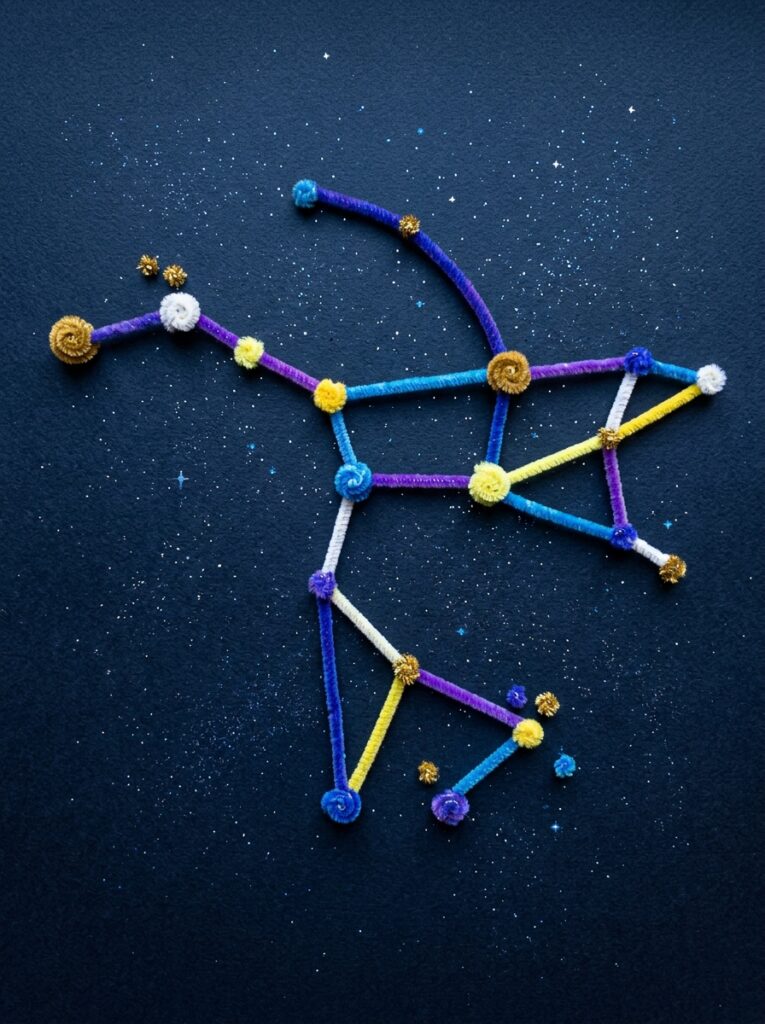
Unlike many pipe cleaner crafts for kids, this activity combines creativity with a touch of astronomy. Children can recreate famous constellations they find in the night sky or invent entirely new star patterns of their own.
This project helps transform distant stars into something visual and hands-on while encouraging curiosity about space and the universe.
What You’ll Need
- Pipe cleaners
- Small star stickers or paper stars (optional)
- Black construction paper
- Glue
- Markers
How to Make a Constellation Creator
- Choose a real constellation or invent one.
- Bend pipe cleaners into connecting lines.
- Arrange the shape on black paper.
- Add stars at each connection point.
- Secure the design with glue.
- Name your constellation.
- Create a story about how it appeared in the sky.
Creativity Challenge
Invent a constellation that represents an animal, object, or mythical creature and write its legend.
What This Craft Teaches
Children develop astronomy-inspired creativity while practicing observation, pattern recognition, and storytelling.
Make It More Educational
Research a real constellation and compare it with your invented design. Discuss how people throughout history used constellations to tell stories and navigate.
Why Kids Love It
The combination of space exploration, creativity, and storytelling makes this craft feel both educational and magical.
13. Pipe Cleaner Roller Coaster Track
Roller coasters are designed to twist, turn, climb, and drop in exciting ways, which makes them a perfect source of inspiration for a hands-on craft project.
In this activity, your child will design and build their own miniature roller coaster track using pipe cleaners and simple supports.
The goal isn’t to create a perfect amusement park ride but to experiment with different track designs and discover how changes affect the movement of a small marble or ball.
What You’ll Need
- Pipe cleaners
- Cardboard base
- Tape or glue
- Small marble or lightweight ball
- Child-safe scissors
How to Make a Pipe Cleaner Roller Coaster Track
- Secure a piece of cardboard as the base.
- Bend pipe cleaners into hills, curves, and turns.
- Create support structures using additional pipe cleaners.
- Add loops, drops, or spirals if possible.
- Secure the track to the base.
- Test the track using a marble.
- Make adjustments to improve movement.
Creativity Challenge
Design a roller coaster with a unique feature that no amusement park currently has.
What This Craft Teaches
Children explore engineering concepts such as design, testing, balance, and experimentation. They also learn that successful designs often require multiple revisions.
Make It More Educational
Ask questions such as:
- Which section is the fastest?
- Where does the marble slow down?
- What changes improve the ride?
Why Kids Love It
The excitement of building something that actually works keeps children engaged and encourages them to keep improving their design.
14. Monster With a Mission
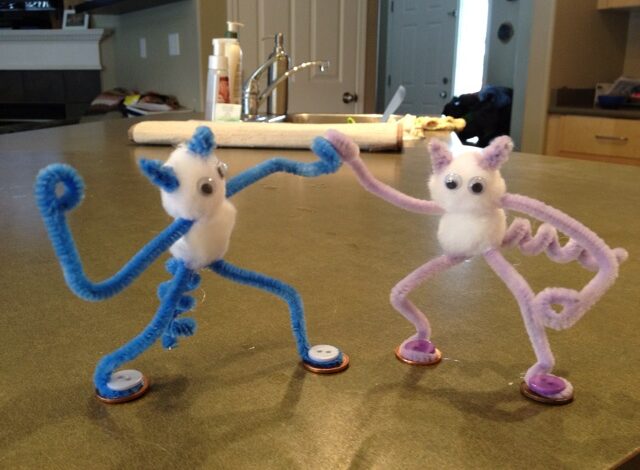
Photo credit: @ Unknown
Not every monster has to be scary. In this creative activity, your child will invent a friendly monster and give it an important job to do. Perhaps it collects dreams, paints rainbows, finds missing socks, or delivers good luck to people around the world.
By combining crafting with storytelling, children create a character that feels unique and memorable.
What You’ll Need
- Assorted pipe cleaners
- Googly eyes
- Pom-poms
- Craft glue
- Markers
How to Make a Monster With a Mission
- Create a monster body using colorful pipe cleaners.
- Add arms, legs, horns, tails, or wings.
- Attach eyes and decorative details.
- Give your monster a name.
- Decide what special job it performs.
- Create a short story about a typical day in its life.
Creativity Challenge
Invent a monster whose job helps solve a common problem in the world.
What This Craft Teaches
Children develop character-building skills, imagination, and creative storytelling while learning how personality traits influence a character’s role.
Make It More Educational
Ask your child:
- Why does the monster do this job?
- Who benefits from its work?
- What challenges does it face?
- What special tools does it use?
Why Kids Love It
Children enjoy creating silly characters, and giving the monster a purpose makes it feel more real and interesting.
Want a fun activity that keeps kids busy and inspired for hours? These 10 Fun Butterfly Crafts for Kids That Will Keep Little Hands Busy All Afternoon are perfect.
15. Mini Habitat Builder
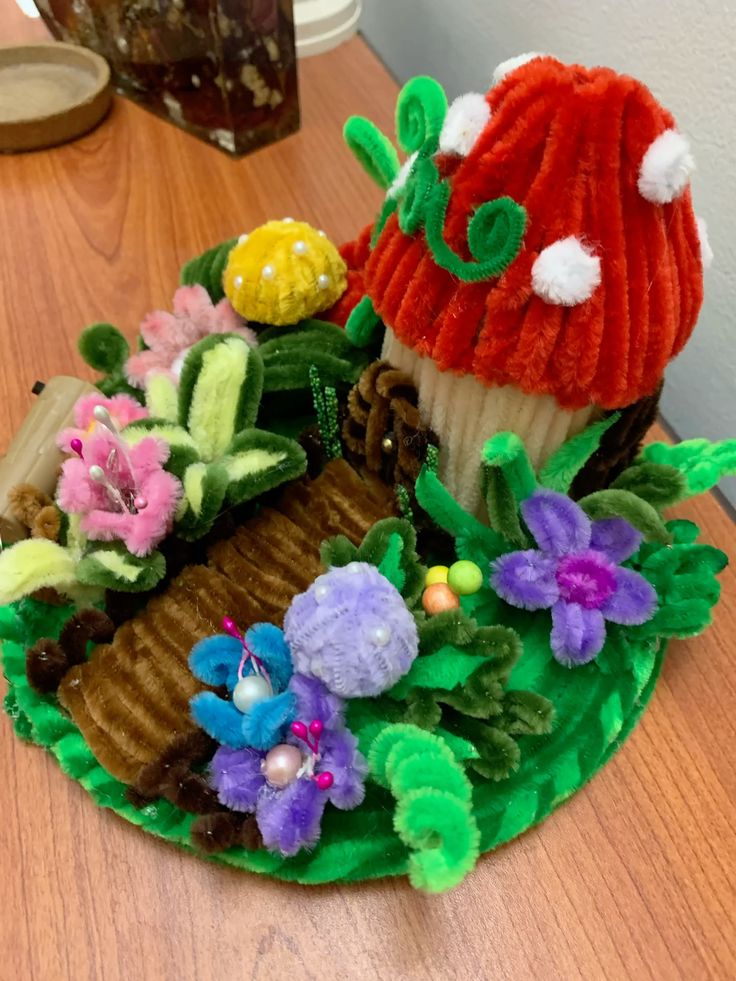
Animals depend on their habitats for food, shelter, and survival. This craft gives your child the opportunity to build a miniature environment designed specifically for a chosen animal.
Whether they select a polar bear, monkey, camel, or sea turtle, they will need to think about what that animal requires to thrive.
What You’ll Need
- Pipe cleaners
- Cardboard base
- Craft glue
- Construction paper
- Markers
- Small craft decorations (optional)
How to Make a Mini Habitat
- Choose an animal.
- Research where the animal lives.
- Create landscape features using pipe cleaners.
- Add plants, water sources, shelters, or other habitat elements.
- Include the animal in the scene.
- Arrange and secure everything on the base.
- Label important features if desired.
Creativity Challenge
Create a habitat for an animal living in an unusual environment, such as a floating island or an underground world.
What This Craft Teaches
Children learn about ecosystems, environmental awareness, and the relationship between animals and their surroundings.
Make It More Educational
Encourage your child to explain:
- What the animal eats
- Where it sleeps
- How it stays safe
- What makes the habitat suitable
Why Kids Love It
Building an entire environment feels like creating a miniature world, making the activity both educational and imaginative.
16. Alphabet Creature Challenge
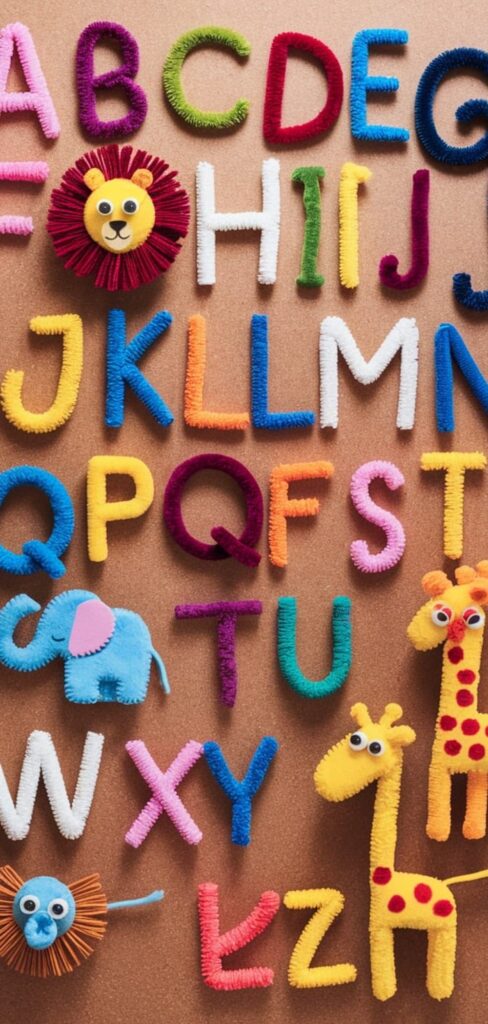
Letters become much more exciting when they transform into imaginative creatures. In this activity, your child will use pipe cleaners to turn alphabet letters into animals, monsters, or completely original characters.
A “B” might become a butterfly, an “S” could become a snake, and a “M” might transform into a mountain monster with giant horns.
What You’ll Need
- Pipe cleaners
- Construction paper
- Googly eyes
- Craft glue
- Markers
How to Make Alphabet Creatures
- Choose a letter of the alphabet.
- Shape pipe cleaners into the letter.
- Look for features the letter already resembles.
- Add eyes, legs, wings, tails, or other details.
- Give the creature a name.
- Repeat with additional letters.
Creativity Challenge
Create an entire alphabet where every letter becomes a different creature.
What This Craft Teaches
Children strengthen letter recognition while practicing visual transformation and creative thinking.
Make It More Educational
Ask your child:
- What inspired the creature’s design?
- Which part of the letter became the most important feature?
- How would the creature behave in the wild?
Why Kids Love It
Children enjoy discovering that ordinary letters can become something completely unexpected through imagination and creativity.
Looking for creative painting ideas that feel more advanced than basic art? Explore 10 Creative Rock Painting Ideas for Kids That Look Like They Took Hours for impressive results.
17. Pipe Cleaner Shadow Sculptures
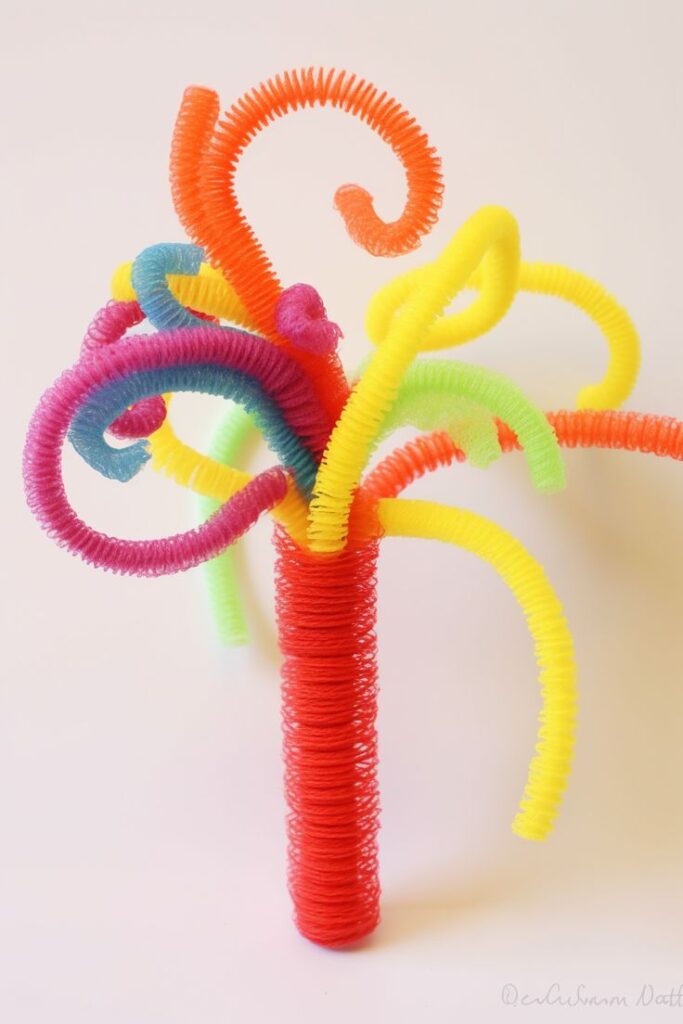
This is one of those pipe cleaner crafts for kids that feels almost like a science experiment. Instead of focusing only on the sculpture itself, the real fun comes from discovering the interesting shadows it creates.
Children can twist stems into spirals, animals, abstract designs, letters, or geometric shapes, then shine a flashlight on them to see how the shadows change. A simple sculpture can produce surprisingly dramatic effects when viewed from different angles.
How to Make It
- Bend pipe cleaners into unique 3D shapes.
- Attach the sculptures to a small cardboard base if needed.
- Place the sculpture on a table in a dim room.
- Shine a flashlight from different directions.
- Observe how the shadows stretch, shrink, and transform.
- Experiment with multiple sculptures to create layered shadow scenes.
What Makes It More Fun
Challenge your child to create a sculpture whose shadow looks completely different from the actual shape. For example, a random-looking structure might cast a shadow resembling an animal, tree, or letter.
Creativity Skill Developed
Exploring light, shape, visual design, and spatial awareness.
18. Invent a Transportation Machine
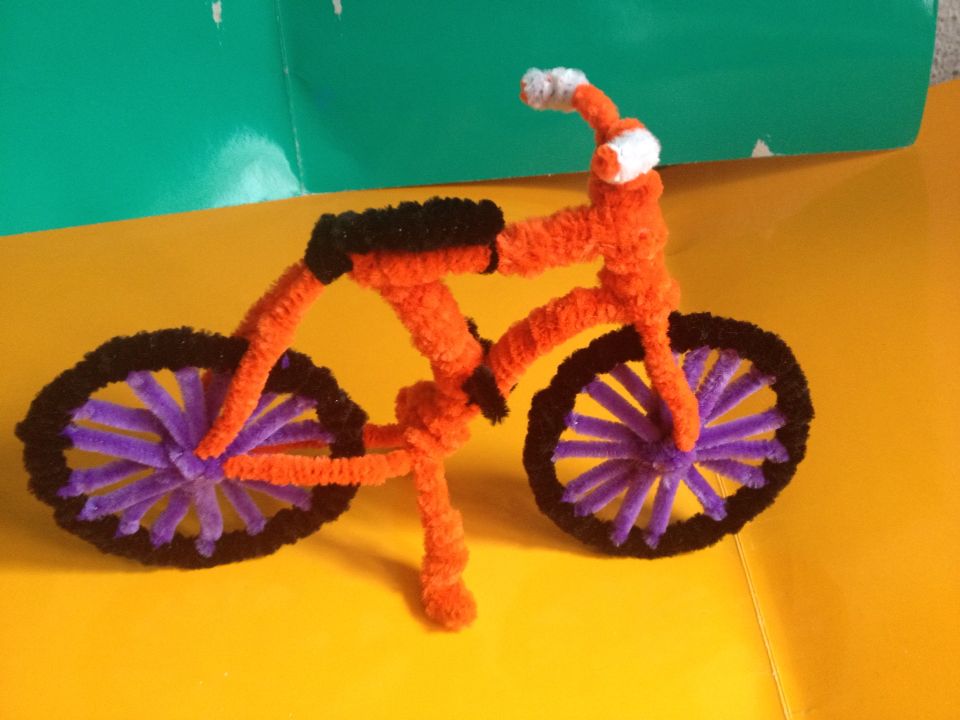
Among the most imaginative pipe cleaner crafts for kids, this activity encourages children to think beyond today’s cars, buses, and airplanes.
The goal is to invent a transportation machine that has never existed before. Children become engineers, designers, and inventors as they create vehicles that solve problems or travel in unusual ways.
Ideas include:
- Flying bicycle
- Ocean scooter
- Moon bus
- Cloud train
How to Make It
- Ask your child where their machine travels.
- Use pipe cleaners to build the main structure.
- Add wheels, wings, propellers, rockets, or floating sections.
- Create passengers, cargo areas, or special features.
- Give the invention a name and purpose.
Challenge Extension
Have your child explain:
- How the machine moves
- What fuel it uses
- Who rides it
- What problem it solves
Creativity Skill Developed
Innovation, problem-solving, future thinking, and invention.
19. Build a Tiny World in a Box
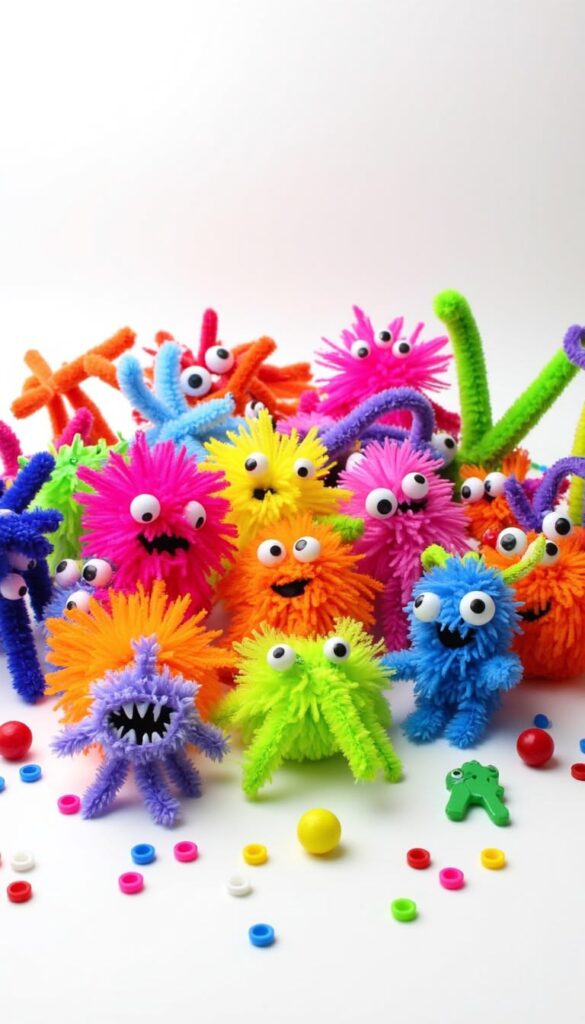
This is one of the most engaging pipe cleaner crafts for kids because it combines construction, storytelling, and imagination in a single project.
Children use a shoebox as their canvas and fill it with a miniature world made from colorful pipe cleaners. Every detail can tell a story, from tiny buildings to characters and landscape features.
Possible themes include:
- Fairy village
- Space station
- Jungle adventure
- Dinosaur park
- Underwater kingdom
How to Make It
- Choose a theme for the miniature world.
- Use a shoebox as the base.
- Create structures, plants, animals, and characters from pipe cleaners.
- Add pathways, bridges, trees, mountains, or decorations.
- Arrange everything inside the box to create a complete scene.
Storytelling Challenge
Encourage your child to answer:
- Who lives there?
- What happens each day?
- What makes this world special?
- What adventure is taking place right now?
Creativity Skill Developed
World-building, storytelling, planning, and imaginative design.
Why Kids Love This Activity
Unlike crafts with a single finished result, this miniature world can continue growing over time. New characters, buildings, and stories can be added whenever inspiration strikes, making it one of the most open-ended pipe cleaner crafts for kids in this collection.
Want a warm, memory-filled activity for families across generations? Try Grandma and Grandkids Craft Night: 15 Simple Ideas That Create Real Memories for bonding moments.
Common Reasons Kids Get Frustrated With Pipe Cleaner Crafts (And How to Fix Them)
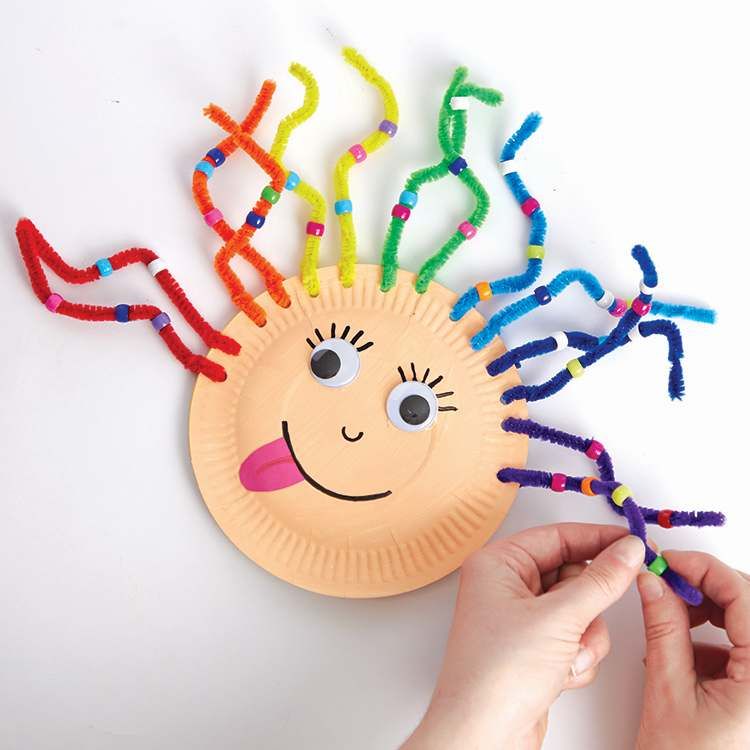
Even though pipe cleaners are one of the simplest craft materials for children, frustration can still happen.
Most of the time, it’s not about skill, it’s about setup, expectations, or small technical issues that make the activity feel harder than it should be. The good news is that each problem has a very practical fix.
1. The Craft Looks Different Than Expected
One of the biggest frustrations in pipe cleaner crafts for kids happens when the final result doesn’t match what the child imagined. They may expect a neat, “perfect” version, but pipe cleaner projects are naturally flexible and sometimes uneven.
What actually helps
- Show 2–3 different possible outcomes instead of one “perfect” example.
- Say clearly: “Every version will look a little different—and that’s the point.”
- Do a quick first build together so they see how shapes naturally form.
- Avoid over-modeling a flawless sample that makes them feel pressured to copy.
This shifts focus from “matching” to “creating,” which reduces disappointment immediately.
-
Shapes Keep Falling Apart
Pipe cleaners can loosen if they are only lightly twisted or if the structure is too ambitious for the amount of material used.
What actually helps
- Teach a simple rule: twist at least 3–4 turns for every joint
- Double up pipe cleaners for stronger parts (like legs or bases)
- Add a small anchor point using cardboard or a pencil for support
- Encourage “simple first, decorate later” so structure is stable before detail
A lot of frustration disappears when kids learn that stability comes from tighter twists, not more force.
Looking for calm, curiosity-driven activities that connect kids with nature? Explore Weather Crafts for Kids That Turn Curiosity Into Gentle Creativity for soothing, hands-on learning ideas.
-
Small Fingers Struggle With Twisting
Younger children often find it difficult to twist pipe cleaners tightly enough, especially for detailed designs.
What actually helps
- Use thicker jumbo pipe cleaners for beginners
- Pre-bend or pre-twist a few base shapes before starting
- Let the child hold one end while an adult helps with the first twist
- Introduce tools like a pencil or marker to wrap around for easier shaping
- Break the craft into short steps instead of long building sessions
The goal is to reduce finger strain so creativity, not effort, stays in focus.
- Kids Lose Interest Halfway Through
This usually happens when the project feels too long, too complicated, or too perfection-focused.
What actually helps
- Break the craft into “mini wins” (head → body → decoration)
- Set a short time goal like 10–15 minutes per stage
- Let kids pause and return later instead of forcing completion
- Add a storytelling element mid-way (e.g., “What is your creature doing right now?”)
- Keep materials visible but not overwhelming, too many options can distract
Children stay engaged longer when they feel progress instead of pressure.
Want simple crafts that help kids embrace imperfection while staying creative? Try 6 Simple Flower Crafts for Kids That Encourage Creativity Over Perfection for soft, expressive making activities.
Conclusion
Pipe cleaner crafts for kids remind us that creativity grows through experimentation, not perfection.
When children are given simple materials and the freedom to explore, they naturally begin to test ideas, solve small problems, and express themselves in ways that structured craft kits often don’t allow.
For parents and teachers, the real value comes from stepping back just enough to let ideas evolve.
When children are allowed to adjust, change, and even break the rules of a craft, they don’t just complete a project, they build confidence in their own creativity.
Frequently Asked Questions About Pipe Cleaner Crafts for Kids
1. What Age Is Appropriate for Pipe Cleaner Crafts?
Pipe cleaner activities can be introduced as early as preschool age (around 3 years), but the type of craft should match the child’s developmental stage. Younger children do best with simple bending, sorting colors, and basic shapes, while older kids can handle more detailed builds like animals, structures, and storytelling projects.
-
Are Pipe Cleaners Safe For Young Children?
Pipe cleaners are generally safe, but they should always be used under supervision for younger kids. The thin wire inside can poke if it’s bent sharply or ends are exposed. For safety, it’s best to trim or fold sharp ends inward and avoid leaving very small pieces with toddlers.
-
How Do You Store Pipe Cleaners Without Tangling Them?
The easiest way to prevent tangling is to group them by color and store them in separate containers or resealable bags. Some people also use pencil cases, mason jars, or craft organizers with compartments. Keeping them loosely coiled (not tightly squeezed) helps maintain shape and reduces knots.
-
What Other Craft Supplies Pair Well With Pipe Cleaners?
Pipe cleaners work well with simple craft materials like:
- Googly eyes
- Pom-poms
- Cardboard or paper bases
- Beads
- Glue or tape
- Child-safe scissors
These extras help children expand their designs and add personality to their creations without making the process complicated.
-
Can Pipe Cleaner Crafts Be Reused?
Yes, many pipe cleaner crafts can be reused, especially if they are not heavily glued down. Because pipe cleaners are flexible, children can reshape, rebuild, or repurpose their creations into new designs. This makes them a great low-waste craft material that supports ongoing creativity instead of one-time use.