This post contains affiliate links. This means I may earn a small commission if you purchase through my links at no extra cost to you.
This month, let’s travel to Japan together. I’ve put together an April activity calendar for seniors in assisted living that starts with a cherry blossom photo at coffee hour and ends with residents voting on where we go next.
In between, we’ll catch a train, listen to a koto, and see who spots Mount Fuji hiding behind a very large wave.
And yes, bingo is still on. I’d keep the numbered game exactly where your residents expect it, then bring out a short picture round with a few things they’ve already seen that month.
I like the thought of someone spotting that train on their card and saying, “We took that one last week.”
This is our first destination in the month-by-month senior activities series. If you’re the person who has to turn a nice idea into a Tuesday afternoon activity, I’ve included what to gather, how to start, and where you can reuse something you already set out.
A sample April activity calendar for assisted living
I’d put the dates into your own calendar after looking at what residents already count on.
If bingo is always on Thursday, give the picture round to Thursday. And if your Tuesday mornings tend to be quiet, that might be just the time to put out the garden photos and see who stops.
| April dates | Japan-themed activities | What you can use again |
|---|---|---|
| April 1–7 | 1: Find Japan on the map. 3: Hanami coffee hour. 6: Take a seated garden walk. | Save the garden and blossom photos for bingo. |
| April 8–14 | 8: Take a virtual train journey. 10: Look for Mount Fuji in The Great Wave. 13: Listen to Japanese music. | Keep the train and mountain photos for picture cards. |
| April 15–21 | 15: Play Japan picture bingo. 17: Compare two Japanese teas. 19: Try seated movement with fans. 21: Write a spring haiku together. | Bring the fan and tea images back for the matching game. |
| April 22–30 | 22: Play picture match-up. 24: Try the cup-and-ball challenge. 26: Put up the carp streamer display. 29: Open the spring memory tin. 30: Vote for the next destination. | Leave the vote open through the day so people can join even if they miss the gathering. |
On the dates between these activities, keep your regular games, music, visits, and quiet time. You can still bring Japan into those moments.
Play one piece from listening hour before lunch, leave the garden photos at the reading table, or invite someone to add a line to the group poem.
Week 1 · Arrive in Japan
1. Find Japan on the map
Set out a large world map, a closer map of Japan, and three removable markers. Put one marker where your group lives. Then find Japan together and mark Tokyo, your starting point for the train journey later in the month.
Ask, “When you get somewhere new, where do you like to go first?” Someone might say the park. Someone else might say wherever they can get a good cup of tea. You already have both on the calendar.
2. Hold a Hanami coffee hour
Set out two large blossom photos and the drinks you usually serve at coffee hour. Hanami means flower viewing, and gathering under cherry blossoms is one way people in Japan enjoy it.
For a photo to show the group, start with the official Tokyo guide to cherry blossoms and hanami. gotokyo.org
I’d ask, “Where did you go to see spring arrive?” Give people a little time with that one. The answers might take you from a grandmother’s front steps to a fruit tree somebody planted when their youngest was born.
3. Take a garden walk from your chair
Set out three large photos from the same Japanese garden. If you can, choose an entrance, a view along a path, and somewhere you could imagine stopping.
Show them one at a time and let residents decide where to go next. At the last photo, ask where they’d put a bench.
If you’re making the shared cherry blossom mural from my April crafts for seniors in assisted living post, keep that decision for craft day.
Put out some easy-to-handle paper craft materials so residents can help arrange the garden they’ve been talking about.
Week 2 · Take the train, look at art, and listen
4. Take a virtual Japanese train journey
Set out a screen, your map from week one, and a large Mount Fuji photo. Start in Tokyo, trace the route toward Shin-Fuji, and use JR Central’s Mount Fuji railway guide to show what passengers might see. JR Central
Pause at the mountain view and ask which seat residents would choose. Then ask about the longest train ride they remember. I’d keep the screen time short enough to leave room for the stories.
5. Find Mount Fuji in The Great Wave
Set out one large print or put the artwork on a screen. Give everyone a quiet moment to look before you ask them to find the boats and the small mountain behind the waves.
The museum’s image is available in The Met’s collection entry for Hokusai’s The Great Wave. The Metropolitan Museum of Art
If the group finds Mount Fuji quickly, cover the lower part of the picture and ask what changes when they can only see the crest of the wave.
Later, bring the print back beside the wave-stamped postcards from craft day. I’d love to hear what residents notice after they’ve tried making a wave of their own.
6. Listen to Japanese music together
Set out a speaker, a large picture of a koto, and a short recording with the performer’s name handy. Play a little without talking over it.
Then ask people what they heard first and whether any part made them think of another instrument.
If someone asks to hear it again, give them that second listen. You can also invite a resident to choose the next piece or suggest music they’d like to share from their own collection.
Week 3 · Play, taste, move, and write
7. Play a round of Japan picture bingo
Set out large picture cards and counters that are easy to pick up. A 2-by-2 card works for a quick round.
Use photos residents have already seen, such as the train, garden bridge, and Mount Fuji, and vary the pictures across the cards.
When you call a picture, hold it up and say its name. Let residents play in pairs if they like. If picture bingo goes over well, try another group activity inspired by a familiar childhood game on your next game day.
8. Compare two Japanese teas
Set out two teas, such as sencha and roasted hōjicha, and a small card with each name.
Offer a look at the dry leaves, then invite residents to compare the color and aroma of the brewed teas.
Follow each resident’s usual beverage plan and make smelling or observing an option.
I’d ask which one they’d choose for a quiet afternoon and why. If you’re turning this into a spring social and refreshments suit your group, have a look at these spring cookies for sharing.
9. Try seated movement with folding fans
Set out lightweight folding fans and put on a piece the group heard during music hour. Begin with the fans resting on laps. Then invite residents to open a fan, make a small sweep within their comfortable reach, and bring it back to rest.
A resident can keep time, choose the next song, or watch. If several people want to lead, let each choose one movement for the group to follow.
10. Write a spring haiku together
Set out a large sheet of paper and one spring image from the month.
Ask one person what they can see, another what they imagine hearing, and another what tiny detail they’d put in a poem.
Write down their words and read back a short, three-line haiku-inspired poem. I’d give the group time to change a word or move a line before you put it on display.
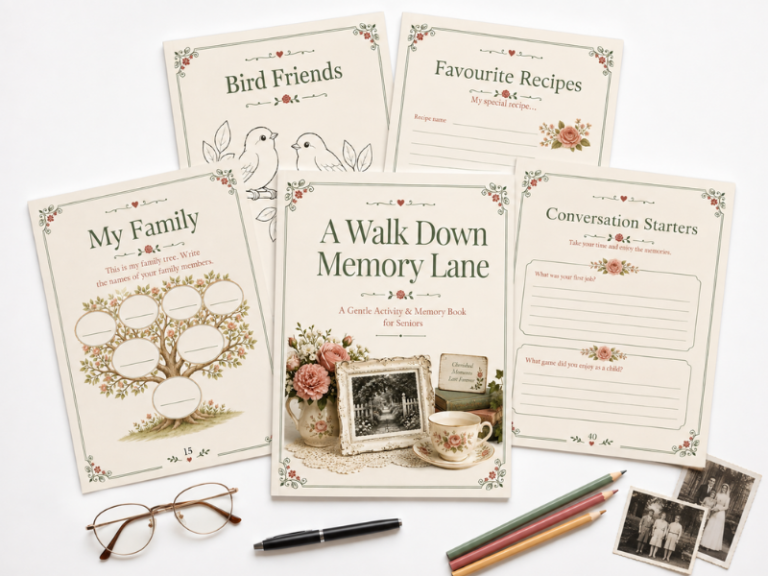
If someone brings up a longer memory, you can offer a page from my free printable memory book for seniors.
Week 4 · Bring back the favorites and choose where to go next
11. Play Japan picture match-up
Set out four to six pairs of large pictures from the month. Start with them face up so people can match by looking and talking together.
If the group wants a memory challenge, turn over a few pairs.
Each time a match is made, ask where the group saw it. A tea cup might bring back the tasting. A garden path might get someone talking about where they wanted the bench.
12. Try the kendama-inspired cup-and-ball challenge
Set out the wide cups and tethered yarn pom-poms from craft day. Give people a practice turn with the cup close to the table.
The challenge is to catch the pom-pom after a gentle swing.
I’d let people choose whether to keep score. Some groups will be delighted to count three catches. Others will enjoy working out why the person who swings the least keeps catching it.
13. Put up a carp streamer window display
Set out the finished paper carp and let residents choose their order and where they’d like them displayed. Staff can hang them where they’ll be easy to see.
In Japan, families fly these carp streamers, called koinobori, for Children’s Day on May 5.
Here’s a Children’s Day guide from the Embassy of Japan you can share as a late-April preview. micronesia.emb-japan.go.jp
If families are visiting soon, let residents show them the display and tell them which fish they helped make.
For a separate project families could do together in May, my Mother’s Day crafts for making together offer a few starting points.
14. Open the spring memory tin
Set out the decorated tin from craft day and a few blank slips. Invite anyone who missed the earlier activity to add a memory now. People can write it down, dictate it, or share it aloud.
Read only the notes residents choose to share. I’d finish by asking what they’d like to do again. If somebody says, “Play that music you had on,” that’s a good reason to put it back on the calendar.
15. Vote for the next destination
Set out two destination photos, a box, and large voting tokens. Pick the choices from places residents have mentioned, including places they’ve lived, have family connections to, or have always wanted to visit.
Give everyone a chance to vote by pointing, telling you their choice, or dropping in a token. Then reveal the result at a familiar gathering. You’ve just given residents something to ask about the next time they see you.
Give the things you make a second outing
If you’re planning both posts together, I’d choose one craft that gets used again. Make the cup-and-ball game on craft day and play it a few days later.
Or start the tea tin early and let residents add memories as April goes on. Either one gives someone a reason to ask, “When are we using that thing we made?”
The companion April crafts for seniors in assisted living post has the instructions for the shared mural, carp windsock, cup-and-ball game, and memory tin.
You can also browse my senior activities collection when you need something that fits a quiet afternoon or a smaller group.
When you’re ready to plan beyond April
If you often get to the end of the month and realize the next calendar is still blank, that’s the moment I had in mind when I put together the Month-by-Month Senior Activity Pack.
It brings monthly calendars and activity ideas into one place so you have something to work from when it’s time to sit down and plan.
If you’re already setting aside ideas for summer, you can also save my July crafts for seniors for your next seasonal planning session.
Frequently asked questions
How many themed activities should I put on an April assisted living calendar?
Three or four a week is plenty for this plan. If your group has a busy week, pick one group activity and bring the theme into a routine you already have.
Can I run these activities without a projector?
Yes. Large printed photos work for the garden walk, blossom conversation, and art discussion. For the train journey, arrange three prints in order so residents can follow the trip together.
What can residents do if they have difficulty seeing the picture bingo cards?
Start with fewer, larger pictures and read each call aloud. A resident can play with a partner who describes the cards or ask someone else to place their counter.
What can I do if I only have 15 minutes?
Try one piece of music, one garden photo, or one quick round of match-up. Give people a moment to respond before moving on. I’d happily spend those 15 minutes on a good conversation about one picture.
What if residents miss the first week of the Japan theme?
Give them a quick welcome at whatever activity they join. Hold up the picture you’re using, tell them what it shows, and invite them into the conversation or game right there.
If I were setting up your first table, I’d bring one good blossom photo and pull up a chair. Ask where people used to go when the weather first turned warm. I’d give that conversation as much room as it needs. It might tell you exactly which part of the month your group will enjoy most.