This post contains affiliate links. This means I may earn a small commission if you purchase through my links at no extra cost to you.
Give nursing home residents meaningful ways to celebrate February 14 with Valentine’s Day crafts that encourage creativity, friendship and personal expression.
Long before Valentine’s cards became a familiar shop-bought gift, people were making them by hand. Handmade valentines date back to the sixteenth century, while mass-produced cards appeared much later.
The tradition of exchanging cards, flowers and messages of affection continues on February 14, but the celebration does not have to be limited to romantic relationships.
For an older person living in a nursing home, making a card for a grandchild, a friend or a fellow resident can be one way to take part.
These Valentine’s Day crafts for seniors in nursing homes include projects that make room for personal messages, familiar creative interests and contributions to a shared activity.
Handmade decorations can bring a warm, romantic feel into your living space, and A Cozy Valentine’s Home Filled With Warm, Handmade Touches shares ideas for creating that atmosphere.
What Makes an Activity Suitable for a Senior in a Nursing Home?
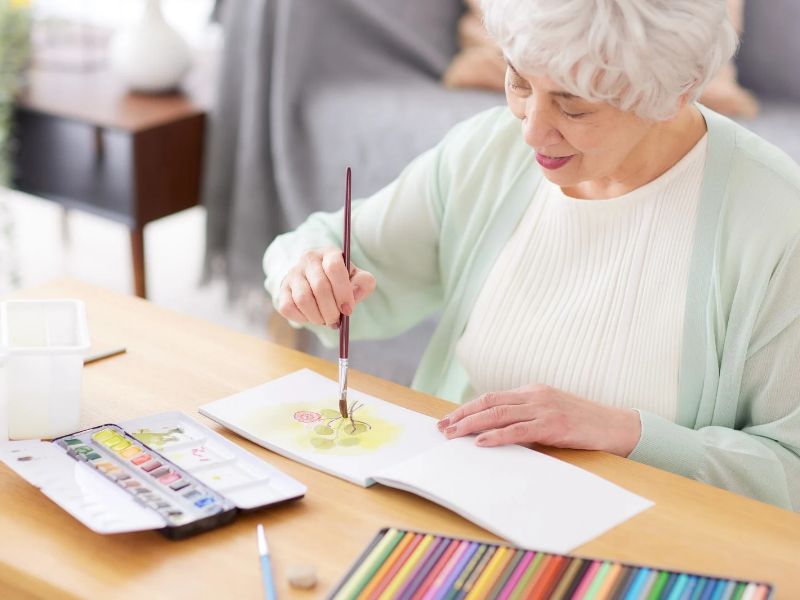
A craft that feels simple to one resident may be difficult or tiring for another. Before choosing Valentine’s Day activities, consider each person’s abilities, interests and comfort.
These points can help make the activity easier to join without making residents feel pressured to complete it.
- Consider hand movement: Stiff joints, reduced grip strength and difficulty handling small objects can make cutting, threading and tying challenging. Prepare some shapes in advance, provide easy-to-hold tools and choose glue sticks where appropriate.
- Account for vision changes: Use contrasting colours, large lettering and good lighting so materials are easier to see. Avoid tiny decorations, small print and patterns that are difficult to distinguish.
- Allow for different cognitive abilities: Give one instruction at a time, demonstrate each step and offer assistance when needed. Residents with dementia may find familiar, repetitive activities more comfortable, but their interests and abilities should guide the choice.
- Provide seated options: Set up materials on a stable table or lap tray so residents who use wheelchairs or find standing uncomfortable can participate without having to move around.
- Respect personal preferences: Not everyone celebrates Valentine’s Day as a romantic occasion. Include themes such as friendship, family, kindness and appreciation, and allow residents to choose whether they want to take part.
- Check with the nursing home: Ask staff about approved adhesives, scissors, paints, shared materials, food-related activities, decorations and infection-control procedures before bringing supplies into the facility.
The Alzheimer’s Association and the National Institute on Aging recommend adapting activities to a person’s abilities, interests and willingness to participate.
The aim is to make the activity enjoyable and manageable, not to expect every resident to complete the same project in the same way.
Valentine’s Day Crafts for Seniors in Nursing Homes
1. Large-Print Valentine’s Greeting Cards With Personal Messages
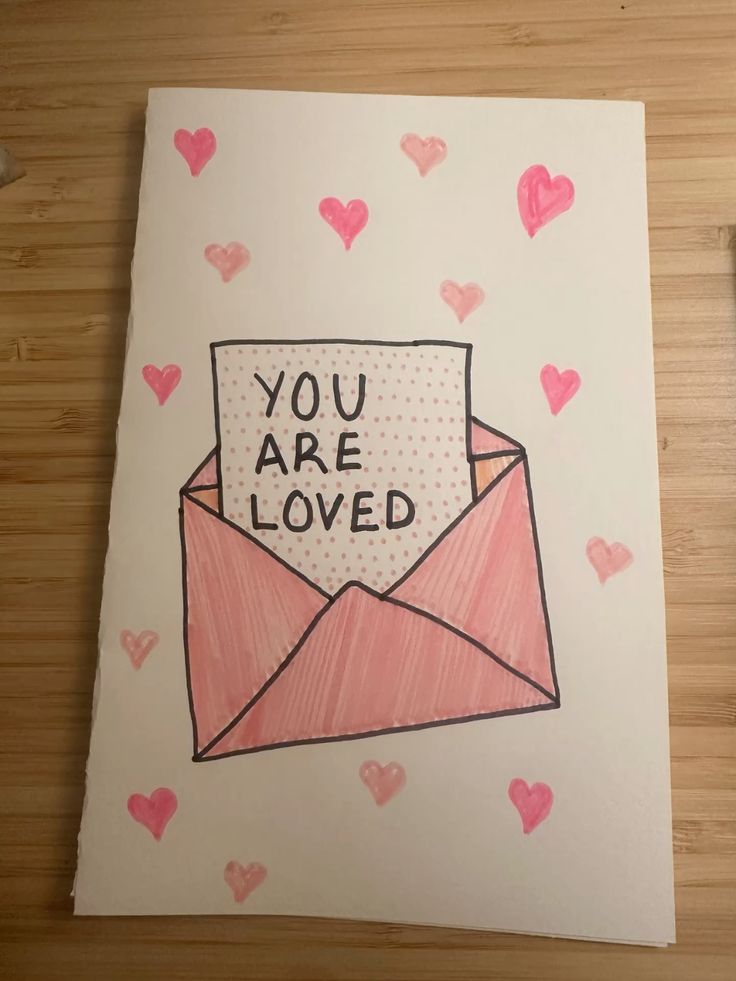
A Valentine’s card does not have to carry a long message to make someone feel remembered.
Residents can create cards for grandchildren, friends, fellow residents, nursing home staff or anyone they would like to appreciate. The important part is allowing each person to choose a message and contribute to the design.
Materials to prepare:
- Heavyweight cardstock in white, cream, pink or red.
- Large pre-cut paper hearts.
- Thick markers or easy-grip pens.
- Large Valentine’s stickers.
- Glue sticks.
- Printed greeting messages in large, clear lettering.
How to make the cards:
- Fold a sheet of cardstock in half to create the card.
- Let each resident choose a few large paper hearts or stickers to decorate the front.
- Add a short greeting, such as Happy Valentine’s Day, Sending You Love or Thank You for Being a Good Friend.
- Leave enough space inside for a personal message.
- Allow residents to sign their names, add a drawing or choose another decoration to finish the card.
How residents with writing difficulties can participate:
Not everyone will be comfortable holding a pen or writing a complete sentence. Offer three simple ways to take part:
- Choose a printed message: Prepare greetings in large print so residents can select the words they want without having to write them.
- Dictate their own words: Ask what they would like to say and write the message exactly as they express it.
- Use an easy-grip marker: A thick marker or pen with a larger barrel may be easier to hold than a thin writing tool.
A detail worth considering: Keep the message personal rather than giving everyone the same printed greeting.
One resident may want to thank a staff member for their kindness, while another may send a message to a grandchild they have not seen recently. These small choices give each card a purpose beyond the decoration.
Reminiscence activities can give older adults an opportunity to revisit meaningful moments and share their stories. Free Printable Memory Book Activity for Seniors — A Gentle 44-Page Activity Book for Nursing Homes and Home Care provides a printable resource for guided memory-sharing.
2. Community Valentine’s Paper Quilt
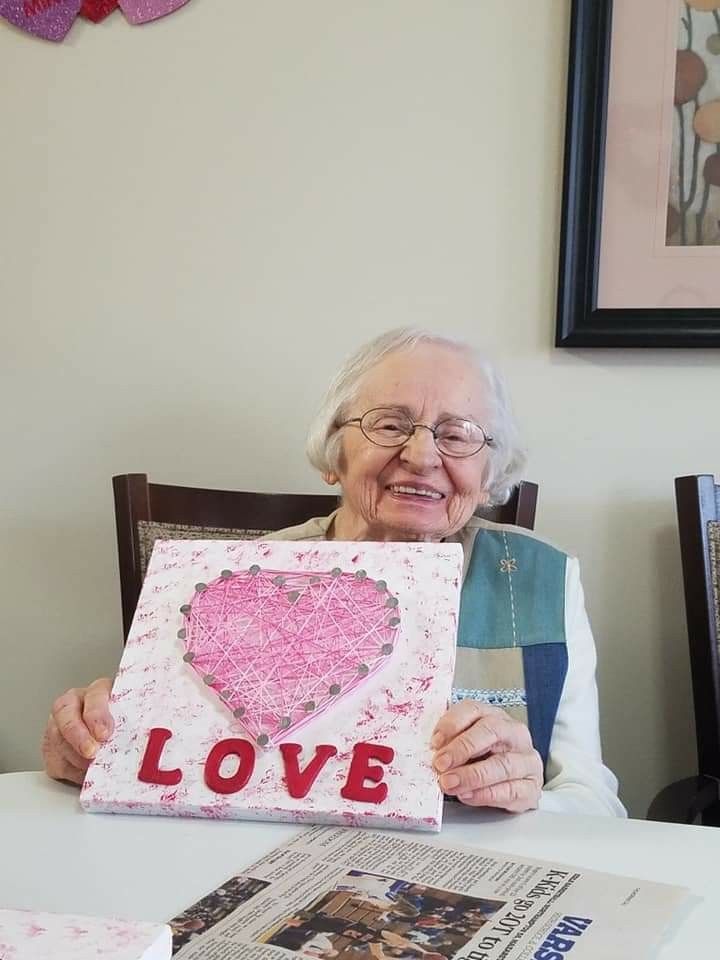
Instead of asking every resident to make a complete craft, let each person contribute one square to a large Valentine’s display.
When the squares are joined, the result becomes a shared piece of artwork for the activity room, hallway or common area.
Materials to prepare:
- Pre-cut cardstock squares, approximately 6–8 inches wide.
- Coloured paper hearts and large stickers.
- Thick markers and crayons.
- Glue sticks.
- A large backing sheet or display board.
How to make the paper quilt:
- Give each resident one cardstock square to decorate.
- Let them choose a design, such as hearts, flowers, stripes, polka dots or a short Valentine’s message.
- Residents can write their names, add a favourite colour or simply arrange and glue paper shapes.
- Collect the finished squares and arrange them in rows on a large backing sheet.
- Leave a small, even gap between the squares or place them edge to edge to create a quilt-like pattern.
How everyone can contribute: One resident might decorate an elaborate square, while another may prefer to place two hearts on theirs. Both contributions count.
Staff can help with arranging and attaching the squares, so residents do not have to handle the larger display themselves.
A display idea: Give the finished quilt a title such as Our Nursing Home Valentine’s Quilt or A Little Love From Everyone.
This makes the individual contributions part of one shared Valentine’s Day activity without expecting residents to work at the same pace or complete the same amount.
3. Textured Fabric Heart Collage
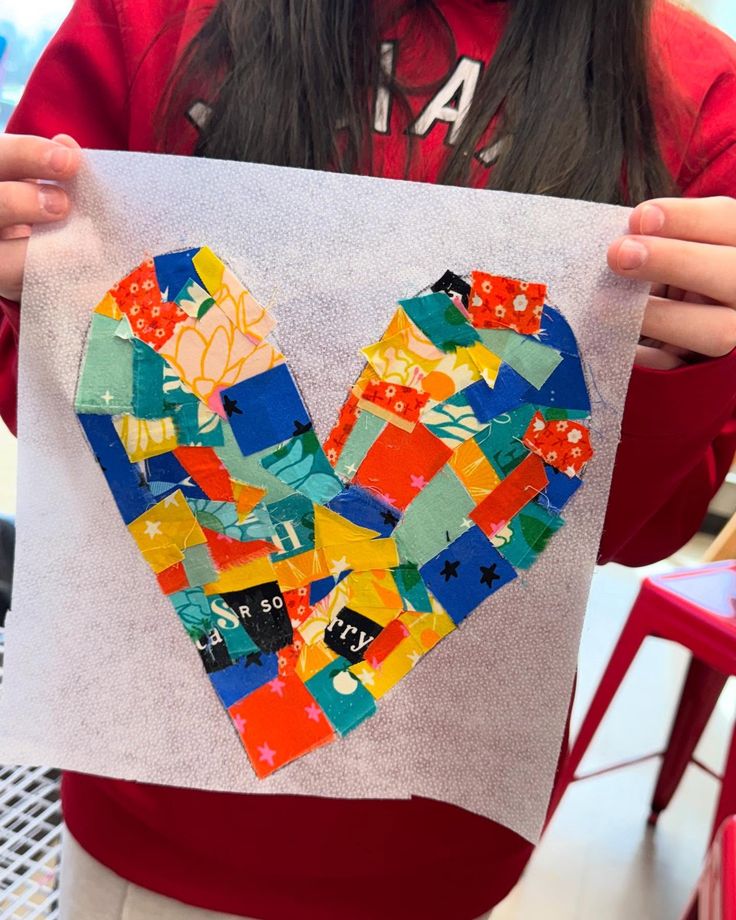
This craft gives residents an opportunity to work with different colours and fabric textures. Rather than drawing or cutting out complicated designs, they can arrange pieces of soft material to create a heart-shaped collage.
Materials to prepare:
- Large heart-shaped cardboard or thick cardstock bases.
- Pre-cut felt, cotton fabric and fleece pieces.
- Large fabric scraps in different colours.
- Non-toxic craft glue or suitable glue sticks.
- Shallow trays for separating the materials.
How to make the fabric collage:
- Prepare the heart-shaped bases before the activity.
- Cut the fabric into large squares, strips or simple shapes that are easy to pick up.
- Allow residents to feel and choose the materials they would like to use.
- Arrange the fabric pieces inside the heart outline, overlapping them slightly to create a layered design.
- Apply glue to the back of each piece and press it gently onto the cardboard.
- Leave the collage flat until the glue dries.
Make the textures interesting: Combine smooth cotton, soft felt and fleece in contrasting colours. For example, a resident could use a red felt heart in the centre, surround it with cream cotton pieces and add a pink fabric border.
Why prepare large pieces? Tiny fabric scraps can be difficult to pinch, pick up and position, particularly for residents with reduced hand strength. Larger pieces are easier to handle and do not require precise placement.
Check that residents are comfortable touching the selected materials, and avoid loose embellishments that could become a safety concern.
4. Personalised Valentine’s Photo Frames
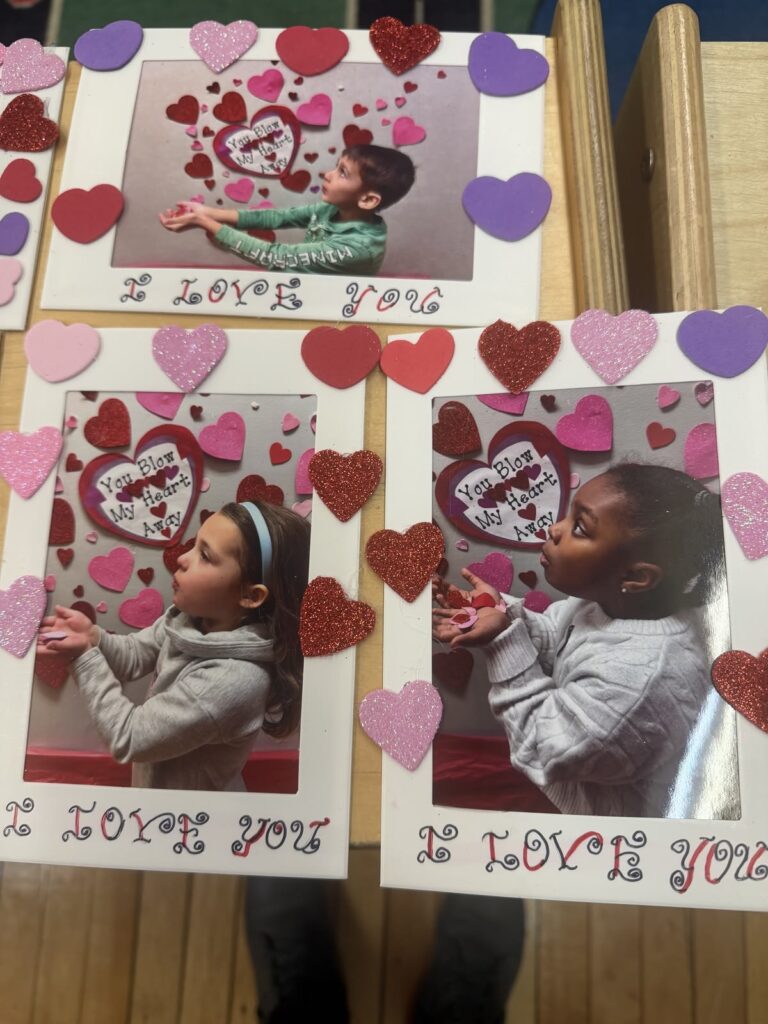
A decorated photo frame can give a resident a place to display a photograph of a loved one, friend, pet or special occasion.
Unlike a general Valentine’s decoration, this project allows the resident to choose an image that has personal meaning.
Materials to prepare:
- Lightweight, pre-cut cardboard photo frames.
- Family photographs or other pictures, provided with permission.
- Large paper hearts and flower shapes.
- Washable markers.
- Large stickers.
- Glue sticks and cardboard backing pieces.
How to decorate the frames:
- Prepare the cardboard frames with the photograph opening already cut out.
- Let each resident choose the colours and decorations for the border.
- Add paper hearts, flowers, stickers or a short personal message.
- Once the decorations are dry, attach the photograph behind the opening.
- Add a backing support so the frame can stand on a bedside table or shelf.
Make the photograph personal: Rather than choosing a random Valentine’s image, ask the resident which photograph they would like to display.
A picture with a grandchild, sibling, close friend or beloved pet may be more meaningful than a generic heart design.
Important considerations: Obtain permission before using or printing photographs, especially when family members supply them.
Check that the finished frame has a stable base and does not have sharp cardboard edges. For residents who cannot choose from printed photographs independently, offer a small selection and let them point to their preferred picture.
5. My Favourite Memories Valentine’s Mini Book
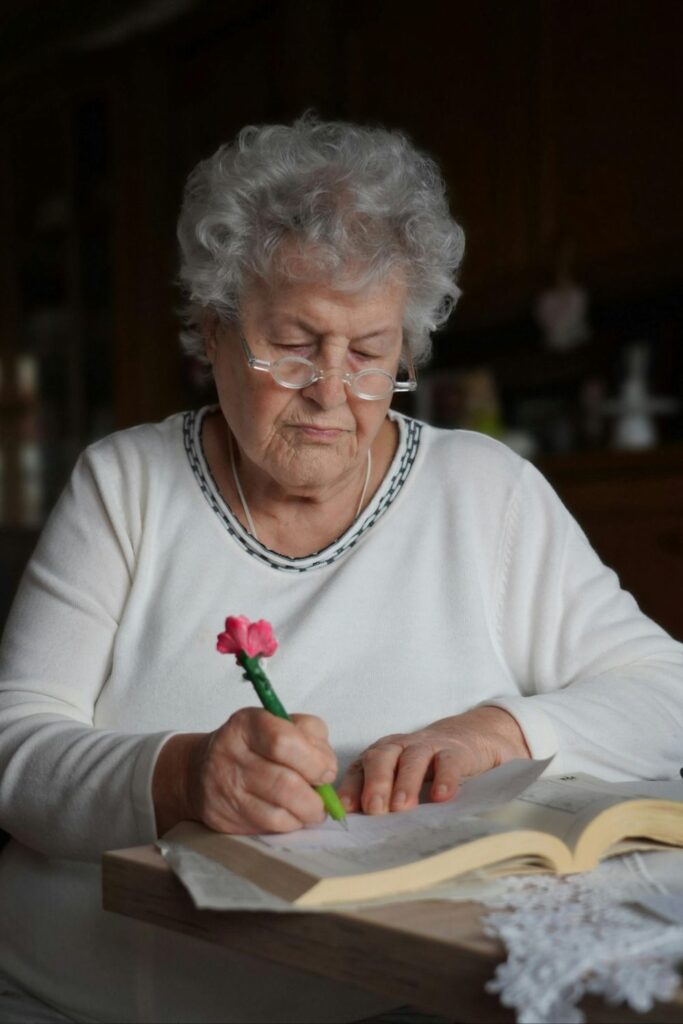
Not every Valentine’s craft has to focus on hearts and flowers. A small booklet with personal prompts gives residents an opportunity to share stories, favourite experiences and messages about people who matter to them.
It can also become a keepsake for the resident or their family.
Materials to prepare:
- Small booklets made from folded cardstock or several sheets of thick paper.
- Large-print question prompts.
- Thick markers or easy-grip pens.
- Printed pictures, large stickers and coloured paper shapes.
- Glue sticks.
Suggested booklet prompts:
- A place I love.
- A song I remember.
- Someone who makes me smile.
- A favourite family celebration.
- A kind thing someone once did for me.
- A message I would like to send to someone.
How to make the mini book:
- Prepare a booklet with four to six pages.
- Write or print one prompt on each page using large, clear lettering.
- Let residents choose which questions they would like to answer.
- They can write a response, draw something, select a picture or dictate their words to a volunteer.
- Decorate the cover with a paper heart and a title such as My Favourite Memories.
Give residents control over their stories: Some prompts may bring up memories that a person would rather not discuss. Make every question optional, and do not insist that residents share personal experiences with the group.
A resident who prefers to decorate the cover and leave the inside pages blank should be free to do so.
6. Paper Flower Bouquets
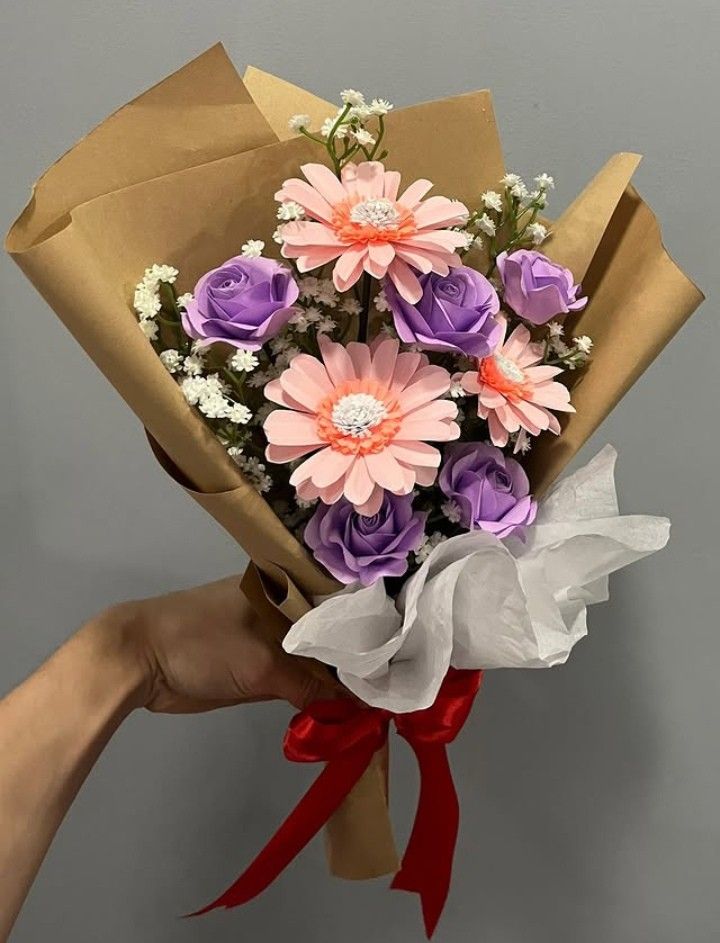
A paper flower bouquet offers a different take on traditional Valentine’s flowers. Residents can choose their favourite colours and arrange several handmade blooms into a small bouquet for a bedside table, family member or friend.
Materials to prepare:
- Pre-cut paper petals in different colours.
- Broad green paper stems.
- Small paper circles for flower centres.
- Glue sticks.
- Green cardstock for leaves.
- Paper or lightweight ribbon for wrapping the finished bouquet.
How to make the flowers:
- Give each resident a set of pre-cut petals and a paper flower centre.
- Arrange the petals in a circle, slightly overlapping their ends.
- Glue the petals to the back of the centre piece.
- Attach the finished flower to a broad paper stem.
- Add one or two green leaves before arranging several flowers together.
- Wrap the bouquet with coloured paper and secure it with a piece of ribbon if the resident wishes.
Make the activity easier: Cutting several matching petals can become tiring, especially for someone with stiff fingers or limited hand control.
Preparing the petals beforehand allows residents to focus on choosing colours, arranging the flowers and putting the bouquet together. Larger petals are also easier to grip than small, narrow shapes.
A personal touch: Ask residents to choose colours that remind them of a favourite flower or someone they would like to give the bouquet to. The finished flowers can be displayed individually or combined into a larger arrangement for the activity room.
Autumn activities can be enjoyable for older adults, especially when they involve simple materials and familiar seasonal themes. 10 Scarecrow Crafts for Seniors You Will Reuse Every Autumn offers projects to try with seniors.
7. Yarn-Wrapped Cardboard Hearts
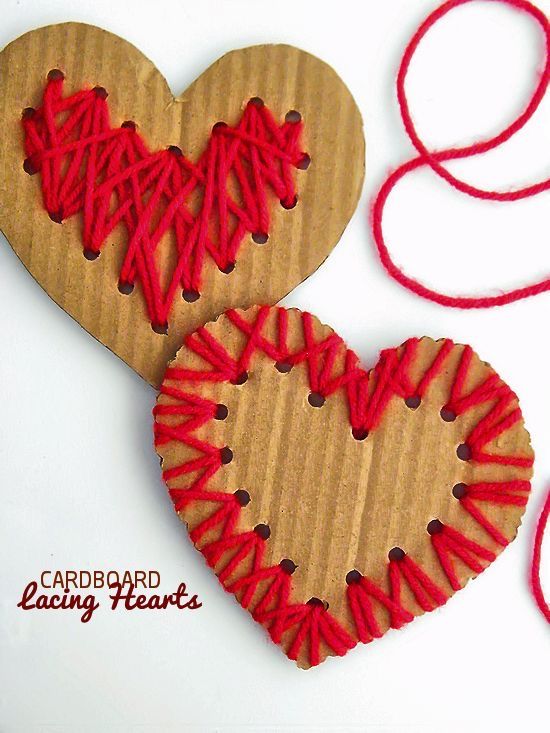
Photo credit: @ Unknown
Wrapping yarn around a cardboard heart creates a soft, textured Valentine’s decoration without requiring knitting, crochet or needlework.
The repeated wrapping motion makes this a simple project for residents who enjoy working with yarn but may not want a more complicated textile craft.
Materials to prepare:
- Large, sturdy cardboard heart shapes.
- Soft, medium-thickness yarn in red, pink, white or purple.
- Wide notches cut around the edges of each heart.
- Large trays or baskets for holding the yarn.
- Paper or masking tape to secure loose ends.
How to make the yarn hearts:
- Cut out the cardboard hearts and prepare wide, shallow notches around their edges before the session.
- Secure one end of the yarn to the back of the heart.
- Show residents how to pass the yarn across the front, catch it around a notch and bring it across again.
- Continue wrapping until the cardboard is mostly covered.
- Secure the loose end at the back with assistance where necessary.
Prepare the bases properly: The notches help keep the yarn in place as it moves around the cardboard.
Make them wide enough for the yarn to sit comfortably without forcing residents to pull it through a narrow opening. Staff should prepare these bases in advance so participants do not have to cut the cardboard.
Offer different levels of participation: Some residents may enjoy wrapping the yarn independently, while others may prefer to choose the colour and make a few wraps with assistance.
For anyone who finds repeated wrapping uncomfortable, a partially wrapped heart can be provided for them to finish.
8. Watercolour Resist Valentine’s Bookmarks
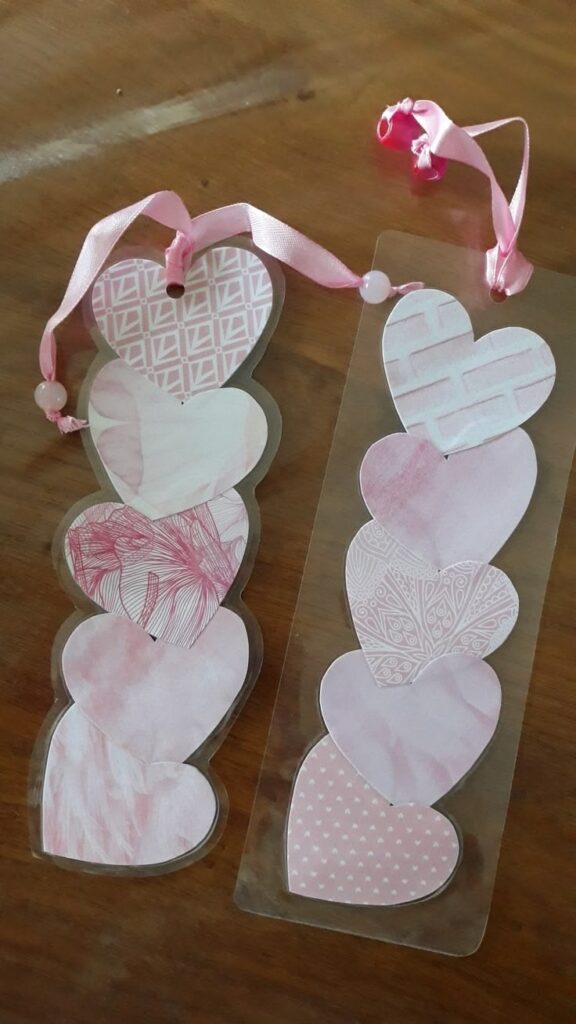
This painting activity uses a simple technique to create a hidden heart design. White crayon is used to draw patterns on thick paper before watercolour is brushed over the surface.
As the paint spreads, the crayon marks resist the watercolour and become visible against the coloured background.
Materials to prepare:
- Thick watercolour paper.
- White wax crayons.
- Washable watercolour paints.
- Broad paintbrushes with comfortable handles.
- Small water containers.
- Paper towels or protective table covers.
- Pre-cut bookmark shapes.
How to make the bookmarks:
- Before the session, draw simple heart outlines, dots or wavy patterns on the paper with a white crayon.
- Give each resident a prepared sheet or bookmark shape.
- Let them choose a watercolour shade, such as pink, red, purple or blue.
- Brush the paint over the paper, allowing the white crayon patterns to show through.
- Leave the bookmarks flat to dry completely.
- Staff or volunteers can laminate the dry bookmarks, trim the edges and add a ribbon if the facility permits.
Why use this technique? Residents do not have to draw detailed pictures or control a pencil to create the design.
The crayon pattern is prepared beforehand, leaving them to choose colours and brush paint across the paper. Broad-handled brushes can also be easier to grip than thin ones.
Turn it into a small gift: Once dry, the bookmarks can be given to residents who enjoy reading, placed in Valentine’s gift bags or shared with family members.
Avoid making the paper too thin, as wet paint can cause ordinary printer paper to wrinkle or tear.
9. Personalised Valentine’s Door or Bedside Signs
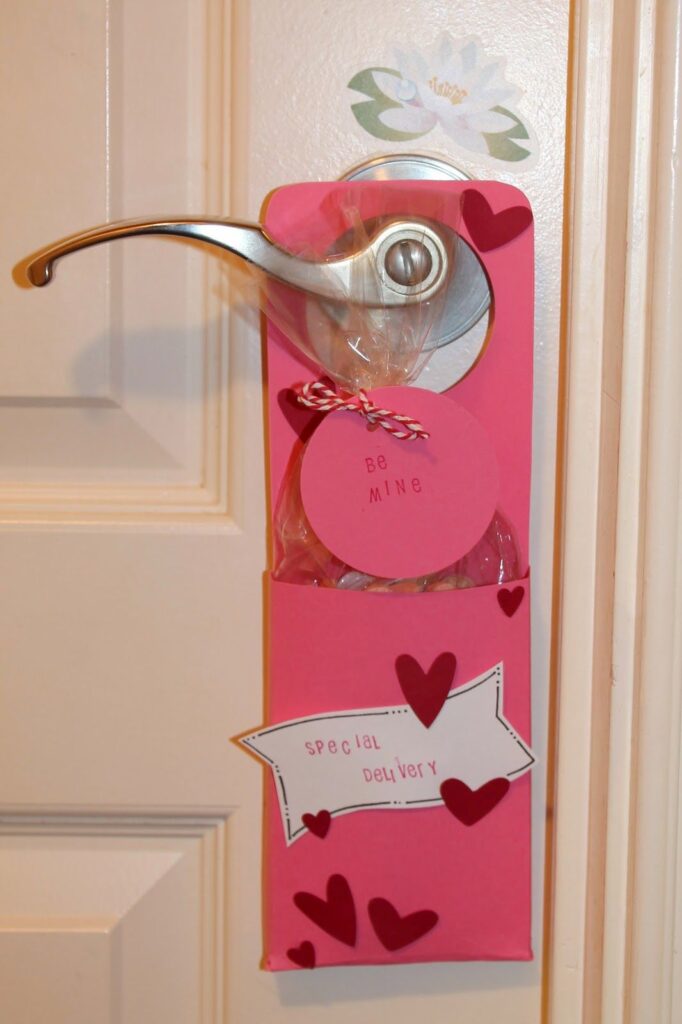
A resident’s room can feel more welcoming with a small decoration that reflects their personality.
For Valentine’s Day crafts for seniors in nursing homes, personalised door or bedside signs offer a simple way to add colour and a greeting without requiring residents to make a complicated project.
Materials to prepare:
- Lightweight cardstock or thin craft foam.
- Large pre-cut hearts and flower shapes.
- Thick markers.
- Large stickers.
- Glue sticks.
- Broad ribbon or another facility-approved hanging material, if permitted.
How to make the signs:
- Prepare rectangular or heart-shaped sign bases before the activity.
- Let each resident choose a background colour and a few decorations.
- Add their first name, a short greeting or a message such as A Little Love Lives Here or Welcome, Friends.
- Allow residents to arrange the hearts and stickers before gluing them down.
- Leave the signs flat until the glue dries.
Make each sign personal: Some residents may prefer their names, while others might choose a message about friendship or kindness. Residents who find writing difficult can select pre-printed words or dictate what they want written.
Check before displaying: Ask nursing home staff where signs can be placed and which hanging materials are permitted.
Decorations should not cover room numbers, obstruct door handles, interfere with emergency equipment or create obstacles in walkways. A small bedside sign may be a better option where door decorations are restricted.
10. Decorated Valentine’s Gift Bags
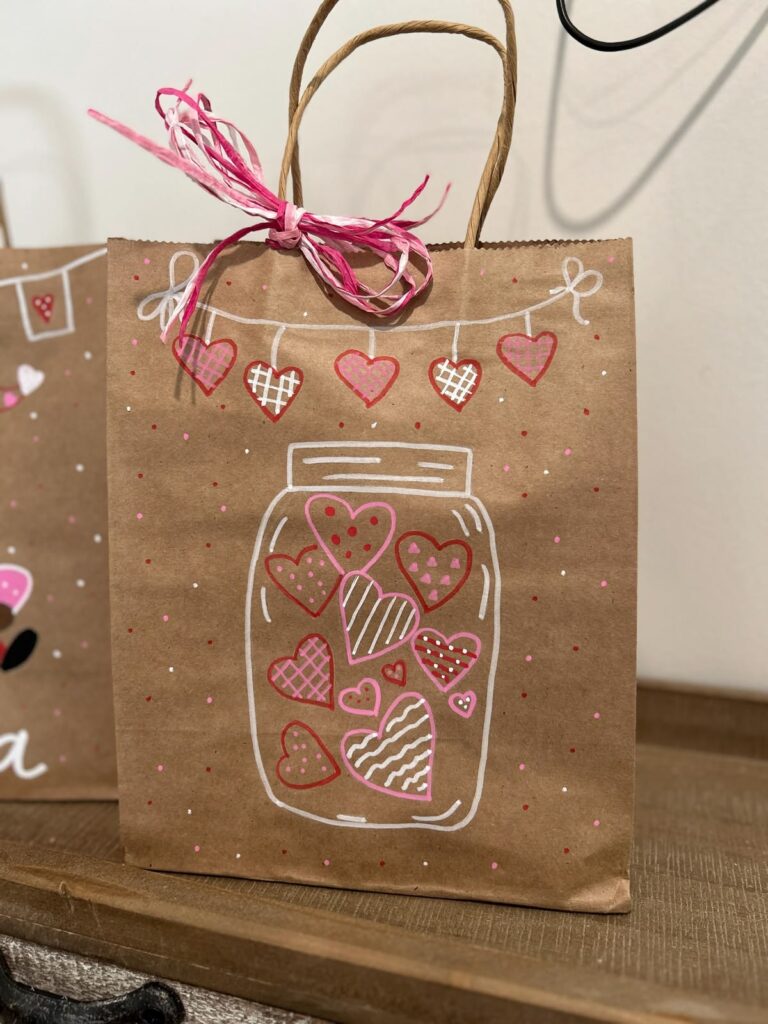
Plain gift bags can become part of the Valentine’s celebration when residents decorate them for presenting small gifts or greeting cards.
This is particularly useful when a nursing home is organising a Valentine’s social and wants residents to contribute to the preparations.
Materials to prepare:
- Plain paper gift bags with sturdy handles.
- Large heart and flower stickers.
- Pre-cut coloured paper shapes.
- Washable markers or stamps.
- Glue sticks.
- Large-print Valentine’s message labels.
How to decorate the bags:
- Give each resident a plain, ready-made gift bag.
- Let them choose stickers, paper hearts and other decorations.
- Add a short greeting, the recipient’s name or a simple Valentine’s message.
- Allow the decorations to dry before staff place approved gifts inside.
Keep the activity focused on decoration: Buy or prepare the bags in advance rather than asking residents to fold, cut and assemble them. This leaves more time for choosing designs and decorating, without making the activity unnecessarily demanding.
Ideas for using the finished bags: They can hold Valentine’s cards, small craft gifts, individually wrapped treats approved by the facility or activity supplies for a social gathering.
Check dietary restrictions and allergies before including food, and make sure the bags are not overloaded or too heavy for the intended recipient.
Choosing a gift for someone special becomes more meaningful when it reflects his interests, so explore Valentine’s Gifts for Your Boyfriend That Feel Personal, Thoughtful and True to Him for thoughtful suggestions.
11. Paper Heart Garland With Messages of Appreciation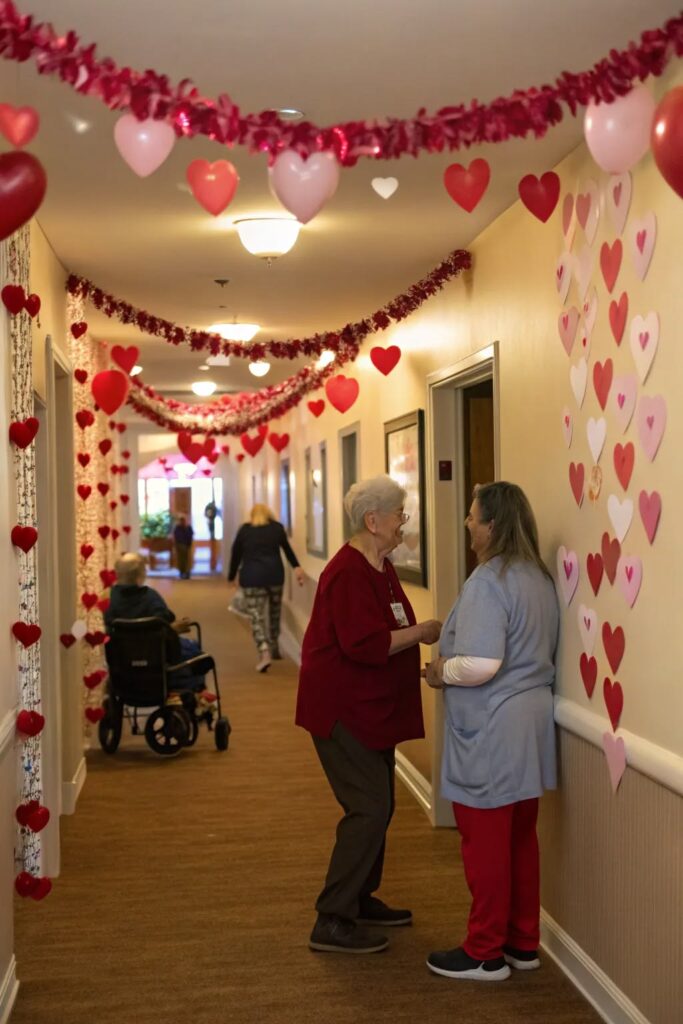
A paper heart garland can turn individual messages into a shared Valentine’s decoration.
Rather than making every heart look alike, residents can contribute their own words about friendship, kindness, family or someone who has made a difference in their lives.
Materials to prepare:
- Large pre-cut cardstock hearts.
- Thick markers and crayons.
- Large stickers.
- Pre-cut paper strips.
- Glue sticks or facility-approved tape.
- A length of string or ribbon, if permitted.
How to make the garland:
- Give each resident one or more large paper hearts.
- Invite them to write a short message, draw a simple picture or decorate the heart with stickers.
- Offer message suggestions such as Thank you for your kindness, You make people smile or Friendship makes life brighter.
- Join the finished hearts using paper strips folded into loops or attach them to a length of string.
- Display the garland in an approved area of the activity room.
Include residents who do not wish to write: Prepare a selection of short appreciation messages in large print. Residents can choose one, select a colour or point to a design they like. A staff member or volunteer can write their chosen words on the heart.
Give the display a shared purpose: The garland could recognise the kindness of fellow residents, visiting family members, volunteers or nursing home staff.
Keep personal messages optional, and ask permission before displaying anything that identifies a resident or shares private information.
12. Large-Piece Paper Mosaic Hearts
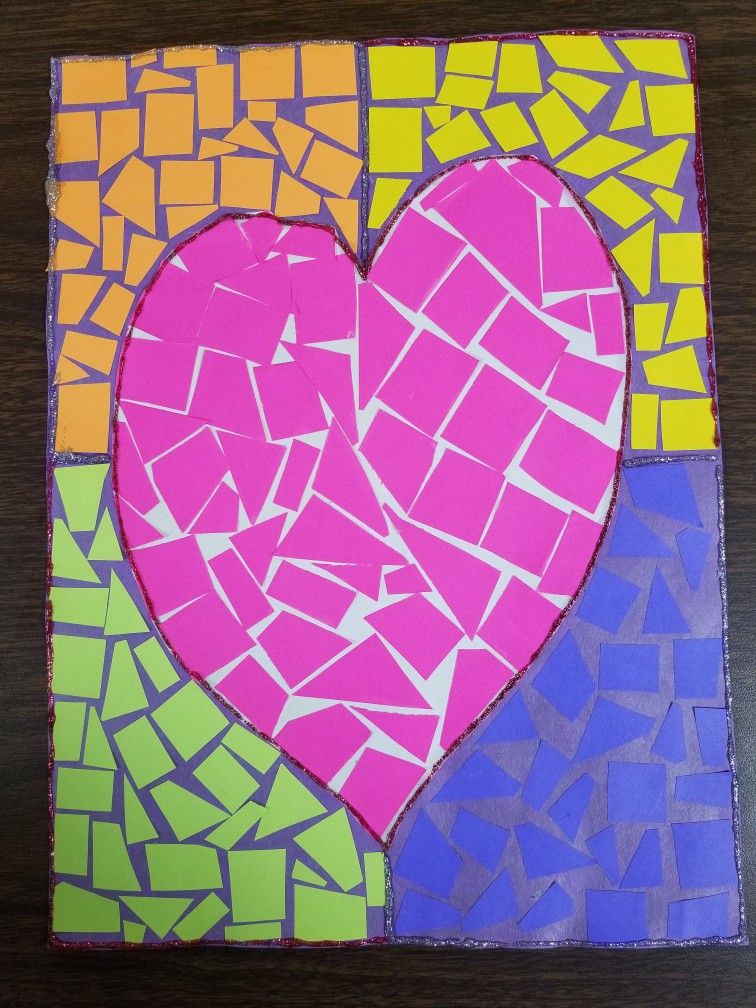
A paper mosaic heart is made by arranging coloured paper pieces across a larger heart-shaped base.
The finished design has the appearance of a mosaic, but residents do not have to work with glass, tiles or complicated cutting tools.
Materials to prepare:
- Large heart-shaped cardstock or cardboard bases.
- Pre-cut paper squares, rectangles and other simple shapes.
- Contrasting colours such as red, pink, white, purple and gold.
- Glue sticks.
- Shallow trays for sorting the paper pieces.
How to make the mosaic:
- Prepare the heart-shaped bases before the session.
- Cut the coloured paper into pieces large enough to pick up easily.
- Let residents select colours and arrange the pieces across the heart.
- Encourage them to leave small spaces between the shapes or overlap the edges slightly for a layered effect.
- Glue the pieces in place and allow the design to dry.
Help residents create different patterns: One person might arrange alternating red and white squares, while another could group pink and purple pieces around the centre.
There is no need for every heart to follow the same pattern. The variety makes the finished collection more interesting.
Choose materials carefully: Tiny beads, buttons and miniature decorations are unnecessary for this project.
They can be difficult to grip and may present choking risks, particularly in shared care settings. Large paper pieces are easier to handle and keep the activity focused on colour, arrangement and creativity.
13. Handmade Valentine’s Letter Holders

During a Valentine’s celebration, residents may receive several cards and notes from relatives, friends and other residents.
A handmade letter holder gives them a designated place to keep those messages rather than leaving them scattered on a bedside table.
Materials to prepare:
- Pre-folded cardstock pockets.
- Large paper hearts and stickers.
- Thick markers.
- Glue sticks.
- Cardstock labels with words such as My Valentine’s Cards or Special Messages.
How to decorate the holders:
- Prepare simple pockets by folding a rectangular piece of cardstock and securing the two sides. Staff or volunteers can complete this step before the session.
- Give each resident a prepared pocket.
- Let them choose a colour and decorate the front with hearts, flowers or stickers.
- Add their name or a short title.
- Allow the glue to dry before placing the holder on a suitable bedside surface or approved display area.
Give the holder a practical purpose: Residents can use it to keep Valentine’s cards, short notes and messages received during the celebration. It can also hold a few greeting cards they have made for other people.
Make it easy to use: The pocket should have a wide opening so cards can be inserted and removed without forcing them into a narrow space.
Avoid making it too deep or narrow, as residents may find it difficult to reach inside. A larger, sturdy pocket is more useful than one covered in elaborate decorations.
14. Decorated Mini Flower Pots
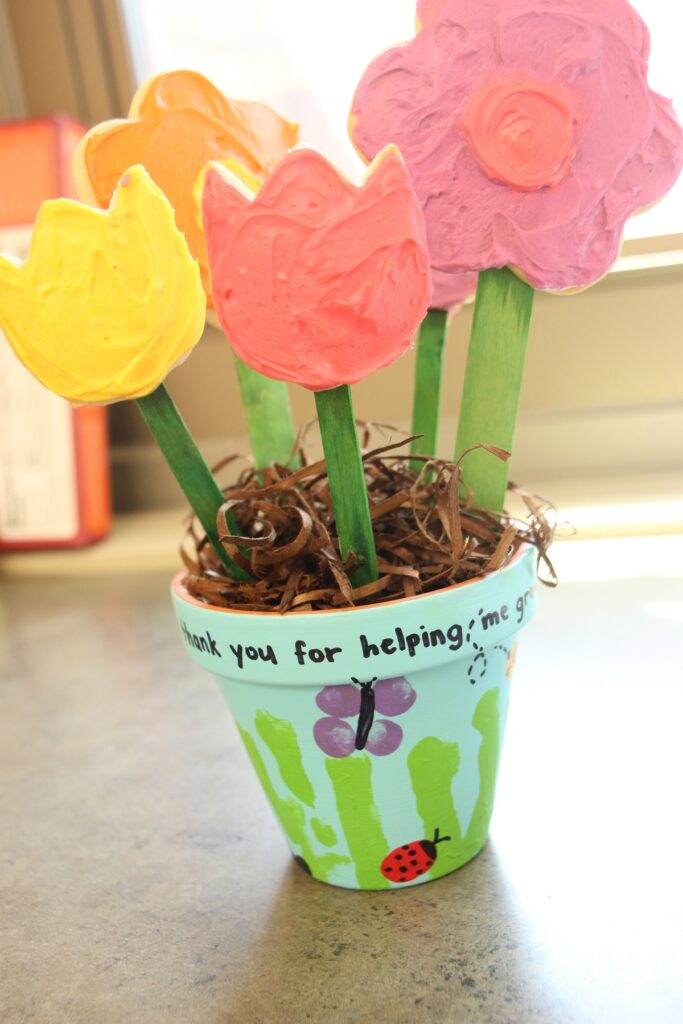
For residents who enjoy flowers or gardening, decorating a small flower pot offers a Valentine’s activity that can continue beyond the craft session.
The pot can hold a suitable plant or flower and provide a colourful addition to a bedside table or approved communal space.
Materials to prepare:
- Lightweight, clean mini flower pots.
- Paint markers or facility-approved paints.
- Large heart stickers and stencils.
- Paintbrushes, if using paint.
- Protective table covers.
- Suitable small plants, selected with the facility.
How to decorate the pots:
- Give each resident a clean, dry pot.
- Let them choose a colour scheme or a simple design.
- Add hearts, names, dots or short messages using paint markers or brushes.
- Leave the pots to dry fully according to the paint manufacturer’s instructions.
- Staff can assist with adding the selected plant after the decoration is ready.
Choose the plant with care: Not every plant is suitable for a nursing home. Staff should check for plant toxicity, allergies, fragrance sensitivities, watering requirements and the resident’s preferences before selecting one.
A plant that requires frequent watering or sheds soil easily may not be practical for every room.
An alternative to live plants: Where live plants are not permitted or practical, use artificial flowers or paper flowers made during the activity. Residents can still enjoy decorating the pot without the additional responsibility of plant care.
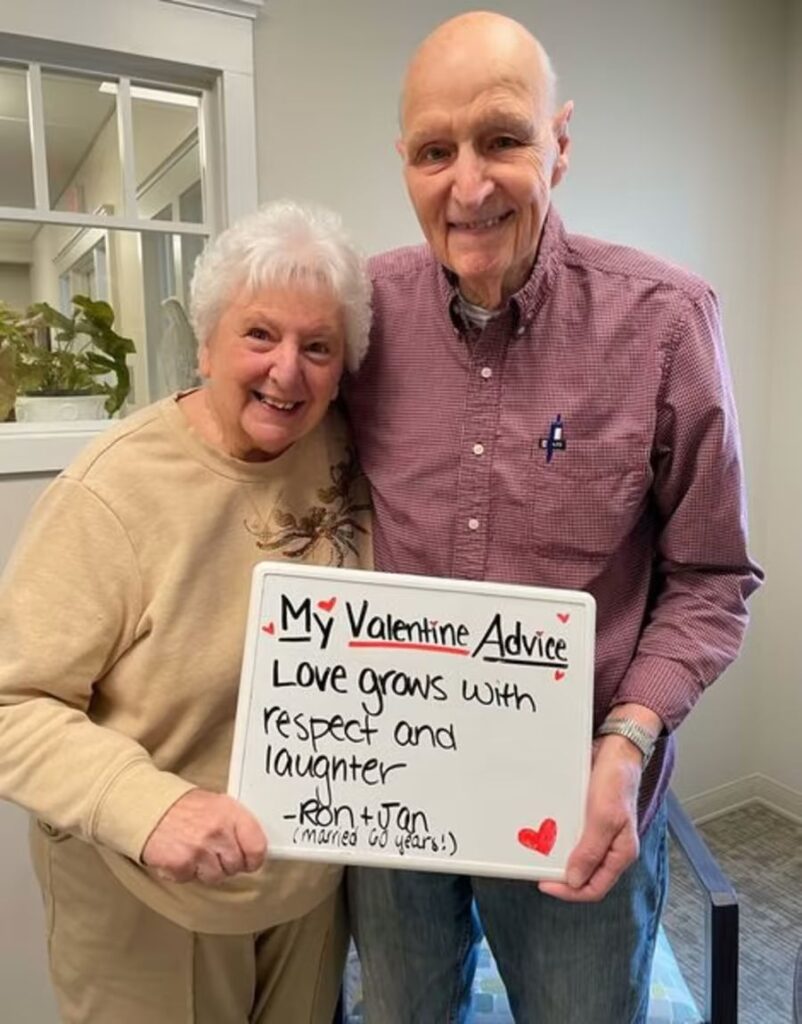
Photo credit: @ clickondetroit.com
A shared appreciation board gives residents a chance to recognise the people and small acts of kindness that make their days better.
Rather than displaying only commercial Valentine’s decorations, the board can feature messages written by residents themselves.
Materials to prepare:
- A large display board or facility-approved noticeboard.
- Large cardstock hearts or message cards.
- Thick markers and large-print message prompts.
- Paper flowers and simple decorations.
- Removable, facility-approved display materials.
How to create the display:
- Set up the board with a simple heading such as Messages of Love and Appreciation.
- Give residents a large heart or message card.
- Invite them to write or dictate a message about friendship, kindness, family or someone they appreciate.
- Let them choose whether to add their names or contribute anonymously.
- Arrange the finished messages on the board, leaving enough space for each one to be read clearly.
Give residents different ways to contribute: Some may want to write a personal message, while others may prefer to choose from printed greetings or dictate their own words to a volunteer.
Residents who do not wish to share a message can still help choose colours or arrange the decorations.
Make the display meaningful: Rather than filling the board with repeated greetings, include specific messages where residents are comfortable sharing them.
For example, someone might thank a fellow resident for keeping them company during lunch, or recognise a staff member who helped them with a daily task.
These details make the display feel connected to the people who live and work in the facility.
Respect privacy: Ask residents before displaying their names, photographs or personal messages.
Keep contributions anonymous when requested, and have staff approve the board’s location and display materials before putting it up.
School celebrations can be more exciting with a personalised treat holder, and Valentine’s Day Boxes for Boys That Feel Creative, Playful, and Just Right for School has fun ideas to inspire the design.
How to Adapt Valentine’s Crafts for Seniors With Different Needs
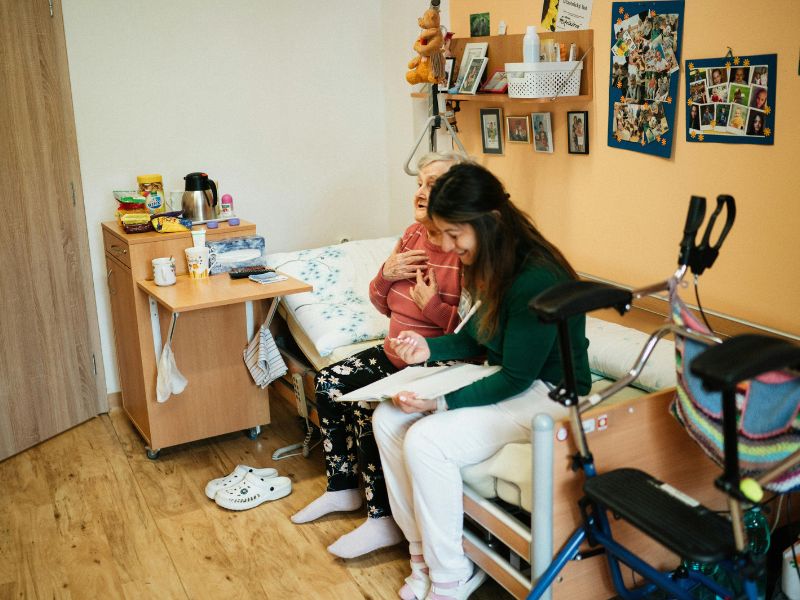
Two residents may sit at the same table, receive the same materials and approach a craft in completely different ways.
One may enjoy cutting out shapes, while another may find it tiring to hold scissors. Someone may happily write a Valentine’s message, but another may prefer to choose the words and have a volunteer write them.
The aim is not to create a separate craft for every resident. It is to make a few sensible adjustments so more people can participate comfortably and make choices about their own work.
For Residents With Limited Hand Strength or Stiff Fingers
Small stickers, thin threads, narrow pen barrels and repeated cutting can make a craft tiring. A resident might enjoy choosing a design but struggle to pick up the materials or keep hold of a tool.
- Prepare materials in advance: Cut paper hearts, flower petals, bookmark shapes and fabric pieces before the session. This leaves residents with the more enjoyable parts of arranging and decorating.
- Choose tools that are easier to hold: Chunky markers, large-handled brushes and easy-grip scissors may be more comfortable than thin pens and small tools. Let residents try them rather than assuming one tool suits everyone.
- Reduce the amount of squeezing required: Glue sticks or suitable adhesive dots can be easier to manage than small glue bottles that require firm pressure.
- Offer manageable quantities: Put a few shapes or stickers on the table at a time instead of giving residents a large pile to sort through. This makes materials easier to pick up and organise.
A useful adjustment is to offer a partly prepared version of the craft. For example, a resident making a paper flower bouquet could receive the petals already arranged around the flower centre and help attach the stem. They still contribute to the finished flower without having to complete every step.
For Residents With Low Vision
A craft can become frustrating when the resident cannot distinguish the decoration from the background or read the message they are working with.
Adding more colours does not necessarily make a project easier to see. The contrast between materials matters.
- Use strong colour contrast: Dark red shapes on white cardstock or white lettering on a dark background are generally easier to distinguish than pale pink designs on cream paper.
- Make shapes larger: Choose broad hearts, large stickers and clearly defined flower petals instead of tiny decorations.
- Use readable lettering: Print greetings and instructions in a large, clear font. Avoid decorative scripts that make letters difficult to recognise.
- Improve the working area: Provide good lighting and arrange materials so they are not hidden behind other objects. Check that glare from glossy paper or shiny decorations is not making the surface harder to see.
For example, a resident decorating a Valentine’s gift bag may find large red heart stickers easier to identify than several tiny pink and silver embellishments. The design can still look attractive without relying on small details.
For Residents Living With Dementia
A long set of instructions or too many materials presented at once can make a craft confusing. This does not mean residents with dementia cannot enjoy Valentine’s activities.
It means the activity should be introduced in a way that suits the person’s familiarity, interests and current abilities.
- Start with familiar materials: Paper, washable markers, fabric and photographs may be more inviting when they relate to activities the person has enjoyed before.
- Give one instruction at a time: Instead of explaining the entire craft, demonstrate the first step and allow the resident to try it before moving on.
- Show rather than only explain: Hold up a finished example or demonstrate how to place a heart on a card. A visible example can make the task easier to understand.
- Keep the choices manageable: Offer two or three colours or decoration options at a time. Too many choices can make it harder to decide where to begin.
- Watch for signs of discomfort: Pausing, turning away, appearing frustrated or repeatedly putting materials aside may mean the activity is no longer enjoyable. Offer a break or another option rather than insisting that the resident finish.
Familiar music, old photographs or simple conversation may help introduce an activity, provided the resident enjoys them. However, avoid turning a craft into a memory test. A person should not be expected to remember names, dates or events to participate successfully.
For Residents With Limited Mobility
A craft may be described as suitable for seniors, but that does not automatically make it comfortable for someone who uses a wheelchair, has difficulty reaching across a table or needs to remain in bed.
- Set up within comfortable reach: Place the materials close enough for the resident to access without stretching, leaning too far or repeatedly asking someone to pass items.
- Use stable work surfaces: A suitable table or lap tray can support the materials and reduce the need to hold everything in place.
- Avoid overcrowding: Keep only the materials being used on the work surface. Extra containers, scissors and decoration supplies can make a small area difficult to manage.
- Allow enough time: Residents should be able to pause, change position or continue later without feeling rushed.
- Arrange assistance with positioning: Ask nursing staff about suitable seating, lap trays and any individual movement or positioning restrictions before starting.
For residents who cannot comfortably reach or manipulate the materials, a volunteer can hold the cardstock steady, move supplies closer or attach a decoration at the resident’s direction. The resident should still decide what goes where.
For Residents Who Prefer Not to Make Things
Participation does not have to mean holding a paintbrush or producing a finished craft. Some residents may dislike arts and crafts, feel tired that day or simply prefer to observe the activity.
Offer other ways to be involved:
- Choose the design: Let the resident select colours, paper shapes or the message for a card.
- Direct a volunteer: They can explain where to place the decorations while someone else handles the cutting or gluing.
- Help with group decisions: Ask them to choose the heading for the shared Valentine’s display or decide how the paper quilt should be arranged.
- Enjoy the activity as an observer: They may prefer to watch others create their projects, listen to conversation or enjoy the finished display.
The National Institute on Aging recommends matching activities to a person’s abilities and interests, offering help when needed and allowing the person to watch if that is their preference. This is an important distinction: a resident should not have to make something to be included in a Valentine’s celebration.
One final consideration: Ask residents what they would like to do before deciding what assistance they need.
Offer help with a specific task rather than taking over the entire project. Someone who cannot cut a paper heart may still be perfectly able to choose its colour, decide where it belongs and enjoy seeing the finished design.
Baking something sweet is a lovely way to mark Valentine’s Day, and Soft and Sweet Valentine’s Day Sugar Cookies Made for Slow Baking Moments offers a recipe to make and share.
Conclusion
The most meaningful Valentine’s Day crafts for seniors in nursing homes are not necessarily the ones with the neatest designs or the most decorations.
A card carrying a personal message, a flower chosen in someone’s favourite colour or one square added to a community paper quilt can make the activity feel personal and worthwhile.
Let residents choose how they participate, whether they prefer making something independently, receiving a little assistance or contributing to a shared display.
What matters is giving everyone room to express themselves, enjoy the company and take part in a way that feels comfortable to them.