This post contains affiliate links. This means I may earn a small commission if you purchase through my links at no extra cost to you.
Plan a memorable candle-making night with 20 creative scent ideas, smart blending tips, and simple lessons for candles that smell great when lit well.
Making a candle that smells incredible in the bottle, only to light it a few days later and wonder where the fragrance went, is a particular kind of disappointment.
That is because smelling good and burning well are not the same thing.
A candle has to do more than hold a beautiful fragrance. The wax has to carry it properly, the fragrance has to be used at an appropriate load, and the wick has to create a melt pool capable of releasing that scent without making the candle burn too hot or poorly.
Even the diameter of the container can change how much fragrance reaches the room. Candle makers call the scent before burning cold throw and the fragrance released during burning hot throw, and the two don’t always agree.
That changes how I think about a candle-making night.
Instead of putting a pile of fragrance oils on the table and telling everyone to pick whatever smells nice, why not make the evening an opportunity to understand scent and build a candle deliberately?
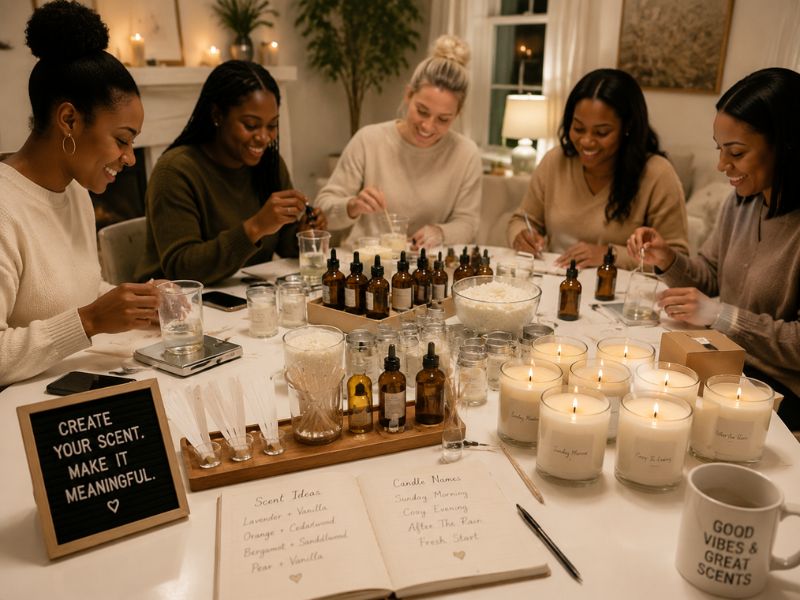
So these candle making night ideas aren’t just about what to pour into a jar, they’re about turning an ordinary craft night into a small scent laboratory, where everyone gets to experiment, learn what actually makes a candle perform, and leave with something that smells good when it is actually burning, not just when the lid comes off.
Make the night more creative with Paint and Sip Craft Night Ideas That Are Way Better Than a Studio, especially if you want a relaxed activity with friends.
1. Build a “Choose-Your-Scent Mood” Candle Bar
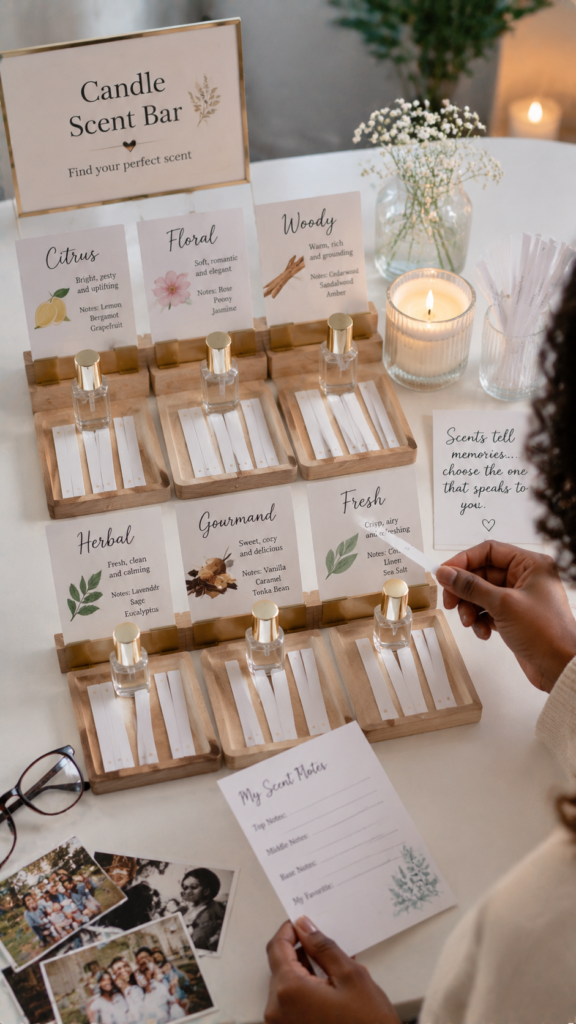
Instead of placing every fragrance oil on the table and asking everyone to pick whatever smells good, organize the scents by fragrance family and mood. This makes the evening easier for beginners and gives everyone a reason behind the scent they choose.
Set up small labeled scent strips or blotters in groups such as:
- Citrus: lemon, orange, grapefruit, bergamot
- Floral: lavender, rose, jasmine, geranium
- Woody: cedarwood, sandalwood, pine
- Herbal/green: rosemary, basil, fresh-cut grass-style fragrances
- Gourmand: vanilla, coffee, chocolate, caramel
- Fresh: linen, tea, aquatic and other clean-style fragrances
Let each guest choose a fragrance family first, then smell a few options within it. This helps prevent the common beginner mistake of combining several strong scents without knowing how they will work together.
Use candle-safe fragrance oils and follow the supplier’s recommended usage rate for your particular wax. A fragrance that smells lovely in the bottle is not automatically suitable for candle making.
The goal is simple: choose the scent direction first, then build the candle around it. It makes the activity more intentional and gives guests a better understanding of how fragrance choices affect the finished candle.
For a faith-centered gathering, Women’s Christian Craft Night: 15 Easy Ideas for Women’s Ministry offers simple projects suited to a group.
2. Create a Two-Note Signature Candle
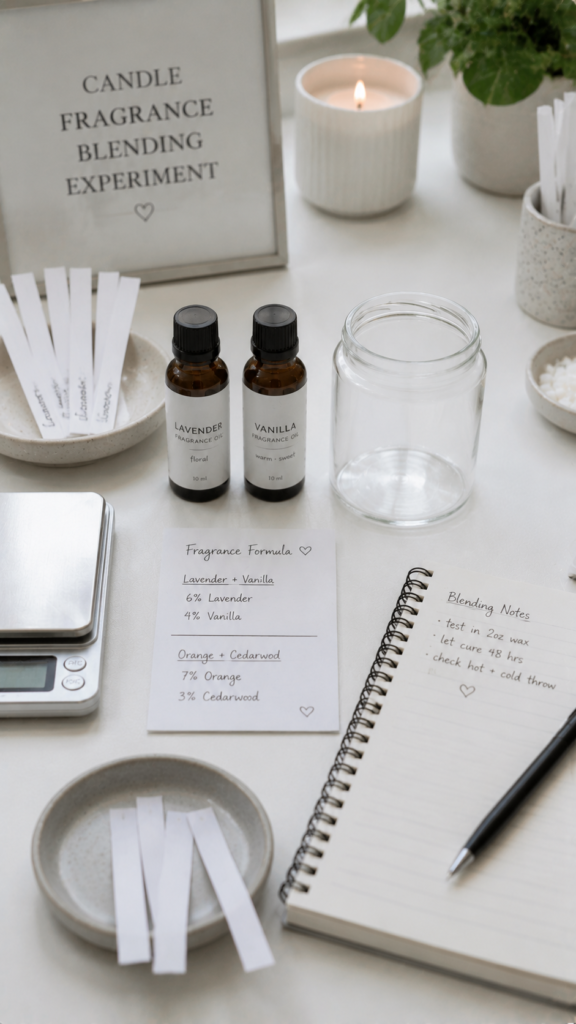
Give each guest just two fragrances to work with instead of a long list of oils. The restriction makes it easier to notice how one scent changes another.
Try pairings such as:
- Bergamot + sandalwood for a fresh, woody profile
- Orange + cedarwood for a bright scent with depth
- Lavender + vanilla for a soft, warm profile
- Pear + vanilla for a gentle fruity-gourmand direction
Have guests smell both fragrances separately before deciding on their blend. One should have a clear role while the other supports it; otherwise, one fragrance can easily overpower the other.
Keep the blend simple and record the amounts used. Fragrance oils should be weighed rather than measured by drops, and the final fragrance load should stay within the wax manufacturer’s recommended range.
The lesson is useful: a good candle scent is not about how many fragrances you can fit into one jar. It is about how well the chosen scents work together.
Can’t get everyone in the same room? How to Plan a Virtual Craft Night Party with Friends (DIY Girls Night Guide) can help you bring the craft night online.
3. Turn a Memory Into a Candle Scent
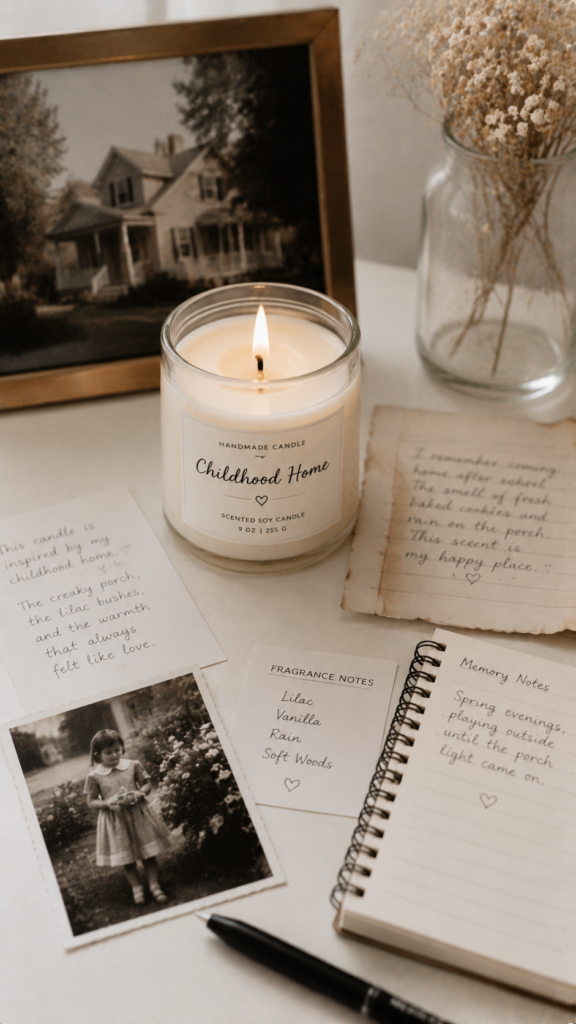
Ask everyone to choose a memory they would like their candle to remind them of—a rainy afternoon, a favorite holiday, a garden, freshly baked cake, a beach trip, or even the smell of a childhood home.
Then turn that memory into fragrance families, rather than trying to find one fragrance that literally smells like the memory.
For example, a rainy garden might suggest green, floral, earthy, or fresh notes. A warm bakery memory could lead toward vanilla, spice, coffee, or other gourmand fragrances.
This works because fragrance is closely tied to memory and emotion, but scent perception is also personal. The same fragrance can remind two people of completely different things.
Give each guest a small card to record the memory, fragrance family, chosen notes, and final candle name. It turns the activity from simply making a scented candle into creating something with a story behind it.
Just avoid promising that a particular blend will reproduce a memory exactly. The goal is to evoke a feeling, not manufacture an identical smell.
Moms who need a little uninterrupted creative time can find more inspiration in 30 Craft Night Ideas for Moms Who Need One Night That’s Just Theirs.
4. Make a Candle Inspired by a Favorite Drink

Turn familiar drinks into scent profiles, rather than trying to recreate the actual drink.
Think:
- Coffee: coffee + vanilla
- Chai: spice + vanilla
- Earl Grey: bergamot + tea
- Hot chocolate: cocoa + vanilla
- Lemon tea: lemon + tea
The important part is using fragrance oils formulated for candles, not coffee, tea, extracts, or other kitchen ingredients. Those may smell pleasant but are not automatically suitable for burning in wax.
This also makes a fun candle making night idea because everyone can choose a drink they already know and translate its character into fragrance.
Need projects that work well across a larger table? 12 Harvest Crafts for Seniors That Fit a Bulk-Group Table Setup offers ideas designed with group crafting in mind.
5. Host a Coffee-Shop Candle Night
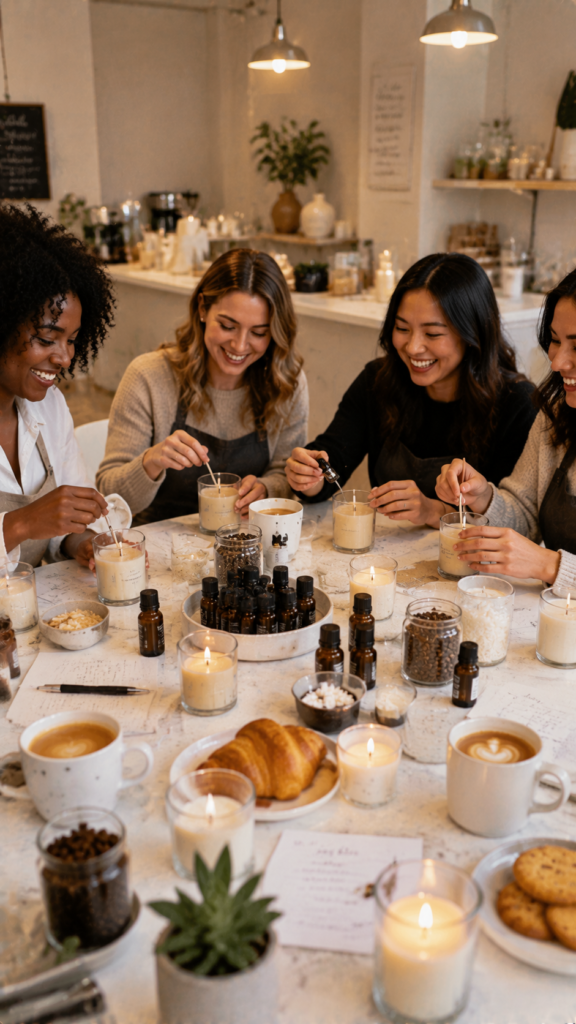
Give the night a café theme and let guests create candles around familiar coffee-shop scent profiles: vanilla latte, mocha, coffee and orange, cinnamon pastry, or hazelnut-style blends.
Instead of giving everyone several fragrances to mix freely, choose two or three options for each profile. This keeps the experiment manageable and makes it easier to identify which fragrance is doing what.
Have guests record their formula by weight, not by drops. Fragrance load is calculated by weight, and the maximum amount depends on the particular wax, so there is no single percentage that works for every candle.
That small detail makes this candle making night idea more useful than simply copying a coffee-scented candle recipe.
Planning ahead for late summer? 20 August Crafts for Seniors in Assisted Living has more seasonal activity ideas.
6. Create a Candle for a Specific Room
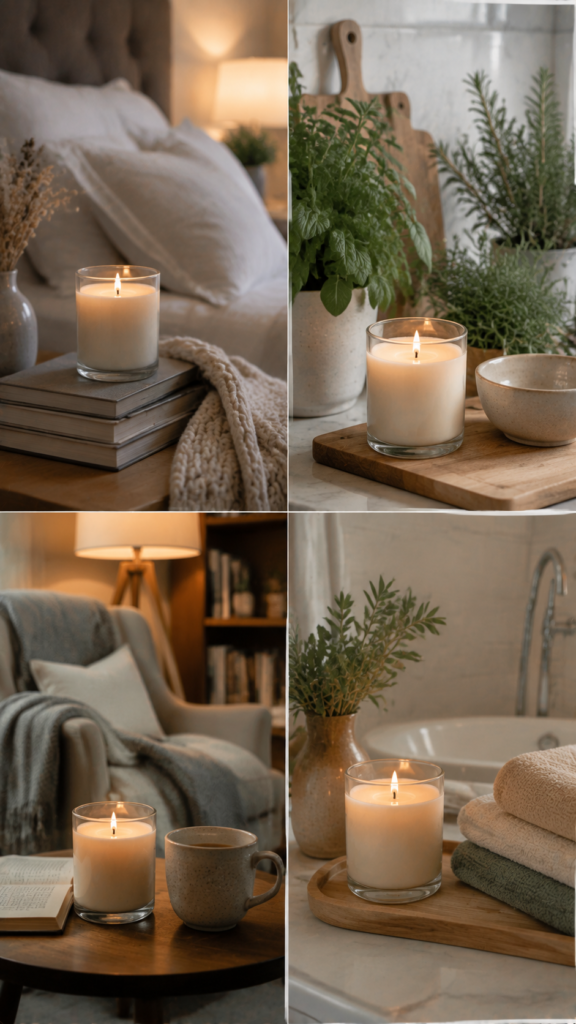
Ask guests one practical question: Where would you actually burn this candle?
Then build the scent around the atmosphere they want:
- Bedroom: soft floral, lavender or gentle woody profiles
- Kitchen: bright citrus or herbal profiles
- Living room: woods, amber, tea or warm blends
- Bathroom: fresh, clean or citrus profiles
- Reading corner: tea, woods or soft gourmand scents
This is one of the more useful candle making night ideas because it moves the activity away from simply choosing the strongest fragrance.
The goal is to match the character of the scent to the space.
And because fragrance behaves differently in different waxes, guests should still test the finished candle rather than assuming a fragrance that smells strong from the bottle will perform the same way when burned.
Start the autumn season with Cozy September Crafts for Seniors That Bring Calm and Creativity to Fall Days for more relaxed group crafting.
7. Let Guests Blind-Test the Fragrances
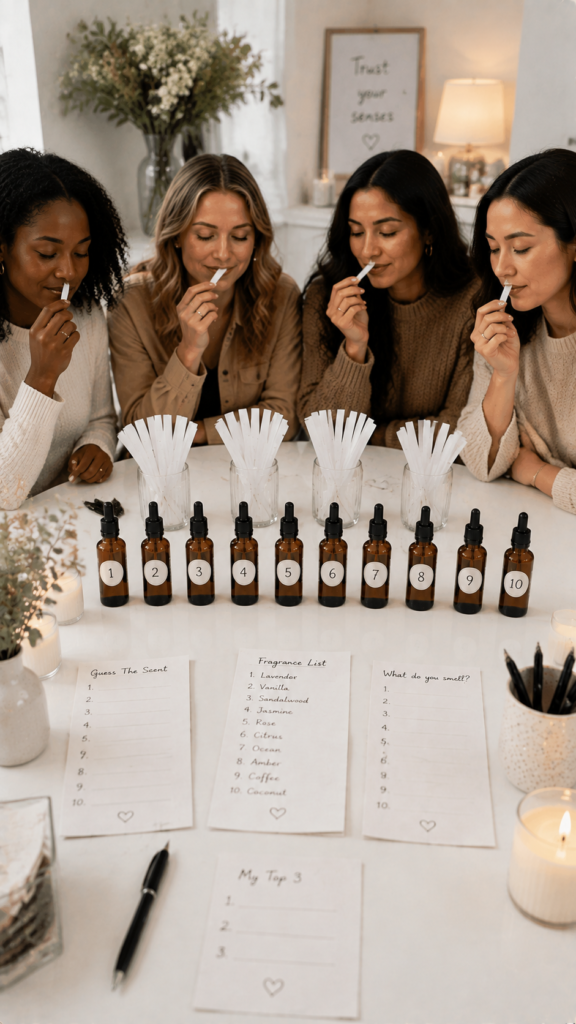
Take the labels off several fragrance bottles and give each scent a number. Guests smell them on blotter strips and write down what they think they detect before the names are revealed.
This is more useful than smelling fragrance straight from the bottle because the concentrated scent can give a distorted first impression. After a short dry-down, the top, middle, and base notes become easier to notice.
Make it a simple game: Which one smells citrusy? Which feels woody? Which would you pair with vanilla?
It also teaches an important candle-making lesson: your first impression of a fragrance is not always the whole fragrance.
Keep the seasonal theme going with October Crafts for Seniors in Nursing Homes That Create Memories, Not Just Decorations.
8. Create One Scent in Three Different Directions
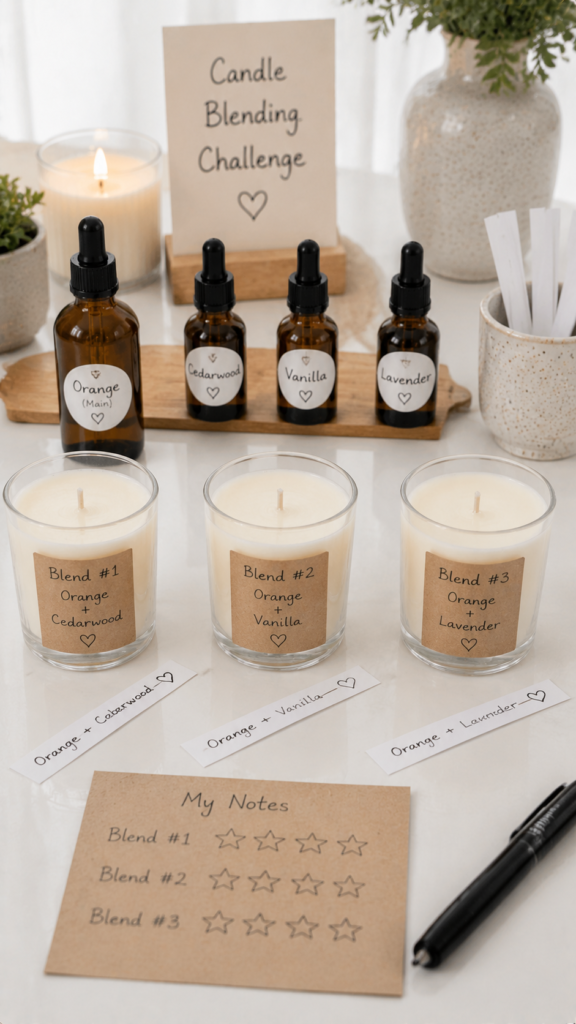
Choose one fragrance as the starting point, then let guests change its personality by pairing it with different supporting scents.
For example, start with orange and try:
- Orange + cedarwood
- Orange + vanilla
- Orange + lavender
The orange remains recognizable, but the supporting fragrance changes the overall character.
This teaches beginners that blending is not about adding as many scents as possible.
Two or three fragrance oils can be enough to create a new profile, but the finished blend still needs to be tested in the actual wax formula before assuming it will perform as expected.
Have guests smell their combinations on separate blotter strips first. That lets them adjust the idea before using wax and fragrance.
9. Have a Seasonal Scent-Building Challenge
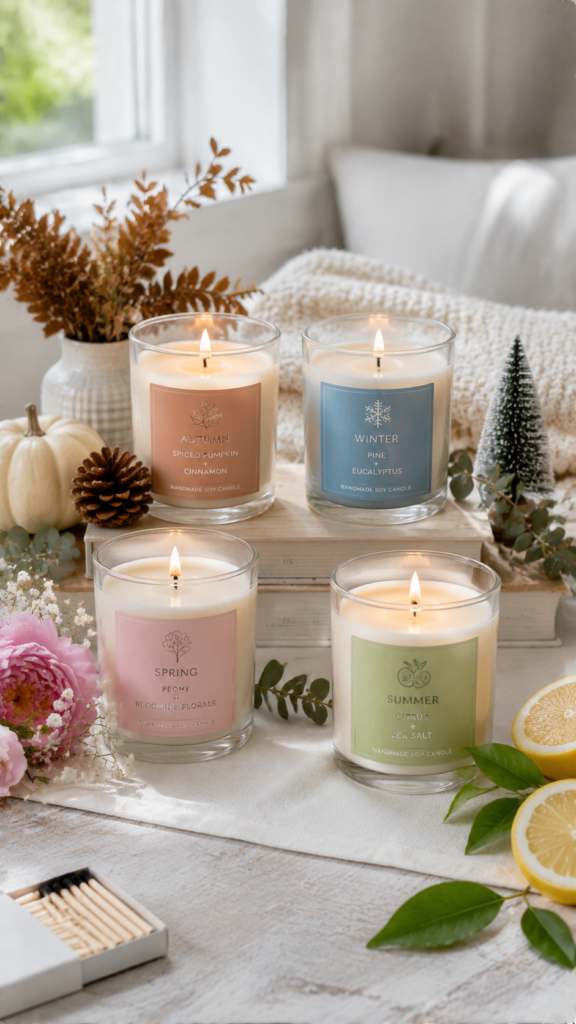
Give each guest a season and ask them to create a candle that captures its scent character, rather than relying on obvious decorations.
Someone given autumn might reach for apple, spice or woods. A summer combination could lean toward citrus, tropical or fresh notes, while winter might suggest evergreen, woods, amber or warm gourmand scents.
The interesting part is comparing how different people interpret the same season.
Keep the challenge focused on fragrance rather than appearance.
A candle does not need cinnamon sticks, dried flowers or other loose decorations on top to communicate “fall” or “winter.” What matters here is how the fragrance itself creates the impression.
Planning activities for older adults? 15 Cozy November Crafts for Seniors in Assisted Living to Enjoy This Fall has seasonal projects to consider.
10. Turn It Into a Scent-Pairing Challenge
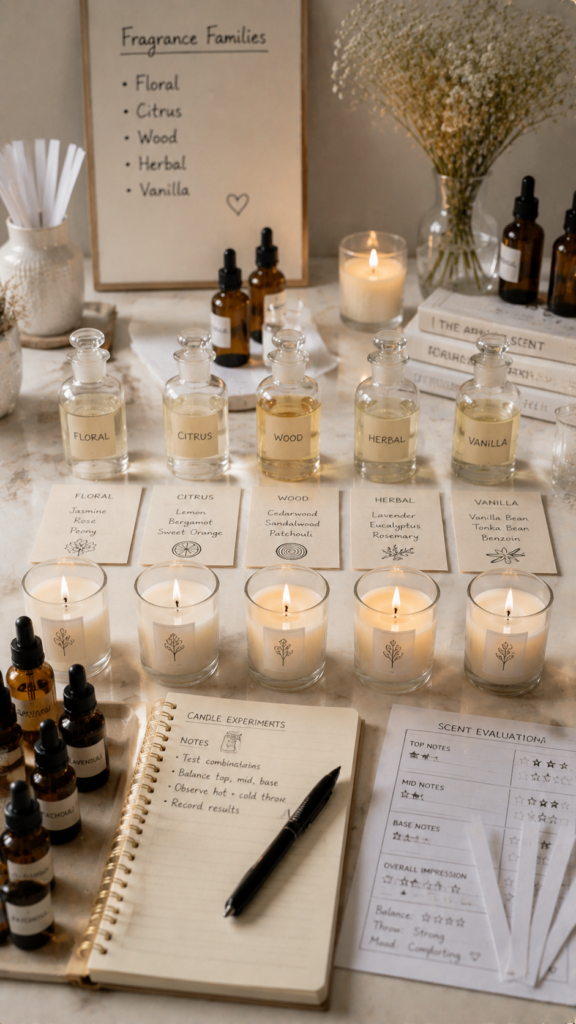
Give everyone a small selection of fragrance families and ask them to find combinations that make sense together, for example, citrus with woods, floral with vanilla, or herbal with citrus.
But don’t let the first sniff decide the winner. Test the proposed combinations on blotter strips and compare them after they have had a chance to develop.
Blotters are useful for previewing blends before putting them into wax, although the finished candle is still the real test.
Ask guests to explain why they paired the scents.
That turns the activity into more than a guessing game. They begin noticing which fragrance provides brightness, which adds depth, and which one becomes dominant.
By the time they pour their candles, they are making a scent choice with a reason behind it rather than simply combining fragrances that smelled pleasant separately.
For activities that encourage conversation as people create, see 15 Thanksgiving Gratitude Crafts That Get Residents to Actually Share.
11. Make a Candle Inspired by a Place
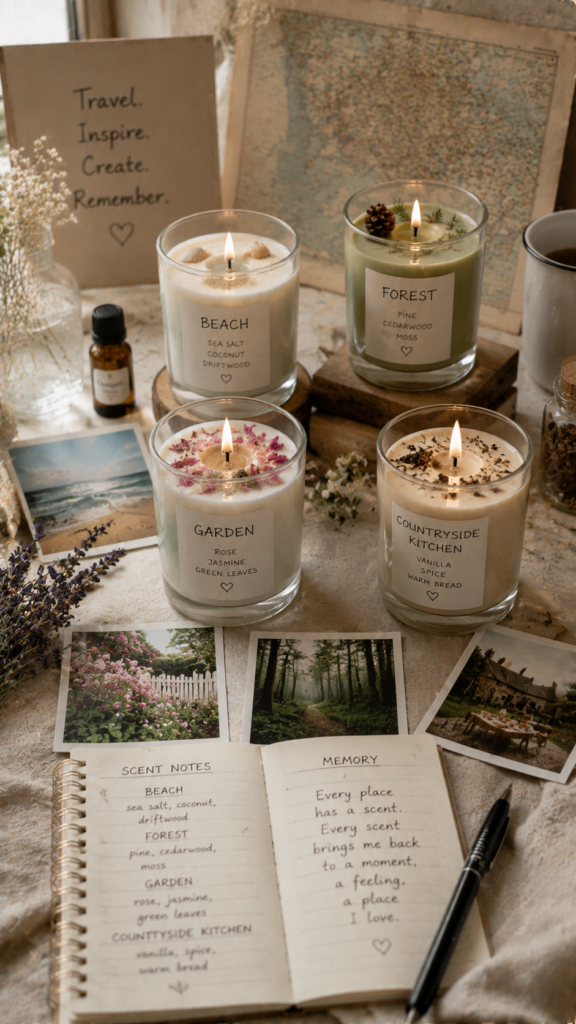
Choose a place everyone knows or loves, a beach, forest, garden, café, countryside kitchen, or favorite travel destination, and ask guests to translate it into a scent profile.
A beach-inspired candle might lean toward fresh, marine, citrus, or coconut notes, while a forest concept could move toward pine, cedar, moss, or other woody-green fragrances.
The interesting part is that there is no single “correct” smell for a place. Each person interprets it differently, which makes this one of the more personal candle making night ideas.
Have guests write down the place first, then the fragrance families they associate with it. This gives them a clear direction before they start blending.
12. Compare Cold Throw and Hot Throw
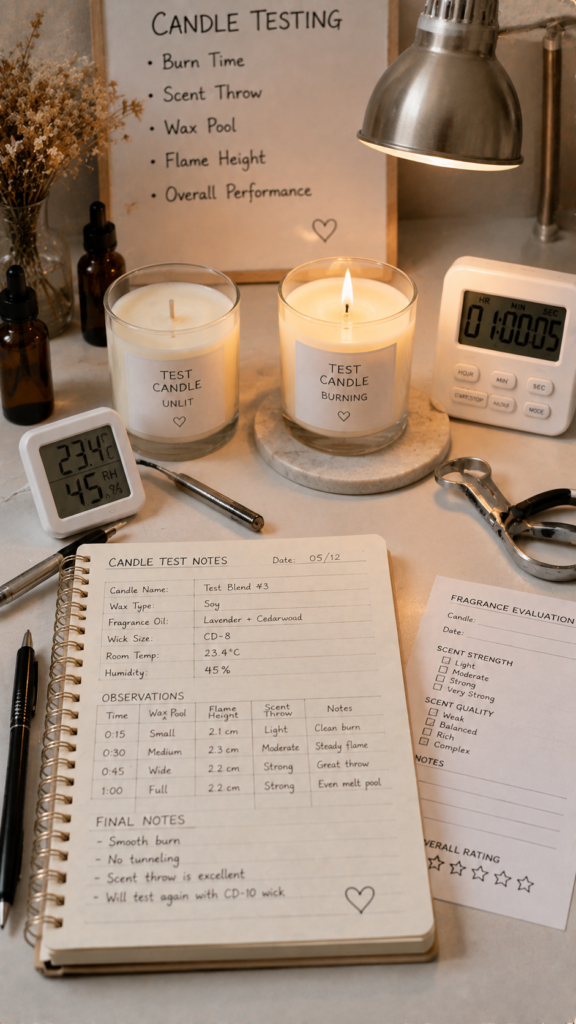
Make the science of candle fragrance part of the evening by teaching guests the difference between cold throw and hot throw.
Cold throw is the scent you notice from an unlit candle.
Hot throw is the fragrance released while the candle is burning. They can be quite different, so smelling a finished candle before lighting it doesn’t tell you everything about how it will perform.
For the activity, let guests smell an unlit test candle and record their impression. A properly prepared burn test can then be used to evaluate its fragrance while burning.
This is a valuable lesson because it prevents the common assumption that a strong-smelling candle before lighting must be a strong-smelling candle in use.
Add a tactile activity to the table with 25 Bead Crafts for Seniors That Look Beautiful and Work for Every Ability Level.
13. Try the “Nothing on Top” Candle Challenge

Ask guests to make a beautiful candle without dried flowers, herbs, coffee beans, fruit slices, crystals, or other loose decorations sitting in the wax.
The challenge forces everyone to concentrate on the things that actually define the candle: the vessel, wax finish, wick, label and fragrance.
It also creates an opportunity to discuss candle safety. Decorative materials that look harmless can become part of the candle’s burning environment once they are surrounded by melted wax and exposed to the flame.
The National Candle Association specifically advises keeping the wax pool free of foreign materials and avoiding flammable objects in or near a burning candle.
The result can be surprisingly elegant, and the lesson is useful: a candle does not need edible-looking toppings or botanical decorations to feel special.
If the goal is relaxation rather than another busy evening, How to Host a Cozy Self-Care Craft Night for Busy Women can help you create a slower-paced gathering.
14. Make a Small Wick-Test Station
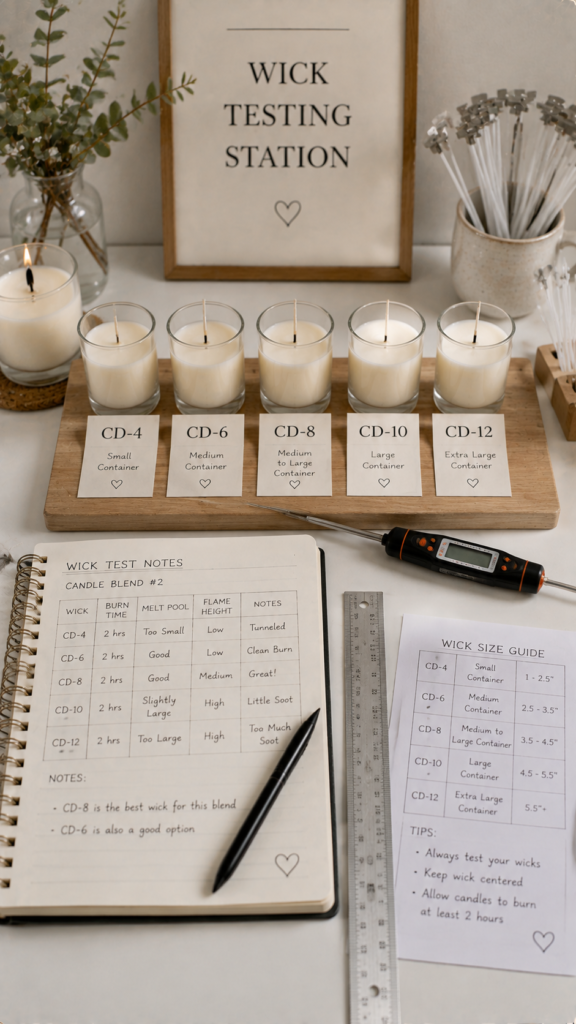
Turn part of the evening into a simple wick experiment. Use the same wax, fragrance, fragrance load, and container, but test different wick sizes.
The point is to show that the wick is not just there to keep the flame alive. Its size affects the melt pool, flame behavior, soot, heat, and fragrance release.
A wick that is too small may struggle to melt the wax properly, while one that is too large can create an excessively hot or sooty burn.
Guests can record what they observe rather than deciding which wick is “best” after one quick look. Wick choice has to be tested with the actual wax, fragrance and vessel combination.
15. Make a Candle Around One Dominant Note
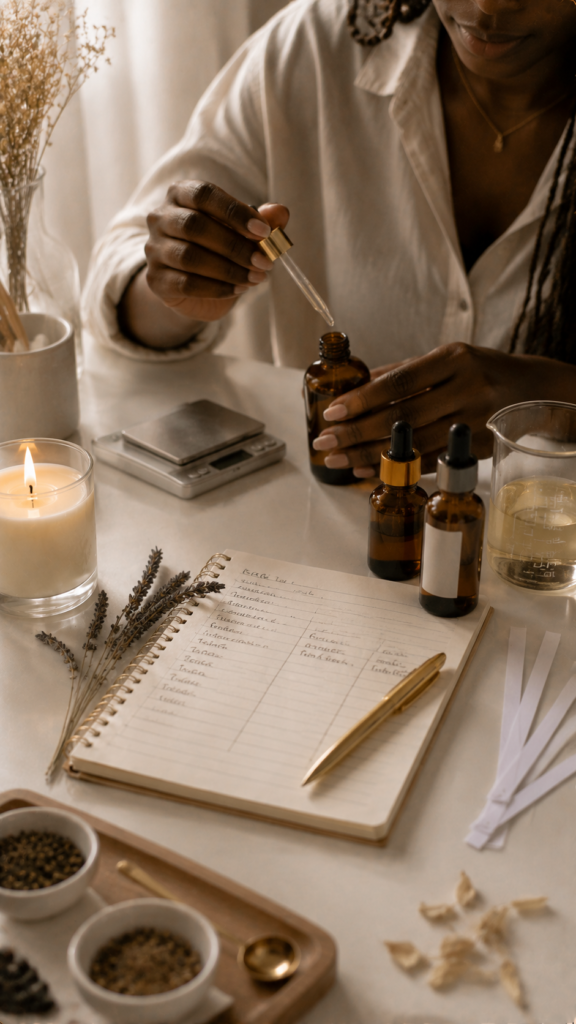
Choose one fragrance to be the main character and use a second scent only to support it.
For example, build around:
- Rose with a little citrus
- Cedarwood with a touch of bergamot
- Vanilla with a small amount of coffee
- Lavender with a hint of wood
The purpose is to teach guests the difference between a dominant fragrance and a supporting fragrance. Without that distinction, beginners often keep adding oils until the original scent becomes difficult to identify.
Have everyone smell the finished blend on a blotter before putting it into wax. If the supporting fragrance completely takes over, the proportions can be reconsidered before anything is poured.
This creates a more restrained candle and teaches an important principle: a good fragrance blend needs direction, not a long ingredient list.
Want the craft night to end with something meaningful to give away? Crafts to Make for Friends: Meaningful DIY Gift Ideas They’ll Actually Love has thoughtful handmade gift ideas.
16. Host a Candle Label Story Night
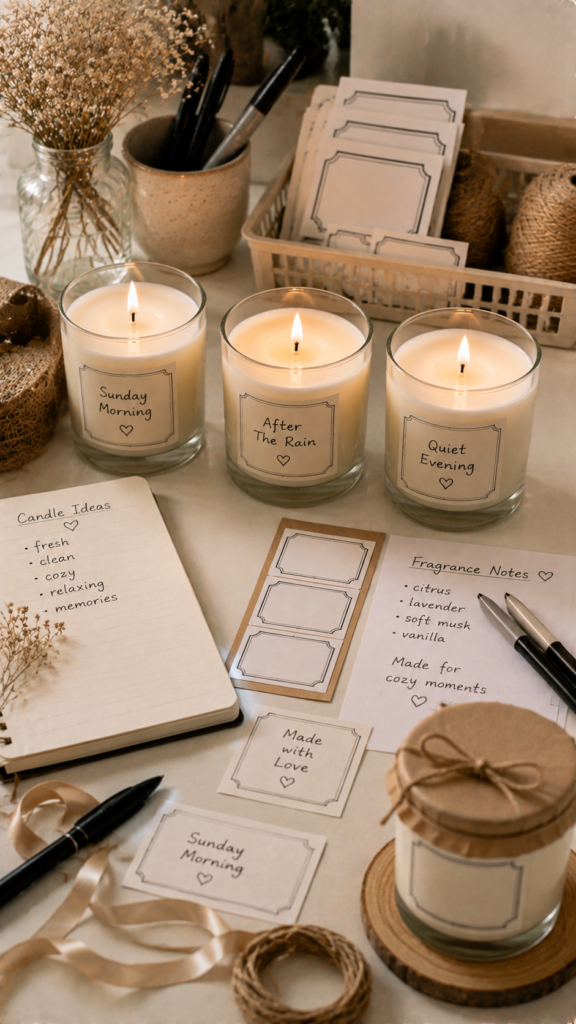
Make the creative part of the evening about the story behind the candle, not just its appearance.
Ask each guest to choose:
Who is this candle for?
What should it remind them of?
What should the room feel like when it is burning?
Someone might create Sunday Morning for a friend who loves slow breakfasts, or After the Rain for someone who loves fresh, green scents.
Then use that story to guide the fragrance choice and write a short label description.
This works particularly well when several people are making candles together because the finished jars become personal keepsakes rather than identical craft projects.
Just keep the label factual. If the candle contains fragrance oil, say so rather than making unsupported claims such as “chemical-free,” “non-toxic,” or “100% natural” simply because the scent sounds botanical.
17. Give Everyone a Candle-Making Test Batch
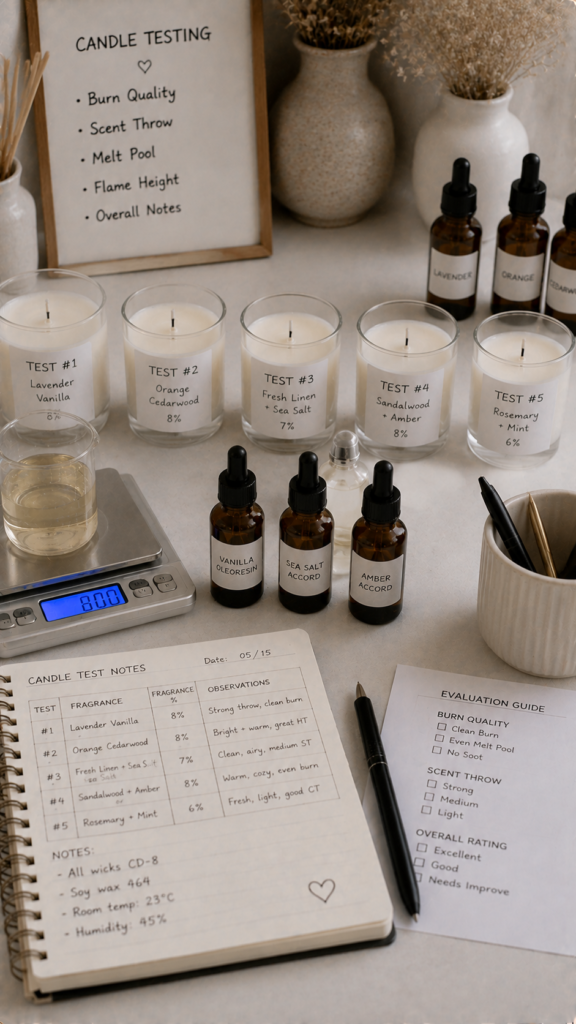
Instead of having everyone make one large candle immediately, let guests create a small test candle first.
This gives them room to experiment with a fragrance blend without wasting a full batch if the combination doesn’t work. Have each person record the wax, fragrance, fragrance load, wick and vessel used so the result can be traced later.
The important lesson is that a candle formula needs testing as a whole. Changing the fragrance, wick, wax or container can change how the candle burns, so a successful result in one setup doesn’t automatically work in another.
That makes this one of the more useful candle making night ideas for beginners who want to learn rather than simply pour and hope.
Adults looking for a Halloween-themed craft night can browse 15 Halloween Crafts For Adults That Are Easy To Do.
18. Create a Candle Formula You Can Reproduce
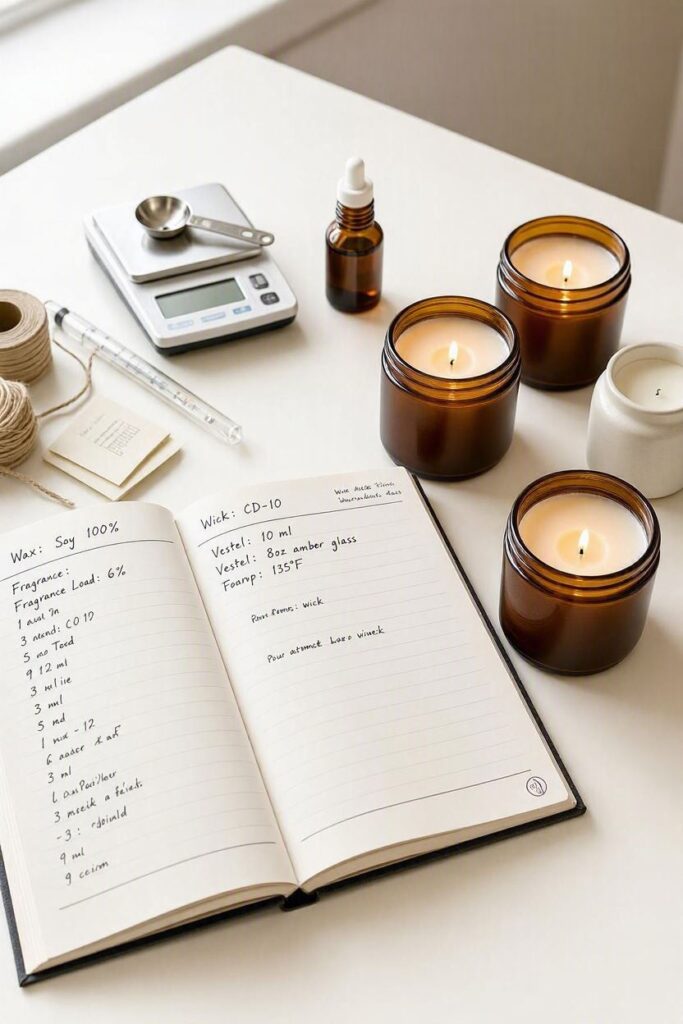
Ask guests to make a candle they could make again six months from now and still know exactly what they did.
Have them record:
- Wax type and amount
- Fragrance oil and amount
- Fragrance load
- Wick type and size
- Vessel type and diameter
- Pour temperature
- Date made
Using a digital scale matters here because candle formulas are based on weight, not teaspoons, cups or an arbitrary number of fragrance drops.
This turns the night into a small formulation exercise. If the candle performs beautifully, the recipe can be repeated. If it doesn’t, the notes make troubleshooting possible instead of leaving everyone wondering what went wrong.
19. Make a Candle and Plan Its Burn Test
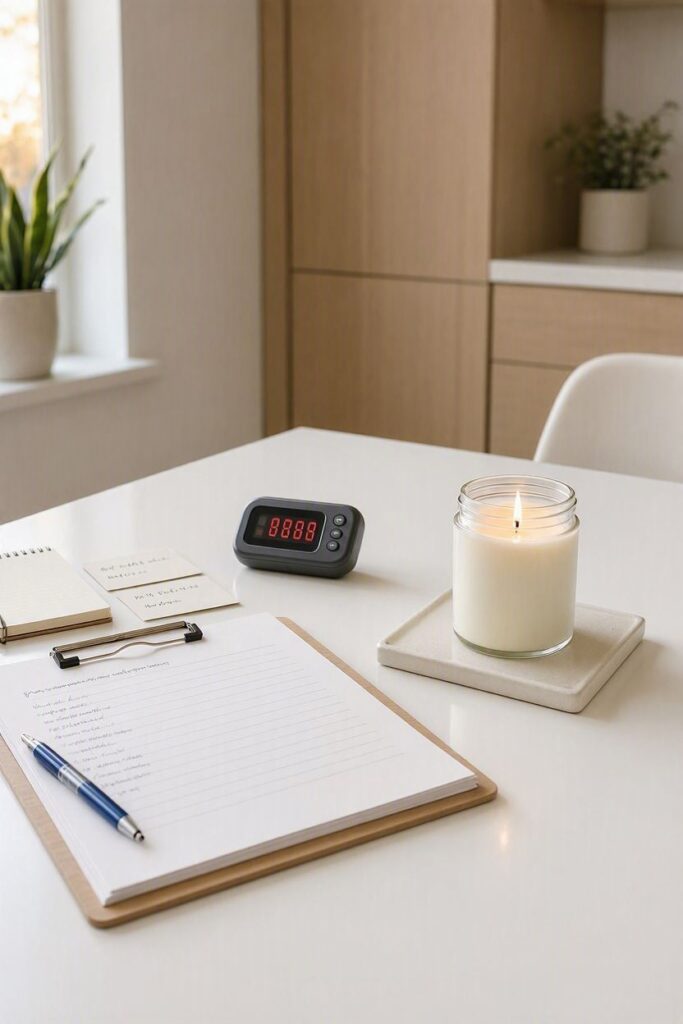
End the making session by teaching guests what happens after the candle leaves the party.
A finished candle should not be judged only by how pretty it looks or how strongly it smells when unlit. Burn testing evaluates how the complete candle behaves over time, including the flame, melt pool, soot and overall burn performance.
Give each guest a simple observation sheet where they can record what happens during each burn cycle.
And make the safety point clear: a burn test is never something to leave unattended. Candles should be placed on a stable, heat-resistant surface, away from drafts and anything flammable.
It gives the evening a useful ending: you don’t just make the candle, you learn how to judge whether you made a good one.
For ideas that appeal beyond the usual craft-night projects, Crafts for Men Over 50 That Are Actually Worth Making and Nothing Like What You Expected offers a different mix.
20. Finish With a Personal Candle-Gifting Station

Let everyone turn their finished candle into a thoughtful gift by creating a simple label based on who they made it for and why.
Instead of generic labels such as “Vanilla Candle,” encourage names that tell the recipient something about the scent or occasion:
Sunday Morning
Mum’s Garden
After the Rain
Quiet Evening
Coffee With You
Add the fragrance description, date made and any relevant care information to the label.
Most importantly, don’t encourage guests to gift a candle simply because it looks finished. If the candle is intended for someone else, its formula should have been appropriately tested first. Burn testing is used to assess the finished candle’s performance and safety before gifting or selling.
The result is a much better keepsake than a jar with a pretty sticker: a candle with a scent, a story and a person in mind.
Keep hands busy with simple materials using 15 Simple Clothespin Crafts for Seniors That Keep Hands Busy and Minds Sharp.
How to Make the Candles Actually Smell Good
A candle that smells amazing in the bottle can still have weak hot throw.
The answer isn’t automatically add more fragrance. A candle’s scent performance depends on how its wax, fragrance, wick, vessel, and curing time work together.
-
Use Candle-Safe Fragrance
Choose fragrance oils intended for candle making and follow the supplier’s recommended usage range for your wax. Don’t assume perfume, food flavoring, or any pleasant-smelling oil will perform safely in a burning candle.
-
Measure, Don’t Guess
Weigh both the wax and fragrance with a digital scale. Counting drops or measuring fragrance with kitchen spoons makes the formula difficult to reproduce and can give inconsistent results.
-
Give It Time
A freshly poured candle may not show its final fragrance performance. Cure time varies with the wax, so follow the wax manufacturer’s guidance rather than treating one number as suitable for every candle.
-
Remember the Wick
The wick affects the melt pool, and the melt pool helps release fragrance. Too small, and the candle may struggle to melt properly; too large, and it may burn excessively hot or produce soot.
-
Test Before You Judge It
Smell the candle unlit, then evaluate it during a controlled burn. Cold throw and hot throw are different things, so a candle should not be judged by its unlit scent alone.
The real goal is not the strongest possible fragrance. It is a candle where the wax, fragrance, wick and vessel are working together.
For a craft night that can work beyond one particular age group or season, see How to Host a Craft Night Party for Any Age, Any Season, Any Occasion.
A Safer Way to Organize the Actual Candle-Making Night

Candle making is more enjoyable when the fun parts are separated from the parts that involve hot wax and heat.
A little planning also keeps fragrance bottles, tools, finished candles, and hot equipment from competing for the same space.
Before Guests Arrive
Set up separate areas for:
- Fragrance and measuring
- Wax heating and pouring
- Finished candles
Pre-label the containers and prepare the fragrances so guests aren’t reaching across a hot workspace while choosing scents.
During the Activity
Let guests handle the creative decisions, choosing fragrances, naming their candles, recording measurements, and designing labels.
Keep the heating and hot-wax handling with the person responsible for that station, particularly when children or inexperienced guests are present.
Never leave melting wax or heating equipment unattended, and keep the work surface clear of anything that could catch fire.
After Pouring
Move finished candles to a stable, undisturbed area where they can cool without being knocked over. Don’t rush to move or decorate them while the wax is still hot.
For a group event, this simple setup works well: one area for choosing, one for pouring, and one for cooling. It keeps the evening flowing without turning the candle-making table into a crowded workbench.
Planning a Halloween gathering for older adults? 25 Halloween Crafts for Seniors in Assisted Living That Work for Every Ability Level offers more accessible project ideas.
Conclusion
A good candle-making night doesn’t have to end with twenty identical jars lined up on a table. The best part is leaving with a candle that has a scent you chose thoughtfully, a formula you understand, and a story behind it.
These candle making night ideas give you plenty of ways to make the evening feel personal without turning it into another complicated craft project.
Pick one idea, gather a few candle-safe fragrances, invite your favorite people, and let everyone create something they will actually want to light.
And don’t worry if the first candle isn’t perfect. Part of the fun is learning what changes when you adjust a scent, wax, wick, or vessel.
Choose your favorite idea, save this post for your next candle night, and start planning a candle-making evening worth remembering.
When visual accessibility matters, 21 Crafts for Seniors With Low Vision That Are Tactile, Beautiful and Completely Accessible has useful options.
FAQs
How many people can comfortably do a candle-making night together?
For a home setup, 6–10 people is usually manageable. Larger groups need separate areas for fragrance selection, pouring, and cooling so guests aren’t crowding the hot-wax station.
What scents mix well when making candles?
Start with complementary families, such as citrus + wood, floral + vanilla, or herbal + citrus. Smell the combination on blotter strips first; a blend that works in theory may smell very different once combined.
How do you make homemade candles smell stronger?
Don’t simply add more fragrance. Use a candle-suitable fragrance, stay within the wax manufacturer’s recommended fragrance load, choose a suitable wick, and allow the candle to cure properly. Hot throw depends on the whole formula.
How long should homemade candles cure before using them?
It depends on the wax and formulation. Follow the wax manufacturer’s guidance rather than using one fixed number of days for every candle.
Can you use essential oils to make scented candles?
Some can be used, but not every essential oil is suitable for candles. Check the supplier’s candle-use and safety guidance instead of assuming that “natural” means candle-safe.
What is the difference between cold throw and hot throw?
Cold throw is the fragrance from an unlit candle. Hot throw is the scent released while it burns. A candle can have a strong cold throw and weak hot throw.
Why does my homemade candle smell strong before burning but weak when lit?
The fragrance may not be releasing effectively during burning. Wax, wick, fragrance load, vessel size, and curing can all affect hot throw, so adding more fragrance isn’t necessarily the solution.
How do you choose a wick for a homemade candle?
Wick choice depends on the wax, fragrance, vessel diameter, and formula. Start with the supplier’s recommendations, then burn-test the complete candle rather than assuming one wick works for every jar.