This post contains affiliate links. This means I may earn a small commission if you purchase through my links at no extra cost to you.
Halloween decor ideas for assisted living are harder to find than they should be.
Most search results are either too childish, too scary, or built for someone decorating a house not a care facility with shared hallways, dementia residents, and strict fire codes.
This post fixes that. Whether you’re an activity director planning the whole facility or a family member decorating one small room, every idea here was chosen with the actual setting in mind.
Safe materials. Removable installations. Resident-friendly aesthetics. Nothing that creates a tripping hazard, a fire risk, or a confused resident at 2am.
I’ve organized these Halloween decor ideas for assisted living by location — because that’s how you actually think about this.
Each section solves a different space with a different set of constraints. Start with the section most relevant to your situation and build from there.
Section 1: Start at the Door — Resident Room Door Decorating

Room door decorating is the single most searched assisted living Halloween decor idea — and it makes complete sense.
Doors are visible from the hallway, can be personalized per resident, and turn the whole corridor festive without touching anyone’s private room.
These Halloween decor ideas for assisted living doors create the most visual impact per square foot of anything in the facility.
1. Jack-o-Lantern Cut-Outs on Bare Doors
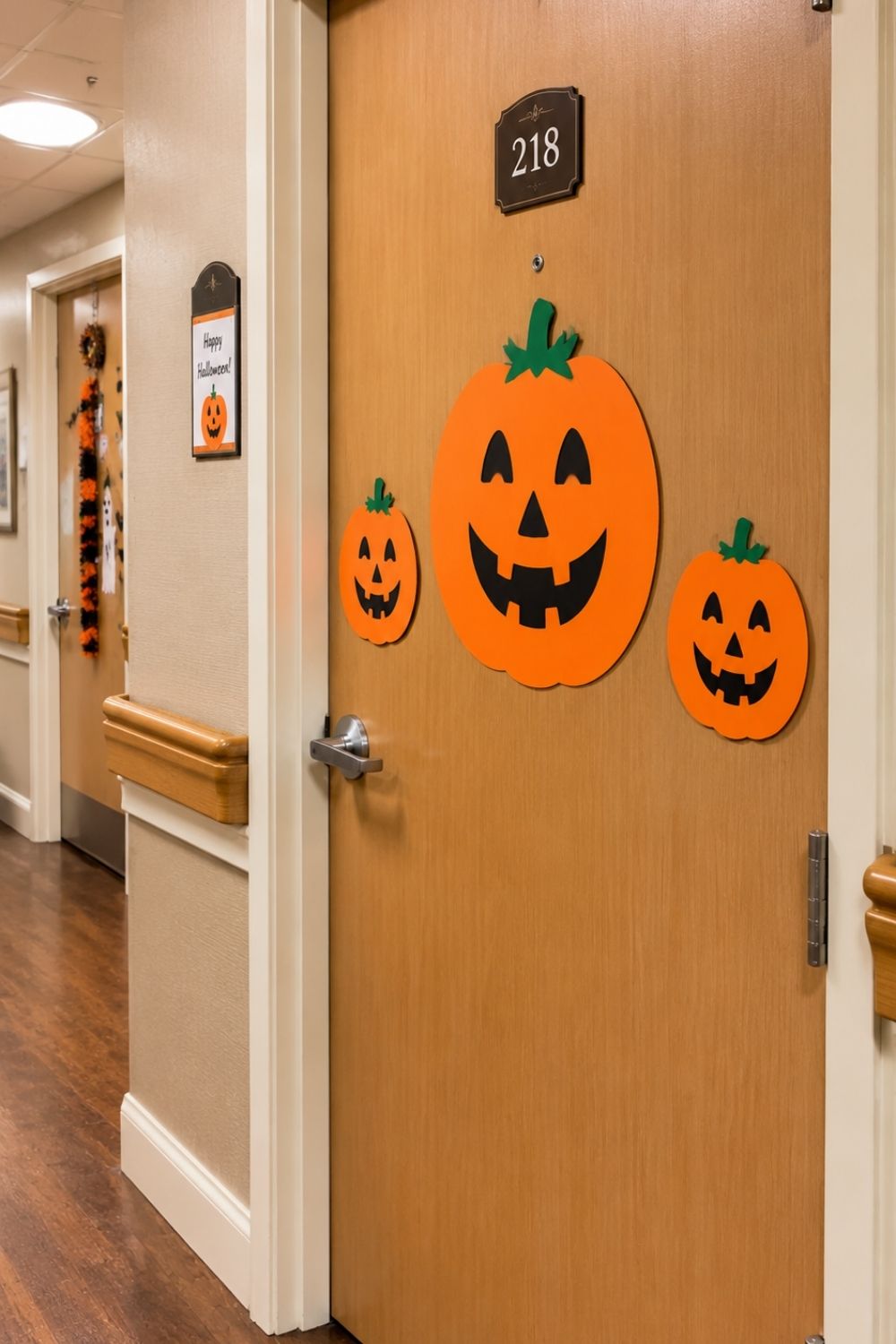
Pre-cut foam or cardstock jack-o-lantern faces are fast, cheerful, and universally recognizable. Buy a pack of twenty assorted sizes and an afternoon covers the whole corridor.
Pumpkin faces read as festive rather than frightening important for residents with dementia or anxiety who may respond negatively to skulls and crossbones.
Use painter’s tape or removable adhesive strips. Never permanent tape on painted doors. Keep everything flat against the door surface so walkers and wheelchairs don’t catch anything protruding into the hallway.
2. Resident-Made Door Decorations
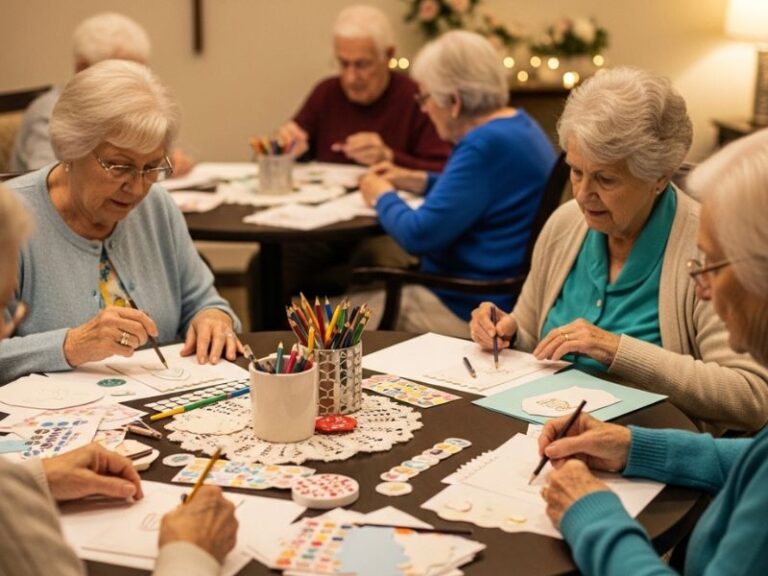
This one turns a decor task into an activity. Give residents a craft session with construction paper, plastic spiders, artificial leaves, ribbon, and foam stickers then let the results go straight onto their doors.
When residents make the decorations, the hallway stops being a facility and starts being a place people actually live.
For craft ideas that translate beautifully into door displays, these October crafts for seniors in nursing homes have a full seasonal range. The wreaths and banner projects work especially well as door pieces.
3. Door Decorating Contest
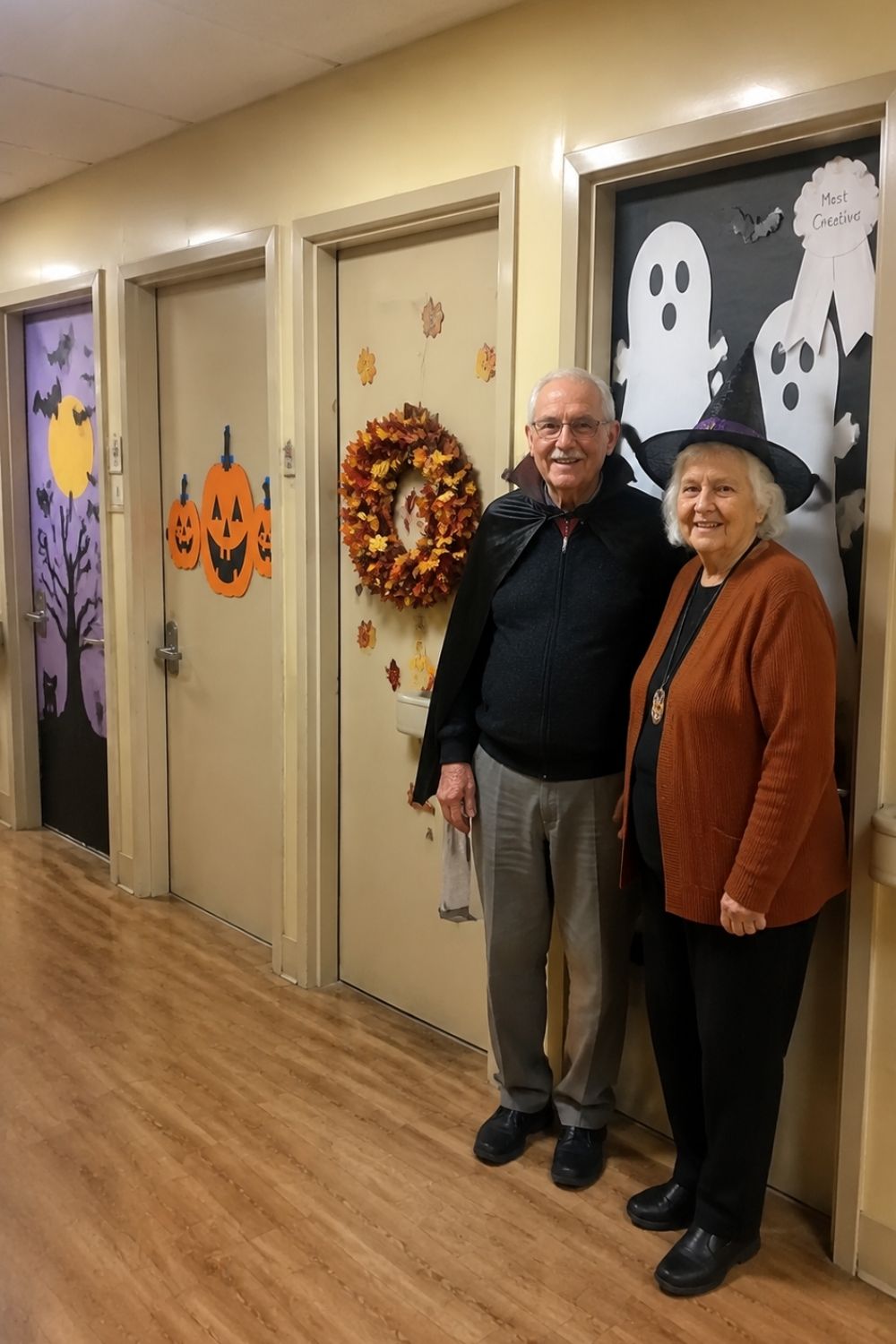
A contest spookiest, most festive, most creative, most elegant with small prizes per category solves multiple problems at once.
It’s an activity, an engagement tool, and a hallway that looks genuinely impressive because people actually tried.
Keep prizes small and dignified a gift card, a candle, cozy socks. Judge it publicly during a common room gathering so the winner gets a real moment.
For the full party program that pairs naturally with this, these Halloween party ideas for assisted living residents cover the complete event alongside the contest.
Safe Door Decorating — Quick Rules
Use removable tape only painter’s tape or Command strips so nothing damages painted surfaces.
Keep all decorations flat against the door. Avoid sharp edges, loose glitter, or small pieces that dementia residents might pick up. Festive and flat is the goal.
Section 2: Hallway Decor That Keeps Pathways Safe
Hallway safety is the top concern when planning Halloween decor ideas for assisted living and rightly so.
A tripping hazard in a hallway is a fall risk, not an inconvenience.
Everything below is designed to add festive atmosphere without a single item on the floor or draped across a walkway.
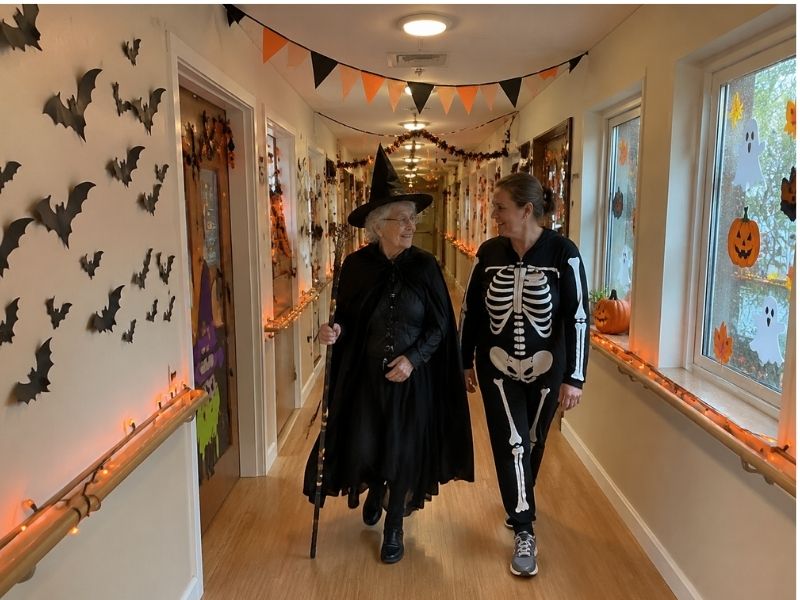
4. Paper Bats Flying Display on a Bare Hallway Wall
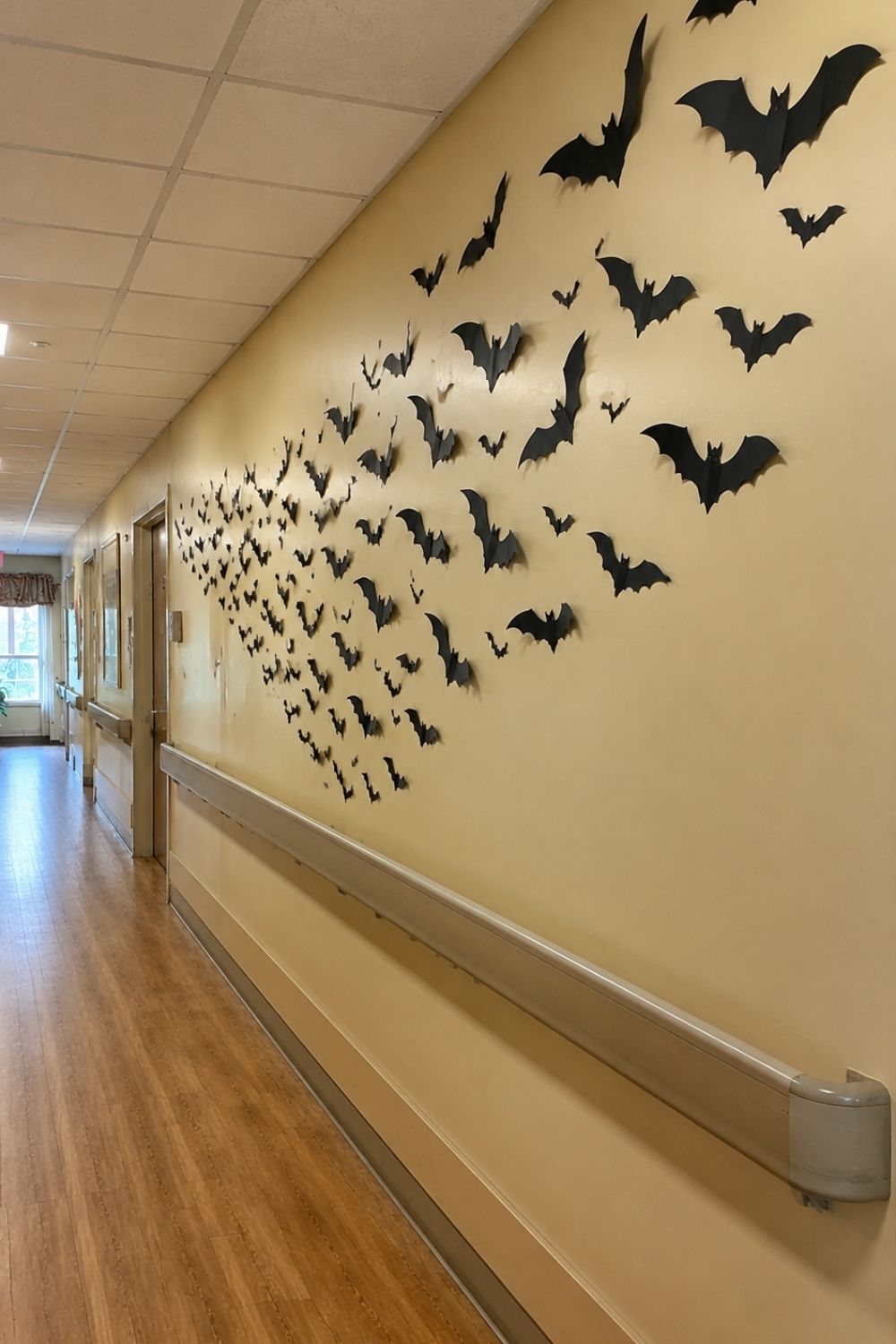
A wall of paper bats in varying sizes, arranged in a swooping flight pattern, is one of the most visually dramatic low-cost Halloween ideas available.
Cut them from black cardstock, fold slightly along the center to give dimension, and attach with removable adhesive. From a distance, it looks like an actual bat colony in mid-flight.
The visual impact is disproportionate to the effort and cost. A pack of black cardstock and an hour of prep produces a feature wall that becomes the most photographed spot in the facility during family visits.
Keep them above shoulder height so they’re never in anyone’s path.
5. Hanging Skeletons, Ghosts, and Scarecrows
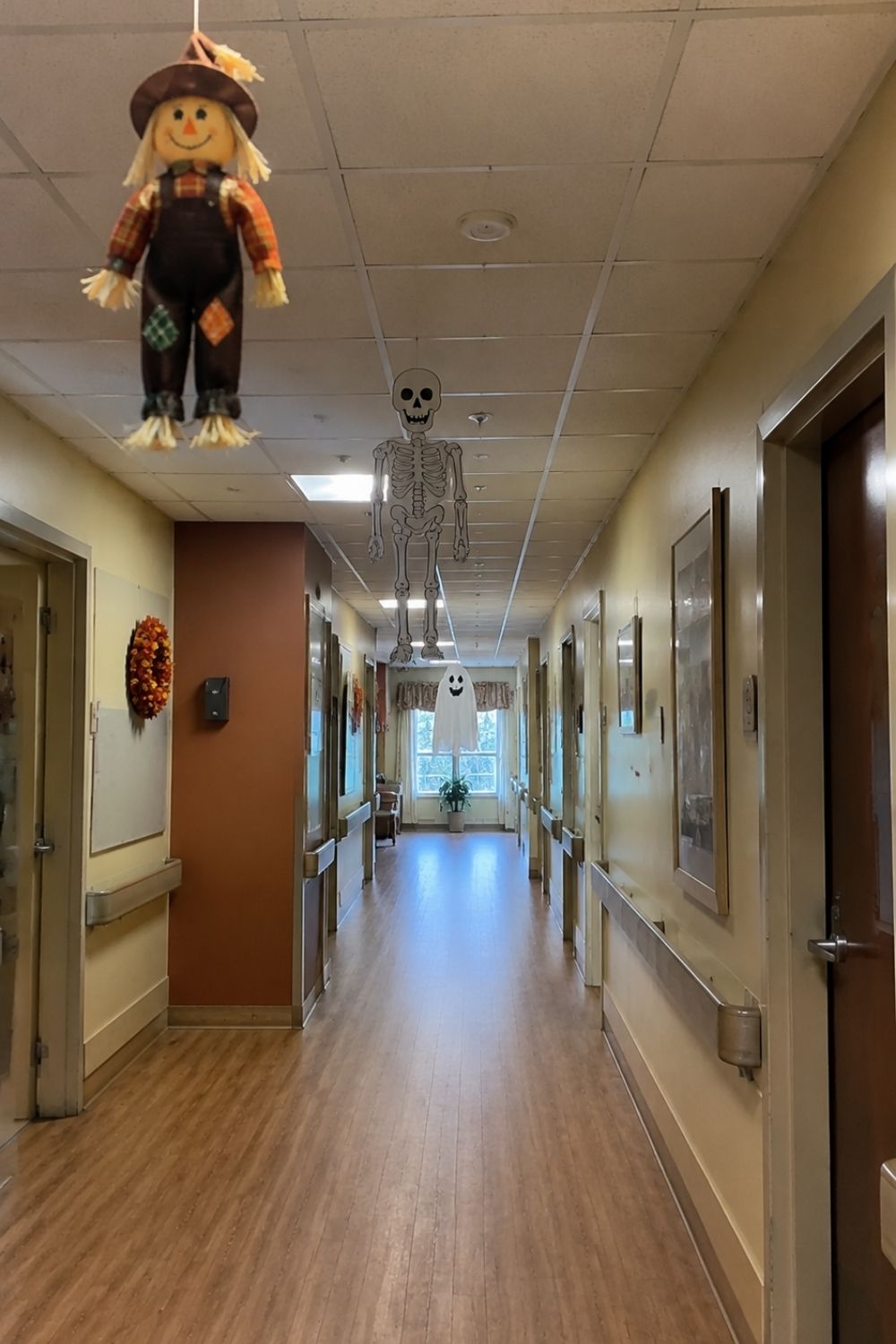
Pre-made Halloween kits from Target or Party City include hanging skeleton figures, ghost cutouts, and scarecrow decorations.
Ceiling-hung placement is always safest in a care setting it keeps everything above resident height and completely out of walking paths.
Space them far enough apart to avoid visual noise, but close enough to create a full scene. A ghost at one end of the hallway, a skeleton at the midpoint, and a scarecrow at the entrance creates a natural visual journey down the corridor.
6. Halloween Garlands Along the Walls

Bat and ghost garlands or orange and black bunting strung along the top of hallway walls above door height, mounted flat with removable hooks add color and movement without anything hanging at resident level.
This is the hallway version of festive lighting: atmosphere without obstruction.
Glow-in-the-dark garland is worth considering for facilities with hallway nightlights already in use.
A subtle glow at night marks the space without startling anyone who’s up during the night.
7. Window Clings on Hallway Windows
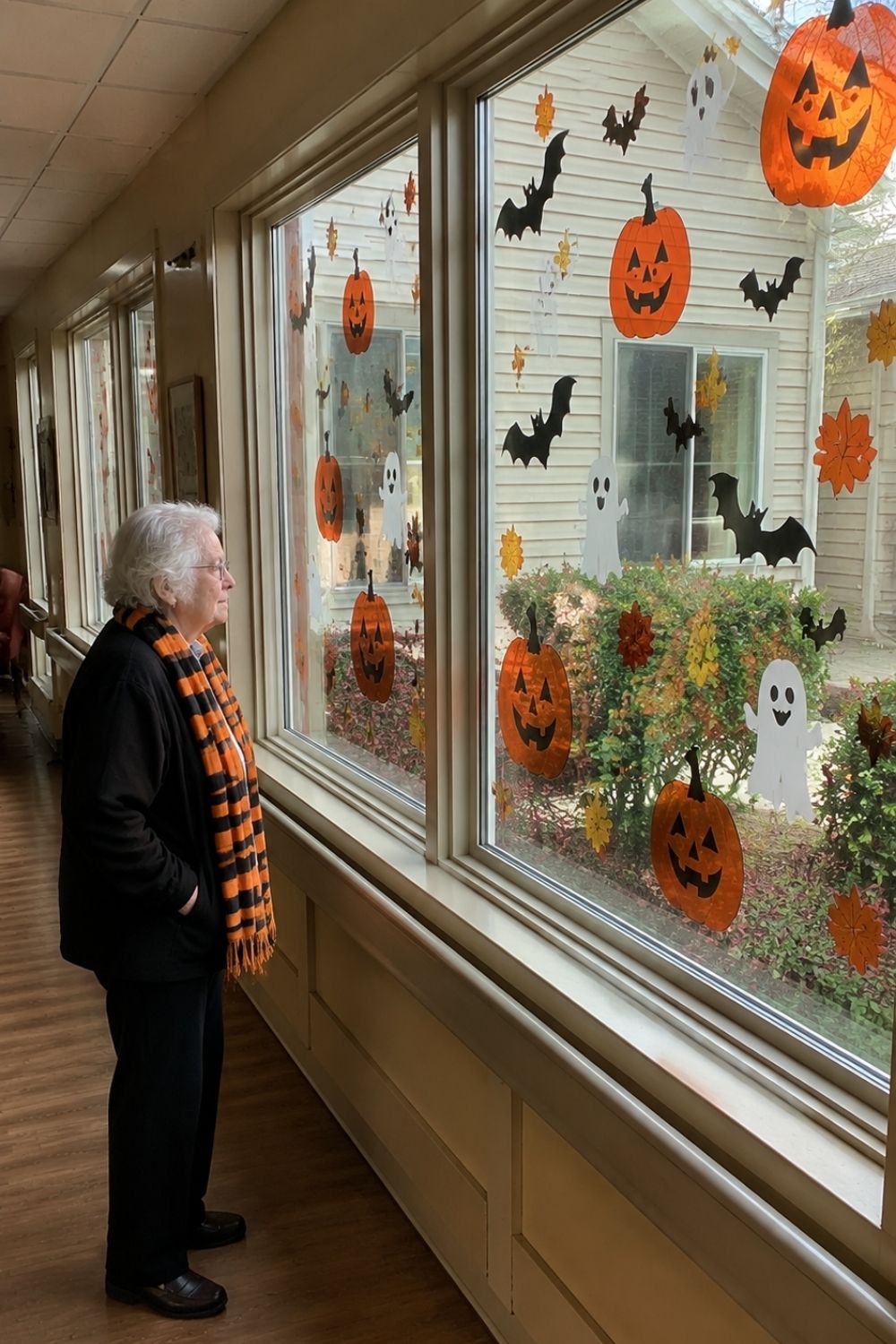
Window clings adhere directly to glass without glue or tape, peel off cleanly, and leave zero residue.
They’re the fastest, safest, most maintenance-free Halloween decor option for assisted living. Bats, pumpkins, ghosts, spiders, and fall leaves can transform every hallway window in under an hour.
They also let in daylight while still looking festive. Installation and removal are genuinely simple important when you’re managing a full facility decor plan.
For more on making the whole October calendar cohesive, these Halloween party games for senior citizens cover the full activity program that pairs with this decor plan.
Hallway Safety Rule
Stick to wall decals, window clings, and ceiling-hung decorations for all hallways. Never drape fabric across walkways, put anything on the floor, or hang anything at face or shoulder height.
The hallway is a transit space first. Every design decision has to honor that.
Section 3: Activity Room Decor That Sets the Party Mood
The activity room is where most Halloween events happen which means its decor has to do the most work.
Good Halloween decor ideas for assisted living activity rooms create a full scene that makes people feel like they’ve walked into the holiday, not just past some decorations on the way to their seat.
8. Halloween Scene Mural or Wall Hanging
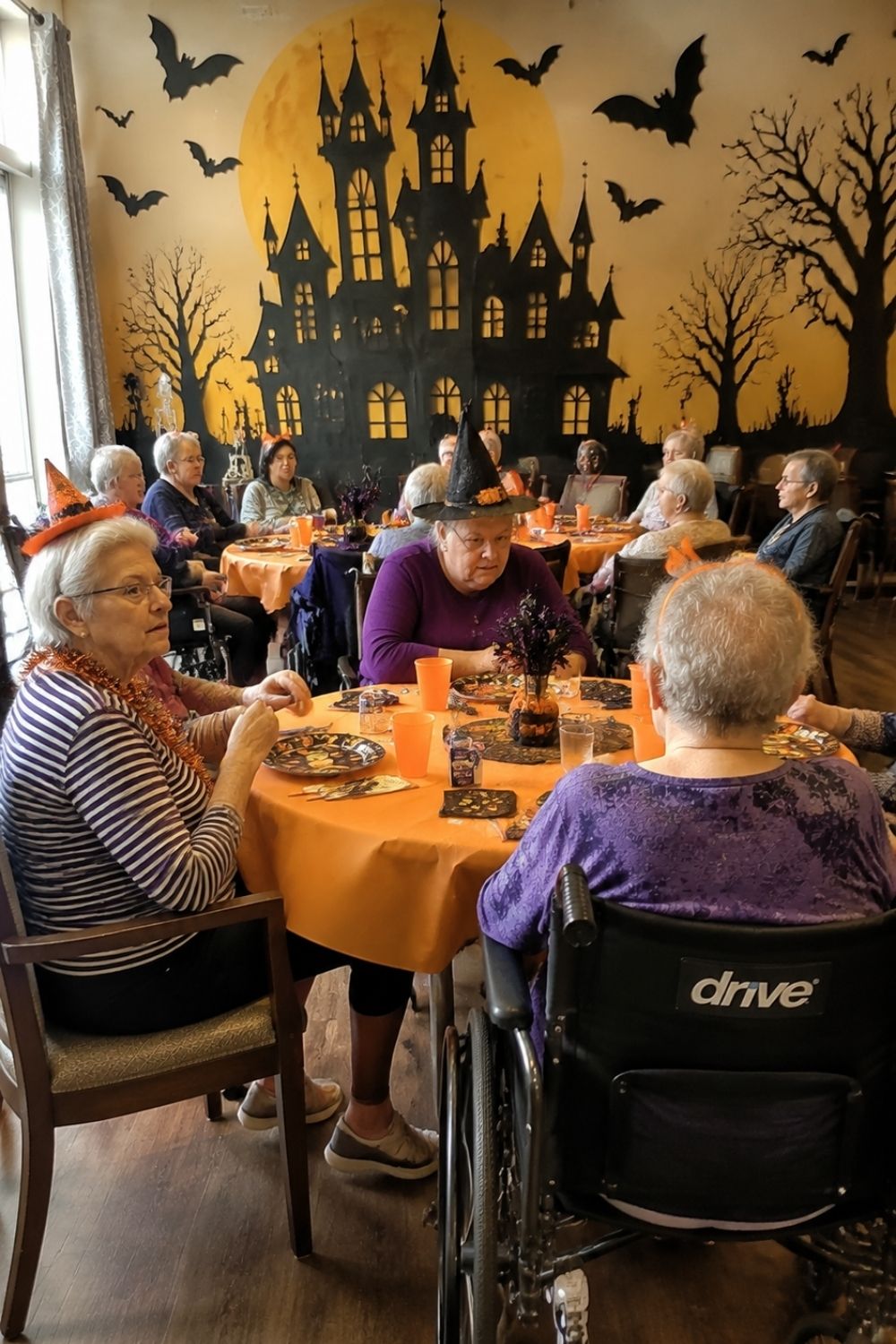
A large Halloween scene on one feature wall haunted house silhouette, autumn forest, harvest moon over a pumpkin field immediately transforms the activity room into a destination.
One strong feature wall does more than ten scattered decorations spread around the room.
Large-format wall murals with removable adhesive are available on Amazon and come down cleanly.
Alternatively, create your own with black butcher paper and a projector.
This is the single most impactful decor investment you can make for the activity room. Residents and families will photograph in front of it.
9. A Bowl of Candy as a Strategic Decor Element
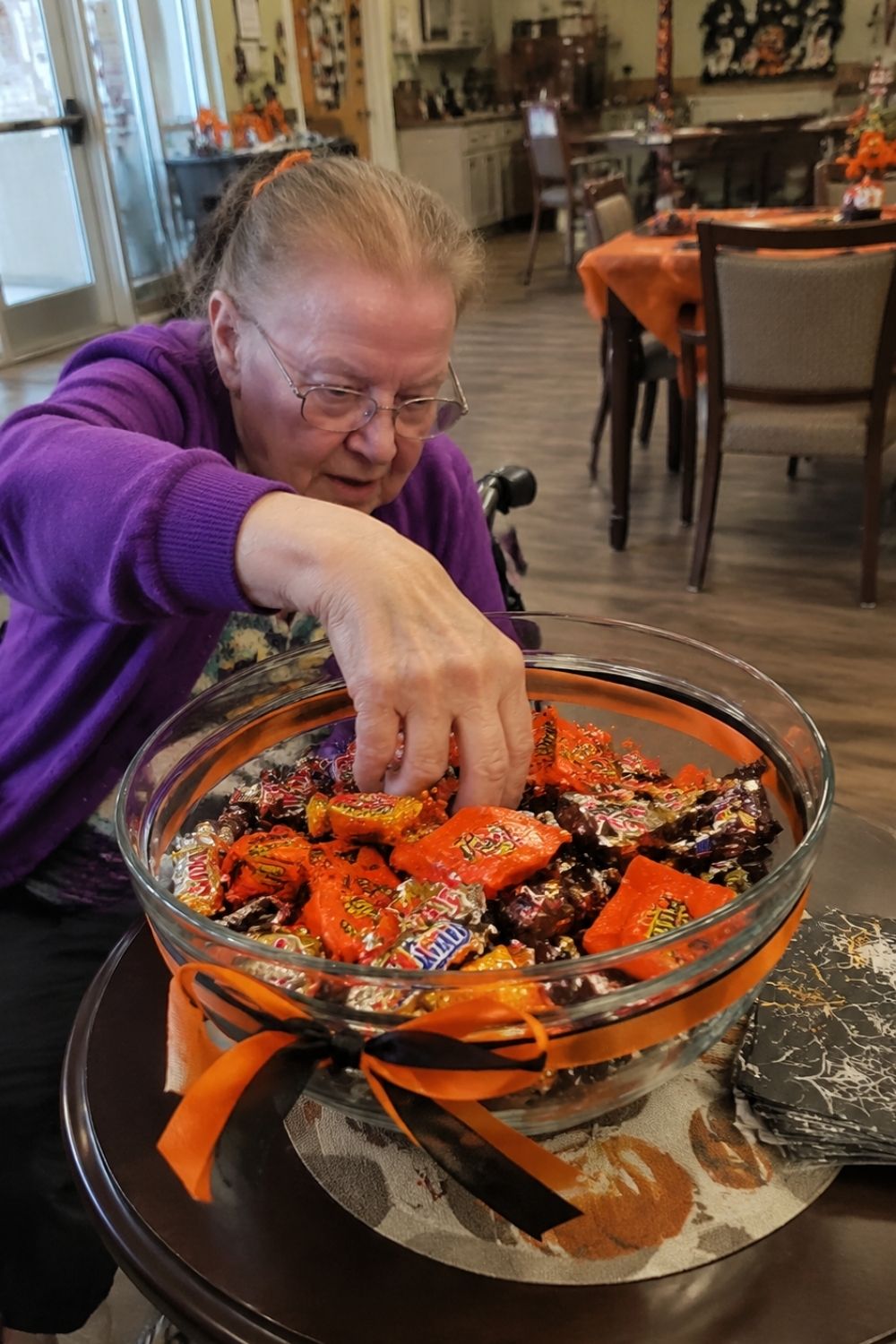
This sounds too simple, but it’s genuinely strategic. A beautiful glass bowl of wrapped Halloween candy creates a reason for residents to wander in, linger, and come back.
It’s both a decor element and a behavioral engagement tool. The candy is the draw. The decorated room is what surrounds them while they’re there.
Restock daily. Use soft, easily unwrappable candy mini chocolates, caramels, peanut butter cups rather than hard candies that present choking or dental concerns.
Place it at a height accessible from a wheelchair so every resident can reach it independently.
10. Orange and Purple LED String Lights
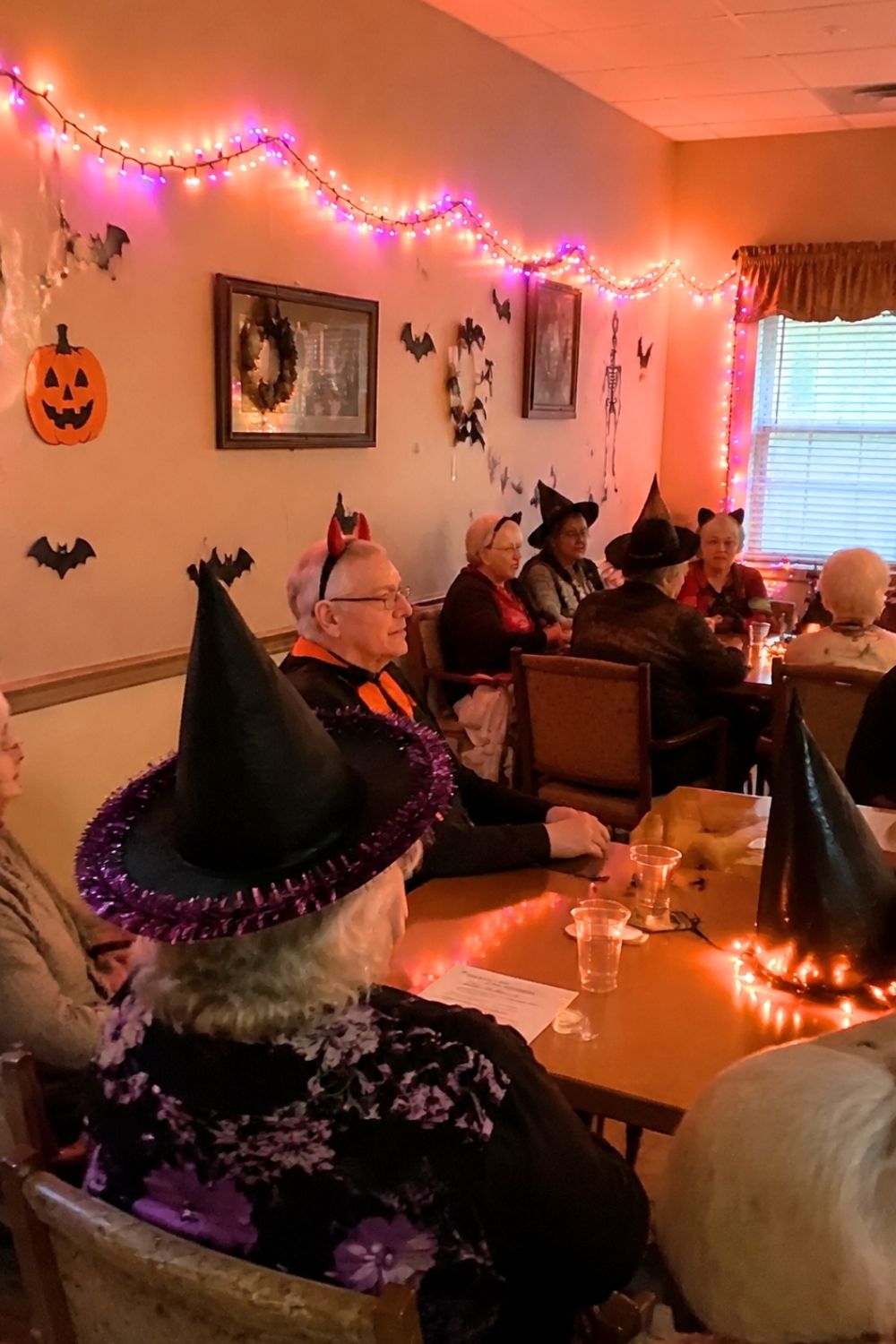
String lights are among the most effective mood-setting tools available. Orange and purple LED versions are everywhere in October.
The warm glow they cast changes the entire atmosphere of a room from institutional to intentional in a way that no paper decoration can replicate.
Always secure cords flat against walls or baseboards with cable clips. Battery-operated sets eliminate the cord problem entirely.
According to the Centers for Disease Control and Prevention, falls are the leading cause of injury among adults over 65 cord management in a decorated space is not optional.
11. Flameless LED Candles in Pumpkin or Ghost Shapes

Flameless LED candles in Halloween shapes pumpkin bodies, ghost figures, skull forms give the warm atmospheric glow of real candles without any fire risk.
They look genuinely beautiful in a dimly lit activity room during an evening event.
The best versions have a timer function, so they turn on and off automatically without staff managing them.
Timed flameless candles are the single best decor upgrade for any assisted living Halloween event.
For the full party program these candles belong in, these Halloween party ideas for assisted living residents cover everything from crafts through games through food.
12. Photo Booth Corner With Halloween Props
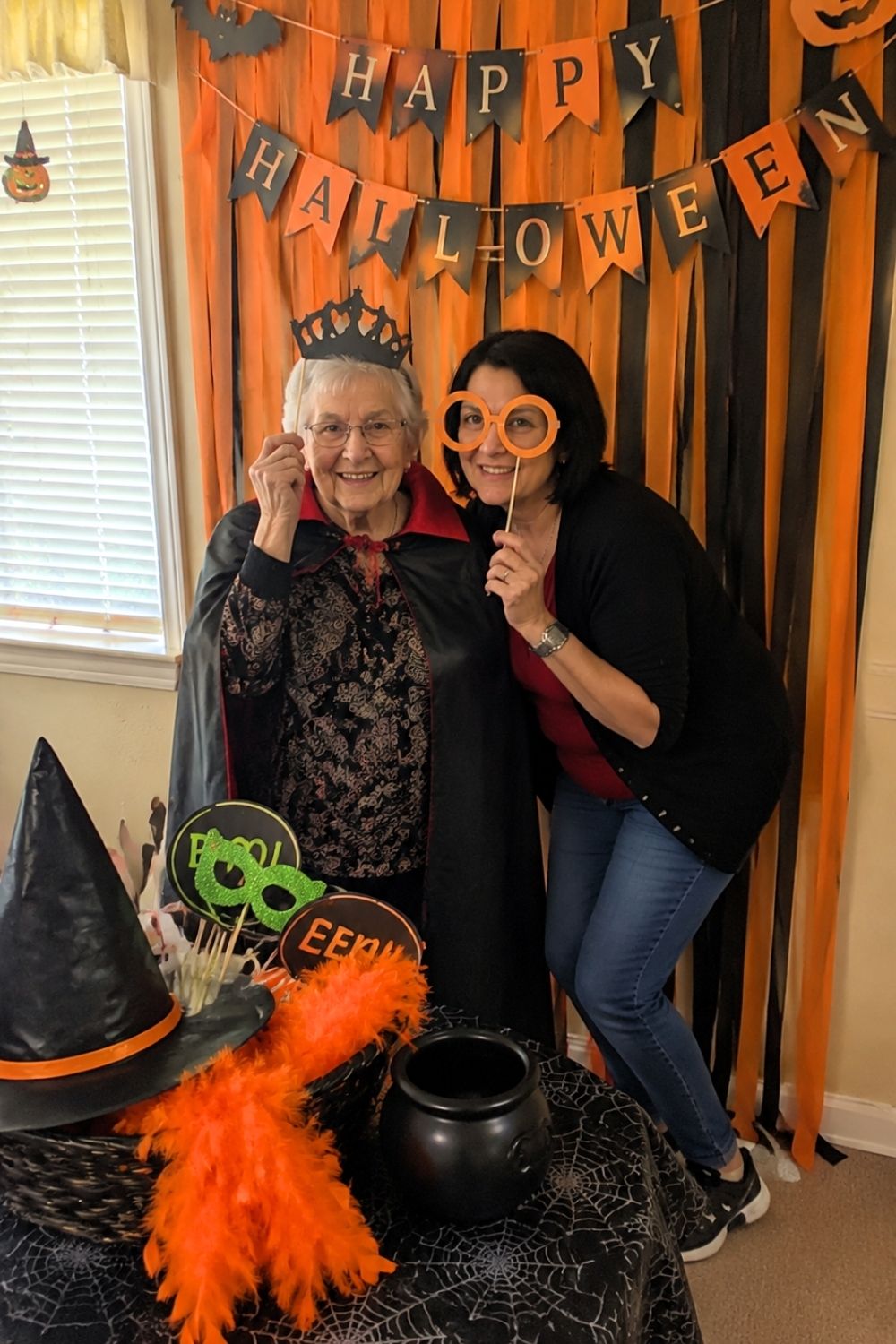
A photo booth corner does triple duty: it’s decoration, a family visit activity, and it produces photos that go home as keepsakes.
Set it up in a corner of the activity room and watch what happens on family visit days.
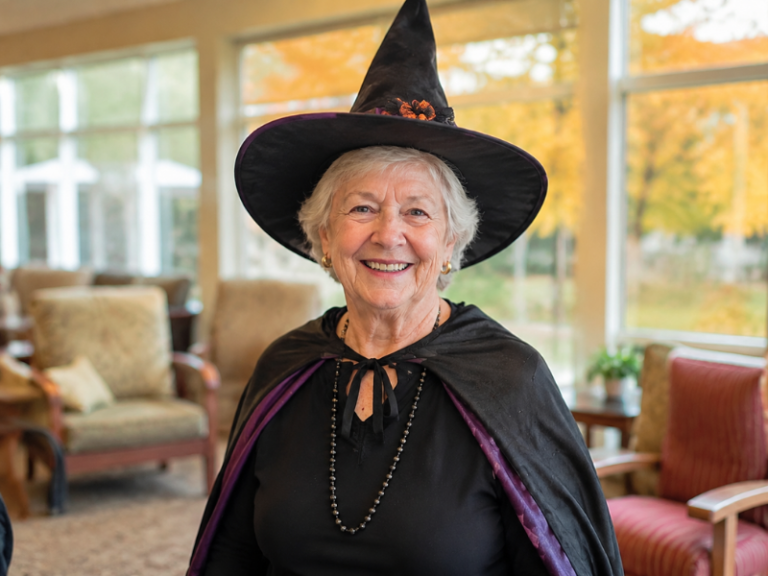
Props should be easy to hold and fun without being frightening — witch hats, silly glasses, feather boas, a small cauldron.
Nothing with sharp edges or small loose pieces. A simple orange and black streamer backdrop or a printed Happy Halloween banner photographs well and takes ten minutes to set up.
Section 4: Dining Room and Common Area Tablescapes
Dining room decor comes up repeatedly in searches for Halloween decor ideas for assisted living — and for good reason.
Residents spend more time at the dining table than almost anywhere else in the facility. Making that space feel festive is one of the highest-impact decorating decisions you can make.
13. Halloween Themed Tablecloths, Placemats, and Coasters
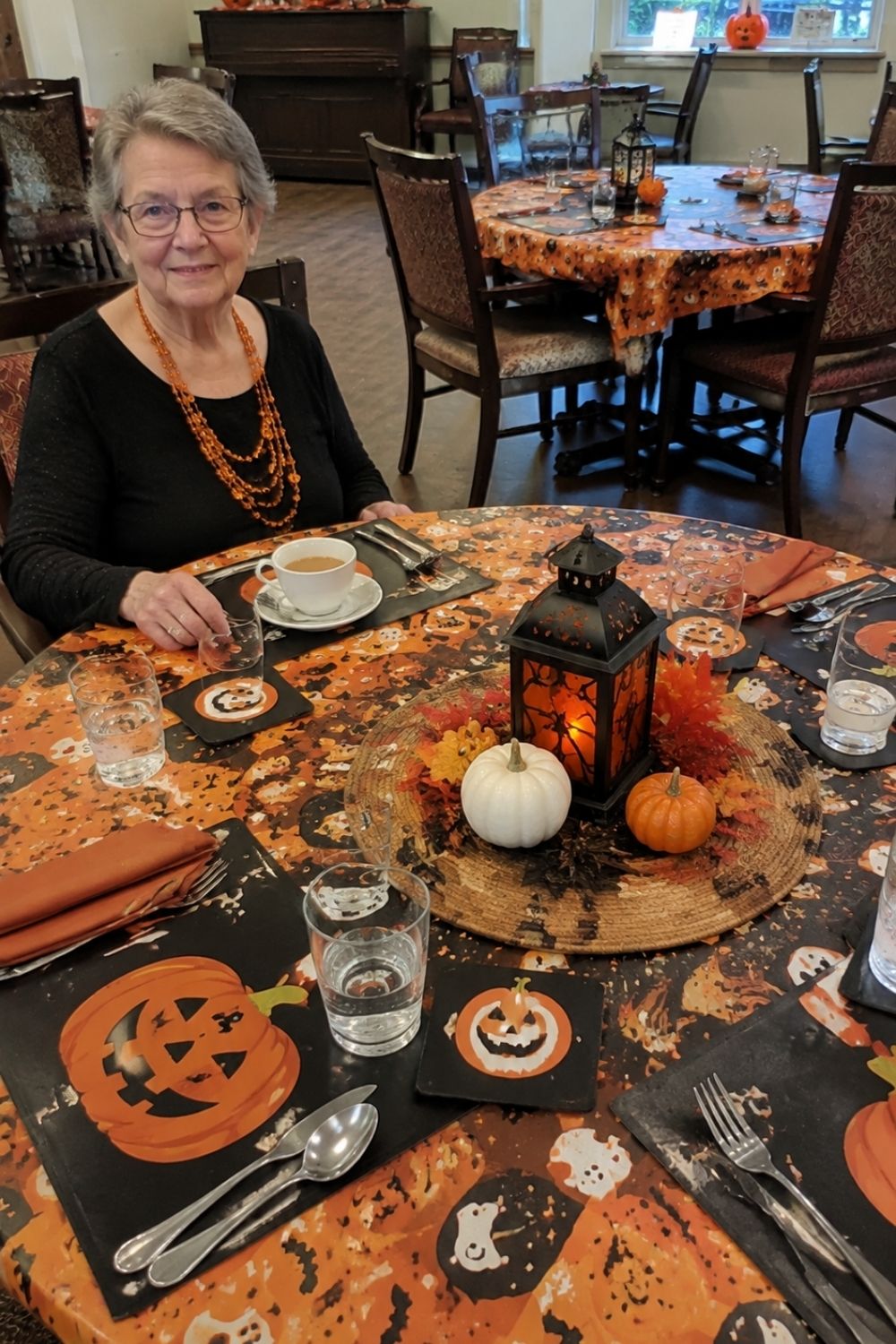
Replacing standard dining linens with Halloween-themed versions is the fastest way to transform a dining room without any installation work.
Functional, festive, and it requires zero tools, zero tape, and zero safety considerations.
Look for wipeable vinyl or easy-wash fabric rather than paper — they look better, last longer, and survive the daily wipe-down every dining room table needs.
A matching tablecloth and placemat set looks intentional even if nothing else in the room is decorated.
14. Mini Pumpkins and Gourds as Table Centerpieces
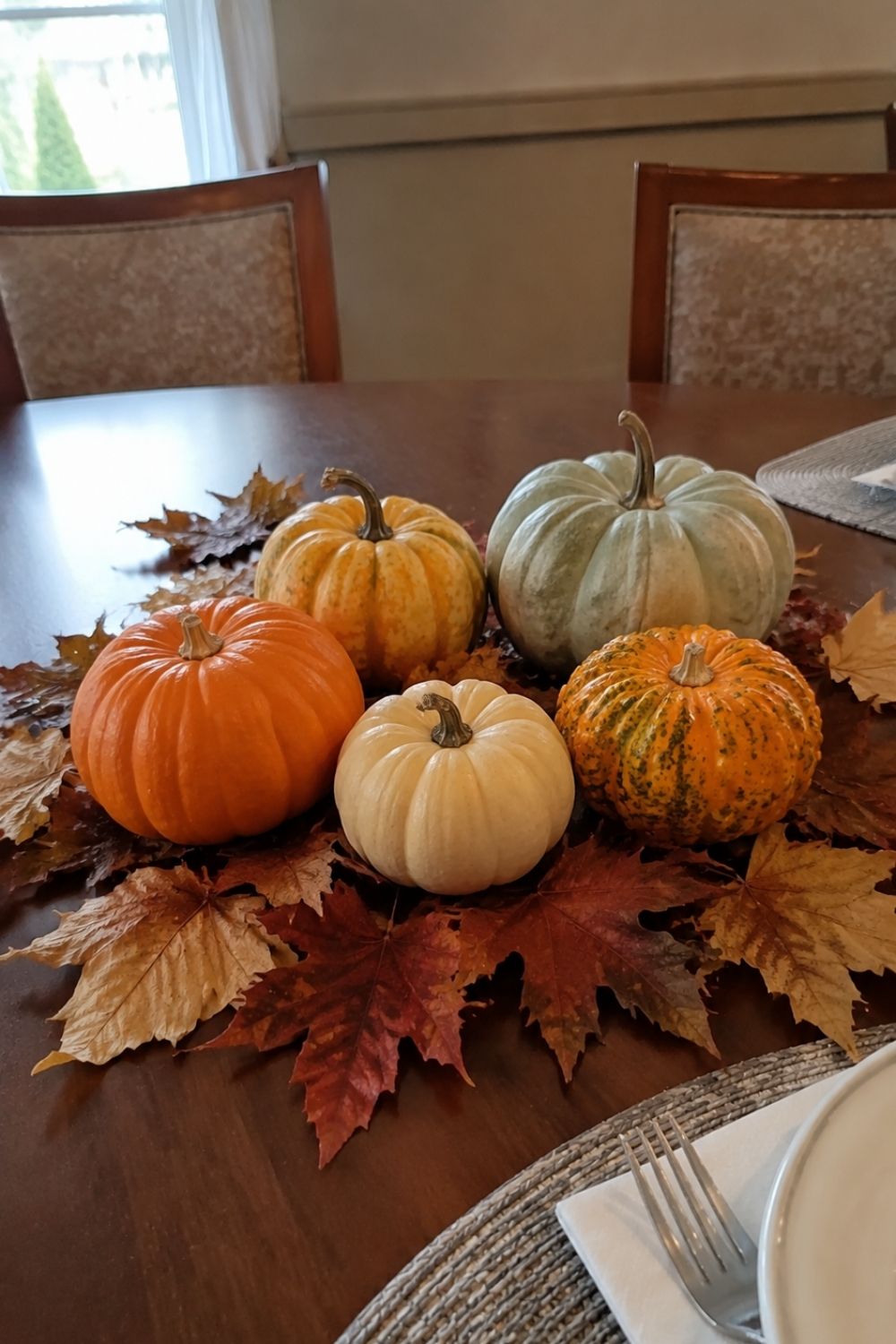
Real mini pumpkins and decorative gourds are the most universally safe and appealing Halloween decor option available.
Natural, familiar, and non-frightening they work equally well for residents with dementia who might be confused by more explicit Halloween imagery.
A cluster of three pumpkins in different sizes and shades with a few dried leaves scattered around the base looks effortlessly beautiful without requiring any craft skill.
Replace them mid-month if they start to soften. Real pumpkins last about two weeks at room temperature.
15. Painted Craft Pumpkins as Dining Table Decor
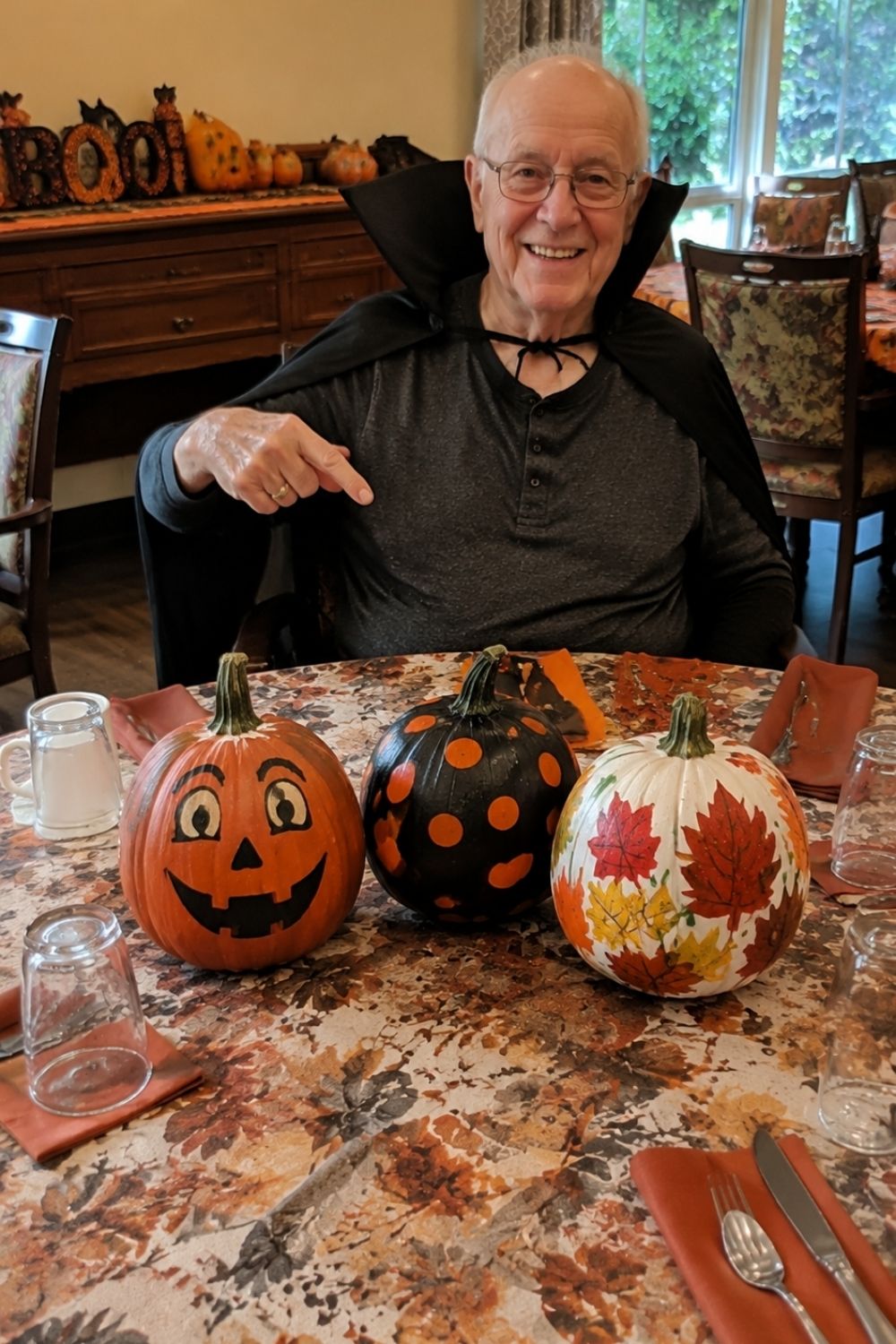
This is the intersection of activity and decor that makes assisted living programming genuinely efficient.
Have residents paint craft pumpkins in a session the painted pumpkins then become the actual dining room centerpieces. Personal, resident-made, and full of conversation starters.
Foam or paper-mâché craft pumpkins last indefinitely, don’t rot, and can be repainted for other seasons.
For the craft session that produces these centerpieces, these Halloween crafts for seniors in assisted living have 25 fully developed craft ideas including pumpkin painting with complete supply lists.
16. Candy Corn in Glass Jars as Centerpieces
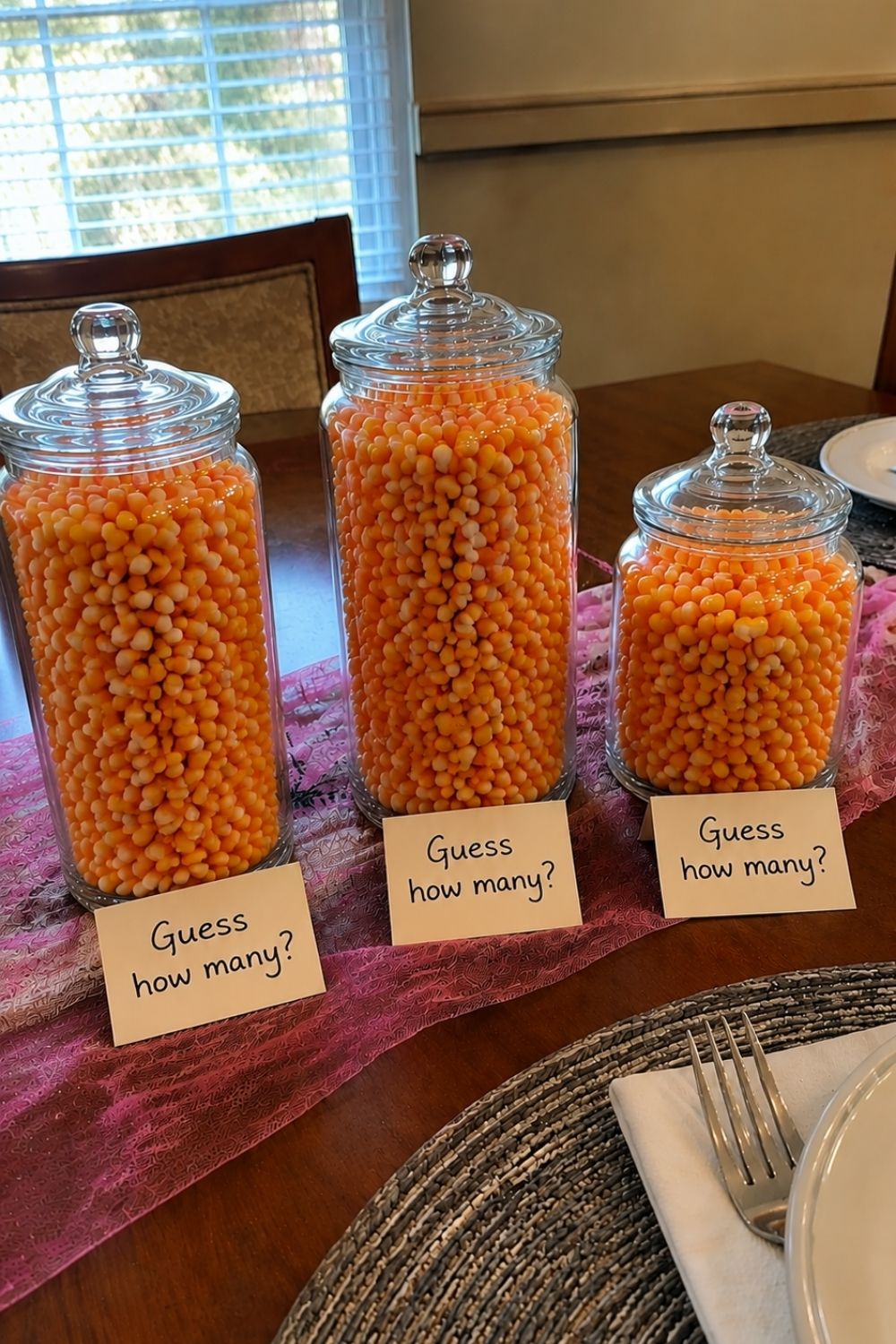
A tall clear glass jar filled with candy corn is simultaneously a decoration, a conversation piece, and a guessing game.
Put a small card beside it that says “Guess how many?” and you’ve turned a centerpiece into an activity. The resident who guesses closest wins the jar.
Use a variety of jar sizes across tables. Taller jars have more visual presence. Shorter jars work better where residents need clear sightlines to the person opposite them visual access across the table matters for connection during meals.
For more on how display objects spark resident connection, these memory jar craft night ideas for seniors show exactly how objects and memory work together in senior programming.
17. Seasonal Napkins and Dish Towels in Halloween Colors

Halloween-print napkins and seasonal dish towels on a beverage station add color without requiring any installation.
Small textile changes have an outsized visual effect in rooms full of hard surfaces and institutional furniture.
This is also one of the easiest ideas for family members decorating a loved one’s personal space.
A set of Halloween-print napkins costs almost nothing and instantly makes a small area feel like someone thought about it.
Section 5: Individual Room Decor for Small Assisted Living Spaces
Family members searching for Halloween decor ideas for assisted living individual rooms face a specific challenge: small spaces, limited surfaces, and facility policies about what can go on walls.
Every idea below works within those constraints. Nothing requires drilling, floor space, or overwhelming a small room.
18. Window Clings — The Easiest Room Decor Option

Window clings adhere to glass without glue or tape, peel off without residue, and reposition as many times as needed.
They require no staff permission, no tools, and no cleanup beyond peeling them off at the end of the season — making them the perfect assisted living room decor solution.
A set of Halloween window clings pumpkins, bats, ghosts, fall leaves — applied to a resident’s window immediately transforms the room without touching a single wall.
They look festive from inside and from the hallway. This is the first thing a visiting family member should bring.
19. Tabletop Halloween Tree
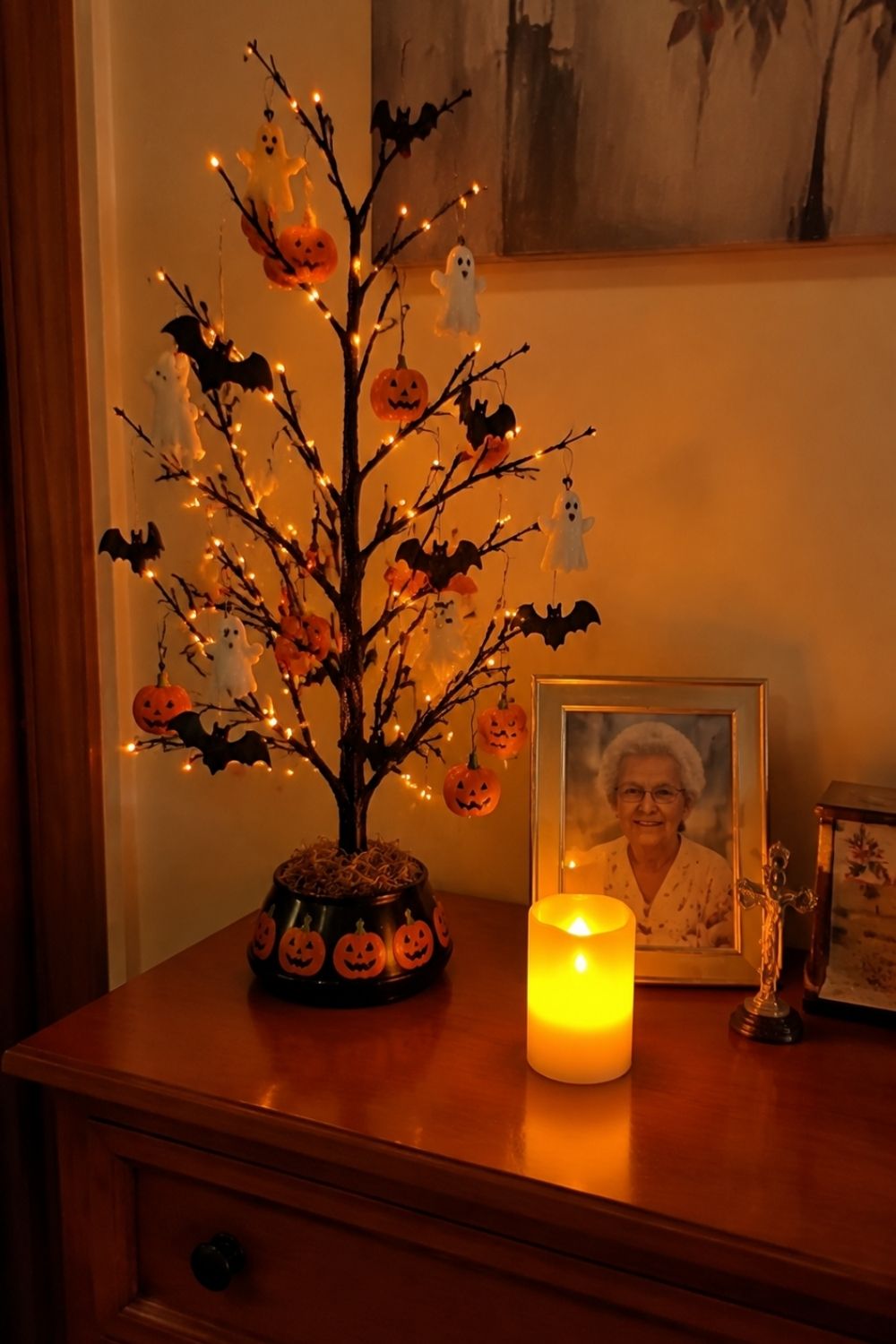
A small tabletop tree decorated with orange fairy lights and miniature Halloween ornaments becomes an instant focal point in a small room.
It sits on a dresser or nightstand, takes up almost no space, and has warmth and personality that most Halloween decorations lack.
This is particularly beloved by residents who usually decorate for Christmas — the tree format is familiar and comforting even in orange and black.
Look for one between 12 and 18 inches tall so it’s noticeable without dominating the surface.
For more seasonal craft ideas that produce room decor residents keep, these August crafts for seniors in assisted living show how seasonal projects naturally double as personal room decor all year long.
20. Pastel Halloween Decorations for a Softer Look
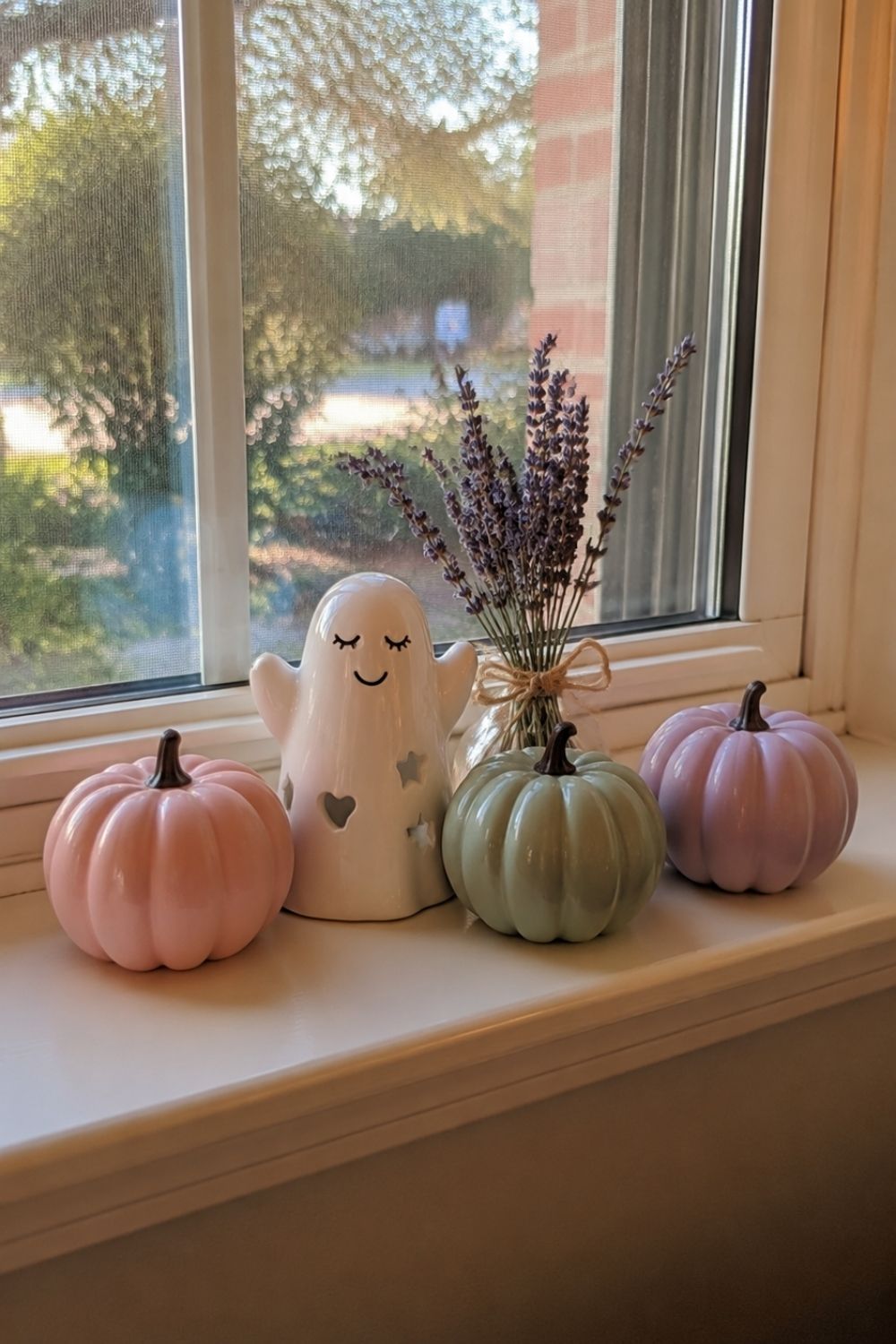
Pastel Halloween decor pumpkins, skulls, and ghosts in pale yellow, baby blue, blush pink, and mint green removes the intimidation factor while keeping the festivity.
For residents who find traditional black and orange stressful or who have dementia that makes dark imagery confusing, pastel is the answer.
A grouping of sage green and blush pink mini pumpkins on a windowsill looks more like thoughtful home decor than seasonal decoration.
It works even for residents who don’t consider themselves Halloween people. For activity ideas using the same gentle approach, these crafts for seniors with low vision show how to adapt seasonal activities for a softer, more tactile approach.
Light-Up Pumpkin for the Windowsill
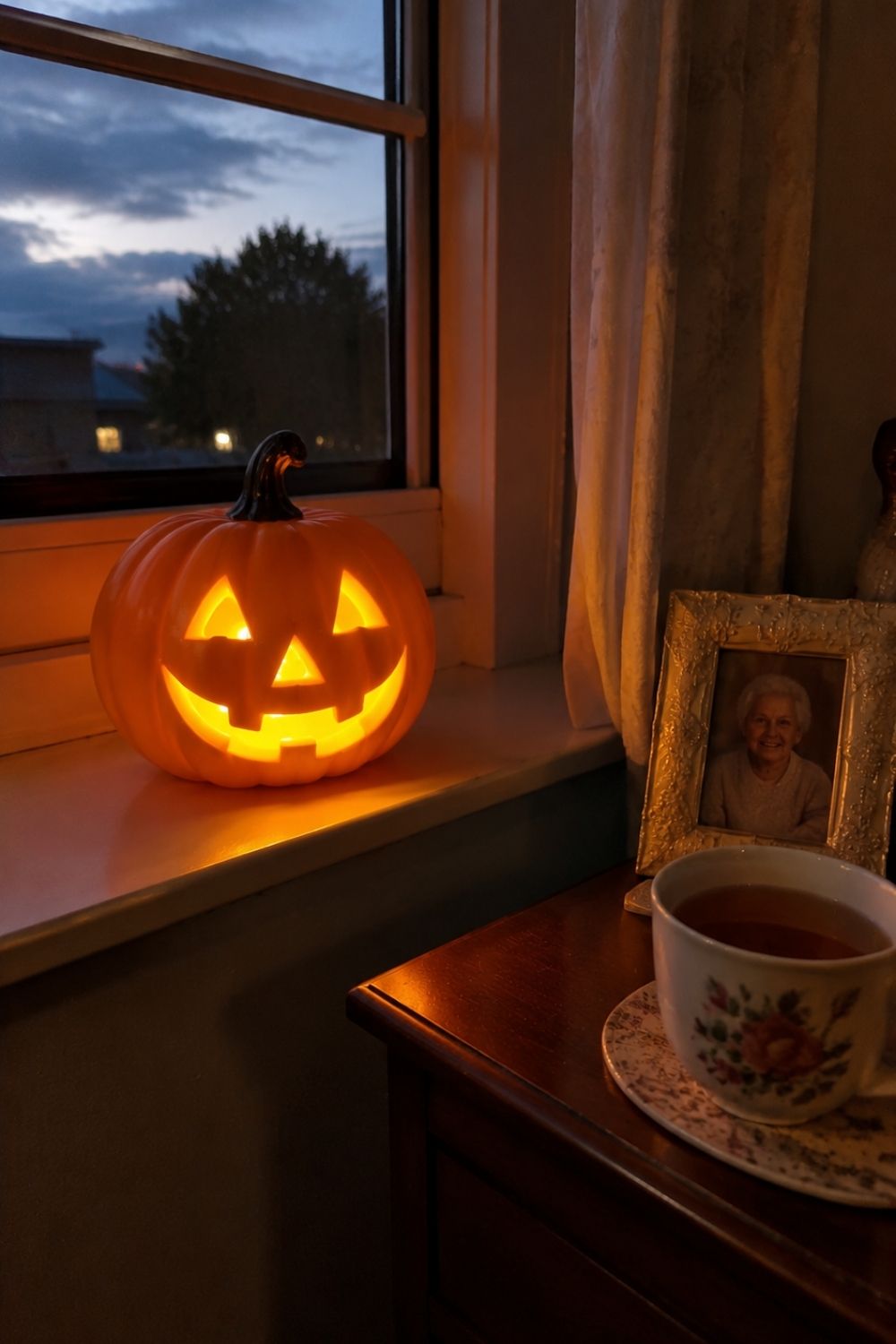
A battery-powered light-up pumpkin for the windowsill is one of the most universally welcomed room additions you can make. Soft evening glow, visible from the hallway, zero installation. Just place it and put in batteries.
Look for one with a timer function so it turns on at dusk and off automatically after a few hours. That convenience matters more than it sounds when memory or mobility is a factor.
Halloween Throw Pillow Cover
A Halloween-themed pillow cover slipped over an existing bed or chair pillow is a fifteen-second decor upgrade that makes a real visual difference. Easy to store afterward, easy to wash, and easy to swap the following year.
Family members can bring this on a visit without advance planning walk in with a Halloween pillow cover and walk out having changed how the whole room feels.
For more ideas to bring on a holiday visit, these Halloween gift ideas for elderly parents cover 25 thoughtful options organized by category.
Section 6: Decor That Works Specifically for Memory Care Residents
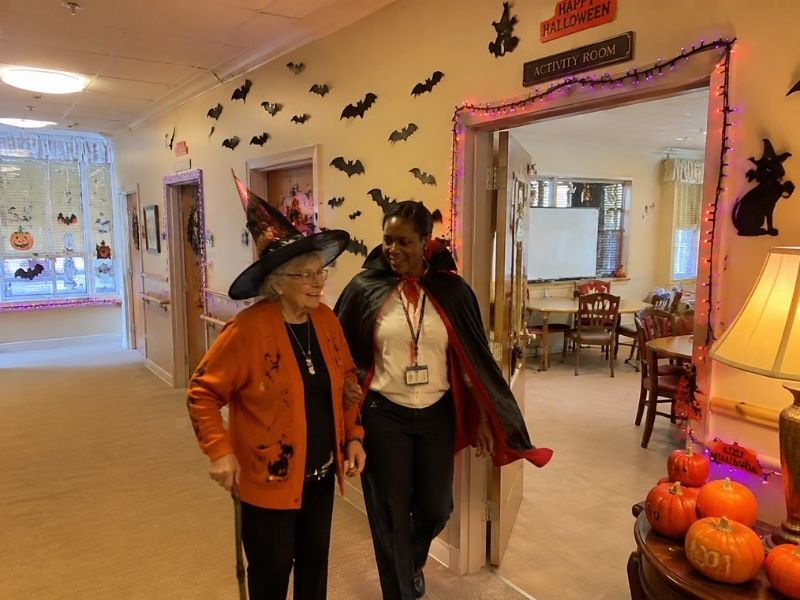
Memory care decor deserves its own section because the rules are genuinely different.
The best Halloween decor ideas for assisted living memory care wings feel seasonal without triggering confusion, agitation, or fear.
This isn’t about dumbing down the holiday it’s about being thoughtful about what actually helps rather than harms.
Keep It Simple and Familiar
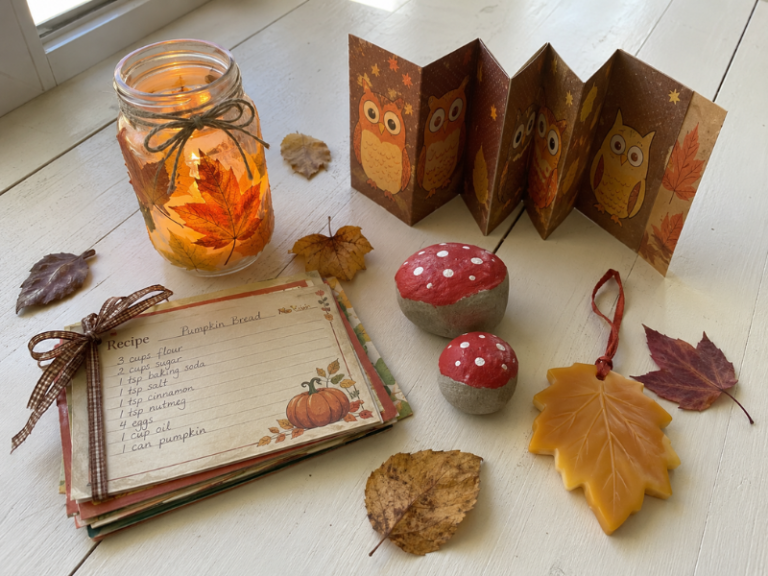
Classic fall decorations — pumpkins, gourds, colorful leaves, sunflowers, small hay bales work better for memory care residents than traditional Halloween imagery.
They connect to a lifetime of positive fall experiences: harvest time, autumn walks, seasonal cooking.
According to the Alzheimer’s Association, familiar objects and seasonal cues can reduce agitation and improve orientation in residents with dementia.
Nature-based seasonal items activate positive recognition without requiring interpretation.
For more on sensory-based programming in this setting, these crafts for seniors with dementia show how sensory engagement works as a therapeutic tool alongside the decor you’re creating.
Avoid Noisy and Flashing Decorations
Motion-activated decorations that make sounds, flash lights, or move unexpectedly are specifically contraindicated for memory care settings.
A cackling skeleton isn’t amusing for a dementia resident it’s genuinely disorienting and can trigger distress that outlasts the moment by hours.
The rule is straightforward: if it moves, makes noise, or flashes unpredictably, it doesn’t belong in a memory care wing. Static decorations only. Steady-on LED lights only. Strobe or flashing effects are never appropriate.
Stick to Warm, Familiar Colors
Orange, gold, brown, cream, and deep red are autumn colors most elderly adults have a lifetime of positive association with.
Heavy black and purple schemes read as Halloween-specific rather than fall-general and for residents with dementia, a strongly Halloween-coded environment can be confusing rather than celebratory.
Warm harvest tones also photograph better in care environments. You lose nothing by going warmer and gain a significantly more appealing space.
Create Atmosphere With Familiar Scents
Scent is the most powerful memory trigger available more reliable than visual or auditory cues for residents with cognitive decline.
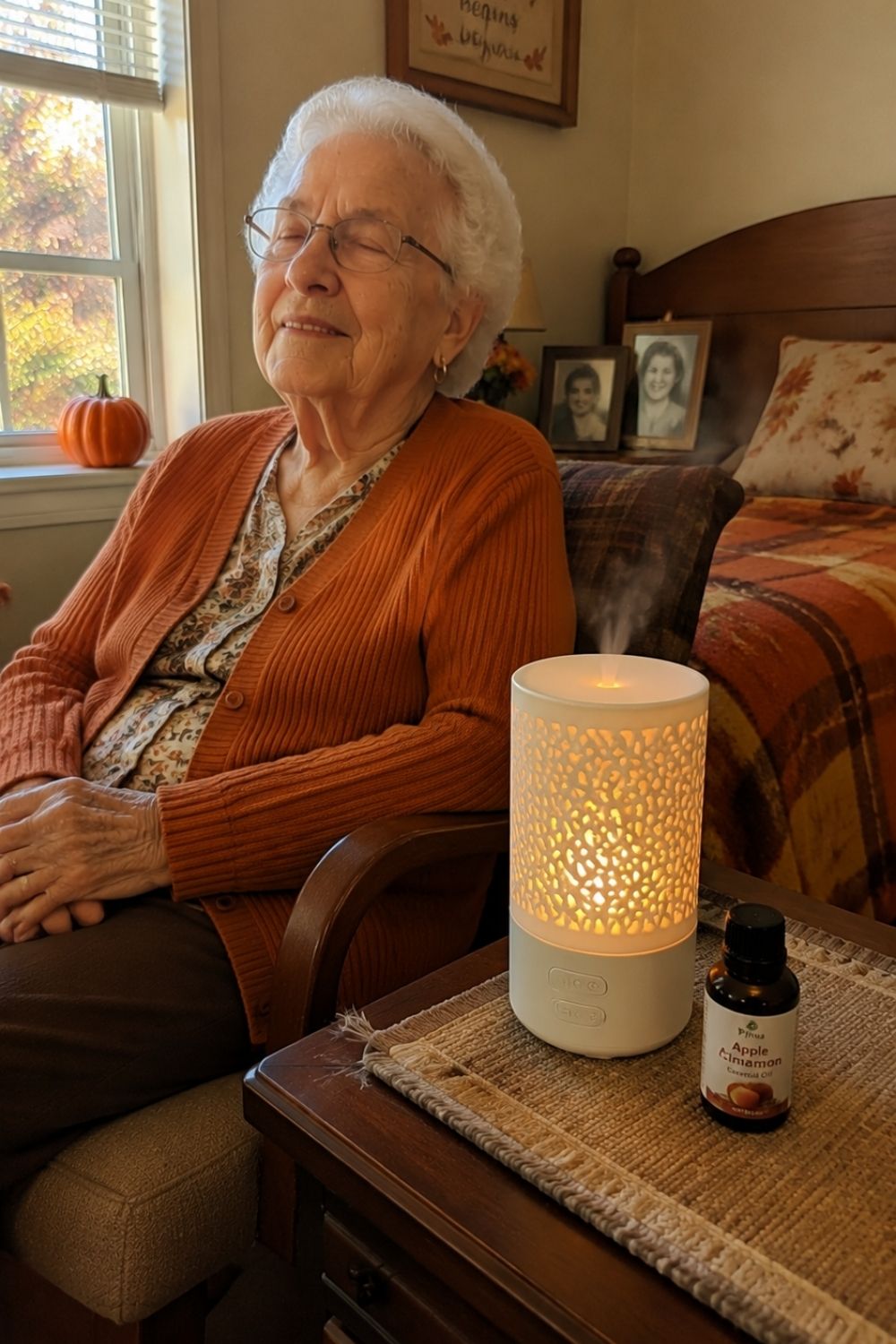
Cinnamon, apple, pumpkin spice, and warm vanilla in a diffuser or sachet can create immediate fall comfort without a single piece of visual decor.
Use a battery-operated diffuser with mild, true-to-life scents. Avoid synthetic or overpowering fragrances. Check with the care team first about any residents with respiratory sensitivities.
Halloween Decor Safety Rules for Assisted Living Facilities
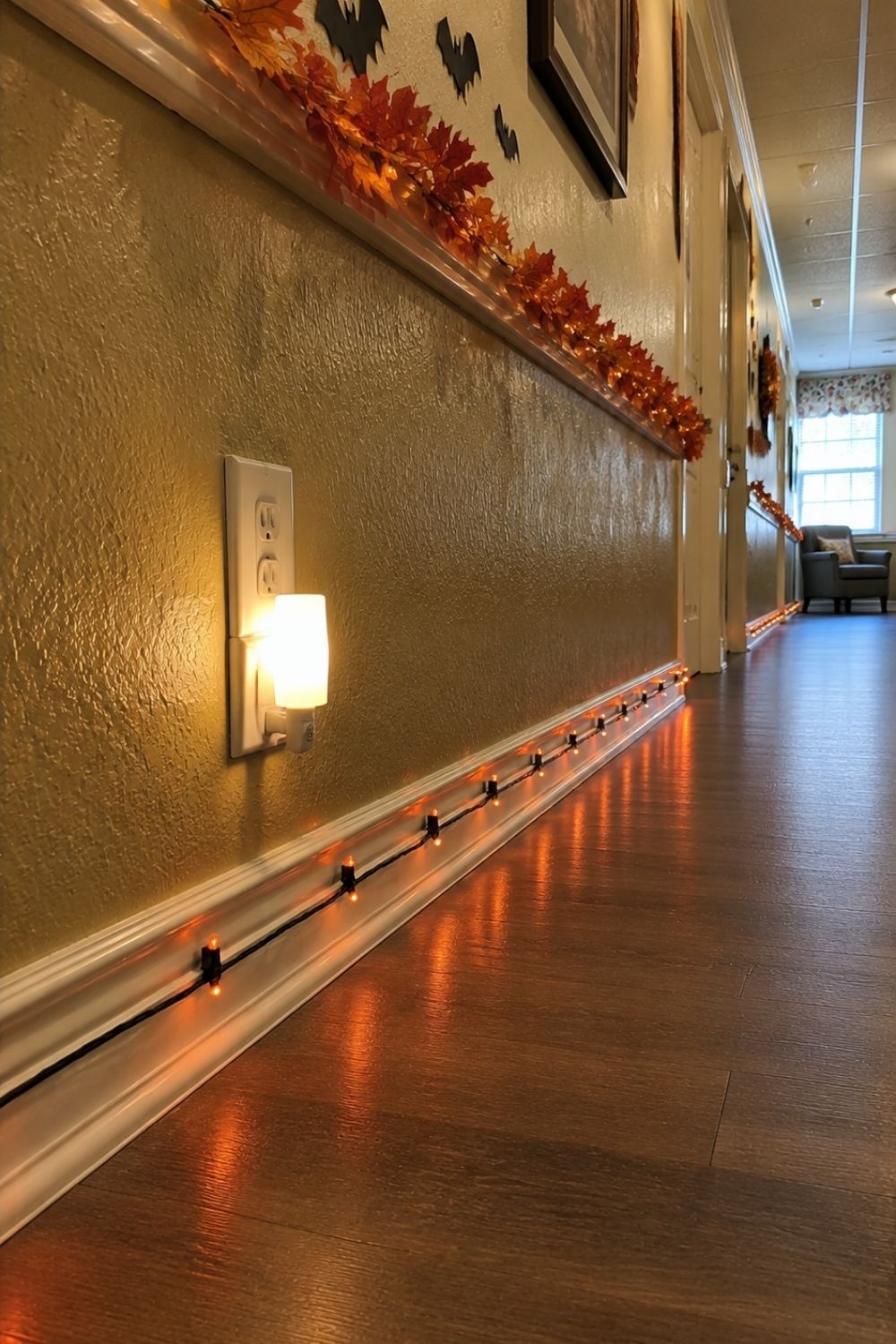
Every Halloween decor idea for assisted living has to pass a safety check before it goes up. These are the non-negotiables the rules that protect residents and protect you as the person responsible for the space.
Keep Clear Paths at All Times
Move furniture or decor before you add Halloween decorations, not after. Hallways, doorways, and paths between furniture in common areas must remain fully clear for walkers, wheelchairs, and canes.
Any decor that narrows a walking path is a liability. Measure twice, decorate once.
Battery-Operated LED Candles Only
This isn’t a preference —it’s a requirement in almost every licensed care facility. Open flames are prohibited in most assisted living and nursing home settings under fire safety regulations.
Battery-operated LED candles that flicker realistically are a complete visual substitute with zero fire risk.
Lightweight and Non-Breakable Decorations Only
Glass, ceramic, and heavy resin decorations break when dropped and create injury risks in settings where residents may knock things over during transfers or reaching for items.
Choose foam, fabric, plastic, and paper-mâché for every surface residents interact with. Save the beautiful ceramic pumpkins for high shelves and reception areas.
Secure All Cords Flat Against Walls
Every cord from every string light, diffuser, or battery pack needs to be clipped flat against the baseboard or wall with cable clips before the space opens to residents.
A cord across a walking path is one of the most preventable fall risks in a decorated space. Do a floor-level inspection before residents enter get down to walker height and look.
Add Motion-Sensor Nightlights in Key Locations
Halloween decor changes the visual landscape of a space residents navigate by memory. Add motion-sensor nightlights in hallways, bathrooms, and bedrooms to compensate.
The CDC reports over 36 million falls occur among older adults each year in the US. Seasonal decor that disrupts familiar navigation is a real contributing factor worth taking seriously.
The Best Decor Is the Kind That Makes Residents Feel Included
The most important thing about Halloween decor ideas for assisted living isn’t the aesthetics it’s what the decorations communicate.
A decorated facility says: this holiday is for you too. You live here. October is happening here. You’re part of it. That message matters more than how perfectly coordinated the tablescapes are.
The best Halloween decor in assisted living involves residents in the process. Let them make door decorations.
Let them paint the craft pumpkins that end up on the dining tables. Give them a say in what goes in their room.
When residents participate in creating the environment, they own it —and that ownership changes everything about how the holiday feels.
For the full Halloween activity program that goes alongside this decor, these Halloween party ideas for assisted living residents cover games, crafts, food, costumes, and family activities from start to finish.
For games specifically, these Halloween party games for senior citizens have 40 ideas organized by ability level.
Craft projects that produce the decorations you’re hanging, these Halloween crafts for seniors in assisted living are the natural companion to this post.
And once Halloween is over, these Thanksgiving gifts for seniors in nursing homes and these September crafts for seniors keep the seasonal momentum going.
Save this to your Halloween Pinterest board and share it with an activity director or family member who needs it.
For a calm wind-down activity that fits beautifully into a decorated space, these gratitude journal craft night ideas for seniors are perfect for a quiet October evening after all the Halloween excitement.
Frequently Asked Questions
How do you decorate an assisted living facility for Halloween?
Start by thinking in zones — doors, hallways, activity room, dining room, and individual rooms each need a different approach.
The most effective Halloween decor ideas for assisted living use wall-mounted and ceiling-hung decorations for hallways, resident-made art for doors, and tabletop installations for dining areas.
Keep everything removable, keep hallways clear, and use battery-operated lights and flameless candles throughout.
The October crafts for seniors in nursing homes post shows how to make resident-created art that doubles as facility decor.
What Halloween decorations are safe for nursing home residents?
Safe nursing home Halloween decorations are flat, lightweight, non-breakable, and non-flammable. Window clings, paper cut-outs, foam decorations, fabric garlands, and battery-operated LED lights all meet the criteria.
Avoid open flames, glass on accessible surfaces, long trailing fabrics, motion-activated noisy decorations, and anything with small parts.
Every decoration should survive being touched, bumped, or knocked over without creating injury or fire risk.
How do you decorate a small assisted living room for Halloween?
For a small room, the window is your best friend. Window clings transform the space immediately with no installation.
A small tabletop tree with orange lights takes up minimal surface space but has significant visual presence.
A Halloween throw pillow cover changes the feel of the whole room in fifteen seconds. Think small, removable, and surface-based — and always check facility policy before attaching anything to walls.
What Halloween decor works for residents with dementia?
For memory care residents, fall-themed harvest decor works better than explicit Halloween imagery. Mini pumpkins, gourds, colorful leaves, and warm autumn colors create seasonal atmosphere without confusing imagery.
Avoid flashing lights, motion-activated decorations, and stark black-and-purple schemes. Familiar scents — cinnamon, apple, pumpkin spice — are often more effective than visual decor for creating a positive seasonal atmosphere.
The crafts for seniors with dementia — which applies the same gentle principles to seasonal activities.
How do you involve assisted living residents in Halloween decorating?
A door decorating contest is the most natural starting point — give residents supplies and let them decorate their own doors.
The craft pumpkin painting session that produces dining centerpieces is another. Any resident who makes something displayed in the facility has a stake in how the space looks and a story to tell when people ask about it.
For building resident participation into the full October program, these September crafts for seniors show how to build crafting momentum in the weeks before Halloween so residents are already engaged when the holiday arrives.