This post contains affiliate links. This means I may earn a small commission if you purchase through my links at no extra cost to you.
Beautiful tables don’t have to cost much. Try these Thanksgiving table setting ideas on a budget for a polished, welcoming table without the splurge.
The table can look surprisingly expensive without anything on it being particularly expensive. A plain plate, an interesting glass, a good napkin and a little restraint can do more than a cart full of seasonal decorations.
That matters on Thanksgiving, when the meal itself is already a major part of the hosting budget. There is no need to buy an entirely new tableware collection just to make dinner feel special.
The pieces you already have can become the foundation, with a few carefully chosen additions doing the rest.
These 25 Thanksgiving table setting ideas on a budget take that approach, with practical ways to create a polished setting without making the table crowded, impractical or overloaded with predictable fall décor.
Make Thanksgiving more personal with Handmade Thanksgiving Gifts for Seniors in Nursing Homes ( They can Gift or be Gifted).
Let Your Table Guide the Setting
Make Room for the Meal, Not Just the Decor
Some of the prettiest tables aren’t the ones with the most decorations.
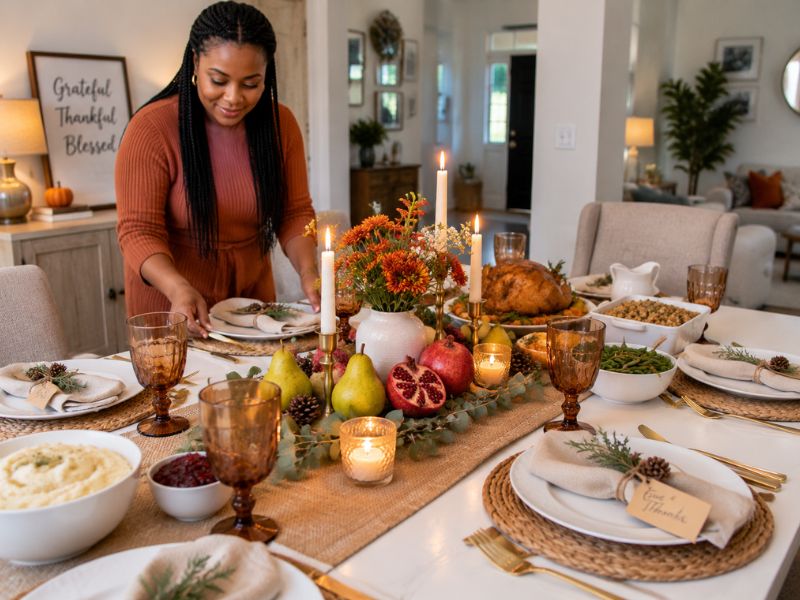
They are the ones where a few things just seem to work together, a simple plate, a cloth napkin, a little candlelight, maybe a glass in a warm color, and nothing feels like it was added just to fill a space.
That is a useful way to think about Thanksgiving, especially when there is already plenty to spend on the meal.
You don’t need new plates for twelve people or a centerpiece covered in miniature pumpkins to make the table feel special. In many cases, the things already in your kitchen can give you a much better starting point.
The difference often comes down to how you combine them: repeating one color, bringing in a bit of texture, giving the table some height without blocking conversation, and choosing decorations that can actually be used again.
That’s where a smaller budget can still produce a table that feels considered rather than thrown together.
Create an easy starting point for conversations and reflection with 15 Thanksgiving Gratitude Crafts That Get Residents to Actually Share.
Thanksgiving Table Setting Ideas on a Budget
1. Make Everyday White Plates Look Like a Collected Set
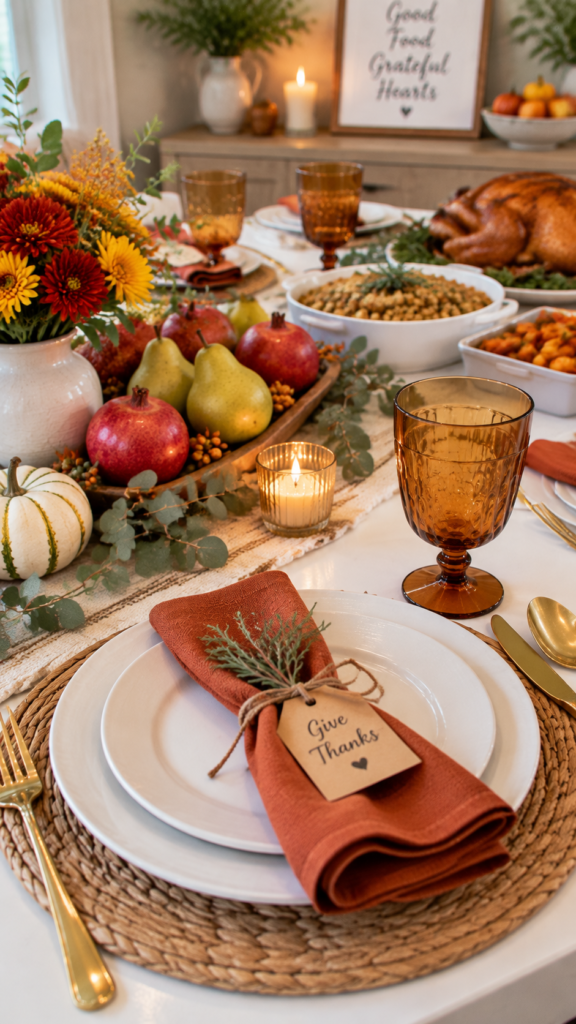
Those everyday white plates in the cupboard can do more for a Thanksgiving table than they get credit for.
Their neutral surface leaves room for patterned glasses, colored napkins or a more interesting serving dish without making the whole setting feel busy.
Keep the plates as the one consistent element, then let one or two smaller details change from there. A deep-colored napkin, amber glass or a simple seasonal accent can give the setting some character without requiring a matching dinnerware collection.
There is also a practical advantage. White plates make it easier to mix pieces you already own, and they work for ordinary dinners long after Thanksgiving is over.
When shopping for replacements or adding to your set, look for plates that are dishwasher- and microwave-safe if those features matter in your household, rather than buying something solely because it looks seasonal.
For the Thanksgiving table, keep the rest of the place setting relatively simple. The plate needs to leave enough room for the food, and the table still needs space for serving dishes and conversation.
2. Use One Statement Textile Instead of Buying a Full Table Set
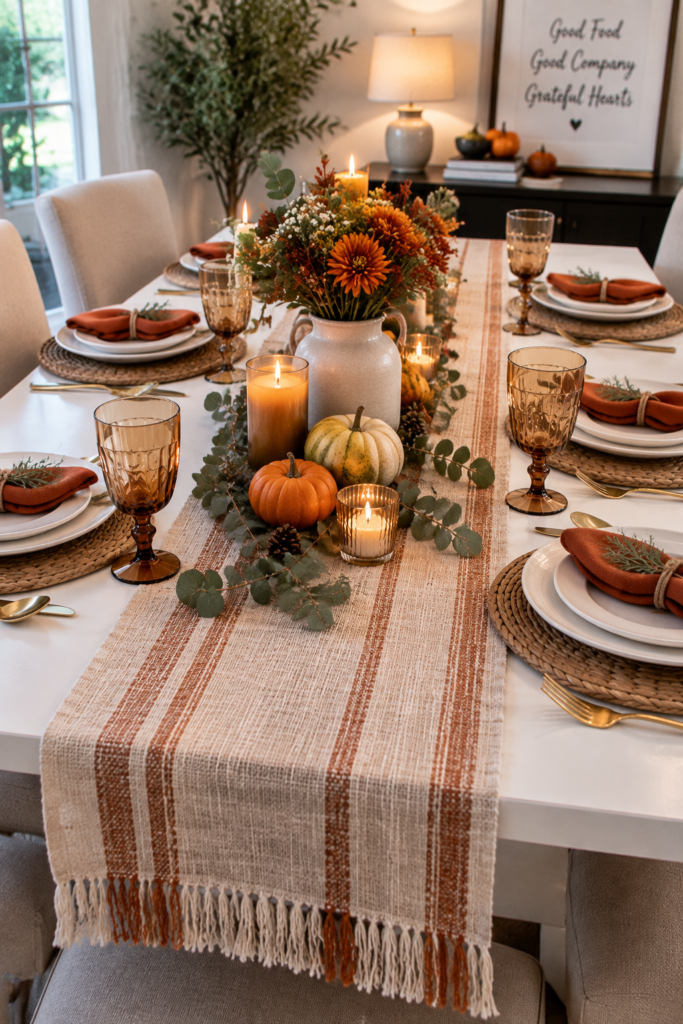
A tablecloth doesn’t have to match the napkins, placemats and runner to make the table feel finished. Sometimes one good textile is enough to give the whole setting a direction.
A textured table runner can bring warmth to a plain table, while a simple tablecloth can give mismatched plates and glasses a more unified backdrop.
Look for cotton, linen or linen-look fabrics in a color that works with pieces you already own. Natural-looking texture can add interest even when the rest of the Thanksgiving table setting is deliberately simple.
There is a budget advantage here too. Instead of buying an entire coordinated collection, spend on the one piece that will cover the most visual space.
A neutral runner or tablecloth can then be reused for Christmas, dinner parties and ordinary meals throughout the year.
3. Let Amber or Tinted Glassware Do the Decorating
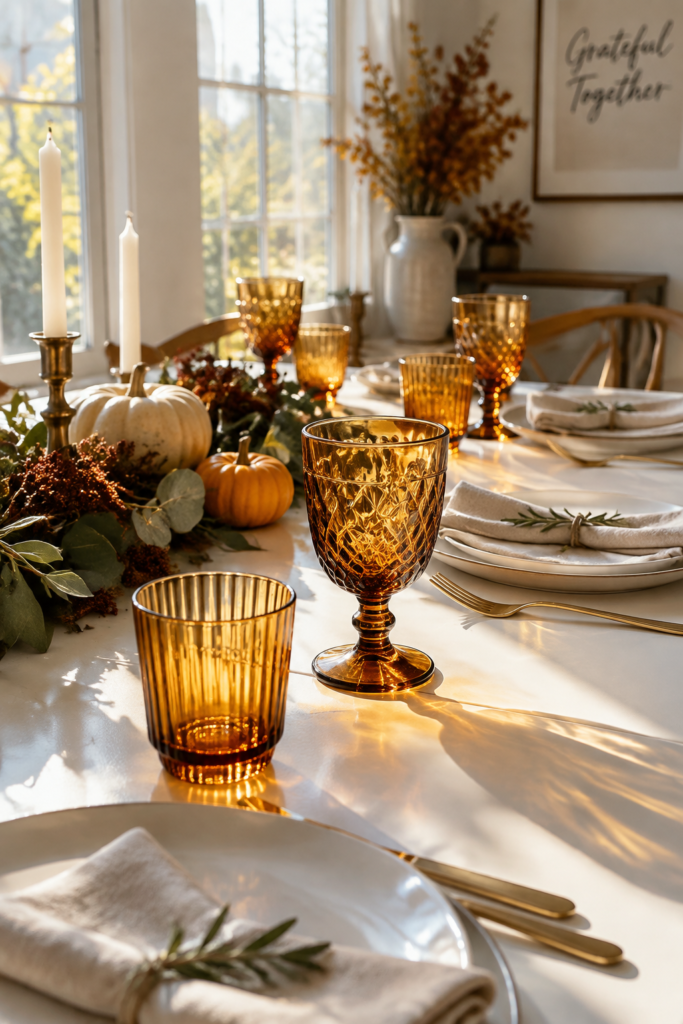
The glassware can quietly become the color on your Thanksgiving table.
Amber glasses are an obvious choice for an autumn gathering, but smoky gray, muted green or another subtle tint can work just as well with neutral plates and linens.
Because the glass remains transparent, it introduces color without taking up the visual weight of a large centerpiece.
That makes it particularly useful on a smaller table where there isn’t much room for extra decoration. Pair tinted glasses with plain dinnerware and a restrained textile, and you may not need much else.
This is also a practical place to spend a little of the décor budget. Choose glassware that can come out for other dinners rather than buying a strongly seasonal design that only makes sense in November.
Stemless glasses can be useful where space is tight, while traditional stemmed glasses give the setting a more formal feel.
Give residents something personal to make and send with 15 Thanksgiving Card Crafts for Seniors in Assisted Living.
4. Build a Produce Centerpiece You Can Eat Afterwards
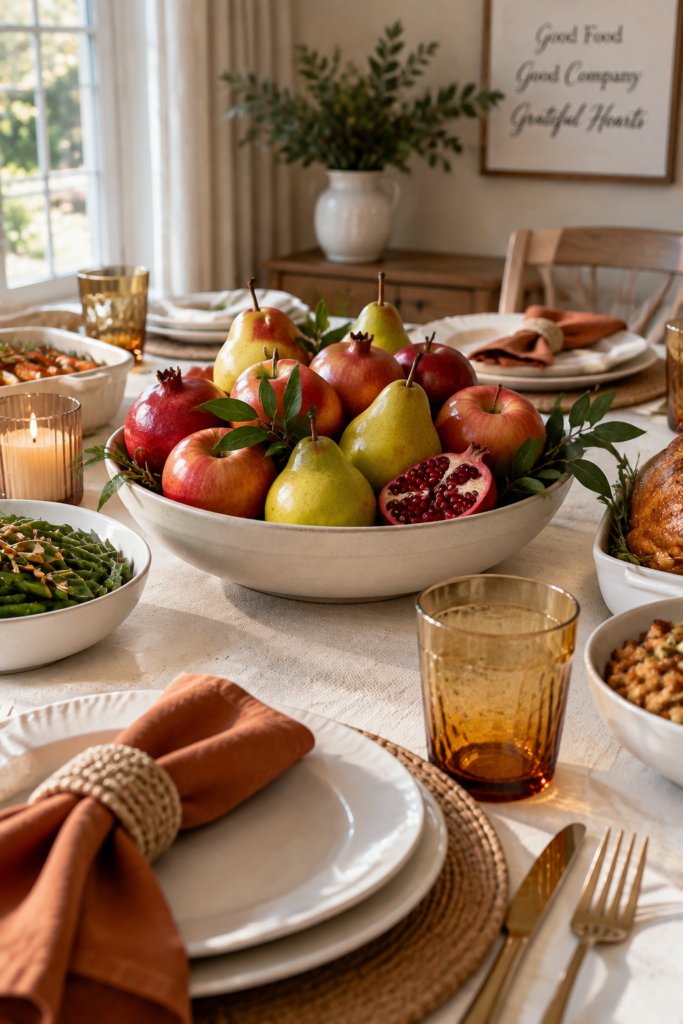
Not every centerpiece needs to be bought from the seasonal décor aisle. Thanksgiving already gives you plenty of natural color to work with, and fruit can bring it to the table without looking overly themed.
Pomegranates, pears and apples can sit in a shallow bowl or be arranged loosely along the centre of a long table.
Their different shapes and colors create enough variation to make the display interesting without needing pumpkins, signs or several decorative objects around them.
Food safety still matters when produce is being used as part of the décor. Keep fruit intended for eating clean and away from candle wax, spills and other sources of contamination.
Decorative fruit that has been painted, coated or otherwise treated shouldn’t be mixed with produce intended for consumption.
For Thanksgiving table setting ideas on a budget, this approach has another advantage: the centerpiece isn’t something you have to store after the holiday. The fruit can simply become part of the meal or be eaten later.
5. Repeat One Metal Finish Three Times
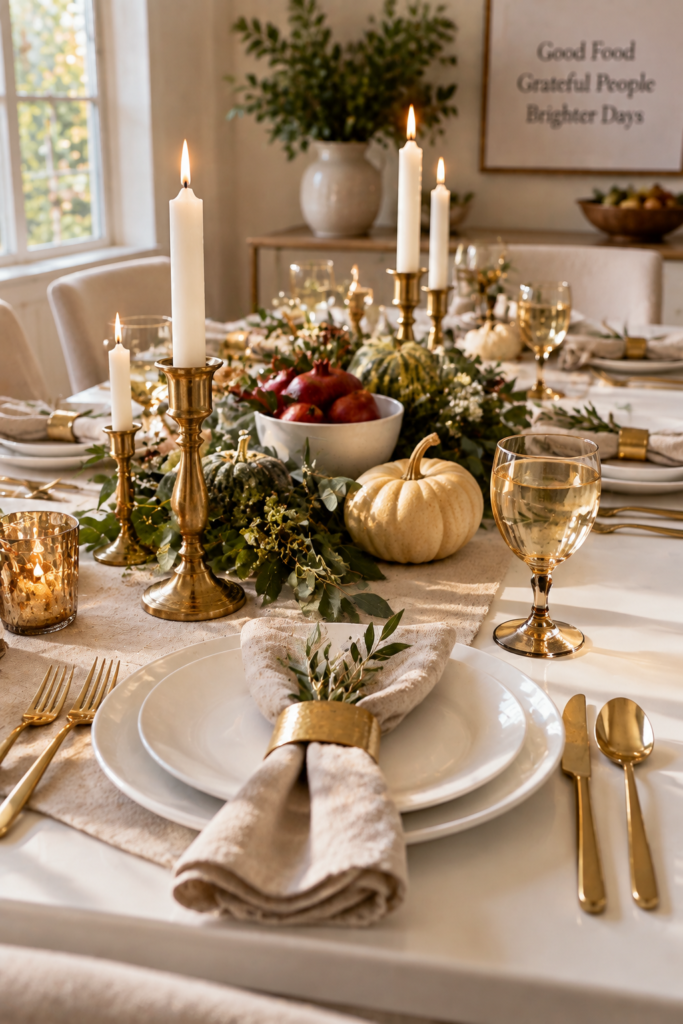
Three small touches can make a table feel more coordinated than a collection of unrelated metallic decorations.
Brass-toned candlesticks might be echoed in gold-colored napkin rings and flatware, for example. The pieces don’t need to be identical. Repeating the finish is enough to create a visual connection between them.
Too many metallic finishes can have the opposite effect, particularly when the table already contains patterned dinnerware or colorful textiles. Choosing one dominant finish gives the rest of the setting somewhere to settle.
This is also a sensible way to shop for Thanksgiving table decor on a budget. Rather than purchasing an entire matching collection, add versatile pieces that can return to the table for Christmas, birthdays or ordinary dinners.
6. Let the Napkin Carry More of the Visual Interest
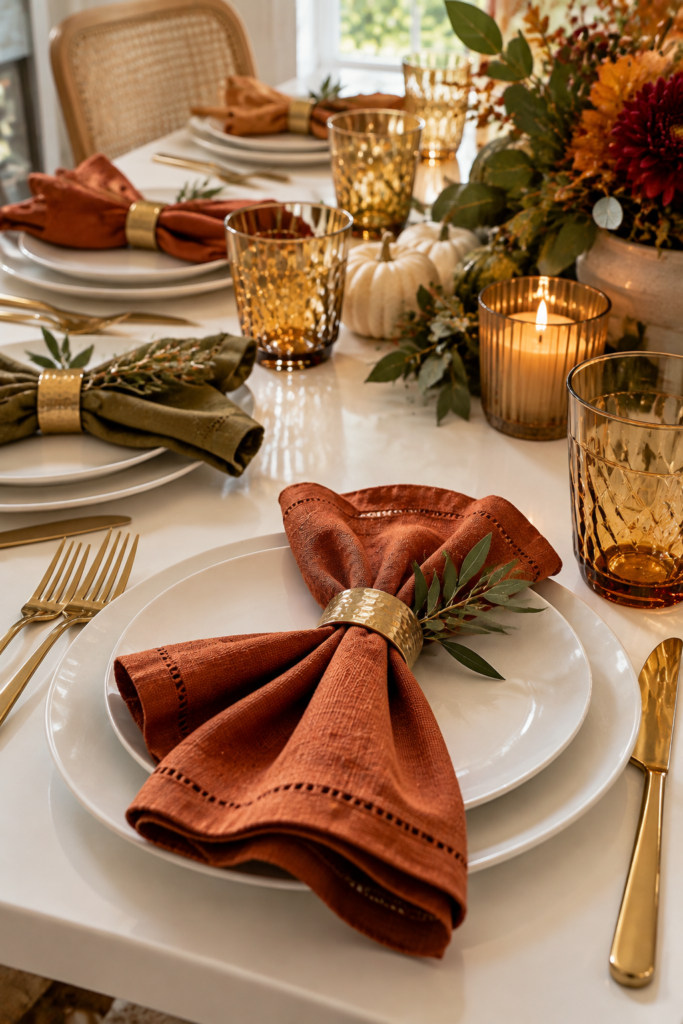
Plain plates leave you with plenty of room to play. A richly colored or textured cloth napkin can change their appearance without replacing the dinnerware underneath.
Try a contrasting color, an interesting fold or a simple napkin ring. Even the way the napkin is placed can make the setting feel more deliberate. Just keep enough room around the plate for guests to eat comfortably rather than treating the napkin as another decorative object.
The repeated detail is what makes this work. One elaborate napkin in the middle of the table would barely register, but the same color or texture appearing at every place setting ties the whole Thanksgiving tablescape together.
Cloth napkins are particularly useful for a budget setting because they aren’t limited to Thanksgiving. Neutral or richly colored cotton and linen-look options can be washed and reused for other meals, giving you more value than a disposable seasonal set.
7. Use a Different Napkin Color From the Tablecloth
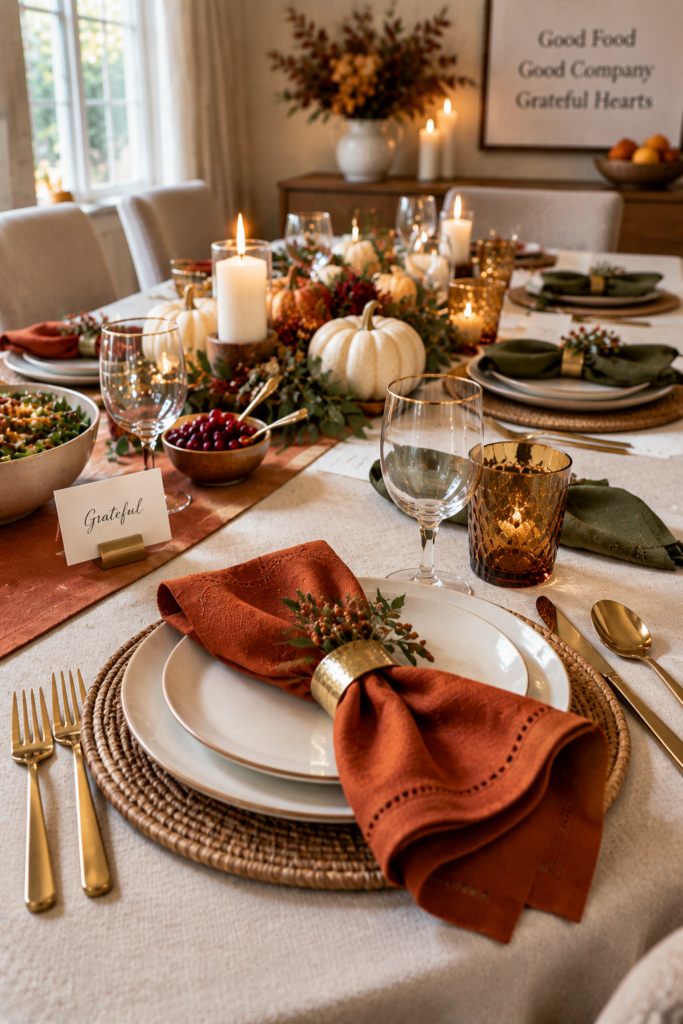
Matching the napkins to the tablecloth is easy, but it can also make the setting look flat. A little contrast gives the eye somewhere to land.
Cream with rust, ivory with olive, white with deep burgundy or tan with muted blue can all work. The colors don’t need to be exact matches; they simply need to sit well together.
Keep the contrast controlled. Once the tablecloth, napkins, plates, glasses and centerpiece all have different strong colors, the table can start to look busy.
Let two main colors do most of the work and use the dinnerware or centerpiece to fill in the rest.
8. Use Place Cards That Solve a Real Seating Problem
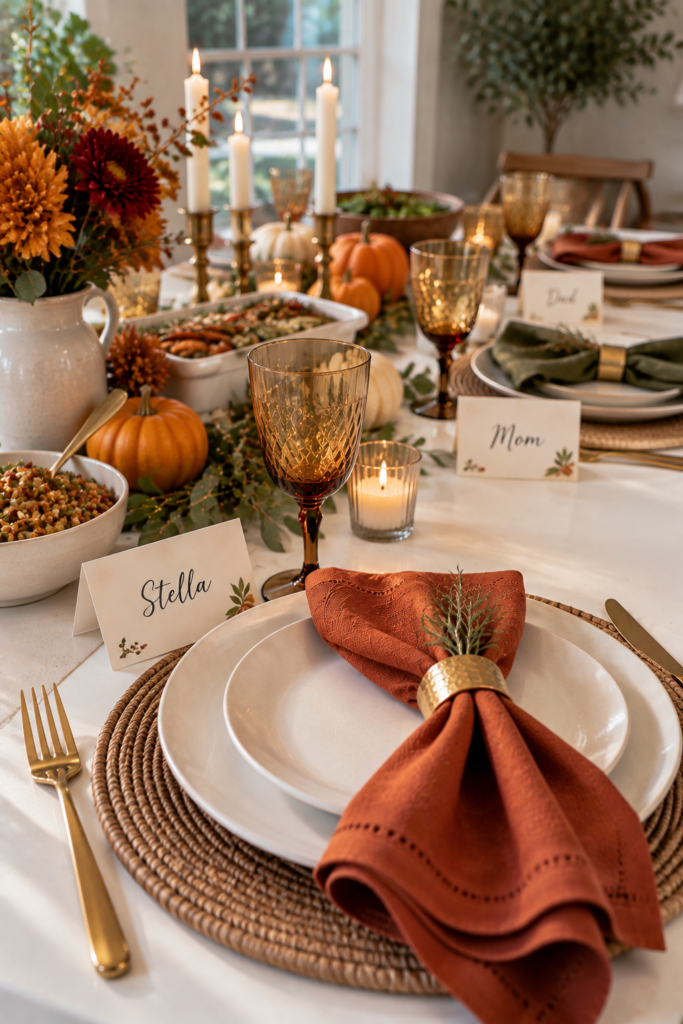
Place cards earn their space when they make dinner easier, not simply because they look pretty.
They can show guests where to sit before everyone gathers around the table, which is especially helpful when you’re hosting a larger group or have a seating plan in mind.
For guests with dietary needs, a discreet note can also help the host identify the appropriate meal without putting someone’s dietary information on display for the whole table.
You don’t need elaborate holders. Folded cardstock, small blank cards or simple card stands can do the job.
Write names clearly and place each card where it can be seen without getting in the way of the plate or glass.
9. Put the Menu at the Table Instead of More Decorations
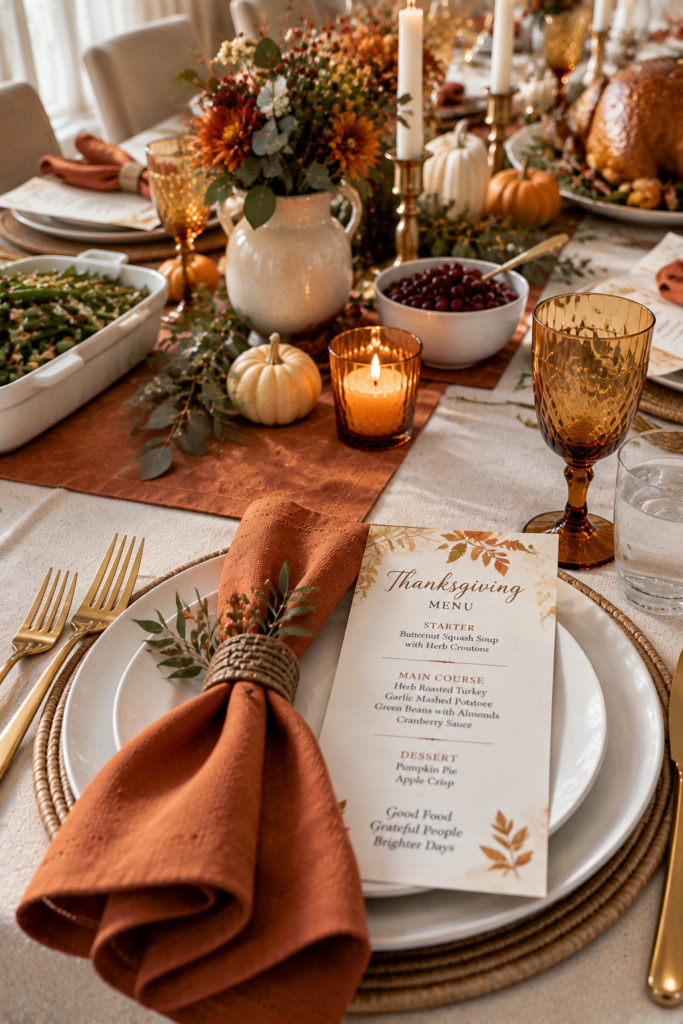
Once the table already has enough visual interest, another decorative object may not add much. A menu can serve a purpose while still making the meal feel considered.
This works particularly well when dinner includes several dishes or courses that guests may want to identify before serving themselves.
One menu at each place setting is an option for a more formal meal; one shared menu can work just as well for a smaller gathering.
Keep the wording simple. List the dishes people are actually eating rather than turning the card into another piece of decoration. It can be printed at home on ordinary cardstock, so there is no need to buy special Thanksgiving stationery.
10. Mix Thrifted China With Modern Glassware
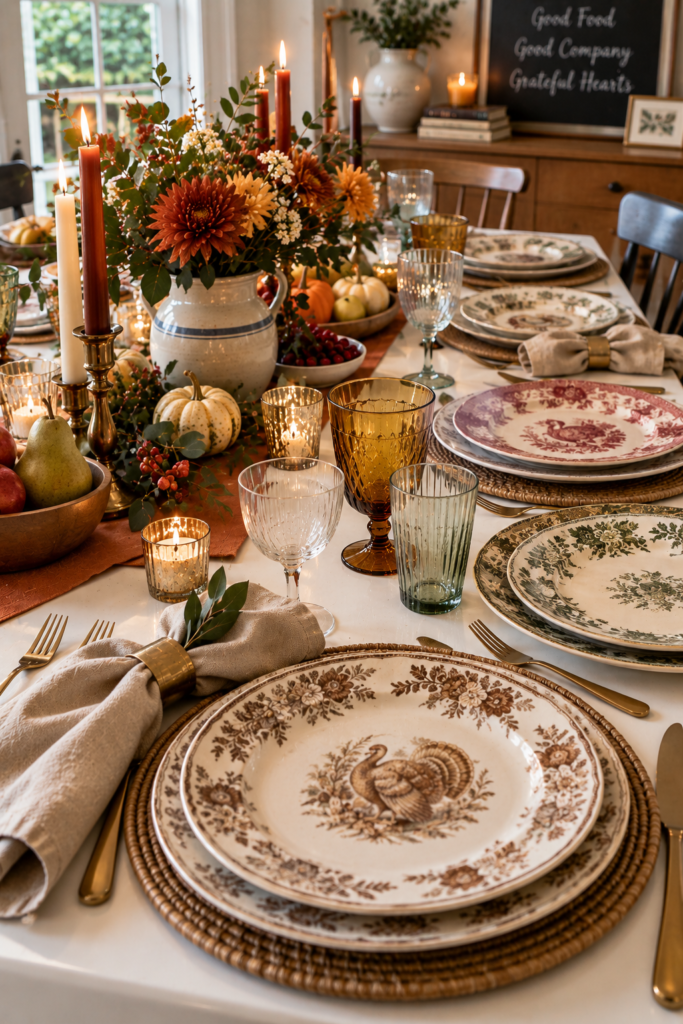
Finding a complete set of twelve matching vintage plates can be difficult and expensive. There is no reason to make matching the goal.
Patterned plates from a thrift store can look intentional when the newer pieces around them provide consistency. Pair them with simple modern glasses, plain napkins and one repeated accent color.
The old and new pieces then have something connecting them, even though they don’t come from the same set.
Check secondhand dinnerware carefully before buying it. Look for chips, cracks, crazing or worn surfaces, and check the manufacturer’s information where possible if you’re concerned about how a particular piece should be used.
For everyday practicality, modern glassware and washable napkins can provide the consistent elements while the thrifted pieces supply the character.
11. Use a Cake Stand to Create Height Without a Large Centerpiece
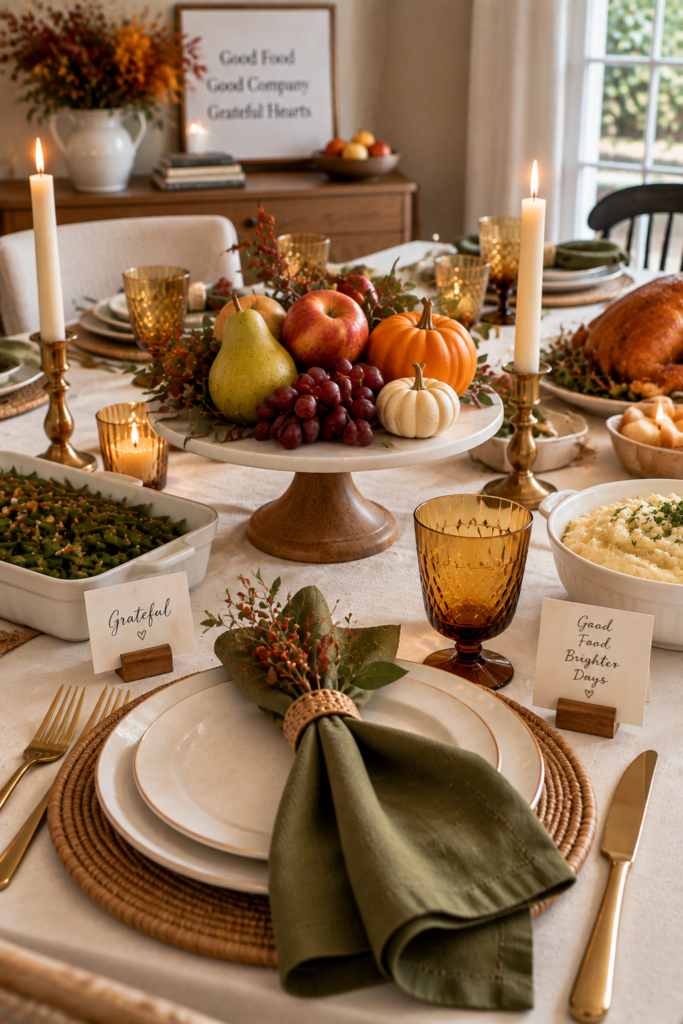
Height can make a flat table more interesting, but it doesn’t have to come from a tall floral arrangement.
A cake stand can raise a bowl of fruit, a small arrangement or another serving piece above the table surface. It also has a job after Thanksgiving, which makes it more useful than a decorative riser bought for one occasion.
Keep anything you elevate stable and make sure guests can still reach around it comfortably.
On a crowded dining table, a small amount of height is enough; the goal is to create another visual level without turning the centre of the table into an obstacle.
12. Give the Serving Dishes a Role in the Tablescape
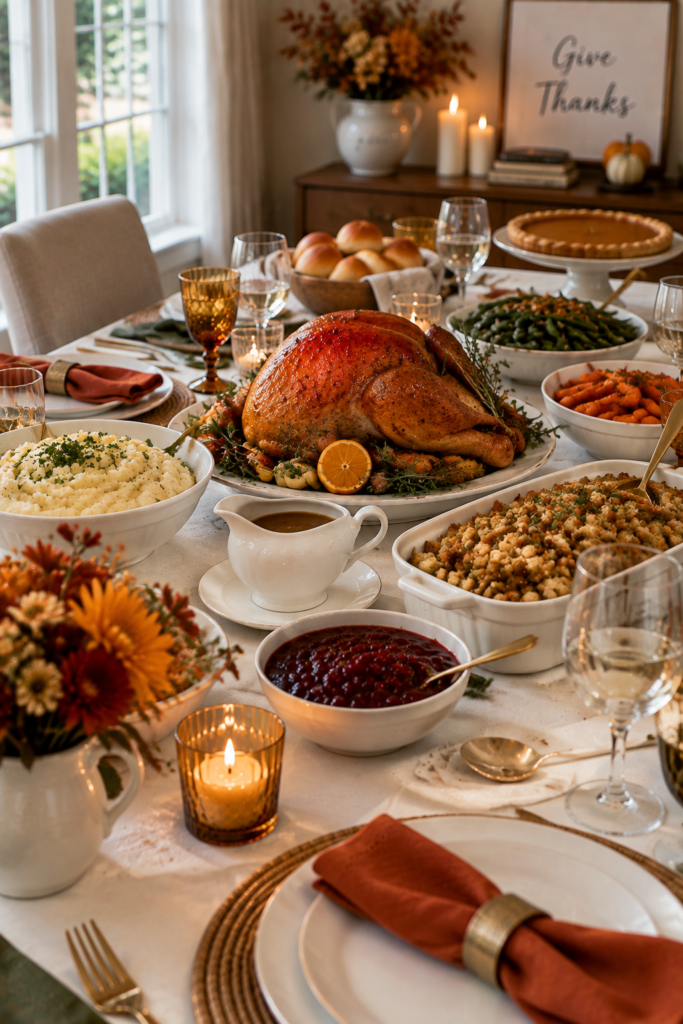
The food is already going to be the centre of attention once dinner begins, so the serving pieces shouldn’t have to disappear into the background.
A large platter, attractive serving bowl or simple gravy boat can become part of the table setting instead of adding another decorative object.
Think about the dishes you will actually use for turkey, vegetables, stuffing, salad, bread or gravy, then choose a few that look good enough to leave on the table.
This can save money in two ways. You don’t need as much separate centrepiece décor, and the pieces you buy have a clear purpose after Thanksgiving.
A neutral serving platter, for example, can come out for roast dinners, family meals and other gatherings throughout the year.
Size matters here. A beautiful serving dish that takes up half the table may make dinner harder to serve.
Measure the space you have and think about where the food will go before buying large platters or bowls.
13. Repeat One Color at Every Place Setting
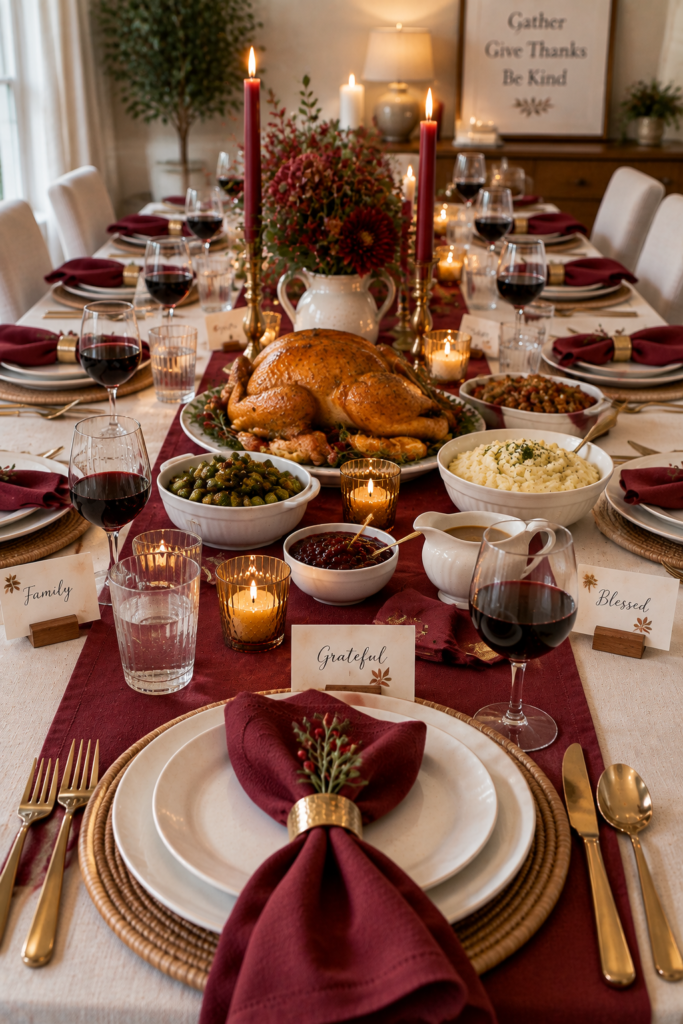
One repeated color can pull together plates and glasses that were never bought as a set.
Suppose your table has white dinnerware and natural wood accents.
Burgundy napkins at every seat can give the setting a clear Thanksgiving feel without adding another collection of seasonal decorations. Olive, deep blue, rust or muted gold can work in the same way.
The useful part is the repetition. You don’t need the color on every single item; seeing it regularly across the place settings is enough to create a connection.
This is also a good way to shop on a budget. Rather than replacing your dinnerware, choose one item, such as cloth napkins, glasses or simple napkin rings, and use that color to tie together what you already own.
14. Create Candlelight Without Open Flames
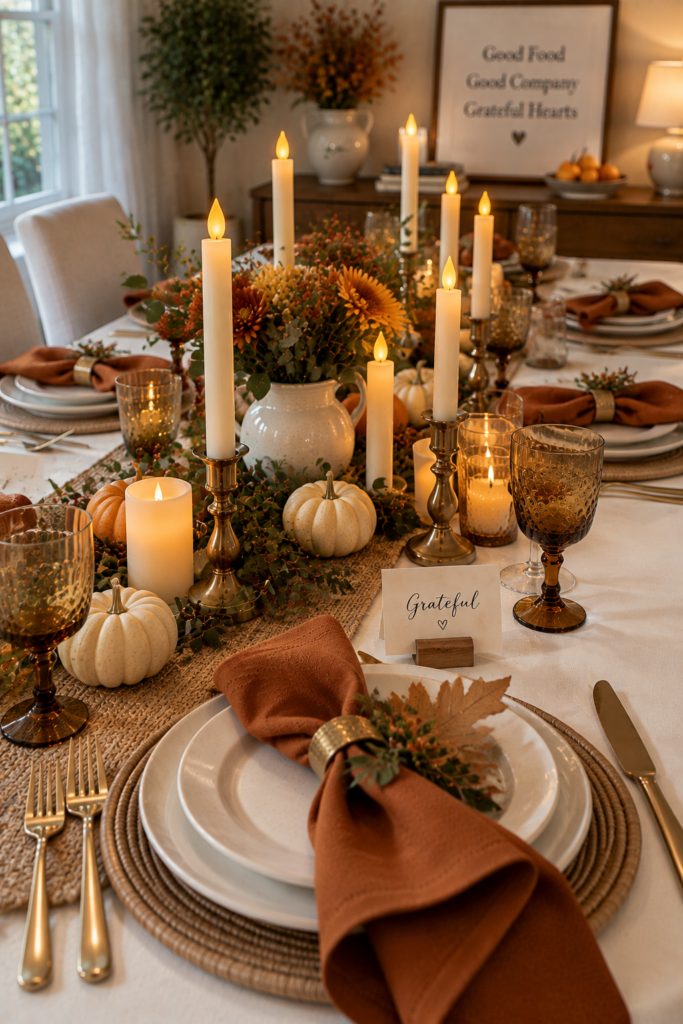
Candlelight can change the feel of a dinner table, but an open flame isn’t always practical when the table is crowded.
Flameless taper candles or LED candles remove the open flame while still giving you the warm glow people often want from candlelight.
They’re worth considering when children or pets are nearby, or when serving dishes and guests leave little room around the candles.
Look for options with a stable base, a timer if you want the convenience, and a battery life that suits the length of your dinner.
If you choose rechargeable models, check how long they take to charge and how long they run rather than relying only on the product’s appearance.
They still need sensible placement. Keep them away from food spills, water and anything that could damage the device, and follow the manufacturer’s instructions.
15. Choose Reusable Candlesticks Over Thanksgiving-Specific Décor
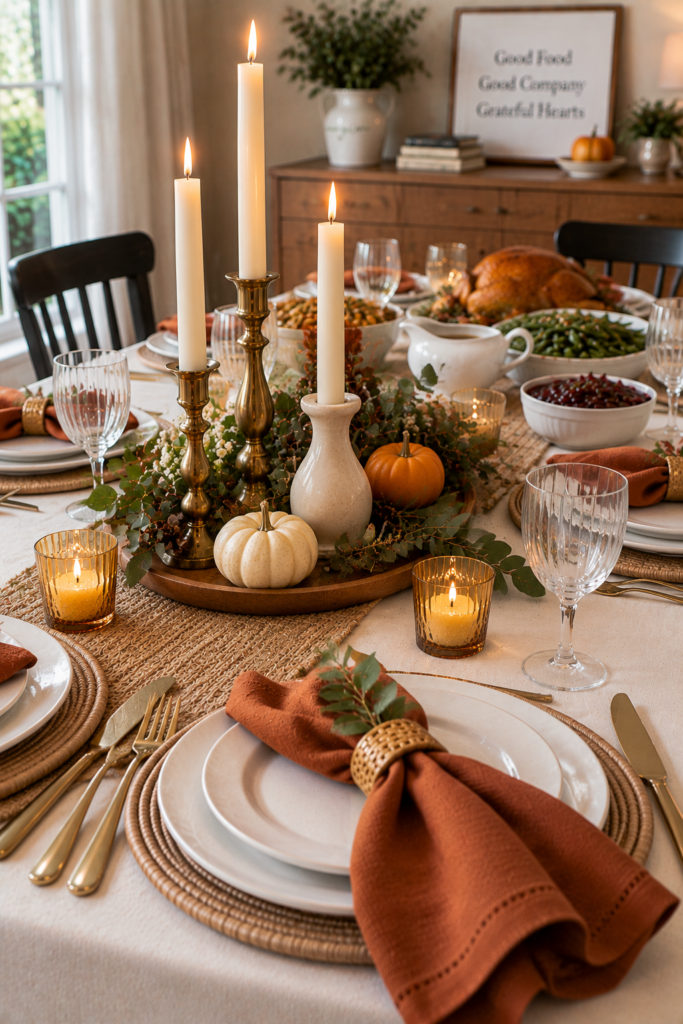
A pair of simple candlesticks can earn their place in your kitchen much more easily than a decoration that only makes sense in November.
Use them with plain taper candles for Thanksgiving, then change the surrounding linens or flowers for another occasion.
Brass, glass, ceramic or another neutral finish can work particularly well because it doesn’t tie the piece to one holiday.
You also don’t need a long row of candlesticks. Two or three placed thoughtfully along the centre of the table can provide height and rhythm without taking up the entire dining area.
When buying, check the base and candle fit carefully. A stable holder that suits the taper size is more useful than one chosen only for its appearance.
16. Turn Fabric You Already Own Into a Table Runner
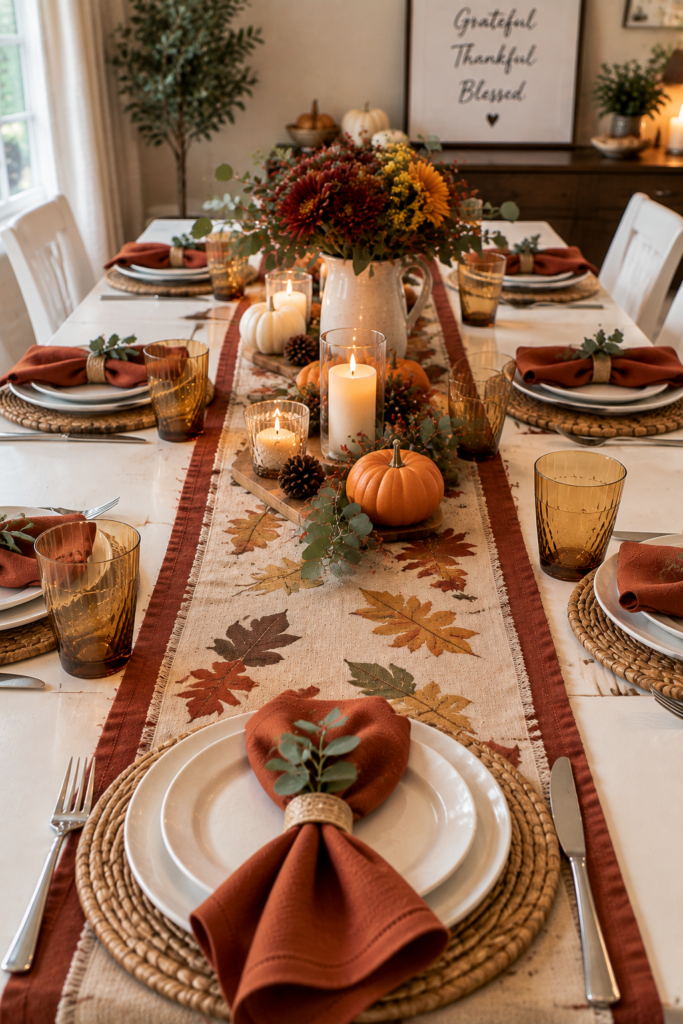
Before buying another piece of Thanksgiving table décor, look at the textiles already in the house.
A suitable length of fabric can create a simple runner when the edges are neat and the material is appropriate for table use. This can be useful when you have a plain dining table but don’t want to cover the entire surface with a tablecloth.
The fabric should sit securely and stay clear of anything that could catch fire.
Don’t use a loose blanket, trailing fringe or highly flammable material around open candles, and avoid anything that sheds heavily onto food or serving dishes.
This is less about making a table look “expensive” and more about making what you already own work harder.
If you do decide to buy a runner later, choose a washable, neutral design that can be used for other dinners rather than a heavily themed Thanksgiving print.
17. Give Each Place Setting One Detail
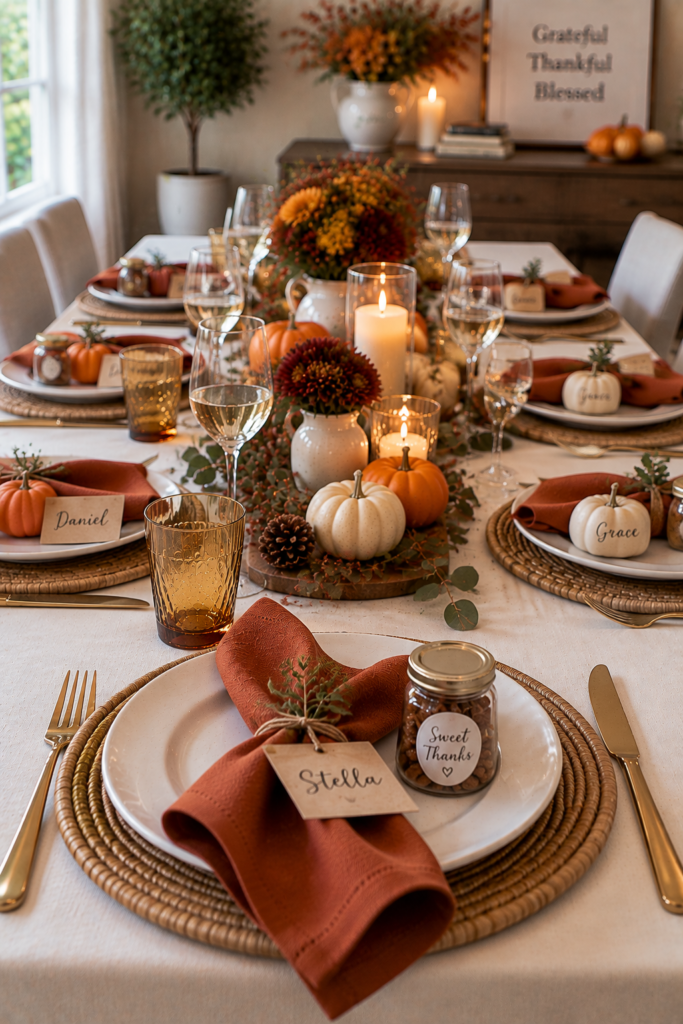
Five little decorations at every seat can make a dining table feel crowded very quickly. One well-chosen detail is often enough.
Perhaps it is a folded cloth napkin, a handwritten place card or a small menu.
For a more personal dinner, a single stem or a small edible favor can work too. The important part is that the same idea is repeated from one seat to the next.
That repetition creates a sense of abundance without requiring you to buy twenty different decorations.
It also keeps the plate, cutlery and glass easy to reach, which matters once people actually sit down to eat.
For a larger guest list, this approach can make a noticeable difference to the budget. One inexpensive detail multiplied across twelve seats is easier to plan for than several decorative pieces at every place.
18. Use Small Vases Instead of One Large Arrangement
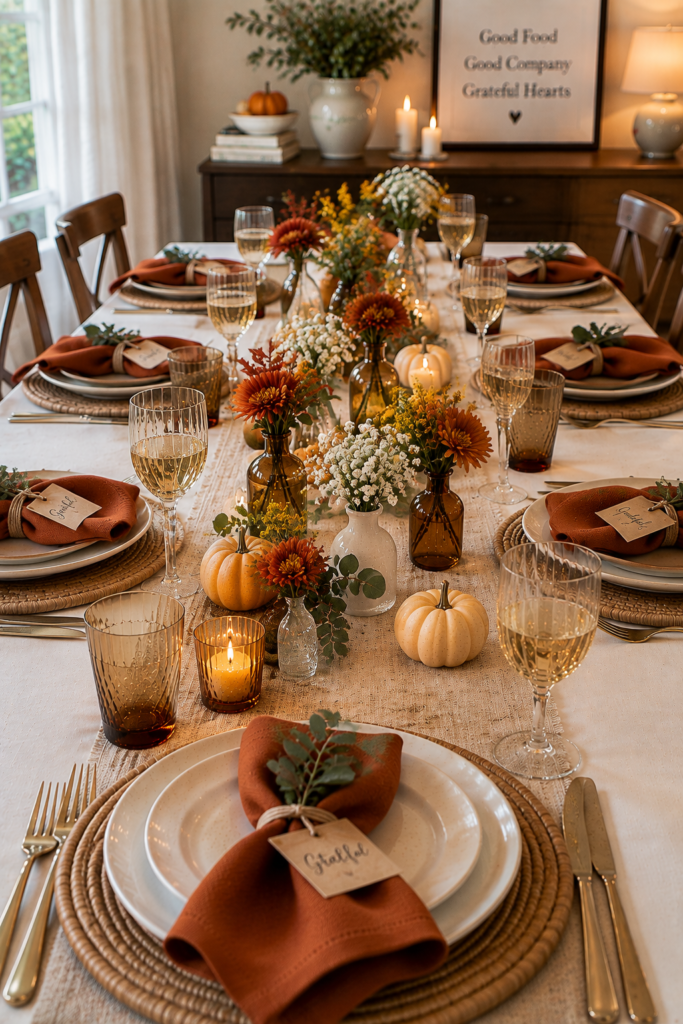
A huge floral centerpiece may look impressive in a photograph, but it can become awkward when guests are trying to see and talk to one another across the table.
Several small vases solve that problem. Spread bud vases or other low vessels along the centre, leaving enough space between them for serving dishes.
Reused glass bottles, thrifted vessels and small ceramic vases can all work, provided they are clean and stable.
Keep the flowers low enough to preserve a clear line of sight. You also don’t need every vase to be identical; repeating a similar shape, flower or color can make different vessels feel connected.
This arrangement is useful beyond Thanksgiving too. The individual vases can be reused around the home or brought out for birthdays, dinners and other occasions.
19. Make a Small Grocery-Store Bouquet Go Further
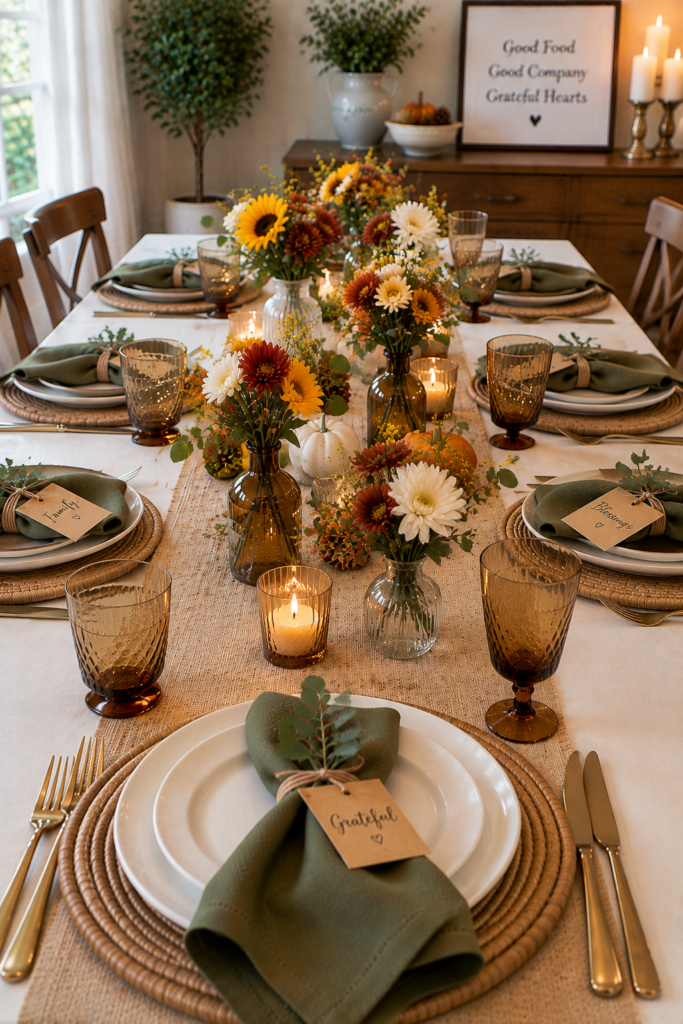
A large floral arrangement isn’t necessary to make flowers part of the table. A single grocery-store bunch can often be divided into several smaller arrangements.
Choose flowers that already look good together rather than buying several unrelated bunches. Remove damaged leaves and unnecessary lower foliage, then divide the stems between a few small vessels.
The result can look fuller across the table because the flowers are spread out instead of concentrated in one place.
Think about the flowers’ height before placing them on the table. Long stems may need trimming so they don’t block guests’ faces, while smaller blooms can sit naturally in bud vases.
There is also less waste when the flowers are divided. After dinner, the smaller arrangements can be moved to the kitchen, hallway or guest room instead of leaving one large centerpiece with nowhere else to go.
Looking for a thoughtful seasonal gesture for an older neighbour? Try 10 DIY Thanksgiving Gift Baskets for Elderly Neighbors That Make Them Feel Remembered and Loved.
20. Let the Glassware Carry the Color
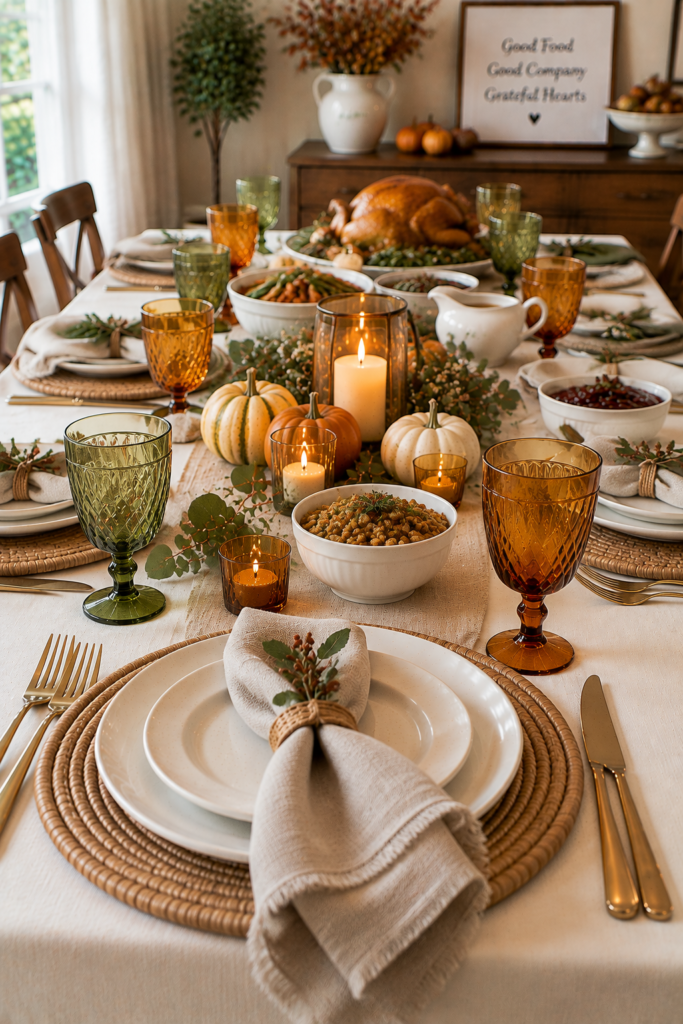
A table doesn’t need an autumn-colored tablecloth, napkins and centerpiece all at once. Keeping most of the setting neutral gives one colorful element room to stand out.
Try white or cream plates with a plain tablecloth and simple napkins, then bring in amber, smoke or muted green glasses. The glass catches the light and adds color without covering much of the table.
This works well when you like Thanksgiving decor but don’t want the usual orange-and-brown look. The food can provide much of the seasonal color naturally, while the glassware gives the setting a more modern feel.
It is also a useful way to shop. A set of versatile colored glasses can be used for other dinners instead of being stored away after Thanksgiving.
21. Use a Serving Board as a Visual Anchor
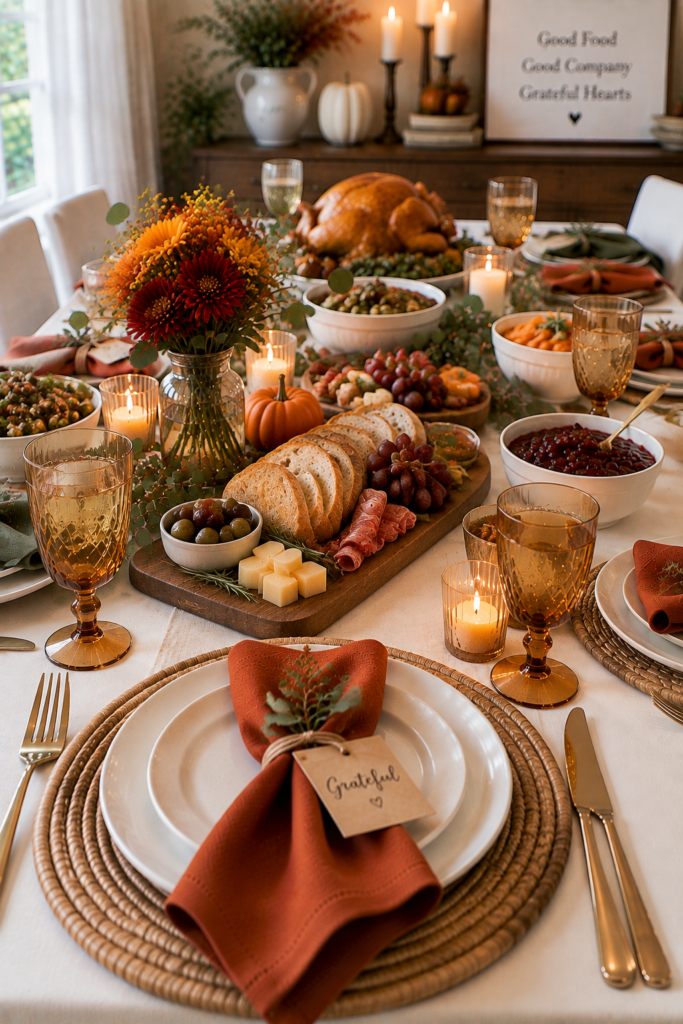
A long serving board can earn its place on the table because it has a job to do.
Use it for bread and butter, small condiments, fruit or appetizers, depending on what you are serving. Placing these items together can give the centre of the table some structure without adding a separate decorative arrangement.
Choose the size with your table in mind. A board that is too wide can take away the space needed for plates and serving dishes, while a narrow one may not hold enough to be useful. Wood is a common choice, but stone or another food-safe material can work too.
Think about cleaning and food safety before buying. A board intended for serving food should be suitable for that use and cared for according to the manufacturer’s instructions.
The bigger benefit is what happens after Thanksgiving. A useful serving board can return for cheese, bread, snacks or appetizers at other gatherings, so your purchase isn’t tied to one holiday.
22. Keep the Thanksgiving Table to One Color Family
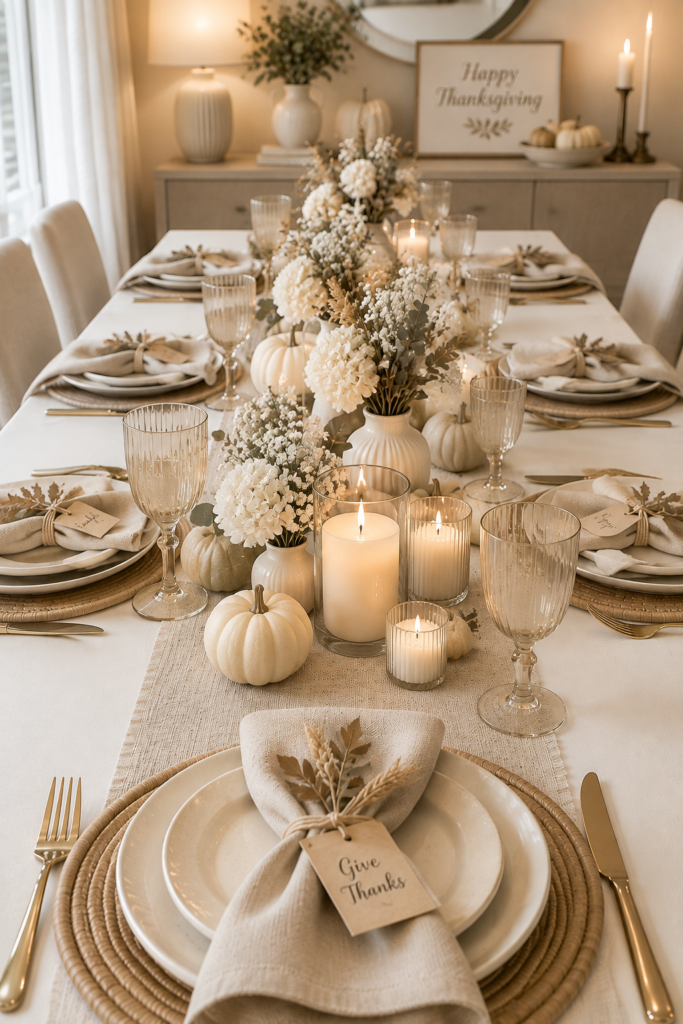
More color does not automatically make a table more festive. Too many strong shades can make different pieces compete with one another, especially when the tableware already has patterns.
A monochromatic approach keeps the colors close together.
Cream, ivory and beige can create a light setting, while olive and sage give you a softer green palette. Burgundy, wine and deep red offer a richer option without needing several unrelated colors.
You can still introduce different materials and shapes within the same color family. That is what keeps the table from looking flat.
This is particularly helpful when you’re working with pieces collected from different places. A shared color can make a thrifted plate, an existing napkin and a new glass feel like parts of the same setting.
23. Use Texture Instead of Buying More Decorations
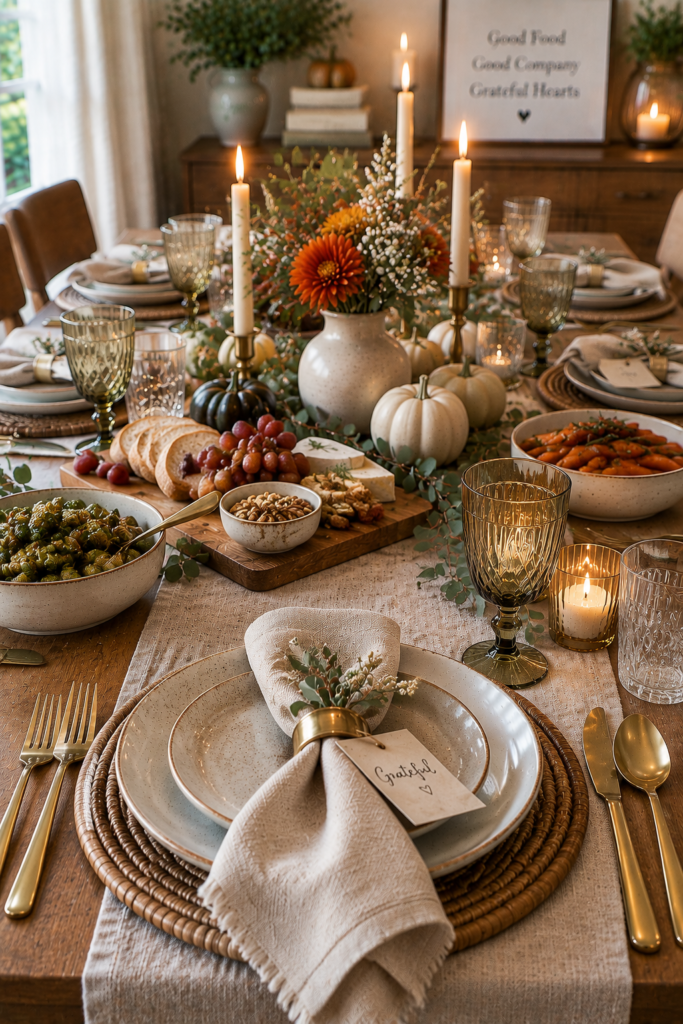
When a table feels plain, the first instinct may be to add another centerpiece or seasonal ornament. Texture can solve some of that problem without adding more objects.
Think about how different surfaces feel and look together: smooth ceramic plates, woven or linen-look napkins, clear or tinted glass, natural wood and a simple metal accent. You only need two or three contrasting textures to create some visual interest.
The goal isn’t to use every material at once. Too many finishes can make a small table feel confused. Pick a few that work with what you already have.
This approach can also stretch a tight decorating budget. Instead of buying several small decorations that only add visual clutter, one textured table runner or a set of cloth napkins can give the setting more depth while remaining useful for future meals.
24. Style the Table Around the Food Instead of Hiding It
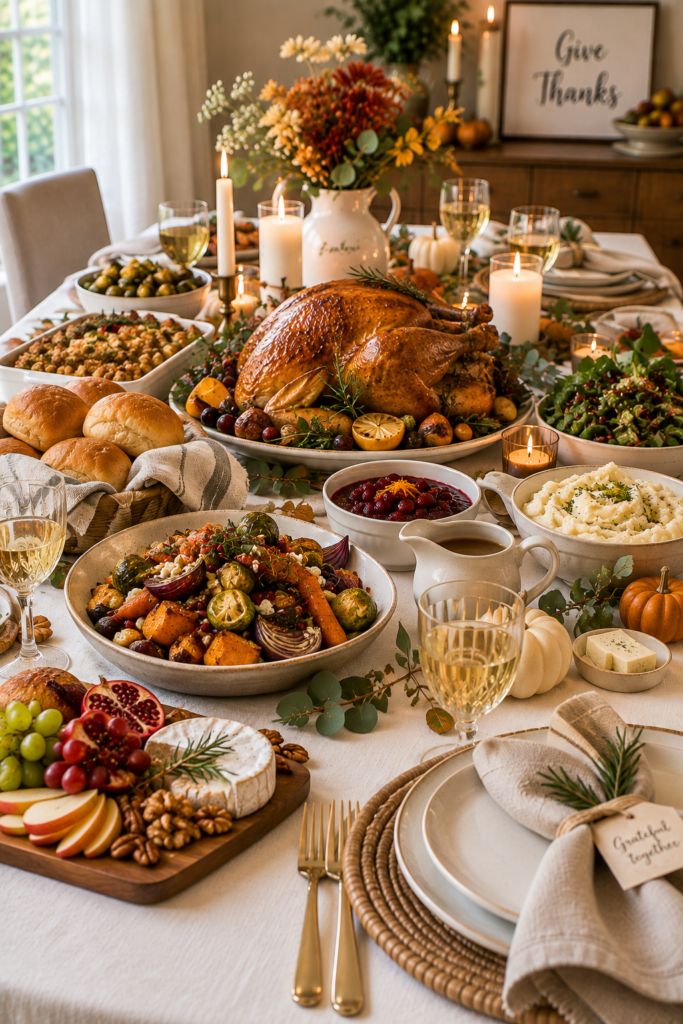
The Thanksgiving meal already brings plenty of color to the table. Cranberry sauce, roasted vegetables, golden rolls, salads, fruit and the turkey can do some of the visual work that decorations are often bought to provide.
Look at the colors in your menu before choosing napkins, flowers or other table decor. Burgundy napkins can pick up the color of cranberry sauce, for example, while green glassware can sit comfortably beside herbs and roasted vegetables.
The connection does not have to be exact; it simply helps the table and the meal feel like they belong together.
This also keeps the setting from becoming too themed. Rather than adding orange pumpkins, red leaves and brown decorations because they are associated with fall, let the actual meal guide a smaller color palette.
It is a simple way to make Thanksgiving table setting ideas on a budget more useful. You are not trying to decorate over the food. You are giving the food enough space to become part of the setting.
25. Buy One Reusable Upgrade Instead of Twenty Thanksgiving Decorations
Before buying another seasonal decoration, ask a more useful question: Will I still want this on my table next year?
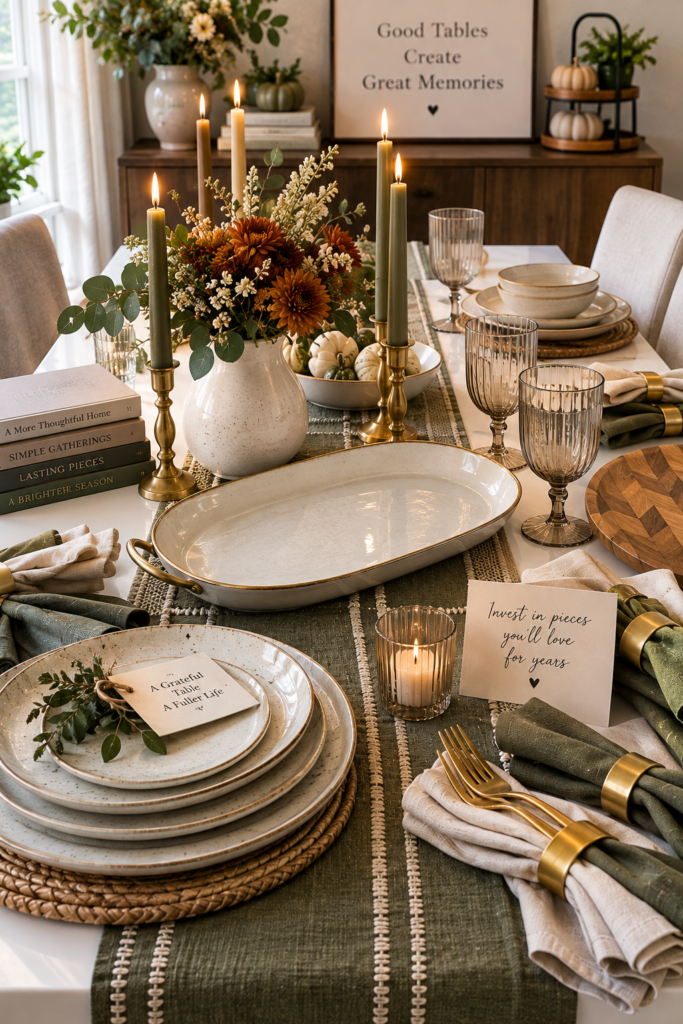
That question can change what you spend your money on. A good set of cloth napkins, a versatile serving platter, simple candlesticks, useful glassware or a neutral table runner can work for Thanksgiving and many other meals.
A cake stand or large serving bowl can also earn its place if you know you will use it throughout the year.
This doesn’t mean the most expensive option is the best choice. Look for something that suits the way you actually host, is easy to care for and can work with more than one style of table setting.
For an Amazon purchase, this is where it makes sense to compare materials, dimensions, care instructions and customer feedback rather than choosing an item because it looks good in a product photo.
A serving platter that is too large for your table, for example, may be less useful than a simpler one that fits your everyday meals.
A budget Thanksgiving table does not have to mean buying the cheapest version of everything.
It can mean buying fewer things and choosing pieces that keep working long after Thanksgiving is over.
Planning a Thanksgiving gathering with friends instead of family? These 25 Friendsgiving Party Ideas That Beat Your Family’s Actual Thanksgiving can help shape the celebration.
How to Set the Actual Thanksgiving Place Setting
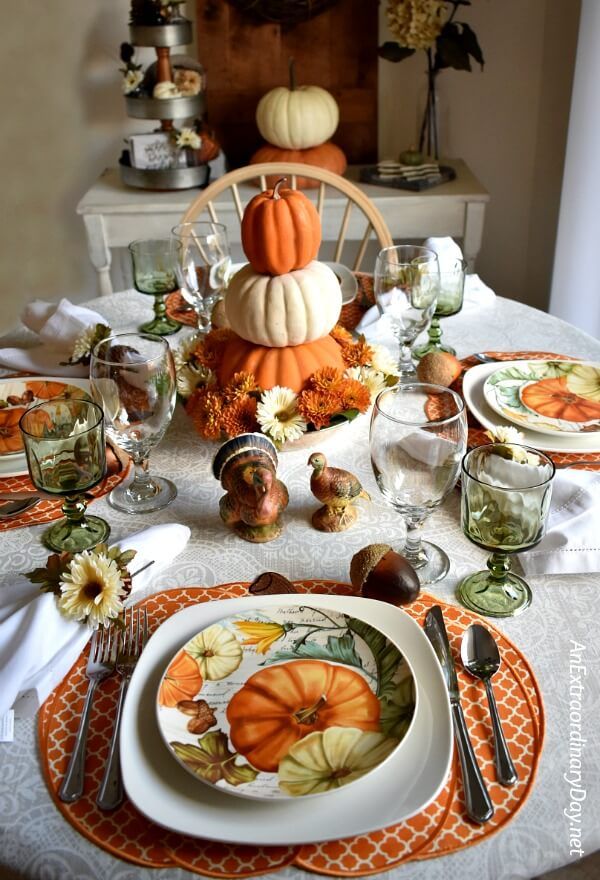
Not every Thanksgiving meal needs a full set of forks, spoons and glasses at each seat. The easiest way to set the table is to look at the meal first.
What are guests eating, what will they drink, and will food be served at the table or from a buffet? Those answers usually tell you what belongs at each place.
Casual Thanksgiving setting
A simple Thanksgiving place setting can include just the basics:
- Dinner plate in the centre
- Fork on the left
- Knife on the right, with the cutting edge facing the plate
- Spoon beside the knife if the meal requires one
- Napkin beside the fork, on the plate or wherever it is convenient
- Water glass above and slightly to the right of the plate
That is enough for many family-style meals. When guests are serving themselves from a buffet, keeping the setting simple can also leave more room on the table for serving dishes.
More formal Thanksgiving setting
More utensils or glasses become useful when the meal has several courses or different drinks.
A bread-and-butter plate can be placed above and to the left of the dinner plate when bread is being served. Additional forks and spoons can be added for separate courses and arranged in the order they will be used.
More than one glass may also be appropriate when guests are being served different beverages.
There is no need to copy a formal American place setting exactly. Thanksgiving is celebrated differently from one household to another, and many families serve the meal buffet-style or use a relaxed family setting.
The formality of the meal can guide the table rather than the other way around.
Don’t buy place-setting pieces just for decoration
Chargers, extra forks and multiple glasses can be useful in some settings, but they are not essential to a complete Thanksgiving table.
A charger is mainly an additional layer beneath the dinner plate. An extra fork has little purpose when there is no separate course for it, and another glass only makes sense when there is a drink to put in it.
For Thanksgiving place settings on a budget, start with what the meal requires. Use the pieces you already have, and buy additions only when they solve a real need.
That leaves more of the table, and your budget, available for serving dishes, linens and other details guests will actually use.
Where to Spend and Where to Save
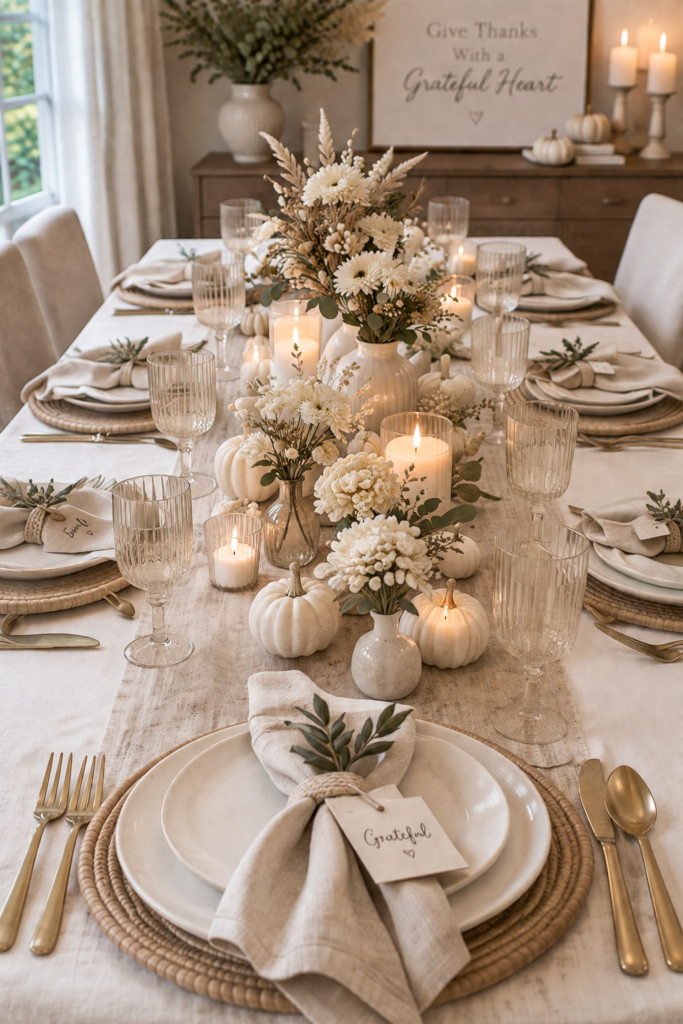
Not every table item needs the same budget. Put more money into pieces you can reuse often, and save on small decorative details that are easy to replace, make yourself or find secondhand.
Worth spending a little more on
Choose items that are durable, versatile and useful beyond Thanksgiving.
- Cloth napkins — washable and reusable for everyday meals and other gatherings.
- Versatile serving pieces — useful for family dinners, holidays and entertaining.
- Reusable glassware — choose styles that work for different occasions.
- Flameless candles — look for good battery life and sturdy construction.
- Neutral tablecloths or runners — easier to reuse with different colour schemes.
- Durable candlesticks — a simple pair can work for many occasions.
Easy places to save
These details can add personality without taking much of the budget.
- Place cards — cardstock or paper you already have can work.
- Seasonal accents — use a few instead of buying a whole collection.
- Small vases — thrifted vessels and clean glass jars can work well.
- Produce — apples, pears or pomegranates can become part of the table and the meal.
- Greenery — garden cuttings can provide a simple natural element where appropriate.
- Decorative paper — useful for menus, labels and place cards.
- Small bowls and vessels — thrift stores can be good places to find inexpensive pieces.
A higher price does not automatically mean better quality. Durability, versatility and how often you will use something are better reasons to spend more.
Conclusion
Thanksgiving dinner is about the people around the table, not how much was spent getting it ready.
With the right Thanksgiving table setting ideas, even a modest table can feel thoughtful, comfortable and ready for a good meal.
Take a look at your table, choose the ideas that genuinely fit your space, and leave the rest. Browse the 25 ideas above and pick a few to try this Thanksgiving.