This post contains affiliate links. This means I may earn a small commission if you purchase through my links at no extra cost to you.
Thanksgiving crafts for toddlers and preschoolers that keep little hands busy without complicated steps, tiny pieces, or a craft-table meltdown.
Five minutes can be a long time for a preschooler.
Ask them to wait for glue to dry, repeat the same step three times, or sit still while an adult finishes something, and that cheerful Christmas activity can suddenly become a hard no.
That matters when choosing a craft for little children. A project can be beautiful and still ask too much from a three- or four-year-old.
Shorter steps, materials they can grip easily, and something they can see taking shape as they work make a real difference.
These Christmas nature crafts keep those small realities in mind, so the making stays enjoyable rather than becoming another battle over sitting still.
Christmas crafting gets much easier when the project matches a toddler’s short attention span, and 15 Christmas Tree Crafts for Toddlers Can Finish Before the Real Tree Goes Up keeps the activity short and festive.
What Makes a Thanksgiving Craft Manageable at Ages 2 to 5?
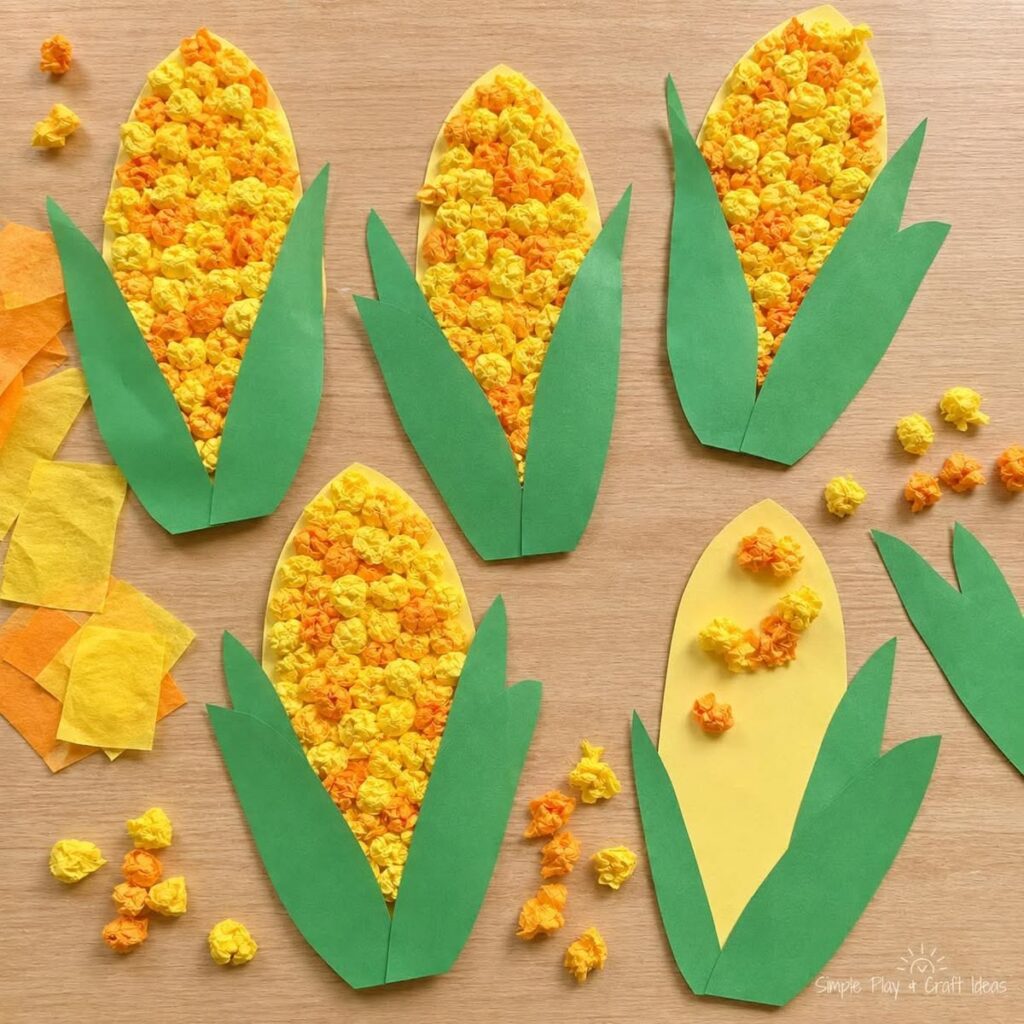
“Easy” means something different at age 2 than it does at age 5.
A good Thanksgiving craft for toddlers and preschoolers leaves enough room for a young child to participate without needing constant correction, waiting or adult rescue.
These five checks can help you tell the difference between a genuinely manageable craft and one that only looks easy in the instructions.
The Child Can Make Something Happen Quickly
Young children get more from a craft when their actions produce an immediate result.
A toddler can press a leaf into paint and see a print appear, tear paper and watch a collage grow, or squeeze paint onto a page and make a mark.
That immediate response matters. A craft that requires several minutes of adult preparation before the child sees anything happen can lose its appeal quickly, especially for younger toddlers.
Accuracy Isn’t Required
A preschooler doesn’t need to glue every feather in the “right” place for the craft to work.
Crooked pieces, uneven paint and overlapping shapes can still become part of the finished Thanksgiving art.
This is one reason process-focused art works well for young children.
The experience of choosing, experimenting and making marks matters more than producing an identical finished picture.
The Adult Isn’t Secretly Doing Most of It
This is an easy test to miss.
Look at the craft and ask: What is the child actually doing?
If the adult cuts every piece, arranges every component, applies the glue and then fixes the final result, the child may be watching more than creating.
Some preparation is perfectly reasonable, particularly for toddlers, but the child’s part should still involve meaningful choices and hands-on action.
There Is Room to Stop Halfway
A two-year-old does not have to finish a Thanksgiving craft simply because the instructions have another five steps.
Choose projects that can still look complete, or at least interesting, after a few minutes of painting, tearing, stamping or arranging.
NAEYC’s guidance on process art supports giving children time to explore materials and allowing them to return to artwork rather than treating completion as the main goal.
That flexibility can make a big difference during a busy Thanksgiving week.
The Craft Can Survive an Imperfect Result
Perhaps the best test is simple: What happens when the child does it differently from the example?
A good toddler or preschool Thanksgiving craft can handle uneven paint, misplaced pieces, unexpected colors and a completely different interpretation of the idea.
Nothing needs to be “fixed” just because it doesn’t resemble the adult’s sample.
That is the kind of craft worth choosing for this age group, not because the finished picture looks perfect, but because the child can genuinely make it their own.
A little seasonal crafting can happen before snack time with 15 Candy Corn Crafts Toddlers Can Finish Before Snack.
Thanksgiving Crafts for Toddlers and Preschoolers Without a Meltdown
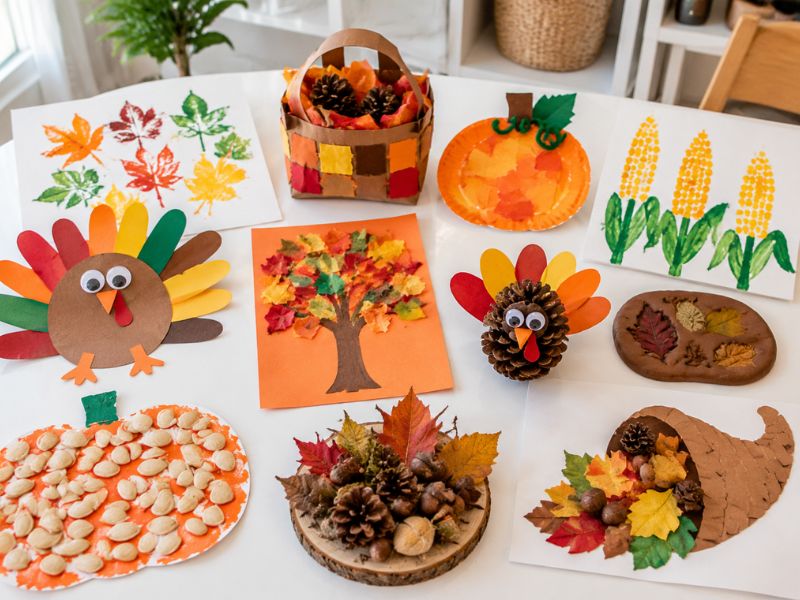
1. Thanksgiving Leaf Printing With Real Leaves
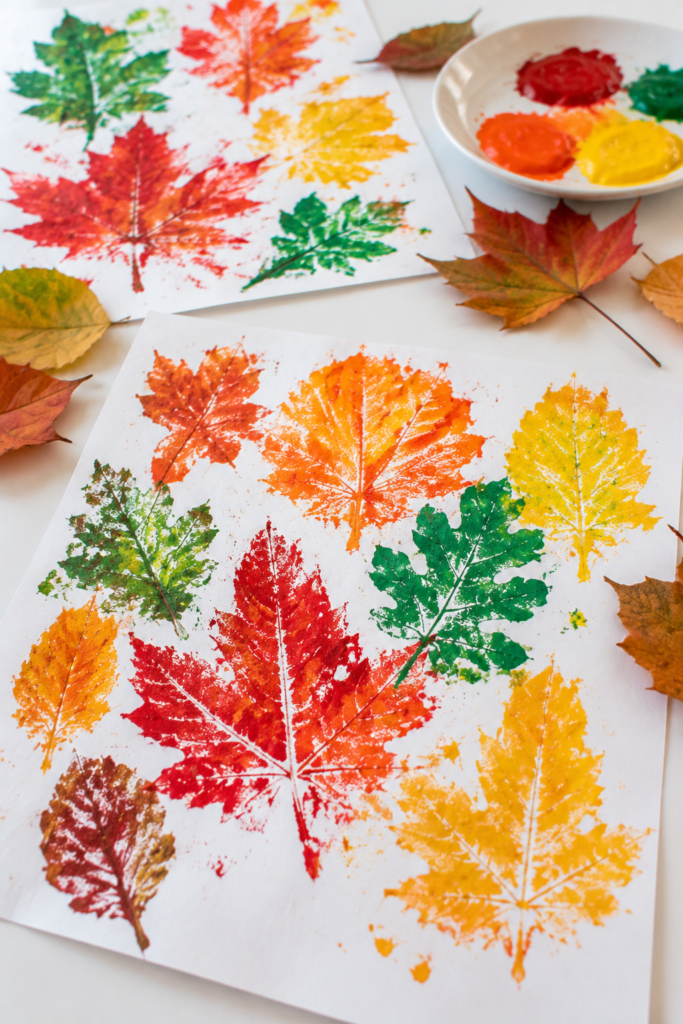
No one needs to teach a two-year-old how to draw a convincing leaf. A real one already has the shape, veins and texture waiting to show up on paper.
For this Thanksgiving craft for toddlers and preschoolers, collect a few fallen leaves that are dry, intact and easy for small hands to hold.
Place a small amount of washable paint on a tray, let the child brush or dab paint onto the veined side of a leaf, then press it onto paper. Lift the leaf carefully and let them see the pattern it leaves behind.
The interesting part is what happens next. Different leaves can produce different marks, and a heavy layer of paint may look quite different from a light one. Preschoolers can compare the prints, notice the veins and experiment with overlapping colors.
What children are learning: texture, pattern, observation and simple cause and effect. They are also practicing controlled hand movements as they paint, press and lift the leaves.
For younger toddlers, keep the activity to large leaves and a few simple prints. Older preschoolers can arrange several prints into a Thanksgiving art collage or use different leaves to create a repeating pattern.
There is no need to correct the placement or turn every print into a turkey. The leaf has already done the drawing; the child’s job is to find out what happens when they use it.
Tiny handprints become the keepsake in 20 Handprint Turkey Crafts for Kids You Will Want to Keep Forever, especially sweet for a fall or Thanksgiving activity
2. Turkey Feather Color-Mixing Tray
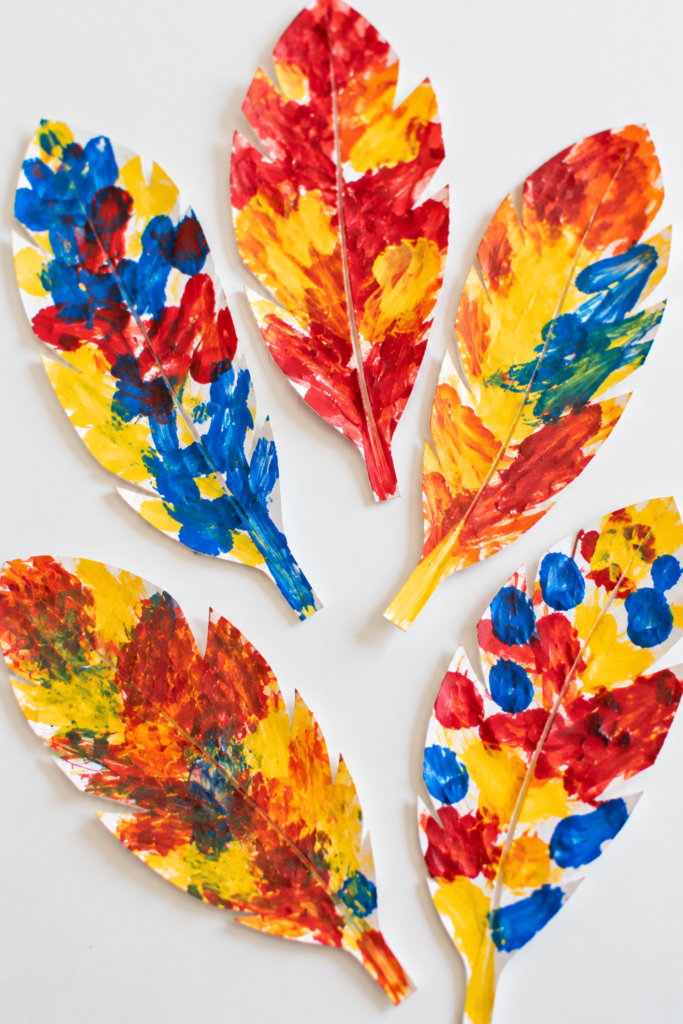
The turkey doesn’t need to be assembled first. Let the feathers become the interesting part.
Set out red and yellow washable paint, adding blue for preschoolers who are ready to experiment with more color combinations.
Give children large brushes or sponges and strips of paper to cover with their own marks. Where two colors meet, pause and look at what changed.
You can later cut the painted strips into broad feather shapes for a turkey collage, but there is no need to make that the goal.
For Thanksgiving crafts for toddlers and preschoolers, the painting itself is where much of the learning happens.
Younger toddlers can simply make and compare marks. Older preschoolers can predict what two colors might make before mixing them.
What children are learning: color mixing, observation, cause and effect and creative decision-making. The activity also follows a process-art approach because there is no single feather design every child has to reproduce.
3. Pumpkin Seed Pattern Collage
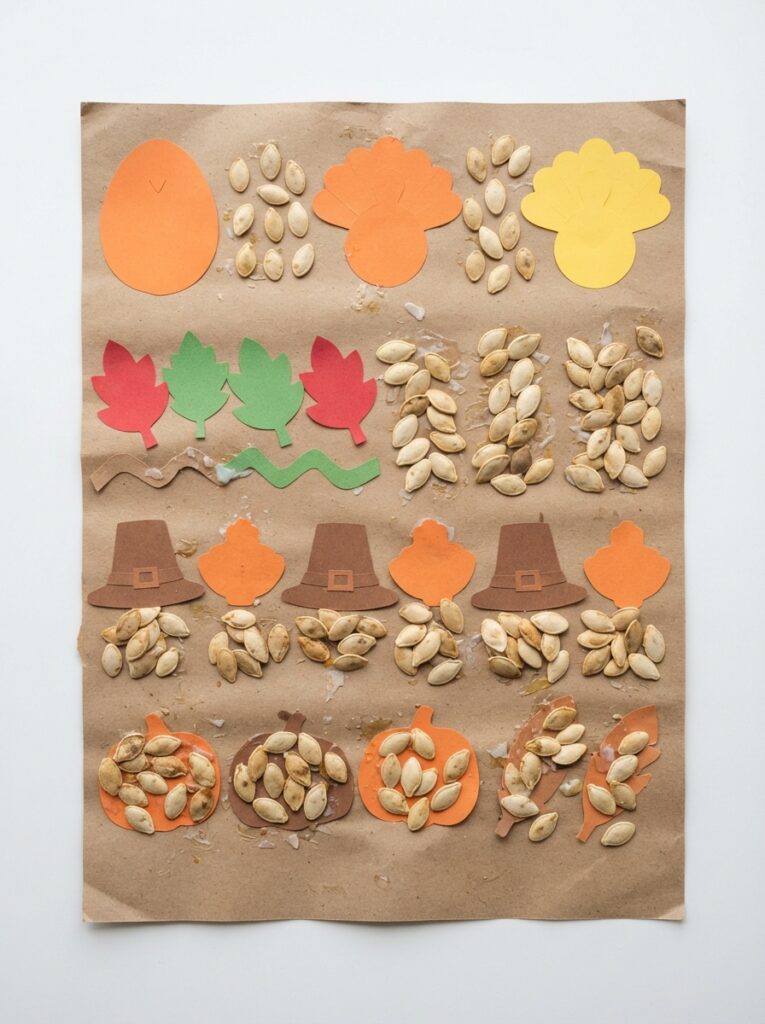
Pumpkin seeds can make an interesting pattern, but they need a more careful approach with young children.
For preschoolers who can safely handle small materials and are closely supervised, place a small number of seeds on a tray and let them arrange them into simple lines, groups or repeating patterns before gluing them down.
A child might make an AB pattern such as seed-space-seed-space or simply experiment with rows and clusters.
For toddlers, skip loose seeds altogether. Large torn pieces of paper can create the same pattern-making experience without introducing a small loose component that may become a choking hazard.
That distinction is worth making in any list of Thanksgiving crafts for toddlers: a material being natural or edible does not automatically make it appropriate for a young child to handle as a craft supply.
What children are learning: repeating patterns, grouping, counting and spatial arrangement.
4. Thanksgiving Tear-and-Layer Collage
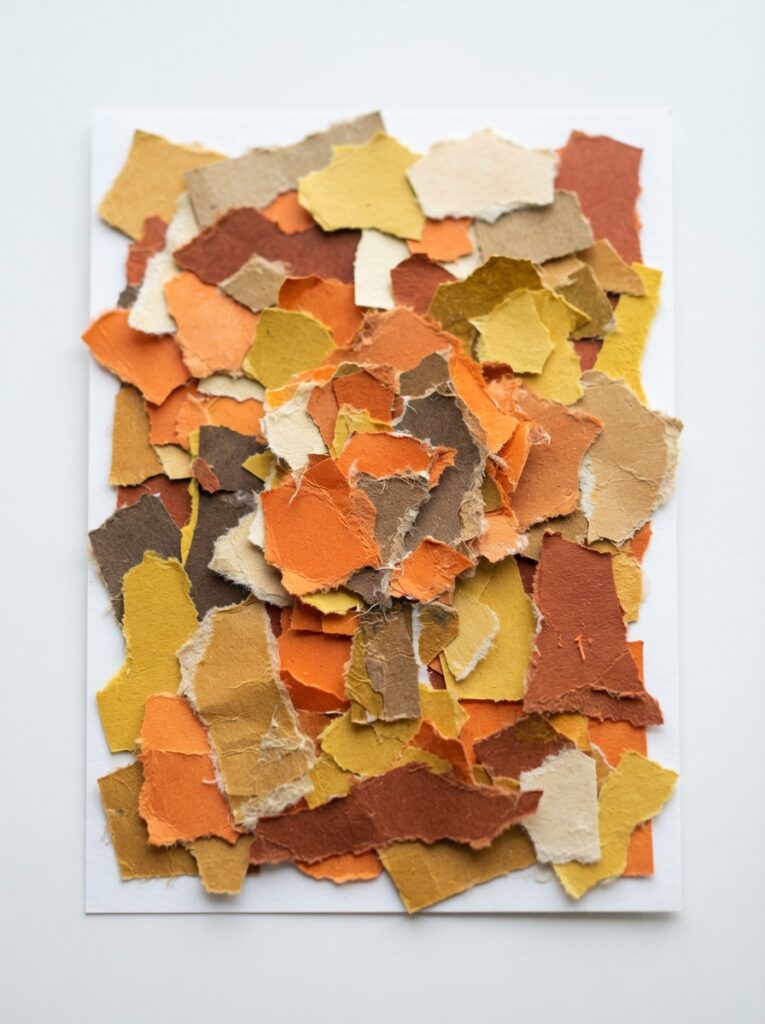
Cutting can turn a relaxed Thanksgiving craft for preschoolers into a lesson in waiting for an adult. Tearing paper gives younger children a way to change the material themselves.
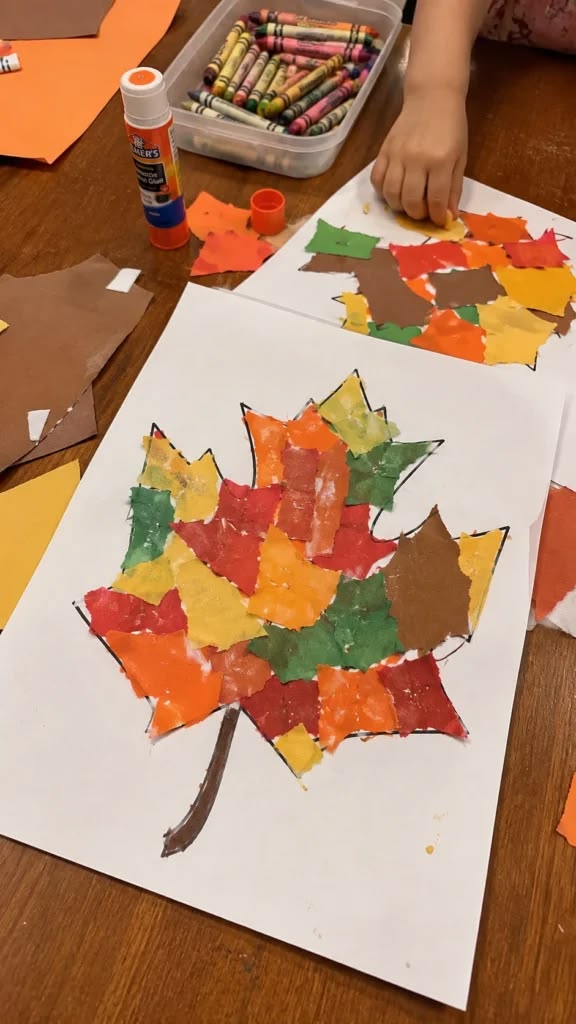
Offer large sheets or scraps of brown, orange, yellow, red and cream paper. Let children tear the pieces into different sizes and layer them onto a larger sheet.
The finished artwork could suggest a harvest basket, autumn landscape, Thanksgiving table or simply become an abstract arrangement of seasonal colors.
There is no need to make every piece fit a template. One child may cover the page with tiny torn pieces while another may use three large pieces and stop.
Tearing and placing also gives the hands plenty to do without demanding the precision required to cut around small shapes.
What children are learning: hand control, visual composition, size comparison, color recognition and decision-making.
Most importantly, the child can change the paper and build the picture rather than waiting for an adult to prepare every component.
Santa gets a personal touch in 15 Santa Handprint Crafts You Will Want to Keep Forever, with little hands becoming part of the finished keepsake.
5. Texture Collage
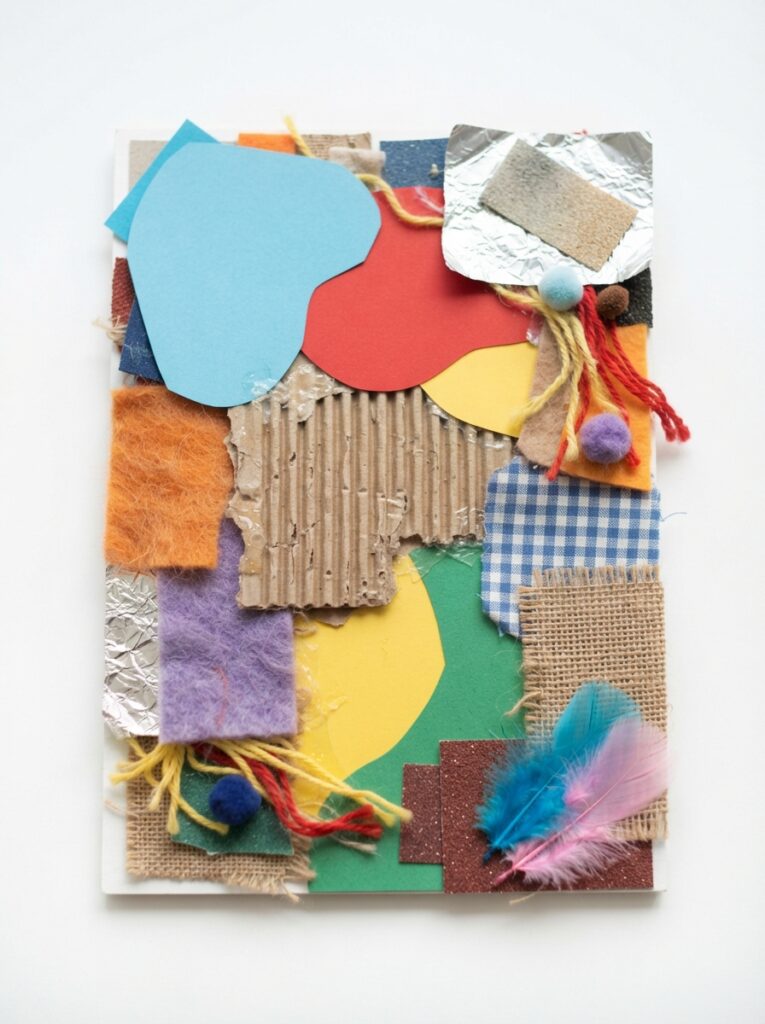
Thanksgiving has plenty of textures to talk about, but young children don’t need a complicated sensory setup to notice them.
Offer a few large pieces of safe, clean material such as smooth paper, corrugated cardboard and fabric scraps. Let children touch each one and describe what they notice: rough, smooth, soft, bumpy or stiff. They can then arrange the pieces into a simple Thanksgiving collage.
For toddlers, keep the materials large enough to handle easily and focus on exploring rather than naming every texture correctly.
Preschoolers can sort materials by how they feel or explain which ones feel alike.
What children are learning: descriptive vocabulary, comparison, sensory observation and early classification.
Open-ended art experiences also give children opportunities to make choices and talk about what they are doing, rather than simply copying a finished example.
6. Corn-Cob Printing
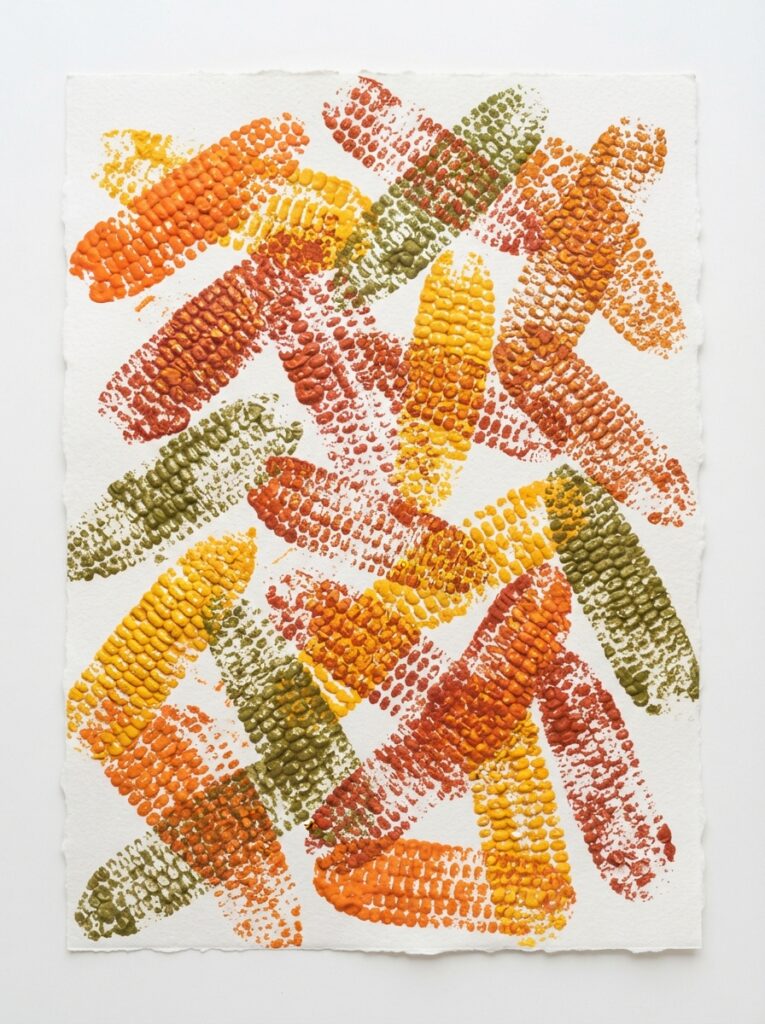
A clean, dry corn cob can become a simple printing tool, giving children a way to make repeated marks without having to draw a pattern themselves.
Apply a thin layer of washable paint to the cob and let the child roll or press it onto paper. The rows and texture of the corn create a natural pattern that can become part of a Thanksgiving craft for toddlers and preschoolers.
Toddlers can experiment with pressing and lifting. Older preschoolers can compare prints made with more or less paint or try overlapping two colors.
Keep the corn cob as an art tool rather than a toy, and supervise children throughout the activity.
What children are learning: printmaking, repetition, texture and cause and effect.
Halloween does not have to mean the same old paper ghosts and pumpkins; 10 Glow-in-the-Dark Halloween Crafts Kids Will Actually Want to Repeat adds a fun twist.
7. Thanksgiving Table Pattern Strip
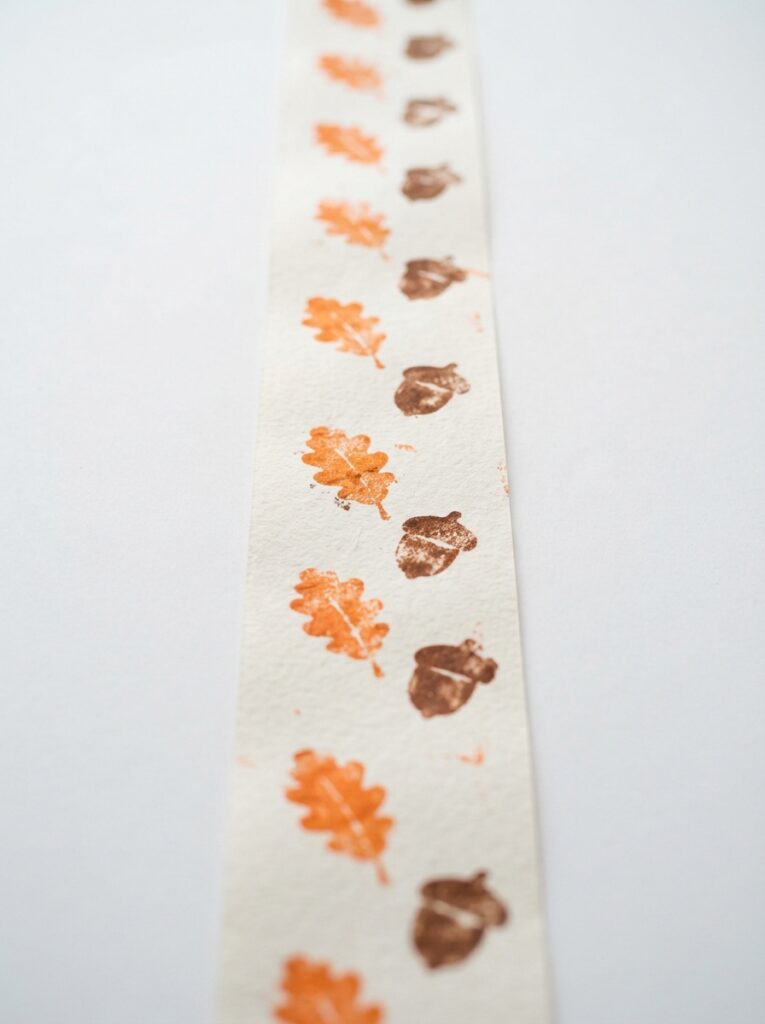
Patterns don’t have to begin on a worksheet. A long strip of paper can turn the idea into something children can physically build.
Start with two large paper shapes or colors, such as orange and brown.
Make a simple orange–brown–orange–brown sequence and ask the child what might come next. Once they understand the idea, preschoolers can create their own repeating pattern.
Toddlers can concentrate on matching two colors or placing shapes side by side without being expected to understand the full pattern.
What children are learning: sequencing, sorting, prediction and early mathematical thinking. It also gives preschoolers a chance to notice that a pattern is something that repeats, not simply a row of decorations.
Craft time can double as a simple body-parts lesson with 12 Skeleton Crafts That Teach Body Parts While Kids Craft.
8. “Thankful Things” Sticker-Free Collage
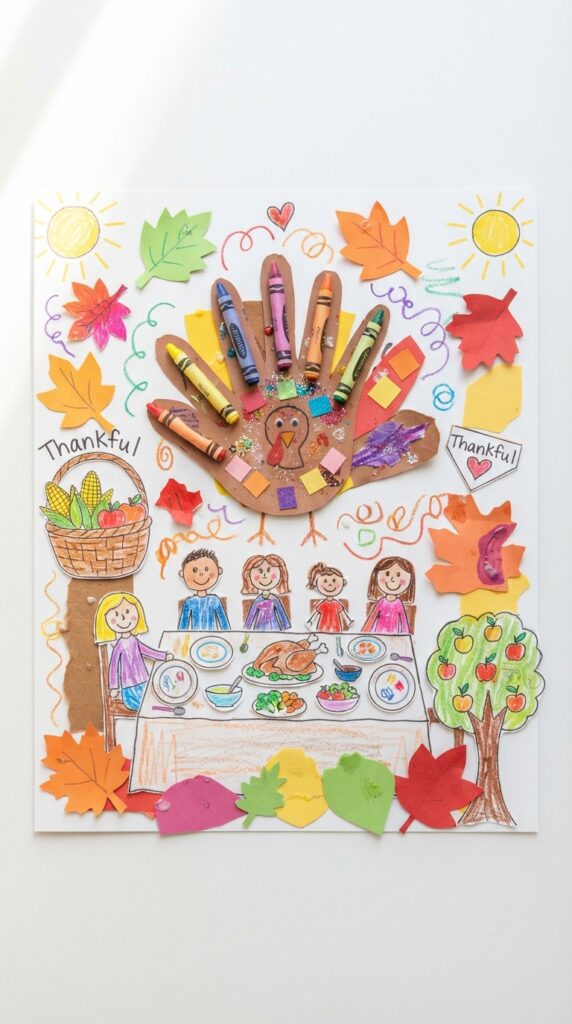
A Thanksgiving craft doesn’t have to tell a child what they are supposed to be thankful for.
Give children large paper shapes and scraps and invite them to make a picture of something important to them, a person, animal, place, food or object.
The adult can ask a simple question such as, “What is this?” or “Tell me about your picture.”
For a child who isn’t writing yet, record their exact words underneath the artwork. Instead of turning the child’s thought into an adult-written Thanksgiving message, their own words become part of the finished piece.
What children are learning: oral language, symbolic representation, communication and early literacy.
9. Thanksgiving Sponge-Shape Painting
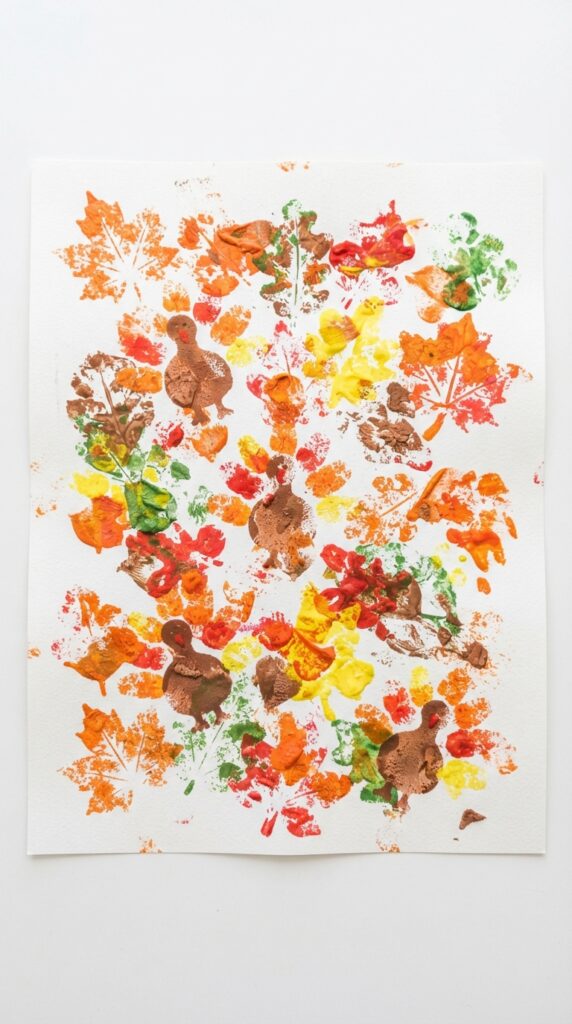
Large sponge shapes can give toddlers a way to experiment with shapes and paint without the precision required to assemble a small turkey.
Offer two or three washable paint colors and a few large sponge shapes. Children can press them onto paper, overlap the prints or arrange the marks into their own Thanksgiving-inspired picture.
Preschoolers can look closely at what happens when one painted shape goes over another. Does the new area look different? What happens when two colors overlap?
There is no need to turn every print into a recognizable object. The marks themselves are part of the Thanksgiving art.
What children are learning: shape recognition, color exploration, visual comparison and cause and effect.
Sunday School craft time can bring the whole Bible story into focus with 15 Noah’s Ark Crafts for Kids Your Sunday School Class Will Actually Be Excited to Make.
10. Paper Harvest Basket Weaving
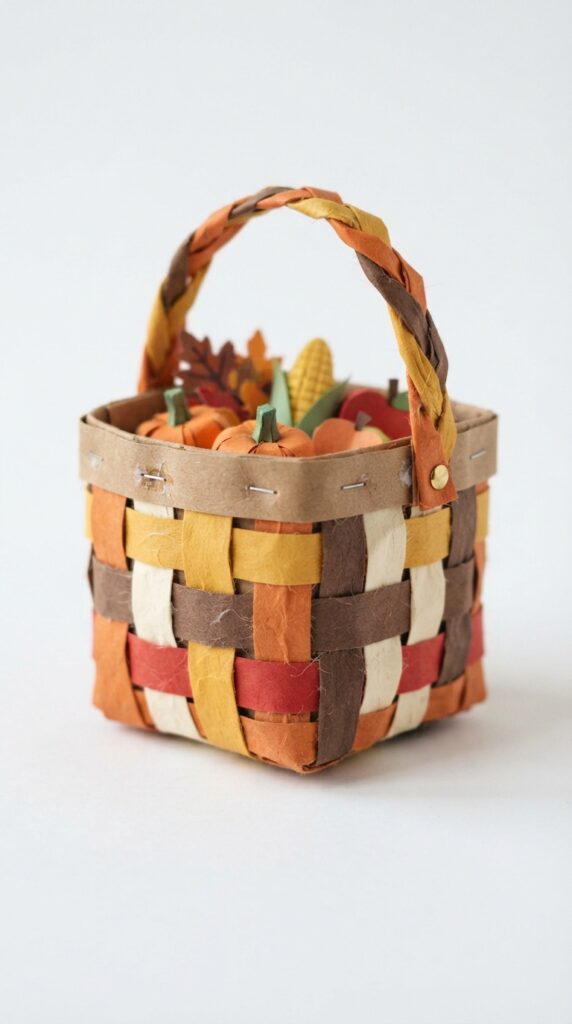
This one works particularly well when toddlers and preschoolers are doing the same Thanksgiving crafts together but need different levels of challenge.
Prepare a large paper basket with wide vertical slots and provide broad strips of paper.
Older preschoolers can weave the strips over and under, while younger toddlers can simply place or slide the strips across the basket with adult help.
Keep the slots wide and the strips broad rather than turning the activity into a test of precision. The finished basket can hold paper “harvest” pieces made from the same craft session.
What children are learning: over-and-under concepts, spatial awareness, bilateral hand use and following a simple sequence.
A fall craft does not have to begin with a trip to the craft store; 10 Corn Husk Crafts For Kids Without a Trip to Michaels makes use of a more unexpected material.
11. Thanksgiving Nature Arrangement on Paper
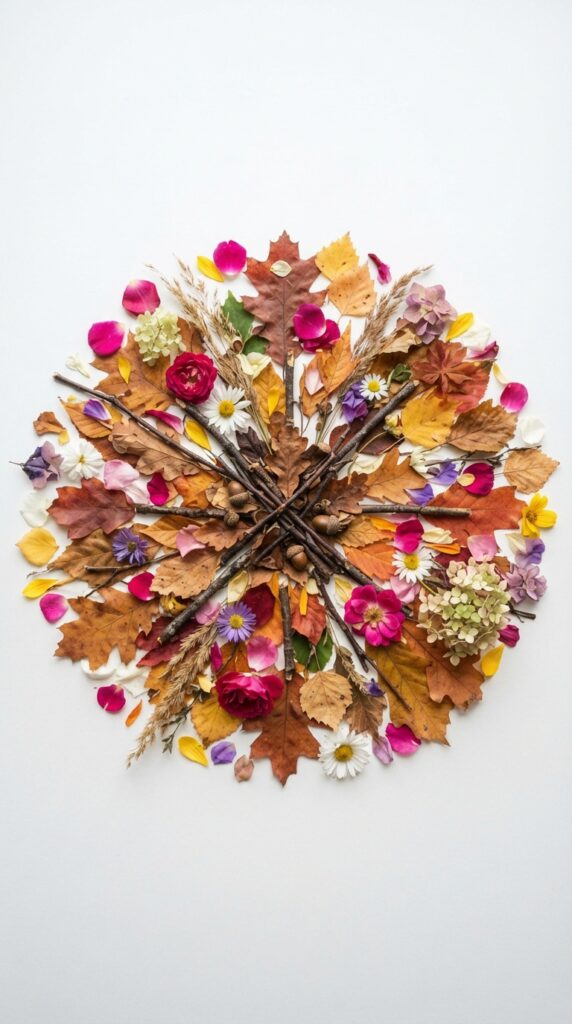
Take a short walk outdoors with an adult and collect safe, fallen natural materials like leaves, small twigs and petals.
The key idea is not turning everything into a glued craft, but letting children arrange and rearrange what they find on a large sheet of paper.
Children can place the materials, move them around, compare layouts and decide what looks interesting to them.
nstead of fixing everything with glue immediately, take a photo of the final arrangement so the design can be remembered even if the materials are reused.
This approach supports open-ended exploration and helps children notice patterns, shapes and natural variation without pressure to produce a permanent result.
12. Build a Turkey From Shapes — Without a Model
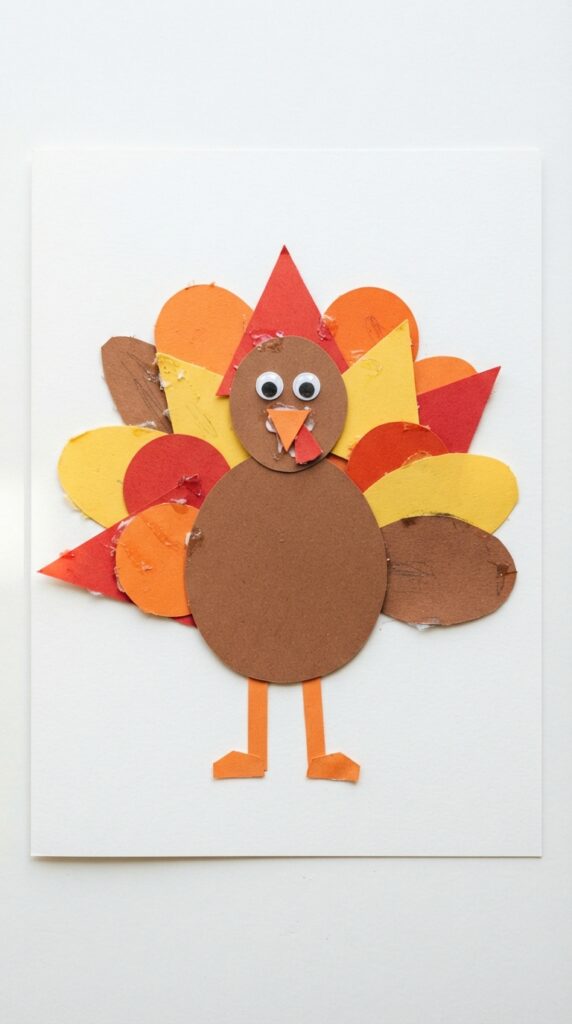
Give children simple cut-out shapes such as circles, ovals and triangles, then step back from showing a finished example.
The goal is not to copy a turkey but to explore what the shapes can become.
A child might assemble something that looks like a bird, or they might create something completely unexpected. Both outcomes are valid.
This activity strengthens early understanding of shape properties, spatial relationships and decision-making. It also supports creative thinking because children are not guided toward a single correct outcome.
13. Thanksgiving Dough Pressing
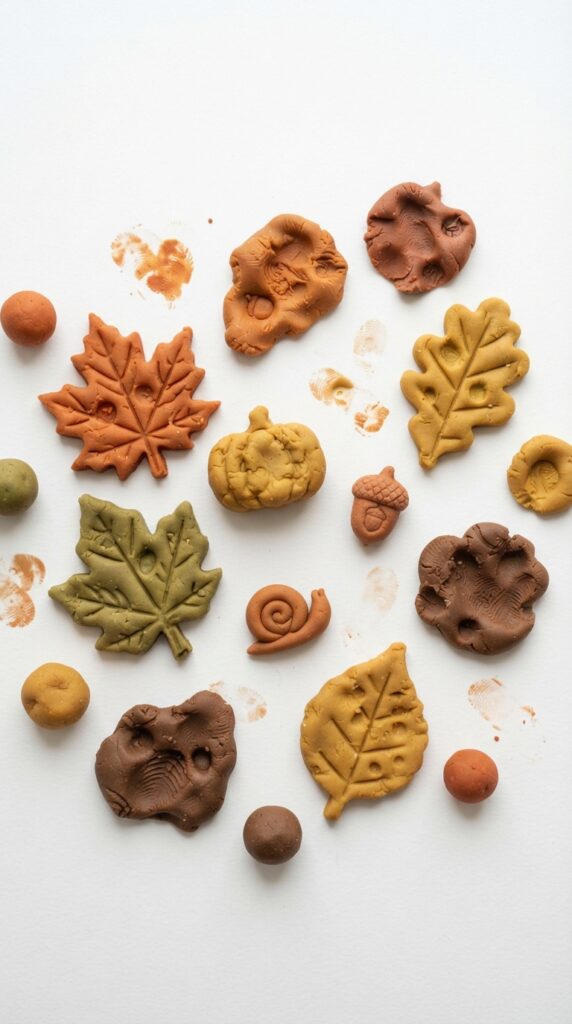
Play dough becomes more interesting when it is used as a surface for discovery rather than shaping fixed objects.
Provide soft dough and a mix of safe tools like leaves, textured objects, large cookie cutters and rolling tools.
Children can press items into the dough and observe the impressions left behind. Some marks will be deep, others light, and some objects will leave clearer patterns than others.
The focus is not on building a specific Thanksgiving figure but on noticing how pressure, texture and shape interact.
This kind of activity builds fine-motor strength while also encouraging sensory awareness and comparison skills.
14. Apple Half Printing
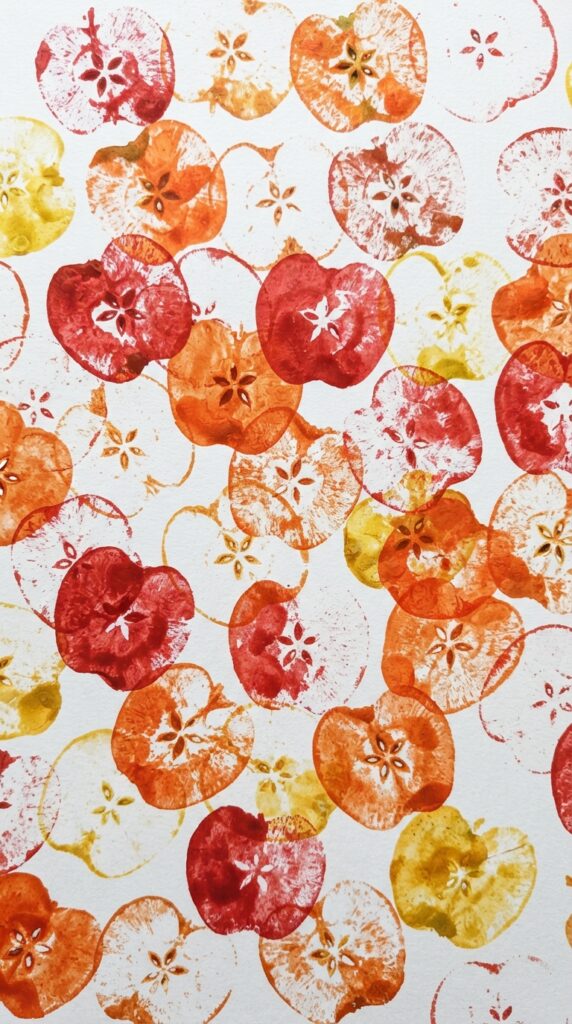
Cut an apple in half and use it as a simple printmaking tool with washable paint.
When pressed onto paper, the apple creates a natural stamp that children can explore in different ways.
Instead of guiding every print toward a themed result, let children observe how the shape changes with paint amount, pressure and placement.
Some prints may be light and faint, others bold and saturated.
Children can build an “apple print page” that reflects their own choices rather than a fixed design.
This activity supports early understanding of cause and effect through printmaking.
15. Thanksgiving Window Collage With Transparent Paper
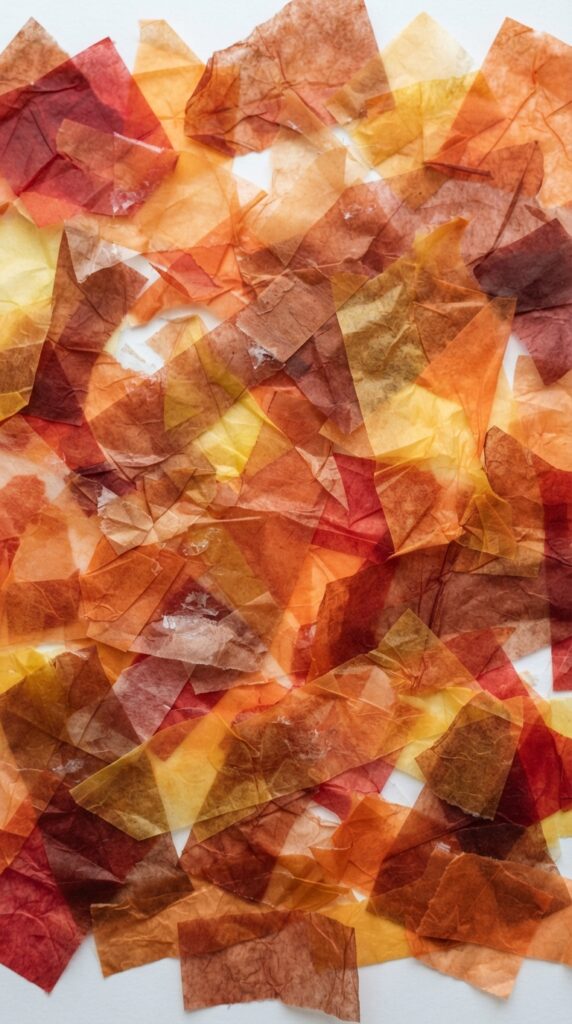
Use translucent or transparent colored paper on a clean, window-safe surface where light can pass through.
Children can layer different colors and see how they interact when placed over each other.
This turns a simple collage activity into a visual exploration of light, shadow and color blending. Preschoolers may notice that overlapping colors create new shades, while toddlers focus on placement and stacking.
Unlike typical paper crafts, the outcome changes depending on light conditions, making the process part of the learning experience itself.
Apples can become more than a snack or picking-day souvenir in 20 Apple Crafts Kids Will Beg to Repeat.
16. One Big Thankful Picture Collaborative Paper
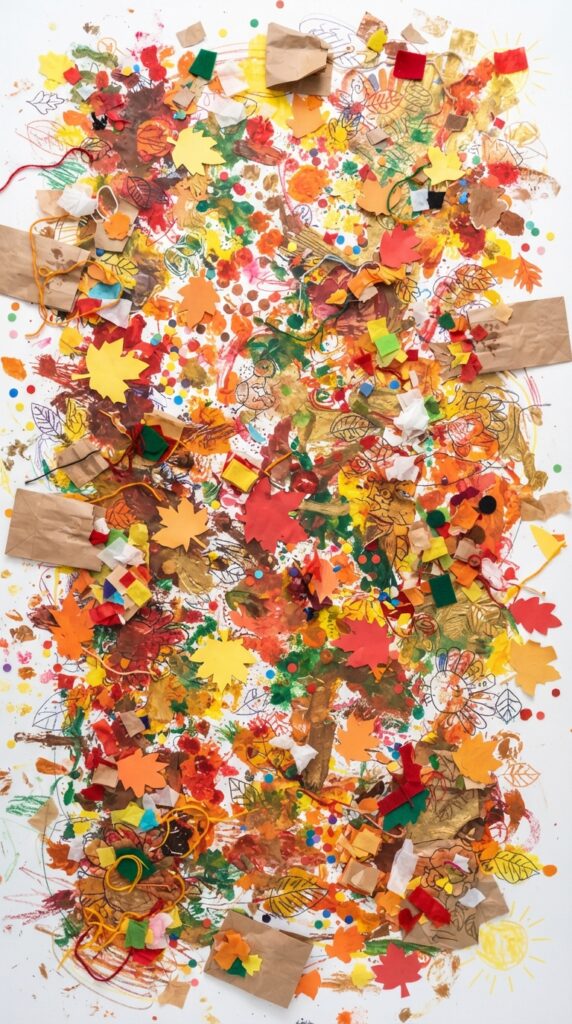
Individual crafts aren’t always the easiest option when several young children are involved.
One large piece of paper can remove some of the pressure to make sure everyone produces an identical finished project.
Tape a large sheet of paper to a table or clean floor and provide a few materials, paint, large paper pieces, crayons or washable markers.
One child might paint while another tears paper and another decides where the pieces belong. Let the children work alongside one another rather than assigning every part.
The Thanksgiving theme can come from the conversation. Ask what they notice about the picture, what they want to add or what reminds them of being together.
The value here isn’t simply having children “share.” They have to notice what someone else is doing, make space, negotiate materials and sometimes adjust their own idea.
NAEYC describes process art as an opportunity for dialogue, social interaction and problem-solving, particularly when children encounter something that doesn’t work as expected.
What children are learning: cooperation, communication, decision-making and problem-solving.
17. Thanksgiving Sound-and-Mark Painting
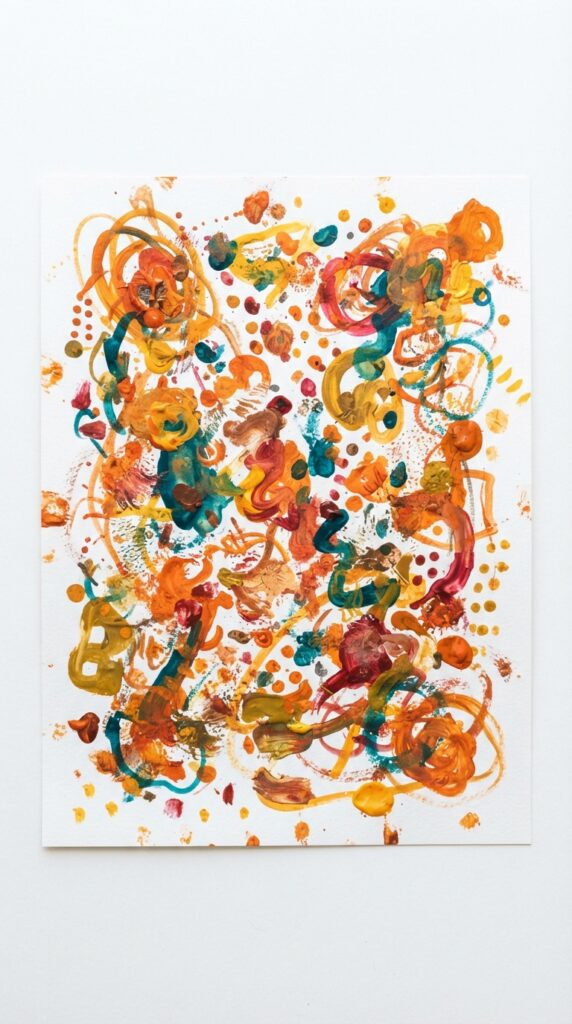
Not every Thanksgiving craft for preschoolers needs to be visual from the beginning.
Try a simple sound-to-mark activity. Tap a table twice, pause, clap, scrape a textured object or shake a container, then invite children to respond with marks on paper.
There is no prescribed symbol for each sound. A child might make dots for tapping or long strokes after hearing a scraping sound.
Later, talk about sounds they might hear during a Thanksgiving gathering, plates being placed on a table, people talking, utensils moving or music playing.
For younger toddlers, keep the sounds simple and allow them to explore making marks.
Older preschoolers can create their own sound sequence and ask another child to respond with marks.
What children are learning: listening, rhythm, mark-making, memory and the connection between sound and movement.
It also gives children who are less interested in conventional drawing another way to participate in Thanksgiving art.
Little handprints take on an autumn theme with 18 Handprint Fall Deer Crafts Kids Will Love Making.
18. Paper Plate Texture Painting — Without the Turkey
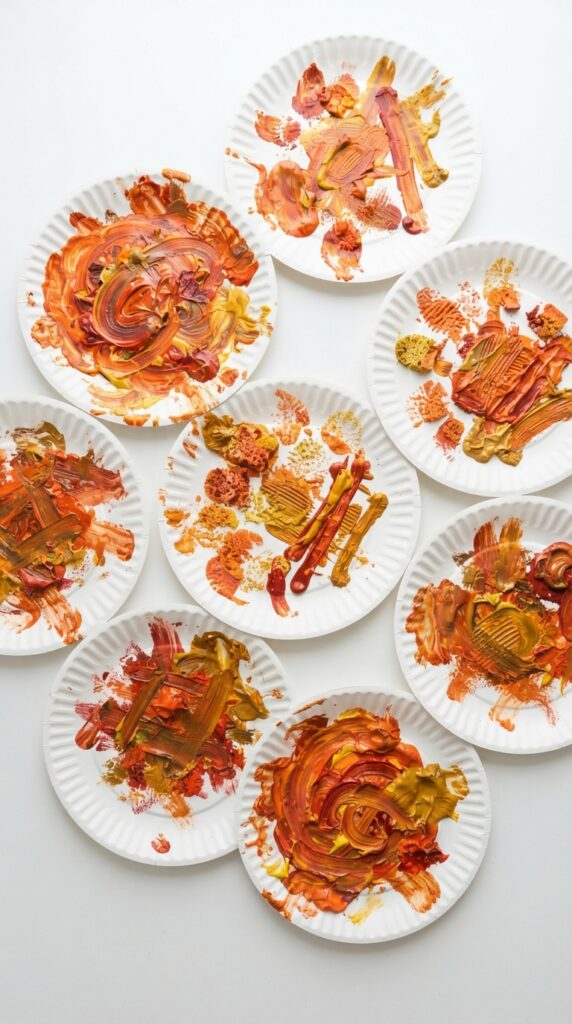
A paper plate doesn’t have to become another turkey.
Use it as a round painting surface and provide a few large tools such as a paintbrush, sponge or piece of corrugated cardboard. Let children make marks with each tool and compare what they see.
A brush might produce a different line from a sponge.
Dragging cardboard through wet paint creates another texture. Preschoolers can experiment with overlapping marks and talk about which tool made each one.
The Thanksgiving connection can simply come through autumn or harvest colors. There is no need to add eyes, feathers and a beak just to make the activity recognizably seasonal.
What children are learning: visual texture, tool exploration, comparison and cause and effect.
This also follows a process-art approach in which children explore materials and techniques rather than work toward one predetermined result.
19. Thanksgiving Card With a Dictated Message
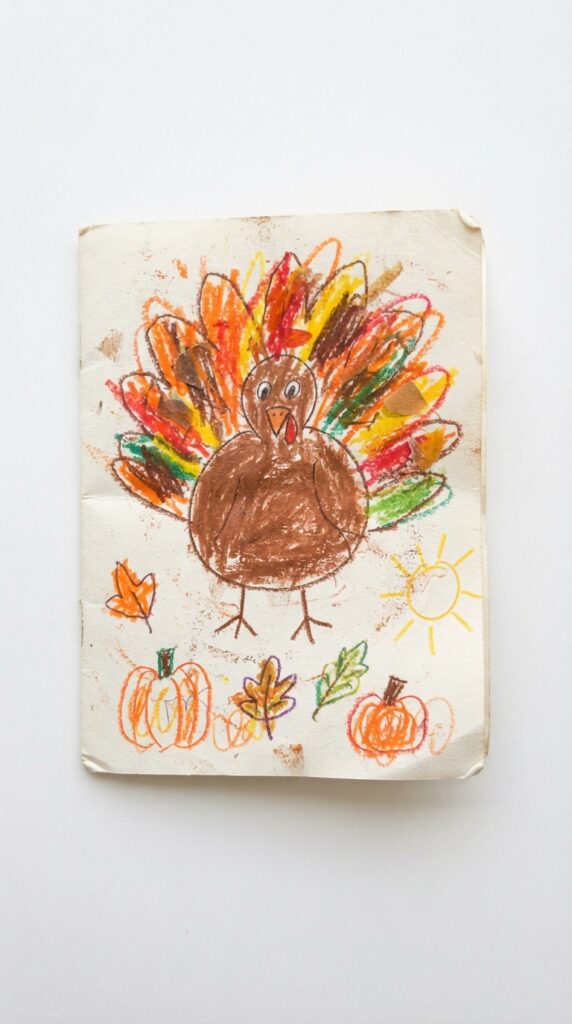
The artwork doesn’t have to carry the whole message. A young child can make the picture while the adult helps put the child’s own words into writing.
Give the child paper, crayons or another suitable art material and let them create a Thanksgiving card for a family member, friend or teacher.
Afterwards, ask what they would like the recipient to know. Write down the child’s words as closely as possible rather than replacing them with a polished adult message.
A preschooler who is beginning to write can add their name or attempt a short greeting, but writing ability shouldn’t determine whether their card has meaning.
This turns a simple Thanksgiving craft for toddlers and preschoolers into a real communication activity.
NAEYC notes that children can add print to process art independently or through dictation, connecting their artwork with language and literacy.
What children are learning: oral language, communication, symbolic representation and the connection between spoken and written words.
20. The “Anything But a Turkey” Thanksgiving Collage
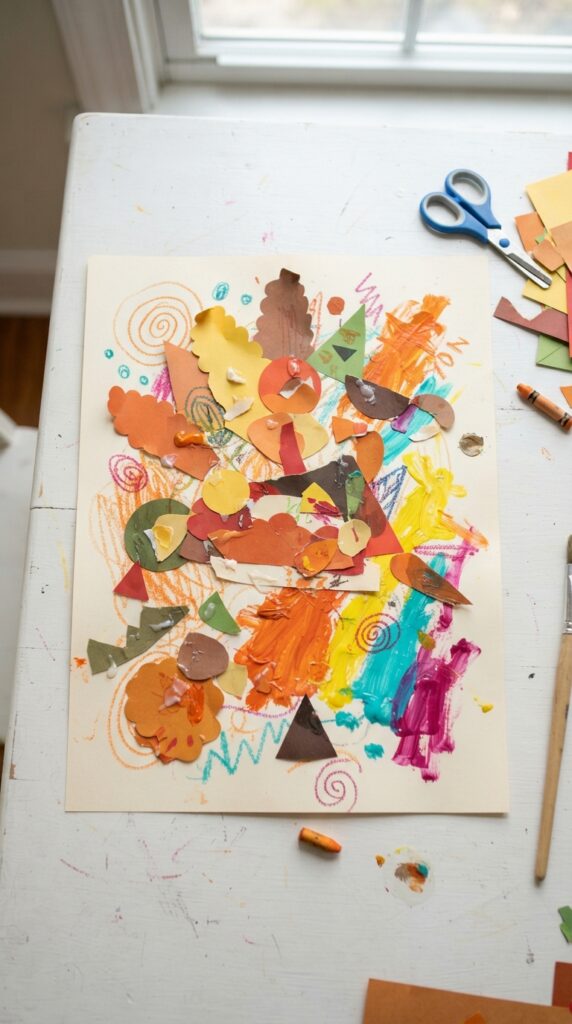
Finish the list by removing the expectation that Thanksgiving art has to look a certain way.
Provide large paper pieces in seasonal colors, crayons, paint or other suitable materials and give one simple invitation: “Make something that reminds you of Thanksgiving.”
Don’t provide a finished sample. Don’t correct the child when the picture doesn’t look recognizable.
A child may make food, people, leaves, a house, a family scene or something that only makes sense after they explain it.
That explanation is part of the artwork. Ask, “Tell me about this,” rather than guessing what the child intended.
The point isn’t to produce a picture that looks impressive to an adult. Process-focused art gives children room to make choices, test ideas and create something that is genuinely their own.
NAEYC specifically identifies the absence of a fixed right or wrong outcome as a characteristic of process art.
For a post about Thanksgiving crafts for toddlers and preschoolers without a meltdown, that distinction matters.
A child is less likely to be stuck trying to make their work match an adult’s example when there is no single “correct” turkey waiting at the end.
Paper cups are surprisingly versatile once they leave the kitchen cupboard, as these 23 Cute Paper Cup Crafts for Kids for Year-Round Creativity show.
Small Craft Pieces Deserve an Age Check
Tiny craft supplies can change the safety of an otherwise simple Thanksgiving activity.
The U.S. Consumer Product Safety Commission uses a small-parts test cylinder about 1.25 inches wide and 2.25 inches long when determining whether an object presents a small-parts hazard for children under 3.
That doesn’t mean every small craft item is automatically unsafe, but it does explain why loose pieces deserve particular caution with toddlers.
Materials to think twice about include:
- small beads
- sequins
- tiny buttons
- loose googly eyes
- miniature pom-poms
- small foam shapes
- other decorative pieces that can fit into a young child’s mouth
Age, mouthing behavior, supervision and the manufacturer’s age guidance all matter. A material that may be manageable for an older preschooler isn’t necessarily a good choice for a 2-year-old.
That doesn’t mean removing the craft altogether. Change the material instead.
Use torn paper instead of sequins, large paper shapes instead of tiny buttons, paint dots instead of beads, or large collage pieces instead of miniature decorations. The child can still practise color, pattern, placing, tearing and creative decision-making without the craft depending on tiny loose parts.
That approach is especially useful when choosing Thanksgiving crafts for toddlers and preschoolers for a daycare or preschool classroom, where several children may be working at once.
The goal isn’t to make every easy Thanksgiving craft for toddlers look plain. It’s to make sure the materials on the table make sense for the children using them.
A handful of pipe cleaners can turn into plenty of different projects with 19 Easy Pipe Cleaner Crafts for Kids That Boost Creativity.
Let the Craft Fit the Child
The easiest Thanksgiving crafts for toddlers and preschoolers aren’t necessarily the ones with the prettiest finished pictures.
They’re the ones that give little hands something they can manage without turning every crooked line or misplaced piece into a problem.
Choose large, simple materials for toddlers, add more choice for preschoolers, and don’t be afraid to stop before the craft is “finished.” A few paint marks or torn-paper pieces can be enough.
The goal is not a perfect turkey. It’s a Thanksgiving activity children can enjoy, handle and make their own.
Pick a craft from the list, gather what you already have, and let the little artist take it from there.
Sunday School craft time can bring the whole Bible story into focus with 15 Noah’s Ark Crafts for Kids Your Sunday School Class Will Actually Be Excited to Make.
FAQS
1. What Thanksgiving crafts are suitable for a 2-year-old?
Look for Thanksgiving crafts for toddlers that involve large, easy-to-handle materials and quick results.
Leaf printing, sponge painting, large paper collages, dough pressing and simple tearing activities work well because a 2-year-old can make marks or change the material without needing precise cutting, gluing or copying.
2. How can I make Thanksgiving crafts safer for toddlers who still mouth objects?
Remove loose small pieces such as beads, sequins, tiny buttons and miniature decorations. Replace them with large paper pieces, paint, chunky crayons or other age-appropriate materials. Also check the manufacturer’s age guidance rather than relying on supervision alone.
3. Should a toddler’s Thanksgiving craft have a finished example to copy?
Not necessarily. An example can make a young child focus on reproducing the adult’s picture instead of experimenting with the materials.
For process-focused Thanksgiving art for toddlers, a simple invitation such as “Let’s make some fall colors” can leave more room for the child to decide what to create.
4. What can a preschooler do independently during a Thanksgiving craft?
A preschooler can often make more of the decisions and handle more of the process, such as choosing colors, tearing paper, arranging shapes, making patterns or using age-appropriate scissors.
Independence still depends on the particular child, material and activity, so preparation and supervision remain important.
5. What Thanksgiving craft can I do when I don’t want paint?
Try a torn-paper collage, nature arrangement, dough pressing, shape collage or paper weaving. These simple Thanksgiving crafts for preschoolers can provide plenty of cutting, tearing, arranging, pressing and pattern-making without setting up a paint station.
6. How do I adapt one Thanksgiving craft for both a toddler and preschooler?
Keep the basic activity the same but change the level of control. A toddler might make simple prints or place large pieces, while a preschooler can create patterns, combine materials or make more deliberate choices. This works particularly well for Thanksgiving crafts for toddlers and preschoolers in mixed-age groups.