This post contains affiliate links. This means I may earn a small commission if you purchase through my links at no extra cost to you.
Christmas crafts can go wrong fast when the project asks someone to remember six steps, thread a tiny bead, or copy a perfect example.
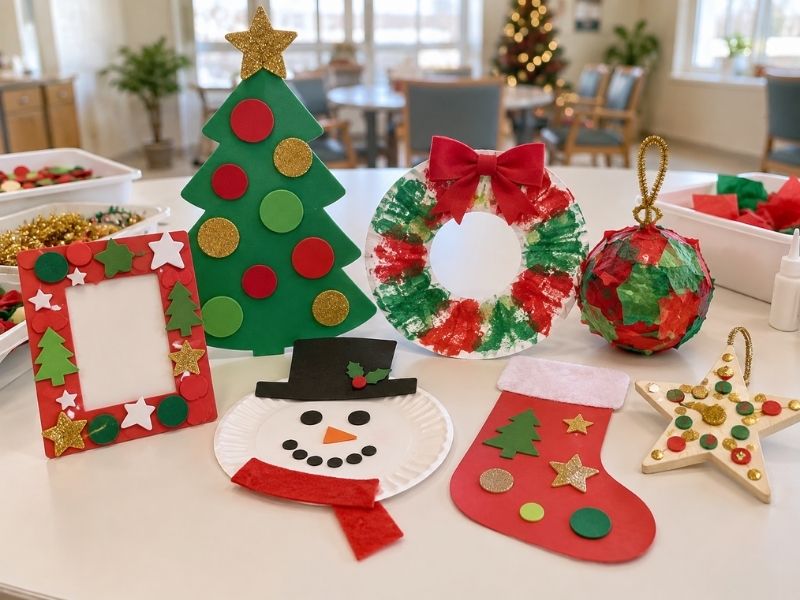
These Christmas Crafts for Seniors are different. Every idea uses large pieces, familiar Christmas colors, simple motions, and enough staff support to help residents join in without feeling tested.
These crafts are meant for shared activity time, not independent use. For residents with advanced dementia, the goal is the experience: touching something soft, choosing red or green, pressing one piece into place, or simply watching beside someone they trust.
A finished ornament is lovely. A calm ten minutes together matters more.
The Alzheimer’s Association recommends adjusting an activity to the person’s changing ability and focusing on enjoyment rather than achievement.
Its guide to meaningful activities for people with dementia is a helpful place to start.
Before You Set Out the Craft Supplies
Advanced dementia changes what “easy” really means. A project may look simple to us and still feel confusing to someone who cannot follow a long direction or recognize what an unfamiliar tool is for.
The NHS explanation of dementia notes that dementia can affect memory, understanding, judgment, movement, and daily activities.
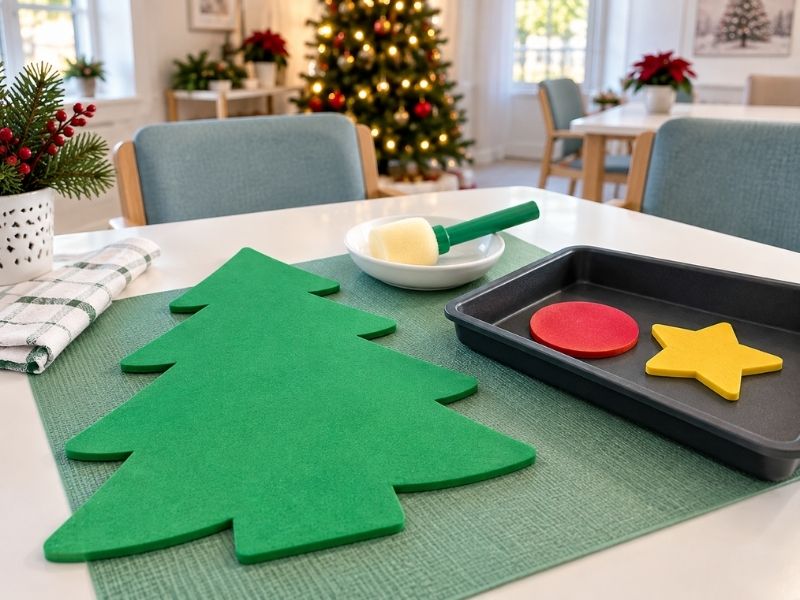
So, keep the table calm. Put out one material at a time, demonstrate one motion, and use a short invitation such as, “Would you like the red one or the green one?” Do not quiz the resident or ask, “Do you remember how to do this?”
If you regularly plan for mixed needs, save these crafts for seniors with dementia too. They use the same idea: lower the demand, keep the pleasure.
Use this safety setup every time
- Seat one helper beside each resident who needs close support.
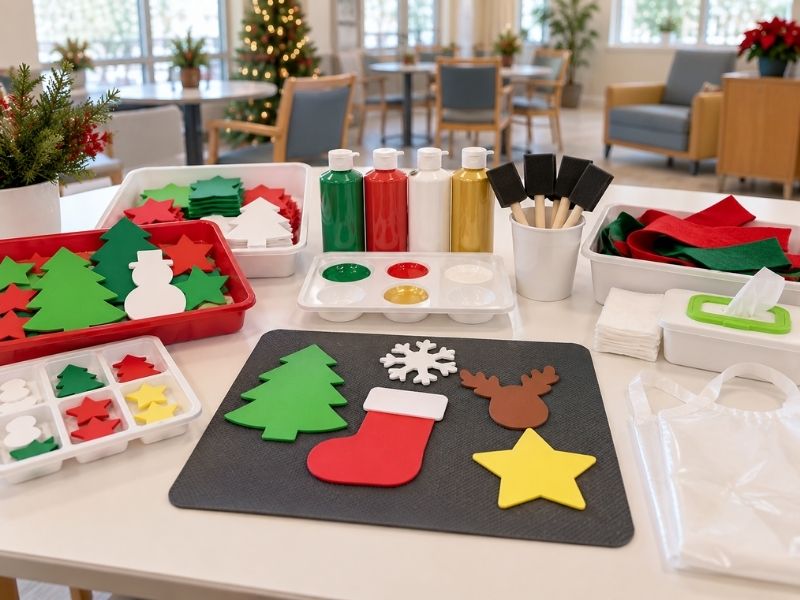
- Use washable, non-toxic paint and glue.
- Choose pieces too large to swallow. Avoid loose beads, bells, buttons, pom-poms, sequins, berries, and candy when a resident may put objects in their mouth.
- Let staff handle scissors, staplers, hole punches, hot glue, wire, and ribbon cutting.
- Use battery candles only. Never place a real flame on the activity table.
- Cover the table with a non-slip mat and place supplies in shallow, stable trays.
- Stop if the resident becomes tired, upset, restless, or repeatedly pushes materials away.
- Follow the resident’s care plan, swallowing precautions, allergy information, and your facility’s infection-control rules.
Never correct the resident’s work. Turn the paper if it helps. Hold the glue sponge steady. Finish a difficult part quietly. But let every safe mark, press, and choice belong to the person making it.
For residents who cannot see small details clearly, these crafts for seniors with low vision explain why strong contrast and large shapes make such a difference.
Meanwhile, easy crafts for seniors with arthritis can help you rethink grip, pressure, and tool size.
20 Christmas Crafts for Seniors That Keep Every Step Simple
1. Press-and-Stick Foam Christmas Tree
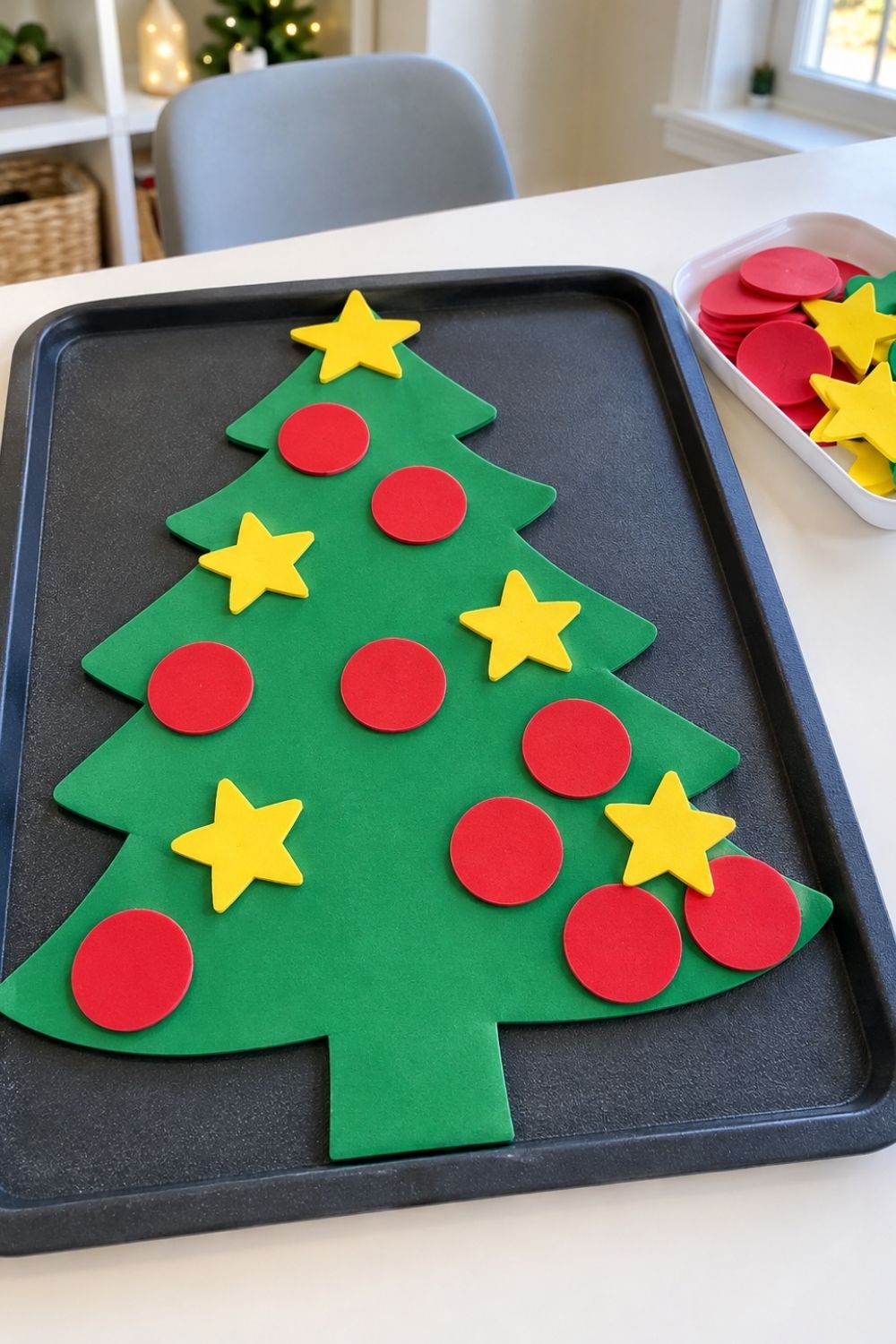
This one gives the resident a clear shape and one satisfying action: press. The finished tree looks cheerful even if every decoration lands in one corner.
You need: A large green foam tree, oversized self-adhesive foam circles or stars, and a dark tray.
Make it: Peel the backing from two or three shapes before you begin. Place one shape in the resident’s hand, point to the tree, and say, “Press it here.” Offer another only after the first is down.
Advanced dementia version: Let the resident choose between one red shape and one yellow shape. If choosing is difficult, place one shape in their palm and guide their hand toward the tree without forcing the movement.
This is one of the safest Christmas Crafts for Seniors when you replace small decorations with pieces at least two inches wide.
If foam shapes work well for your group, the large-piece approach in these paper crafts for seniors with low grip strength will give you more ideas.
2. Sponge-Painted Christmas Wreath
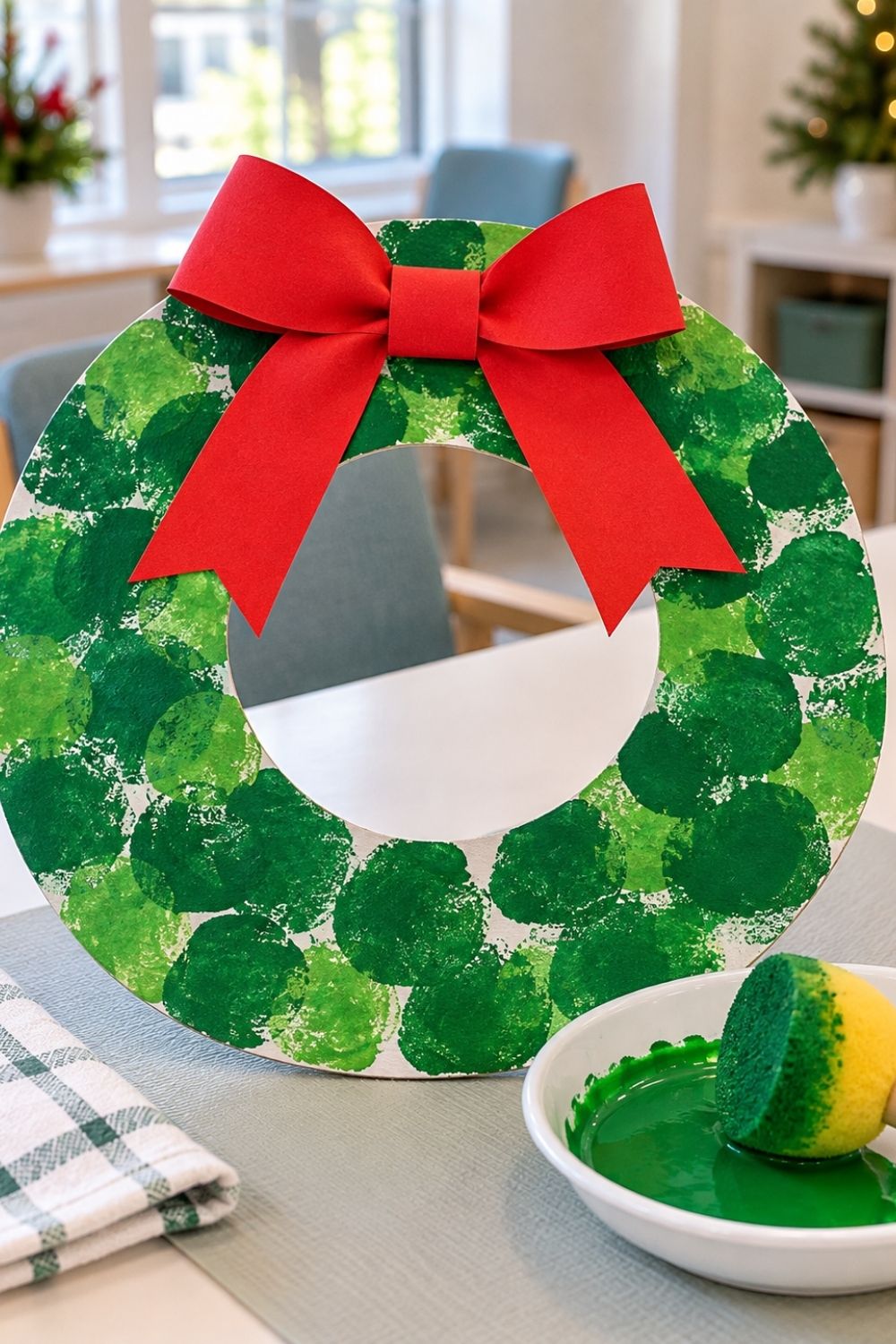
A wreath does not need neat brushstrokes. Soft sponge dabs make a full green ring, and the repeated up-and-down motion can be easier than controlling a pencil.
You need: A large cardboard wreath prepared by staff, green washable paint, a chunky round sponge, and a wipe-clean mat.
Make it: Put a small amount of paint in a shallow dish. Help the resident dip the sponge once, then dab around the ring. Staff can add a wide red paper bow after the paint dries.
Advanced dementia version: Skip the full wreath. Invite the resident to make three or four green dabs, then thank them and let staff complete the background later.
Keep the sponge large enough that it cannot be swallowed. One color is enough.
3. Sticky-Back Tissue Paper Ornament
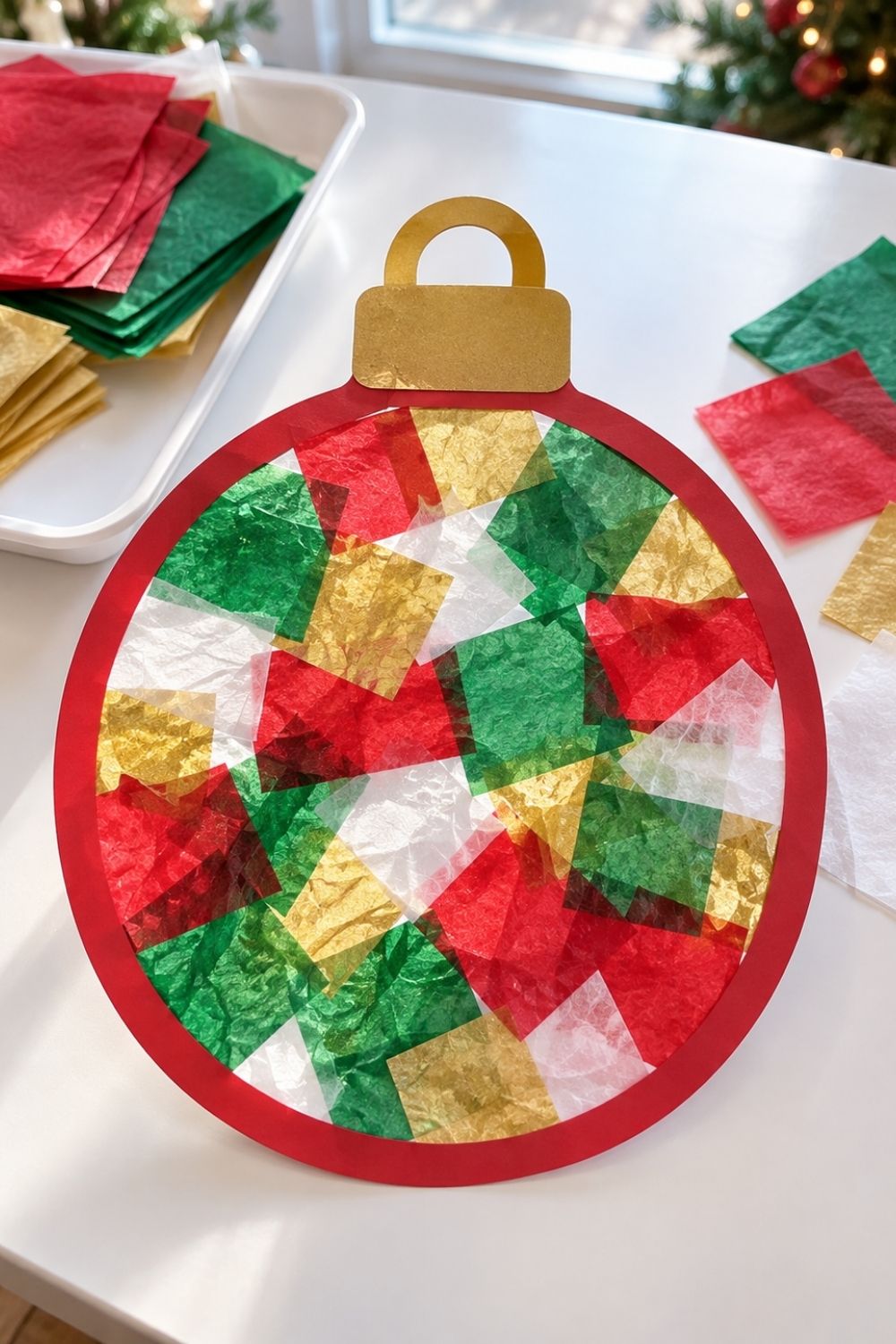
This craft feels more like arranging than building. The sticky surface holds each piece right away, so there is no waiting for glue to behave.
You need: Clear self-adhesive paper, a large ornament-shaped frame cut by staff, and big squares of red, green, white, and gold tissue paper.
Make it: Tape the sticky sheet to the table with the sticky side facing up. Give the resident one tissue square at a time and invite them to lay or press it down. Add the ornament frame over the finished collage.
Advanced dementia version: Use only two strongly contrasting colors. Crumpling the tissue and passing pieces to a helper still counts as taking part.
If you have wrapping paper and cards left after Christmas, save them for these recycled crafts for seniors. Familiar materials often make the table feel less clinical.
4. Cinnamon-Scented Fabric Sachet
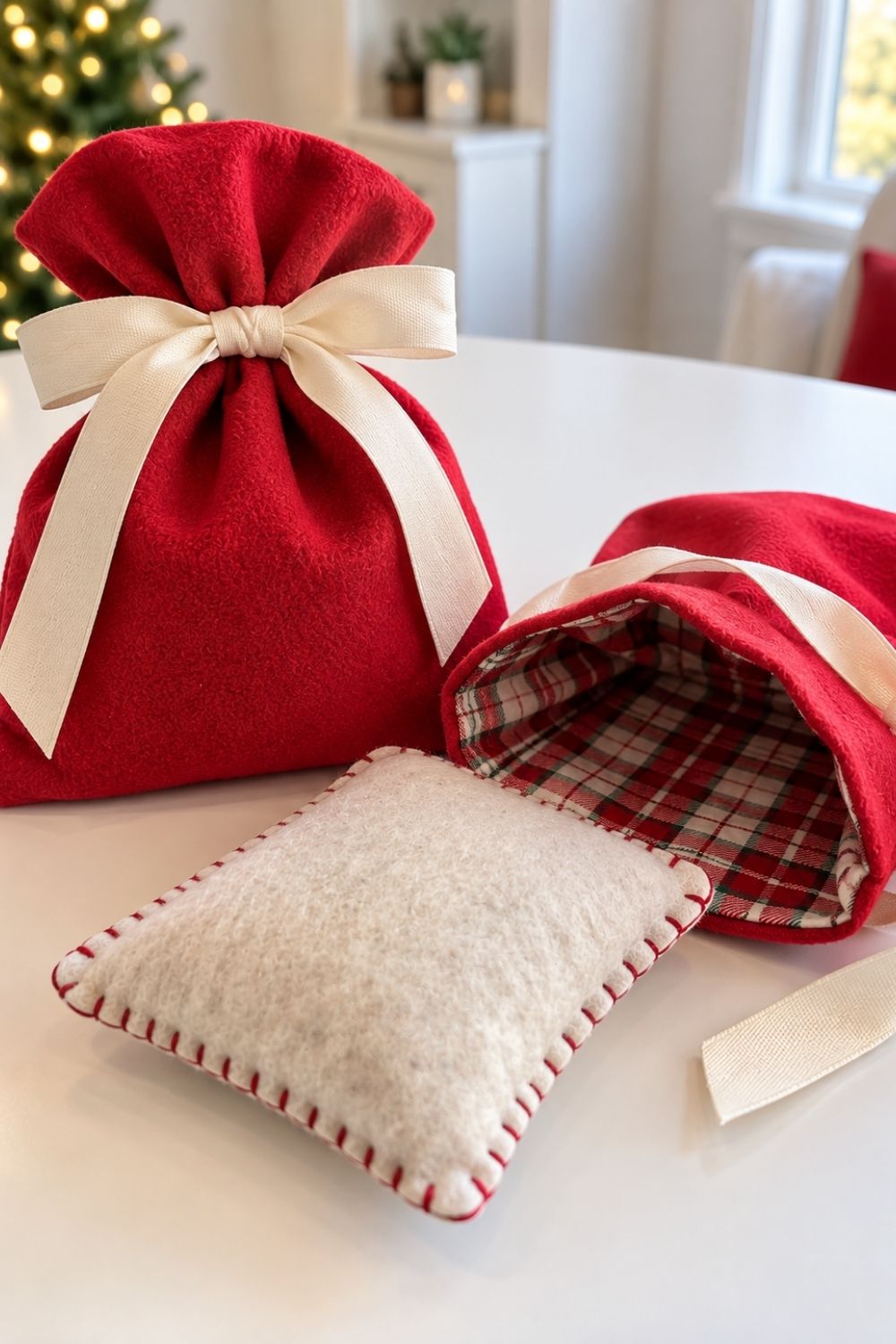
This one brings Christmas into the room through smell and touch. A soft red pouch filled and sealed by staff can become a comforting drawer or bedside decoration.
You need: A pre-sewn fabric pouch, large pieces of cinnamon-scented felt or a sealed scent insert, and a wide ribbon.
Make it: Let the resident touch the fabric and smell the sealed insert. Invite them to place the insert into the pouch. Staff closes the pouch and ties the ribbon.
Advanced dementia version: The resident can hold the soft pouch while a helper fills it. If strong smells cause discomfort, use an unscented square of fleece instead.
Do not use loose cinnamon, cloves, dried orange pieces, or potpourri with residents who may taste non-food items.
The World Health Organization explains that dementia affects people differently, so a sensory activity that calms one person may overwhelm another; its dementia fact sheet gives a clear overview.
5. Jumbo Christmas Card Collage
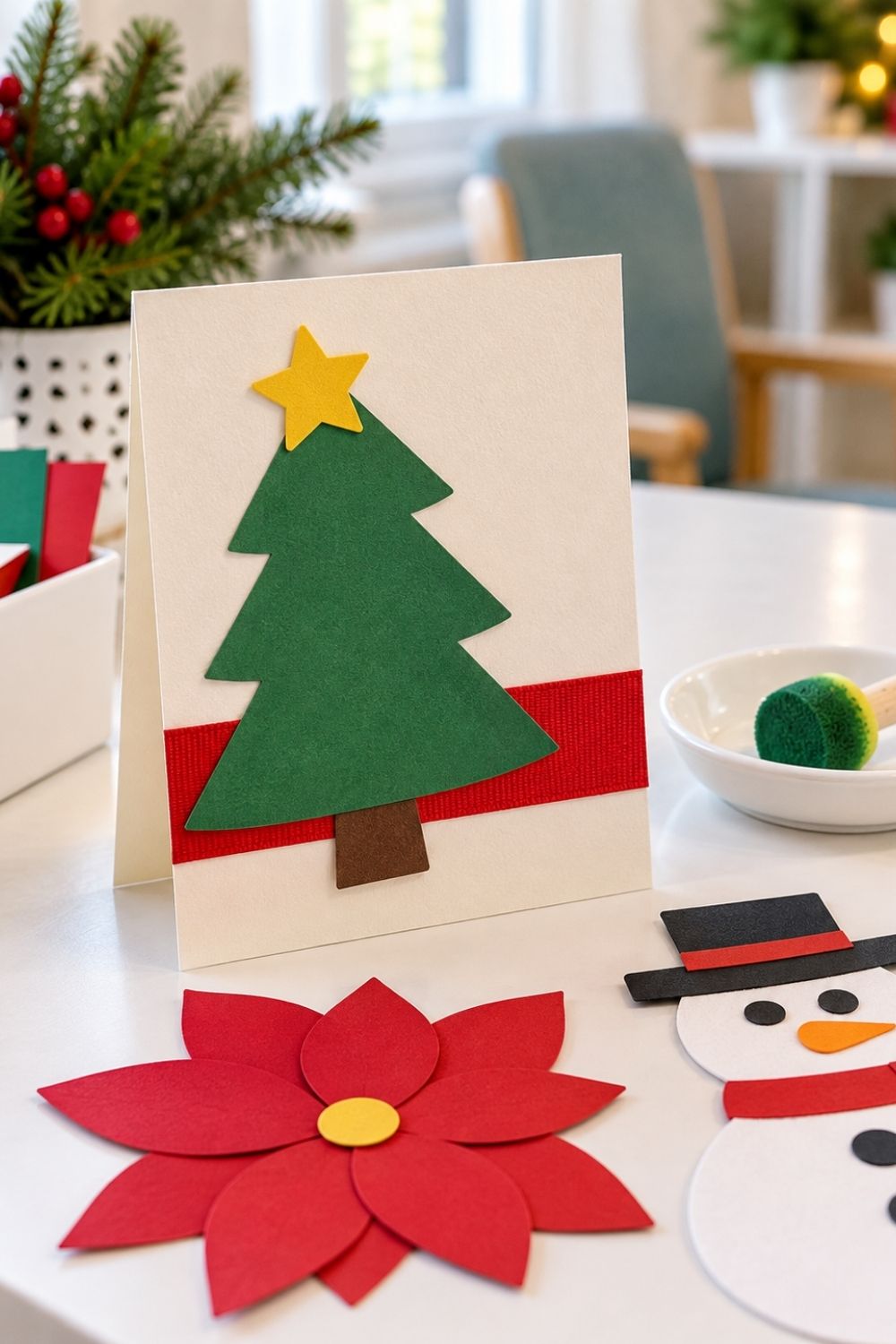
A handmade card can still feel grown-up without requiring writing. One bold picture and one large piece of ribbon are plenty.
You need: A folded sheet of sturdy cardstock, large pre-cut Christmas pictures, glue dots or a glue sponge, and one wide ribbon strip.
Make it: Show two pictures and ask, “Which one should go on the card?” Place the chosen picture on a glue dot, then help the resident press it onto the front. Staff can write a dictated name or greeting inside.
Advanced dementia version: Use one picture only. Say the person’s name as you work: “This card is from Mary.”
These Christmas Crafts for Seniors become more meaningful when the item can be given to someone. A simple card on a grandchild’s shelf says far more than perfect handwriting ever could.
6. Contact-Paper Snowflake Window Art
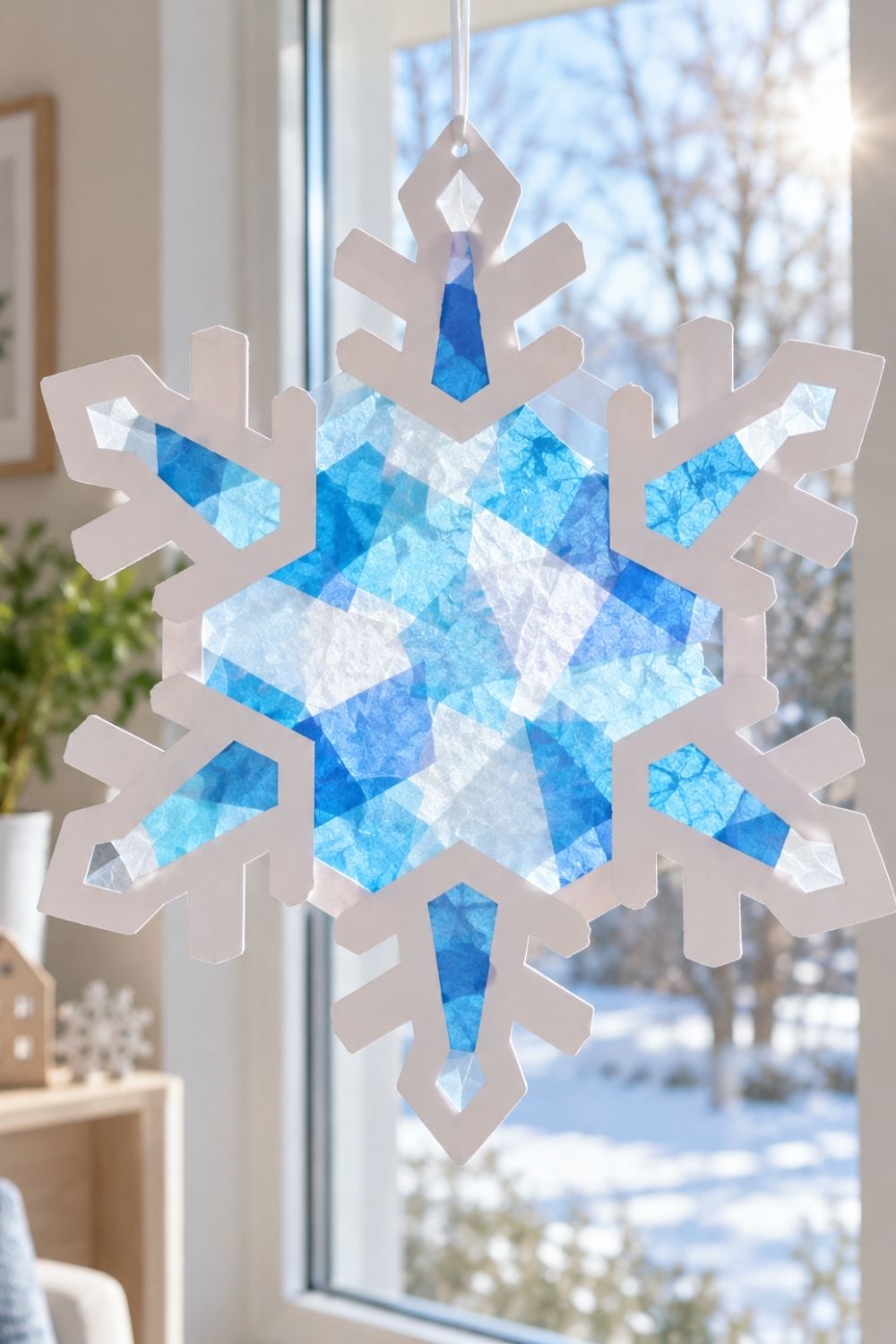
This snowflake is big, bright, and almost impossible to spoil. It catches the light without using glitter, which is already a small Christmas miracle.
You need: Clear self-adhesive paper, a large white paper snowflake frame cut by staff, and large pieces of pale blue and white tissue paper.
Make it: Secure the sticky sheet to the table. Let the resident place tissue pieces on it. Staff adds the frame and trims the edges before hanging it on a window.
Advanced dementia version: Offer one piece at a time and use a simple cue: “Put it on the sticky part.” If the resident only pats the surface, that is participation too.
7. No-Tie Fleece Mini Wreath
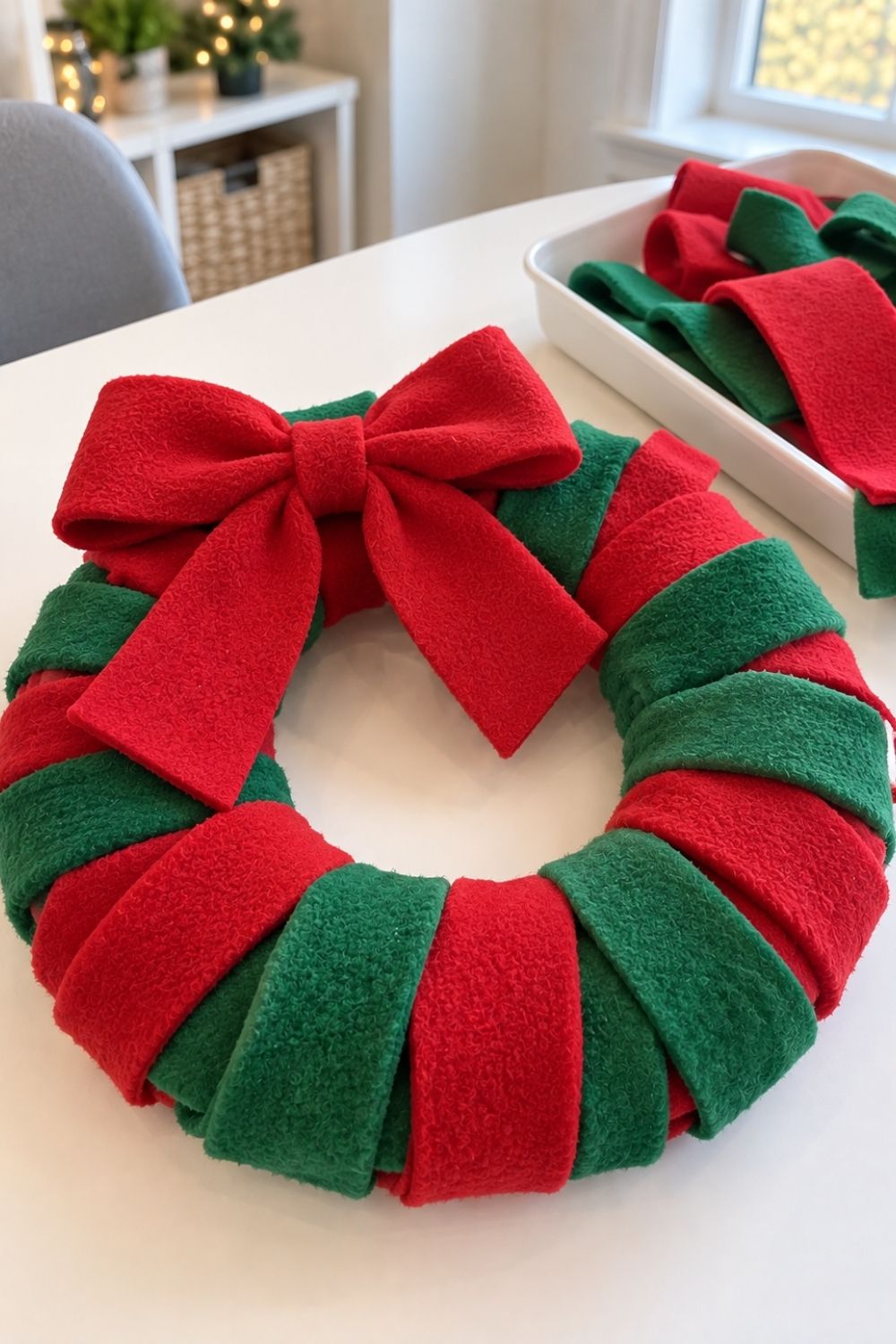
Soft fleece is warm, familiar, and pleasant to hold. This version removes the knots and asks residents only to tuck wide strips around a ring.
You need: A thick cardboard ring covered with double-sided tape, wide fleece strips cut by staff, and a broad fabric bow.
Make it: Place one strip across the sticky ring and press. Turn the ring slightly, then repeat. Staff fills any gaps and attaches the bow.
Advanced dementia version: Let the resident stroke, sort, or hand over the red and green strips. The helper can press each chosen strip onto the ring.
For another activity built around touch rather than tiny detail, try the texture ideas in these clothespin crafts for seniors, using large easy-grip pegs only when they suit the resident.
8. Painted Wooden Star With a Sponge Brush
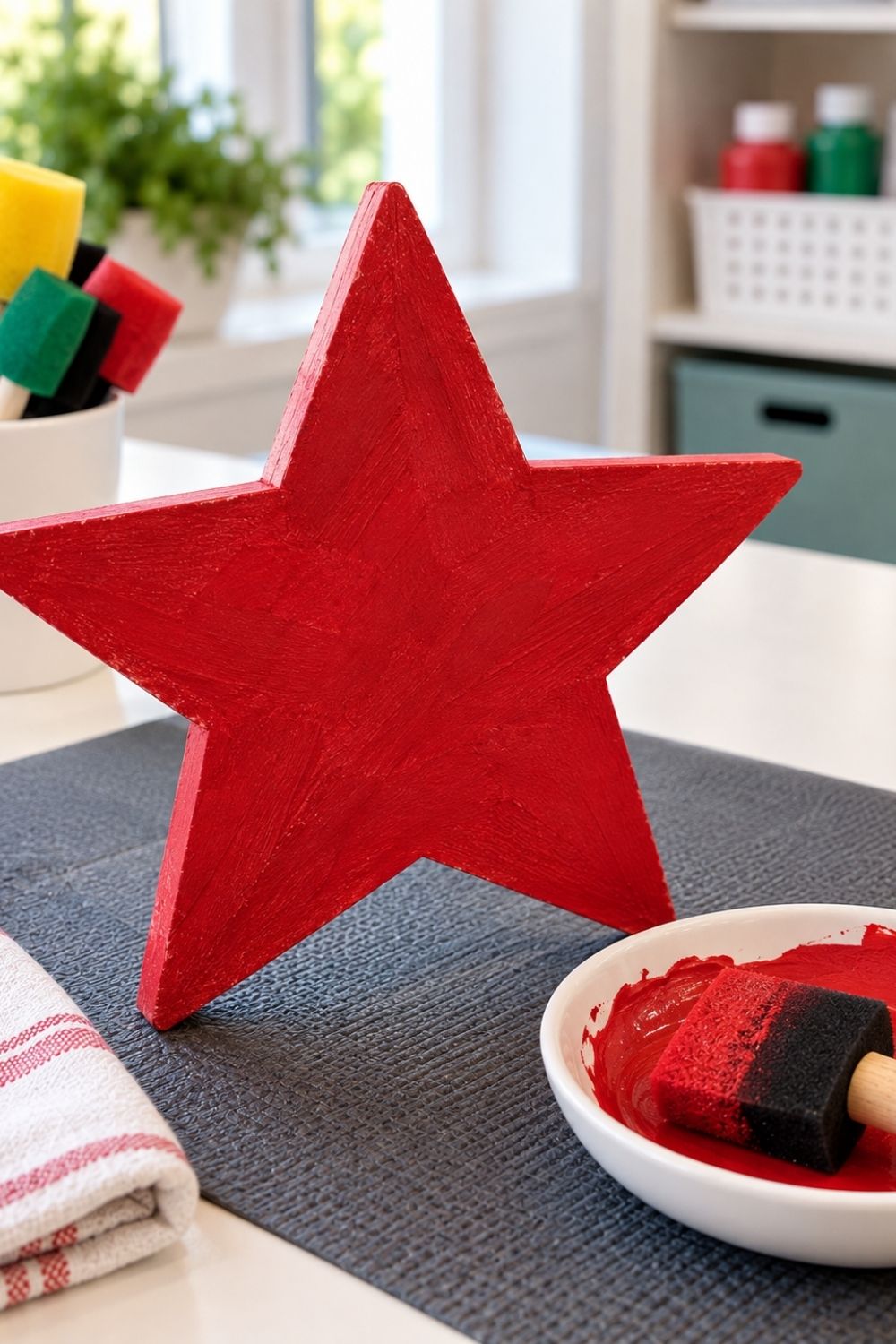
A large wooden star feels solid in the hand and looks lovely with just one coat of paint. No lines to stay inside. No pattern to copy.
You need: A smooth unfinished wooden star at least six inches wide, washable non-toxic paint, a chunky foam brush, and an apron.
Make it: Secure the star on a non-slip mat. Load the brush lightly, then invite the resident to sweep paint across the surface. Staff paints the sides and attaches hanging ribbon after the star is dry.
Advanced dementia version: Hand-over-hand support may help start the motion, but release your hand if the resident resists. One brush mark can be the whole activity.
This is one of those Christmas Crafts for Seniors that looks beautiful because it stays simple. Add a name and year on the back, not a pile of extra decoration on the front.
9. Christmas Photo Frame With Large Stickers
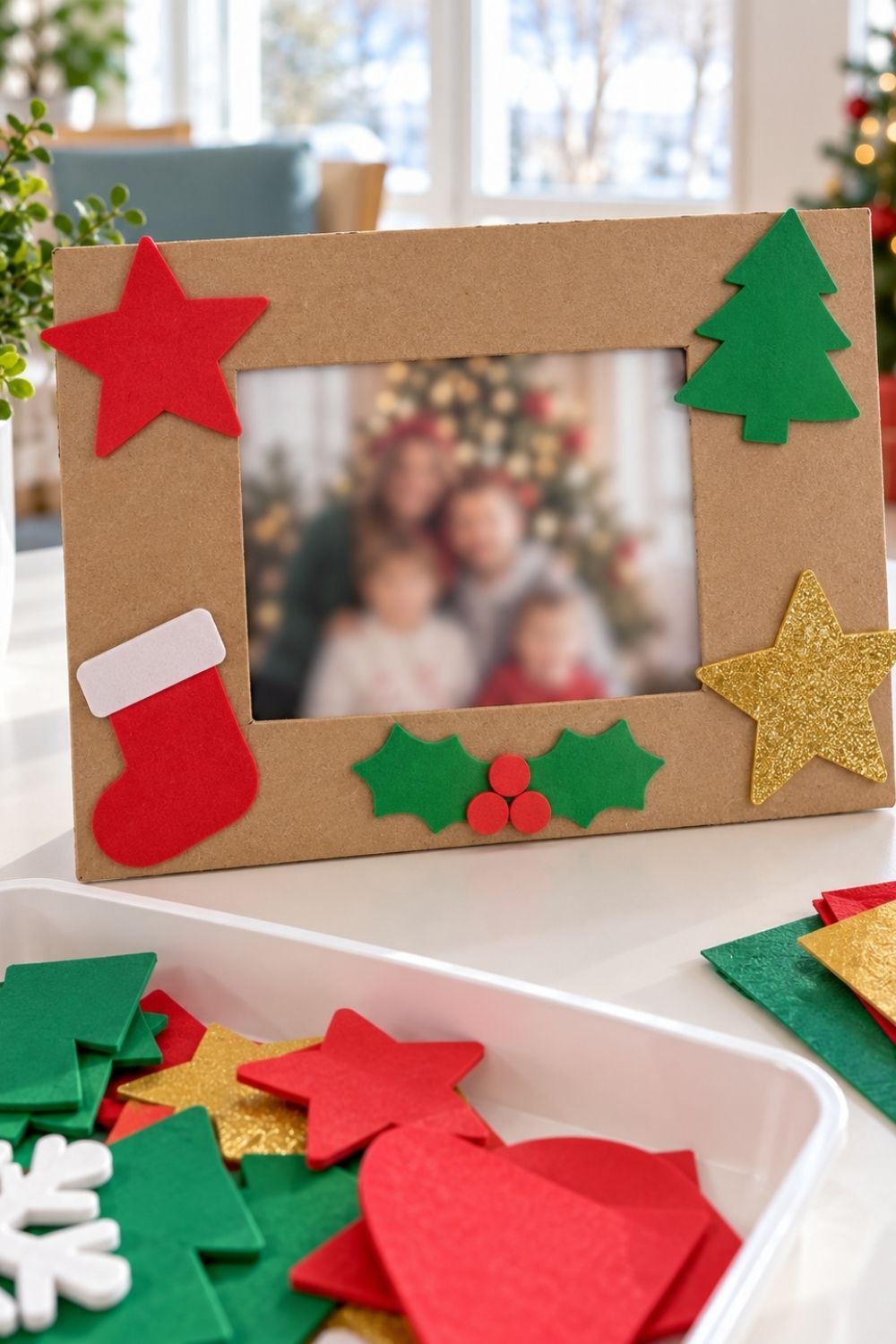
Photos can make an abstract craft feel personal right away. A familiar face in the center gives the resident something clear to look at while decorating.
You need: A wide cardboard photo frame, a copied family photograph, oversized foam stickers, and glue dots.
Make it: Put the photo into the frame before activity time. Offer one large sticker at a time and help the resident press it onto the wide border. Use no more than five stickers.
Advanced dementia version: Talk about what is visible without testing memory. Say, “You are wearing a lovely blue dress here,” instead of, “Who is this?”
For more gentle ways to use familiar images, the memory book activity for seniors keeps prompts simple and leaves room for staff or family to help.
10. Red-and-Green Paper Chain
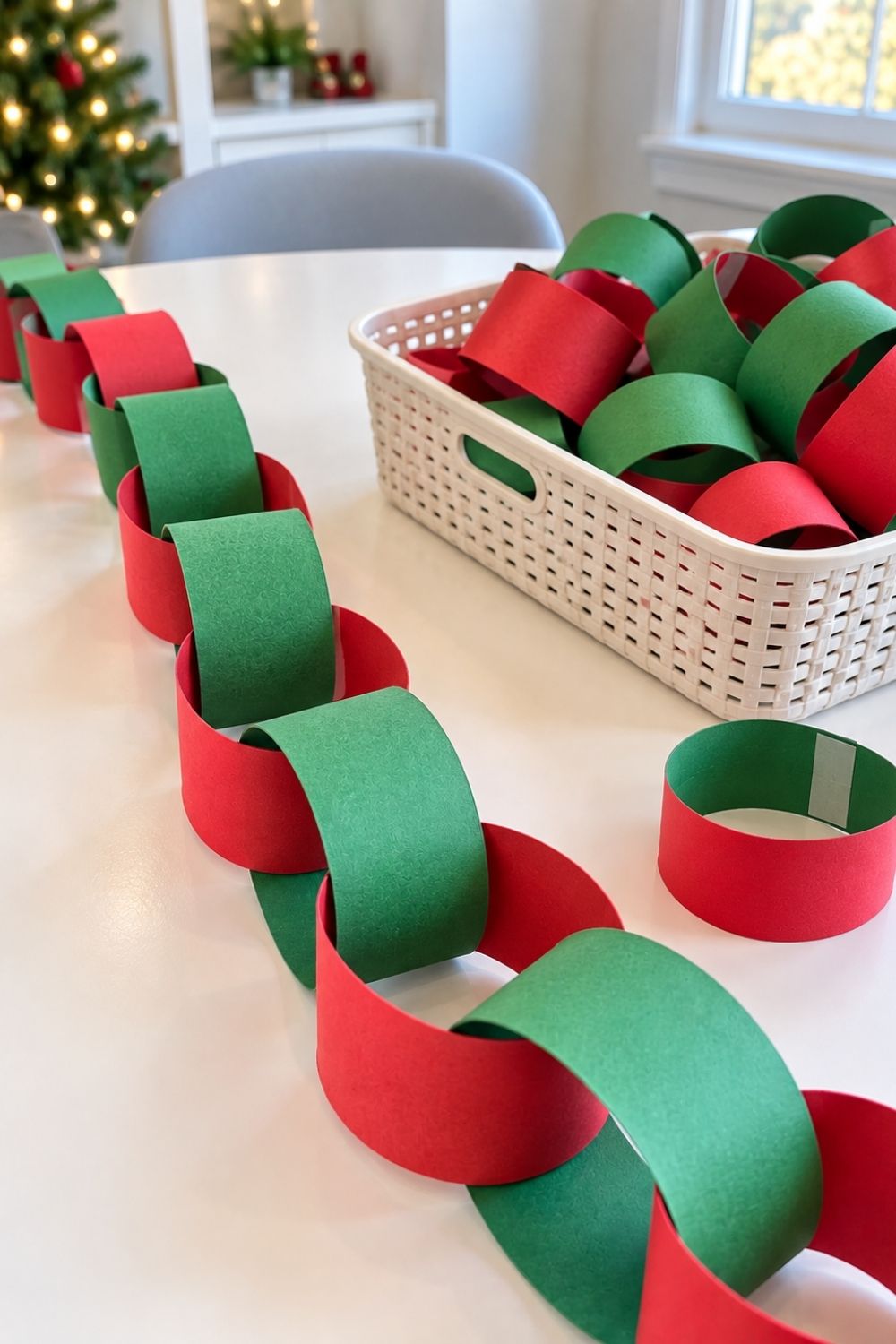
A paper chain turns one small action into a decoration the whole unit can share. Residents can make one loop each, and staff can connect everything later.
You need: Wide strips of red and green cardstock, double-sided tape placed on the ends, and one finished sample loop.
Make it: Form a strip into a circle. Help the resident press the taped ends together. Place each finished loop in a basket for staff to join into a chain.
Advanced dementia version: Ask the resident to choose red or green, then let a helper shape the loop. Pressing the join is enough.
Avoid staples. Tape removes a sharp object and makes this one of the easiest group Christmas Crafts for Seniors to prepare in bulk.
11. Fingerprint-Free Dot-Painted Bauble
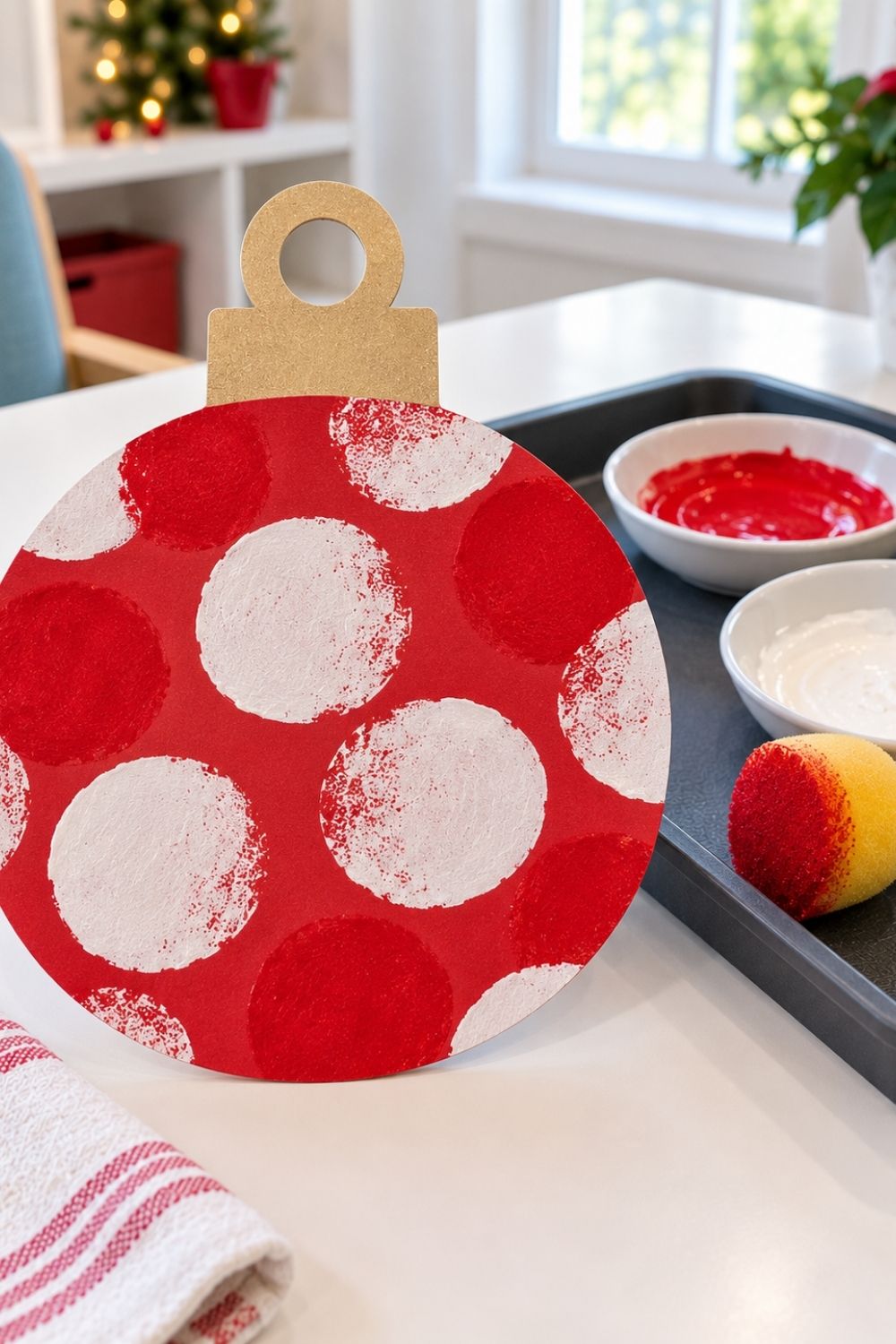
The name sounds fancy. The method is simply dipping a large round sponge dauber into paint and making big dots.
You need: A large paper ornament cutout, washable paint in one or two colors, jumbo sponge daubers, and a tray.
Make it: Tape the ornament to the tray so it cannot slide. Demonstrate one dot. Then let the resident add as many or as few as they want.
Advanced dementia version: Use one dauber already loaded with paint. Repeat the same cue each time: “Tap, lift.”
Residents who enjoy simple repeated motions may also like bird crafts for seniors, especially versions that use broad shapes and large feathers.
12. Felt Nativity Shape Board
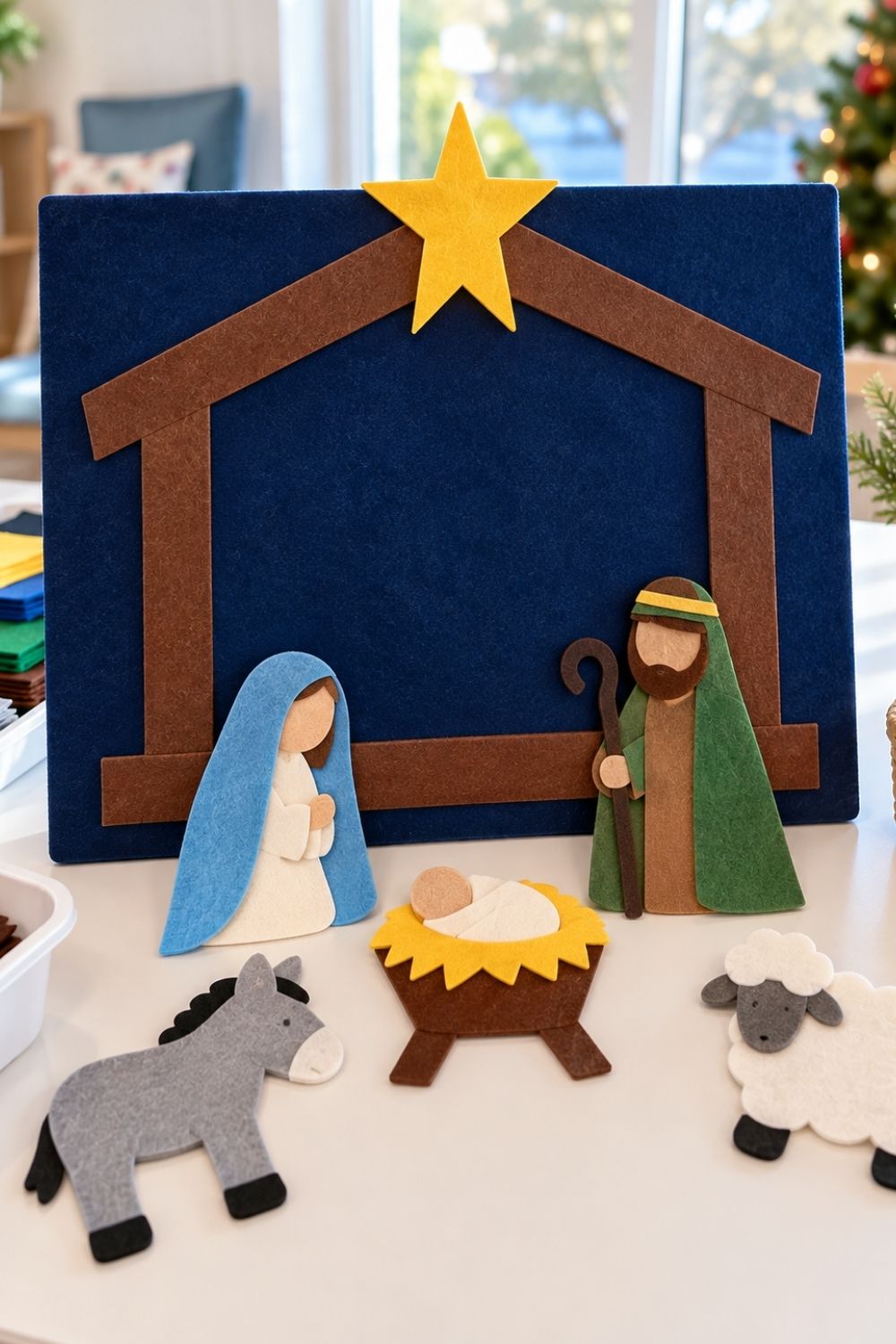
For Christian residents, a nativity scene can be familiar without becoming a complicated cut-and-glue project. Felt pieces cling to the board and can be moved again and again.
You need: A large felt-covered board and oversized pre-cut felt shapes: stable, star, Mary, Joseph, baby, and animals.
Make it: Begin with the stable already in place. Hand the resident one piece and name it. Invite them to put it anywhere on the board.
Advanced dementia version: Use only the star and one figure. Play a familiar carol quietly if music usually comforts the resident.
For a faith-based activity session, pair this with a simple reading from these Bible verse craft night ideas for seniors. Keep the verse short and let listening be enough.
13. Ribbon-Wrapped Cardboard Tree
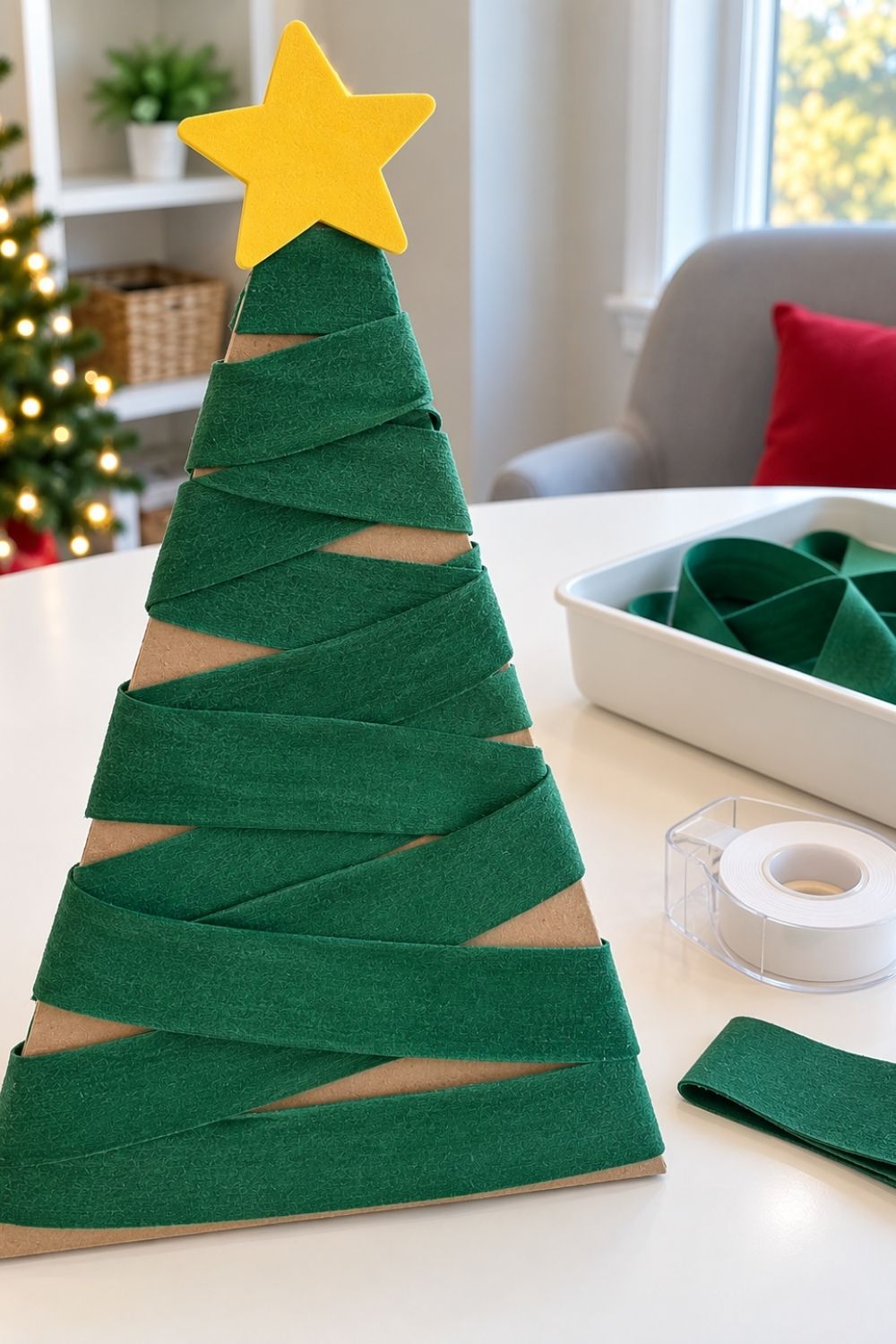
Wrapping a wide ribbon around a sturdy shape uses a natural, repeated motion. The uneven layers are what make the tree look soft and handmade.
You need: A large cardboard tree cutout, wide green fabric ribbon, double-sided tape, and a large foam star.
Make it: Staff secures the first ribbon end. Help the resident guide the ribbon around the tree several times. Staff secures the final end and adds the star.
Advanced dementia version: The resident can hold or feed the ribbon while the helper turns the tree. Stop before the motion becomes tiring.
Never loop ribbon around a resident’s wrist or leave long ribbon unattended. Cut manageable lengths before the session.
14. Soft Snowman Face Plate
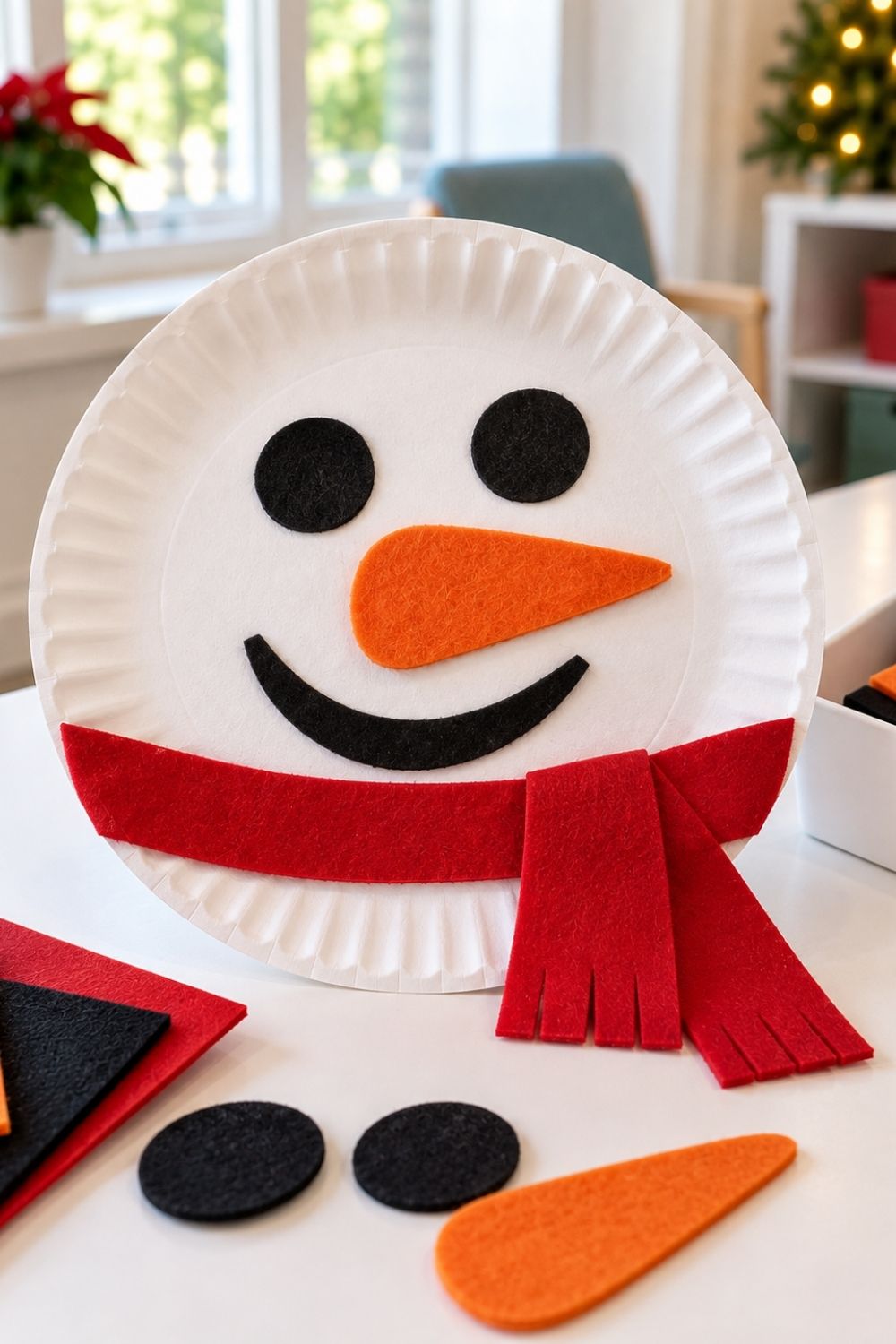
This snowman needs only three or four large pieces, and his crooked smile is allowed. Honestly, it usually makes him better.
You need: A sturdy white paper plate, two large black felt eyes, a large orange felt nose, a wide red fabric strip, and double-sided tape.
Make it: Put tape on each piece before the activity. Offer the nose first, then the eyes. Staff wraps the red strip along the bottom as a scarf.
Advanced dementia version: Use the nose and scarf only, or let the resident touch and choose the soft pieces while a helper places them.
If you want a child visitor to join, Santa handprint crafts can work as a separate family table. Staff should do the cutting and keep the dementia-friendly table free from small decorations.
15. Christmas Memory Jar With Picture Cards
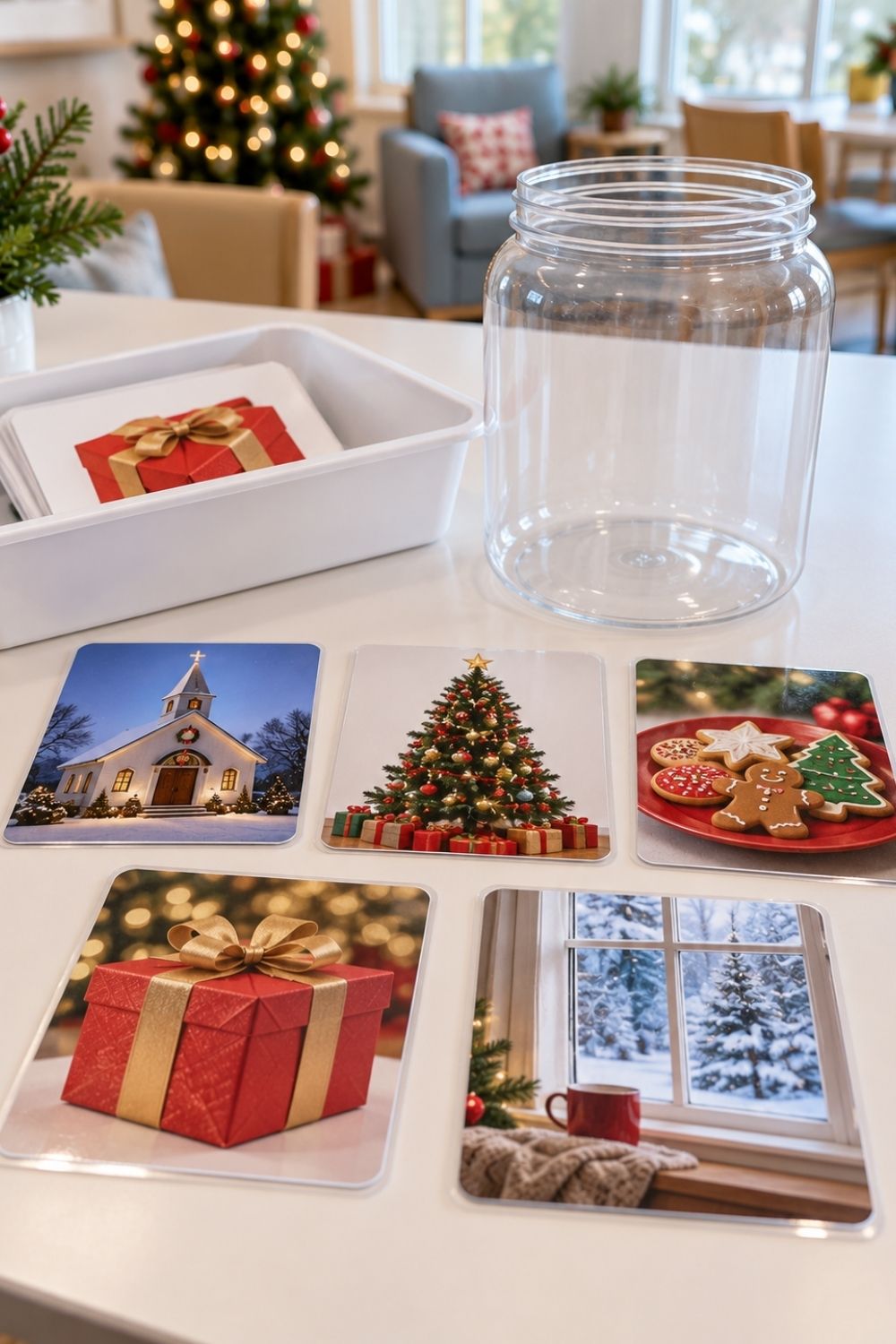
This is not a memory test. It is a jar filled with gentle starting points: a church, a Christmas tree, a plate of cookies, a wrapped gift, or snow.
You need: A clear plastic jar with a wide opening and five to eight large laminated Christmas picture cards.
Make it: Show one card and make a simple observation. “That tree has bright lights.” The resident can look, hold it, place it in the jar, or say anything that comes to mind.
Advanced dementia version: Use only two cards at a time. Accept every response, including silence, humming, a smile, or handing the card back.
The same no-pressure approach works with these memory jar craft ideas for seniors. Connection comes first. Correct answers do not belong at this table.
16. Jumbo Sticker Stocking
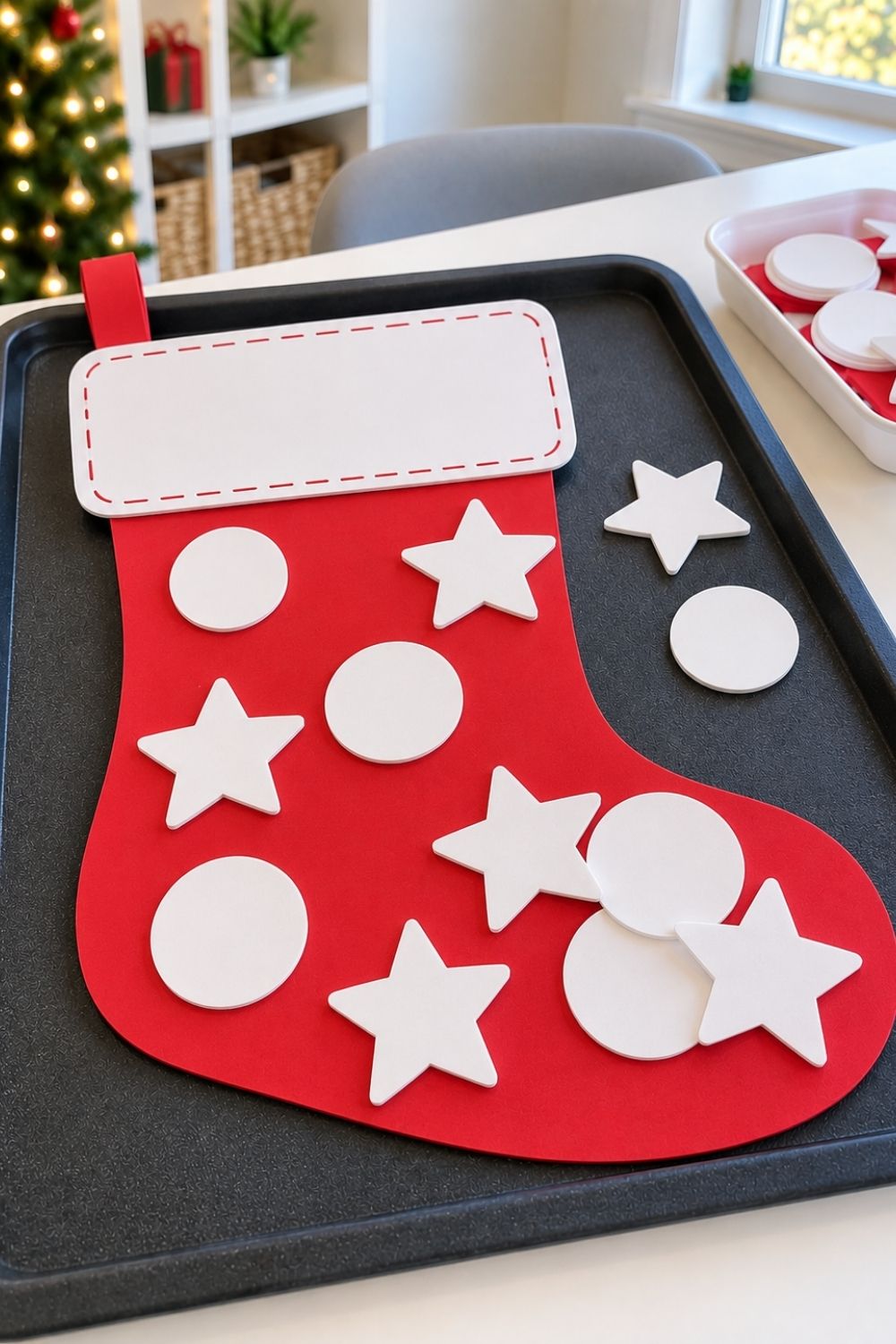
A paper stocking has a familiar outline and a big open space. Large stickers make decorating immediate and keep wet glue out of the way.
You need: A large red cardstock stocking prepared by staff, oversized white foam shapes, a large name label, and a dark tray.
Make it: Peel each sticker backing in advance. Offer one shape at a time and invite the resident to press it onto the stocking. Add the resident’s name in large print.
Advanced dementia version: Give one sticker at a time. If the resident places all the shapes on top of one another, leave them there.
This Christmas Crafts for Seniors idea can double as a door decoration. For a small item to place inside later, see these stocking stuffers for seniors, then check every gift against the resident’s care needs.
17. Paper-Plate Christmas Bell
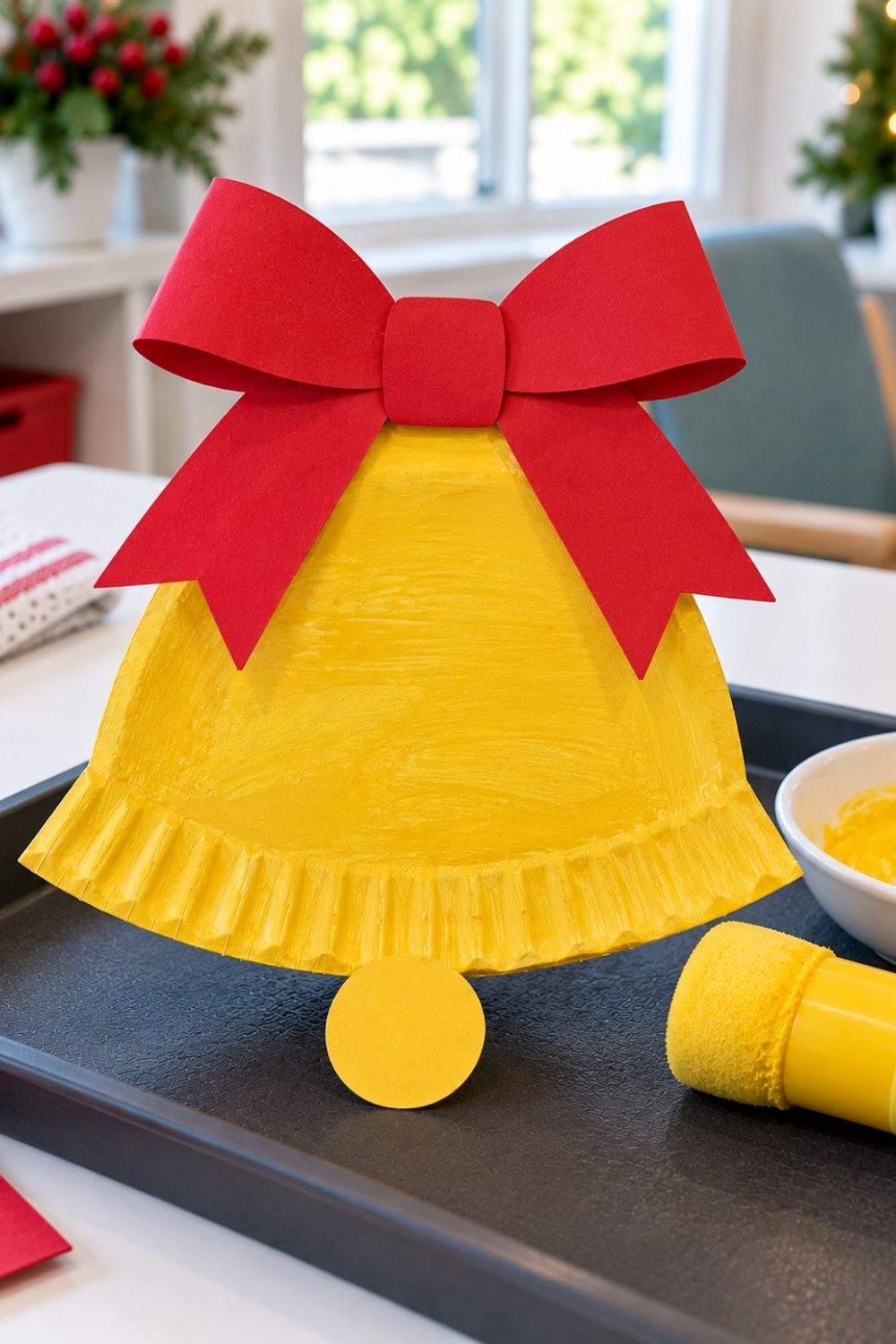
This bell gives residents a broad surface to color and a clear finished shape. It looks festive without using a real metal bell or a tiny clapper.
You need: Half a sturdy paper plate, a jumbo yellow paint stick or washable paint, a wide red paper bow, and a large paper circle.
Make it: Secure the plate half on a tray. Let the resident color or paint it yellow. Staff attaches the bow at the top and the paper “clapper” at the bottom.
Advanced dementia version: Offer the paint stick and model a side-to-side motion. If the resident watches instead, narrate what you are doing in a calm voice.
Use a paper circle, not a jingle bell. The look stays festive without adding a small metal part.
18. Christmas Cookie Decorating With Soft Icing
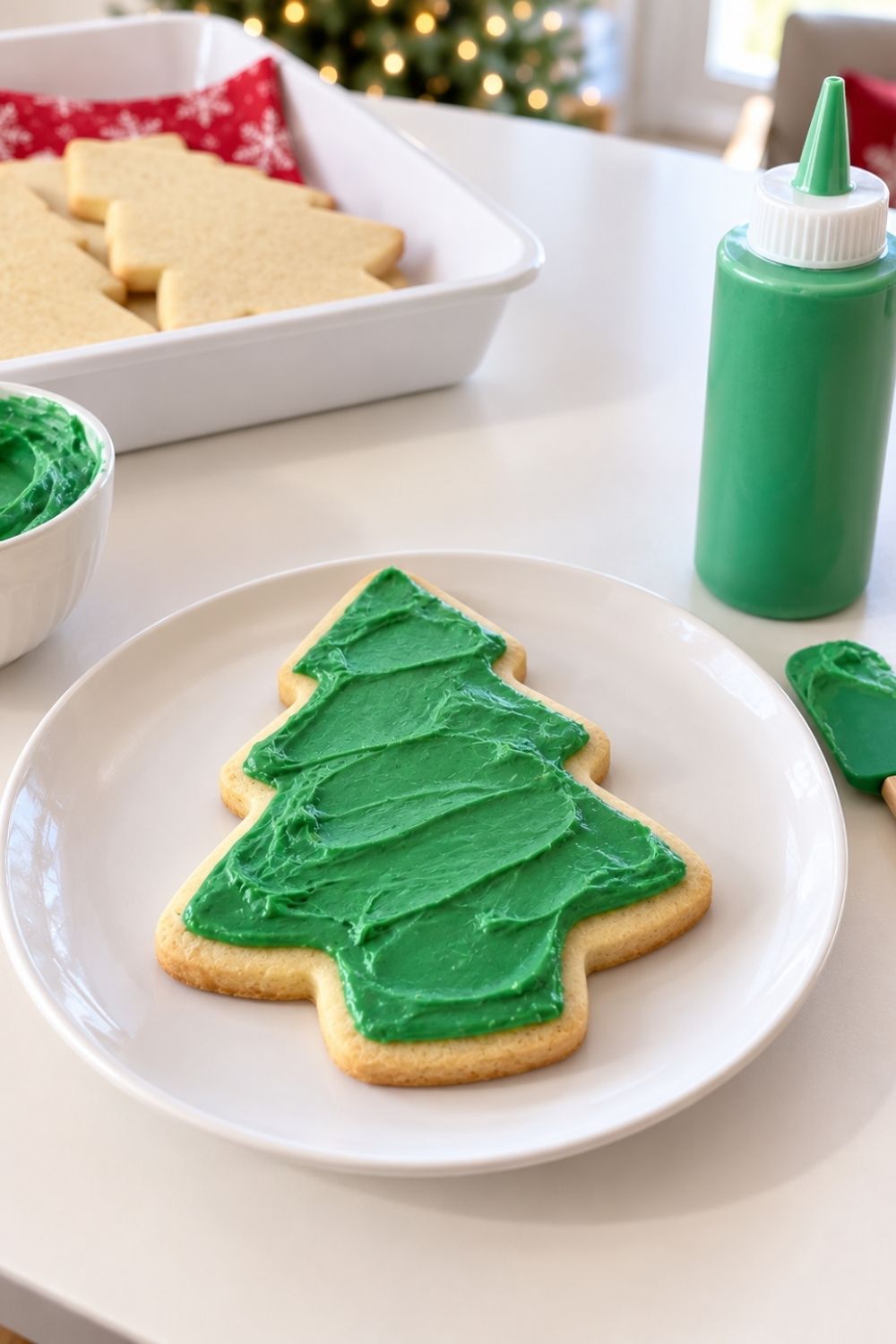
For residents who can safely eat regular food, decorating one large cookie can be familiar, sensory, and wonderfully short. The icing does most of the work.
You need: One large soft sugar cookie, a wide-tip squeeze bottle or short spreader, smooth icing, and an individual plate.
Make it: Check the resident’s diet, allergies, diabetes plan, swallowing needs, and texture restrictions first. Offer one icing color and help the resident squeeze or spread it across the cookie.
Advanced dementia version: A helper can squeeze a small amount while the resident spreads it with a short silicone tool. Skip sprinkles, hard candy, nuts, coconut, and other loose toppings unless the care team has confirmed they are safe.
The full Christmas cookie decorating guide for seniors includes accessible designs and setup ideas. Food crafts require care-team approval for each resident.
The Alzheimer’s Association also offers a holiday guide for people living with dementia and their caregivers.
19. Group Christmas Tree Mural
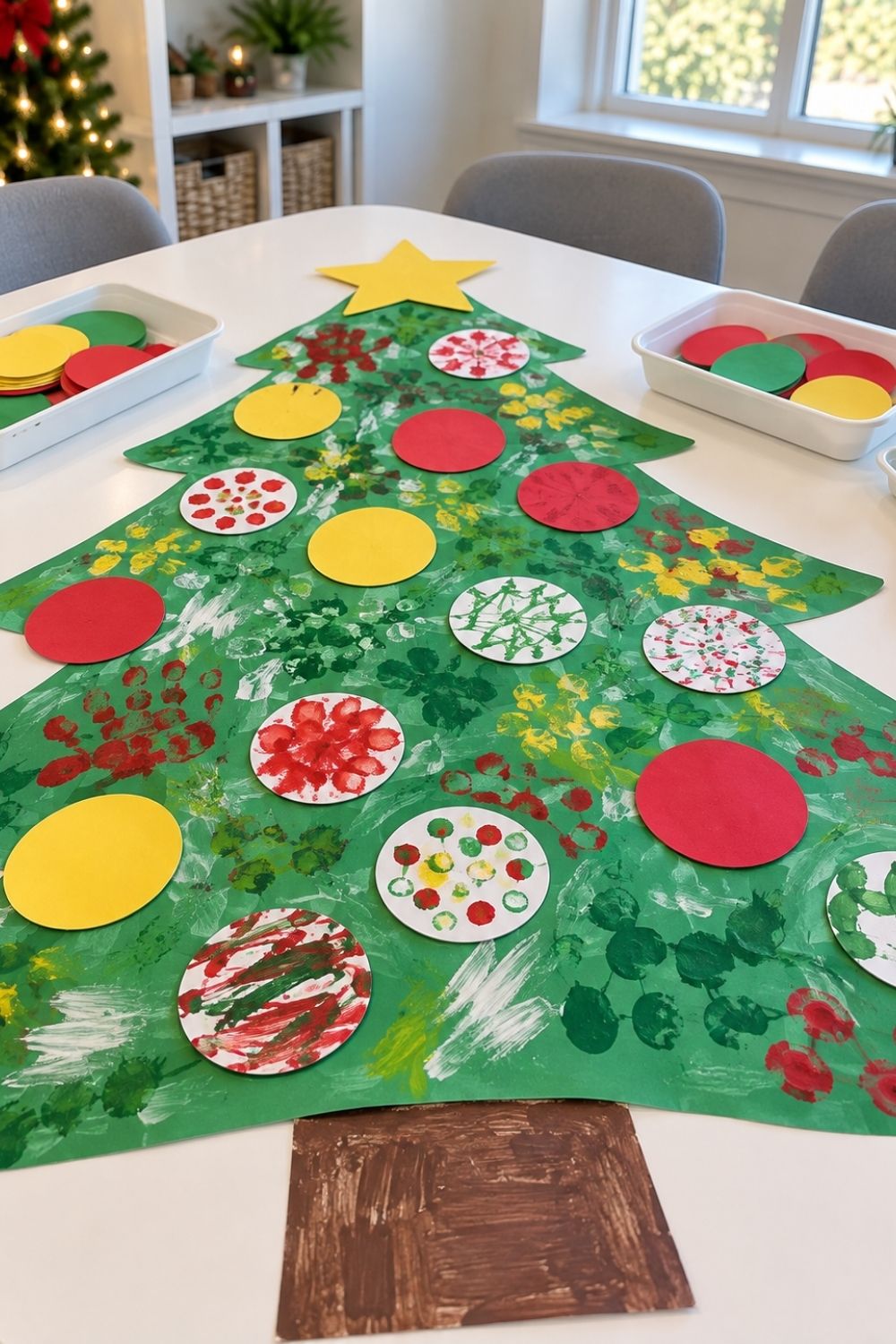
A shared mural removes the pressure to finish an individual project. One resident can add a green mark, another can press on a paper ornament, and someone else can sit nearby with the music.
You need: A large sheet of paper with a tree outline, washable paint sticks, oversized paper circles with tape on the back, and name labels.
Make it: Place the mural flat on a large table. Invite residents one at a time to color a section or add one ornament. Staff writes first names near each contribution if families and the facility permit it.
Advanced dementia version: Bring a small movable section of the mural to the resident rather than expecting them to move seats. Offer one action and finish there.
This is one of the best Christmas Crafts for Seniors for a mixed-ability group because nobody’s work has to look the same. For more shared programming ideas, bookmark these fall activities for assisted living residents and adapt the strongest formats for winter.
20. Sealed Sensory Christmas Stocking
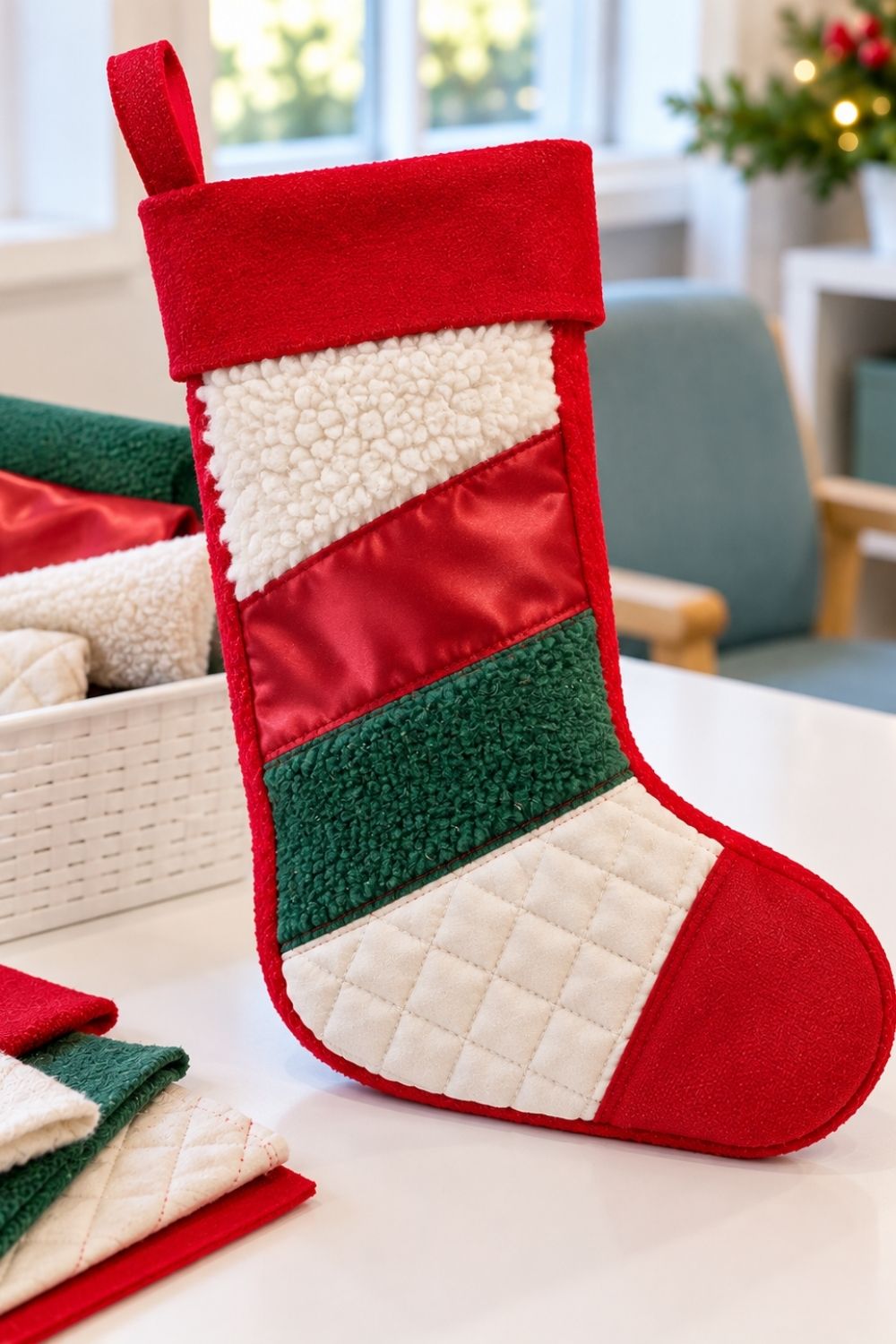
This final craft is built for residents who connect more easily through touch than through instructions. A securely sealed stocking holds several large textures without exposing loose pieces.
You need: A strong fabric stocking, one square each of fleece, satin, faux fur, and quilted cotton, plus a sewn or heavy-duty closure completed by staff.
Make it: Let the resident feel each fabric square. Place the chosen textures inside the stocking, then have staff sew or permanently secure it shut. Check it before every use.
Advanced dementia version: Skip the filling step. Offer the completed stocking and gently name each texture as the resident touches it.
Nothing should be removable, sharp, edible-looking, or small enough to swallow. If the resident pulls, tears, or mouths fabric, use the stocking only with direct one-to-one supervision and remove it when the activity ends.
That is what makes these Christmas Crafts for Seniors work: the project bends to the person. The person never has to bend to the project.
How to Run the Session Without Overwhelming Anyone
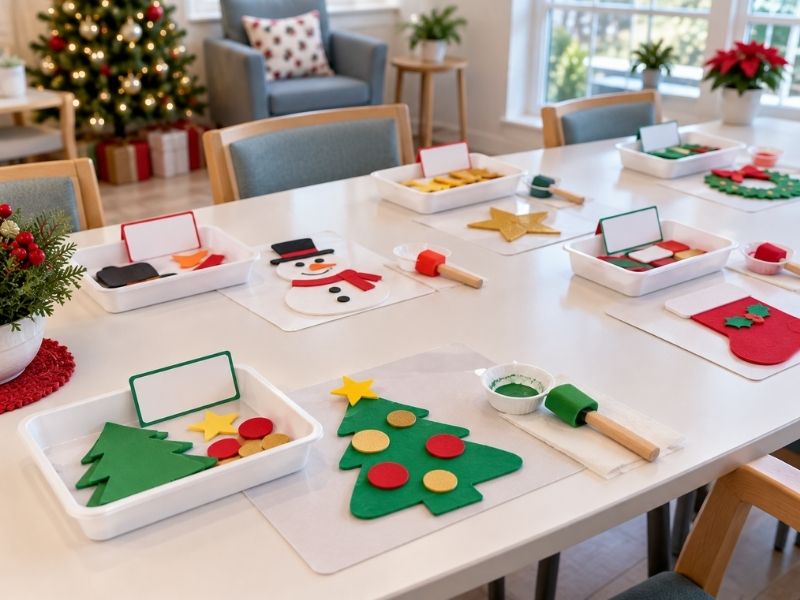
Set up before residents arrive. Pre-cut every shape, peel difficult sticker backings, put names on trays, and pour only a small amount of paint. A crowded table can turn a pleasant activity into visual noise.
Choose one craft for a 15- to 25-minute session. You may have residents who finish in three minutes and others who only watch. Both are normal.
Keep your directions short:
- “Choose red or green.”
- “Press it here.”
- “Would you like another?”
- “We can stop now.”
Avoid baby talk, exaggerated praise, or taking the work away to make it neater. A warm “That red looks lovely” respects the resident without treating an adult like a child.
Quiet Christmas music may help, but it should never compete with your voice. If a resident starts singing, let the singing become the activity. The craft is an invitation, not an assignment.
For a calm seasonal follow-up, November crafts for seniors in assisted living can help you build toward Christmas slowly.
You can also borrow reflective elements from these winter Christian craft night ideas when they match residents’ beliefs and preferences.
A Simple Shopping List for a Nursing Home Craft Cart
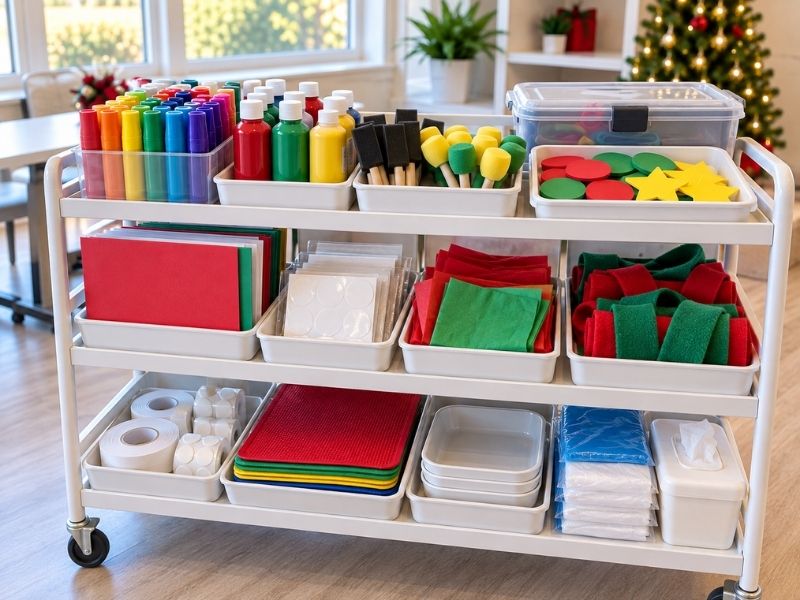
You do not need twenty separate bins. A small set of flexible supplies can cover most of these Christmas Crafts for Seniors:
- Jumbo washable paint sticks
- Washable non-toxic paint
- Chunky foam brushes and sponge daubers
- Large self-adhesive foam shapes
- Sturdy cardstock and cardboard
- Clear self-adhesive paper
- Large tissue-paper squares
- Wide fleece and fabric strips
- Double-sided tape and glue dots
- Non-slip mats
- Shallow sorting trays
- Disposable aprons and wipes
Staff scissors, hot glue, staplers, needles, and hole punches should stay on a separate preparation cart. Residents do not need access to every tool used to finish the item.
If your budget is tight, cardboard boxes, old Christmas cards, wide wrapping-paper scraps, and clean fabric offcuts can do a lot.
These DIY Christmas crafts from recycled materials offer more ways to use what you already have.
Frequently Asked Questions About Christmas Crafts for Seniors
What are the easiest Christmas crafts for seniors with advanced dementia?
The easiest Christmas Crafts for Seniors use one repeated action, such as pressing a sticker, dabbing paint, placing tissue paper, or touching fabric. Start with the foam tree, sponge wreath, sticky-paper ornament, or sealed sensory stocking.
How long should a dementia-friendly Christmas craft session last?
Plan for 15 to 25 minutes, but let each resident stop sooner. A three-minute positive experience is better than pushing through twenty minutes of frustration.
Which craft supplies should nursing homes avoid?
Avoid small loose pieces, sharp tools, hot glue, real candles, long unattended cords or ribbons, toxic paint, and anything that looks edible. Also remove glitter when it may get into eyes, mouths, wounds, or medical equipment.
What if a resident will not join the craft?
Do not pressure them. Offer a simple choice, invite them to watch, play a familiar carol, or try again on another day.
Only when the resident’s nurse or care team confirms the food, texture, toppings, and supervision are safe. If there is any doubt, choose a non-food craft instead.
How can I adapt Christmas crafts for seniors with poor vision or arthritis?
Use strong color contrast, large shapes, non-slip mats, thick handles, and self-adhesive pieces. Staff can pre-cut materials and steady the project while the resident completes one comfortable motion.
Do the finished Christmas crafts need to look polished?
No. Keep the resident’s safe choices and marks exactly where they placed them; that is what makes the item theirs.
The Part That Matters Most
A resident may not remember making the wreath tomorrow. They may still feel calm while the sponge rises and falls, smile when “Silent Night” begins, or hold the finished star for a few quiet minutes.
That is enough.
Choose one of these Christmas Crafts for Seniors, prepare every difficult step before the session, and follow the resident’s lead. A good activity leaves the person feeling safe, included, and respected. The ornament is simply what you get to hang afterward.
Pin this post for December planning, and share it with the activity director or caregiver who needs a Christmas project that truly meets residents where they are.