This post contains affiliate links. This means I may earn a small commission if you purchase through my links at no extra cost to you.
A craft afternoon sounds lovely until you’re still picking glitter out of the tablecloth at dinner.
These indoor winter crafts for seniors skip the wet paint, liquid glue, and loose glitter, so finishing the project doesn’t mean starting a cleanup project.
But you still want something worth making, right? Something you’d put on a shelf or give to a friend not something you have to find a hiding place for afterward.
That’s the idea here. There’s a soft fleece cushion for a favorite chair, a little woodland scene for the bookshelf, and a woven mat that can go on the afternoon tea tray.
Some projects involve arranging and decorating, while others give you a chance to wrap, weave, or build.
You don’t need to enjoy all of those things. If folding paper sounds fiddly but choosing fabrics sounds lovely, start with the fabric.
Now, “no-mess” doesn’t mean there’s no preparation. A few projects need shapes cut beforehand, and those sticker backings will still need somewhere to go. I’ll point out the preparation so you know what you’re taking on before the supplies cover the table.
You’ll also find specific adjustments for dementia, low vision, and arthritis. Because “easy” isn’t much help if the very first step involves peeling a tiny backing or tying a knot that hurts.
So, whether you’re making something at home or planning a shared craft session, choose the project that sounds enjoyable first. Then check the steps and the support it needs. There’s no reason everyone at the table has to make the same thing.
Choose Something They Actually Want to Make
Before you put a single supply on the table, ask what sounds enjoyable. A person who loves fabrics might happily work on a woven mat but have no interest in decorating a paper house.
That choice matters. The National Institute on Aging’s guidance on enjoyable activities encourages finding meaningful ways to stay involved through activities that match your interests.
A few questions will help:
- Would they rather make something useful or decorative?
- Do they enjoy following a pattern or making their own design?
- Which actions feel comfortable: arranging, folding, wrapping, or weaving?
- Would they prefer company or a quieter individual project?
Then look beyond the word “easy.” A no-sew cushion still involves knotting, and a sticker picture still involves peeling.
For someone living with dementia, these gentle craft ideas with flexible ways to participate offer more starting points. Choose the project around the person, not the other way around.
Get the Supplies Ready Without Taking Over the Table
A shallow tray makes a handy workstation. Put the current materials on it, keep extras nearby, and add a small container for discarded backings.
You don’t need every item below for every project. This is a reusable supply kit:
- Precut cardstock and felt shapes.
- Large stickers and wide decorative tape.
- Thick yarn and broad fabric strips.
- Dry adhesive pads or sheets suitable for the materials.
- Prepared cardboard bases and display stands.
- Contrasting work mats.
- Labeled bags for unfinished projects.
Try the materials together beforehand. An adhesive that holds card beautifully may barely cling to fleece.
Also, check the recycling cupboard before buying more bases. Shallow packaging boxes and sturdy card can be useful, and these recycled crafts for seniors offer more ways to turn suitable household materials into finished projects.
Prepare the awkward parts. Leave the interesting decisions.
Plan Your December Senior Activities—without starting from scratch
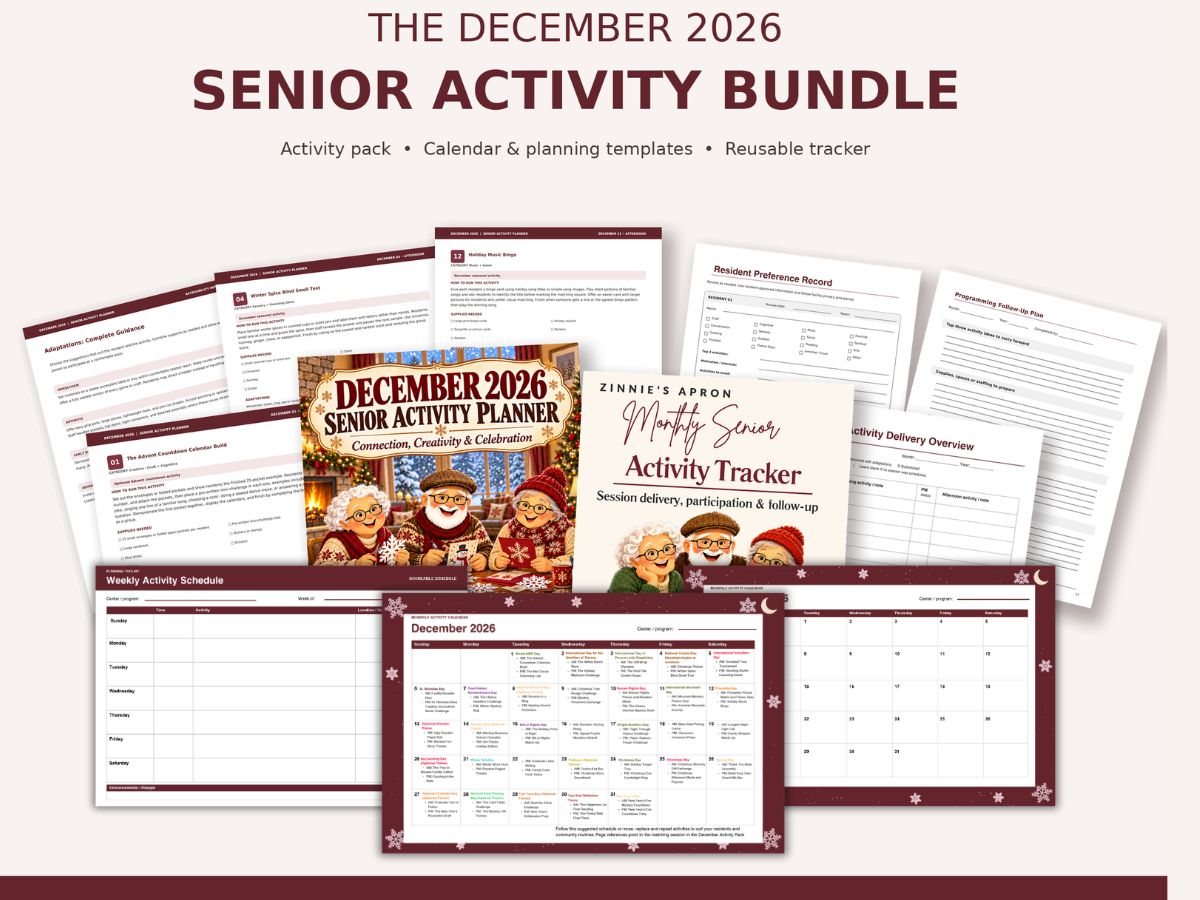
Finding an activity is one thing. Putting together a varied month, preparing the sessions and organising the calendar is another.
The Ready-to-Run December Activities for Seniors Bundle brings together a variety of December activities with facilitator guidance, a suggested prefilled calendar and practical planning tools.
Rather than working from a list of ideas alone, you get activities with guidance to help you prepare and lead your sessions plus a suggested schedule showing how to bring them together across the month.
Your bundle includes:
-
A variety of ready-to-run December activities with facilitator guidance.
-
A prefilled December calendar with a suggested activity schedule.
-
A blank calendar for creating your own programme.
-
Planning templates to organise session details and preparation.
-
A reusable Monthly Senior Activity Tracker to record activities, resident preferences and reflections.
Follow the suggested calendar or move, replace and repeat activities to suit your residents and community routines.
Get the December bundle here
Which Craft Should You Start With?
Choose by the action involved, not just the finished photograph. Something can look simple and still require more folding or gripping than someone wants.
| If you want… | Start with… | Preparation needed |
|---|---|---|
| A short paper project | Washi-tape bookmarks | Cut cards and prepare tape |
| Something tactile | Sweater-texture pictures | Cut and back fabric pieces |
| A useful textile item | Fleece cushion | Cut panels and fringe |
| A shared display | Winter patchwork panel | Prepare squares and backing |
| Three-dimensional making | Folded winter village | Cut and score templates |
| A repeated hand activity | Felt weaving | Prepare slotted bases |
These aren’t timed challenges. A project that takes several pleasant sittings is still doing its job.
15 Indoor Winter Crafts for Seniors
Each project includes specific adjustments for dementia, low vision, and arthritis. Use the ones that help the individual rather than applying every suggestion automatically.
1. Winter Woodland Shadow Box
If you want something that looks lovely on a shelf, start here. A few dark trees against a pale winter sky can turn a shallow cardboard box into a little woodland window.
You’ll need: A shallow display box, precut trees, winter-colored card, and dry mounting pads.
Choose a background and arrange the trees before attaching them. Place some directly against the back and others on raised pads for depth.
Adaptations:
- Dementia: Build one layer at a time with a small selection.
- Low vision: Use bold light-dark contrast and raised shapes.
- Arthritis: Prepare large pull-tabs on adhesive backings.
Keep it uncluttered. Three well-placed trees can be enough.
If the group enjoys making winter scenes, these December crafts for seniors in assisted living include more seasonal projects for the colder weeks.
2. No-Sew Fleece Winter Cushion
There’s something appealing about making a craft you can settle against afterward. This cushion belongs on a favorite chair, not in a cupboard marked “finished projects.”
You’ll need: Two prepared fleece panels with wide matching fringe and a ready-made cushion insert.
Line up the panels and tie corresponding strips around three sides. Add the insert, then finish the final side.
Adaptations:
- Dementia: Demonstrate one knot and work along a short section.
- Low vision: Choose contrasting front and back fabrics.
- Arthritis: Offer a partner for knotting while the resident chooses fabrics and positions the insert.
Be honest about the handwork. Knotting can be demanding, even without a needle.
If it’s being made for someone else, choose that person’s colors. For more personal gift ideas, browse these crafts to make for friends.
3. Winter Stained-Glass Window Panel
This one changes when the light comes through it. Blue, lavender, and clear shapes become a little patch of winter color without using actual glass.
You’ll need: Clear self-adhesive film, precut translucent shapes, and a cardstock frame.
Set the film sticky-side up inside the frame. Arrange the shapes, then have a helper seal them beneath a second clear sheet.
Adaptations:
- Dementia: Offer a few large shapes at a time.
- Low vision: Use bold outlines; choose a tabletop display if backlighting causes discomfort.
- Arthritis: Use broad pieces rather than tiny tissue fragments.
The shapes can overlap. They can leave gaps, too.
For a Christmas version using large pieces and supported steps, these Christmas crafts for seniors with advanced dementia include contact-paper snowflake art.
4. Winter Mug-Rug Weaving
If someone enjoys a repeated movement, this is a good project to consider. Wide felt strips pass over and under a prepared base, gradually becoming a small woven mat.
You’ll need: A felt base with broad slits and contrasting felt strips.
Weave the strips across the base. Adjust the spacing, then tuck the ends securely through the outer slits.
Adaptations:
- Dementia: Demonstrate one pass at a time.
- Low vision: Use contrasting strips and follow the weave by touch.
- Arthritis: Keep strips broad and flexible; secure the base on the table.
Use it as a decorative tray mat, not protection for handling hot cookware.
For more projects where texture matters as much as appearance, these crafts for seniors with low vision are a natural next stop.
5. Snowflake Ribbon-Ring Hanging
A soft winter hanging can brighten a door without needing a full wreath-making session. White fabric, blue ribbon, and a few large snowflakes are plenty.
You’ll need: A lightweight ring, precut broad fabric strips, and prepared snowflake attachments.
Loop strips around the ring, arrange the colors, and add the snowflakes. A helper can attach a short hanging loop.
Adaptations:
- Dementia: Start with a partly covered ring and repeat one action.
- Low vision: Offer distinctly different fabric textures.
- Arthritis: Rest the ring flat and have a partner tighten loops.
Choose an approved display spot where it won’t catch or obstruct movement.
If Christmas decorating is next on your calendar, these nursing home Christmas decoration ideas include resident-made displays for shared spaces.
6. Winter Washi-Tape Bookmarks
Sometimes the nicest project is the small one you can actually finish today. Three bold stripes on a cream bookmark can look beautifully deliberate.
You’ll need: Sturdy bookmark blanks, wide decorative tape, and optional large stickers.
Arrange tape strips across the card and fold the ends around the back. Add one finishing detail if wanted.
Adaptations:
- Dementia: Offer one prepared strip at a time.
- Low vision: Choose bold patterns instead of faint, busy prints.
- Arthritis: Put ready-cut strips on a release sheet with their ends lifted.
Skip the ribbon if tying adds frustration. A bookmark doesn’t need a tassel to do its job.
If paper projects are the favorite, these paper crafts for seniors offer more ideas. Some use wet materials, so check the supplies before choosing another no-mess session.
7. Sweater-Texture Winter Picture
This is a lovely choice for someone who enjoys fabric but doesn’t want to sew. Ribbed cream knit beside smooth navy felt already gives you an interesting design.
You’ll need: A sturdy base, clean precut fabric pieces, and suitable adhesive backing.
Arrange broad blocks or bands before attaching them. Add a simple card mount if desired.
Adaptations:
- Dementia: Begin with three large pieces.
- Low vision: Offer distinct textures and strong color contrast.
- Arthritis: Avoid small patches that require fingertip pinching.
Let someone reject a texture they dislike. Soft to you might feel scratchy to them.
You can keep the same technique for February and change the shapes. These Valentine’s Day crafts for seniors in nursing homes include a textured fabric heart collage and a community paper quilt.
8. Folded Winter Village
A little village gives everyone something to arrange after the making is finished. Someone can build a shop, someone else a library, and suddenly the table has a neighborhood.
You’ll need: Precut, prescored house templates, roof pieces, window stickers, and dry adhesive strips.
Decorate each building while flat. Fold along the prepared lines, join the tabs, and choose its place in the village.
Adaptations:
- Dementia: Introduce one fold at a time.
- Low vision: Mark fold lines clearly and contrast roofs with walls.
- Arthritis: Offer an assembled building to decorate.
The houses don’t have to match. Neither do real neighborhoods.
If you want a shared project for a faith-based winter gathering, these indoor winter Christian craft night ideas offer additional group-project themes.
9. Braided Winter Napkin Rings
If a shared lunch or tea is coming up, make something the table can use. These soft fabric rings add color without requiring a long sewing project.
You’ll need: Wide fleece strips, reusable napkin-ring bases, and prepared fastening tabs.
Secure three strips, braid a short length, then fasten it around the base.
Adaptations:
- Dementia: Offer a two-strip twist instead of a braid.
- Low vision: Use three distinct colors or textures.
- Arthritis: Keep tension loose and offer partner support.
Some people will enjoy braiding. Others may prefer choosing combinations and arranging the finished rings around napkins.
For a different way to make decorative rings at a later session, these bead crafts for seniors include beaded napkin rings. Choose components and threading support around the individual.
10. Winter Landscape Sticker Mosaic
A landscape doesn’t need hundreds of tiny pieces to look interesting. A wide evening sky, a few mountains, and one bright cabin window can tell the whole story.
You’ll need: A card base and large self-adhesive geometric shapes.
Arrange the sky, mountain line, and foreground. Add trees, a moon, or a house if desired.
Adaptations:
- Dementia: Work on one area at a time.
- Low vision: Use bold, uncomplicated shapes.
- Arthritis: Lift sticker corners beforehand.
Offer an outline for someone who likes guidance. Leave the base blank for someone who wants freedom.
Before sealing anything down, give the maker a moment to look. Moving one mountain is easier before it’s attached.
11. Yarn-Wrapped Winter Trees
If knitting needles are more equipment than you want today, try wrapping instead. Thick yarn around a prepared tree shape creates texture without needing a stitch pattern.
You’ll need: Notched tree shapes, thick yarn, dry securing tabs, and prepared stands.
Secure the starting end, wrap yarn between the notches, then tuck the final end into place.
Adaptations:
- Dementia: Demonstrate a few wraps without insisting on a pattern.
- Low vision: Contrast the yarn with the base.
- Arthritis: Avoid tight tension; a partner can turn the tree.
Keep yarn lengths manageable and supervise according to individual needs.
Neat rows are optional. A loose crisscross can be the design.
12. Winter Scene Display Cards
A card doesn’t have to wait for a birthday. A little layered winter view can stand on a bedside table or travel home with a visitor.
You’ll need: Folded card bases, large winter shapes, and dry adhesive pads.
Choose a background, arrange a central shape, and add one or two raised details.
Adaptations:
- Dementia: Offer a small selection of recognizable shapes.
- Low vision: Use contrasting raised layers.
- Arthritis: Prepare easy-peel tabs.
Add a greeting only if the person wants one. Writing should not be the price of finishing.
For residents making cards with a church group, these women’s Christian craft night ideas include faith-centered paper projects that can be adapted to winter colors.
13. No-Sew Winter Fabric Garland
A shared garland is useful when people want different levels of involvement. One person can decorate a single flag while another makes several.
You’ll need: Precut felt flags, large fabric decorations, and a prepared attachment band.
Decorate the flags individually, then decide their order together. A helper can hang the finished display.
Adaptations:
- Dementia: Focus on one flag rather than explaining the entire project.
- Low vision: Offer tactile shapes and contrasting fabrics.
- Arthritis: Use broad attachment tabs instead of knots.
Keep each contribution recognizable. The display doesn’t need to look factory-made.
When winter starts giving way to spring, these paper spring garlands offer a natural follow-on. Change the materials and shapes rather than repeating the exact project.
14. Cozy Winter Notebook Covers
A plain notebook is a good place to put a small, confident design. Think charcoal card, a wide cream stripe, and one textured fabric square.
You’ll need: Prepared removable cardstock covers, decorative tape, and large fabric-backed stickers.
Decorate the cover while flat, then slide it onto the notebook.
Adaptations:
- Dementia: Offer two design choices to begin.
- Low vision: Use bold decoration and an optional large label.
- Arthritis: Prepare tape with lifted ends.
The notebook can hold pictures, sketches, lists, or supported notes. It doesn’t have to become a diary.
If the person enjoys collecting photographs and familiar details, the free printable memory book activity for seniors gives them another project to personalize afterward.
15. Collaborative Winter Patchwork Panel
This is the project to choose when you want everyone’s individual work to remain visible. Different squares are the point, not something to tidy away.
You’ll need: Felt squares, precut fabric shapes, suitable adhesive sheets, and a prepared backing.
Each person decorates a square. Arrange the completed pieces together before attaching them to the backing.
Adaptations:
- Dementia: Offer a simple arrangement with a few large pieces.
- Low vision: Use distinct textures and strong contrast.
- Arthritis: Prepare broad backing tabs and avoid tiny patches.
Let people change their minds about the arrangement. It’s their display, not just their supplies.
You could use the same backing for later seasonal panels, storing each person’s winter square safely when it comes down.
Want help putting your December programme together? Explore the Ready-to-Run December Activities Bundle, with varied activities, facilitator guidance and a prefilled calendar you can follow or adapt.
Get the December bundle here!
Adapt the Difficult Step, Not the Whole Idea
A little help can preserve the part someone actually wants to do. Peeling an adhesive backing is different from choosing and placing every piece for them.
For Someone Living With Dementia
Begin with an invitation, then demonstrate one step. Keep the table calm and allow time for the person to respond.
The Alzheimer’s Society’s advice on choosing activities emphasizes involvement, individual strengths, and support without taking over.
If a sequence becomes frustrating, simplify that sequence. You don’t need to turn every project into sorting.
For Someone With Low Vision
Ask what helps them see the materials. A white shape on a white tray may disappear, even if it is large.
Use contrast, suitable lighting, and clear descriptions. The RNIB’s care-home activity guidance includes ways to support participation in arts and crafts with sight loss. This link opens a Word document.
Also, check glare before moving someone closer to a bright window. More light and better light aren’t always the same thing.
For Someone With Arthritis
Look at the action that causes discomfort. Is it pinching a backing, holding a narrow tool, or keeping tension on fabric?
Try comfortable built-up handles, prepared tabs, or partner support. The Arthritis Foundation’s assistive-device guidance explains how adapted tools can make tasks easier on joints.
For future sessions, these summer crafts for seniors with arthritis offer additional examples of adjusted tools and techniques.
That’s a longer-range planning resource, not a reason to skip ahead on your winter calendar.
If knotting hurts today, choose another fastening method or another project. The cushion can wait.
Keep Setup and Cleanup Small
Make one sample before preparing a group quantity. That is where you find out whether the roof tabs actually hold.
Then keep the session manageable:
- Put each project’s materials in one tray.
- Bring out only the current step’s supplies.
- Collect backings as you go.
- Store unfinished work in labeled containers.
- Save reusable shapes and templates.
Check materials against individual care needs, especially where someone may mouth objects. Large pieces are not automatically suitable just because they are easier to hold.
And call preparation what it is. A precut village can be simple to assemble, but somebody still has to cut those templates.
Give the Finished Work Somewhere to Go
Ask before adding someone’s project to communal décor. They may already have a place for it.
A bookmark can go straight into a book. A fabric square might join the wall panel, while a woodland box stays beside the maker’s chair.
For shared displays, let people help choose the arrangement. Ask permission before photographing them or sharing their work publicly.
Sometimes the best finishing touch is simply handing it back and saying, “Where would you like this?”
Questions You Might Be Asking
What Are the Easiest No-Mess Winter Crafts for Seniors to Start With?
Washi-tape bookmarks, large-shape sticker pictures, and display cards involve relatively few construction steps. Start there for a shorter project, then adjust peeling and arranging support to the individual.
What Winter Crafts Can Seniors Make Without Scissors or Liquid Glue?
Most projects here use precut materials and dry attachments during the session. Bookmarks, sticker mosaics, and fabric pictures are straightforward options, although a helper may need to prepare supplies.
Can These Winter Crafts Be Adapted for Someone With Dementia?
Yes, but choose around the person rather than the diagnosis alone. Offer manageable steps, useful demonstrations, and enough freedom for the work to remain theirs.
Which Crafts Are Better for Seniors With Arthritis?
Look for actions the individual finds comfortable rather than assuming one craft suits everyone. Large-piece fabric pictures may be preferable to repeated knotting, with assistance for peeling.
How Do You Make Winter Crafts Adult-Appropriate?
Offer attractive materials, genuine choices, and a finished object the person wants. Avoid insisting on identical results or correcting every detail.
Are These Crafts Completely Mess-Free?
They avoid wet materials, loose glitter, and drying time. You will still collect backings, packaging, or an occasional scrap, so keep a small waste container nearby.
How Long Should a Senior Craft Session Last?
Let interest and comfort guide the session rather than setting a compulsory finish time. A labeled tray makes it easy to stop and return another day.
Start With the One You Can Already Picture
Maybe it’s the cream-and-navy fabric picture. Maybe it’s a row of little houses with one bright yellow shop front.
Choose that one.
Save the supply list, prepare the awkward parts, and leave the choices open. Then give the person making it enough room to surprise you.