This post contains affiliate links. This means I may earn a small commission if you purchase through my links at no extra cost to you.
Finding the right Questions to Ask Your Aging Parents can open the door to family stories you may never hear otherwise.
Most conversations with our parents begin with ordinary questions: How are you feeling? Did you take your medicine? What do you need from the store?
Those questions matter, especially as parents grow older and may need more practical support.
But somewhere between appointments, errands, work and family responsibilities, it is easy to forget that the person sitting across from us has lived an entire life we only partly know.
Your mother had a best friend before you knew her. Your father once walked nervously into his first job.
They had childhood games, neighborhood characters, family traditions, private disappointments, favorite songs and moments when they had no idea what to do next.
Some of those stories may have been repeated many times, while others may never have been shared simply because nobody thought to ask.
These Questions to Ask Your Aging Parents are not meant to make your mother or father feel interviewed, tested or pressured.
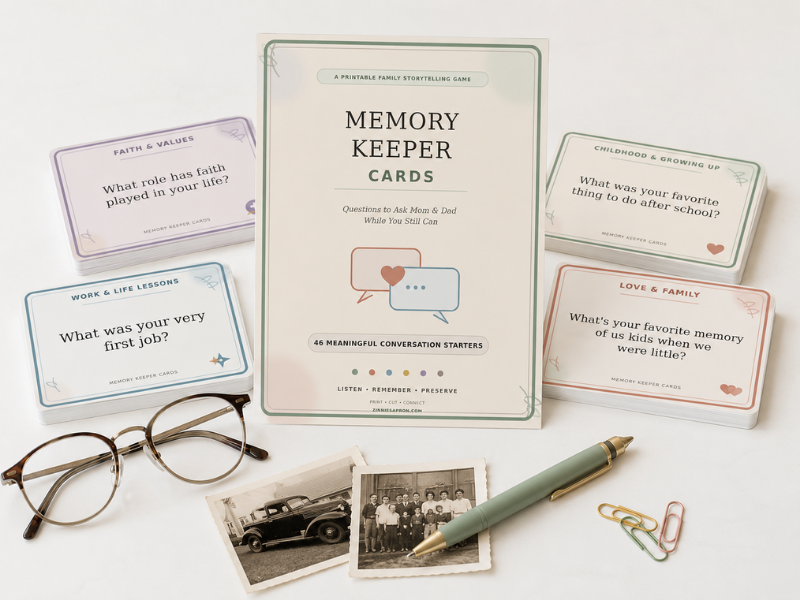
They are gentle invitations to slow down, listen and discover the experiences that shaped them. You do not need to ask all 46 questions at once. One printable card may be enough for an entire afternoon.
Some answers will make you laugh. Others may surprise you or become emotional. A few may seem beautifully ordinary.
The value is not in receiving a dramatic answer every time. It is in showing your parents that their experiences still matter and that someone genuinely wants to hear their stories in their own words.
What Is Included in the Free Printable?
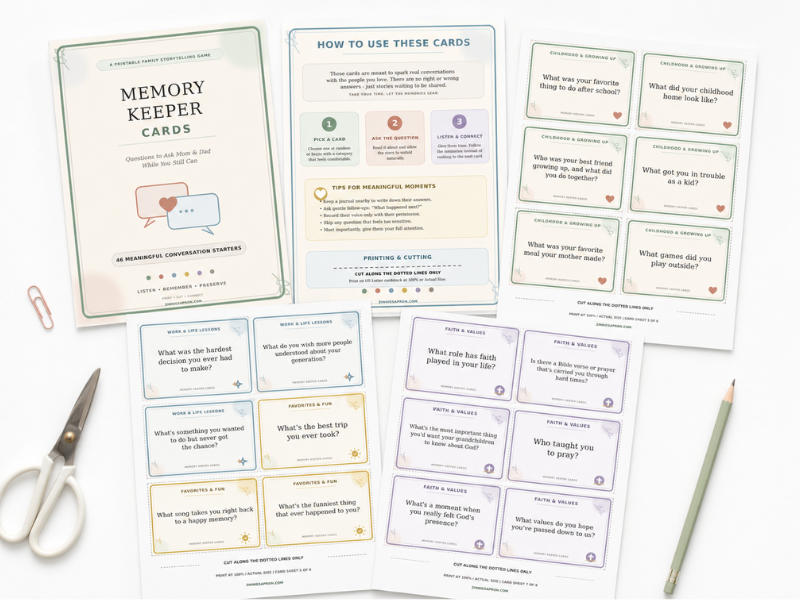
The printable contains 46 conversation cards arranged across eight US Letter card sheets. There are 43 ready-made questions and three blank-style prompts for adding something personal you have always wanted to ask. A cover, simple instruction page and closing keepsake page are also included.
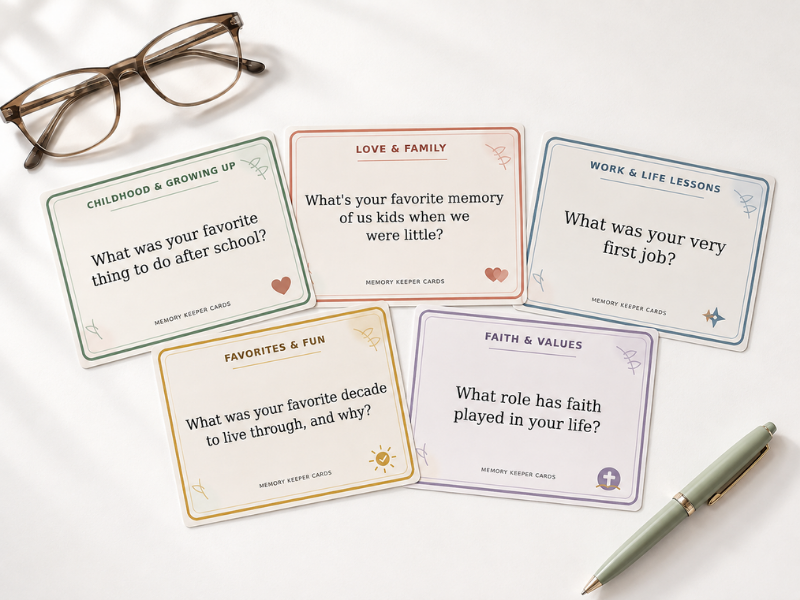
The cards are divided into five gentle categories:
- Childhood and Growing Up
- Love and Family
- Work and Life Lessons
- Favorites and Fun
- Faith and Values
The different categories help you match the question to the moment. Start with something light when you have only a few minutes. Save questions about difficult years, faith or family history for a quiet conversation when neither of you feels rushed.
Why These Conversations Matter
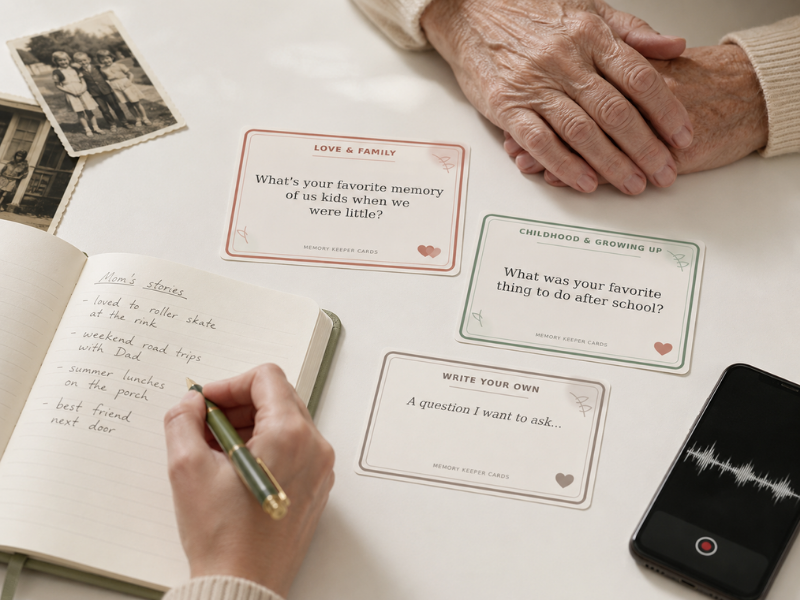
Family stories are rarely lost all at once. They disappear in small pieces: a nickname nobody remembers, the reason a tradition began, the name of a childhood friend or the advice a grandparent used to repeat.
Asking now gives those details somewhere to live beyond one person’s memory.
Conversation also creates connection in the present. The National Institute on Aging’s guidance on staying socially connected explains that meaningful contact with family and friends supports older adults’ well-being.
These cards are a simple way to make a visit feel personal instead of filling the time with television or practical updates.
You are not collecting perfect historical records. Dates may be uncertain, siblings may remember events differently and stories may change slightly with each telling.
Preserve the voice, feeling and meaning. Those are often the parts a family treasures most.
How to Begin Without Making It Feel Like an Interview

Choose a relaxed moment and ask permission: “I found some questions about family stories. Would you like to pick one with me?”
Let your parent choose the card if possible. Sit beside them rather than across a table like an interviewer, and put your phone away unless you have permission to record.
Ask one question, then wait. Do not rush to fill every silence. A memory may take a few seconds to surface.
Use natural follow-ups such as “What happened next?” “What do you remember most?” or “How did that make you feel?” If the story moves away from the printed question, follow the story.
StoryCorps’ collection of questions for meaningful conversations also encourages families to choose the prompts that feel right and create their own. The goal is not to complete a list. It is to hear the person.
46 Questions to Ask Your Aging Parents
Childhood and Growing Up
- What was your favorite thing to do after school?
- What did your childhood home look like?
- Who was your best friend growing up, and what did you do together?
- What got you in trouble as a kid?
- What was your favorite meal your mother made?
- What games did you play outside?
- What was your neighborhood like?
- What’s your earliest memory?
- Did you have a pet growing up? Tell me about them.
- What was school like for you?
Love and Family
- How did you and Dad or Mom meet?
- What was your wedding day like?
- What’s your favorite memory of us kids when we were little?
- What’s the best advice someone gave you about marriage?
- What’s a family tradition you wish we would bring back?
- What was the hardest year of your life, and how did you get through it?
- What do you wish you had known before becoming a parent?
- Who in our family do you think I am most like?
- What’s something about our family history I might not know?
Work and Life Lessons
- What was your very first job?
- What’s the proudest moment of your career?
- What’s a skill you taught yourself?
- If you could give your 20-year-old self one piece of advice, what would it be?
- What’s the smartest money decision you ever made?
- What was the hardest decision you ever had to make?
- What do you wish more people understood about your generation?
- What’s something you wanted to do but never got the chance?
Favorites and Fun
- What song takes you right back to a happy memory?
- What’s the best trip you ever took?
- What’s the funniest thing that ever happened to you?
- What was your favorite decade to live through, and why?
- What’s a movie or show you could watch repeatedly?
- What’s the best meal you have ever had?
- If you could relive one day of your life, which would it be?
- What’s something that is much better now than when you were young?
- What’s something that was better back then?
Faith and Values
- What role has faith played in your life?
- Is there a Bible verse or prayer that has carried you through hard times?
- What’s the most important thing you would want your grandchildren to know about God?
- Who taught you to pray?
- What’s a moment when you truly felt God’s presence?
- What values do you hope you have passed down to us?
- What does a life well-lived look like to you?
Write Your Own
- A question I want to ask…
- A story I want to hear…
- Something I have always wondered…
How to Listen So Your Parent Feels Heard
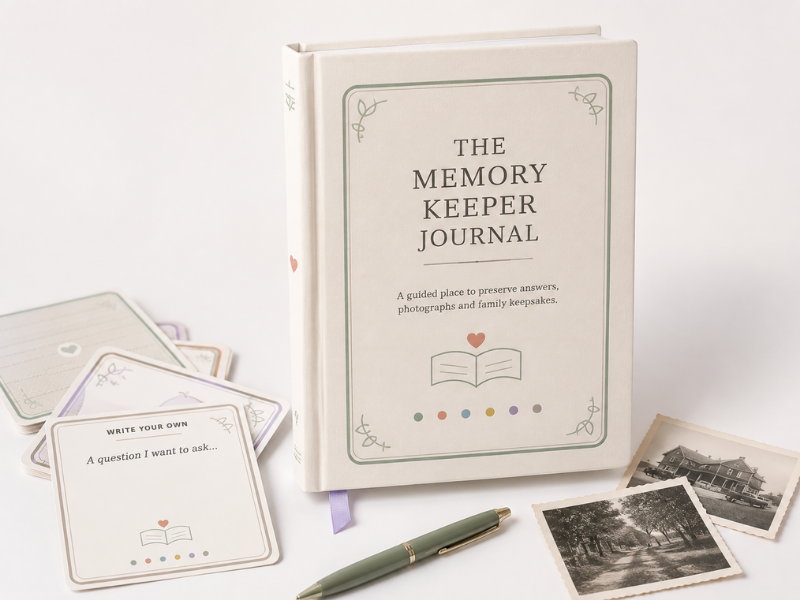
The best Questions to Ask Your Aging Parents can still fall flat if the conversation feels rushed or corrected. Listen for meaning, not perfect accuracy.
Avoid interrupting to fix a date, challenge a detail or tell your version too quickly. You can compare memories later. First, allow your parent to finish theirs.
Do not demand an answer to a sensitive card. “We can skip this one” protects trust and keeps the activity voluntary.
Questions about marriage, regret, money, faith or difficult years may touch experiences your parent does not want to revisit. Respecting that boundary matters more than completing the deck.
Notice emotion as well as words. If a happy memory brings tears, do not assume the question was a mistake. Pause and ask whether they want to continue. Sometimes grief and gratitude sit inside the same story.
If you want to preserve longer answers, ask permission before recording audio or video. A simple voice recording captures laughter, accent, pauses and expressions that written notes cannot. If they prefer privacy, write the story afterward and let them decide who may read it.
Turn the Answers Into a Family Keepsake
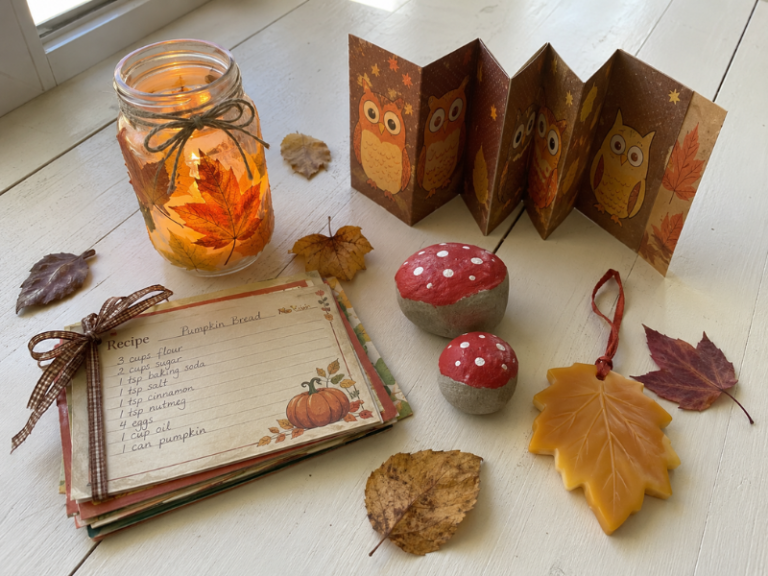
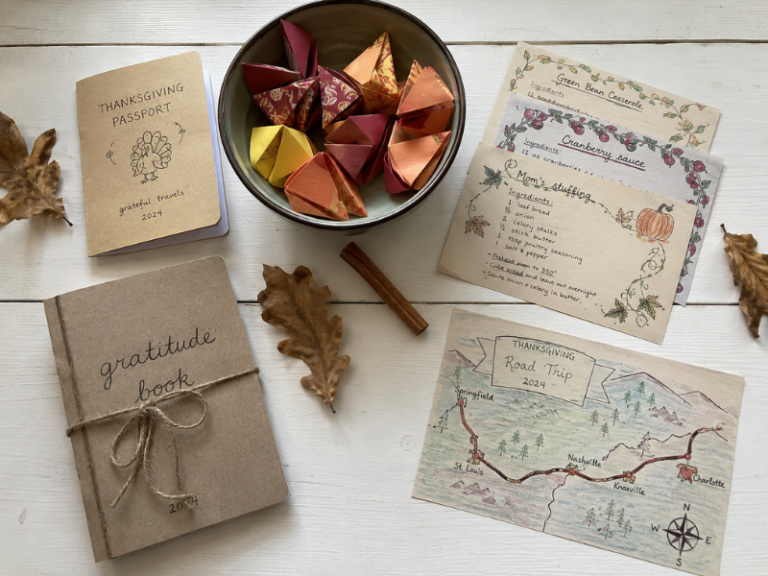
Write the date on the back of each card and add one sentence about the answer. Store completed cards in a photo box, recipe tin or envelope. You can also pair them with old photographs, letters, recipes or maps.
For a larger place to preserve stories, use the free Memory Book Activity for Seniors. Its family tree, recipe, photograph and story pages give longer conversations room to grow.
If your parent enjoys small hands-on projects, these memory jar craft ideas for seniors offer another highly relevant way to save individual memories.
Using the Cards When Memory or Communication Has Changed
These cards are conversation tools, not a memory test. If your parent cannot remember an answer, say, “That’s okay; let’s choose another.” Never use the questions to prove that they have forgotten something.
For a parent living with dementia, choose familiar and concrete prompts. Ask one question at a time in a quiet space and allow plenty of time for a response.
The Alzheimer’s Association’s communication guidance recommends listening patiently, avoiding criticism or correction and treating the person with dignity.
A photograph, familiar song or family recipe may work better than a question alone. Stop if your parent becomes tired, upset or frustrated. A peaceful five-minute conversation is more valuable than finishing several cards.
How to Print and Prepare the Cards
- Download the PDF to your device.
- Choose US Letter paper and print at 100% or Actual Size.
- Use white cardstock if you want sturdier, reusable cards.
- Cut only along the dotted lines at the bottom of each card row.
- Keep the cards in a small box, envelope or binder pocket.
Print the complete set or choose only the pages that suit your family. You can also laminate frequently used cards and write notes on the back with a removable marker.
Download the Free Questions to Ask Your Aging Parents Cards
Do not wait for the perfect family gathering or a completely free afternoon. Print the cards, choose one and begin where you are. Ask about the neighborhood, the first job, the family tradition or the song that still brings everything back.
Years from now, you may forget the exact day you had the conversation. But you may remember your mother’s laugh as she described getting into trouble, your father’s face as he spoke about his first job, or the piece of advice neither of you knew you needed to hear.
These Questions to Ask Your Aging Parents are simple pieces of paper. What they can hold is much bigger: a voice, a lesson, a family story and the feeling of being truly listened to.
GET THE FREE PRINTABLE MEMORY KEEPER CARDS
Ready to Preserve the Stories? Grab the Memory Keeper Journal
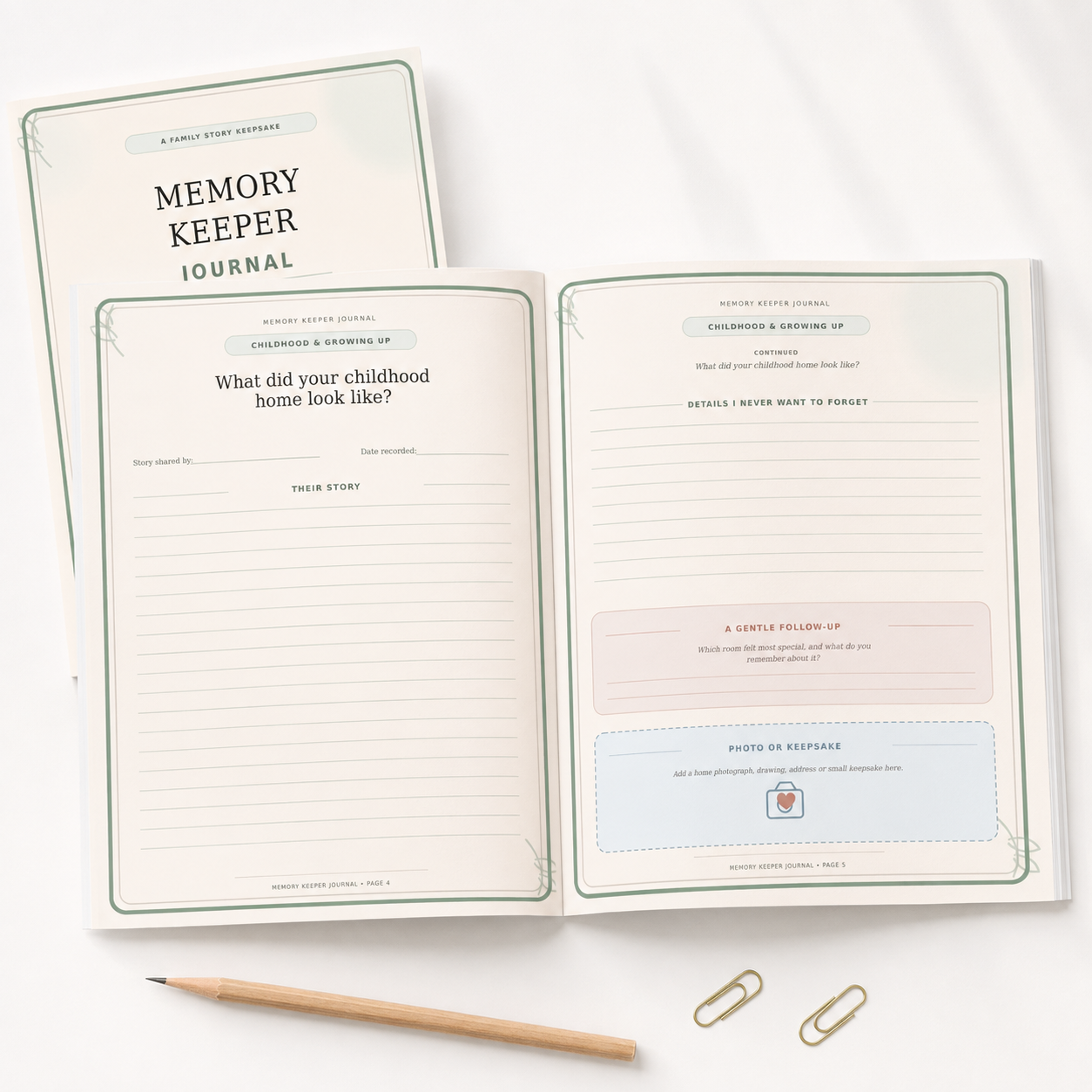
The cards start the conversation. The journal preserves it.
The Memory Keeper Journal is an 80-page printable guided journal designed to help you record your parents’ answers, save the details you never want to forget, and turn those conversations into a family keepsake that lasts for generations.
Each prompt includes space for their story in their own words, a gentle follow-up question that goes deeper, and room for a photo or keepsake that brings the memory to life.
It covers all five categories Childhood & Growing Up, Love & Family, Work & Life Lessons, Favorites & Fun, and Faith & Values plus a Family Legacy page where they can leave a blessing for the family.
If the cards sparked something meaningful, the journal is where you hold onto it.
Frequently Asked Questions
Are These Questions Only for Elderly Parents?
No. They work with parents, grandparents, older relatives and family friends. There is no minimum age for sharing a life story.
Should I Ask All 46 Questions at Once?
No. Choose one to three cards per visit. Let a meaningful answer take as long as it needs.
What If My Parent Gives Only Short Answers?
Accept the short answer without pressure. Try a gentle follow-up or add a photograph, song or familiar object that may make the question easier to explore.
Can I Record the Conversation?
Yes, but always ask permission first. Explain how the recording will be stored and who may hear it.
Can These Cards Be Used in Nursing Homes?
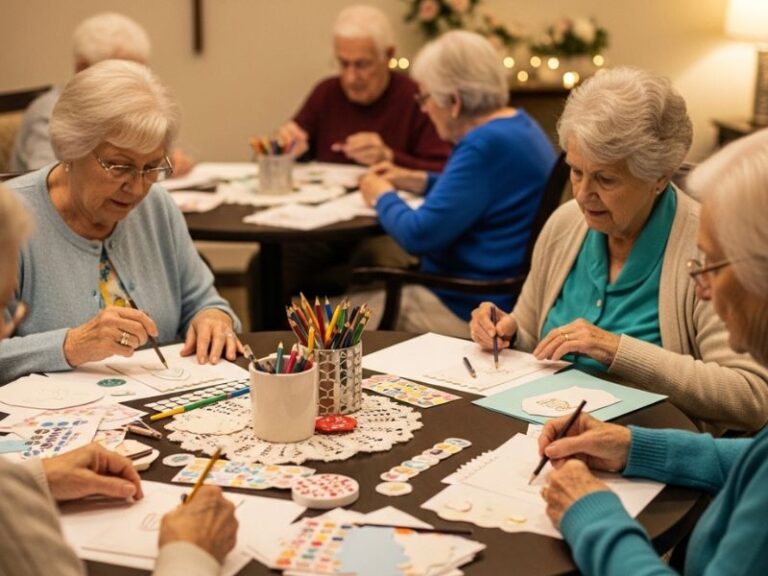
Yes. Families and caregivers can use them one-to-one, and activity staff can use selected cards in small groups. Never require a resident to answer or share a private story publicly.
Are the Printable Cards Free?
Yes. The complete Memory Keeper Cards printable is free for personal, family and single-facility activity use. It may not be resold, redistributed or uploaded to another website.